

Asia Minor was a French-Turkish symphonic-rock band that released the 1979 album Crossing the Line, followed in 1980 with Between Flesh and Divine, both on self-press W.A.M.
Members: Setrak Bakirel (lead vocals, guitar, bass), Eril Tekeli (flute, guitar, bass), Can Kozlu (drums, 1976-77), Jean-Philippe Bottier (bass, 1976-77), Lionel Beltrami (drums, percussion, 1977-82), Paul Levy (bass, 1977-78), Robert Kempler (keyboards, bass, 1979-82), Pascal Niro (bass, 1980)
Background
Guitarist Georges Bodossian and fellow Turkish musician, guitarist Eril Tekeli, founded Asia Minor in Paris in 1973. The Turkish founders sought to infuse their progressive rock with Middle Eastern influences, developing a distinctive sound often compared to Camel.
Drummer Lionel Beltrami joined the group in April 1977 after answering a classified advertisement. Beltrami drew influence from drummers like Mike Giles, Bill Bruford, and Phil Collins, and approached his instrument with the sensibility of a classical conductor.
Between Beltrami’s arrival and the recording of their debut album, the band performed at various venues in Paris and the provinces, experiencing several personnel changes among their bass and keyboard players. This period of live performance led to the material for their first album, which they recorded in October 1978.
Crossing the Line
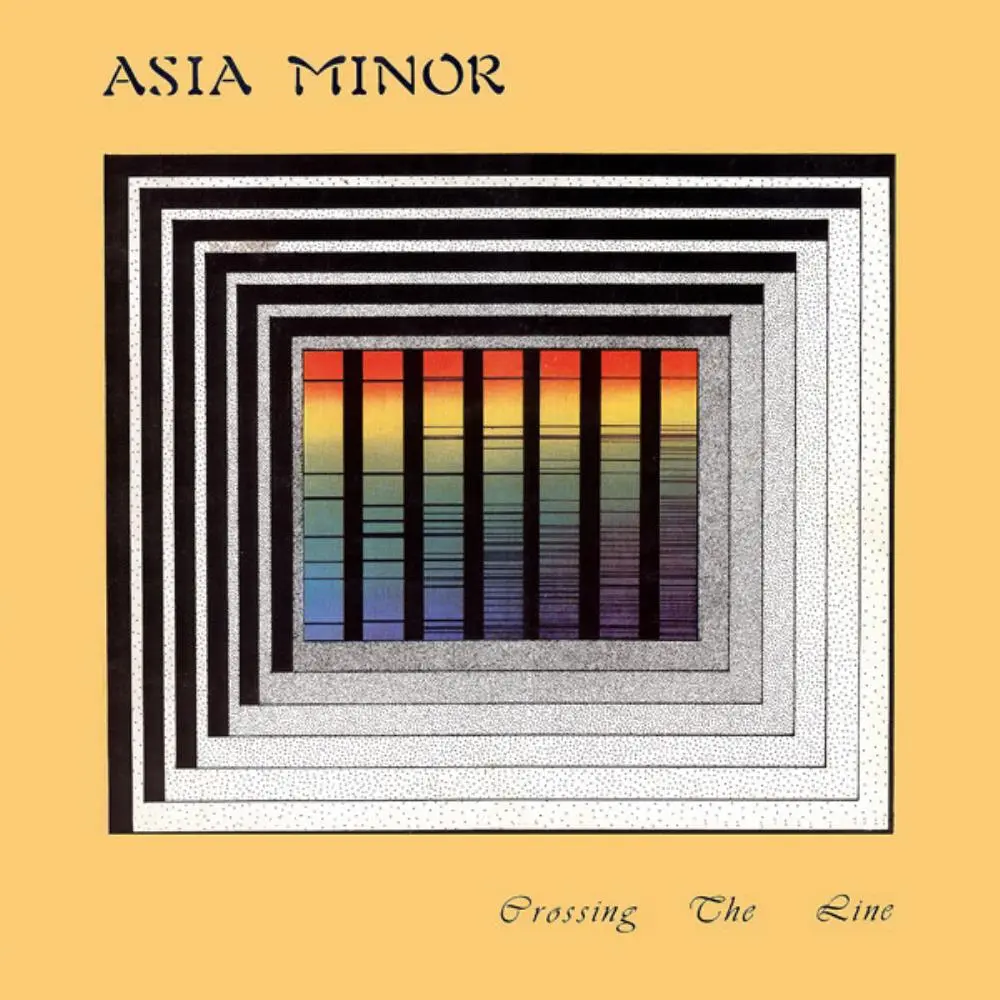 Asia Minor released their first album, Crossing the Line, in April 1979 on W.A.M.
The album merges European symphonic rock with Anatolian tonal phrasing, combining complex rhythmic development with wistful, flute-led themes and atmospheric keyboard backdrops. Its music balances the structural precision of Camel and Genesis with modal influences rooted in the group’s Turkish heritage.
Singer–guitarist–bassist Setrak Bakirel and flutist–guitarist–bassist Eril Tekeli composed and produced the album, joined by percussionist Lionel Beltrami and guest keyboardist Nick Vicente. Tekeli’s flute functions as both lead voice and tonal bridge, while Bakirel alternates between English and Turkish lyrics.
Bakirel and Tekeli wrote all nine songs, which range from expansive symphonic sequences to concise instrumental etudes. The title unites their contrasting styles—Tekeli’s modal flute and guitar interplay against Bakirel’s narrative vocal passages.
“Preface” opens the album with gong strikes, flute, and shifting rhythmic motifs that rise from spacious atmosphere to sharp, jazz-inflected phrasing. “Mahzun Gözler” follows as an eight-minute centerpiece that transitions between brooding, slow passages and bursts of intricate, rhythmic interplay with alternating Turkish and English vocals. “Mystic Dance” serves as a brief duet for flute and electric guitar, while “Misfortune” introduces a tense, percussive arrangement that alternates calm vocal lines and urgent instrumental breaks.
Side two begins with “Landscape,” where somber, arpeggiated guitars and subdued singing give way to an electric piano and guitar-driven resolution. “Visions” unfolds over a 7/4 bass pattern, combining sustained keyboard lines and ascending guitar figures beneath reflective vocals. “Without Stir,” a short 12-string acoustic interlude, precedes “Hayal Dolu Günler İçin,” which shifts through rapid tempo changes, layered guitar leads, and alternating moods between delicacy and tension. “Postface” closes the cycle with organ and flute restating earlier motifs before fading into silence.
A1. “Preface” (4:18) – A gong and distant percussion set a foreboding tone before flute threads through the haze. The ensemble builds from restraint to density as Eril Tekeli’s guitar and Lionel Beltrami’s drums press forward beneath Setrak Bakirel’s brief, plaintive vocal passage. The track closes in instrumental conversation, guitar and flute circling until the sound abruptly dissolves.
A2. “Mahzun Gözler” [Sad Eyes] (8:13) – Layers of flute, guitar, and percussion slowly interlock into a restless rhythmic fabric. The pace breaks and reforms several times, alternating between tightly wound riffs and open, modal passages suggestive of Eastern modality. Bakirel’s voice enters midway, his phrasing carrying a tone of reflection and distance, before the band spirals back into an intricate instrumental finale of shifting meters and entwined lines.
A3. “Mystic Dance” (1:45) – A brief instrumental interlude where flute and guitar intertwine in quick, fluid exchanges. The pace and phrasing evoke circular movement, closing almost as soon as the momentum peaks.
A4. “Misfortune” (4:30) – Mechanical hum introduces a surge of flute-led jazz rock. The rhythm breaks midway to accommodate Bakirel’s terse vocal, then reclaims its propulsion in a sequence of angular guitar chords and darting bass patterns. The title’s implication of unrest carries into the phrasing, which remains unsettled even at resolution.
B1. “Landscape” (3:50) – Arpeggiated guitar establishes a sparse frame that expands into sharp, syncopated bursts. Bakirel’s vocal intervenes briefly, tempering the movement before electric piano bridges toward a more forceful conclusion. The instrumental close layers fuzzed guitar and drums in brief release.
B2. “Visions” (5:35) – Built around a cycling bass figure in asymmetrical meter, the piece alternates between tension and clarity. Bakirel’s voice enters with a subdued tone over synthesizer textures, expressing inward reflection that contrasts with the restless rhythm below. The arrangement tightens in the final section as the ensemble drives the motif to a steady, decisive close.
B3. “Without Stir” (1:50) – Twin guitars, one strumming and one picking harmonics, trace a sparse, meditative shape. Bakirel’s short vocal line floats within this frame before the instruments fade as quietly as they began.
B4. “Hayal Dolu Günler İçin” [For Dream-Filled Days] (4:38) – The ensemble returns to heavier interplay, alternating brisk rhythmic passages with moments of suspension. Bakirel sings in Turkish, his phrasing threading through rapid shifts in meter and tone. Instrumental breaks pivot between rock drive and freer, jazz-inflected figures before returning to the opening pattern for the song’s final statement.
B5. “Postface” (2:00) – Organ surfaces from near silence, gradually joined by flute reprising the “Preface” theme. The instruments thin to a single tone, closing the album as a quiet mirror of its beginning.
Sessions occurred at Studio Maïa in Paris with producer Asia Minor and engineer Serge Dudit, assisted by remix engineer Jean-Claude Egreteau.
Crossing the Line features cover design by Tekeli and Bakirel, whose abstract layout complements Krikor’s photography.
Issued by the Paris-based W.A.M. label and manufactured by PolyGram, Crossing the Line introduced Asia Minor’s cross-cultural symphonic style—an intricate fusion of European progressive structures and Eastern modal nuance that distinguished them within the late-1970s continental art-rock scene.
The permanent quartet lineup—comprising founders Setrak Bakirel (who handled vocals and likely some keyboards) and Eril Tekeli (guitar), along with Lionel Beltrami (drums) and Robert (bass/keyboards)—stabilized shortly after their first album’s recording. In December 1979, the group performed for a cultural program broadcast on a national French television channel. During this time, they continued to compose; they later included the song “Paradise” from this period on their second album, retitled as “Boundless.” The material for the second album developed into a more Western-influenced, classically styled progressive rock that benefited from a more polished production.
Between Flesh and Divine
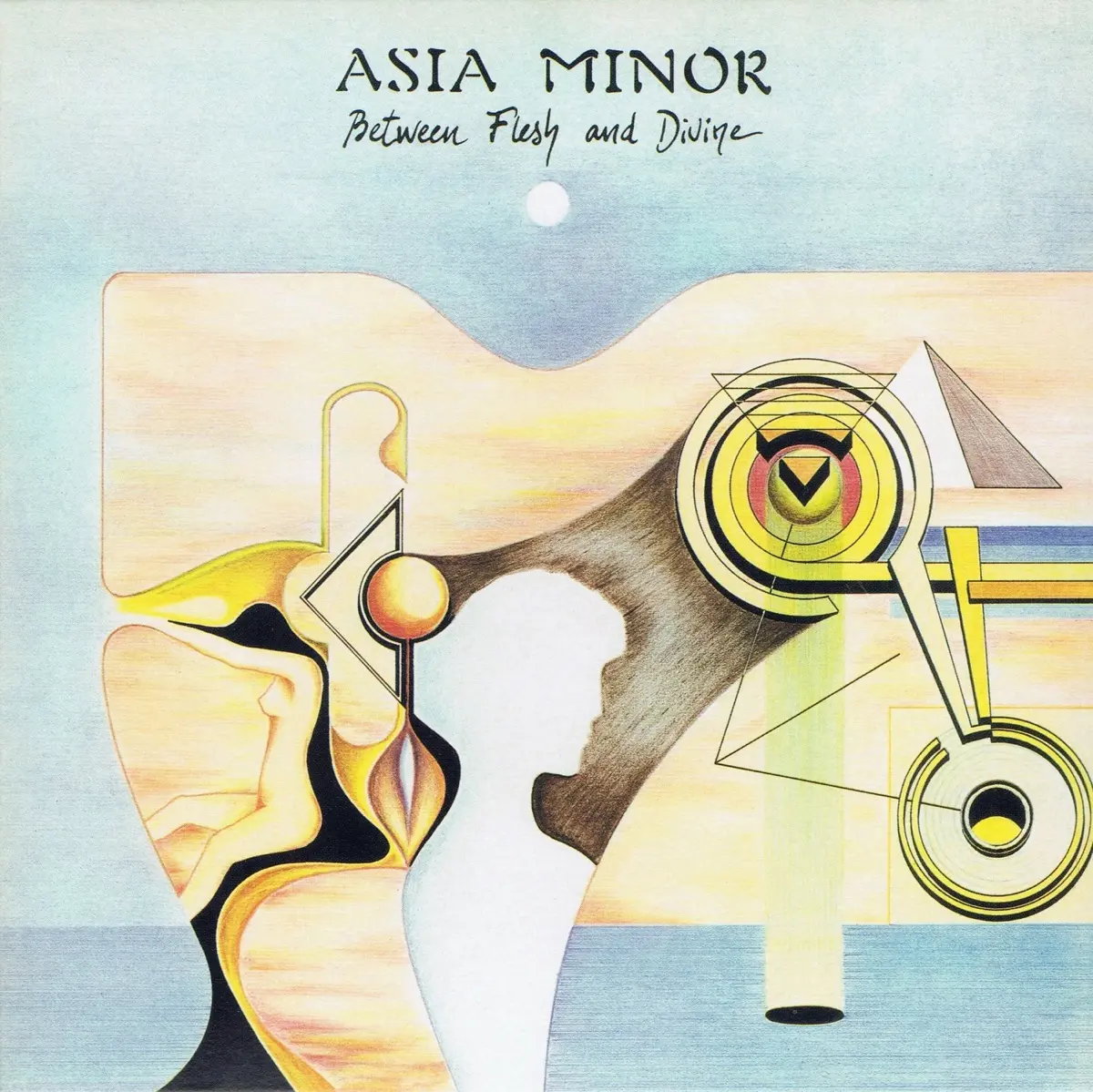 Asia Minor released their second album, Between Flesh and Divine, in December 1980 on W.A.M.
The album deepens the band’s fusion of European symphonic structures and Anatolian-tinged tonal phrasing, blending shifting meters and textural contrasts within a refined, melancholic framework. Compared with Crossing the Line, it presents a fuller sound and greater rhythmic clarity, balancing airy flute passages and layered keyboards against sustained guitar lines and episodic dynamics.
Singer–guitarist–bassist Setrak Bakirel and flutist–guitarist Eril Tekeli composed, arranged, and produced the album with drummer–percussionist Lionel Beltrami and keyboardist–bassist Robert Kempler. Bakirel handled the lead vocals, alternating acoustic and electric guitar textures alongside Kempler’s sustained organ and synthesizer voicings.
Bakirel and Tekeli co-wrote all six tracks, which follow a continuous conceptual arc of introspection and transition. The album opens with “Nightwind,” which unfolds through multiple time changes, from an angular instrumental theme to a calm vocal sequence and back to a concluding Mellotron-led coda. “Northern Lights” alternates pastoral electric-piano passages with surging guitar and flute interplay, its climactic section swelling into layered harmonic counterpoint. “Boundless” provides a brief, subdued interlude of voice and synthesizer.
“Dedicace” juxtaposes bass-driven jazz inflections with acoustic strumming and organ swells, recalling mid-1970s Camel in its rhythmic progression and flute phrasing. “Lost in a Dream Yell” develops across shifting moods—rain sound effects, sparse guitar arpeggios, and a long, ascending flute-and-snare sequence that builds to a solemn, processional close. The instrumental “Dreadful Memories” concludes the cycle with a driving unison riff over organ, bass, and tom-heavy percussion, fading on a suspended chord.
A1. “Nightwind” (6:23) – A measured pulse of bass and percussion introduces interlocking layers of guitar and flute. The rhythm shifts between asymmetrical and even meters as the band alternates between dense instrumental writing and a quieter section where Setrak Bakirel’s voice enters briefly. Mellotron and sustained guitar bring the piece to a gradual ascent before its closing refrain.
A2. “Northern Lights” (7:45) – Flute and electric piano open in restraint before the tempo rises, moving into a sequence of swift, tightly structured exchanges. Midway, the sound recedes to a skeletal pattern of guitar arpeggios that frames Bakirel’s low, unhurried vocal line. The song’s final third expands through repeated harmonic motion, guitar and synthesizer trading contours as the texture fills and dissolves again.
A3. “Boundless” (3:00) – A brief vocal piece built on cyclical chords, its simplicity framed by restrained synthesizer voicings. The ending extends into a slow, repeating guitar phrase that fades without resolution.
B1. “Dedicace” (6:11) – Bass and flute establish a steady rhythmic pattern before the ensemble breaks into alternating passages of acoustic strumming and electric tension. Bakirel sings with compressed phrasing, his lines carried over abrupt shifts between tempo and texture. The piece ends as it began, drawing its themes back into the same rhythmic pulse that opened it.
B2. “Lost in a Dream Yell” (7:42) – Rain and muted piano outline a sparse sound field. Bakirel’s voice emerges over intermittent guitar figures, soon joined by flute tracing long, ascending phrases. Gradually, the piece builds momentum as martial drums enter beneath the sustained melodic line, the pattern repeating until it fades into stillness.
B3. “Dreadful Memories” (3:00) – A short instrumental anchored by a recurring guitar and bass motif. Organ and synthesizer expand the harmony before the track ends abruptly, its final echo left hanging in silence.
Sessions occurred in July 1980 at Studio de la Grande Armée in Paris with producer Asia Minor and engineer Emmanuel Guiot, assisted by Bruno Permane. Between Flesh and Divine features cover art and design by Bakirel.
The album was distributed by Safari Ambiance and pressed by SNA. Musea reissued it on CD in 1991 with “Dreadful Memories” as a bonus track. Between Flesh and Divine stands as Asia Minor’s final release before their long hiatus, refining their synthesis of Franco-British symphonic rock and Turkish modal color into one of the most intricate works of the continental progressive resurgence at the dawn of the 1980s.
Postlude
The band broke up in 1982 due to weariness compounded by Eril Tekeli’s decision to depart for Turkey indefinitely. Former drummer Lionel Beltrami ceased playing drums after their final concert in Milan in December 2018 due to a shoulder injury. He has not played since but holds onto musical ideas and rhythmic compositions. Beltrami served as the group’s original drummer upon their reunion in 2013, though health issues prevented him from drumming on their 2020 comeback album, Points of Libration.
Discography:
- Crossing the Line (1979)
- Between Flesh and Divine (1980)
Sources:
Artist/Album Pages:
The Korgis were an English pop-rock band that charted with "If I Had You," "Everybody's Got to Lea...
Roger Voudouris (Dec. 29, 1954 — Aug. 3, 2003) was an American vocalist and songwriter who release...
Massacre was an English-American avant-rock/No Wave trio based in NYC that released the album Kil...
BB Gabor — aka Gabor Hegedus (1948 — Jan. 17, 1990) — was a Hungarian-born/Canada-based singer, gu...
The Glaxo Babies were an English post-punk/dub band from Bristol cut the 1979 EP This Is Your Lif...
The Landress / Hart Group was an American jazz-rock band behind the 1981 album Dancing Moments on...
Skafish was an American new wave/art-rock band from Chicago headed by Jim Skafish, an eccentric si...
Horizont was a Swedish symphonic-rock band behind four singles and the 1978/79 CBS albums Horizont...
Conventum was a Québécois avant/symphonic-folk band that released the 1977–79 albums À l'affût d'u...
Varis was a German jazz-rock band that self-released a 1979 eponymous album. Members: Ralf Pallm...
Alcatraz was a German jazz-rock band that released the 1971 Philips album Vampire State Building. ...
Metabolisme was a French symphonic-rock band that released the album Tempus Fugit on Crypto in 197...