

Zerra One was an Irish modern-rock band that released three indie singles and a 1984 self-titled album, produced by Todd Rundgren, followed in 1987 with The Domino Effect, produced by Barry Blue.
Members: Paul Bell (vocals, keyboards), Andreas Grimminger (guitar), Adrian Wyatt (bass), Korda Marshall (drums, 1983-87), Mike Mesbur (drums, 1982-83)
Background
Zerra One formed in London in early 1982 when keyboardist Paul Bell teamed with guitarist and fellow Irishman Andreas Grimminger, a native of Wexford. Bell contacted Robert Smith, who made Zerra One the opening act on Fourteen Explicit Moments, the UK/European Cure tour that ran April through June. Afterwards, the pair returned to Ireland and prepared their first single as a four-piece with bassist Adrian Wyatt and drummer Korda Marshall.
Early singles, 1982–83
From the outset, Bell wrote the band’s original material and remained the sole writer through the catalog.
Top Hole issued “Let’s Go Home” in 1982 as a Dutch 7-inch with a short version on the A-side and an extended version on the reverse. Zerra One produced the record, and Paul O’Duffy engineered the session.
A. “Let’s Go Home (Short)” (4:01)
B. “Let’s Go Home (Ext. Play)” (5:50)
Second Vision then issued “The West’s Awake” in 1983 as a UK 7-inch and 12-inch, with Bell’s arrangement of the traditional song on the face and “Let’s Go Home” on the reverse. Bell shared production with O’Duffy.
A. “The West’s Awake” (5:07)
B. “Let’s Go Home (Ext. Play Dance Mix)” (5:51)
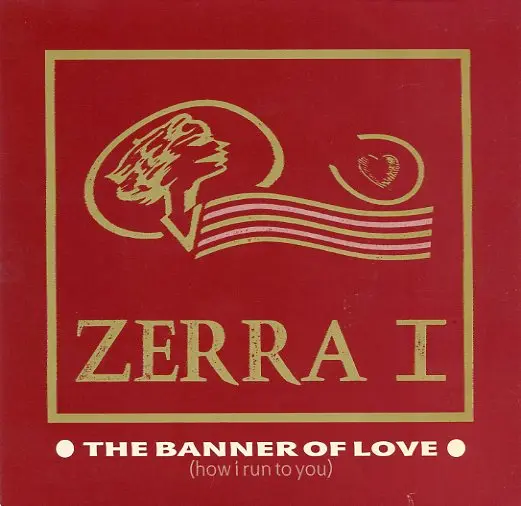 Second Vision followed on October 31, 1983 with “The Banner Of Love (How I Run To You),” backed with “Cry.” David Lord produced the single, and “The Banner Of Love (How I Run To You)” reached No. 33 on the UK Independent Singles Chart.
A. “The Banner Of Love (How I Run To You)” (Extended Version) (6:48)
B. “Cry” (5:48)
In early 1984, Korda Marshall cleared out for drummer Mike Mesbur.
Zerra I
 Zerra One released their self-titled debut album in December 1984 on Mercury.
Bell wrote the full ten-song program and held the center with lead voice and keyboards, while Grimminger’s guitar sits over Wyatt’s bass and Korda Marshall’s backbeat. Mercury carried the album across Europe under the Zerra I spelling and also circulated a five-track flexi sampler during the release cycle.
Zerra I opens in a grave register. “Mountains and Water” sets a slow, dramatic pulse under spectral keyboards and a vocal line pushed to full strain, while “Diaries” keeps that same dark pressure close to the surface. “Tumbling Down” hits harder through urgent phrasing and driving guitar force, then “I Feel It” holds the emotional pitch high inside a tighter song form. “Rain” cuts with scrappy guitar attack, “I Know” rises on a more open vocal climb, and “Nothing” drops into a hazier stretch where skewed synth detail and a lower vocal tone thicken the mood.
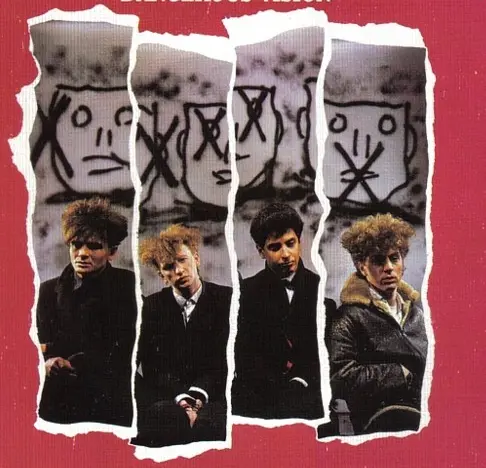 A1. “Mountains and Water” (4:40)
A2. “Tumbling Down” (3:42)
A3. “Diaries” (5:35)
A4. “I Feel It” (3:57)
A5. “The Other Side” (4:14)
B1. “Rain” (4:03)
B2. “I Know” (5:03)
B3. “Nothing” (3:34)
B4. “Young Love” (5:27)
B5. “Children” (5:38)
Zerra One recorded Zerra I at Utopia Sound Studios with producer Todd Rundgren and engineer Chris Anderson.
Bell supplied the painting credit, and Robert Mapplethorpe shot the sleeve photograph.
Mercury lifted “Ten Thousand Voices, Message From The Peoples” as the first single in 1984. The single reached No. 112 in the UK chart. Ian Taylor produced the alternative single version.
A. “Ten Thousand Voices, Message From The Peoples” (Alternative Version)
B. “Saoirse I Do Cheann”
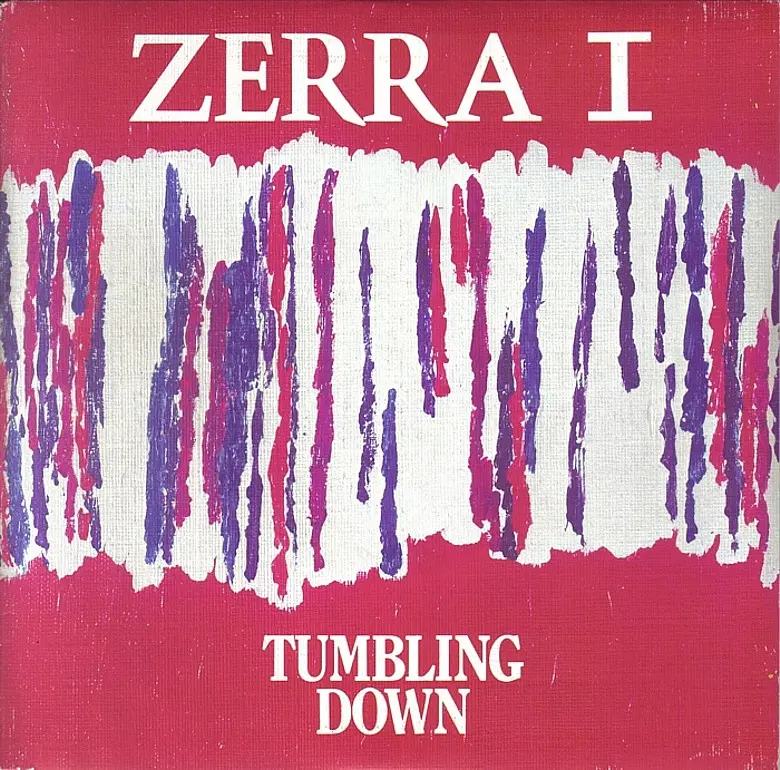 In September 1984, “Tumbling Down” became the second UK single in 7-inch and 12-inch formats. The 7-inch ran as “Tumbling Down” (b/w “Dangerous Vision”), while the 12-inch placed an extended version on the face.
A. “Tumbling Down” (Extended Version)
B. “Dangerous Vision”
“Mountains And Water” appeared as a UK 7-inch in January 1985 (b/w “I Know”). The single reached No. 152 in the UK chart.
Between albums
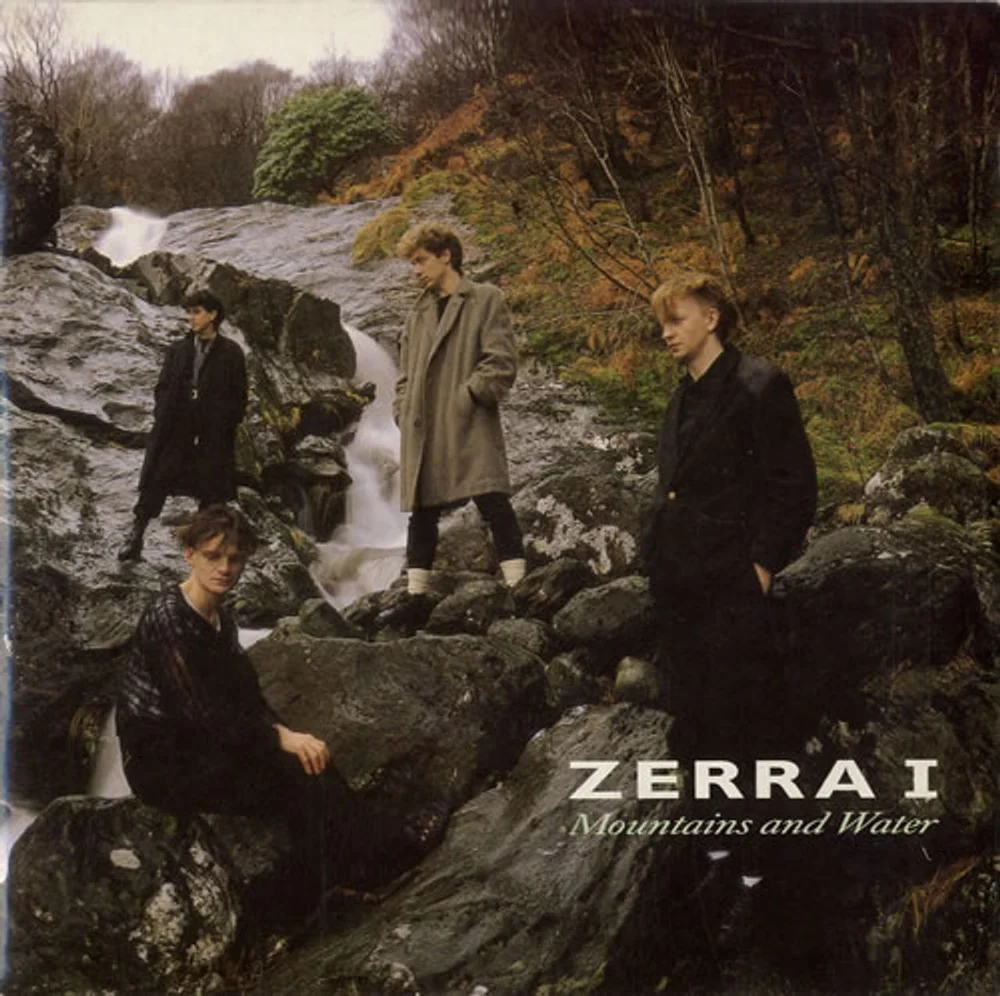 Mercury recut the debut for Canada in 1985 as Mountains and Water. The revised eight-track sequence dropped “I Feel It,” “Nothing,” and “Young Love,” inserted “Ten Thousand Voices,” and carried a new sleeve photograph by Laurie Lewis. The printed credits on that issue list Bell on vocals and keyboards, Grimminger on guitar, Wyatt on bass, and Mike Mesbur on drums, with Todd Rundgren on seven tracks and Ian Taylor on “Ten Thousand Voices.” The package includes a printed inner sleeve with special thanks to Robert Smith, Lol Tolhurst, Simon Gallup, Maria, John Lloyd, Peter Lawton, U2, Carol, Flip, Jeff, Chris, John Peel, Robin Gibson, John Wilde, family, friends, and everybody who made the record possible.
A1. “Tumbling Down” (6:34)
A2. “The Other Side” (4:14)
A3. “Diaries” (5:35)
A4. “Ten Thousand Voices” (3:40)
 B1. “Mountains and Water” (4:40)
B2. “Rain” (4:03)
B3. “I Know” (5:03)
B4. “Children” (5:38)
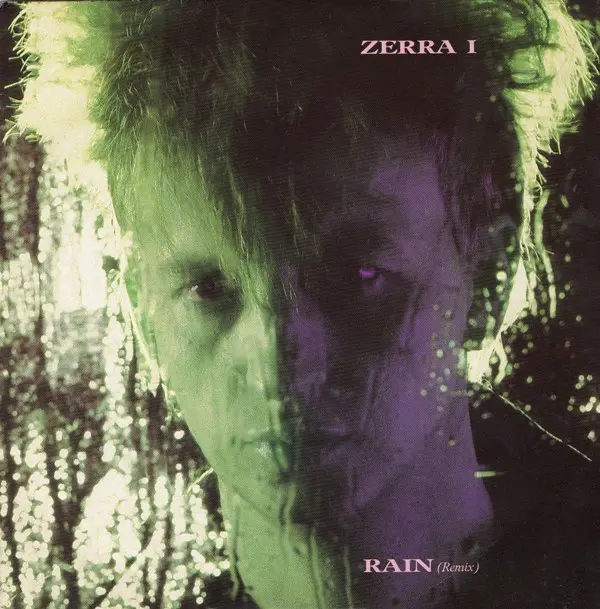
Mercury kept the catalog active in 1985 with “Rain” as a remix single. The 7-inch ran as “Rain” (b/w “Nothing”), and the 12-inch added “The Other Side” in a BBC recording. During the same stretch, Mesbur cleared for Korda Marshall, then Marshall and Wyatt both left before the second album took final shape. Eamo Doyle took the bass role, Bell and Grimminger remained in place, and the group contracted to a trio.
The Domino Effect
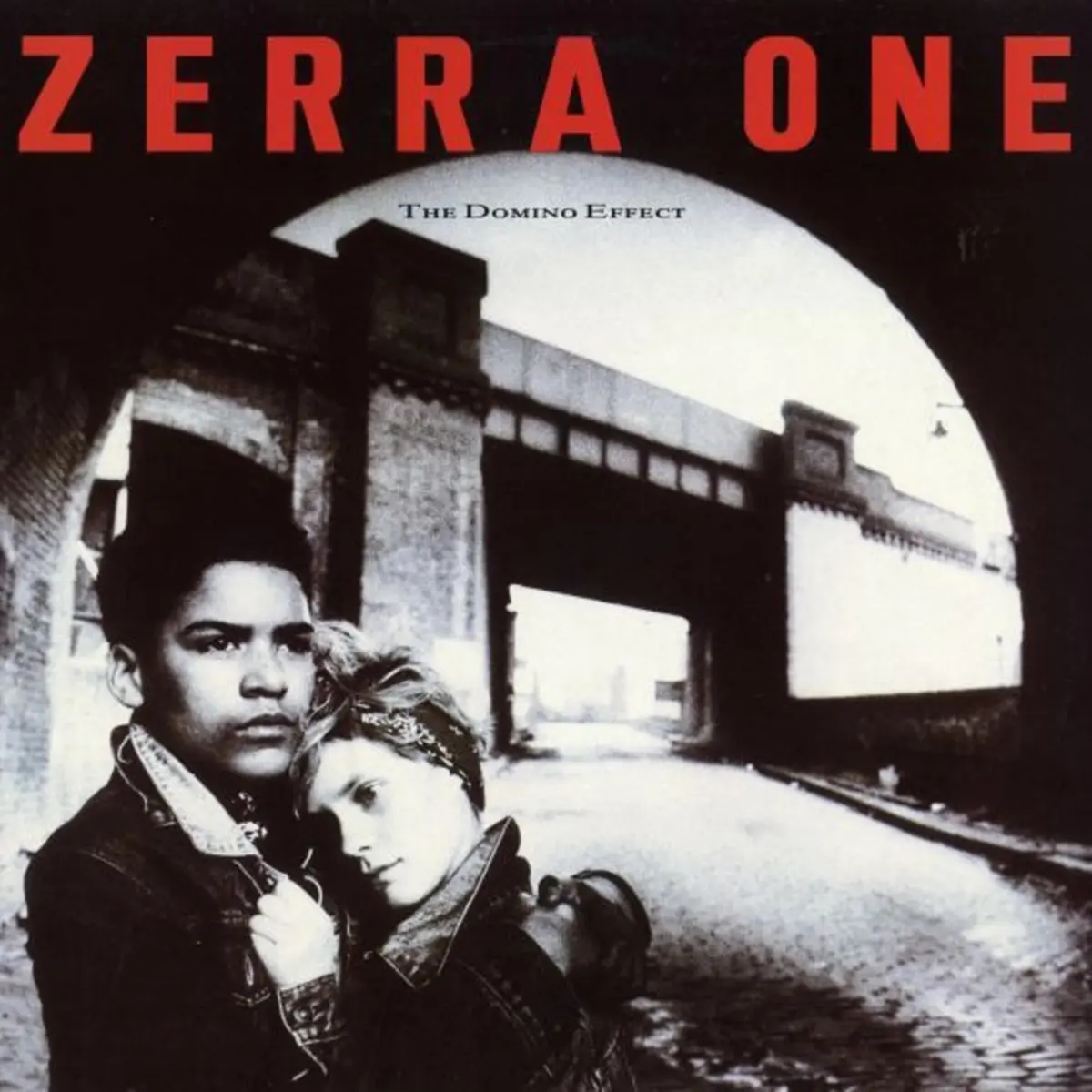 Zerra One released their second album, The Domino Effect, in January 1987 on Mercury.
Bell again holds the center on lead voice and keyboards, with Anto Drennan on guitar, Eamo Doyle on bass, and a drum chair split between Gavin Harrison and added players Pete Thomas and Mathew Letley. Peter Vettese and Richard Cottle expand the keyboard side, and London Community Gospel Choir with Ruby James, Suzanne Rattigan, and Sylvia Mason-James widen the vocal layer.
The Domino Effect shifts into a cleaner, brighter surface, with large guitar outlines, prominent synth lines, and female backing vocals spread across long song forms. “Rescue Me” drives hardest, with extra gloss and thicker guitar force, while “Hands Up” pushes upward through a hymn-like rise and a broader choral lift. “Forever and Ever” runs on a buoyant keyboard pulse and a repeated “walk away” refrain that keeps the song in steady motion, and “Heaven” closes the set in bright synth light with a slower, more reflective tone.
 A1. “Rescue Me” (4:04)
A2. “Domino Effect” (4:50)
A3. “I Know, I Feel, I Stand” (6:00)
A4. “Hands Up” (6:26)
B1. “Forever And Ever” (4:15)
B2. “Cry For You” (4:05)
B3. “All Forgiven” (5:35)
B4. “Guardian Angel” (4:34)
B5. “Heaven” (4:38)
Zerra One recorded The Domino Effect at Marcus, Air, Utopia, and Aosis in London with producer Barry Blue, engineers John Etchells and Nigel Walker, mixer Dave Bascombe, and added production and mixing from Tim Palmer on selected Bell productions.
Health & Efficiency designed the sleeve, and Simon Fowler supplied the photography.
Mercury issued “Rescue Me” in October 1985 as the first advance single. The release reached No. 82 in the UK chart.
A. “Rescue Me”
B1. “No Longer”
B2. “Connor Pass”
“Forever and Ever” appeared as the second advance single in May 1986. The 12-inch preview copy paired the album cut with two non-album titles.
A. “Forever And Ever” (Eternity Mix)
B1. “You Are My Friend”
B2. “Golden”
In February 1987, “Domino Effect” became the album’s third and final single.
A. “Domino Effect” (Album Version)
B1. “Stronger Tonight”
B2. “The Emigrant”
Postlude
In late 1986, Zerra One opened for Ultravox on the latter’s U-Vox tour. The band then turned toward an American push during 1987 and closed its run later that year.
Discography:
- Zerra I (1984)
- The Domino Effect (1986)
Sources:
Artist/Album Pages:
Palass was a Belgian hard-rock/metal band that cut two singles circa 1980/81 on Robert Derycke Pro...
Minority Band was an American soul-funk septet from New Jersey that released the 1980 album Journe...
Magnum was an English hard-rock band from Birmingham that released four studio albums and a live d...
WC3 was a French new wave band that cut a 1979 single on F.L.V.M., followed by three titles on CB...
Ekatarina Velika was a Yugoslav new wave band from Beograd in modern-day Serbia. Between 1985 and ...
Stevie Wonder is an American R&B musician, vocalist, songwriter, and producer who began recordin...
Dave Davies (born Feb. 3, 1947) is an English guitarist, songwriter, and singer who played in The ...
Ronnie Laws is an American jazz-funk flutist and saxophonist who played in the 1972/73 lineup of E...
Steve Hackett is an English classical/rock guitarist with a career in music that dates back to 1970....
Didier Bocquet is a French electronic musician who released the 1977 album Eclipse on Le Kiosque D...
Tomorrow's Edition was an American soul-funk band that cut a pair of 1975/76 singles for Gang Reco...
Blitzkrieg was an English metal band that first emerged with the 1981 NWOBHM single "Buried Alive....