

Roy Harper (born June 12, 1941) is an English folk-rock singer/songwriter and guitarist from Rusholme, Greater Manchester, who released an album apiece on Strike, CBS, and Liberty, followed by a run of nine studio albums between 1970 and 1980 on Harvest. The subsequent decades yielded further albums on EMI, Science Fiction, and Awareness Records.
His definitive works include Stormcock, HQ, and the live set Flashes from the Archives of Oblivion, which showcase his distinctive vocal phrasing and extended acoustic compositions. Notable songs include “Me and My Woman,” “The Same Old Rock,” “When an Old Cricketer Leaves the Crease,” and “Hope.” Harper recorded with Jimmy Page (Jugula), David Gilmour, and Kate Bush, extending his influence across the British art-rock landscape.
Early Life
Harper was born on June 12, 1941, in Rusholme, outer Manchester. His mother, Muriel, died when he was three weeks old. From age six, he was raised in St Annes on Sea by his father and stepmother, whose fundamentalism stirred his later atheism.
At age 12, he took up poetry and started listening to blues and skiffle music. He formed his first group, De Boys, at age 14 with his two brothers, David and Harry.
In 1956, 15-year-old Harper joined the Royal Air Force to become a pilot. After two years, he lost interest in the discipline and feigned madness to get a discharge. Instead, he was given electroconvulsive therapy and sent to the Lancaster Moor Mental Institute, which he escaped after one day. He spent the early 1960s busking around London, Europe, and Northern Africa.
Harper immersed himself in music, absorbing blues (Leadbelly, Big Billy Broonzy), folk (Woody Guthrie), jazz (Miles Davis), and classical (Sibelius). His lyrics drew from 19th century Romantics (Shelley, Keats) and recent Beat poets (Kerouac). In 1965, he got a residency at Les Cousins, a folk club in London’s Soho district, where he alternated nights with fellow up-and-comers Bert Jansch and John Renbourn.
The Sophisticated Beggar
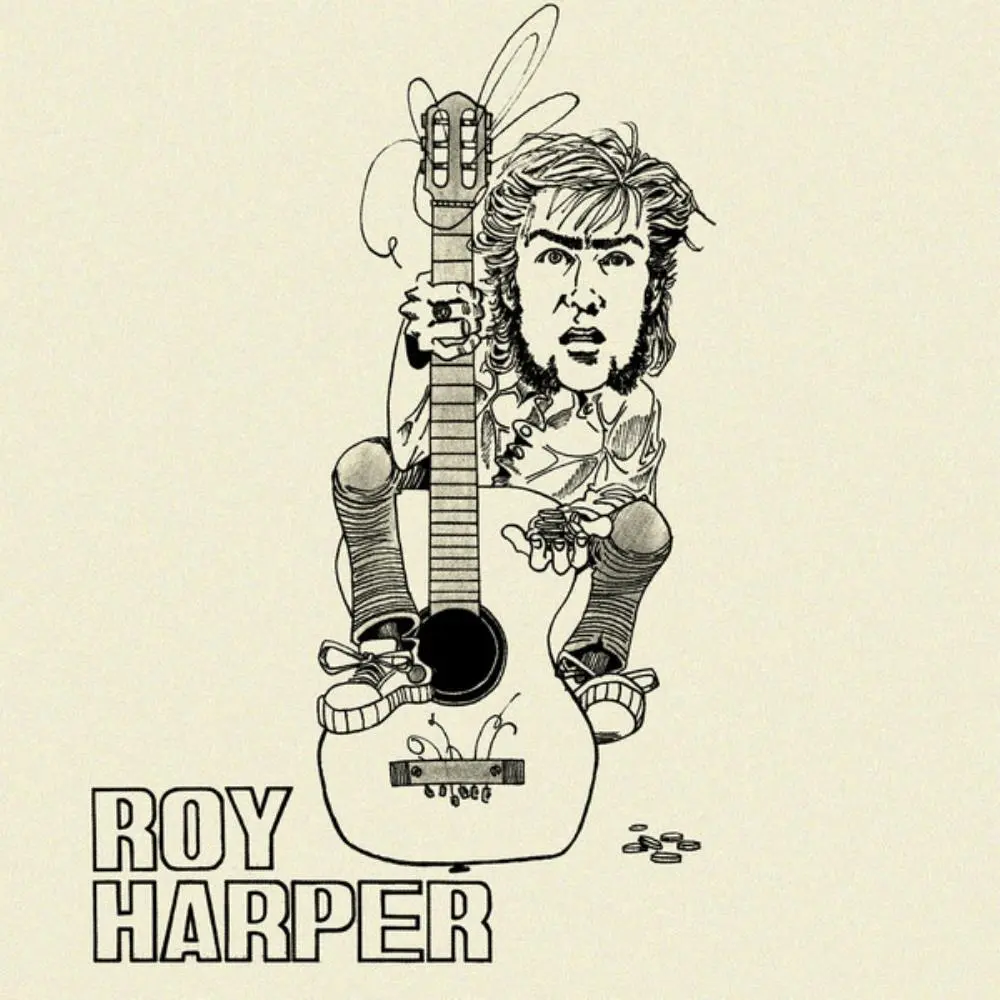 Roy Harper released his debut album, The Sophisticated Beggar, in 1966 on Strike.
Harper’s debut documents his formative years as an unaccompanied folk singer steeped in the lyrical individualism of the British counterculture. Recorded on primitive equipment with few overdubs, the album captures his earliest acoustic compositions and spoken-word pieces in raw, demo-like form.
Harper handles vocals and acoustic guitar throughout, supporting his declamatory and confessional delivery with steady fingerpicking and shifting tempos. The skeletal arrangements include light second guitar on two tracks by cover illustrator Lon Goddard, who lived with Harper during this period. Liner notes suggest possible uncredited contributions by John Renbourn and Ritchie Blackmore.
Harper wrote all thirteen tracks, which range from caustic critiques of authority to whimsical portraits and meditative laments. The title track sets the album’s tone with biting sarcasm. “October the Twelfth” and “Forever” offer plaintive, modal folk balladry, while “Committed” adds an early rock edge with electric guitar. Several songs serve as poetic sketches rather than conventional verse-chorus forms.
“China Girl” opens with a slow alternation of sparse chord figures and suspended phrasing that ebbs into an accelerating cadence. “Goldfish” cycles through picked arpeggios in short bursts that underscore the narrator’s fleeting affection. “Blackpool” unfolds across suspended minor voicings and shifting meters, framing a somber tale of regret. On “Sophisticated Beggar,” Harper alternates accusatory spoken lines with slow, arid strums. The closer, “Committed,” rides a jagged, riff-based rhythm that contrasts the otherwise acoustic set.
A1. “China Girl” (3:29)
A2. “Goldfish” (2:44)
A3. “Sophisticated Beggar” (5:03) — sarcastic rebuke of social hypocrisy
A4. “My Friend” (4:03)
A5. “Big Fat Silver Aeroplane” (3:38)
A6. “Blackpool” (5:02) — bleak travelogue from a disillusioned narrator
A7. “Legend” (3:40)
B1. “Girlie” (2:59)
B2. “October the Twelfth” (5:48) — yearning lament couched in seasonal metaphor
B3. “Black Clouds” (4:27)
B4. “Mr. Stationmaster” (3:00)
B5. “Forever” (3:24)
B6. “Committed” (3:12) — riff-driven outburst featuring electric guitar by Ritchie Blackmore (uncredited)
Sessions occurred in mid-to-late 1966 on a Revox tape machine with producer Pierre Tubbs (credited as Peter Richards). Most recordings took place informally in Harper’s residence.
The Sophisticated Beggar features cover art by Lon Goddard, who illustrates Harper in cloaked silhouette, echoing the title’s theme of outsider dignity and poetic detachment.
The album was distributed in a limited pressing and has since appeared under alternate titles (Return of the Sophisticated Beggar) with altered sequencing. Harper receives royalties only for the official Science Friction reissue.
Come Out Fighting Ghengis Smith
 Roy Harper released his second album, Come Out Fighting Ghengis Smith, in 1967 on CBS.
His first major-label release, Come Out Fighting Ghengis Smith expands Harper’s format from sparse acoustic folk to orchestrated, multi-sectioned song structures. Producer Shel Talmy and arranger Keith Mansfield guided the project toward a lusher sound, culminating in the ambitious 11-minute suite “Circle.” The album reflects Harper’s early push beyond the folk club circuit into broader, modernist terrain.
Harper sings and plays acoustic guitar across all tracks, joined on several cuts by drummer Laurie Allan and orchestral elements arranged by Mansfield. Mansfield’s additions range from chamber strings to horn flourishes, underscoring Harper’s jagged, modal phrasings and dynamic tempo shifts.
Harper wrote all nine songs, including the non-album single “Life Goes By,” recorded at the same sessions. “You Don’t Need Money,” later retitled for sampler use, became an early signature and appeared on The Rock Machine Turns You On. Bert Jansch contributed liner notes, reflecting mutual respect between Harper and the folk elite, even as Harper pursued more experimental formats.
“Freak Street” opens in 6/8 with ringing suspended chords and brisk strumming beneath Harper’s clipped syllables and shifting rhythms. “What You Have” pivots from intricate fingerpicking to a brisk vocal meter over spare orchestration. “Circle” unfolds in episodic movements: street ambience, shouted verse, free-time acoustic interludes, and rhythmic spoken monologue. The title track begins with nimble runs and accelerates into chaotic falsetto verses, capped with cascading repetitions and psychedelic modulation.
A1. “Freak Street” (3:06)
A2. “You Don’t Need Money” (2:27) — exuberant paean to bohemian detachment
A3. “Ageing Raver” (4:11)
A4. “In a Beautiful Rambling Mess” (2:51) — pastoral reverie disrupted by shifting tempos and dense imagery
A5. “All You Need Is” (5:49)
A6. “What You Have” (5:16) — staggered phrasing over fast, rhythmic fingerpicking
B1. “Circle” (10:40) — multi-part suite evoking memories, noise, and youthful dislocation
B2. “Highgate Cemetery” (2:22)
B3. “Come Out Fighting Ghengis Smith” (8:58) — allegorical centerpiece with rapid-fire shifts in tempo and tone
Sessions occurred in mid-1967 in London with producer Shel Talmy and arranger Keith Mansfield. Harper later expressed mixed views on the rushed process but acknowledged Talmy’s sympathetic handling of difficult material.
Come Out Fighting Ghengis Smith features multiple cover variants across its reissues, with the 1977 CBS reissue retitled The Early Years. The original pressing includes liner notes by Bert Jansch.
CBS promoted the album with the single “Life Goes By” (b/w “You Don’t Need Money”), produced by Talmy with orchestration by Mansfield. Neither side appears on the original LP, and “Life Goes By” remains uncompiled.
Folkjokeopus
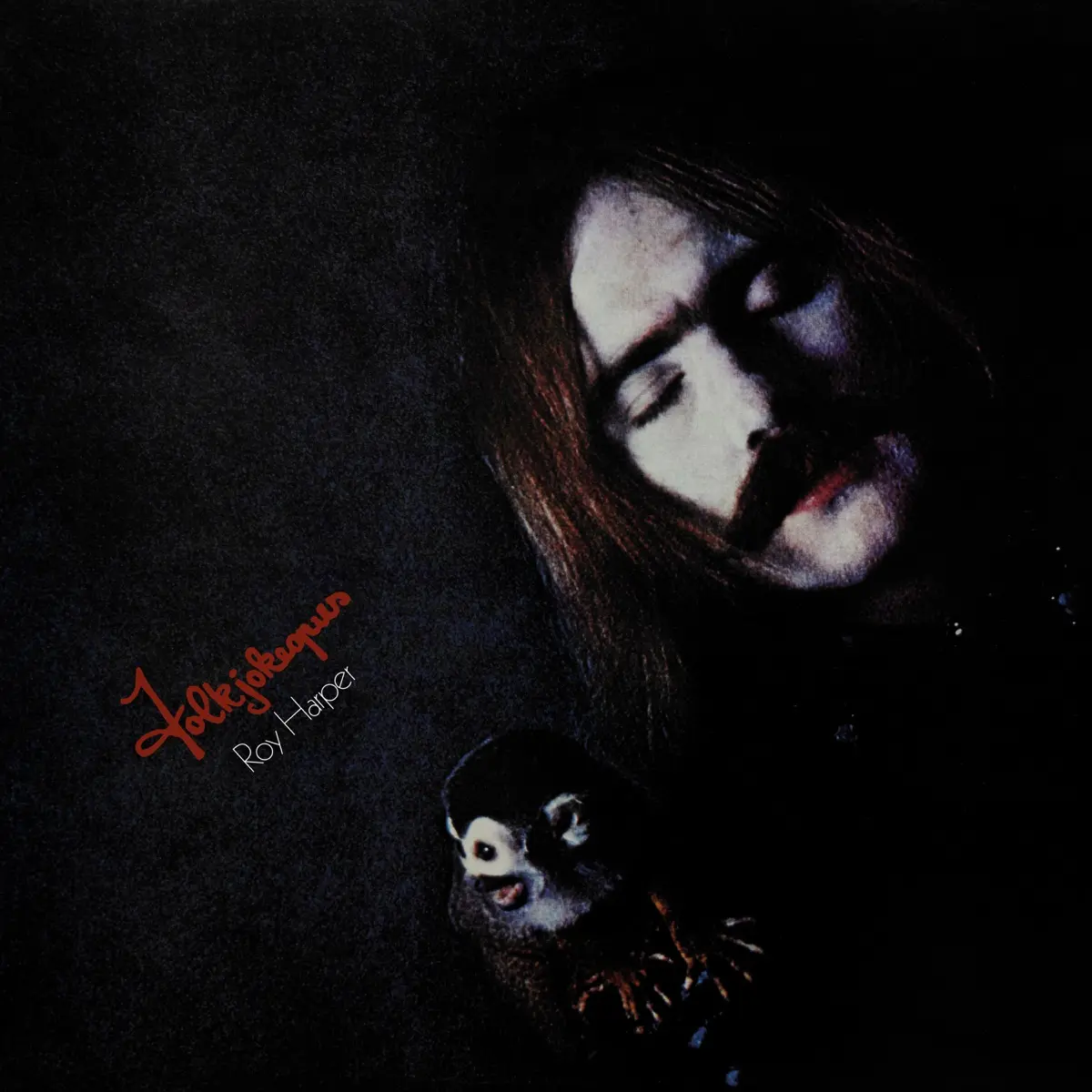 Roy Harper released his third album, Folkjokeopus, on June 5, 1969, on Liberty.
His third album marked a shift from song-based folk material to a broader conceptual structure that fused long-form narrative, poetic density, and experimental textures. Harper paired again with producer Shel Talmy, but unlike the structured orchestration on Come Out Fighting Ghengis Smith, Folkjokeopus allows more improvisational freedom and personal expression, culminating in the 18-minute “McGoohan’s Blues.”
Harper performs vocals and acoustic guitar across all tracks. Supporting musicians include pianist Nicky Hopkins, percussionist Clem Cattini, bassist “Russ,” and experimental arranger Ron Geesin. Jane Scrivener contributes backing vocals on the opener. The album also employs tape effects and sitar, expanding its timbral range beyond conventional folk instrumentation.
Harper wrote all eight songs. The UK version includes “One for All,” a solo guitar piece dedicated to Albert Ayler. The US edition substitutes two tracks from the Folkjokeopus sessions: “Zaney Janey” and “Ballad of Songwriter.” “McGoohan’s Blues” references The Prisoner television series and opens with a line addressed to Harper’s son, Nick. The album spans romantic ballads, surreal vignettes, and satirical interludes that reveal Harper’s growing ambition as both writer and performer.
“Sgt. Sunshine” launches the set with a bright ascending motif and double-time strumming over alternating major–minor phrasing. “She’s the One” cycles through a scolding second-person narrative with shifting vocal dynamics, peaking in sharp falsetto. “In the Time of Water” features reversed effects and modal sitar phrasings that dissolve into open cadences. “One for All” unspools as a rubato guitar étude, while “McGoohan’s Blues” stretches through repeated strophic verses with abrupt tempo shifts, chord modulations, and a full-band finale after minute ten.
A1. “Sgt. Sunshine” (3:04) — buoyant folk-pop opener with layered backing vocals and bright chord progressions
A2. “She’s the One” (6:55) — impassioned outburst addressing a neglectful friend and his overlooked partner
A3. “In the Time of Water” (2:16) — layered sitar, tape effects, and acoustic textures
A4. “Composer of Life” (2:26) — whimsical sketch in the mold of early ISB
A5. “One for All” (8:11) — extended acoustic instrumental dedicated to saxophonist Albert Ayler
B1. “Exercising Some Control” (2:50) — brisk meter and irony-laced lyrics
B2. “McGoohan’s Blues” (17:55) — extended protest monologue that builds to full-band crescendo
B3. “Manana” (4:20) — lilting singalong with deliberately trite optimism
Sessions occurred in early 1969 in London with producer Shel Talmy. Ron Geesin contributed arrangements; Nicky Hopkins, Clem Cattini, and Jane Scrivener appear on select tracks.
Folkjokeopus features art direction by Woody Woodward and photography by Ray Stevenson. The US edition on World Pacific alters the tracklist to include “Zaney Janey” and “Ballad of Songwriter” in place of “One for All.”
Flat Baroque and Berserk
 Roy Harper released his fourth album, Flat Baroque and Berserk, on June 15, 1970, on Harvest.
The album marks Harper’s first sustained venture into fully arranged studio recording after three prior albums of lo-fi and often fragmentary folk material. It inaugurates his decade-long relationship with Harvest and establishes the balance between barbed sociopolitical commentary and introspective balladry that would define his 1970s output.
Harper sings and plays acoustic guitar throughout, with sparse contributions from arranger David Bedford (strings), Keith Emerson (keyboards), Lee Jackson (bass), Brian Davison (drums), Tony Visconti (recorder), and Skaila Kanga (harp). Harper also adds electric guitar on the climactic closer.
All twelve tracks are written by Harper, with the exception of “I Hate the White Man,” “Francesca,” and “Hell’s Angels,” which credit his alias H. Ash on the original LP. Bedford’s orchestration frames “Another Day,” while Emerson, Jackson, and Davison support Harper on “Hell’s Angels,” the only full-band track.
“Don’t You Grieve” opens with a pointed vocal in the voice of Judas Iscariot over brisk flatpicking. “I Hate the White Man” stretches over eight minutes as a stark, word-heavy declamation, anchored by low-strung acoustic lines and growing vocal intensity. “Another Day” moves between two emotional perspectives: first-person regret and second-person yearning, culminating in a resigned parting. “Tom Tiddler’s Ground” contrasts nimble fingerstyle with recorder filigree and ambiguous lyrical turns. “Hell’s Angels” disrupts the album’s acoustic flow with a snarling wah-wah riff, Emerson’s Hammond interjections, and Harper’s slurred, manic laughter.
A1. “Don’t You Grieve” (5:43) — bitter rejection cast as a dialogue between Judas and Christ
A2. “I Hate the White Man” (8:03) — searing lament for colonialist violence and cultural guilt
A3. “Feeling All the Saturday” (1:56) — gentle vignette of suburban longing
A4. “How Does It Feel?” (6:29) — introspective confessional with poetic enjambment
A5. “Goodbye” (5:42) — disillusioned farewell built on steady fingerpicking and tonal ambiguity
B1. “Another Day” (2:57) — expresses the sadness of a missed connection with a past lover
B2. “Davey” (1:30) — acoustic tribute to Harper’s brother
B3. “East of the Sun” (3:02)
B4. “Tom Tiddler’s Ground” (6:48) — surrealist sequence with recorder and broken rhymes
B5. “Francesca” (1:19) — fleeting fragment of affection
B6. “Song of the Ages” (3:52) — modal ballad with harp and open voicings
B7. “Hell’s Angels” (7:46) — electric blowout backed by The Nice
Sessions occurred in August and September 1969 at Abbey Road Studios and Les Cousins in London with producer Peter Jenner and engineers Phil McDonald and Neil Richmond.
Flat Baroque and Berserk features cover art by Lon Goddard with photography by John McKenzie. The illustration depicts a medieval-styled minstrel amid swirling baroque motifs, referencing both the title and Harper’s hybrid folk–beat poetry aesthetic.
Harvest issued “Don’t You Grieve” (b/w “Song of the Ages”) as a single in January 1970. “Another Day” was later covered by Kate Bush and Peter Gabriel in 1979 and by This Mortal Coil in 1984. Harper’s own live version appears on Flashes from the Archives of Oblivion.
Later in 1970, Led Zeppelin paid tribute to Harper with “Hats Off to (Roy) Harper,” the closing track on Led Zeppelin III.
Stormcock
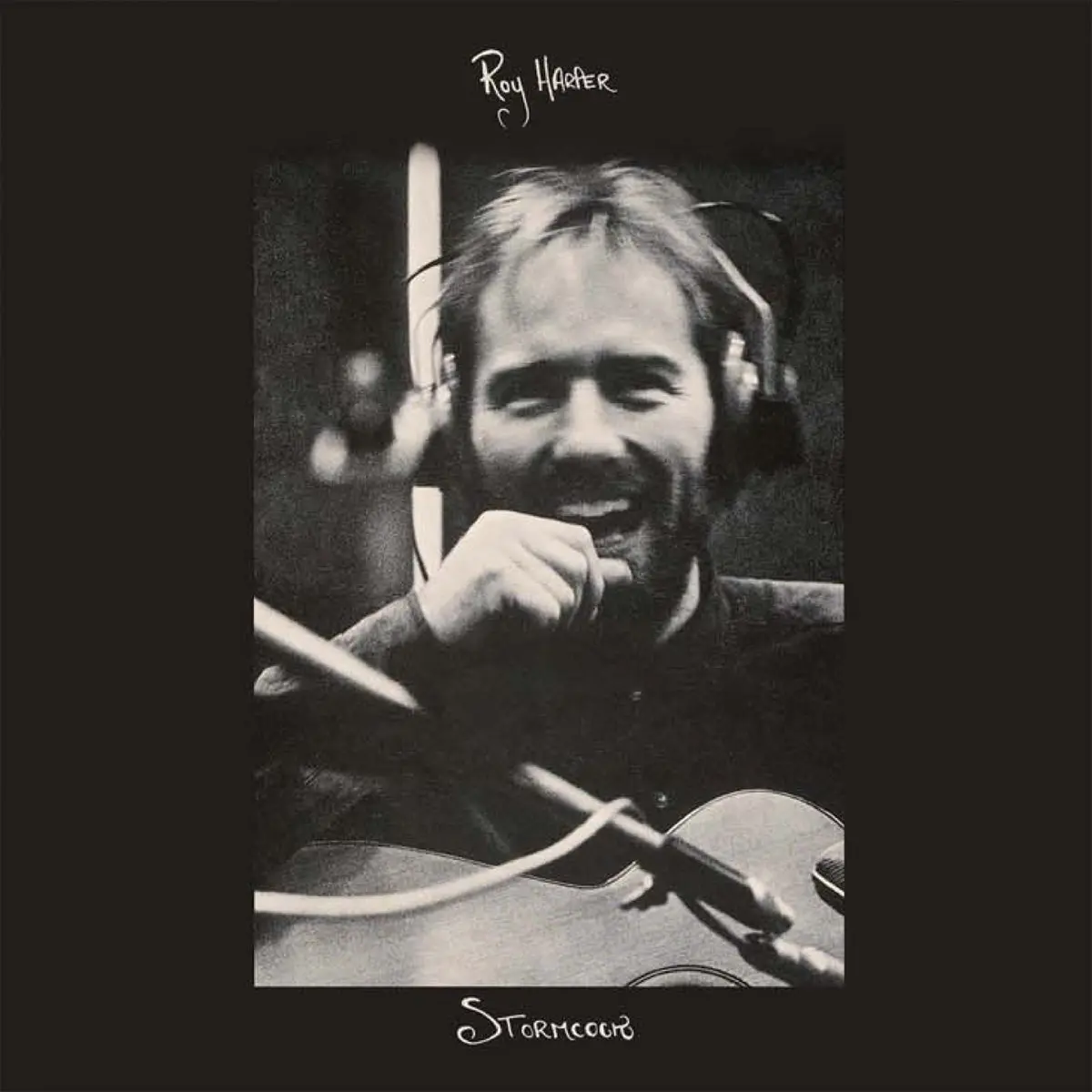 Roy Harper released his fifth album, Stormcock, in May 1971 on Harvest.
The album consists of four long-form tracks that deepen the compositional scope introduced on Flat Baroque and Berserk. It explores extended lyrical forms, sudden rhythmic pivots, and multi-movement structures. Harper augments his voice and acoustic guitar with orchestral charts by David Bedford and guest guitar from Jimmy Page, credited pseudonymously due to contractual constraints.
Harper handles all vocals and 6- and 12-string acoustic guitars, plus piano on the final track. Bedford contributes Hammond organ and arranges strings on “Me and My Woman.” Page plays second acoustic guitar on “The Same Old Rock,” where his lines alternate and converge with Harper’s. All instrumentation remains acoustic aside from subtle studio treatments and Bedford’s brief electric organ presence.
Harper wrote all four songs. Each track functions as a thematic suite: “Hors d’Oeuvres” merges social critique with barbed wit, “The Same Old Rock” mounts a poetic indictment of organized belief, “One Man Rock and Roll Band” rails against media violence, and “Me and My Woman” sets romantic uncertainty against harmonic upheaval.
“Hors d’Oeuvres” opens with alternating clusters of fingerpicked figures beneath elongated verse, building vocal pressure before resolving into abrupt changes of meter and cadence. “The Same Old Rock” plays out as a 12-minute acoustic dialogue between Harper and Page, with long periods of cross-picked interplay interrupted by strophic verses, harmonic suspensions, and Page’s modal solo. “One Man Rock and Roll Band” rides a pulse of clipped wah-filtered guitar and vocal declamation, developing a tense, syncopated momentum. “Me and My Woman” unfolds across multiple time shifts and tonal contrasts, as layered string parts ebb and rise around Harper’s suspended chords and melismatic phrasing.
A1. “Hors d’Oeuvres” (8:37) — critiques capital punishment and social hypocrisy through layered narrative voice
A2. “The Same Old Rock” (12:24) — rejects institutional faith in favor of individual transcendence
B1. “One Man Rock and Roll Band” (7:23) — rails against media-fed violence and glorified destruction
B2. “Me and My Woman” (13:01) — traces a volatile romantic arc through orchestral and structural transformation
Sessions occurred between July 1 and December 20, 1970, at Abbey Road Studios in London with producer Peter Jenner and engineers Phil McDonald, Peter Bown, John Barrett, Nick Webb, Alan Parsons, John Leckie, and Richard Imrie.
Stormcock features cover photography by Richard Imrie. The title refers to the mistle thrush — known for singing during storms — symbolizing Harper’s lyrical persistence amid disillusionment.
Harvest issued no singles from Stormcock. The album remained a critical favorite and underwent digital remastering in 2007 with restored credits for Jimmy Page.
Lifemask
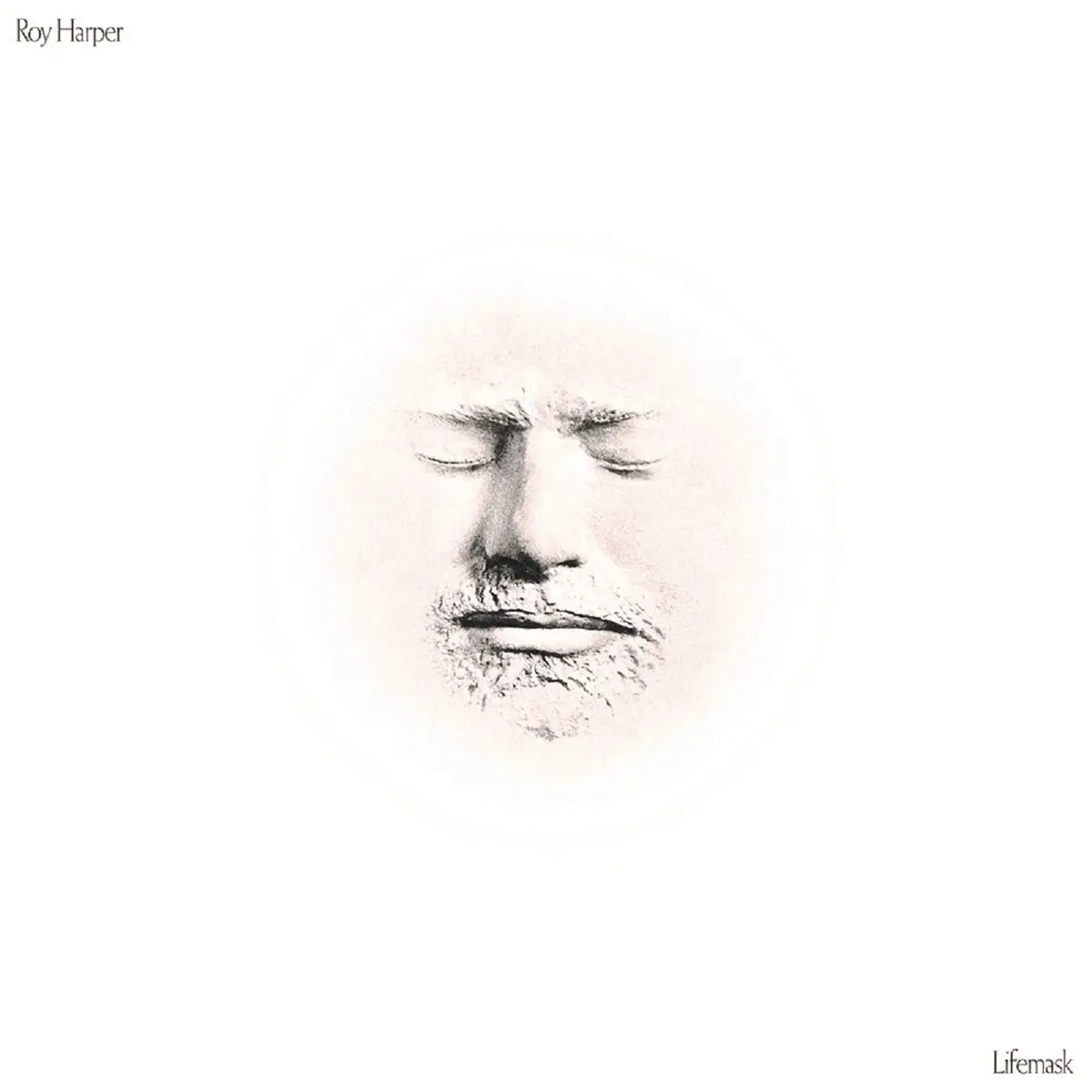 Roy Harper released his sixth album, Lifemask, in February 1973 on Harvest.
The album bridges the expansive acoustic suites of Stormcock with denser, multi-instrumental arrangements. Its second side consists of the 23-minute “The Lord’s Prayer,” conceived during a health crisis and framed as Harper’s artistic last testament. The first side gathers five compact tracks, several of which appeared in alternate versions in the film Made, where Harper played the role of a self-destructive musician.
Harper handles guitar, bass, harmonica, bells, synthesizer, and vocals across the album. Jimmy Page adds lead acoustic guitar to “Bank of the Dead” and “The Lord’s Prayer.” Rhythm support includes Brian Odgers (bass), Laurie Allan (drums), and Tony Carr (percussion), with Ray Warleigh contributing flute to the closing suite. “Highway Blues” employs a layered electric/acoustic blend, while “South Africa” and “Little Lady” explore tonal contrast through harmonica and reverb.
Harper wrote all six tracks. “Bank of the Dead” and “Little Lady” were used in Made with alternate lyrics. “South Africa,” originally released as “Living Here Alone,” gained retrospective exposure through Harvest compilations. “The Lord’s Prayer” unfolds in five titled sections with internal modal repetition, poetic motifs, and sectional development.
“Highway Blues” opens with jagged electric–acoustic interplay and asymmetric phrasing before relaxing into modal drift. “All Ireland” compresses social commentary into two minutes of dry wit and rhythmic lilt. “Little Lady” juxtaposes low vocal phrasing with echo-treated acoustic lines and shifting time. “Bank of the Dead” rides syncopated strums and a terse vocal rhythm while Page interjects sharp fills. “South Africa” floats on suspended voicings and yearning verses, with Harper shifting focus between distant lands and imagined futures. “The Lord’s Prayer” opens with a spoken surrealist prelude before flowing through linked acoustic movements, punctuated by poetic stanzas, brass-touched transitions, and a final diminuendo.
A1. “Highway Blues” (6:34) — recounts restless travels through shifting rhythmic cells
A2. “All Ireland” (2:52) — reflects on Ireland’s cultural identity through sharp brevity
A3. “Little Lady” (4:19) — explores romantic regret in subjective, psychedelic detail
A4. “Bank of the Dead” (3:13) — critiques shallow image culture through rapid lyrical turns
A5. “South Africa” (4:06) — conjures longing for unknown places and future selves
B1. “The Lord’s Prayer” (22:55) — constructed in five parts, interweaving poetic reflection, modal repetition, and acoustic suite form
Sessions occurred in 1972 at Abbey Road Studios in London with producer Peter Jenner and engineers John Leckie, Phil McDonald, and Nick Webb.
Lifemask features a fold-out gatefold cover designed to resemble Harper’s death mask. When opened, the mask parts reveal his living image fixed in an unblinking stare, symbolizing survival and reawakening.
Harvest issued “Bank of the Dead” (b/w “Little Lady”) as a single, sourced from the Made soundtrack with alternate lyrics and edits. In 1987, Awareness Records reissued the album on cassette with four bonus tracks from earlier singles and US editions.
Valentine
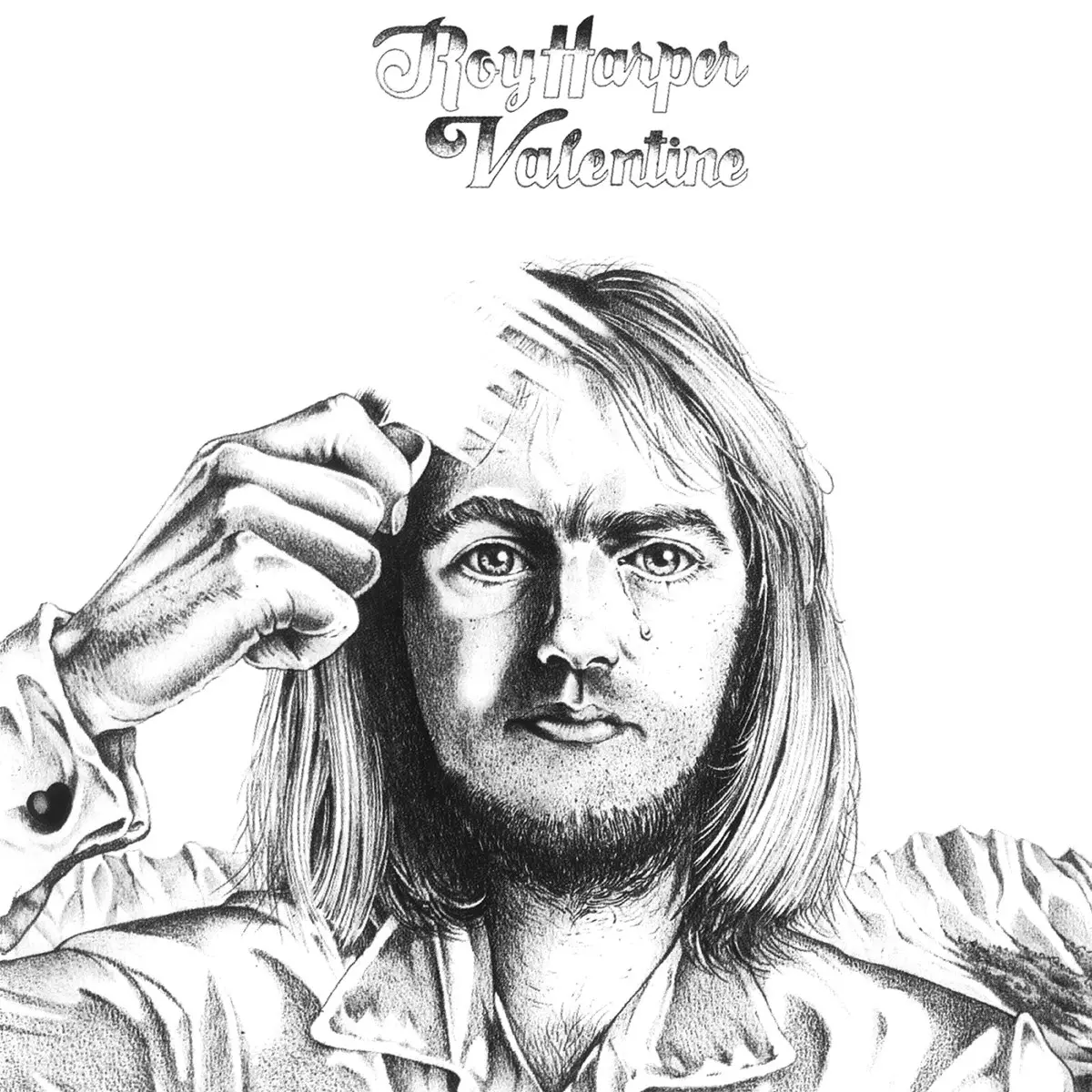 Roy Harper released his seventh album, Valentine, on February 14, 1974, on Harvest.
The album compiles ten love- and lust-themed songs written during the Stormcock and Lifemask years but shaped with more compact structures and stylistic variety. In contrast to the suite-based compositions of its predecessors, Valentine favors standalone vignettes that range from orchestral ballads to electric rock, surreal jazz, and folk fingerpicking, unified by Harper’s lyrical volatility.
Harper sings and plays guitar throughout, joined by longtime collaborator David Bedford, who arranged strings on five tracks. Jimmy Page appears on “Male Chauvinist Pig Blues” alongside Keith Moon (drums) and Ronnie Lane (bass). Max Middleton plays piano on “Acapulco Gold,” and Ian Anderson contributes flute to the studio version of “Home” (1989 bonus track). The core rhythm section includes Pete Sears, Marty Simon, Steve Broughton, and Tim Walker.
Harper wrote nine of the ten original album tracks. “North Country” adapts Bob Dylan’s “Girl from the North Country” in new arrangement and phrasing. The centerpiece “Twelve Hours of Sunset” inspired Bedford’s BBC-commissioned choral suite of the same name, performed at the 1975 Proms. “Commune” and “Che” developed into Harper live staples. The album’s reissue includes “Home” and two live tracks from Flashes from the Archives of Oblivion.
“Forbidden Fruit” opens with gentle cyclical phrasing and layered vocals over diatonic acoustic lines. “Male Chauvinist Pig Blues” bursts with staccato riffing and combative lyrics over a rock rhythm section. “I’ll See You Again” builds from soft arpeggios into an orchestrated crescendo shaped by Bedford’s harmonic scaffolding. “Twelve Hours of Sunset” threads polytonal vocals and chromatic horn textures through two extended peaks. “Acapulco Gold” interweaves jazz piano voicings and tempo rubato phrasing with surrealist lyrics. “Commune” contrasts plucked harmonics and voice-lead shifts with soft string patterns and modulating chorus tags. “Che” rides Spanish-style modal runs through fast-picked tremolos. The final three songs close on quieter, reflective tones, ending with “Forever,” a reprise of Harper’s 1966 debut closer.
A1. “Forbidden Fruit” (2:35) — cloaks a morally fraught love lyric in delicate guitar voicings
A2. “Male Chauvinist Pig Blues” (3:36) — lampoons masculine ego through electric attack and shouted phrasing
A3. “I’ll See You Again” (4:58) — pledges affection through rising cadences and string counterlines
A4. “Twelve Hours of Sunset” (5:06) — contemplates impermanence through vocal layering and orchestral tension
A5. “Acapulco Gold” (4:06) — drifts through dreamlike imagery over chromatic jazz piano
B1. “Commune” (4:34) — dissects emotional paradox over harmonic shifts and circular motifs
B2. “Magic Woman (Liberation Reshuffle)” (6:35) — parodies romantic tropes with distorted guitar and carnival rhythms
B3. “Che” (3:04) — instrumental tribute marked by flamenco inflections
B4. “North Country” (4:35) — adapts Dylan’s lyric into slower phrasing and modal guitar
B5. “Forever” (2:52) — reprises Harper’s debut finale with matured tone and new voicings
Sessions occurred in 1973 at Abbey Road Studios in London with producers Peter Jenner and Roy Harper and engineer John Leckie.
Valentine originally featured a pencil-drawn self-portrait by Joe Petagno (Hipgnosis) depicting Harper erasing himself with a rubber. Reissues altered the cover with new portraits by Harper’s wife and later by James Edgar before reverting to the original artwork.
Harvest issued no singles from Valentine, but several tracks (“Commune,” “Twelve Hours of Sunset”) became concert fixtures and compilation staples. Bedford’s 1975 Proms adaptation of “Twelve Hours” premiered with the BBC Symphony and vocal chorus.
Flashes From the Archives of Oblivion
In 1974, Roy Harper released the live double-album Flashes From the Archives of Oblivion.
The double album collects live material from multiple UK concerts and captures Harper’s solo acoustic setpieces alongside ensemble performances. Two songs stem from his February 14, 1974, Rainbow Theatre event, dubbed the Valentine’s Day Massacre, where Harper was joined by Jimmy Page, John Bonham, Keith Moon, David Bedford, Ronnie Lane, and Max Middleton. Though not credited, Robert Plant introduced the concert. Harper’s young son Nick briefly appears, sharing knock-knock jokes with Moon. The LP also sparked controversy for its cover, which depicts Harper nude save for Manchester City football socks, prompting a strike among female EMI workers.
Harper performs all vocals and guitars. The arrangements emphasize his rhythmic strumming, vocal elongations, and unscripted transitions. The set alternates between sardonic monologues, lyrical vignettes, and extended pieces with vocal reverb and harmonic delay.
All songs are written by Harper. “One Man Rock & Roll Band” and “Highway Blues” serve as showpieces for his live layering techniques, while “Me and My Woman” unfolds in a stretched and dynamic version. “Twelve Hours of Sunset” and “South Africa” retain their studio structures but benefit from intensified phrasing. The two-part appearance of “Home” (one studio, one live) frames the album with introspective counterpoint. Spoken interludes and audience banter contribute to the album’s informal tone.
A1. “Home” [Studio version]
A2. “Commune”
A3. “Don’t You Grieve”
A4. “Twelve Hours of Sunset”
A5. “Kangaroo Blues”
B1. “All Ireland”
B2. “Me and My Woman”
B3. “South Africa”
C1. “Interference” (courtesy Nick Webb)
C2. “Highway Blues”
C3. “One Man Rock & Roll Band”
D1. “The Great Divider”
D2. “Another Day”
D3. “M.C.P. Blues”
D4. “Too Many Movies”
D5. “Home” [live reprise]
Sessions were recorded live at various UK concerts with engineering by John Leckie and MC duties by Ian Tilbury. Exact recording dates were not documented.
Flashes from the Archives of Oblivion features a provocative nude sleeve photo of Harper, censored from some listings. The 1989 Awareness reissue condensed the album to one CD, omitting “Home” (studio), “Too Many Movies,” and “Home” (live), and reissued those tracks on the Valentine re-release.
HQ
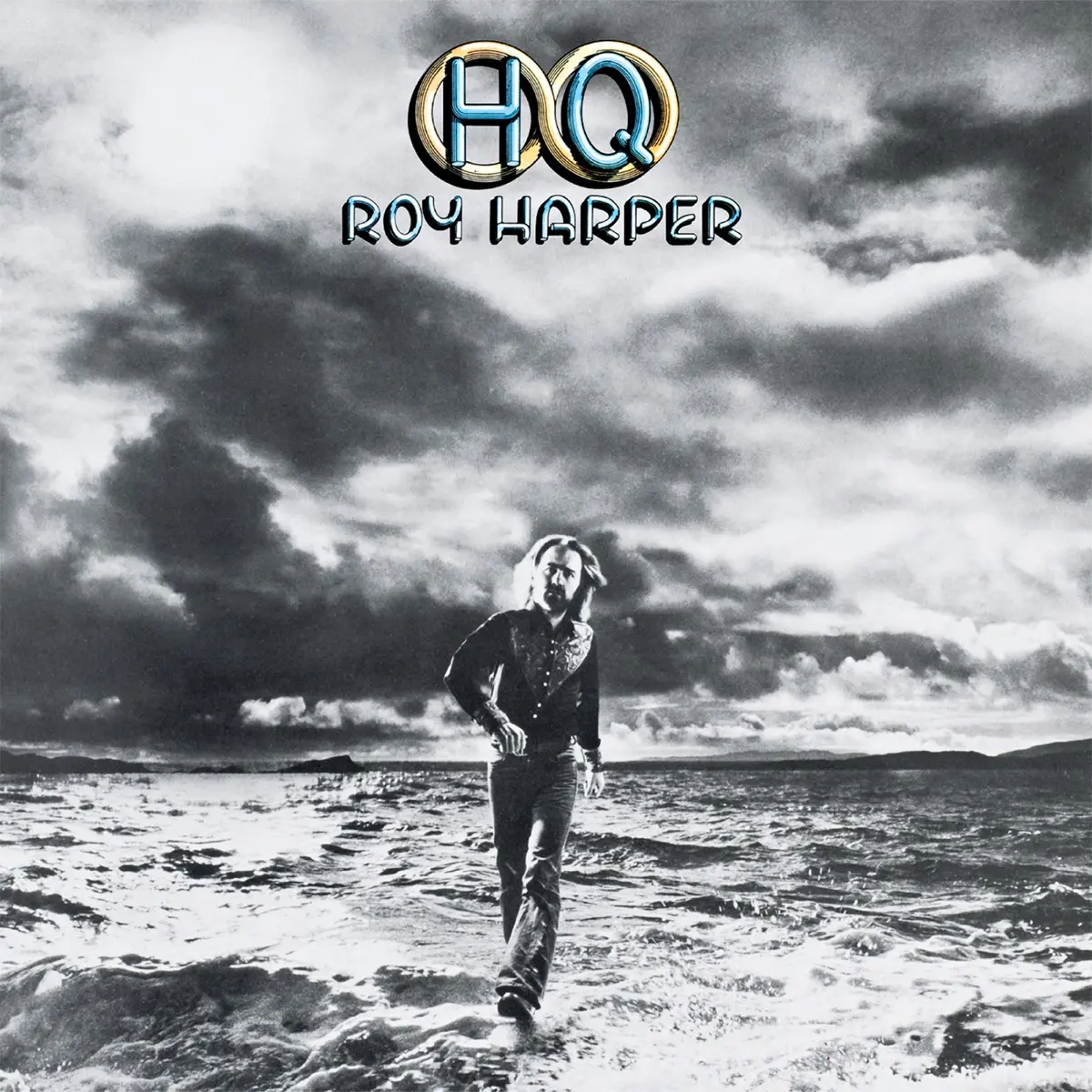 Roy Harper released his eighth studio album, HQ, in June 1975 on Harvest.
The album marks Harper’s full transition to amplified band arrangements, recorded with a core electric trio dubbed “Trigger” and guest turns from David Gilmour and John Paul Jones. While earlier works favored long acoustic suites or lyrical abstractions, HQ presents a blend of driving rock, studio ballads, and brass-enhanced retrospection, capped by one of his most enduring pieces.
Harper sings and plays acoustic guitar throughout, supported by Chris Spedding (electric guitar), Dave Cochran (bass), and Bill Bruford (drums). Gilmour and Jones contribute lead guitar and bass, respectively, to the opener. Steve Broughton appears on drums for that track. Bedford arranges brass for the closing elegy, performed by the Grimethorpe Colliery Band. Harper also overdubs vocal harmonies and occasional electric rhythm guitar.
Harper wrote all seven tracks. “The Game” is divided into five titled movements and recorded with a one-off supergroup. “Referendum (Legend)” and “The Spirit Lives” extend Harper’s lyrical critiques into full electric settings. “When an Old Cricketer Leaves the Crease” anchors the second side with brass band counterpoint and childhood nostalgia, dedicated to England cricketers Geoffrey Boycott and John Snow.
“The Game (Parts 1–5)” builds in movements: from blues-driven power riff to spoken monologue, soft electric modal interlude, marimba-accented lull, and final hard rock surge. “The Spirit Lives” evolves from acoustic slide motifs into sharp-edged full-band protest, laced with religious satire. “Grown Ups Are Just Silly Children” channels 1950s tropes into a brisk sendup of adult behavior. “Referendum (Legend)” rides Spedding’s staggered chord phrasing and pulsing rhythm, giving way to clipped vocal lines and layered refrains. “Forget Me Not” floats on open-chord picking and filtered vocals in a brief interlude. “Hallucinating Light” opens spaciously, unfolding in slow motion with phased textures and ambient guitar commentary. “When an Old Cricketer Leaves the Crease” juxtaposes 12-string arpeggios and collier band fanfare, framing Harper’s elegy to lost time and rural English traditions.
A1. “The Game (Parts 1–5)” (13:42) — surveys the collapse of myth, belief, and order across five modal song-sections
A2. “The Spirit Lives” (4:14) — denounces religious conquest with layered guitars and rhythmic shifts
A3. “Grown Ups Are Just Silly Children” (2:55) — parodies adult pretense with rockabilly bounce and call-and-response vocals
B1. “Referendum (Legend)” (3:49) — criticizes political inertia over looping electric motifs
B2. “Forget Me Not” (2:24) — suspends acoustic folk tones in reverb and layered phrasing
B3. “Hallucinating Light” (6:24) — meditates on love and time through slow, ambient layering and vocal drift
B4. “When an Old Cricketer Leaves the Crease” (7:13) — eulogizes tradition and mortality with brass-band elegy and cricket metaphors
Sessions occurred in March 1975 at Abbey Road Studios in London with producer Peter Jenner and engineers from the Harvest staff.
HQ features a cover by Hipgnosis, with Harper depicted walking on water. The image was staged on the Isle of Skye and presented without Harper’s input; he reportedly approved it on the spot.
Harvest issued “When an Old Cricketer Leaves the Crease” (b/w “Hallucinating Light” live) in May 1975. “Grown Ups Are Just Silly Children” followed as a second single with “Referendum (Legend)” on the B-side. Chrysalis retitled the US version When an Old Cricketer Leaves the Crease with alternate cover art of Harper in cricket attire.
Bullinamingvase
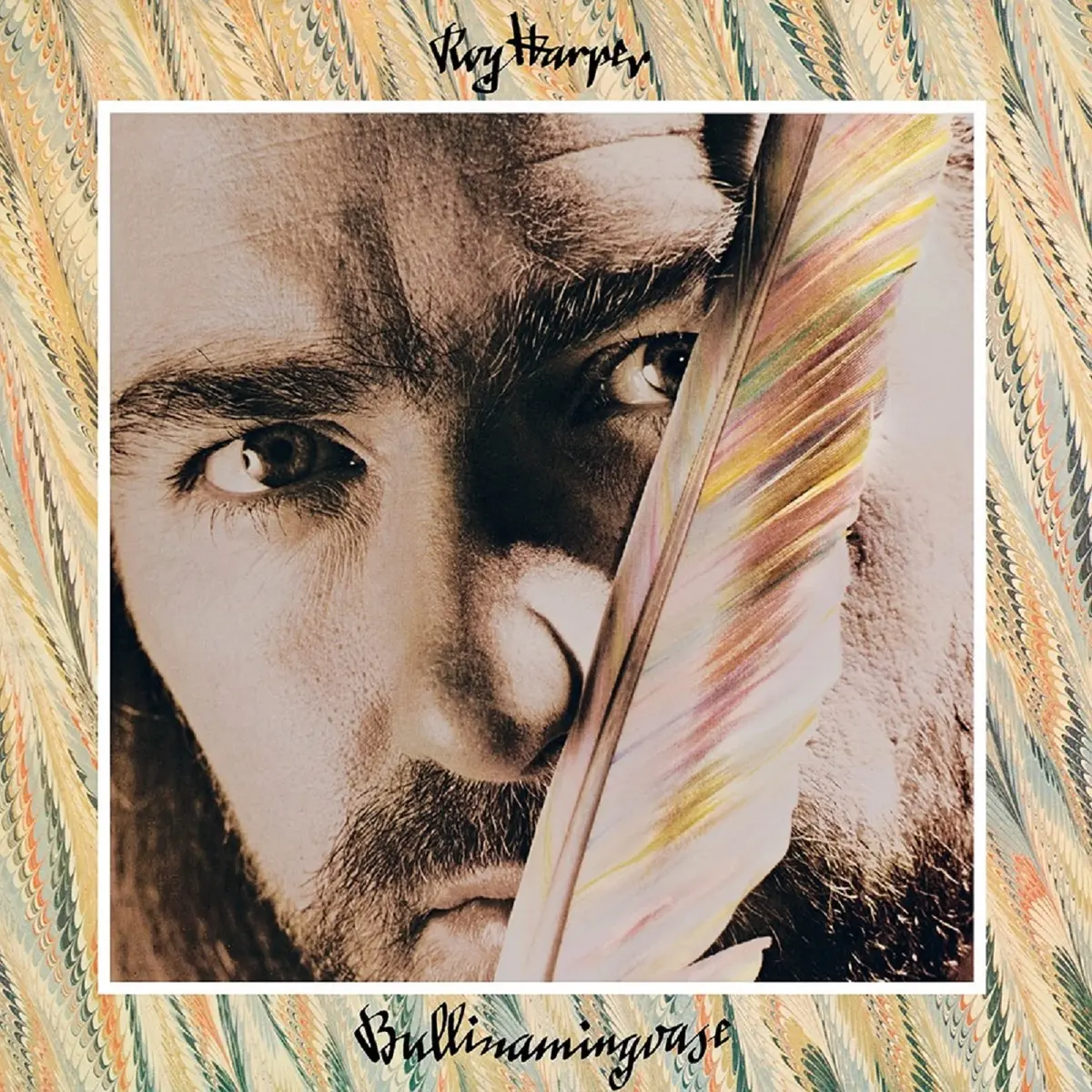 Roy Harper released his ninth album, Bullinamingvase, on February 11, 1977, on Harvest.
The album centers on an extended, nine-part suite and marks Harper’s final 1970s release for EMI. It features a mix of folk ballads, country-tinged reflections, and biting satire, offset by one of his most ambitious large-scale compositions. Some UK pressings replaced the controversial “Watford Gap” with the less contentious “Breakfast With You.”
Backing players include drummer John Halsey, bassist Dave C. Drill, and guitarists Henry McCullough and Andy Roberts. Dave Lawson (keyboards) arranged the orchestral sections and conducted the Vauld Symphony Orchestra. Guest players include B.J. Cole (pedal steel), Herbie Flowers, Ronnie Lane, Max Middleton, Steve Broughton, and Dave Cochran. Paul and Linda McCartney sing backup on the title track.
Harper wrote all songs apart from “Watford Gap,” a satirical jab at motorway cuisine, which EMI removed from some editions. The 19-minute “One of Those Days in England (Parts 2–10)” interweaves cultural critique and English folklore across multiple passages of linked verse and shifting instrumentation.
The side-opening “These Last Days” rises gradually from acoustic guitar into layered harmonies and suspended Rhodes phrases. “Cherishing the Lonesome” alternates open-tuned acoustic figures with charged electric interjections. “Naked Flame” unfolds in a staggered pattern of mandolin loops, fingerpicked guitar, and steel guitar leads that drift above shifting folk–rock rhythms. “Watford Gap,” built on a galloping banjo-led frame, closes in satirical protest. The full-side suite begins as a recast of the title track theme, pivots through harp clusters, slide guitar refrains, and dynamic choral turns, and closes on a hushed blend of Mellotron, low brass, and string cadence.
A1. “One of Those Days in England” (3:25)
A2. “These Last Days” (4:26)
A3. “Cherishing the Lonesome” (5:54)
A4. “Naked Flame” (5:06)
A5. “Watford Gap” (3:22) — a biting satire on motorway food culture, removed from early UK pressings.
B1. “One of Those Days in England (Parts 2–10)” (19:27)
Sessions occurred in autumn 1976 at Roy Harper’s home studio in Hereford with producers Peter Jenner and John Leckie. Engineers included Leckie and Mark Vigars.
Bullinamingvase features a typographic cover design with floral motifs, echoing Harper’s prior use of pastoral iconography and layered double meanings (bull in a Ming vase).
Harvest issued “One of Those Days in England” (b/w “Watford Gap”) as the album’s lead single in March 1977. A second single paired “Cherishing the Lonesome” with “Sail Away,” a track from Harper’s unreleased Commercial Breaks LP.
Later CD reissues (Science Friction HUCD021) restore “Watford Gap” and append “Breakfast With You” as a bonus track.
Commercial Breaks
In late 1977, Roy Harper and his backing band Black Sheep recorded Commercial Breaks, slated for a 1978 release as his tenth studio album. The intended album (Harvest cat. # SHSP 4077) remained vaulted until 1994 when it appeared on Harper’s Science Fiction label.
The album was shelved after disputes with EMI over its commercial direction and budget priorities. Though test pressings were made (cat. no. SHSP 4077), the official release remained delayed for sixteen years. Three songs were later re-recorded for The Unknown Soldier and seven others appeared on the 1988 compilation Loony on the Bus. The 1994 CD restored the original sequence and added two Loony tracks as bonuses.
Backing group Black Sheep includes guitarist Andy Roberts, bassist Dave Cochran, drummer John Halsey, keyboardist Dave Lawson, and guitarist Henry McCullough. Harper leads on vocals and acoustic guitar with subtle electric flourishes layered into the rhythm section and chordal arrangements.
Harper wrote all ten of the original tracks. “Sail Away” appeared as a standalone single in 1977 and three cuts—“I’m in Love With You,” “Ten Years Ago,” and “The Flycatcher”—were reimagined in 1980 with alternate arrangements and production.
“My Little Girl” opens with clipped vocal phrasing over a brushed rhythm pattern and acoustic drone. “Sail Away” unfolds on slow, chiming guitar strokes beneath a reflective lyric cadence. “Ten Years Ago” shifts through soft volume arcs and staggered piano clusters. “Cora” cycles on an arpeggiated figure that blurs into the vocal line. “Come Up and See Me” stretches across long-form verses punctuated by electric bursts and lyrical interjections. “Too Many Movies” alternates suspended guitar figures with slow, triplet-timed rhythmic breaks, while “Square Boxes” draws to a close with layered vocal reflections and dissonant chord slides.
A1. “My Little Girl” (2:36)
A2. “I’m in Love With You” (4:07)
A3. “Ten Years Ago” (3:19)
A4. “Sail Away” (4:49)
A5. “I Wanna Be Part of the News” (3:32)
B1. “Cora” (3:26)
B2. “Come Up and See Me” (4:21)
B3. “The Flycatcher” (3:55)
B4. “Too Many Movies” (4:14)
B5. “Square Boxes” (4:04)
1994 CD adds:
11. “Burn the World (Part 1)” (5:06)
12. “Playing Prisons” (4:22)
Sessions occurred in late 1977 at EMI facilities in England with Roy Harper as producer and John Leckie as engineer.
Commercial Breaks features collage-style cover art with commercial mascots and 1970s advertising imagery, including the Smash Martian, the Honey Monster, the Michelin Man, and a Wrigley’s gum pack, in ironic juxtaposition to the album’s original title.
“Sail Away” appeared in November 1977 as an advance single on Harvest (HAR 5140), backed with “Cherishing the Lonesome” from Bullinamingvase. The label printed “Taken from the new LP Commercial Breaks” on its sleeve.
The Unknown Soldier
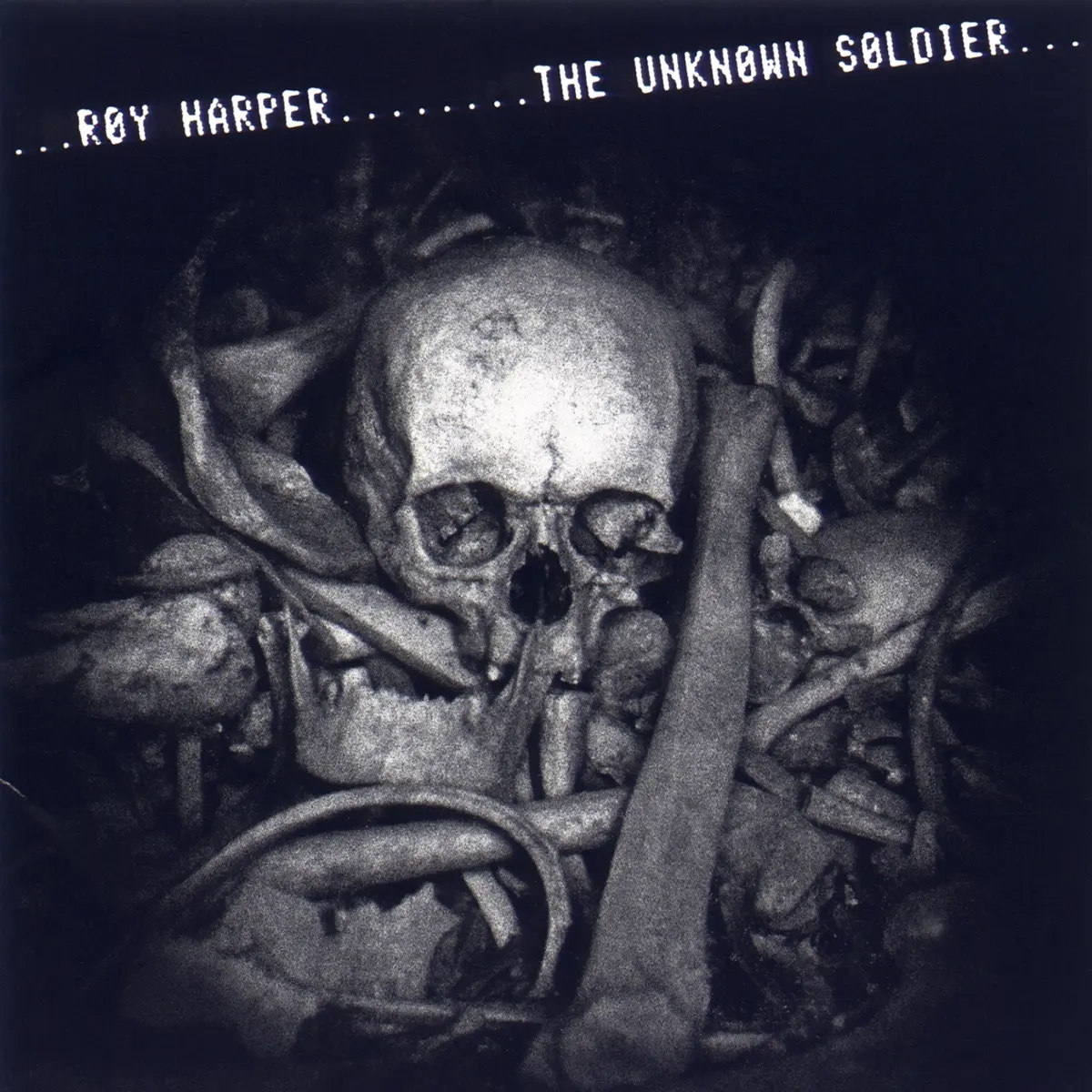 Roy Harper released his tenth chronological album, The Unknown Soldier, in 1980 on Harvest.
The album marks Harper’s final release for EMI and features multiple collaborations with David Gilmour, who co-wrote five songs and plays guitar throughout. It also includes a guest vocal by Kate Bush, Harper’s only duet partner on record up to that point. Three tracks—“I’m in Love With You,” “Ten Years Ago,” and “The Flycatcher”—were revised from the unreleased Commercial Breaks.
Backing musicians include Andy Roberts and Steve Broughton on guitar, B.J. Cole on steel, and bassists Tony Levin, Jimmy Bain, Will Lee, and Neil Jason. Keyboards are split between David Lawson, Pete Wingfield, and Don Grolnick, with orchestrations by David Bedford. Percussion support comes from Jimmy Maelen and Andy Newmark, with engineering input from Haydn Bendall and John Barrett across sessions in the UK, US, and France.
Harper wrote all lyrics while Gilmour composed the music to five tracks: “Playing Games,” “You,” “Old Faces,” “Short and Sweet,” and “True Story.” “Short and Sweet” previously appeared on Gilmour’s 1978 solo debut in an alternate version.
“Playing Games” opens with a descending keyboard riff and clipped guitar accents under Harper’s sardonic lyric on media corruption. “You” unfolds as a mid-tempo acoustic ballad with layered strings, harmonic build, and vocal counterpoint between Harper and Bush. “Short and Sweet” runs on a steady bassline and wide-interval vocal phrasing that builds through dramatic guitar swells. “Old Faces” combines plucked acoustics with organ swells and wistful vocals that taper into ambient sustain. “Ten Years Ago” alternates staccato phrasing with downstruck chords and reflective commentary. The title track hinges on quiet voice–guitar interplay, drawn through suspended string swells and diaphanous reverb. Closing cut “True Story” returns to electric rhythm backing with sharp transitions and a tightened vocal cadence.
A1. “Playing Games” (3:12) — Harper attacks the entertainment industry with irony-laced barbs and clipped delivery.
A2. “I’m in Love With You” (3:45)
A3. “The Flycatcher” (4:10)
A4. “You (The Game Part II)” (4:37) — duet with Kate Bush over an escalating, choral acoustic backdrop.
A5. “Old Faces” (4:09)
B1. “Short and Sweet” (6:28) — previously recorded by Gilmour; this version features galloping bass and dramatic midsection.
B2. “First Thing in the Morning” (3:40)
B3. “The Unknown Soldier” (3:33)
B4. “Ten Years Ago” (3:35)
B5. “True Story” (4:50)
Sessions occurred between 1978 and early 1980 at Abbey Road Studios (London), Rockfield Studios (Monmouthshire), House of Music (New Jersey), Studio Aquarium (Paris), and Chapel Lane Studios (Hereford) with producers Roy Harper and Peter Jenner. Engineering was led by Haydn Bendall and John Barrett.
The Unknown Soldier features cover photography by Roy Harper and Adrian Boot, taken at the Verdun battlefield ossuary in France. The image depicts memorial statuary amid war graves, shot during a somber pilgrimage Harper described as emotionally overwhelming.
Harper also backed Kate Bush on “Breathing,” the lead single from her 1980 album Never for Ever, following her cover of “Another Day” (with Peter Gabriel) in her 1979 TV special.
Work of Heart
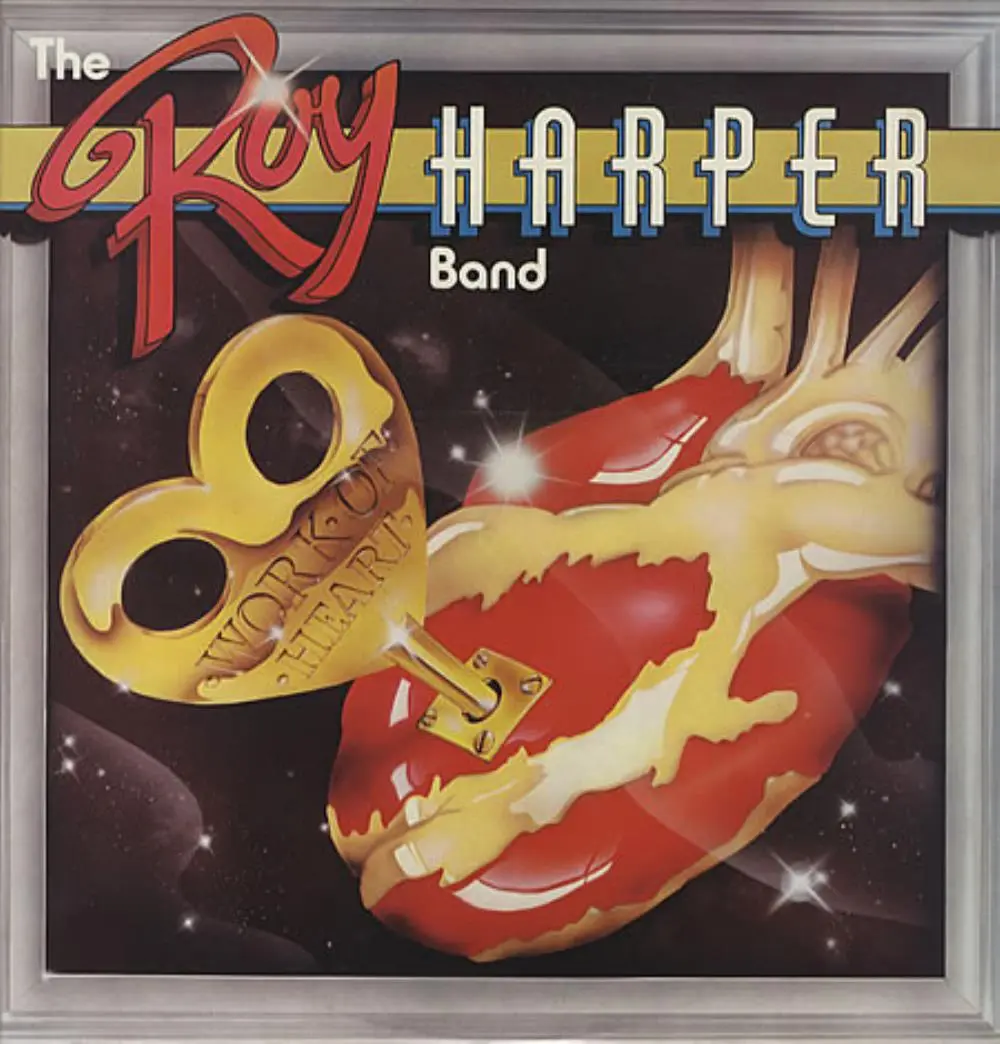 Roy Harper released his eleventh studio album, Work of Heart, in 1982 on self-press Public Records.
The album followed Harper’s split with EMI and inaugurated his independent imprint, launched with Mark Thompson. He recorded it with a regular touring lineup billed as the Roy Harper Band, yet the project was split across multiple studios and featured three different drummers. Despite being named Album of the Year by The Sunday Times, it failed commercially and led to the collapse of the label.
Harper plays electric and acoustic guitar, lead vocals, and select synthesizer parts. Guitarist Bob Wilson, bassist Tony Franklin, keyboardist Dave Morris, and saxophonist Dick Morrissey form the core group. Drumming duties are split between Charlie Morgan, Darrell Lockhart, and Dorian Healey. David Lord adds Oberheim synth textures and tubular bells, and Paul Cobbold contributes secondary bass and engineering.
Harper wrote all tracks. “Jack of Hearts” shares its lyrics with the demo “No Woman Is Safe,” which appeared on the limited companion release Born in Captivity. That LP, later reissued by Awareness, documents acoustic demos of Work of Heart material recorded prior to the full studio sessions.
“Drawn to the Flames” builds slowly from hushed guitar to a layered crescendo with bright vocal phrasing and declarative lines. “Jack of Hearts” follows with acoustic strums, soft synth textures, and narrative lyrics adapted from earlier work. “I Am a Child” pivots on sharp melodic cadences and syncopated bass–piano interplay. “Woman” drops into a minor-key contour with subtle drums and ornamental synth fills. “I Still Care” blends soft piano lines and open-voiced guitar chords into a rising vocal phrase that ends side one on a note of calm intensity. The 21-minute title suite fills side two in six continuous parts. It alternates sections of acoustic vocal reflection with layered sequences of processed drums, handclaps, ensemble interjections, and dynamic restatements of the core melodic motif.
A1. “Drawn to the Flames” (6:34)
A2. “Jack of Hearts” (4:14) — same lyrics as the Born in Captivity demo “No Woman Is Safe.”
A3. “I Am a Child” (3:09)
A4. “Woman” (4:42)
A5. “I Still Care” (4:50)
B1. “Work of Heart” (21:32)
— a. “No One Ever Gets Out Alive”
— b. “Two Lovers In the Moon”
— c. “We Are the People”
— d. “All Us Children (So Sadly Far Apart)”
— e. “We Are the People (Reprise)”
— f. “No-one Ever Gets Out Alive (Finale)”
Sessions occurred in 1981 and early 1982 at multiple UK studios with producers Roy Harper and David Lord and engineers John Leckie, Paul Cobbold, and Tom Oliver.
Work of Heart was originally issued in a textured gatefold on Public PUBLP 5001. A 1984 Awareness reissue features alternate cover art and credited the album simply to “Roy.”
Born in Captivity
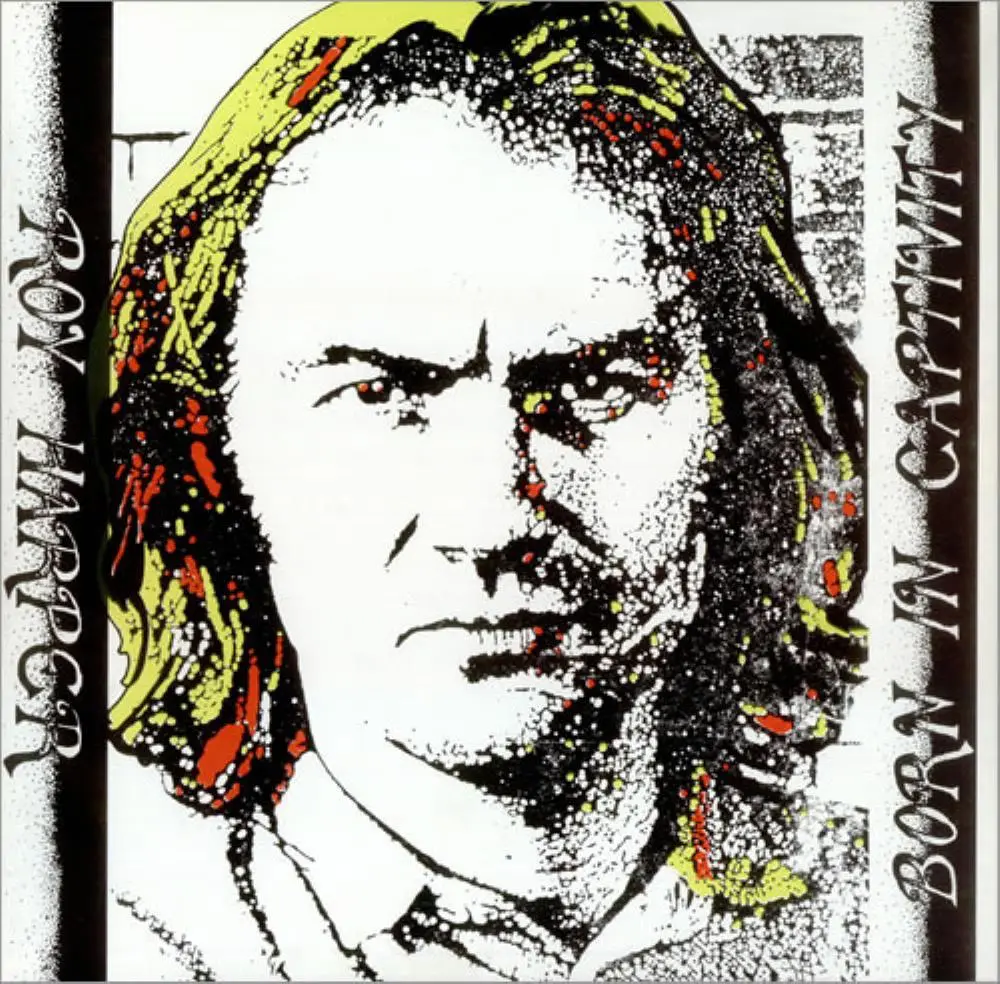 Roy Harper released his twelfth studio album, Born in Captivity, in 1984 on self-press Hardup.
The album presents the original solo acoustic demos for Work of Heart, recorded in 1981–82 and issued here as a stripped-down companion to its layered studio counterpart. Released in a limited run of 830 copies, Born in Captivity quickly sold out and was reissued in 1985 on Awareness, which also released the first CD edition. In 1994, Harper compiled the demos and final album as a double CD on his Science Friction label.
Harper performs all tracks alone on amplified Ovation Legend acoustic guitar and multi-tracked vocals. These sessions marked a new approach in his sound, using subtle mic’d harmonics, fingerstyle passages, and carefully layered vocal lines to replicate the harmonic depth of a full ensemble.
All songs are written by Harper. “No Woman Is Safe” is lyrically identical to Work of Heart’s “Jack of Hearts.” “Elizabeth” was re-recorded the following year for Whatever Happened to Jugula?. “Stan” refers to British footballer Stanley Matthews, and the side-long title track explores Harper’s thematic concerns of love, disillusionment, and spiritual disconnection.
“Stan” opens with percussive chord slashes and rising phrases that blend social commentary with homage. “Drawn to the Flames” flows on soft attack arpeggios that swell into layered harmonies. “Come to Bed Eyes” staggers its vocal cadence over a fluid mid-tempo strum. “No Woman Is Safe” follows with clipped refrains and pastoral lyricism. “I Am a Child” carries a steady meter and poignant lyrical focus on innocence and change. “Elizabeth” merges rapid fingerpicking with vocal cross-tracks. The 19-minute “Work of Heart” cycles through six linked passages, using acoustic guitar motifs, descending cadences, and harmonic contrast to move between spiritual alienation, collective consciousness, and human connection.
A1. “Stan” (5:03)
A2. “Drawn to the Flames” (4:43)
A3. “Come to Bed Eyes” (4:20)
A4. “No Woman Is Safe” (4:42) — shares lyrics with “Jack of Hearts.”
A5. “I Am a Child” (3:59)
A6. “Elizabeth” (4:47)
B1. “Work of Heart” (19:20)
— a. “No One Ever Gets out Here Alive”
— b. “Two Lovers in the Moon”
— c. “We Are the People”
— d. “All Us Children (So Sadly Far Apart)”
— e. “We Are the People (Reprise)”
— f. “No One Ever Gets out Here Alive (Finale)”
Sessions occurred between 1981 and 1982 in England with Roy Harper as sole performer and producer.
Born in Captivity features a cover image of Harper behind bars. The number “120641” references his birthdate, and “No.006” alludes to the character from The Prisoner, reprising the theme of alienation first explored in “McGoohan’s Blues” (1969).
Whatever Happened to Jugula?
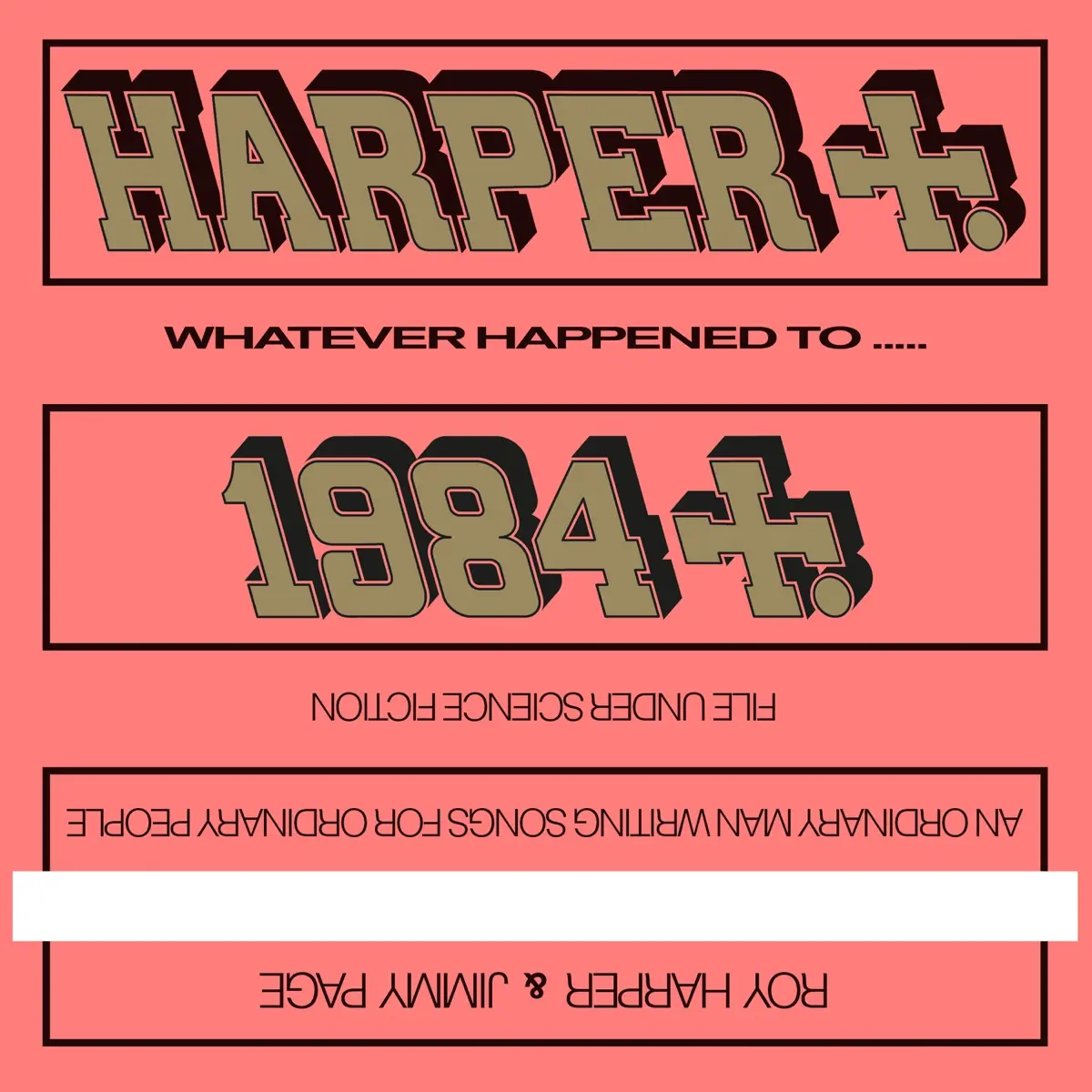 On March 4, 1985, Roy Harper and Jimmy Page released the collaborative album Whatever Happened to Jugula? on Beggars Banquet.
The album marks Harper’s first full-length collaboration with Page, with whom he’d intermittently worked since 1971. Titled after Harper’s truncated phrase “Go for the jugular,” the album was recorded informally across several private locations using an 8-track Teac recorder borrowed from Pete Townshend. The minimal production favors raw takes, layering acoustic duets with occasional electric bursts, ambient synths, and spoken fragments. Jugula became Harper’s highest-charting UK album and marked a resurgence after his EMI years.
Harper handles vocals, Ovation acoustic, and electric guitars. Page contributes acoustic and electric leads throughout, including most of the album’s climactic sections. Bassist Tony Franklin, keyboardist Nik Green, and drummers Steve Broughton, Preston Heyman, and Ronnie Brambles appear across the sessions. Harper’s son Nick Harper plays lead on “Hope,” a reworking of a David Gilmour melody.
Harper wrote all lyrics and most music. “Hope” uses a Gilmour melody rejected by its composer for About Face. “Elizabeth” originated on Born in Captivity and was rerecorded here. The brief “Bad Speech” serves as a preface to “Hope” and reflects Harper’s penchant for spoken interludes. The closing track, “Advertisement,” merges sardonic narration with shifting instrumental layers.
“Nineteen Forty-Eightish” opens with aggressive acoustic phrasing, struck harmonics, and phased synth trails before Page enters with serpentine lead breaks. “Hope” centers on a circular acoustic pattern with layered tremolo textures and one of Harper’s most emotionally intense vocal performances. “Hangman” rides a suspended 12-string rhythm while Page weaves in high-register counterlines. “Frozen Moment” plays entirely in C♯, with chilly harmonics and echo-laced chord turns. “Twentieth Century Man” retreats to close-mic’d fingerpicking with airy sustain. “Advertisement” builds from drowsy falsetto phrasing and muttered lines into a climactic burst of distorted phrasing and abrupt close.
A1. “Nineteen Forty-Eightish” (9:45) — Harper’s commentary on Orwellian dread and Cold War anxiety, ending in dual acoustic interplay.
A2. “Bad Speech” (1:17) — spoken fragment introducing “Hope.”
A3. “Hope” (4:31) — based on David Gilmour’s unused theme, with lead guitar by Nick Harper.
A4. “Hangman” (7:09) — imagines the condemned thoughts of an innocent man facing capital punishment.
B1. “Elizabeth” (6:39)
B2. “Frozen Moment” (3:18)
B3. “Twentieth Century Man” (4:27)
B4. “Advertisement (Another Intentional Irrelevant Suicide)” (8:19)
Sessions occurred at multiple informal locations in England and Ireland—Clapham, Hereford, Berkshire, Lytham, and West Cork—using mobile equipment and Boilerhouse Studios. Roy Harper produced the album with engineering by Nik Green.
Whatever Happened to Jugula? features cover art styled after an unfolded Rizla pack. The 1999 Science Friction reissue rebranded the title as Jugula and used a revised layout. A green-sleeve 12″ single paired the new “Elizabeth” with “Advertisement” and a live version of “I Hate the White Man,” recorded October 18, 1984, in Poynton.
Discography:
- The Sophisticated Beggar (1966)
- Come Out Fighting Ghengis Smith (1967)
- Folkjokeopus (1969)
- Flat Baroque and Berserk (1970)
- Stormcock (1971)
- Lifemask (1973)
- Valentine (1974)
- Flashes From the Archives of Oblivion (1974)
- HQ (1975)
- Commercial Breaks (1977 • Roy Harper & Black Sheep)
- Bullinamingvase (1977)
- The Unknown Soldier (1980)
- Work of Heart (1982 • The Roy Harper Band)
- Born in Captivity (1984)
- Whatever Happened to Jugula? (1985 • Roy Harper & Jimmy Page)
- … Descendant of Smith (1988)
- Loony on the Bus (1988)
- Once (1990)
- Burn the World (1990)
Sources:
- Discogs: Roy Harper
- RYM: Roy Harper
- 45cat: Roy Harper
- ProgArchives: Roy Harper
- MusicBrainz: Roy Harper
Artist/Album Pages:
The Spiders From Mars were an English hard-rock band formed in 1971 as the backing band for David ...
Marlena Shaw (1939–2024) was an American soul singer who recorded two albums and assorted singles fo...
Loggins and Messina were an American country rock duo that released six studio albums and a live do...
Cactus was an American hard-rock|blues band that released four albums between 1970 and 1972 on At...
Octobre was a Québécois symphonic-folk band that released five studio albums, each on a different ...
Rick Springfield (born Aug. 23, 1949) is an Australian singer, songwriter, and actor with a musical ...
The Moon Riders are a Japanese art-pop band from Tokyo that debuted on the 1974 multi-artist live...
Gérard Manset is a French chanson and art-pop singer-songwriter who emerged with a 1968 self-title...
The Manhattans were an American soul group from Jersey City that released fourteen singles and tw...
The Long Hello was a side-project put together in 1972 by instrumentalists from a temporarily halted...
Gaskin was an English hard-rock/metal band that released the 1981/82 Rondelet albums End of the Wo...
Sandra Wright (Oct. 1, 1948 — Jan. 11, 2010) was an American soul singer from Memphis who recorde...