

Smith was an American soul-rock band from Los Angeles that scored a Top 5 hit with “Baby It’s You” and released two albums in 1969/70 on ABC Dunhill: A Group Called Smith and Minus-Plus.
Members: Gayle McCormick (vocals), Rich Cliburn (guitar, 1969), Jerry Carter (bass, 1969), Larry Moss (keyboards), Bob Evans (drums, percussion), Judd Huss (bass, 1970)
Background
Guitarist James Richard Cliburn and bassist Jerry Carter originated in The Trippers, a garage-rock trio that cut two singles in 1966/67 on Ruby-Doo Records. They evolved into The Smiths and cut the 1968 Columbia single “Now I Taste the Tears,” a dark psychedelic ballad backed with “I Can’t Stop,” an upbeat soul-rocker.
By 1969, the group reshuffled in Los Angeles, where they sought a stronger vocal focal point. Around this time, St. Louis–born singer Gayle McCormick (b. November 26, 1948; St. Louis) arrived on the West Coast after fronting the Missouri pop-soul outfit Steve Cummings & The Klassmen, a regional act with two locally promoted singles and televised performance clips. Raised in Maryland Heights, she came out of choral training at Pattonville High, where she sang high soprano in a large ensemble that performed with the St. Louis Symphony. Her grounding in bluesy R&B and her command of material associated with Tina Turner and Etta James made her an immediate fit for the band’s shift toward a harder, voice-forward sound.
Cliburn, Carter, and drummer Bob Evans incorporated McCormick as their lead vocalist and reestablished themselves under the shortened name Smith. The new lineup built momentum on the Los Angeles club circuit, where their mix of rock, blue-eyed soul, and tightly arranged covers drew industry attention. During one of these sets, they were spotted by veteran rocker Del Shannon, who took an active interest in their repertoire. Shannon reworked their stage arrangement of “Baby It’s You”, a treatment that became the centerpiece of their demo and ultimately secured the group a contract with ABC–Dunhill Records.
A Group Called Smith
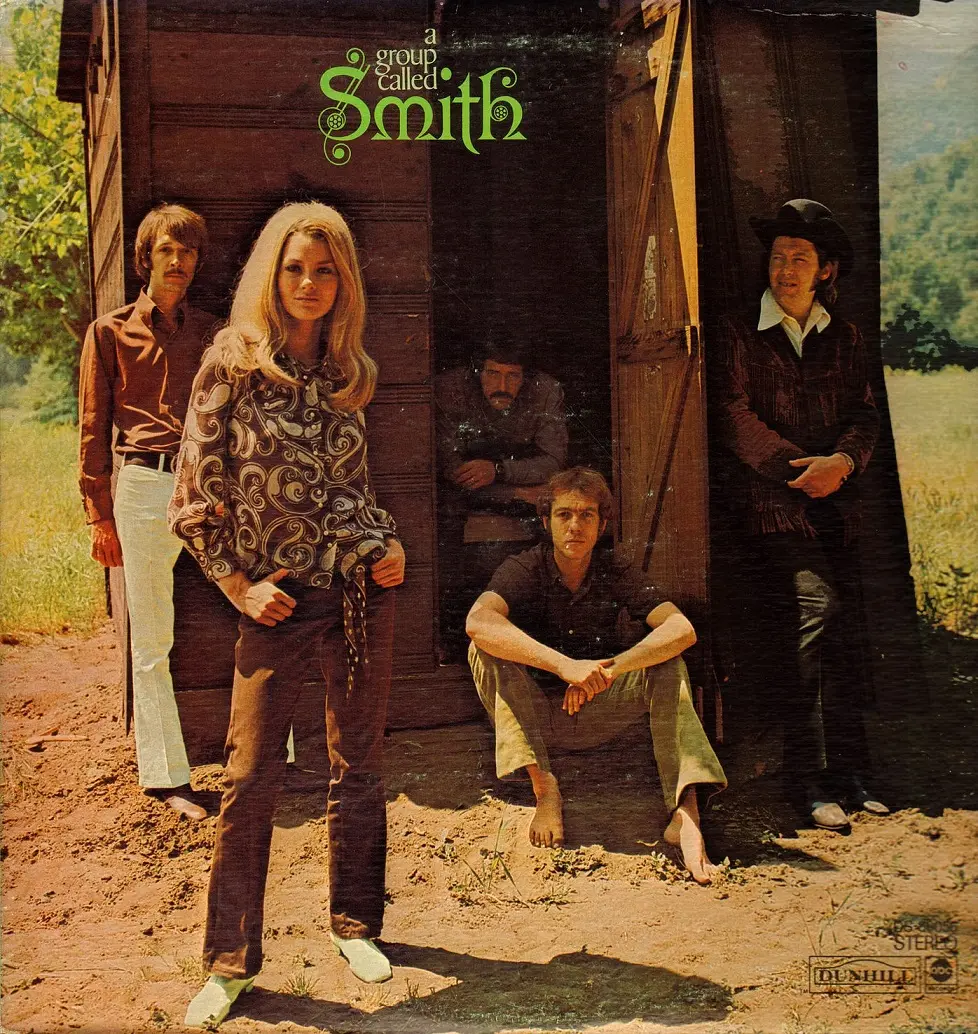 Smith released their first album, A Group Called Smith, in 1969 on ABC Dunhill.
They interpret songs popularized by The Youngbloods (“Let’s Get Together”), The Zombies (“Tell Her No”), Bo Diddley (“Who Do You Love”), The Shirelles (“Baby, It’s You”), Muddy Waters (“I Just Want to Make Love to You”), The Rolling Stones (“The Last Time”, “Let’s Spend the Night Together”), and Texas band The Clique (“I’ll Hold Out My Hand”). Writers Harvey Price, Joel Sill, and Dan Walsh provide the lone non-cover track.
The album alternates between expansive, forceful arrangements and tighter, controlled numbers. “Baby, It’s You” opens with sustained vocals over steady rhythmic pulses, while “Tell Him No” emphasizes organ lines that weave through angular vocal turns. “Let’s Spend the Night Together” features a throaty intensity and driving tempo, contrasting with the more measured pacing of “I Just Want to Make Love to You.” “Let’s Get Together” presents a stripped, mid-tempo approach with restrained instrumental layers. The male vocal parts provide a throaty counterpoint on several tracks, balancing McCormick’s soaring delivery, and the band punctuates covers with brief fuzz guitar flourishes and occasional countermelodies.
A1. “Let’s Get Together” (3:32) – Chet Powers; a 1969 Top 5 hit for The Youngbloods, first recorded in 1963 by Powers under the stage name Dino Valenti.
A2. “I Don’t Believe (I Believe)” (3:41) – Jeffrey Thomas; charts the inner-conflict between trust and doubt.
A3. “Tell Him No” (3:27) – Rod Argent; a 1965 British Invasion hit. In contrast to The Zombies’ closed-cadence original, Smith slow the song with a looser, organ-laden arrangement akin to Vanilla Fudge‘s take on The Supremes‘ hit “You Keep Me Hanging On.”
A4. “Who Do You Love” (2:57) – Bo Diddley; originated as a 1956 Diddley side, covered recently by The Woolies, Juicy Lucy, and Quicksilver Messenger Service.
A5. “Baby, It’s You” (3:27) – Burt Bacharach, Hal David; popularized in 1961 by the Shirelles and covered in 1963 by The Beatles.
B1. “Last Time” (5:38) – Jagger/Richards; originated as a 1965 Rolling Stones single (their third UK No. 1).
B2. “I Just Want to Make Love to You” (2:38) – Willie Dixon; first recorded in 1954 by Muddy Waters, popularized by Etta James on her 1960 album At Last!.
B3. “Mojaleskey Ridge” (2:32) – Price/Sill/Walsh; concerns a frontier locale.
B4. “Let’s Spend the Night Together” (3:54) – Jagger/Richards; originated as a 1967 Rolling Stones double-a-side with “Ruby Tuesday.”
B5. “I’ll Hold Out My Hand” (3:06) – originated as a 1969 single by The Clique; co-written by Just Us, the duo of Al Gorgoni and songwriter Chip Taylor (“Wild Thing,” “Angel of Morning”).
Sessions occurred in 1969 with producers Steve Barri and Joel Sill.
ABC Dunhill promoted the album with “Baby, It’s You,” which reached No. 5 on the Hot 100. Smith also covered “The Weight,” a 1968 song by The Band, whose original appears in the 1969 road film Easy Rider. Due to contractual issues, Smith’s version replaced the original on the film’s soundtrack album.
Minus-Plus
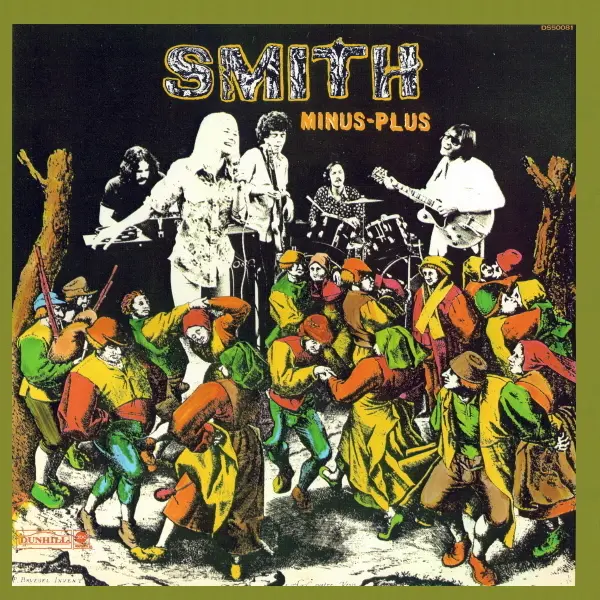 Smith released their second album, Minus-Plus, in 1970 on ABC Dunhill.
The album presents a tighter, soul-leaning rock sound with increased input from the band’s internal writers. Gayle McCormick fronts material that shifts between upbeat rhythm pieces, slower ballads, and mid-tempo rockers with Hammond organ, fuzz guitar, and unified vocal harmonies.
Alan Parker emerges as the primary writer with four songs, while Judd Huss contributes two and Larry Moss and Jeff Cliburn each supply one. They cover Willie Cobbs (“You Don’t Love Me”) and Bobby Bare Sr. (“What Am I Gonna Do”). Parker also wrote “Comin’ Back to Me” and “Feel the Magic,” and co-wrote “Born in Boston” with Huss and Moss. Huss wrote the closer “Minus-Plus.”
The album ranges from the terse opener to Parker’s sharper-paced “Feel the Magic” and Huss’ closing title track, which expands with organ surges and emphatic vocal phrasing. “Born in Boston” incorporates brief psych-fuzz bursts, while “Circle Man” moves at a more clipped, percussive pace. McCormick’s delivery heightens “You Don’t Love Me” with sustained phrasing drawn from Cobbs’ 1960 original.
A1. “You Don’t Love Me (Yes I Know)” (3:20) – Willie Cobbs; originated as Cobbs’ 1960 R&B single, adapted from Bo Diddley’s “She’s Fine She’s Mine.” Later covered by artists across blues-rock and soul. Lyrically centers on a partner’s emotional withdrawal.
A2. “Born in Boston” (2:42) – Parker/Huss/Moss
A3. “Comin’ Back to Me” (2:56) – Parker
A4. “Feel the Magic” (2:37) – Parker
A5. “Jason” (3:24) – Huss
B1. “What Am I Gonna Do” (2:51) – Carole King/Toni Stern; written for Bobby Bare Sr. and also recorded by Kenny Rogers and the First Edition.
B2. “Take a Look Around” (2:50) – Cliburn/Carter
B3. “Since You’ve Been Gone” (3:46) – Parker
B4. “Circle Man” (2:27) – Moss
B5. “Minus-Plus” (4:03) – Huss
Sessions occurred in 1970 with producers Joel Sill and Steve Barri. S.G. cut the lacquer and Longwear Plating prepared the metalwork. The lineup features McCormick (vocals), Parker (guitar, vocals), Huss (bass, vocals), and Bob Evans (drums).
Record label promoted Minus-Plus with “What Am I Gonna Do,” issued as a single in 1970.
Discography:
- A Group Called Smith (1969)
- Minus-Plus (1970)
Sources:
Artist/Album Pages:
X is an American rock band from Los Angeles, formed in 1977 during the Southwest punk explosion. The...
Nolan Porter (1949–2021) was an American soul singer from Los Angeles who released the 1971/72 al...
The Spinners were an American soul group, best known for the 1970s hits “It’s a Shame,” “I’ll Be A...
Blind Faith was an English rock band that released a self-titled album on Atco in 1969. The band a...
Roberta Flack (February 10, 1937 – February 24, 2025) was an American soul singer and pianist who ...
Return to Forever was an American jazz-rock supergroup that evolved from a namesake 1972 solo albu...
Flaming Youth was an English psych-rock band that released the album Ark 2 on Fontana in 1969. Drumm...
Tymepiece was an Australian rustic-rock band that cut two singles in 1968–69 on Festival Records, fo...
Edu Lôbo (born Aug. 29, 1943) is a Brazilian singer, guitarist, composer, and arranger who emerged...
The Hook was an American psych-rock band from Los Angeles that released two albums in 1968 on Uni...
Paul Korda (1948 – March 11, 2020) was an English singer, songwriter, and producer who issued a stri...
Gringo was an English pop-rock band behind a 1971 self-titled album on MCA. Guitarist/keyboardist He...