

Rainbow Generator was the Australian experimental electronic duo of synthesist Robert “Ras” Greaves and guitarist–synthesist David “Mojo” Labuschagne. They released the 1978 Fission Chips album Dance of the Spheres, then continued as the Generator and joined magician-performer Geof Krozier for the 1981 double album Tranceformer.
Members: Robert Greaves [aka Ras] (synthesizers, rhythm machines, percussion), David Labuschagne [aka David Mow, Mojo] (guitar, guitar-synth, synthesizers)
Background
Rainbow Generator formed in 1976 from the partnership of guitarist David Labuschagne and percussionist Robert Greaves. The two first met in 1969 and developed a long-term musical friendship. Labuschagne resumed guitar in 1973, while Greaves accompanied him on congas and bongos through travels across eastern and western Australia.
Effects pedals redirected their work in 1975, when they recorded the cassette Sensuous Undercurrents of My Refrigerator with Fender guitar, percussion, and shortwave-radio signals. Greaves assembled a PAIA Gnome kit and bought a Roland System 100, while Labuschagne expanded his bank of guitar processors.
The pair made the 1976 cassette ROY G BIV with synthesizer, guitar, percussion, piano interior, timpani, and household objects. One segment came from their first concert in a country hall before a single listener.
Labuschagne moved to Sydney in 1977 and converted a disused factory at 155 Bourke Street, Woolloomooloo, into the ’Lectric Loo studio. Rainbow Generator began album sessions there in June 1977 under their new recording setup.
Dance of the Spheres
 Rainbow Generator released their singular album, Dance of the Spheres, in 1978 on Fission Chips.
Labuschagne used processed Fender guitar and a Roland GR-500 guitar synthesizer. Greaves worked with Roland electronics, rhythm machines, percussion, and shortwave signals. Didgeridoo player Damien Burnett appears on “Wandjina,” while Naomi Leago supplies words and singing on “Essence.” Tor Davis contributes words and voice to “City of the Sun”; Marie provides the spoken passage on “D-Lirium.”
“Polyploid Spex” emits a broad synthesizer drone through an electronically treated lead and indigenous percussion. “Quiblings Query” sways through a slow, hazy drone. “Wandjina” coils around processed didgeridoo lows and acidic burbles. “Asymptote” flickers across a crude rhythm-box figure and fractured solo runs.
“Essence” glides through delicate acoustic arpeggios beneath Naomi Leago’s folk-toned lead. “City of the Sun” drifts beneath Tor Davis’s spoken recitation as a coarse mechanical pattern unsettles surrounding atmosphere. “D-Lirium” cycles a straight oscillator figure beneath an uneasy female monologue and skewed electronic line. “Rainbow Raga” revolves through sitar-like figures and swarming overtones.
 A1. “Polyploid Spex” (2:51)
A2. “Quiblings Query” (3:06)
A3. “Wandjina” (5:36)
A4. “Asymptote” (3:27)
A5. “Embryonic Eye” (4:36)
A6. “Essence” (4:26)
B1. “Shockwave Rider” (5:06)
B2. “City of the Sun” (5:14)
B3. “D.Lirium” (7:05)
B4. “Rainbow Raga” (5:15)
B5. “‘Ssence” (0:41)
Sessions spanned June 1977 through June 1978 at the ’Lectric Loo in Woolloomooloo, Sydney, where Labuschagne operated the recording space. Archie Wah-Wah mixmastered and mutated the tapes at Electric Lunacy with assistant Manual Nobbs.
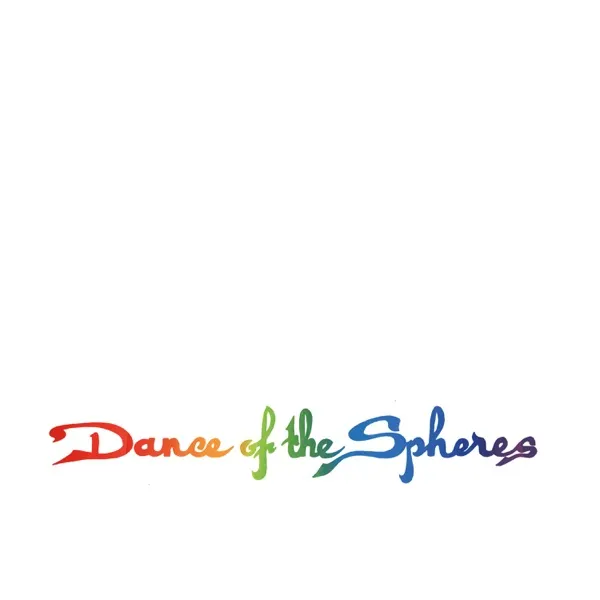
Fission Chips pressed 399 hand-numbered copies. Bill Dunn, Char, and Mop designed the silk-screened gatefold, which sets rainbow title lettering against a white front and carries radial black-and-white designs across the inner and rear panels.
Roland awarded “Polyploid Spex” first prize in the Class B category for innovative electronic composition, with Japanese electronic composer Isao Tomita among the judges.
The Melbourne label Left Ear returned Dance of the Spheres to vinyl and digital circulation through a 2023 edition.
The Generator and Krozier
Rainbow Generator adopted the Generator name after the album and played in Sydney, the Australian Capital Territory, and at Down to Earth ConFests through 1980 under the shortened name. Melbourne dates also extended the duo’s live activity.
In 1980, magician-performer Geof Krozier joined Labuschagne and Greaves in Krozier & the Generator. Drummer Michael Buckingham expanded the live lineup for ten Melbourne performances between June and October.
The project relocated to the ’Lectric Loo in January 1981 for rehearsals and recordings. Krozier died on May 17, before the planned tour and formal studio program.
Tranceformer
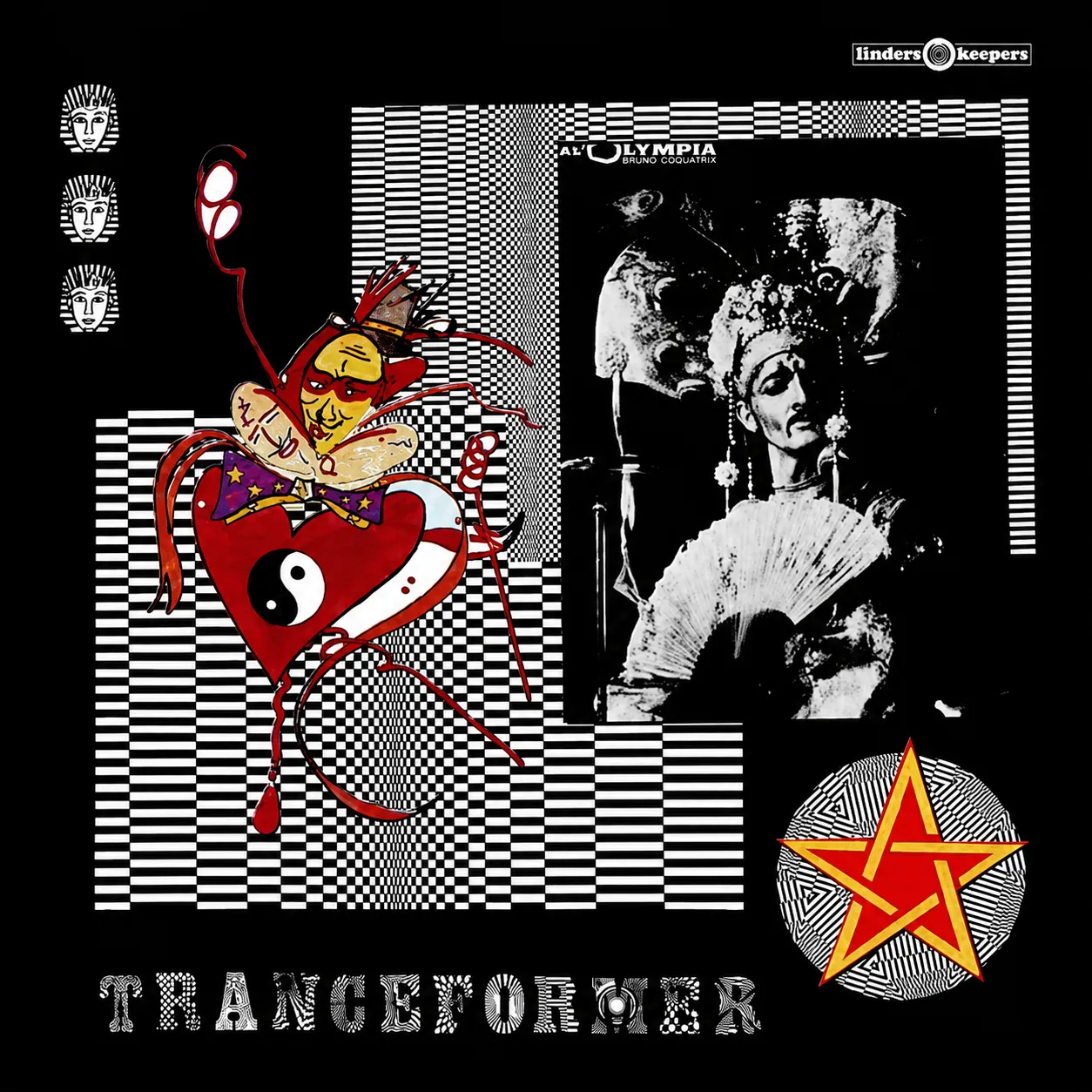 Labuschagne and Greaves assembled the posthumous double album Tranceformer with Ayers Rock percussionist Keith Casey and engineer Barry Wolifson. Fission Chips issued the set later in 1981 as a memorial release.
Tranceformer joins Krozier’s theatrical monologues and occult incantations to processed guitar, synthesizers, rhythm machines, and percussion. Ayers Rock percussionist Keith Casey joins the established Generator duo. Krozier wrote the words; the Generator composed the music.
“House of the Sun” hovers on a quiet drone above a steady machine beat and chattering electronics. “Khan-Khallili Razaar” intones a pharaoh’s grievance over a quirky oscillator motif and restless effects. “The Devil May Care” looms through distant booms, ominous drone, brief minor-key peaks, and a mournful lead before a quickened collapse. “Slave Traders” percolates through a sparse bass-synth figure as stereo-treated accents drift between channels.
“Land of Unclean Spirits” warps low electronic tones beneath paired recitations toward a seasick drone. “Perhaps Reincarnation” throbs beneath a glassy drone, sliding notes, and dry timekeeping dialogue. “House of the Joker” oscillates through a breakbeat pattern, glacial electronics, repeated blood chant, and diffuse fade. “Take a Look” stutters through cash-register clinks, crowd chatter, tribal accents, and a stop-start fuzz figure.
“Temple of Exotic Delights” unfolds from subdued sung lines into a slow beat, spaced electronics, recurring returns, an alternate closing theme, and a music-box coda. “Feed You to the Sharks” echoes a comic monologue through delay and reverb. “Lapis-Lazuli” crawls across polyrhythmic accents, flanged guitar, glacial notes, and brief detours.
“I’ll Be a Sphinx for You” descends through spaced electronic notes and echo-faded lines. “Doubting Thomas” skitters through rapid stage patter, word-association turns, and an abrupt outburst. “Paid Your Money” quickens from a mechanical shuffle into a sparse two-note figure and flanged squall.
A1. “House of the Sun” (2:33)
A2. “Khan-Khallili Razaar” (3:18)
A3. “The Devil May Care” (8:01)
A4. “Slave Traders” (2:33)
B1. “Land of Unclean Spirits” (3:54)
B2. “Perhaps Reincarnation” (2:02)
B3. “House of the Joker” (8:15)
B4. “Take a Look” (4:42)
C1. “Temple of Exotic Delights” (14:23)
D1. “Feed You to the Sharks” (1:43)
D2. “Lapis-Lazuli” (6:35)
D3. “I’ll Be a Sphinx for You” (1:30)
D4. “Doubting Thomas” (1:30)
D5. “Paid Your Money” (7:18)
Recordings came from live shows and rehearsals held between January 7 and 26, 1981, at the ’Lectric Loo in Woolloomooloo, Sydney. Labuschagne and Casey added overdubs to material transferred from a TEAC four-track machine to an Otari eight-track recorder. Labuschagne produced the album and shared engineering with Barry Wolifson.
Charmaine Tracey and Labuschagne, credited as David Mow, created the handmade gatefold graphics. The front collage combines a heart-bodied joker, checkerboard fields, a monochrome Krozier portrait, and a red pentagram. Interior panels reproduce Krozier journal pages among press clippings and performance photographs. Fission Chips pressed 399 hand-numbered copies. A printing omission removed “Believable” from one Krozier passage, so Labuschagne restored the word by hand on every sleeve.
Finders Keepers returned Tranceformer to double vinyl and digital circulation through a 2015 edition.
Postlude
Labuschagne and Greaves resumed the Generator name after the Woolloomooloo studio closed in 1983 and moved their work to the Bellingen area. Labuschagne opened Never Never Studio near Thora, then established further recording rooms in Melbourne as the partnership continued.
Archival work produced the Krozier & the Generator CD Krozier’s Crusade from live tapes, outtakes, and incomplete material. Further collections followed under the titles Signs and Symbols and Hannibal’s Skull.
Generator sessions continued into the 2000s and culminated in the CD About Time, the final release under the shortened name.
Discography:
- Dance of the Spheres (1978 • Rainbow Generator)
- Tranceformer (1981 • Krozier & the Generator)
- About Time (2008 • the Generator)
Sources:
- Discogs: Rainbow Generator
- RYM: Rainbow Generator
- 45cat: Rainbow Generator
- MusicBrainz: Rainbow Generator
Artist/Album Pages:
Groep Ohm was a Dutch avant-jazz band behind the 1974 album Skokian, followed by the 1977 release ...
Harmonium was a Québécois symphonic-folk band that released the 1974–75 Célébration albums Harmoni...
Al Williams Quintet Plus One were an American avant-garde jazz sextet led by drummer Al Williams....
Joni Mitchell is a Canadian singer–songwriter who released nineteen studio albums between 1968 and 2...
Moose Loose was a Norwegian jazz-rock band behind the 1974 Mai release Elgen er Løs, followed by t...
Jukka Linkola (born July 21, 1955) is a Finnish pianist, composer, and conductor who first emerged...
Legs Diamond was an American hard-rock band from San Francisco that made the 1977 Mercury albums L...
Mess was an Estonian symphonic/space-rock ensemble, active in the mid-Seventies. In 1976, they recor...
Nutz was an English hard rock band from Liverpool that released the 1974–76 A&M albums Nutz, N...
Björgvin Gíslason (September 4, 1951 – March 5, 2024) was an Icelandic guitarist, songwriter, and ...
Jimmie Spheeris (Nov. 5, 1949 — July 4, 1984) was an American singer/songwriter who made the 1971–...
Dan Thiessen is a Canadian songwriter and arranger who released the 1978 album Whippoorwill on Cu...