

Kebnekaise was a Swedish ethno-folk/jam band that released five albums on Silence between 1971 and 1977, followed by a sixth on Mercury. The band regrouped for additional live and studio material during the 21st century.
Members: Kenny Håkansson (guitar, vocals, 1971-77, 2001-present), Pelle Ekman (drums, 1971-77, 2001-present), Bella Fehrlin [Bengt Linnarsson] (bass, 1971-72), Rolf Scherrer (guitar, 1971-73), Göran Lagerberg (bass, 1972-75, 2001-present), Mats Glenngård (violin, 1972-78, 2001-present), Gunnar Andersson (drums, 1972-74), Thomas Netzler (bass, 1972-78, 2001-present), Ingemar Böcker (guitar, 1972-75, 2001-06), Hassan Bah (percussion, 1972-78, 2001-present), Pelle Lindström (harmonica, violin, vocals, 1972-75, 2001-04), Turid (vocals, 1972-73), Åke Eriksson (drums, 1977), Pelle Holm (drums, vocals, 1977-78), Per Lejring (keyboards, vocals, 1977-78)
Background
Kebnekaise grew out of the second lineup of Mecki Mark Men, the Stockholm psych-rock band that had debuted in 1967. By 1969, MMM leader Mecki Bodemark had absorbed the members of Baby Grandmothers — guitarist Kenny Håkansson, bassist Bengt Linnarsson (also known as Bella Fehrlin), and drummer Pelle Ekman — into a reconstituted Mecki Mark Men for their sophomore album, Running in the Summer Night. That lineup toured extensively, collaborated with the Royal Swedish Opera on Lars Johan Werle’s work Resan in 1969 and 1970, and embarked on a three-month U.S. tour in 1970 that included festival dates alongside Sly and the Family Stone, Jethro Tull, Mountain, The Byrds, and Muddy Waters.
In 1971, Bodemark and the same quartet returned for a second Werle collaboration, the ballet Stonehorse. When that project concluded, all three ex-Baby Grandmothers departed MMM, taking guitarist Rolf Scherrer with them to form Kebnekaise in Stockholm in 1971. The band took their name from Kebnekaise, the highest mountain in Sweden; the original spelling matched the mountain, but the name shifted to the present form for later releases.
Håkansson, whose studio work had brought him into contact with a wide range of Swedish artists, drove the band’s early sound before a chance encounter redirected their course: following the release of the debut album, he toured with Dutch-Swedish folk artist Cornelis Vreeswijk, whose backing band included two fiddle players. The experience led Håkansson to begin study of violin and to integrate former supporting act Homo Sapiens, including violinist Mats Glenngård, into Kebnekaise’s expanded lineup for their second album.
Resa Mot Okänt Mål
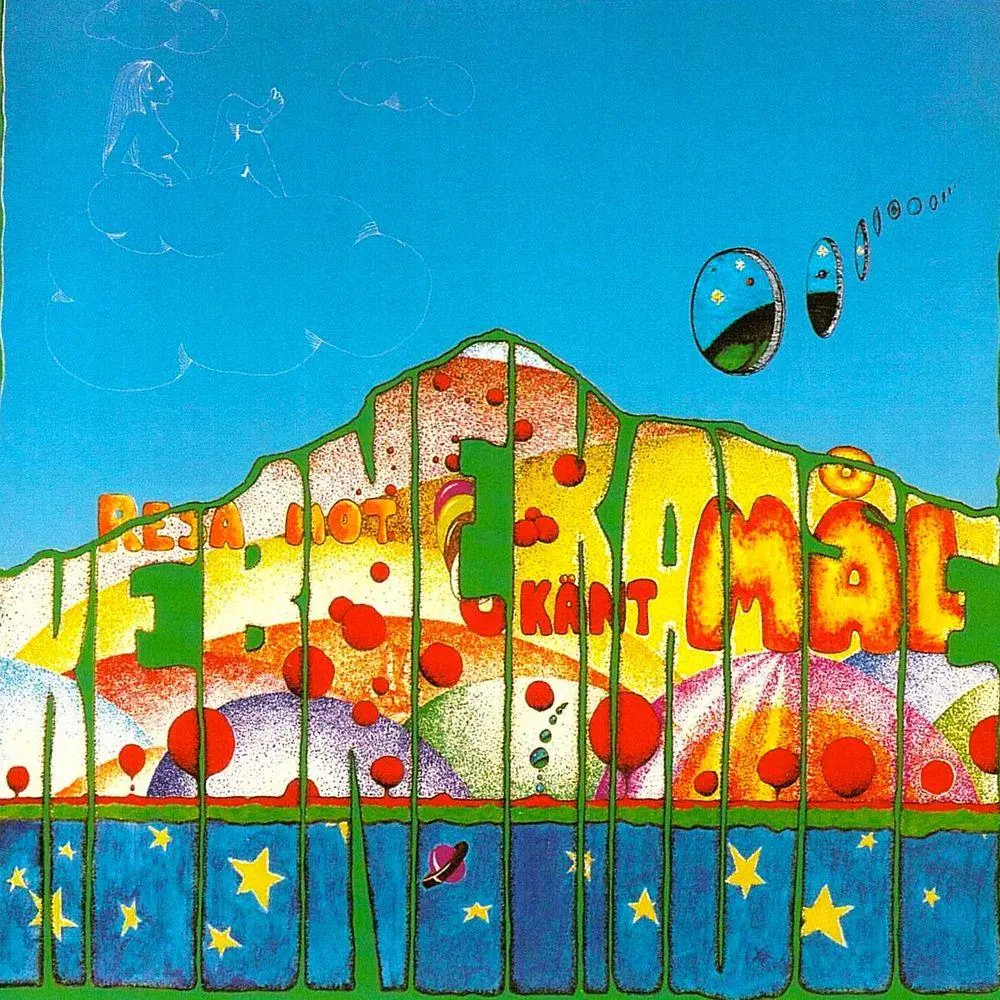 Kebnekajse released their first album, Resa Mot Okänt Mål, in December 1971 on Silence. The title translates as Journey Towards Unknown Destinations.
The album runs on electric guitar throughout, with Håkansson and Scherrer trading leads over Ekman’s direct drumming and Linnarsson’s bass. Most tracks hold to compact structures that pivot between riff-driven verses and brief instrumental stretches; a few extend into looser territory where guitar dominates the space. The vocals — present on four of the seven tracks — sit in a plain, unadorned register, and the album’s overall character reads as hard rock with scattered folk and blues color.
“Tänk på livet” opens on a blunt, repeated guitar figure before vocals enter at a strident pace, with Håkansson’s lead cutting through near the three-minute mark. “Frestelser i stan” is a guitar-forward instrumental that builds on interlocking riff patterns and pulls toward a more melodic resolution. “Orientens Express” runs brief and episodic, with a playful, slightly absurdist quality and a stop-start structure. The title track pairs a driving rhythm with treated, high-pitched vocals that run in parallel with the guitar line, giving the arrangement an unsettled edge.
“Jag älskar sommaren” is the longest piece at just under eleven minutes, mostly instrumental after an opening vocal passage, and sustains a rolling, unhurried exchange between guitar and bass. “Förberedelser till fest” moves at high tempo through a tightly wound instrumental figure that lands somewhere between folk and surf. “Kommunisera” closes the album with vocals and a grinding guitar that thickens in the second half.
A1. “Tänk på livet” [Think About Life] (4:58)
A2. “Frestelser i stan” [Temptations in the City] (4:47)
A3. “Orientens Express” [Orient Express] (2:06)
A4. “Resa mot okänt mål” [Journey Towards an Unknown Destination] (7:14)
B1. “Jag älskar sommaren” [I Love the Summer] (10:47)
B2. “Förberedelser till fest” [Preparations for a Party] (3:33)
B3. “Kommunisera” [Communicate] (5:12)
Cover artwork on Resa mot okänt mål was produced by Håkansson, Rickard Trädgårdh, Scherrer, and Pelle Lindström.
Kebnekaise
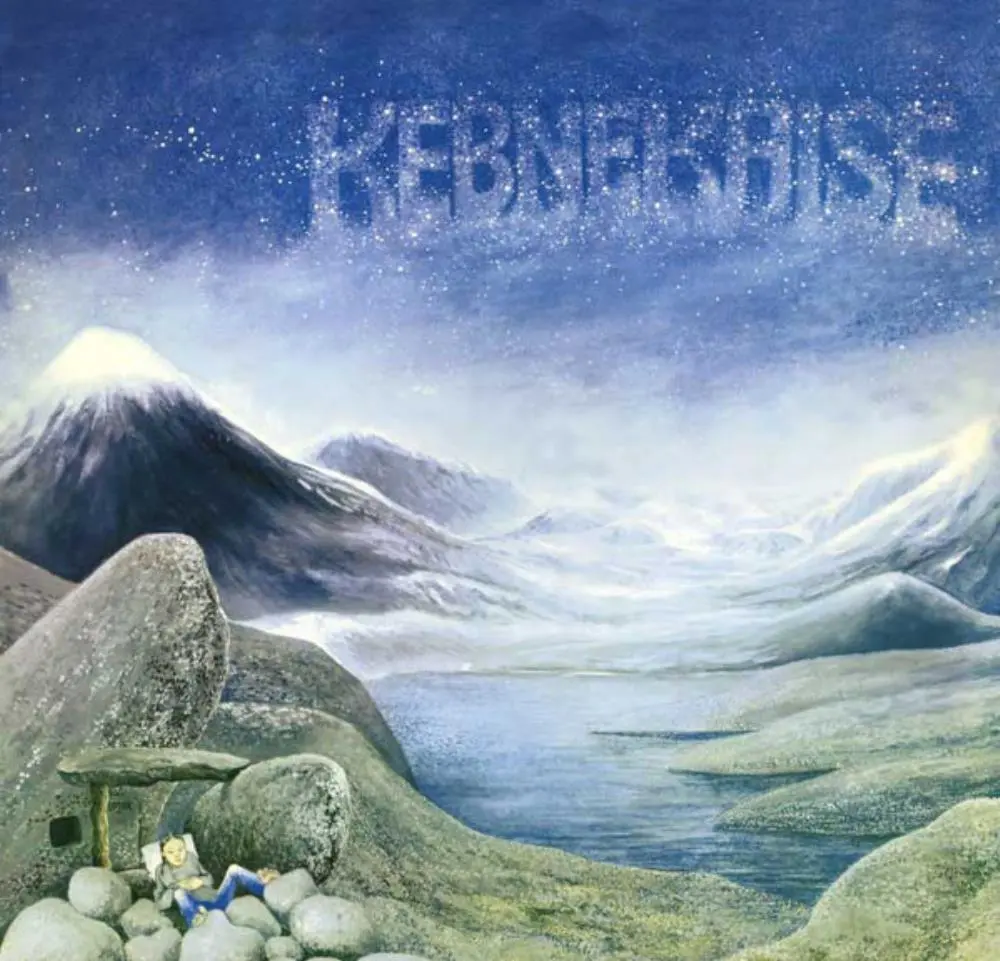 Kebnekaise released their self-titled second album in October 1973 on Silence.
The lineup expanded to nine for this recording: Håkansson and Ingemar Böcker on twin electric guitars, Mats Glenngård on violin, Pelle Lindström on violin and harmonica, Thomas Netzler and Göran Lagerberg sharing bass, Pelle Ekman and Gunnar Andersson sharing drum duties, and Hassan Bah on congas and timbales.
The band abandoned original composition almost entirely, instead adapting four traditional Swedish folk tunes and presenting them in arrangements that move between acoustic and electric registers, with guitar and violin carrying most of the melodic weight. Bah’s percussion provides a Latin underpinning to several tracks, and the dual guitar approach — Böcker’s elaborated, jazz-tinged runs set against Håkansson’s leaner melodic lines — gives the record a sustained conversational texture. There are no keyboards; the album’s timbral range comes from the combination of strings, guitar, and hand percussion alone.
“Rättvikarnas gånglåt” opens with a near-martial conga pattern from Bah and wordless vocal chanting by singer Turid Lundqvist, who appears on this track only; the arrangement stays closest to traditional form, with Glenngård’s violin dominant and Böcker’s guitar filling in beneath. “Horgalåten” drops the vocal and shifts to a looser, wandering guitar exchange with a faintly Arabic quality; Böcker and Håkansson develop the melody at varying distances from the folk source. “Skänklåt från Rättvik” opens on a slow, psychedelically inclined guitar passage before lifting into a more direct melodic statement, with guitar and violin trading off above a firm bass and percussion bed.
“Barkbrödlåten” pairs the two guitarists on interlocking melodic lines that run through a relatively compact structure. The closing “Comanche Spring” — the album’s sole original composition, written by Böcker — runs sixteen minutes across several distinct movements: a measured opening with bass and sparse guitar, a central section of frantic dual-guitar and violin interplay over heavy percussion, a quiet percussion episode, and a final passage where violin and lead guitar exchange in declining intensity.
A1. “Rättvikarnas gånglåt” [The Rättvik Residents’ Walking Tune/Marching Song] (5:07)
A2. “Horgalåten” [The Horgalåten (a traditional Swedish folk dance tune)] (6:18)
A3. “Skänklåt från Rättvik” [Gift Tune/Present Tune from Rättvik] (8:31)
B1. “Barkbrödlåten” [The Bark Bread Tune/Song] (4:37)
B2. “Comanche Spring” [Comanche Spring] (16:01)
Kebnekaise recorded the album at Decibel Studios in Stockholm in September 1973.
Kebnekaise III
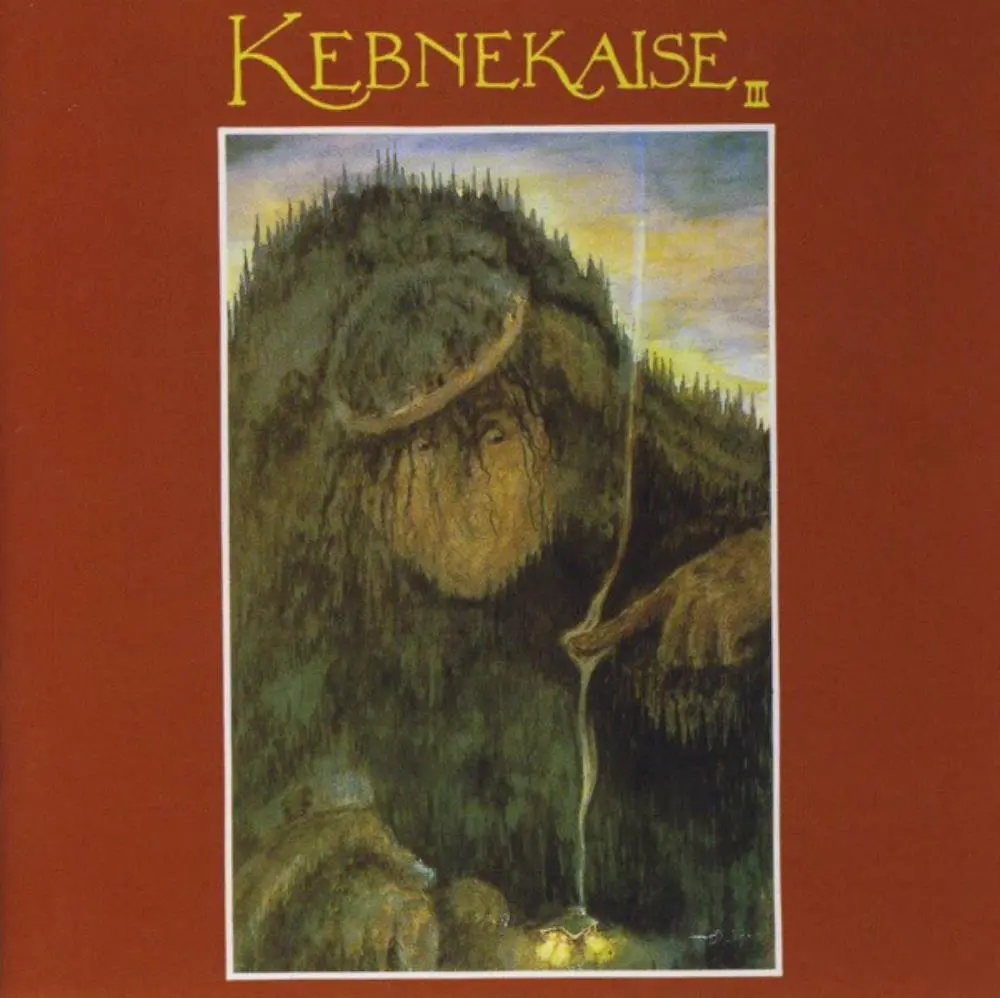 Kebnekaise released their numerical third album in May 1975 on Silence.
Gunnar Andersson’s departure left Ekman as sole drummer, with Bah’s congas, timbales, and additional hand percussion filling the rhythmic space alongside him. The lineup of eight brought new instrument textures to the fore: mandolin from both Glenngård and Håkansson, tambourine from Lindström, and additional percussion across the ensemble.
The album continues the approach of the second — traditional Swedish folk tunes adapted into ensemble arrangements — while tightening the track lengths and distributing the melodic work more evenly across violin, guitar, and harmonica. Böcker’s sole composition, the thirteen-minute “Balladen om björnbär och nätmelon,” holds the long-form role that “Comanche Spring” filled previously. Two original compositions also appear: Håkansson’s “S:t John” and Hassan Bah’s “Mariamá.”
“Leksands brudmarsch” opens at a brisk pace with congas and a driving guitar figure, Glenngård’s violin leading the principal melody. “Polska från Härjedalen” tightens the tempo further and leans on fiddle, while “Eklundapolskan” develops a related theme with more active guitar interaction. The three opening tracks function as a loosely connected sequence, each picking up from the tone of the last. “S:t John” shifts the energy with an instrumental that draws on the harder-edged character of the debut while electric violin layers over the guitar. “Skänklåt till speleman” is the album’s only vocal track, presenting a traditional tune in an arrangement that stays closer to folk convention than most of the surrounding material.
“Polska från Bingsjö” opens the second side in a relatively straightforward adaptation. “Balladen om björnbär och nätmelon” moves through a long opening buildup before breaking into a more urgent central section marked by Håkansson’s guitar and Bah’s congas, then passes through abstract electric passages before resolving. “Mariamá,” composed by Bah and reflecting West African influence, closes the album on a different tonal register from the rest of the record.
A1. “Leksands brudmarsch” [Leksand Wedding March] (4:29)
A2. “Polska från Härjedalen” [Polska from Härjedalen] (3:09)
A3. “Eklundapolskan” [The Eklunda Polska] (4:19)
A4. “S:t John” [St. John] (3:51)
A5. “Skänklåt till speleman” [Gift Tune for a Fiddler/Musician] (3:07)
B1. “Polska från Bingsjö” [Polska from Bingsjö] (3:19)
B2. “Balladen om björnbär och nätmelon” [The Ballad of Blackberries and Cantaloupe] (13:02)
B3. “Mariamá” [Mariamá] (3:14)
Kebnekaise recorded Kebnekaise III at Decibel Studios in Stockholm. Cover artwork was produced by Kurt Netzler.
Ljus från Afrika
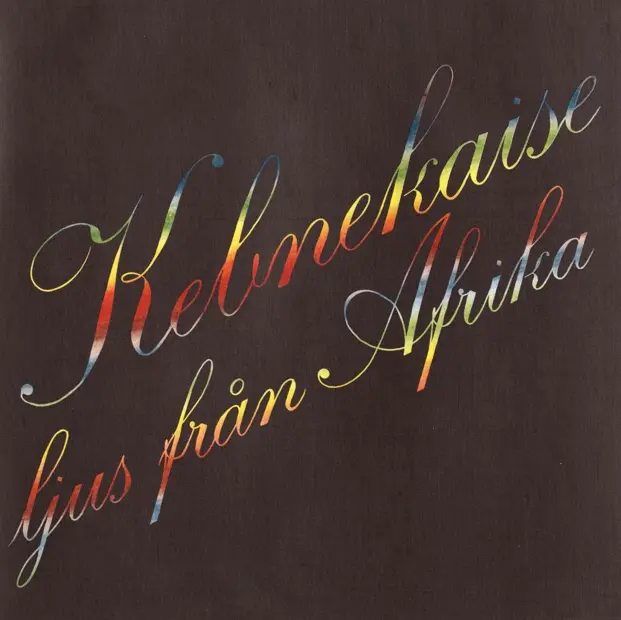 Kebnekaise released their fourth album, Ljus från Afrika, in 1976 on Silence. The title translates as Light From Africa.
The band contracted to a quintet for this recording: Håkansson on guitar, Glenngård on violin, Netzler on bass, Ekman on drums, and Bah on congas, timbales, and congoma. Bah, whose origins lie in Guinea, takes a leading role in shaping the album’s material; most of the tracks draw on West African folk forms rather than the Scandinavian tradition of the previous two records. The arrangements are rhythmically dense, built around Bah’s layered percussion, with guitar and violin used sparingly against the pulse. Christoffer Okonkwo appears on two tracks on soprano and tenor saxophones.
“Doberela Woulo” opens briefly with a percussion-forward figure and sets the album’s tonal register. “Silifé” is the longest track, a sustained, rolling piece built on Bah’s percussion and a recurring guitar figure. “Bèlemama” extends a similar approach with more prominent violin. “Bouncé na Bouncé” brings in Okonkwo on saxophone, whose lines accent the conga-driven rhythm. “Tigerdance/Wind” moves into more abstract territory, with processed guitar and electronic textures that depart from the folk base of the other tracks. “Brudarnas parti” closes the album with heavier guitar, electric bass, and saxophone, and pulls back toward the more direct rock character of earlier Kebnekaise material.
A1. “Doberela Woulo” (2:47)
A2. “Silifé” (7:14)
A3. “Bèlemama” (8:21)
B1. “Bouncé Na Bouncé” (5:10)
B2. “Tigerdance/Wind” (6:28)
B3. “Brudarnas parti” [The Brides’ Party] (5:57)
Elefanten
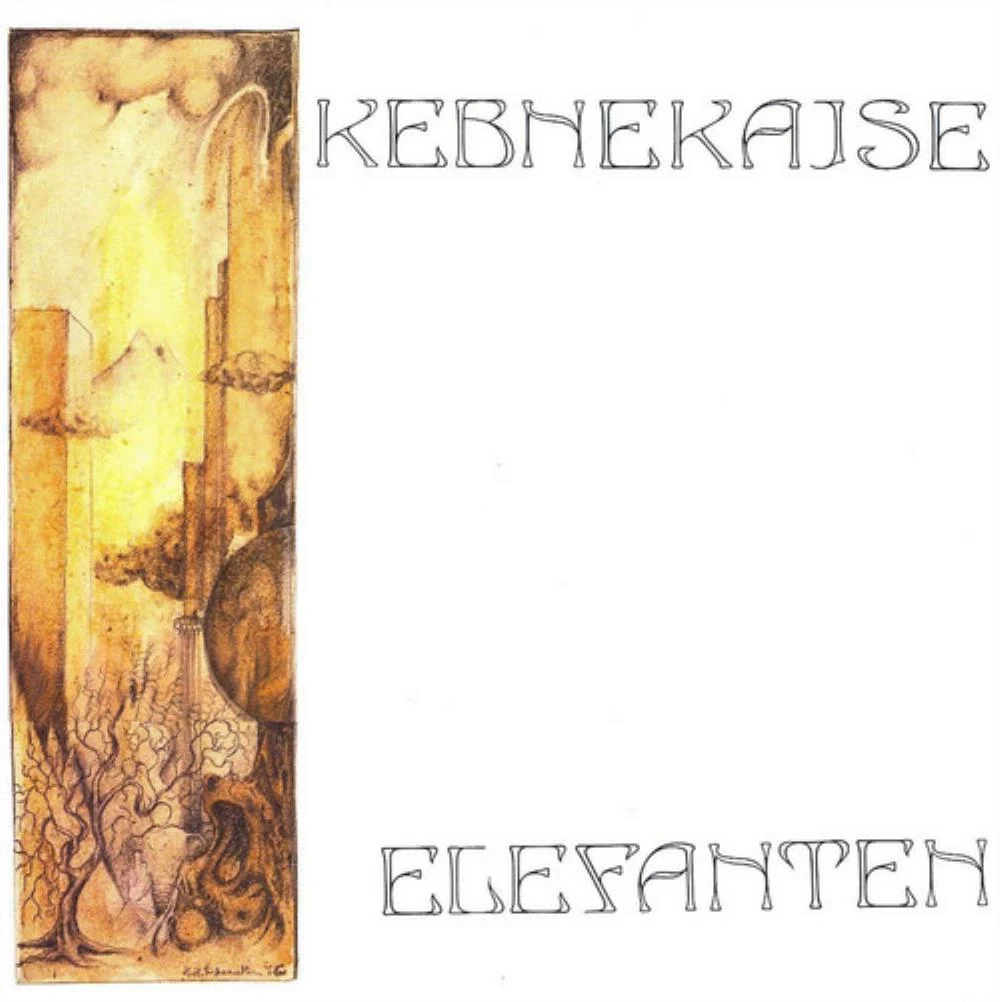 Kebnekaise released their fifth album, Elefanten, in 1977 on Silence.
Okonkwo’s departure ended the African-oriented direction of Ljus från Afrika; Elefanten returns to Scandinavian folk influence while adding fusion and jazz-inflected elements to the texture. The core quintet of Håkansson, Glenngård, Netzler, Bah, and Ekman remains, with three different drummers appearing across the six tracks: Pelle Holm handles one track, Ekman takes another, and Åke Eriksson covers the remaining four. Glenngård’s violin and Håkansson’s guitar carry the melodic leads across most of the record, with Bah’s layered congas and timbales providing a persistent rhythmic counterpoint. The arrangements favor odd meters and sudden tempo shifts, and Håkansson’s guitar work moves between lyrical, sustained lines and more active, fusion-adjacent passages.
“Ingenting” opens on a clean, patient guitar figure over a moderate rhythm, with violin weaving in gradually. “Saab-Mustang” runs at a faster tempo with tighter rhythmic exchanges between guitar and percussion. “Lantluft” takes a more relaxed pace, with violin dominant and guitar filling an accompanying role. “Elefantens strävan mot Nirvana” extends into more elaborate structure, with the guitar and violin developing a theme across several sections over Ekman’s drums. “Grabbarnas afton” runs twelve minutes across a side and moves through several distinct textures: a slow opening passage, a central section of driving guitar and massed percussion, and a gradual withdrawal at the close. “Halling från Ekshärad” closes the album with a traditional Norwegian folk dance arranged for the full ensemble, violin in the foreground.
A1. “Ingenting” [Nothing] (4:41)
A2. “Saab-Mustang” [Saab-Mustang] (5:33)
A3. “Lantluft” [Country Air] (4:53)
A4. “Elefantens strävan mot Nirvana” [The Elephant’s Striving Towards Nirvana] (6:18)
B1. “Grabbarnas afton” [The Boys’ Evening] (12:16)
B2. “Halling från Ekshärad” [Halling from Ekshärad] (6:45) Ekshärad is a traditional Norwegian folk dance and a place in Sweden.
Vi Drar Vidare
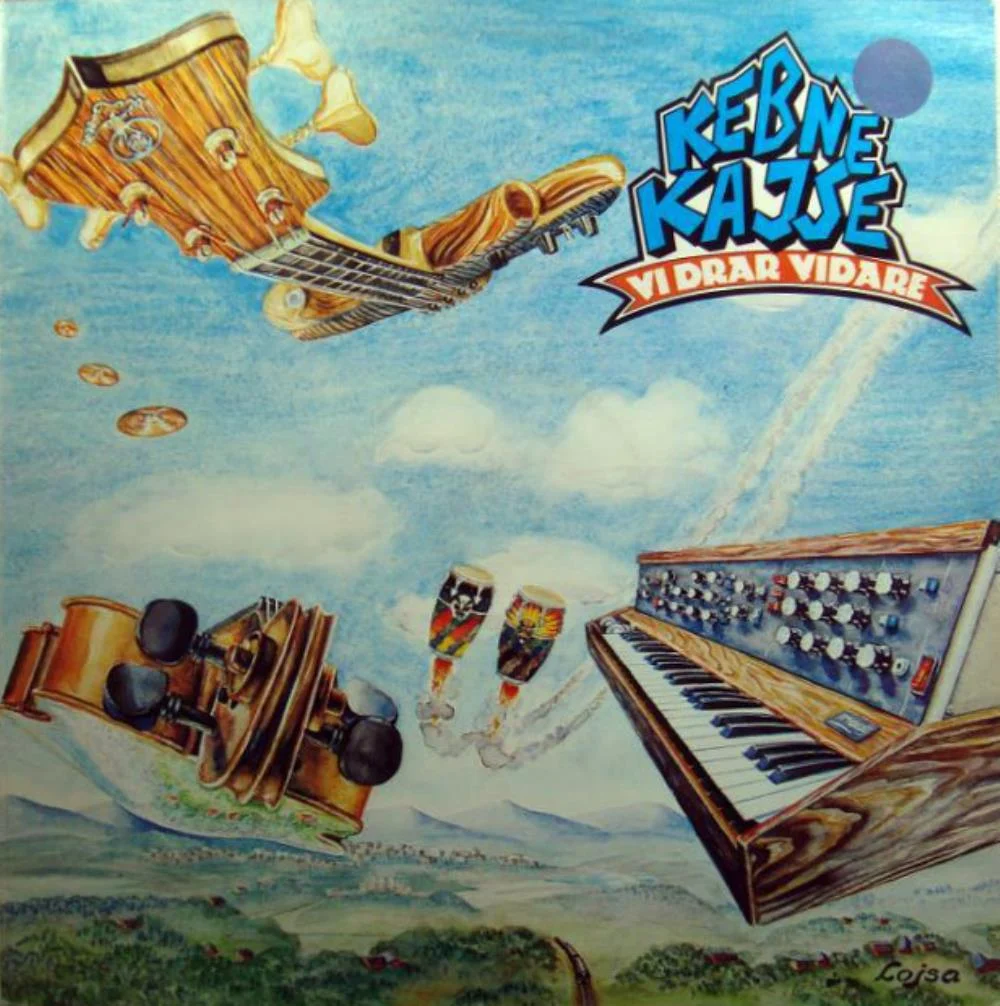 Kebnekaise released their sixth album, Vi Drar Vidare, in 1978 on Mercury. The title is Swedish for “We Move On” or “We Carry On” (literally “We Draw Further”).
Håkansson’s departure prior to this recording marked the most significant personnel shift in the band’s history. The lineup for Vi drar vidare consists of Glenngård on guitar, violin, and vocals; Per Lejring on acoustic and electric pianos, organ, Moog, and vocals; Netzler on bass and Taurus pedals; Pelle Holm on drums; and Bah on congas, timbales, and percussion. Lejring’s keyboards — organ, electric piano, and synthesizer — give the album a fundamentally different tonal character from any previous Kebnekaise record; the dense percussion and twin-guitar interplay of the earlier work give way to keyboard-led arrangements with more conventional song structures. Nearly half the tracks carry vocals. Glenngård’s violin retains an idiomatic role, but its relationship to the overall texture shifts in a more pop-oriented framework.
“Friheten” opens with a sweeping keyboard arrangement and prominent vocals in a style more aligned with late-1970s Swedish pop than with Kebnekaise’s prior output. “Prelud” is a brief, subdued piano introduction. “Jakten på Vivaldi” is among the album’s more instrumentally developed pieces, with violin and keyboards trading across a mid-tempo structure. “Attitydfaser” is a short transitional piece. “Oändliga möjlighet” returns to vocal-forward territory with a keyboard-driven arrangement.
Side two opens with “Klubban,” a short, punchy instrumental; “Stigfinnaren” offers a more spacious instrumental with violin prominent. “Ur gropen i hålet” is a brief passage under two minutes. “Jag väver av toner” develops into the album’s most extended instrumental section, with Glenngård’s violin and Lejring’s organ sustaining a longer exchange. “Stupet” closes the main body of the album with a moderate-tempo arrangement. “7:an” is a brief coda.
A1. “Friheten” [The Freedom] (6:20)
A2. “Prelud” [Prelude] (1:28)
A3. “Jakten på Vivaldi” [The Hunt for Vivaldi] (5:29)
A4. “Attitydfaser” [Attitude Phases] (2:13)
A5. “Oändliga möjlighet” [Infinite Possibility] (5:53)
B1. “Klubban” [The Club/Hammer] (2:28)
B2. “Stigfinnaren” [The Pathfinder] (4:52)
B3. “Ur gropen i hålet” [Out of the Pit into the Hole] (1:01)
B4. “Jag väver av toner” [I Weave with Tones/Notes] (6:00)
B5. “Stupet” [The Cliff/Precipice] (3:56)
B6. “7:an” [The 7 / Number 7] (1:15)
Discography:
- Resa mot okänt mål (1971 • Kebnekajse)
- Kebnekaise (1973)
- Kebnekaise III (1975)
- Ljus från Afrika (1976)
- Elefanten (1977)
- Vi drar vidare (1978)
Sources:
Artist/Album Pages:
Kahvas Jute was an Australian post-psychedelic hard-rock band from Sydney that released the 1971 a...
Svanfríður was an Icelandic art-rock/psych band that existed for 17 months between 1972 and 1973, ...
The Willem Breuker Kollektief was a Dutch avant-jazz big band formed in Amsterdam in 1974 by reedi...
Eruption was a UK soul-funk group that charted with the Ann Peebles cover “I Can't Stand the Rain”...
Utopia was an American maximalist-rock band that released six studio albums and a live disc on Bea...
Too Much was a Japanese hard-rock/psych band behind a 1971 self-titled album on Atlantic. Member...
Cirkus was an English symphonic-rock band from Newcastle upon Tyne that released the album One on ...
Pražský Výběr was a Czech art-rock band, formed in 1976 by keyboardist Michael Kocáb, who led thei...
Steve Hackett is an English classical/rock guitarist with a career in music that dates back to 1970....
Clivage was a French ethno/jazz-rock ensemble led by André Fertier across the 1977/78 albums Regin...
Hi-Tension was an English soul-funk band from London that released a 1978 self-titled album on Isl...
Daddy Warbucks were an American pop-rock band from Los Angeles whose album appeared in 1976 on th...