

Ultimate Spinach was an American psychedelic rock band that released three 1968–69 albums on MGM.
Formed in Boston by singer–guitarist Ian Bruce-Douglas, the group emerged as part of MGM’s so-called “Bosstown Sound,” a marketing campaign aimed at positioning Boston as a rival psychedelic hub to San Francisco.
Their self-titled debut introduced a dense, effects-driven sound built on anti-war themes and multi-part suites. A second album, Behold & See, retained the conceptual structure but featured a new rhythm section and softer dynamics. After Bruce-Douglas departed, a reconfigured lineup recorded III, a straightforward rock album with blues, garage, and folk influences. Ultimate Spinach disbanded after their final live engagements in early 1969.
Members: Ian Bruce-Douglas (vocals, guitar, harmonica, keyboards, bass, recorder, theremin, vibraphone), Barbara Hudson (guitar, vocals), Keith Lahteinen (drums, percussion, vocals), Ted Myers (guitar, vocals), Richard Nese (bass), Geoffrey Winthrop (guitar, vocals), Jeff “Skunk” Baxter (guitar), Mike Levine (bass), Tony Scheuren (drums)
Background
Ultimate Spinach formed in 1967 in Boston from the remnants of a group called Underground Cinema, which served as house band at the Unicorn club. This lineup featured multi-instrumentalist Ian Bruce-Douglas, vocalist/guitarist Barbara Hudson, drummer Keith Lahteinen, guitarist Geoff Winthrop, and bassist Richard Nese. They recorded demos that later surfaced on New England Teen Scene: Unreleased! 1965–1968.
Upon signing with local producer Alan Lorber, Bruce-Douglas renamed the band Ultimate Spinach after an LSD-induced vision. Lorber used the band as a centerpiece for his heavily promoted “Bosstown Sound” initiative, which aimed to establish Boston as a rival music scene to San Francisco. The project attracted national media attention, briefly elevating the band’s profile.
Ultimate Spinach (1968)
 Ultimate Spinach released their self-titled debut album in January 1968 on MGM.
The album presents their dense, effects-driven psychedelia with darkly stylized mini-suites that blend fuzz guitars, tremolo basslines, and baroque instrumentation. Across nine thematically unified tracks, they explore claustrophobic anti-war narratives and surrealist imagery, linked by layered arrangements, heavy processing, and spoken-word interludes.
Ian Bruce-Douglas wrote and composed all the songs. He performs vocals, electric piano, electric harpsichord, harpsichord, 12-string guitar, sitar, harmonica, flute, theremin, and celesta, and authored the liner notes. Barbara Hudson sings and plays electric and hollow-body guitars and kazoo. Keith Lahteinen plays drums, tabla, bass drum, bells, and chimes. Geoffrey Winthrop adds rhythm and lead guitar as well as sitar and electric sitar. Richard Nese plays bass and employs amplified feedback.
The record opens with disjointed organ-and-guitar rockers (“Ego Trip,” “Your Head Is Reeling”) and drifts into multi-part instrumentals that juxtapose folk themes with hypnotic repetition (“Sacrifice of the Moon,” “Baroque #1”). Barbara Hudson delivers an unnerving performance on the album’s centerpiece, “(Ballad of the) Hip Death Goddess,” a slow-motion invocation layered with echo and distorted soloing. The B-side mixes blues-based sarcasm (“Dove In Hawk’s Clothing”) with absurdist theatrics (“Funny Freak Parade,” “Pamela”), capping the album with a sense of grotesque parody.
A1. “Ego Trip” (3:15) – A distorted organ riff circles over four chords as Bruce-Douglas riffs on countercultural self-delusion with rising agitation.
A2. “Sacrifice of the Moon” (3:45) – A four-part suite shifts from looping organ drones to Baroque recorder lines and lullaby motifs, ending in an instrumental swirl of reverb and rhythm guitar.
A3. “Plastic Raincoats / Hung-Up Minds” (2:54) – A parlor piano vamp sets a saloon-like tone for a cynical vocal, embellished with background voices and ambient room chatter.
A4. “(Ballad of The) Hip Death Goddess” (8:18) – Hudson’s whispered vocals float above a six-note bass motif and extended psychedelic soloing in a hypnotic tribute to doomed beauty.
B1. “Your Head Is Reeling” (3:39) – The Doors’ influence surfaces in another burst of overdriven organ and clipped declarations on social disintegration.
B2. “Dove in Hawk’s Clothing” (3:55) – A blues-based anti-war rant framed by snarling fuzz tones and dry rhythmic pacing.
B3. “Baroque #1” (4:46) – Bruce-Douglas cycles through harpsichord, harmonica, and vibraphone over a churning instrumental backdrop steeped in delay and echo.
B4. “Funny Freak Parade” (2:36) – A warped cabaret sequence plays out in exaggerated vocal inflection and stage-set orchestration, mocking outsider caricatures.
B5. “Pamela” (3:09) – A melodramatic closer that lurches between horror-camp and theatrical psych-pop, leaning on minor-key piano and falsetto inflections.
Sessions spanned September 18 through October 29, 1967, at Bell Sound in New York City with producer Alan Lorber and engineer Harry Yamark. The cover features artwork and design by Richard Sauter.
MGM issued Ultimate Spinach simultaneous with the debuts of Beacon Street Union and Orpheus as part of the label’s “Bosstown Sound” marketing campaign.
The album charted at No. 34 on the Billboard 200 and earned Ultimate Spinach a supporting slot alongside Big Brother and the Holding Company and The Youngbloods at the Fillmore.
Behold & See
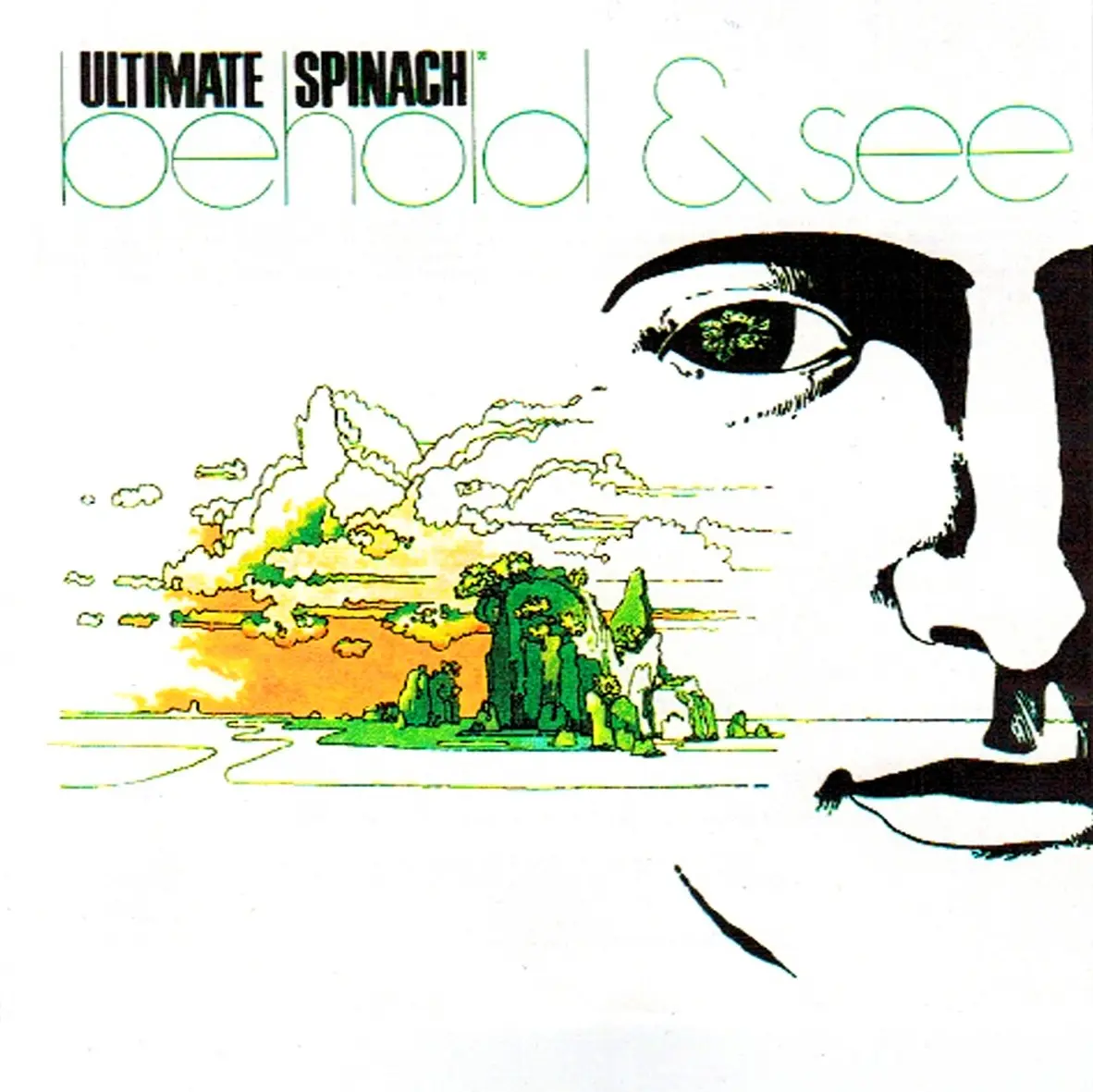 Ultimate Spinach released their second album, Behold & See, in August 1968 on MGM.
The album maintains the conceptual format of their debut but with revised personnel and reduced keyboard presence. This marks the first appearance of drummer Russell Levine, who replaced Lahteinen, and co-vocalist Carol Lee Britt, who replaced Priscilla DiDonato. Geoffrey Winthrop departed before the sessions and was replaced by Jeff Baxter, who does not appear in the album credits but was part of the band at this time.
Ian Bruce-Douglas again wrote, composed, and arranged all material. He sings and plays electric piano, organ, vibraphone, lead guitar, and recorder. Barbara Hudson sings and plays acoustic guitar. Richard Nese returns on bass. Russell Levine plays drums and percussion. Geoffrey Winthrop plays rhythm guitar. Carol Lee Britt provides additional vocals.
Behold & See advances Ultimate Spinach’s psychedelic framework with extended forms, surrealist themes, and a deeper integration of jazz and chamber instrumentation. Ian Bruce-Douglas layers processed guitar and vocals across fluctuating structures that pivot between baroque mysticism, dystopian satire, and modal improvisation. Several tracks mutate through contrasting sections—folk, fuzz, noise, and organ-led drift—without relying on solo spotlights. Structured as long-form pieces rather than vamp extensions, the album favors transitional shifts, spoken interludes, and tonal dissonance over repetition or climax.
A1. “Gilded Lamp of the Cosmos” (2:30) – short psychedelic ballad with a fuzz-drenched riff resembling “Foxy Lady,” colored by Carole Lee Britt’s treated vocals and vibrato-heavy lead guitar.
A2. “Visions of Your Reality” (5:49) – Bruce-Douglas sings over a tense, fuzz-blues framework with spiraling lead guitar phrasing that drags against the pace.
A3. “Jazz Thing” (8:20) – vibraphone and lounge-chord voicings frame a slow-building piece with satirical lyrics and interludes that shift from cocktail ambiance to tense spoken-word.
A4. “Mind Flowers” (9:38) – disorienting collage with filtered vocals, sustained feedback, unstable chord cycles, and dissolving sections that ebb between paranoia and trance.
B1. “Where You’re At” (3:10) – conventional rocker driven by Britt’s clear lead vocal and restrained band dynamics.
B2. “Suite: Genesis of Beauty (In Four Parts)” (9:56) – multipart piece beginning with a pastoral motif, interrupted by an abrupt jazz turn and declamatory lyrics; the structure fragments without resolution.
B3. “Fifth Horseman of the Apocalypse” (5:50) – instrumental in three phases: Byrds-like folk intro with harmonica, distorted midsection of multi-tracked guitar, and an organ-flute coda that circles back to the start.
B4. “Fragmentary March of Green” (6:51) – slow, piano-led dirge with Eastern percussion accents, deadpan vocals, and a closing chant that recalls mid-period Beatles.
Sessions occurred April 13 through 24, 1968, at Mayfair Studios in New York City with producer Alan Lorber and engineers Harry Yamark and Val Valentin. The cover features artwork by David Jenks.
The album peaked at No. 198 as public interest in the “Bosstown Sound” waned and the band’s West Coast-derived aesthetic fell out of favor. Bruce-Douglas departed shortly after its release, citing creative interference from Lorber.
Ultimate Spinach III
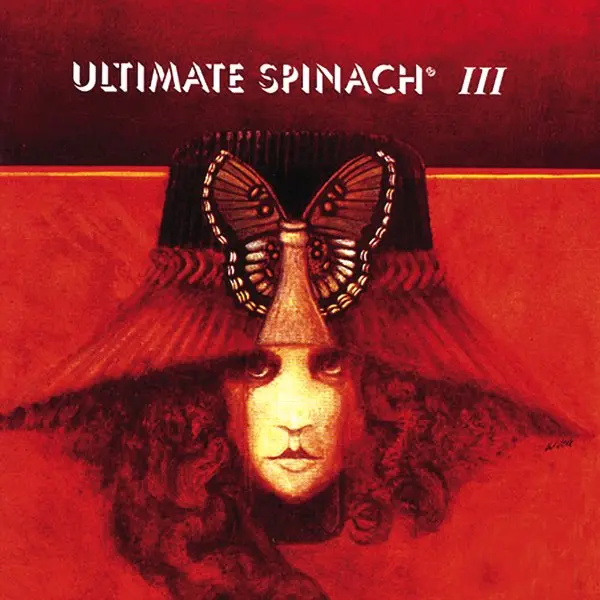 Ultimate Spinach released their numerical third album in February 1969 on MGM. Recorded after Ian’s departure, producer Alan Lorber completed III with mostly new musicians.
The album eschews effects-driven psych for concise forms shaped by Ted Myers and Tony Scheuren, both previously of Chamaeleon Church. Myers handles lead vocals and lead guitar. Scheuren performs organ, piano, acoustic guitar, and vocals. Russell Levine returns on drums and percussion while Barbara Hudson (the last remaining co-founder) appears on vocals and acoustic guitar. III also features two additional recruits: bassist Mike Levine and guitarist Jeff Baxter, who plays lead, pedal-steel, and vibraphone.
III encompasses garage rock (“Daisy”), straight blues (“Eddie’s Rush,” “Back Door Blues”), and acoustic pop (“Reasons”). “Some Days You Just Can’t Win” combines double-tracked vocals with downcast chord changes, while “Happiness Child” uses a clear arrangement with subdued psychedelic elements. “Strange-Life Tragicomedy” incorporates layered transitions and abstract lyrics reminiscent of the band’s earlier style.
A1. “(Just Like) Romeo & Juliet” (2:38) – electric cover of the Reflections hit with a heightened rock arrangement; Myers handles lead, Baxter adds a mid-song solo.
A2. “Some Days You Just Can’t Win” (3:28) – blues-influenced minor-key ballad with double-tracked vocals and shaded guitar lines.
A3. “Daisy” (2:18) – short, driving garage rock tune with tight pacing.
A4. “Sincere” (3:29) – mid-tempo country track marked by straight rhythm and plain vocal delivery.
A5. “Eddie’s Rush” (6:50) – loose blues instrumental with spotlight segments for each player; assembled as a studio jam.
B1. “Strange-Life Tragicomedy” (4:13) – layered arrangement with unstable pacing and lyrical abstraction; faint trace of earlier psychedelia.
B2. “Reasons” (3:51) – soft acoustic ballad led by Scheuren and Hudson in tandem.
B3. “Happiness Child” (4:42) – mid-tempo psych-pop with an easy vocal line and softened contours.
B4. “Back Door Blues” (3:02) – boogie-rocker with recycled material from Myers’ prior group The Lost; Baxter’s opening guitar presages his Steely Dan phrasing.
B5. “The World Has Just Begun” (3:19) – final track with steady rhythm and lyrical reflection; ends on a clean, compact Baxter lead.
Sessions occurred December 2 through 11, 1968, at Mayfair Studios in New York City with producer Alan Lorber and engineers Val Valentin and Eddie Smith.
The band disbanded shortly after this release.
Discography:
- Ultimate Spinach (1968)
- Behold & See (1968)
- Ultimate Spinach (1969)
Sources:
- Discogs: Ultimate Spinach
- RYM: Ultimate Spinach
- ProgArchives: Ultimate Spinach
- 45worlds: Ultimate Spinach
- 45cat: Ultimate Spinach
Artist/Album Pages:
Lothar and the Hand People were an American psych-rock band that released the albums Presenting... a...
The Smoke was an American pop-psych band from Los Angeles that released a 1968 self-titled album ...
Stained Glass was an American psych-rock band from San Jose that released four singles in 1966/67...
Blues Image was an American post-psychedelic rock band from Tampa that scored a 1970 hit with "Ri...
Boffalongo was an American psych-rock band from NYC that released the 1969/70 albums Boffalongo a...
Banchee was an American East Coast psych-rock band that released a self-titled album on Atlantic in ...
Steppenwolf was an American hard-rock band that released six albums and two live sets on ABC/Dunh...
Appaloosa was an American chamber-folk band from Boston that released a self-titled album on Colu...
The Glitterhouse was an American soul-psych band that released the 1968 album Color Blind on Dynov...
The United States of America were an American psych-rock band that released a 1968 self-titled al...
Giant Crab was an American psychedelic blue-eyed soul band from California. They cut three single...
Westfauster was an American psych-rock trio from Cincinnati that released the 1971 album In a Kin...