

The Chocolate Watchband was an American garage-rock band that released three 1967–69 albums on Capitol–Tower. Their songs “Let’s Talk About Girls” and “Are You Gonna Be There (At the Love-In)?” appear on numerous psych comps.
Members: Mark Loomis (guitar, keyboards, 1965-67, 1968-70), Rich Young (bass, 1965-66), Jo Kemling (organ, 1965), Ned Torney (guitar, 1965, 1968-70), Danny Phay (lead vocals, guitar, 1965, 1968-70), Pete Curry (drums, 1965), Gary Andrijasevich (drums, percussion, vocals, 1965-67, 1968-70, 1999-present), Bill “Flo” Flores (bass, vocals, 1966-70, 1999-2015), Sean Tolby (guitar, 1966-70), David Aguilar (lead vocals, harmonica, keyboards, percussion, 1966-68, 1999-present), Tim Abbott (lead guitar, flute, harmonica, vocals, 1967, 1999-present), Chris Finders (lead vocals, 1967), Mark Whittaker (drums, 1967)
Background
The Chocolate Watchband formed in summer 1965 at Foothill College in Los Altos Hills, California, when guitarists Mark Loomis and Ned Torney assembled singer Danny Phay, bassist Rich Young, drummer Pete Curry, and organist Jo Kemling. Loomis and Torney came from the Chaparrals, a 1964 surf band in which Torney taught Loomis rock-and-roll guitar. The musicians chose the Chocolate Watchband name in the Foothill College student lounge. Cupertino High School jazz drummer Gary Andrijasevich soon replaced Curry.
The first lineup worked the South Bay teen circuit with R&B songs and British rock material but issued no records. Young left after receiving a military draft call. The Topsiders recruited Torney in November 1965. Phay and Kemling followed him into the reconfigured group, which became the Otherside.
Loomis briefly joined the Shandels, then revived the Chocolate Watchband in spring 1966 with Shandels bassist Bill “Flo” Flores and returning drummer Andrijasevich. Former Topsiders guitarist David Jackson “Sean” Tolby joined next. Singer David Aguilar came from Early Morning Reign while studying biology at San Jose State University. The five rehearsed nightly in Loomis’s garage before returning to clubs and teen dances around the South Bay with sets built largely from R&B songs and British imports.
The group supported the Mindbenders at Bill Graham’s Fillmore Auditorium on July 8–9, 1966. Graham subsequently offered to manage the Watchband, but the musicians already were under contract to local promoter Ron Roupe, who connected the group with Green Grass Productions in Los Angeles, where producers Ed Cobb and Ray Harris brought the musicians into the studio.
The Watchband cut Chuck Berry’s “Come On” as an early studio test before recording Cobb’s “Sweet Young Thing” and Bob Dylan’s “Baby Blue.” Cobb also put the musicians behind the Hogs name for “Blues Theme” (b/w “Loose Lip Sync Ship”), which Hanna-Barbera issued in December 1966. Uptown released “Sweet Young Thing” (b/w “Baby Blue”) that month, followed by “Misty Lane” (b/w “She Weaves a Tender Trap”) in February 1967.
Green Grass placed the Watchband in the Sam Katzman films Riot on Sunset Strip and The Love-Ins. The group performs “Don’t Need Your Lovin’” and “Sitting There Standing” in Riot on Sunset Strip, while the second film prompted the Tower single “Are You Gonna Be There (At the Love-In)” (b/w “No Way Out”). Aguilar, Flores, Andrijasevich, Loomis, and Tolby returned to Los Angeles for further recordings under Cobb, and Tower scheduled No Way Out for a September release.
No Way Out
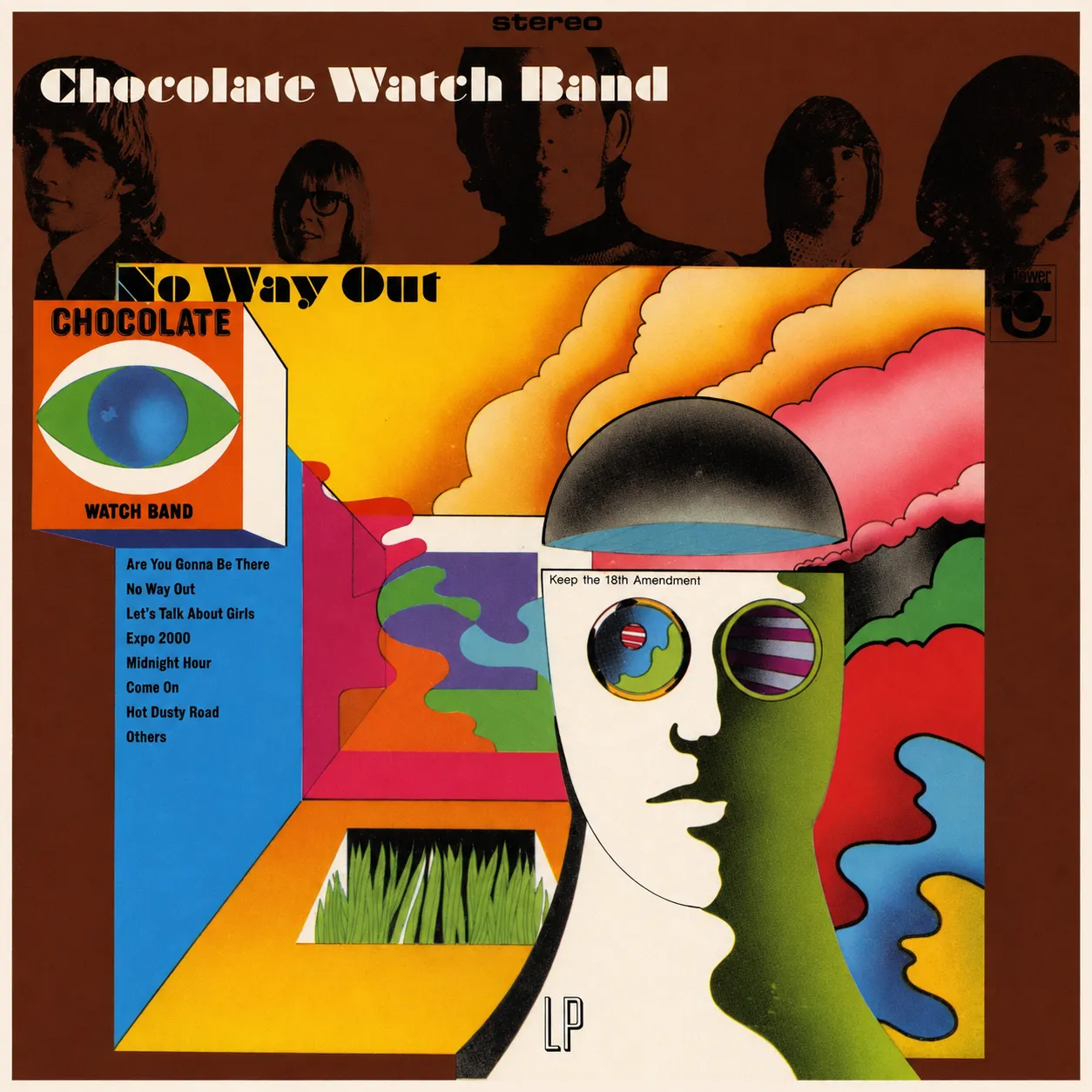 The Chocolate Watchband released their debut studio album, No Way Out, in September 1967 on Tower Records.
The ten-song program splices Watchband performances with Cobb-directed studio reconstructions. Don Bennett redubbed lead vocals on “Let’s Talk About Girls,” “In the Midnight Hour,” and “Hot Dusty Road,” while Richard Podolor assembled studio players for two instrumentals, “Expo 2000” and “Dark Side of the Mushroom.” Cobb built “Gossamer Wings” from the basic track of the Hogs B-side “Loose Lip Sync Ship” and added Bennett as lead singer.
“Let’s Talk About Girls” stomps through a reverb-soaked riff over a steady beat. “Come On” rattles through brisk phrases with harmonica threaded across a simple beat. “Dark Side of the Mushroom” circles through a bolero-like fuzz figure.
“Are You Gonna Be There (At the Love-In)” surges through loose, echo-heavy phrases under a defiant sneer. “Gone and Passes By” coils around sitar figures over a rolling beat. “No Way Out” twists around a jagged blues-raga guitar figure beneath distant echo. “Expo 2000” prowls through shadowed instrumental riffage.
A1. “Let’s Talk About Girls” (2:30) – Freiser
A2. “In the Midnight Hour” (4:26) – Pickett–Cropper
A3. “Come On” (1:50) – Berry
A4. “Dark Side of the Mushroom” (2:26) – Podolor–Cooper
A5. “Hot Dusty Road” (2:26) – Stills
B1. “Are You Gonna Be There (At the Love-In)” (2:24) – McElroy–Bennett
B2. “Gone and Passes By” (3:09) – Aguilar
B3. “No Way Out” (2:25) – Cobb
B4. “Expo 2000” (2:33) – Podolor
B5. “Gossamer Wings” (3:34) – Bennett–McElroy
Sessions occupied four days in mid-1967 at American Recording Studios in Los Angeles, with producer Ed Cobb, a former Four Preps singer who moved into rock production through The Standells (Dirty Water, Try It). Richard Podolor and Bill Cooper engineered No Way Out; Podolor also worked on 1967 recordings by the Electric Prunes (Underground) and The Monkees (More of the Monkees).
No Way Out appeared in a sleeve designed by Bill Dhalle, whose contemporary credits include the Blues Project (Projections), The Cyrkle (Neon), and Strawberry Alarm Clock (Incense and Peppermints). The front places a split green-and-white face in visor-like goggles against geometric blocks and layered clouds beneath a brown strip of group silhouettes. Dense back-cover copy occupies a central diamond, with eye and ankh motifs among the surrounding symbols.
Tower lifted “Are You Gonna Be There (At the Love-In)” as an October 1967 single (b/w “No Way Out”).
The Inner Mystique
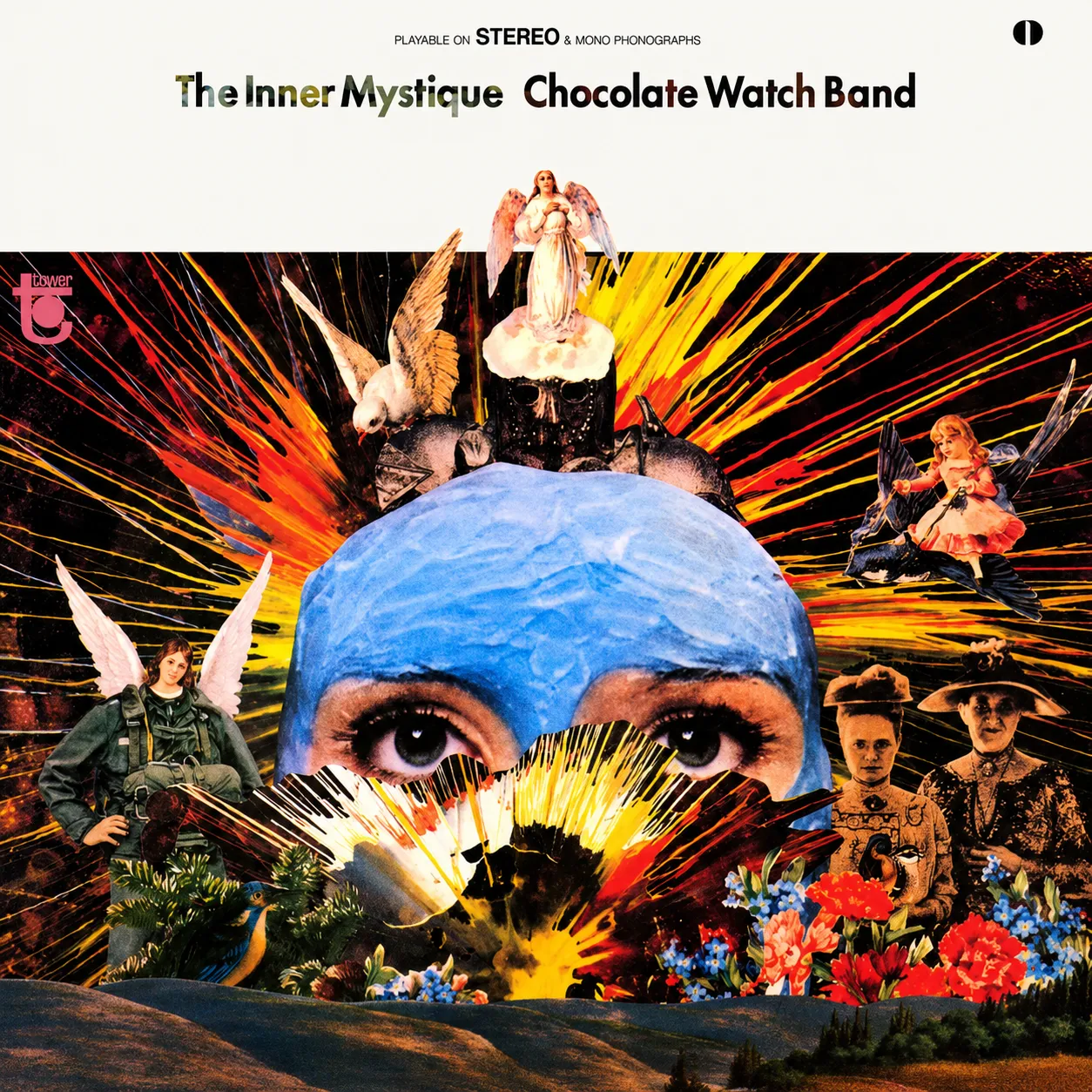 The Chocolate Watchband released their second studio album, The Inner Mystique, in February 1968 on Tower Records.
Richard Podolor assembled the studio unit for side one around sitar and flute parts on the two Cobb instrumentals. Don Bennett takes the lead on “In the Past,” while side two combines finished Watchband recordings with Bennett-redubbed outtakes from earlier sessions.
“Voyage of the Trieste” meanders through sitar flourishes and chimes before jazz-sax breaks cut across a repeating fuzz figure. “In the Past” glides on soft sitar phrases through shimmering echo. “Inner Mystique” lingers over slow, darkened figures with flute arabesques suspended above fuzz.
“I’m Not Like Everybody Else” snarls from simmering lines into barked declarations over overdriven chords. “Medication” simmers through loose phrases toward a heated finish. “Baby Blue” sways through chiming phrases as wind lines rise before an abrupt stop. “I Ain’t No Miracle Worker” shakes through jangling guitar and bouzouki beneath Aguilar’s howl.
A1. “Voyage of the Trieste” (3:39) – Cobb
A2. “In the Past” (3:08) – Proctor
A3. “Inner Mystique” (5:34) – Cobb
B1. “I’m Not Like Everybody Else” (3:43) – Davies
B2. “Medication” (2:04) – Alton–Di Tosti
B3. “Let’s Go, Let’s Go, Let’s Go” (2:04) – Ballard
B4. “Baby Blue” (3:14) – Dylan
B5. “Ain’t No Miracle Worker” (2:51) – Tucker–Mantz
Cobb assembled The Inner Mystique for its February 1968 release from earlier Watchband recordings and newly constructed studio material. Podolor built side one with session players, using Bennett on “In the Past” between the instrumentals “Voyage of the Trieste” and “Inner Mystique.” Podolor and Cooper co-engineered before 1968 work on Steppenwolf (Steppenwolf).
Dhalle returned for The Inner Mystique amid 1968 sleeve work for Blue Cheer (Outsideinside), the Neighb’rhood Childr’n (self-titled), and Harpers Bizarre (Secret Life of Harpers Bizarre). The front collage centers a blue female head and disembodied eyes amid fairy figures and radiating color bands. The back cover substitutes a dense small-type roll of names and influences for conventional group imagery.
One Step Beyond
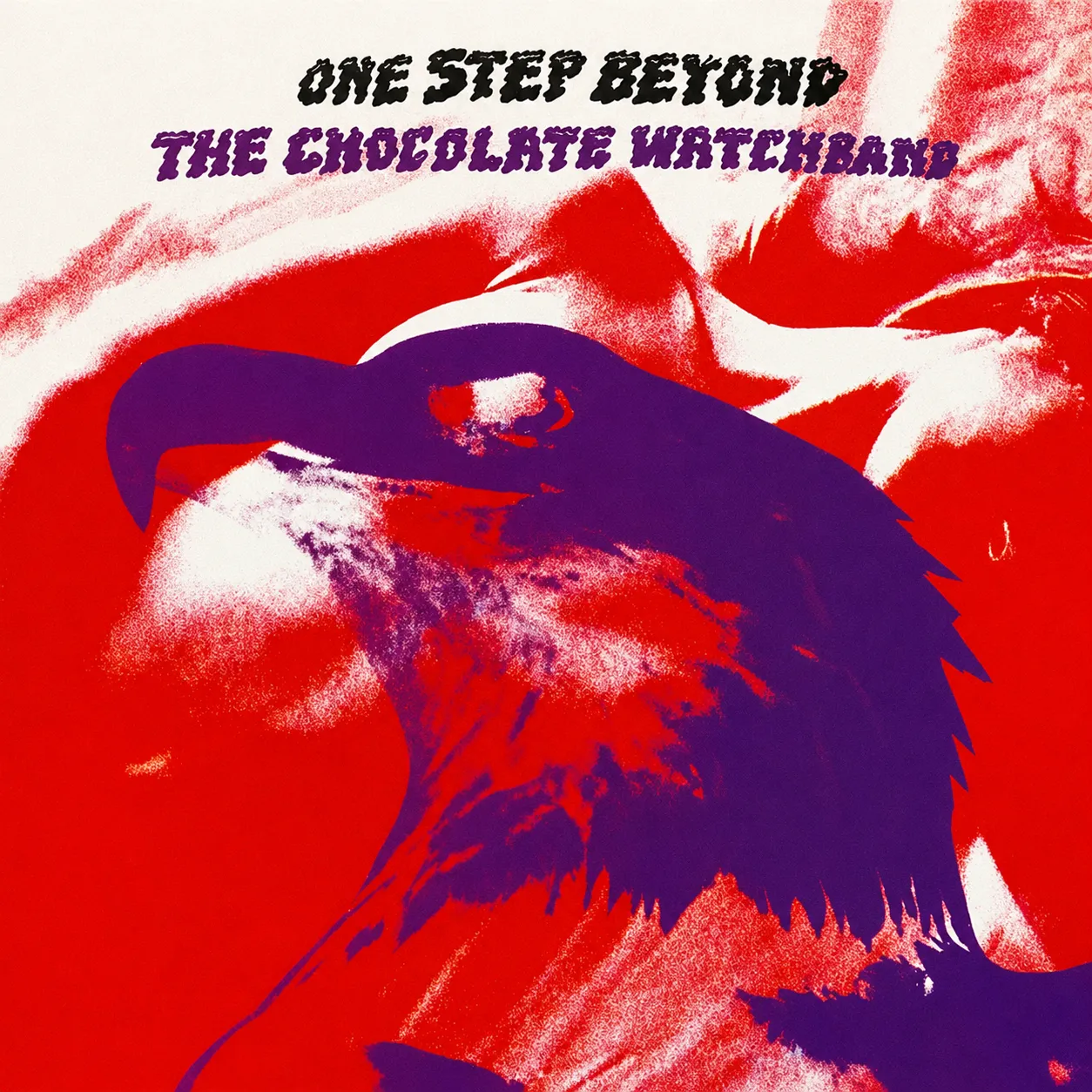 The Chocolate Watchband released their third studio album, One Step Beyond, in May 1969 on Tower Records.
Tolby and Flores reassembled the recording lineup with returnees Loomis and Andrijasevich plus original lead singer Danny Phay. Six band originals fill the seven-song program with folk-leaning guitar arrangements and shared harmonies. “I Don’t Need No Doctor” supplies the sole outside composition. Moby Grape guitarist Jerry Miller replaces Loomis on lead guitar for “Devil’s Motorcycle.”
“I Don’t Need No Doctor” surges through a driving riff with rough-edged distortion. “Fireface” thickens around dense riffage. “And She’s Lonely” settles into a mid-song guitar arpeggio.
A1. “Uncle Morris” (3:00) – Andrijasevich–Loomis
A2. “How Ya Been” (3:08) – Andrijasevich–Phay
A3. “Devil’s Motorcycle” (2:59) – Andrijasevich–Tolby
A4. “I Don’t Need No Doctor” (4:00) – Ashford–Simpson
B1. “Flowers” (2:48) – Andrijasevich–Phay
B2. “Fireface” (2:47) – Tolby
B3. “And She’s Lonely” (4:11) – Loomis–Tolby
Sessions occurred in late 1968 at Sunset Studios in Los Angeles, where Cobb retained producer credit for the re-formed Watchband. Mark Loomis recalled that the group arrived with the material worked out in advance and controlled the sessions. Moby Grape guitarist Jerry Miller played lead guitar on “Devil’s Motorcycle” after Loomis left the studio.
Tower packaged One Step Beyond with a red-orange front cover dominated by a dark eagle silhouette and rough-edged title lettering. The back cover uses a black-and-white photo montage, with band portraits and white cutout silhouettes arranged around the track and credit block.
Later Activity
The Chocolate Watchband continued into early 1970 after Mark Loomis withdrew for health reasons. Guitarist Phil Scoma replaced Loomis in a final lineup with singer Danny Phay, bassist Bill Flores, drummer Gary Andrijasevich, and guitarist Sean Tolby. The remaining musicians ended the group after a short run of bookings.
Ned Torney moved into the Rhythm Dukes, where he played electric piano and rhythm guitar alongside guitarist Jerry Miller, bassist John Barrett, drummer Fuzzy John Oxendine, and saxophonist Rick Henry. Torney joined the group near the end of 1969 and left the following January.
David Aguilar pursued astronomy after his departure from professional music. He studied at San Jose State University and completed graduate work at the University of California, Santa Cruz. Aguilar directed Bay Area observatories before Hartnell College appointed him director of the J. Frederic Ching Planetarium in Salinas. He moved to Boulder in 1980 to direct the Fiske Planetarium and Science Center at the University of Colorado. Aguilar subsequently entered the aerospace field, where he worked through the latter part of the decade.
Mark Loomis and Danny Phay withdrew from professional music after the final Watchband period. Sean Tolby also left music after the breakup and worked as a carpenter by the late 1980s. His Watchband compositions returned to circulation when Rhino released The Best of the Chocolate Watch Band in 1983 and Big Beat followed with Forty Four in 1984.
Those compilations marked the first sustained reissue activity around the Watchband catalog. Renewed interest in American garage and psychedelic recordings brought the group’s Tower material back into record shops and collector markets through the remainder of the 1980s.
Nuggets Legacy
Lenny Kaye placed the Chocolate Watchband recording of “Let’s Talk About Girls” on side four of Elektra’s 1972 double album Nuggets: Original Artyfacts from the First Psychedelic Era, 1965–1968. Sire reissued Kaye’s collection in 1976, extending circulation of a Watchband album track that had never appeared as a single.
The Undertones carried that exposure into the punk era when they recorded “Let’s Talk About Girls” for the B-side of “You’ve Got My Number (Why Don’t You Use It!)” in September 1979. Guitarist Damian O’Neill later recalled that the group first heard the song through the Watchband recording on Nuggets and did not discover Manny Freiser’s original version by the Tongues of Truth until years later.
The Pebbles series widened the Watchband presence beyond the Kaye selection when BFD placed “Sweet Young Thing” on Pebbles, Volume 7 in 1980. American revival bands also returned to the repertoire. The Slickee Boys recorded a live version of “Are You Gonna Be There (At the Love-In)” at the Psychedelly in Bethesda in February 1980 and later included the performance on Here to Stay. The Chesterfield Kings recorded the same song for the 1981 Voxx compilation Battle of the Garages, which grouped contemporary garage bands around material and styles drawn from mid-1960s singles.
Rhino brought the Watchband catalog into its own reissue program with The Best of the Chocolate Watchband in 1983. The label then expanded the group’s Nuggets representation beyond “Let’s Talk About Girls”: Nuggets, Volume 2: Punk included “Are You Gonna Be There (At the Love-In)” in 1984, while Nuggets, Volume 6: Punk, Part Two added “Sweet Young Thing” the following year. Rhino returned “Let’s Talk About Girls” to Nuggets: A Classic Collection from the Psychedelic Sixties in 1986 and placed both “Are You Gonna Be There” and “Sweet Young Thing” on More Nuggets: Classics from the Psychedelic Sixties, Vol. 2 in 1987.
By the end of the decade, the three Watchband tracks had circulated through successive Nuggets and Pebbles editions while younger bands carried individual songs into punk and garage-revival repertories. The Slickee Boys retained “Are You Gonna Be There” through the 1980s and included another live performance on the CD edition of Live at Last in 1989, extending a cover sequence that had begun with the Undertones a decade earlier.
Discography:
- No Way Out (1967)
- The Inner Mystique (1968)
- One Step Beyond (1969)
Sources:
Artist/Album Pages:
Quicksand was a Welsh symphonic/hard-rock band behind a 1970 standalone single and the 1973 Dawn r...
Woody Kern was an English psychedelic blues-rock band that released the 1969 album The Awful Disclos...
Hero was an Italian symphonic/hard-rock trio that recorded an album in Germany, where its 1974 rel...
The Electric Flag was an American brass-rock band that made soundtrack music for the 1967 counter...
Apollo was a Finnish psych-rock band that released a self-titled album on Blue Master in 1970. Per...
I Roy — aka Roy Samuel Reid (June 28, 1944 — Nov. 27, 1999) — was a Jamaican dub/reggae artist and...
Minnie Riperton (Nov. 8, 1947 — July 12, 1979) was an American soul singer from Chicago, best known ...
Weather Report was a multinational jazz-funk/fusion ensemble that released fourteen studio albums be...
Bodkin was a Scottish hard-rock/psych band that released a 1972 self-titled album on small-press W...
Arthur Verocai is a Brazilian multi-instrumentalist, composer, and arranger who made a 1972 self-t...
Hunka Munka was the performance moniker of Italian keyboardist/vocalist Roberto Carlotto, who rele...
Fat was an American psych-rock band from Massachusetts that released a self-titled album on RCA i...