

John Abercrombie (Dec. 16, 1944 — Aug. 22, 2017) was an American jazz guitarist who played in the supergroups Dreams and Atmospheres. In 1975, he debuted as a bandleader with the ECM release Timeless. His output spans jazz-rock, free-form, post-bop, and solo unaccompanied sets.
Background
John Abercrombie was born on December 16, 1944, in Port Chester, New York, and grew up in Greenwich, Connecticut. Early rock and roll pulled him toward the guitar in his teens. Chuck Berry gave him his first jolt, Barney Kessel turned his ear toward jazz, and later listening fixed Jim Hall, Wes Montgomery, George Benson, Pat Martino, and Sonny Rollins’ The Bridge in his musical vocabulary. In 1962 he entered Berklee in Boston, where he studied jazz guitar, worked local clubs, and stayed on the scene after school in rooms around Paul’s Mall and the Jazz Workshop. After Berklee, he spent a period at North Texas State before heading for New York in 1969.
In Boston, Abercrombie landed his first professional break. Johnny “Hammond” Smith drafted the young guitarist for a club tour, which led to Abercrombie’s first commercial recording on the organist’s 1968 album Nasty!. Around the same period he worked with other young players on the Boston circuit, including Michael and Randy Brecker, then moved into larger electric ensembles after his relocation to New York. In 1969 he joined Monty Stark’s Stark Reality, which cut Discovers Hoagy Carmichael’s Music Shop, and he also entered Dreams, the horn-led jazz-rock band with the Brecker Brothers and Billy Cobham that produced two Columbia albums at the start of the new decade. Chico Hamilton’s band followed and gave him his first European exposure.
 By the early 1970s Abercrombie gained prominence on electric and open-ended jazz dates across New York. He played on 1972–74 albums by Barry Miles (White Heat, Scatbird), Gato Barbieri (Under Fire), Enrico Rava (Katcharpari), Dave Liebman (Lookout Farm), Billy Cobham (Crosswinds, Total Eclipse), and Gil Evans (Plays the Music of Jimi Hendrix).
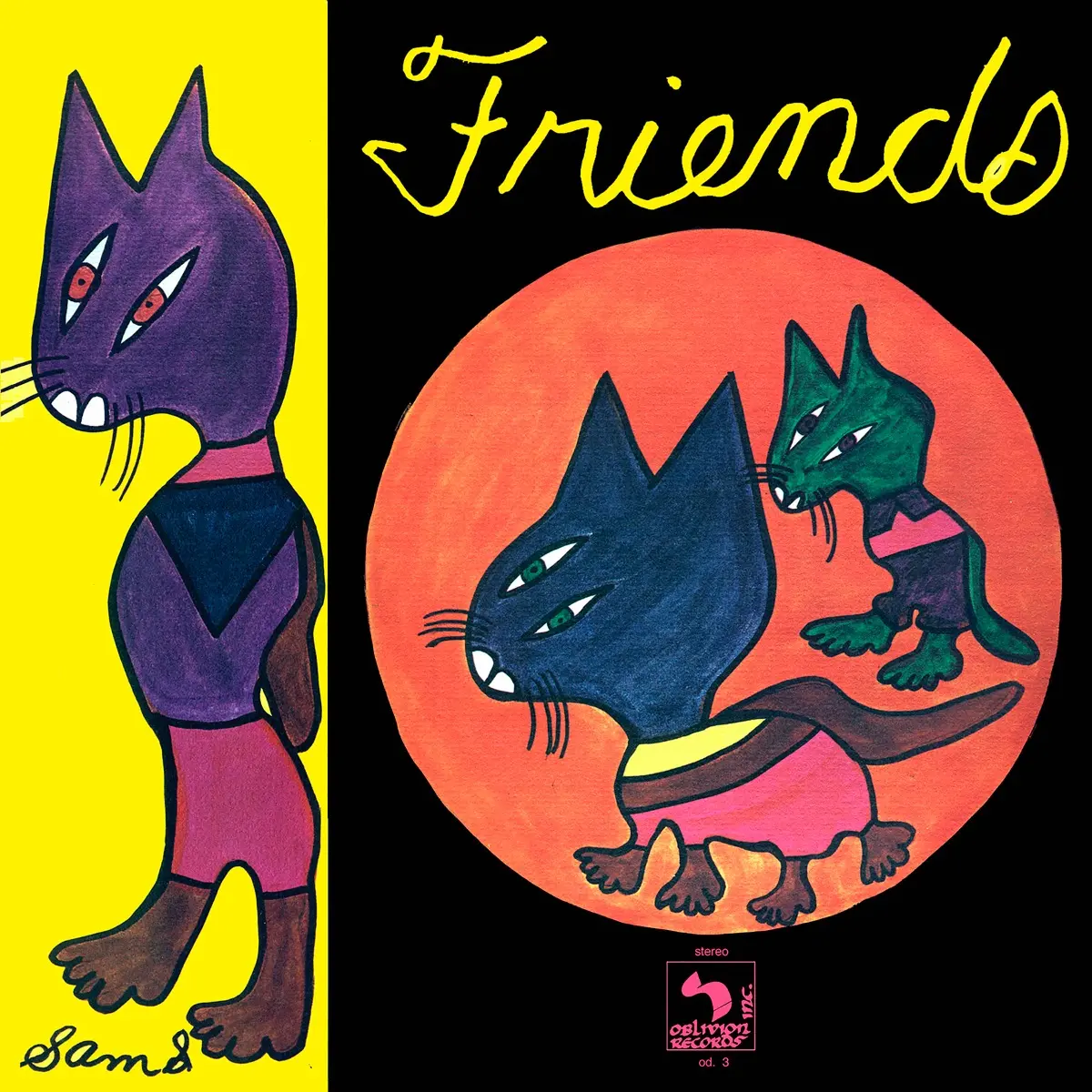
In 1973, Oblivion Records issued Friends, sourced from a trio date between Abercrobie, contrabassist Clint Houston, and alto saxophonist Marc Cohen. Along with Cobham and Steve Khan, Abercrombie cut back-to-back albums in Atmospheres, a jazz-rock operative led by English saxophonist Clive Stevens. Elsewhere, Abercrombie interlocked with Jack DeJohnette on the drummer’s 1975 Prestige release Cosmic Chicken, a jazz-funk set with bassist Peter Warren and alto saxist Alex Foster.
German jazz producer Manfred Eicher signed Abercrombie to the Munich-based ECM label.
Timeless
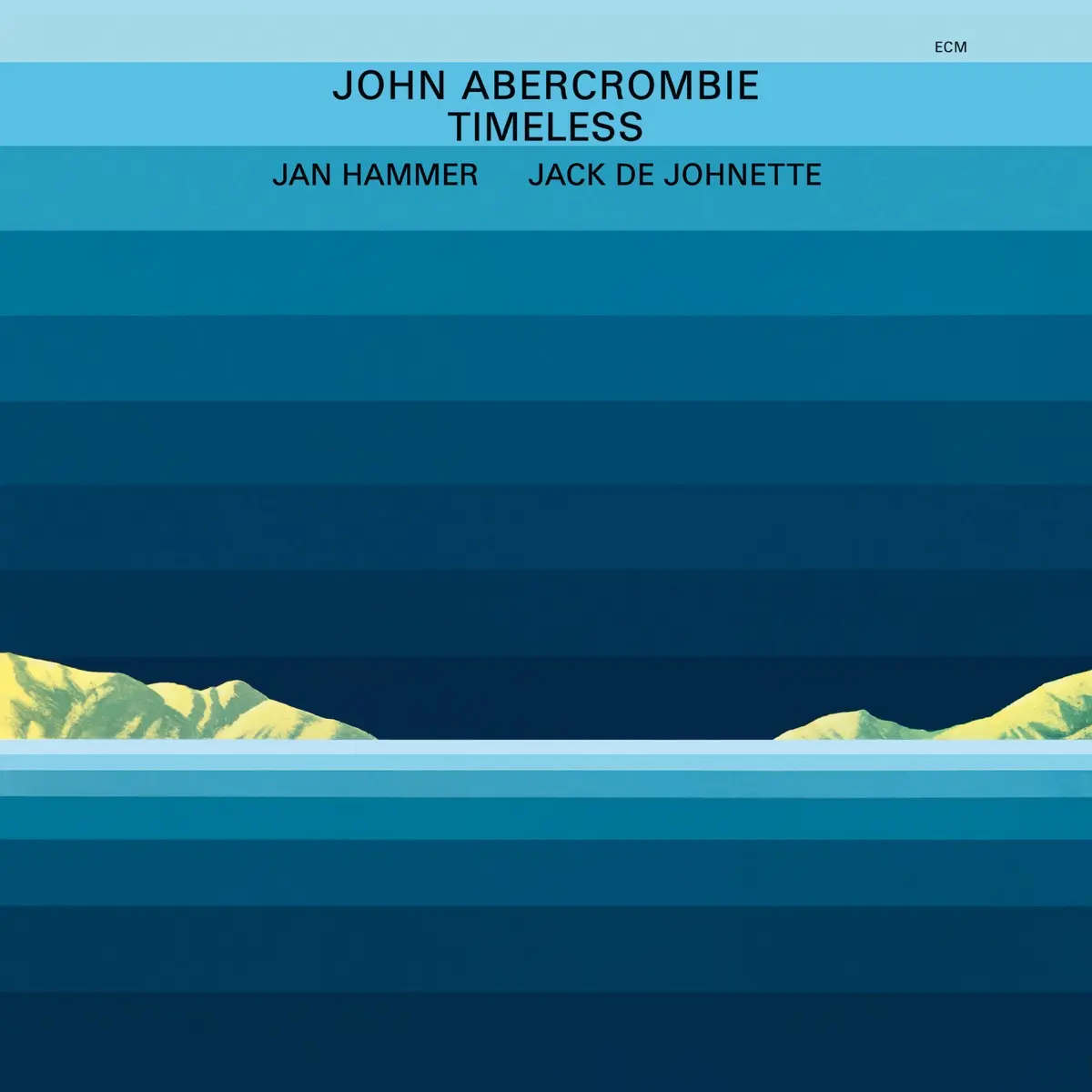 John Abercrombie released his debut bandleader album, Timeless, in January 1975 on ECM.
Abercrombie sets electric guitar against Jan Hammer’s organ, synthesizer, and piano, while Jack DeJohnette supplies a hard backbeat and fast directional turns. The trio works in short high-voltage bursts on the Hammer pieces, then cuts the texture to piano-and-guitar duets and a longer title piece built from drone, suspended harmony, and gradual accumulation.
“Lungs” opens with clipped keyboard stabs, quick hi-hat figures, and aggressive guitar lines. “Love Song” and “Remembering” strip the session to acoustic guitar and piano. “Ralph’s Piano Waltz” joins mirrored lead phrases to a loping triple meter. “Red and Orange” restores the amplified charge. “Timeless” starts from a synth pedal and widens into a long trio statement.
A1. “Lungs” (12:09) — Hammer
A2. “Love Song” (4:35) — Abercrombie
A3. “Ralph’s Piano Waltz” (4:56) — Abercrombie
B1. “Red and Orange” (5:24) — Hammer
B2. “Remembering” (4:32) — Abercrombie
B3. “Timeless” (12:00) — Abercrombie
Abercrombie recorded Timeless on June 21 and 22, 1974, at Generation Sound Studios in New York with producer Manfred Eicher and recording engineer Tony May. Jan Erik Kongshaug handled the mix.
Rolf Liese designed the sleeve, and Roberto Masotti supplied the photograph.
Gateway
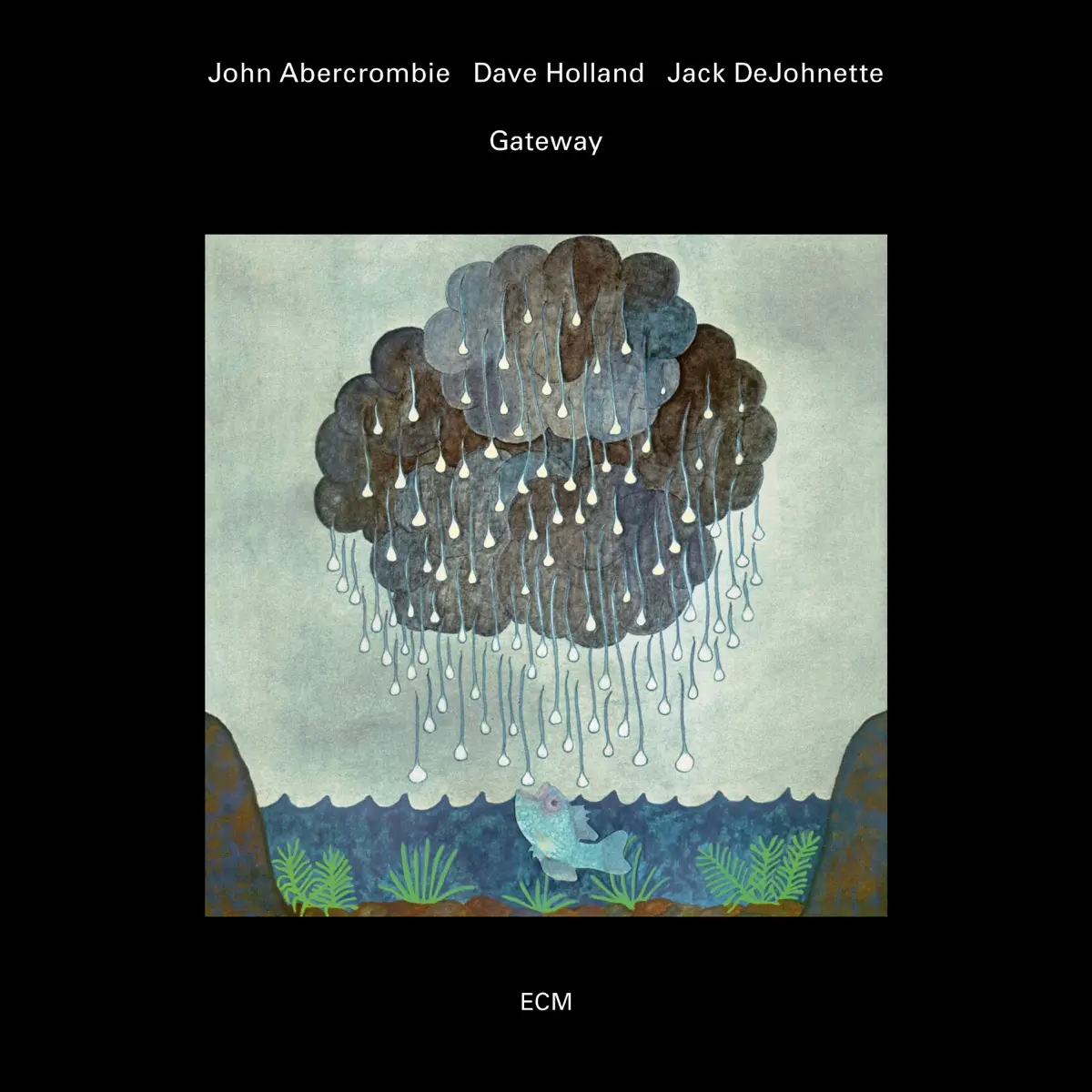 John Abercrombie released his second album, Gateway, in October 1975 on ECM.
Gateway sets guitar, bass, and drums inside open forms that keep written themes in sight while leaving long stretches for collective direction. Dave Holland anchors much of the material with ostinato figures and recurring motifs, while Abercrombie threads clipped runs across Jack DeJohnette’s shifting accents.
“Backwoods Song” rises from a bass ostinato and steady drum commentary. “Waiting” pares the trio to bass and drums. “May Dance” starts from a clear theme, then breaks into longer dialogue. “Unshielded Desire” brings a looser electric attack. “Jamala” supplies the set’s ballad. “Sorcery I” opens the broadest field for abstract exchange.
A1. “Backwoods Song” (7:51) — Holland
A2. “Waiting” (2:10) — Holland
A3. “May Dance” (11:01) — Holland
B1. “Unshielded Desire” (4:49) — DeJohnette, Abercrombie
B2. “Jamala” (4:47) — Holland
B3. “Sorcery I” (10:56) — DeJohnette
Gateway recorded Gateway in March 1975 at Tonstudio Bauer in Ludwigsburg with producer Manfred Eicher and engineer Martin Wieland.
Maja Weber designed the cover.
Sargasso Sea
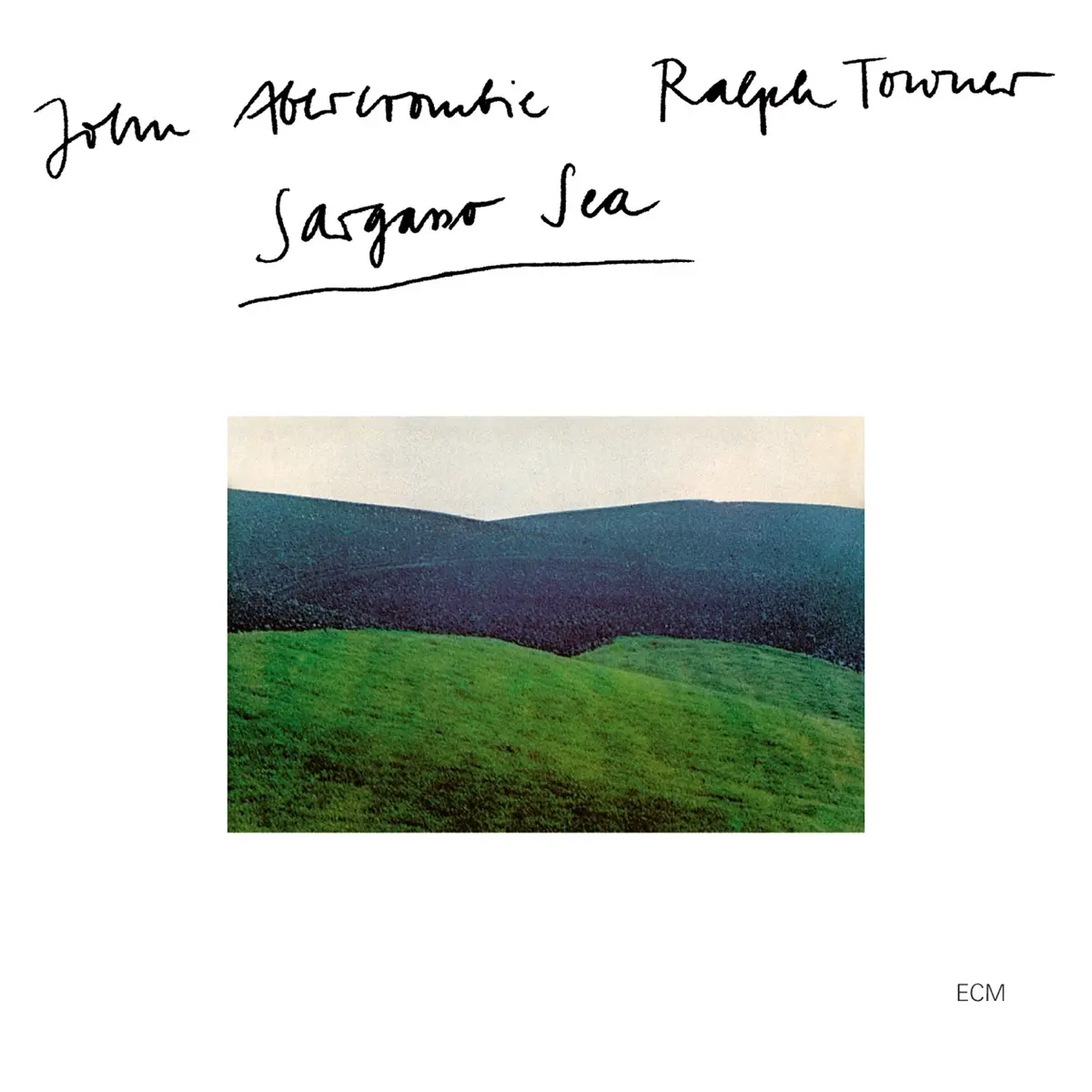 John Abercrombie and Ralph Towner released their first duo album, Sargasso Sea, in October 1976 on ECM.
Abercrombie and Towner cut the texture to two guitars and occasional piano, with electric sustain set against 12-string and classical figures. The record favors close counterpoint, chamber-scale dialogue, and quiet rhythmic motion over backbeat pressure.
“Fable” places Towner’s 12-string beside Abercrombie’s electric line in the album’s core duet language. “Avenue” and “Over and Gone” keep the exchange spare. “Saragoss Sea” unsettles the middle stretch with shorter phrases and shifting emphasis. “Elbow Room” adds echo to Abercrombie’s part. “Staircase” pairs classical guitar with amplified electric detail. “Parasol” closes with 12-string guitar over electric lines and overdubbed piano.
A1. “Fable” (8:38) — Abercrombie
A2. “Avenue” (5:15) — Abercrombie
A3. “Saragoss Sea” (3:56) — Abercrombie, Towner
A4. “Over and Gone” (2:48) — Abercrombie
B1. “Elbow Room” (5:08) — Abercrombie, Towner
B2. “Staircase” (6:21) — Towner
B3. “Romantic Descension” (3:13) — Abercrombie
B4. “Parasol” (5:24) — Towner
Abercrombie and Towner recorded Sargasso Sea in May 1976 at Talent Studio in Oslo with producer Manfred Eicher and engineer Jan Erik Kongshaug.
Barbara Wojirsch handled the layout. Franco Fontana shot the front cover, and Jürgen Müller supplied the back-cover photograph.
Gateway 2
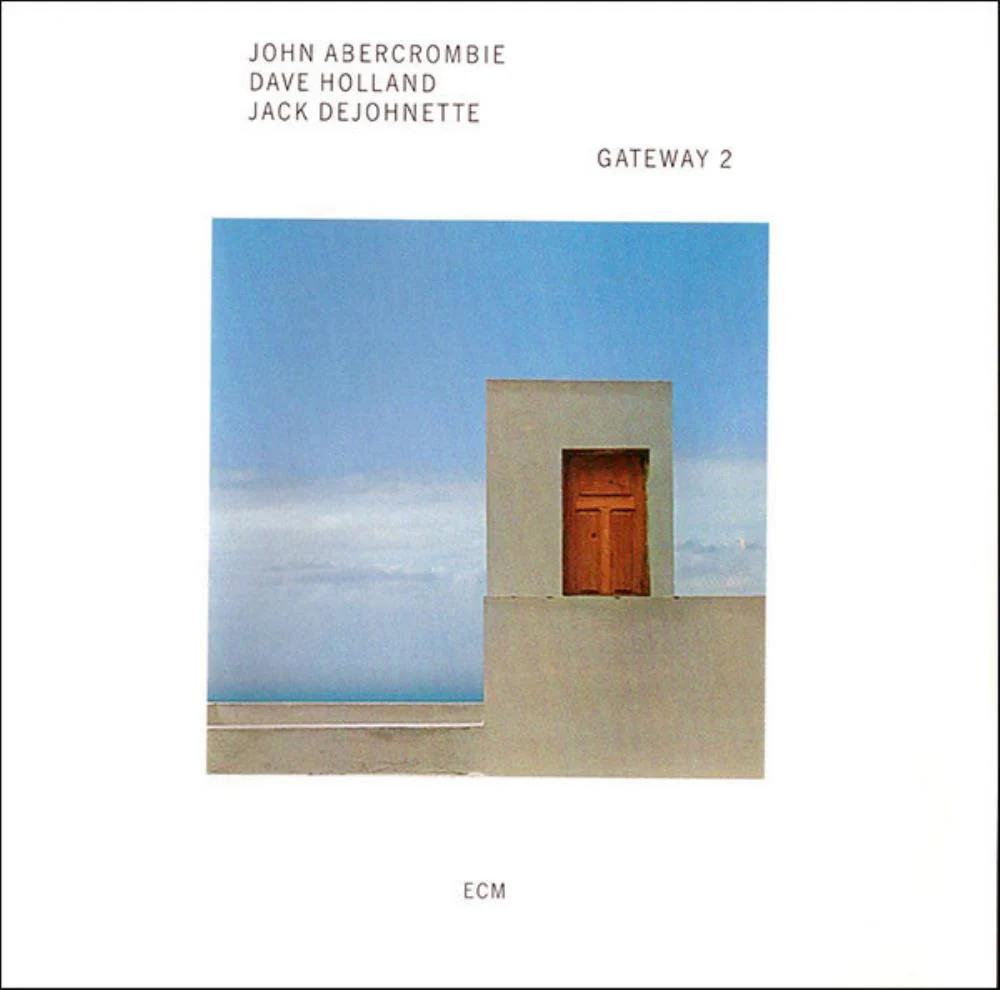 John Abercrombie released his numerical second Gateway album in March 1978 on ECM.
Gateway returns with longer arcs, quieter openings, and a colder surface built from suspended figures, bass pedals, and delayed resolution. Abercrombie adds electric mandolin to the trio palette, and DeJohnette also brings piano into the closing stretch.
“Opening” unfolds across sixteen minutes, starting with scattered figures before a firmer pulse and longer lines take shape. “Reminiscence” narrows the sound to a pensive conversation between bass and guitar. “Sing Song” sets Abercrombie’s theme inside nuanced drum motion. “Nexus” turns on a Holland bass figure and sharper syncopation. “Blue” ends the album with DeJohnette at the piano.
A1. “Opening” (16:17) — Abercrombie, Holland, DeJohnette
A2. “Reminiscence” (4:32) — Holland
B1. “Sing Song” (6:55) — Abercrombie
B2. “Nexus” (7:55) — Holland
B3. “Blue” (8:14) — DeJohnette
Gateway recorded Gateway 2 in July 1977 at Talent Studio in Oslo with producer Manfred Eicher and engineer Jan Erik Kongshaug.
Dieter Bonhorst handled the layout. Michael Heeg supplied the cover photograph, and Andreas Raggenbass and Roberto Masotti contributed additional photos.
Characters
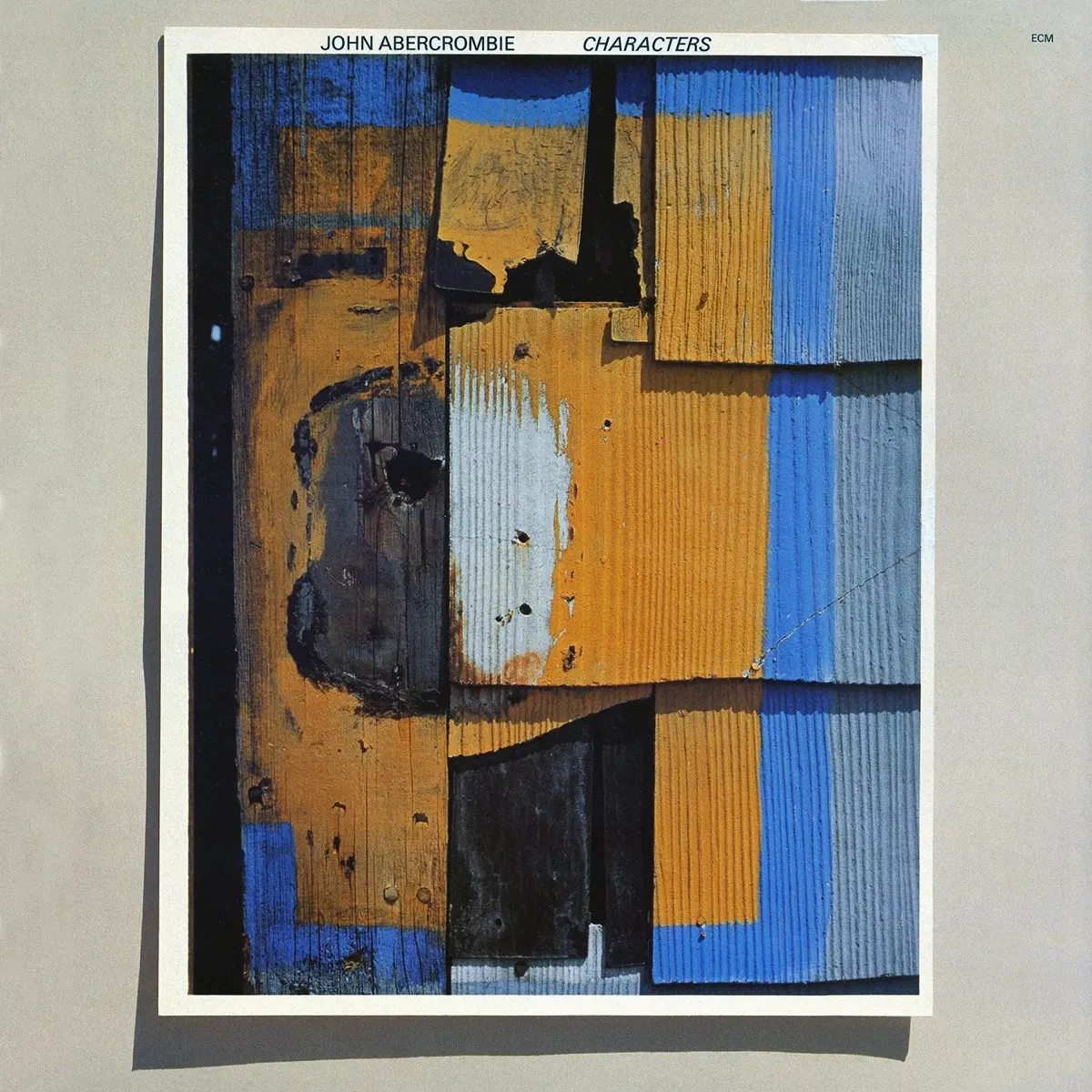 John Abercrombie released his first self-contained album, Characters, on May 1, 1978, on ECM.
Abercrombie performs eight originals unaccompanied on electric/acoustic guitar and electric mandolin. His recurrent figures, sustained notes, and interlocked lines offer supple motion with varied tonal colors.
“Parable” sets electric mandolin against layered string figures. “Memoir” isolates a brief acoustic dialogue between stacked guitar parts. “Telegram” brings in Abercrombie’s humming over overdubbed lines. “Ghost Dance” turns short recurring cells into a wider solo design. “Evensong” offers a slower final arc.
A1. “Parable” (10:38).
A2. “Memoir” (3:10).
A3. “Telegram” (4:32).
A4. “Backward Glance” (4:32).
B1. “Ghost Dance” (6:58).
B2. “Paramour” (3:49).
B3. “After Thoughts” (3:19).
B4. “Evensong” (7:35).
Abercrombie recorded Characters in November 1977 at Talent Studio in Oslo with producer Manfred Eicher and engineer Jan Erik Kongshaug.
Barbara Wojirsch handled the layout. Don Leavitt shot the cover photo, and Roberto Masotti supplied additional photography.
Arcade
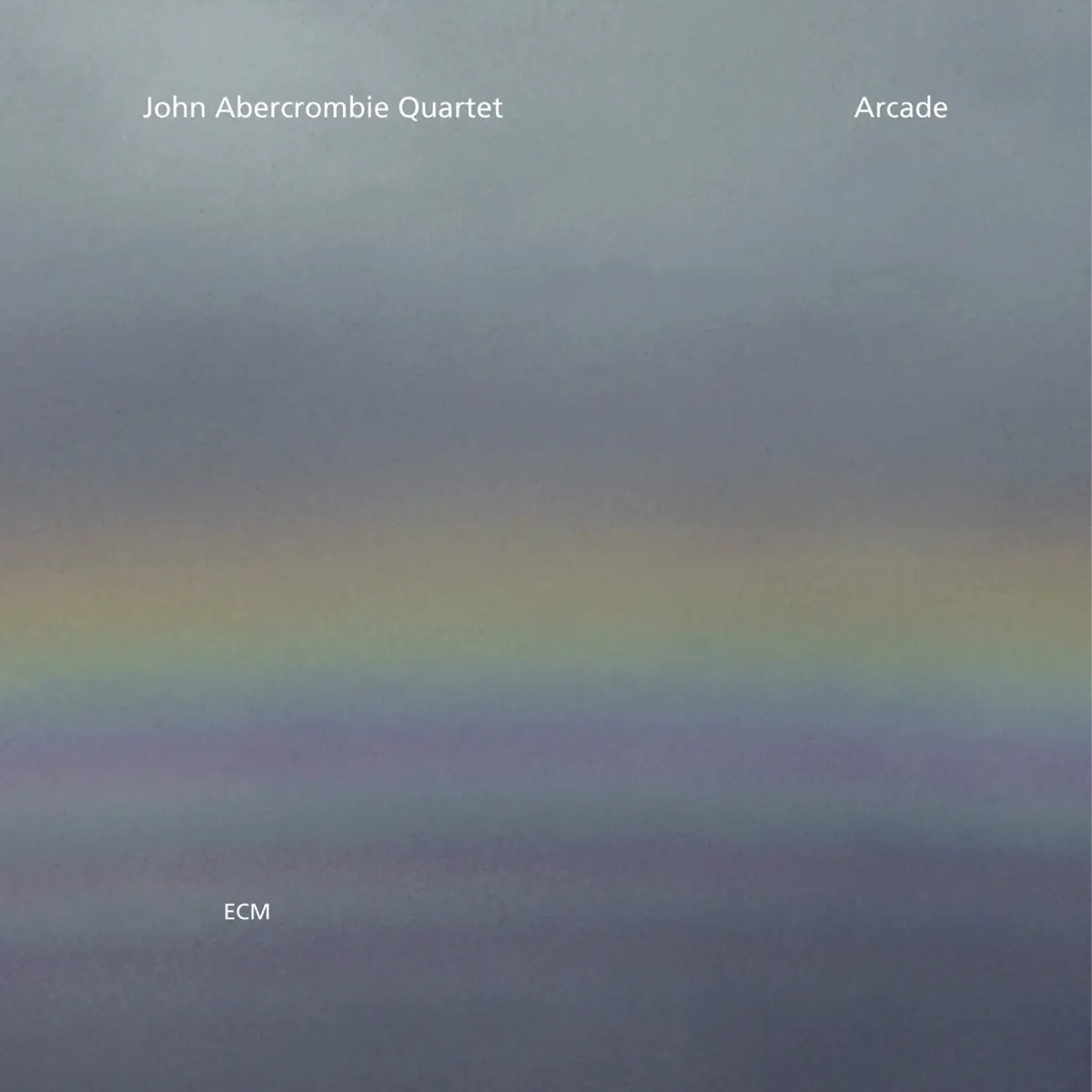 John Abercrombie Quartet released Arcade on March 1, 1979, on ECM.
Guitar and electric mandolin by Abercrombie meet pianist Richard Beirach inside broad pieces that leave room for theme statements and collective drift. Bassist George Mraz and drummer Peter Donald hold the undercurrent with light but steady motion.
“Arcade” stretches a short figure across nearly ten minutes and lets the theme stay present even as the quartet opens the form. “Nightlake” narrows the motion and lowers the temperature. “Paramour” ties a lighter rhythmic sway to close guitar-piano exchange, while “Alchemy” closes the album with its longest and broadest statement.
A1. “Arcade” (9:36) — Abercrombie.
A2. “Nightlake” (5:31) — Beirach.
A3. “Paramour” (5:06) — Abercrombie.
B1. “Neptune” (7:30) — Beirach.
B2. “Alchemy” (11:31) — Beirach.
Abercrombie Quartet recorded Arcade in December 1978 at Talent Studio in Oslo with producer Manfred Eicher and engineer Jan Erik Kongshaug.
Barbara Wojirsch designed the sleeve, and Dieter Rehm supplied the photography.
Straight Flight
John Abercrombie Trio recorded the session behind Straight Flight on March 19 and 20, 1979, at Sage and Sound Studios in Los Angeles. Discomate first issued the material in Japan in July 1979 as Direct Flight, and JAM later released it in the United States as Straight Flight.
Abercrombie drops original compositions from the program and works entirely through standards and established jazz repertory. George Mraz anchors the trio on bass, Peter Donald supplies a sharp attack at the kit, and Abercrombie takes most of the date on electric guitar before switching to electric mandolin for “Bessie’s Blues.”
“In Your Own Sweet Way” takes a severe angle on Brubeck’s tune and keeps the melody at a distance. “My Foolish Heart” lowers the volume and gives Mraz a larger role. “Bessie’s Blues” opens with a Donald solo and runs at high speed, while “There Is No Greater Love” withholds the full theme until late. “Nardis” begins with arco bass and sparse percussion before the trio opens the piece into a longer workout.
A1. “In Your Own Sweet Way” (7:01) — Dave Brubeck.
A2. “My Foolish Heart” (7:20) — Victor Young.
A3. “Bessie’s Blues” (4:45) — John Coltrane.
B1. “There Is No Greater Love” (6:42) — Isham Jones, Marty Symes.
B2. “Beautiful Love” (6:15) — Wayne King, Victor Young, Egbert Van Alstyne.
B3. “Nardis” (6:44) — Miles Davis.
Abercrombie Trio recorded the album at Sage and Sound Studios in Los Angeles with producer Lew Tabackin.
Abercrombie Quartet
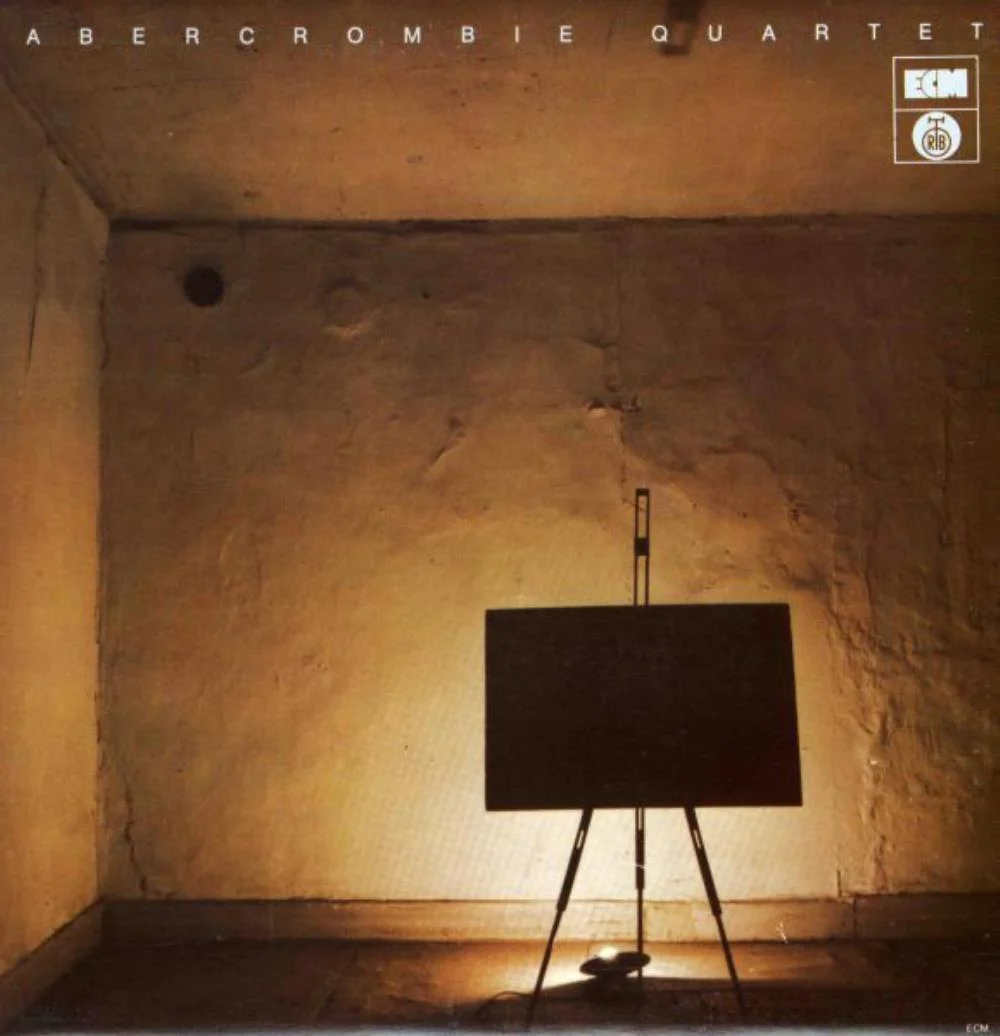 The Abercrombie Quartet released their self-titled album on March 25, 1980, on ECM.
Abercrombie and Beirach widen the quartet language with rubato openings, modal vamps, and longer passages where the guitar line and piano harmony pull against one another. Mraz and Donald keep the bottom firm but flexible, which gives the pieces space to open and tighten without losing shape.
“Blue Wolf” starts in free time, then locks into a faster vamp. “Dear Rain” loosens the meter and spreads the quartet across a more open rhythmic field. Beirach’s “Madagascar” carries the broadest piano-led statement on the album, and “Foolish Dog” closes the set as a lower-volume ballad that brings Mraz further forward.
A1. “Blue Wolf” (8:20) — Abercrombie.
A2. “Dear Rain” (6:49) — Abercrombie.
A3. “Stray” (6:31) — Beirach.
B1. “Madagascar” (9:00) — Beirach.
B2. “Riddles” (8:07) — Beirach.
B3. “Foolish Dog” (6:16) — Abercrombie.
Abercrombie Quartet recorded Abercrombie Quartet in November 1979 at Talent Studio in Oslo with producer Manfred Eicher and engineer Jan Erik Kongshaug.
Dieter Rehm designed the sleeve and supplied the main photography. Richard Laird shot the group photo.
M
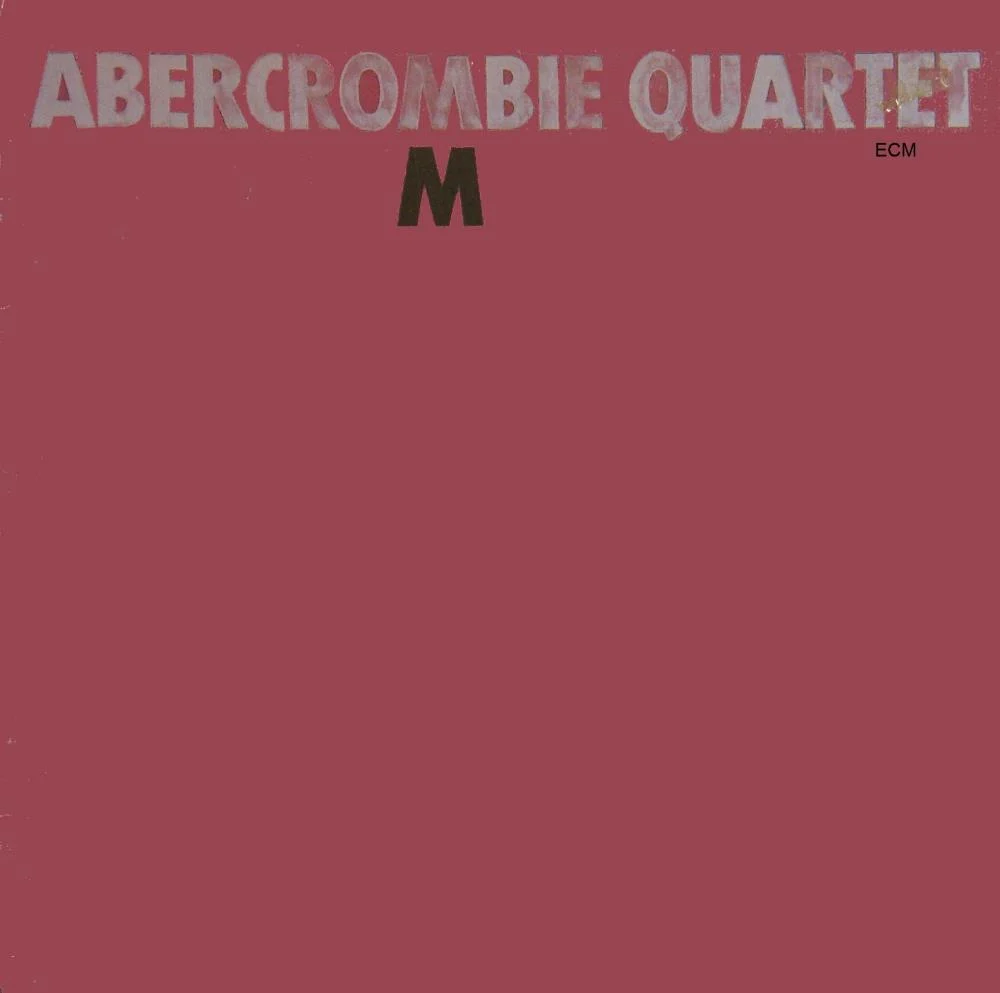 Abercrombie Quartet released M on April 1, 1981, on ECM.
Abercrombie shifts between electric and acoustic guitar across a darker set built from slow themes, suspended harmony, and quieter ensemble pressure. Beirach carries a larger share of the written material, while Mraz and Donald keep the quartet grounded through long pieces that open gradually instead of arriving at once.
“Boat Song” opens the album with its longest piece, a slow-building design that thickens over time. The title track loosens the middle of the set with a more relaxed gait. “What Are the Rules” and “Flashback” put Beirach’s writing in the foreground, and “Veils” begins with an extended piano introduction before the quartet enters and the piece settles back down. “Pebbles” ends the album with Mraz’s lone composition.
A1. “Boat Song” (9:52) — Abercrombie.
A2. “M” (6:17) — Abercrombie.
A3. “What Are the Rules” (7:29) — Beirach.
B1. “Flashback” (6:13) — Beirach.
B2. “To Be” (5:14) — Abercrombie.
B3. “Veils” (5:42) — Beirach.
B4. “Pebbles” (4:42) — Mraz.
Abercrombie Quartet recorded M in November 1980 at Tonstudio Bauer in Ludwigsburg with producer Manfred Eicher and engineer Martin Wieland. Barbara Wojirsch designed the sleeve.
Five Years Later
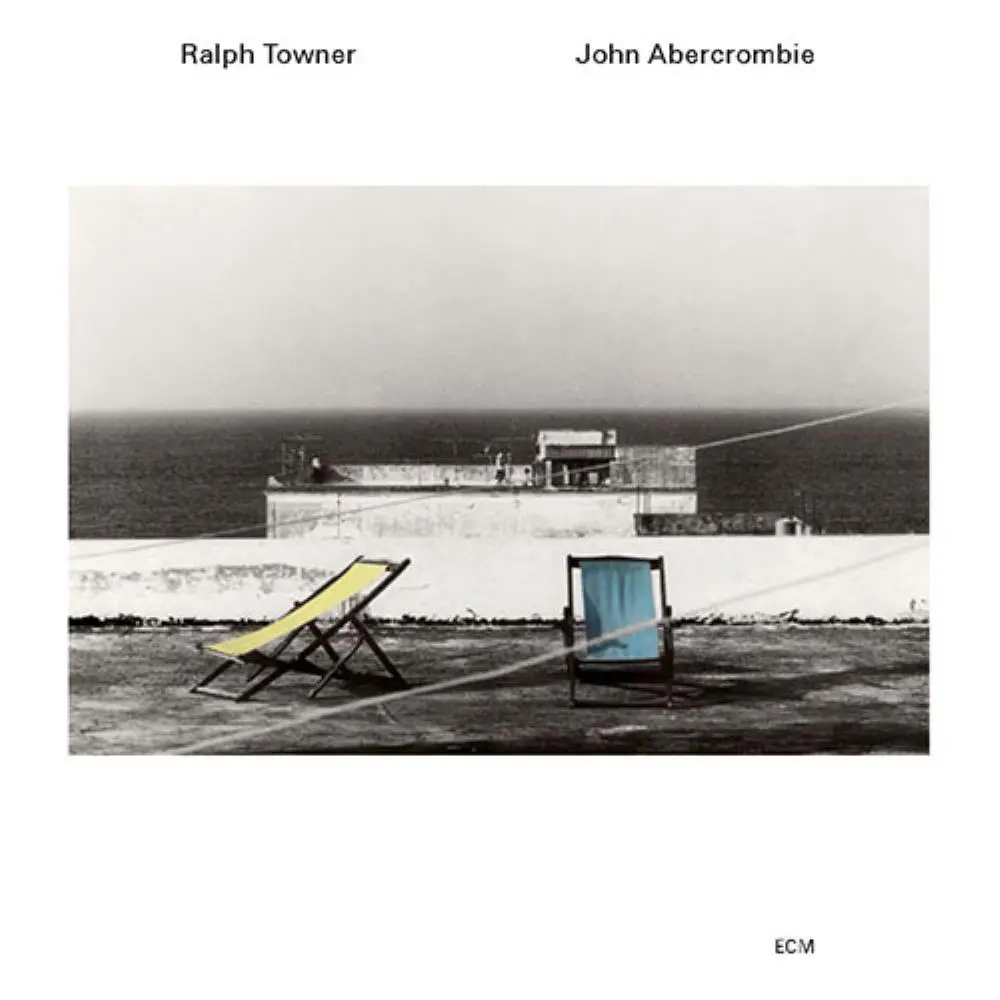 Ralph Towner and John Abercrombie released Five Years Later on February 1, 1982, on ECM.
Towner and Abercrombie widen the duo with steel-string, nylon-string, 12-string, electric, and mandolin-guitar colors. Abercrombie places brighter electric lines against Towner’s drier acoustic attack, and the two trade lead and accompaniment without fixing either role for long.
“Late Night Passenger” opens with suspended electric sonorities before the second guitar enters with sharper acoustic detail. “Half Past Two” and “The Juggler’s Etude” cut the sound to all-acoustic interplay, while “Caminata” adds the album’s clearest overdubbed layer. “Isla” and “Child’s Play” place Abercrombie’s writing inside close two-guitar exchange, and “Bumabia” stretches the improvised side of the session across a longer span.
A1. “Late Night Passenger” (9:54) — Abercrombie, Towner
A2. “Isla” (6:24) — Abercrombie
A3. “Half Past Two” (4:26) — Towner
A4. “Microtheme” (3:39) — Abercrombie, Towner
B1. “Caminata” (3:01) — Towner
B2. “The Juggler’s Etude” (7:29) — Towner
B3. “Bumabia” (9:50) — Abercrombie, Towner
B4. “Child’s Play” (4:51) — Abercrombie
Towner and Abercrombie recorded Five Years Later in March 1981 at Talent Studio in Oslo with producer Manfred Eicher and engineer Jan Erik Kongshaug.
Barbara Wojirsch designed the cover. Mikko Hietaharju supplied the main photograph, and Roberto Masotti contributed a liner image.
Night
 John Abercrombie released Night on September 1, 1984, on ECM.
Abercrombie sets guitar against Jan Hammer’s keyboards and Jack DeJohnette’s drums, with Mike Brecker entering on tenor at selected points. Hammer fills much of the low register and broadens the harmony, which gives Abercrombie and Brecker room for tighter unison lines and longer electric runs.
“Ethereggae” opens the album with Hammer’s half-time shuffle. “Night” lowers the intensity into a slower ballad, while “3 East” returns to a harder electric attack. “Look Around” spreads the quartet across a wider and more reflective space. “Believe You Me” brings Brecker into a more direct front-line role, and “Four On One” closes the session with the strongest ensemble drive.
A1. “Ethereggae” (8:23) — Hammer
A2. “Night” (4:56) — Abercrombie
A3. “3 East” (4:27) — Abercrombie
B1. “Look Around” (8:55) — Abercrombie
B2. “Believe You Me” (7:36) — Abercrombie
B3. “Four On One” (6:42) — Abercrombie
Abercrombie recorded Night in April 1984 at Power Station in New York with producer Manfred Eicher and engineer Jan Erik Kongshaug.
Dieter Rehm handled the photography and design. ECM later identified the image as Rehm’s photograph of a New York alley wall bearing a Richard Hambleton shadow figure, over which he drew additional lines and the album title.
Solar
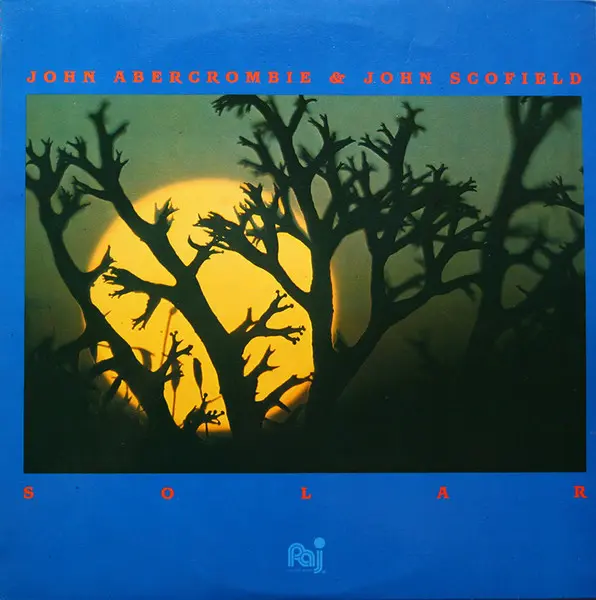 John Abercrombie and John Scofield released Solar in 1984 on Palo Alto.
Abercrombie and Scofield build most of the album as a guitar duo and expand to quartet on three titles with bassist George Mraz and drummer Peter Donald. Close unison passages, delayed theme statements, and chordal backing from one guitarist under the other guitarist’s line give the record its working method, while Abercrombie adds electric mandolin on “Four on Six” and “Small Wonder.”
“Solar” withholds the tune until the close of the performance. “Even Steven” and “Sing Song” place Abercrombie’s writing inside the duo format, while “Four on Six” and Scofield’s “Small Wonder” bring in the quartet. “I Should Care” stays with the two guitars, and “If You Could See Me Now” closes the album in a sparse duet setting.
A1. “Solar” (4:10) — Miles Davis
A2. “Even Steven” (6:51) — Abercrombie
A3. “Four on Six” (6:25) — Wes Montgomery
A4. “Sing Song” (6:22) — Abercrombie
B1. “Small Wonder” (6:21) — Scofield
B2. “I Should Care” (6:39) — Sammy Cahn, Axel Stordahl, Paul Weston
B3. “If You Could See Me Now” (6:02) — Tadd Dameron, Carl Sigman
Abercrombie and Scofield recorded tracks 1, 3, and 5 through 7 in May 1982 at Music Annex Recording Studios in Menlo Park with engineer Fred Catero and assistant Roger Wiersema. They recorded tracks 2 and 4 in December 1983 at Classic Sound Studios in New York with engineer Mike McDonald. Orrin Keepnews produced the album with Abercrombie and Scofield, and George Horn mastered the release at Fantasy Studios in Berkeley.
Herb Wong directed the art. Chuck Walker handled the design, David Cavagnaro shot the cover, and Lee Townsend supplied the back-cover photograph.
Current Events
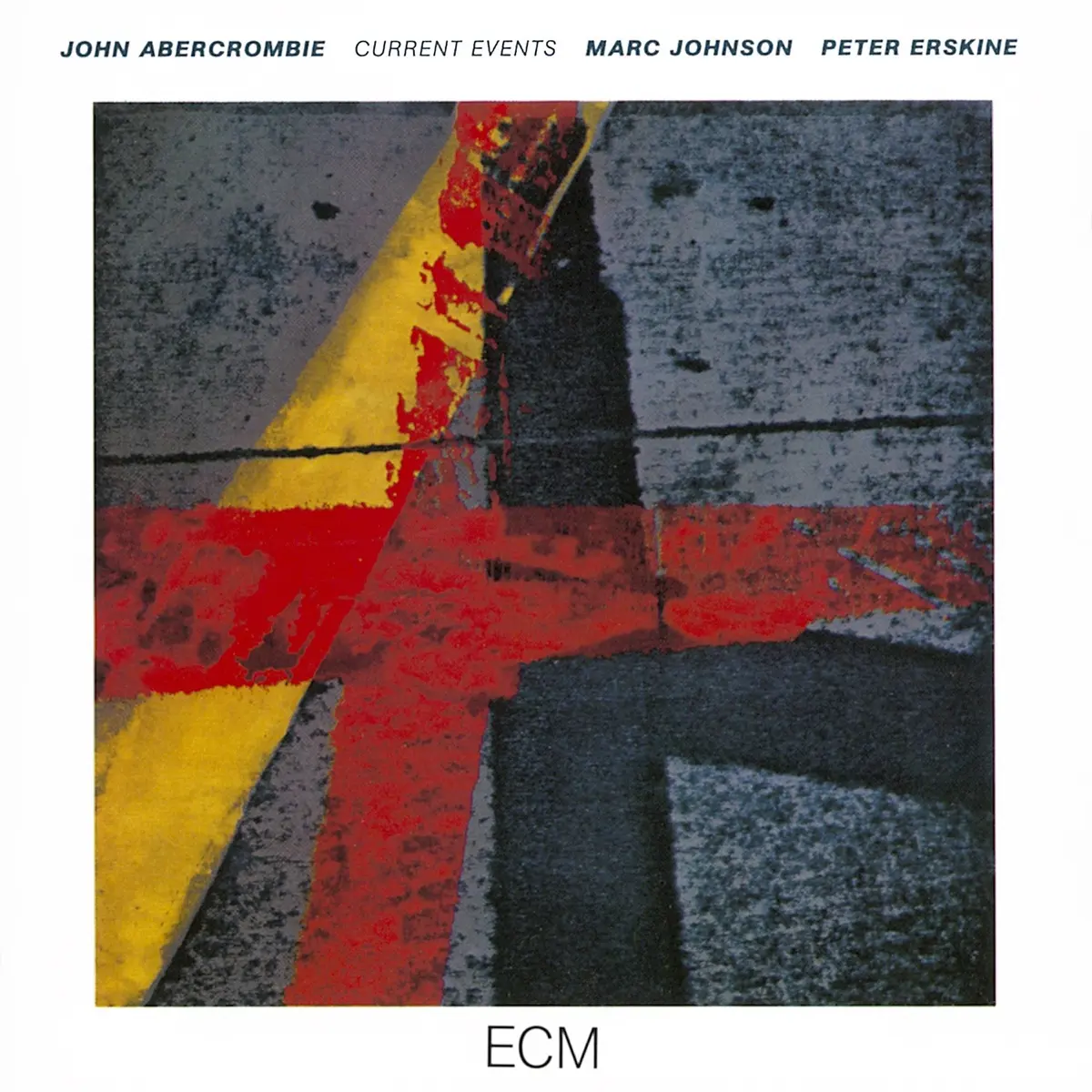 John Abercrombie, Marc Johnson, and Peter Erskine released Current Events on April 3, 1986, on ECM.
Abercrombie shifts between electric guitar, guitar synthesizer, and acoustic guitar across a trio setting with no chordal instrument behind him. Johnson and Erskine give the music a firm but elastic base, while Abercrombie changes the color of the set by reserving the guitar synthesizer for “Clint,” “Hippityville,” and “Killing Time,” and the acoustic guitar for “Ralph’s Piano Waltz,” “Lisa,” and “Still.”
“Clint” opens with the trio’s co-written theme and one of the album’s brighter rhythmic designs. “Alice in Wonderland” starts from a quieter introduction before the trio opens the tune. “Ralph’s Piano Waltz” returns to Abercrombie’s early ECM book in an all-acoustic reading, and “Lisa” cuts the session to a short solo statement. “Hippityville” places the synthesizer sound at the center of the album’s most active surface, while “Killing Time” and “Still” close the set with slower, more spacious writing.
A1. “Clint” (6:06) — Abercrombie, Erskine, Johnson
A2. “Alice in Wonderland” (8:42) — Sammy Fain, Bob Hilliard
A3. “Ralph’s Piano Waltz” (6:15) — Abercrombie
A4. “Lisa” (2:28) — Abercrombie
B1. “Hippityville” (8:22) — Abercrombie
B2. “Killing Time” (7:52) — Abercrombie
B3. “Still” (8:56) — Abercrombie
Abercrombie recorded Current Events in September 1985 at Rainbow Studio in Oslo with producer Manfred Eicher and engineer Jan Erik Kongshaug.
Dieter Rehm designed the sleeve. Gerd Winner supplied the cover graphic, and Richard Laird provided the photography.
Emerald City
Richie Beirach and John Abercrombie released Emerald City in May 1987 on Pathfinder. The session marked Abercrombie’s first release after Current Events and the last before Getting There.
Beirach sets acoustic piano against Abercrombie’s guitar and synthesizer in a two-player format with no bass or drums. Beirach wrote four of the six pieces, which gives the record a piano-led writing profile, while Abercrombie broadens the sound with sustained electric color and synth shading.
Beirach supplies the long pieces “Odin,” “Anse Des Flamands,” “Emerald City,” and the fifteen-minute “On Overgrown Paths.” Abercrombie and Beirach share authorship on “Sleight of Hand” and “Carnival Suspone,” which cut the program into shorter spans between the larger statements.
A1. “Odin” (9:25) — Beirach
A2. “Anse Des Flamands” (8:20) — Beirach
A3. “Sleight of Hand” (4:45) — Abercrombie, Beirach
B1. “Emerald City” (6:05) — Beirach
B2. “On Overgrown Paths” (15:00) — Beirach
B3. “Carnival Suspone” (5:40) — Abercrombie, Beirach
Beirach and Abercrombie recorded Emerald City on February 23–25, 1987, at Mediasound in New York with producers Dave Baker, John Abercrombie, Richie Beirach, and Douglas Lichterman. Evidence reissued the album on CD in 1994.
Getting There
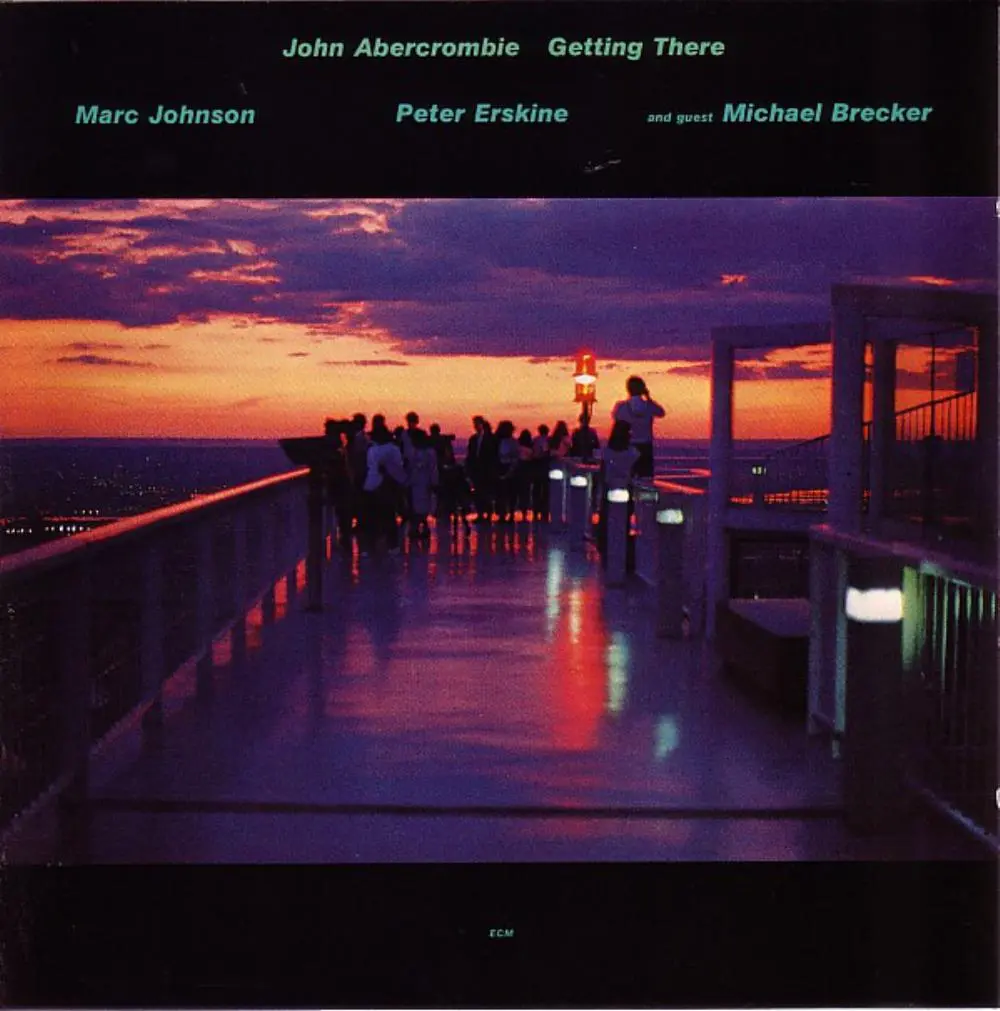 John Abercrombie released Getting There on February 1, 1988, on ECM.
Abercrombie sets electric guitar, acoustic guitar, and guitar synthesizer against Marc Johnson’s bass and Peter Erskine’s drums, with Michael Brecker entering on tenor saxophone. The quartet works in compact forms, with the synth textures and tenor lines widening the trio’s surface without changing its central rhythm profile.
“Sidekicks” opens the record with Brecker in the front line and a fast rhythmic pull from Erskine and Johnson. “Upon a Time” keeps the trio format intact, while the title track pushes the synth sound to the center of the session. Vince Mendoza’s “Thalia” and Abercrombie’s “Chance” lower the temperature, and Johnson’s “Furs on Ice” brings Brecker back into a tougher ensemble setting. “Labour Day” closes the album with Johnson in a more exposed role before Abercrombie returns for the last solo statement.
A1. “Sidekicks” (5:17) — Abercrombie
A2. “Upon a Time” (4:27) — Abercrombie
A3. “Getting There” (7:35) — Abercrombie
A4. “Remember Hymn” (5:17) — Abercrombie
B1. “Thalia” (4:19) — Vince Mendoza
B2. “Furs on Ice” (8:09) — Marc Johnson
B3. “Chance” (4:55) — Abercrombie
B4. “Labour Day” (3:45) — Abercrombie
Abercrombie recorded Getting There in April 1987 at Power Station in New York with producer Lee Townsend and engineer James Farber.
Upon a Time: An Album of Duets
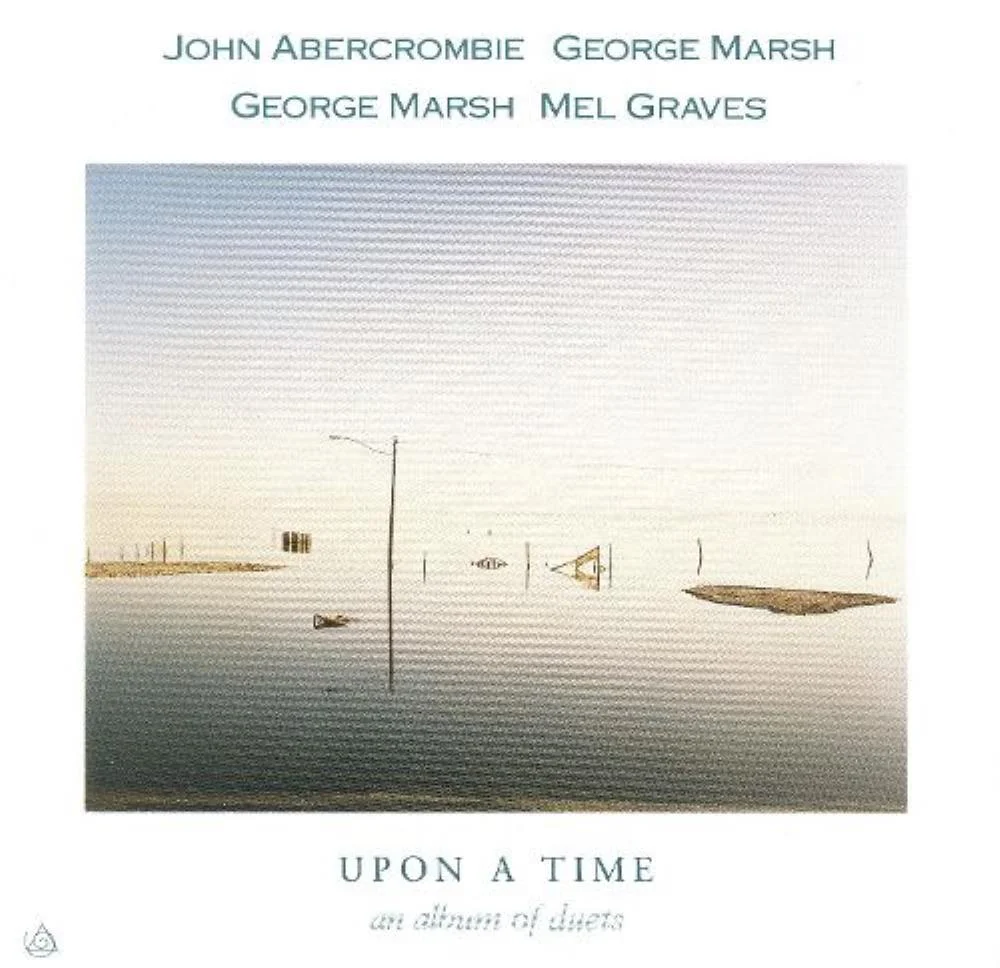 John Abercrombie released Upon a Time: An Album of Duets in 1989 on New Albion. He recorded the material in 1982 at Arch Studios in Berkeley.
The album splits into two different duet settings. Tracks 1 through 10 pair Abercrombie with George Marsh, while tracks 11 through 16 shift to Marsh with bassist Mel Graves and leave Abercrombie out of the last section. Within Abercrombie’s portion of the record, the instrumentation ranges across electric guitar, mandolin, mando-guitar, and piano, while Marsh adds drums, percussion, and thumb piano.
The first ten performances originally appeared as Drum Strum on 1750 Arch Records. The remaining six tracks came from Marshland on the same label. Inside the Abercrombie-Marsh sequence, “My Scottish Heart,” “Muchacha Dorada,” and “Vincent” sit alongside shorter originals such as “Upon a Time,” “Demi-Saison,” and “Camel Walk.” The closing Marsh-Graves section brings in Graves’s own “Moonfire,” “Gypsy Wand Song,” and “McNabb the Crabb,” then ends with “Chelsea Bridge” and “Lullaby of the Leaves.”
A1. “My Scottish Heart” (5:30) — Abercrombie, Marsh
A2. “Muchacha Dorada” (5:37) — Abercrombie, Marsh
A3. “Upon a Time” (3:10) — Abercrombie
A4. “In the Woods” (6:10) — Marsh
A5. “Demi-Saison” (3:38) — Abercrombie
A6. “Baby Lucille” (5:56) — Abercrombie, Marsh
A7. “Vincent” (8:23) — Abercrombie, Marsh
A8. “Count” (2:53) — Abercrombie, Marsh
B1. “Chuck Man Rivers” (2:39) — Abercrombie, Marsh
B2. “Camel Walk” (4:21) — Abercrombie
B3. “Play It Again” (2:50) — Marsh
B4. “Moonfire” (2:30) — Graves
B5. “Gypsy Wand Song” (5:56) — Graves
B6. “McNabb the Crabb” (2:19) — Graves
B7. “Chelsea Bridge” (5:48) — Billy Strayhorn
B8. “Lullaby of the Leaves” (2:34) — Bernice Petkere, Joe Young
Abercrombie self-produced Upon a Time.
Animato
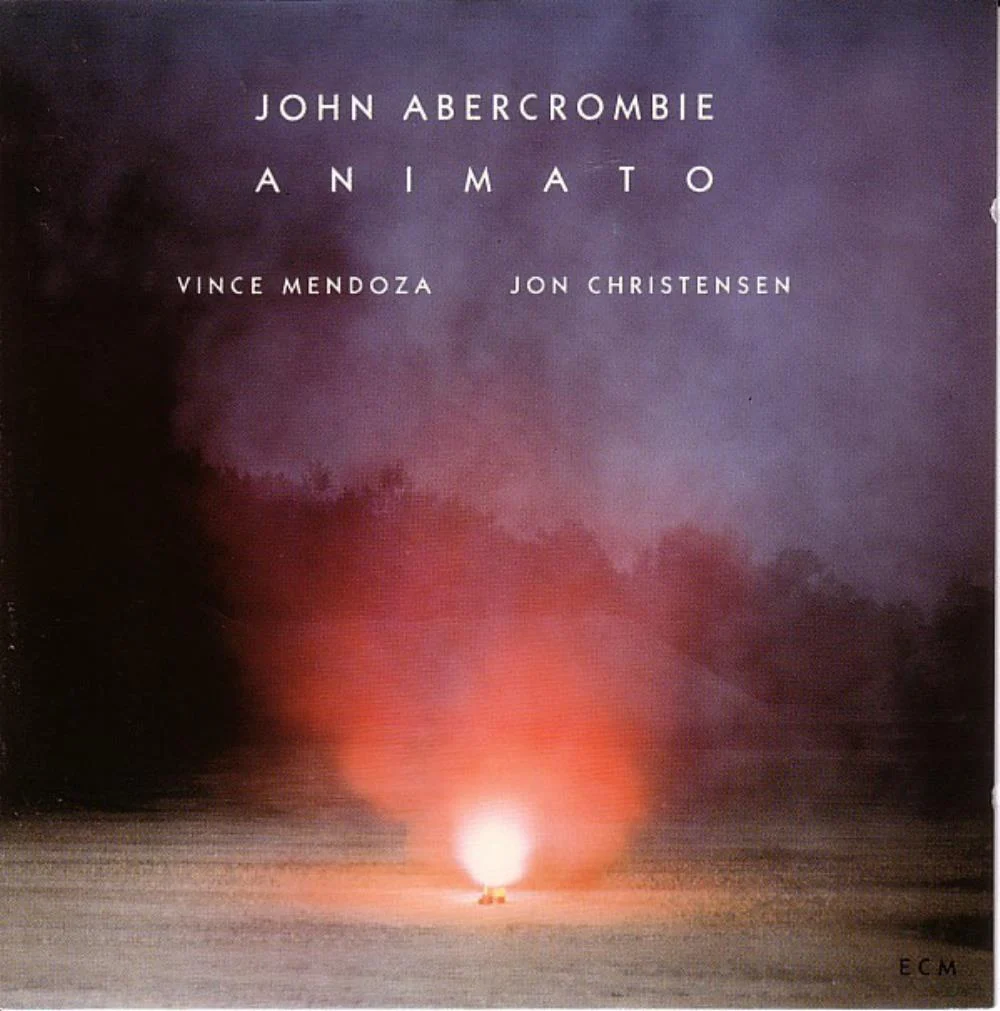 John Abercrombie released Animato on March 1, 1990, on ECM.
Abercrombie places guitar and guitar synthesizer inside Vince Mendoza’s synthesizer writing and Jon Christensen’s drums and percussion. Mendoza wrote most of the program and supplies the album’s broad electronic backdrop, while Christensen threads acoustic detail through the denser keyboard layers.
“Right Now” opens as the lone group co-write and gives Abercrombie the first extended lead line. “Single Moon” and “Agitato” carry Mendoza’s writing into thicker electronic settings, and “First Light” and “Last Light” divide the middle of the record into two short linked episodes. “For Hope of Hope” stretches the trio across the album’s longest span, while Abercrombie’s “Bright Reign” breaks the Mendoza sequence before “Ollie Mention” closes the set.
A1. “Right Now” (7:26) — Abercrombie, Christensen
A2. “Single Moon” (4:19) — Mendoza
A3. “Agitato” (5:00) — Mendoza
A4. “First Light” (1:30) — Mendoza
B1. “Last Light” (4:03) — Mendoza
B2. “For Hope of Hope” (8:49) — Mendoza
B3. “Bright Reign” (5:07) — Abercrombie
B4. “Ollie Mention” (7:34) — Mendoza
Abercrombie recorded Animato in October 1989 at Rainbow Studio in Oslo with producer Manfred Eicher and engineer Jan Erik Kongshaug.
Discography:
- Timeless (1975)
- Gateway (1975 • John Abercrombie, Dave Holland & Jack DeJohnette)
- Sargasso Sea (1976 • John Abercrombie / Ralph Towner)
- Gateway 2 (1977 • John Abercrombie, Dave Holland & Jack DeJohnette)
- Characters (1978)
- Arcade (1979 • John Abercrombie Quartet)
- Straight Flight (1979 • John Abercrombie Trio)
- Abercrombie Quartet (1980 • Abercrombie Quartet)
- M (1980 • Abercrombie Quartet)
- Five Years Later (1982 • Ralph Towner & John Abercrombie)
- Night (1984)
- Solar (1984 • John Abercrombie & John Scofield)
- Current Events (1986 • John Abercrombie, Marc Johnson & Peter Erskine)
- Emerald City (1987 • Richie Beirach & John Abercrombie)
- Getting There (1987)
- Upon a Time: An Album of Duets (1989 • John Abercrombie, George Marsh & Mel Graves)
- Animato (1990)
Sources:
- Discogs: John Abercrombie
- RYM: John Abercrombie
- JazzDisco: John Abercrombie
- ProgArchives: John Abercrombie
- MusicBrainz: John Abercrombie
Artist/Album Pages:
Bush Tetras were an American No Wave/punk-funk band from NYC that released three shortplayers on ...
Streetheart was a Canadian melodic-rock band that released the 1978/79 Atlantic albums Meanwhile B...
Sacbé was a Mexican Latin-jazz/rock band behind the 1977/78 albums Sacbé and Selva Tucanera on Dis...
Harari was a South African funk band behind the 1976 album Rufaro Happiness on The Sun label, foll...
Hiroshima are an American new age ensemble that debuted with a 1979 self-titled album on Arista, f...
Tomorrow's Edition was an American soul-funk band that cut a pair of 1975/76 singles for Gang Reco...
Experience Unlimited was an American funk band from Washington, D.C, that released the 1976 album ...
Trillion was an American AOR|hard-rock band that released the 1978–80 Epic albums Trillion and Cle...
Fringe Benefit was an English art-pop band that released a self-titled album on Capricorn in 1977....
Madden & Harris were the Australian symphonic-folk duo of multi-instrumentalist/tutor Peter Ha...
Loose Tubes were an English 21-piece jazz cooperative during the 1984–90 span. In 1988, Editions E...
Alan Ross was an English rock guitarist and singer who led the bands Ro Ro, Ross, and the Alan Ros...