

Loose Tubes were an English 21-piece jazz cooperative during the 1984–90 span. In 1988, Editions EG released Open Letter after two albums on Loose Tubes Limited. Lost Marble later issued recordings from the final residency, while the 2015 album Arriving paired further archive material with new BBC commissions.
Members: Julian Argüelles (soprano saxophone, baritone saxophone), Steve Argüelles (drums, percussion), Iain Ballamy (soprano saxophone, alto saxophone), Chris Batchelor (trumpet), Django Bates (keyboards), Steve Berry (bass), Steve Buckley (soprano saxophone, alto saxophone), Steve Day (trombone), Dave DeFries (trumpet), John Eacott (trumpet), Nic France (drums), John Harborne (trombone), Lance Kelly (trumpet), Thebe Lipere (percussion), Mark Lockheart (tenor saxophone, soprano saxophone), John Parricelli (guitar), Eddie Parker (flute), Dave Powell (tuba), Dai Pritchard (clarinet), Richard Pywell (trombone), Ashley Slater (trombone), Tim Whitehead (tenor saxophone)
Background
In 1983, composer and educator Graham Collier assembled a London rehearsal workshop. By 1984, the players separated from Collier and adopted Loose Tubes as a collective name under administrator-manager Colin Lazzerini.
Bates initially declined the workshop but returned with “Eden Express”; Berry also brought original pieces. The cooperative rehearsed on Mondays at Wood Wharf Studios in Greenwich and played its first London date in 1984 at the Prince of Orange. Ronnie Scott’s bookings and festival appearances followed as the members retained collective authority over repertory and business decisions. Arts Council support helped finance a self-released debut, whose first session took place in December 1984 at Portland Studios.
Loose Tubes
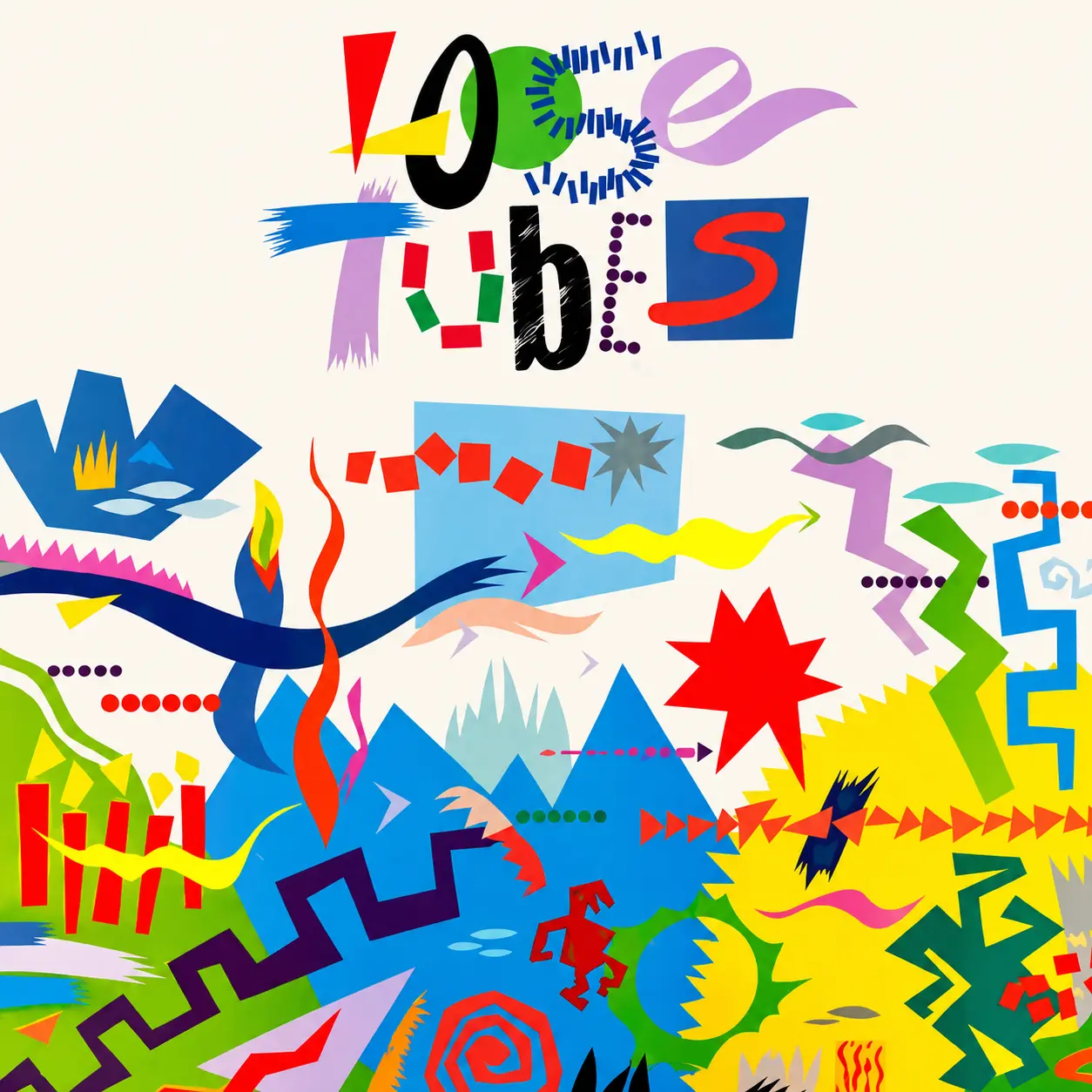 Loose Tubes released their self-titled debut album in 1985 on Loose Tubes Limited.
The album contains three compositions by Bates and two by Berry. Batchelor supplied “Arriving”; Berry co-wrote “Descarga” with Parricelli and percussionist Dave Pattman. Ballamy and Lockheart worked within the reed section, while Parricelli joined bassist Berry and drummer Nic France in the rhythm unit. Steve Argüelles handled percussion.
“Eden Express” hurtles through repeated figures before a careening keyboard break. “Rowing Boat Delineation Egg” swerves through crooked figures and crowded collective improvisation. “Yellow Hill” lopes from a block-like ensemble entry into a cushioned soprano solo. “Arriving” strides through declamatory calls before whole-band improvisation.
A1. “Eden Express” (8:15) – Django Bates
A2. “Rowing Boat Delineation Egg” (3:55) – Bates
A3. “Descarga” (8:00) – Dave Pattman, John Parricelli, Steve Berry
A4. “Descarga Ocurriencia” (2:43) – Berry
B1. “Yellow Hill” (6:01) – Bates
B2. “Mister Zee” (7:08) – Berry
B3. “Arriving” (4:22) – Chris Batchelor
Loose Tubes recorded five tracks on December 29, 1984 at Portland Studios (London) with engineer Nick Horne. The band cut “Descarga” and “Descarga Ocurriencia” on September 15, 1985 at Lansdowne Studios (London) with Chris Dibble, then mixed the full album October 15–17 at Odyssey Studios (London) with Marcellus Frank.
The cooperative produced the album and issued it through Loose Tubes Limited, which also released the 1986 Human Chain album by Bates and Steve Argüelles. Martyn Hey designed the sleeve with photography by Jak Kilby. Arts Council support helped fund the record. The album has not received an official CD reissue.
Delightful Precipice
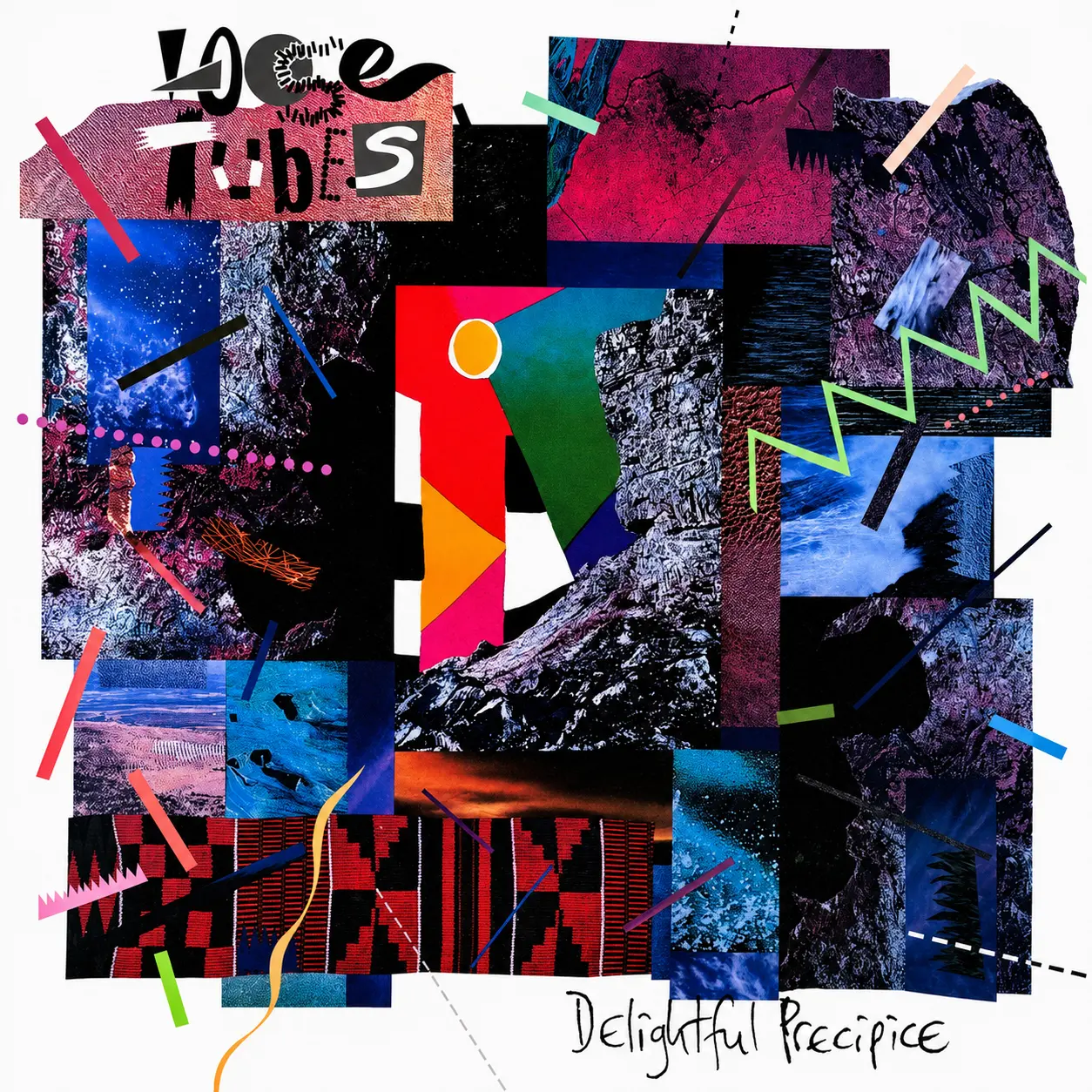 Loose Tubes released their second album, Delightful Precipice, in 1986 on Loose Tubes Limited.
The album contains pieces by Bates and Berry, with further contributions from Parker and Batchelor. DeFries wrote “Hermeto’s Giant Breakfast”; Eacott developed “Sunny” with three co-writers (Owen Rossiter, Paul O’Kane, Rob Birch). Julian Argüelles took the baritone and soprano saxophone chair, replacing the rotating baritone assignments on the debut. France remained on drums, with Steve Argüelles on percussion.
“Säd Afrika” erupts in an off-balance fanfare, drops into a massed chant, then turns toward severe ensemble lines. “Delightful Precipice” splinters knotty lines outward before regrouping over an elastic beat. “Sosbun Brakk” darts through free, angular figures. “Sunny” parades through rugged village-band calls before paired solos. “Hermeto’s Giant Breakfast” threads intricate counterpoint into a rich acoustic-guitar solo. “Would I Were” rises from a misted opening into grand brass declarations and a searing final solo.
A1. “Säd Afrika” (5:09) – Django Bates
A2. “Delightful Precipice” (6:48) – Bates
A3. “Shelley” (6:47) – Steve Berry
A4. “Sosbun Brakk” (5:49) – Eddie Parker
B1. “Sunny” (7:14) – John Eacott, Owen Rossiter, Paul O’Kane, Rob Birch
B2. “Hermeto’s Giant Breakfast” (8:36) – Dave DeFries
B3. “Would I Were” (8:09) – Chris Batchelor
Sessions took place July 31 and August 1, 1986 at Angel Recording Studios (London) with engineer John Timperley, who concurrently recorded the Courtney Pine debut Journey to the Urge Within.
The design firm Giant created the Delightful Precipice sleeve. Its back cover combines a colonial-era map of the Union of South Africa with part of Bates’s manuscript for “Säd Afrika.” Arts Council support again helped fund production.
Proms and Editions EG
On August 30, 1987, Loose Tubes became the first jazz orchestra presented at the Proms, appearing at the Royal Albert Hall. BBC One booked the group for Wogan the following month, where they performed “Sticklebacks.” Editions EG subsequently approached the band through Bill Bruford, whose Earthworks lineup included Bates and Ballamy.
Open Letter
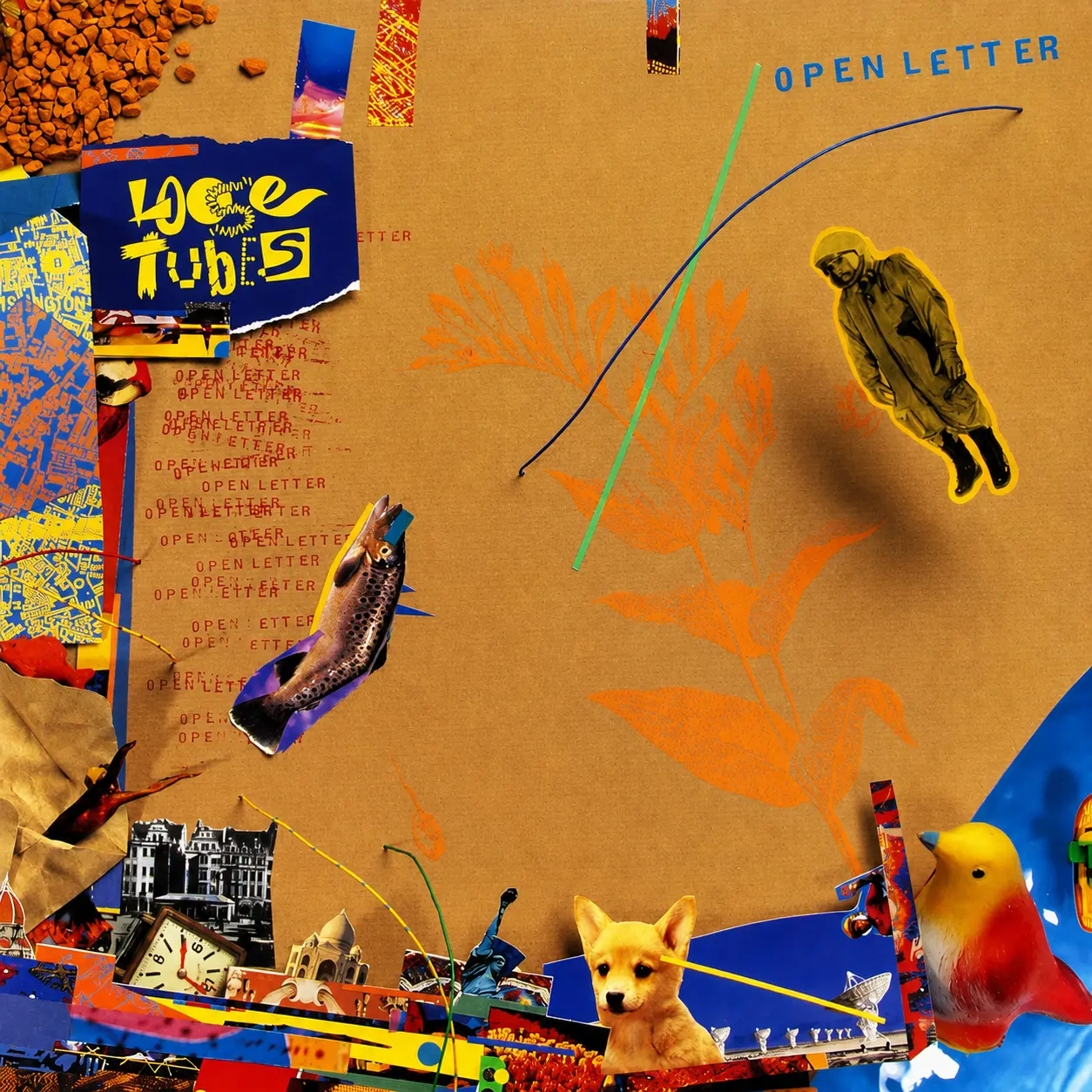 Loose Tubes released their third album, Open Letter, in 1988 on Editions EG.
The album marked the move from the group’s own imprint to Editions EG and introduced outside producer Teo Macero. Steve Argüelles moved to drums and percussion after France’s departure; South African percussionist Thebe Lipere joined the ensemble. Eight LP compositions came from six members, with John Harborne contributing “A” and DeFries composing the Dudu Pukwana dedication.
“Sweet Williams” bounds through buoyant, dancing figures and a sharply profiled solo sequence. “Children’s Game” slinks around a compact vamp with supple cross-accents. “The Last Word” lurches into an offbeat detour, then intensifies around a blunt opening figure.
A1. “Sweet Williams” (8:54) – Django Bates
A2. “Children’s Game” (5:27) – Eddie Parker
A3. “Sticklebacks” (4:24) – Chris Batchelor
A4. “Blue” (5:52) – Steve Berry
B1. “The Last Word” (6:39) – Parker
B2. “A” (5:14) – John Harborne
B3. “Accepting Suites From Strangers” (7:39) – Bates
B4. “Open Letter to Dudu Pukwana” (8:05) – Dave DeFries
Loose Tubes recorded Open Letter in December 1987 at Angel Recording Studios (London) with producer Teo Macero and engineer Mike Walter. Macero issued the 1985 album Acoustical Suspension under his own name, after a long Columbia production tenure that included Miles Davis (In a Silent Way, Bitches Brew).
Giant returned for the sleeve design. The initial CD sequence omitted “A” and added Parker’s “Shadow Play” plus Batchelor’s arrangement of the traditional “Mo Mhuirnin Ban.”
Breakup and Reunion
Loose Tubes ended after a September 1990 residency at Ronnie Scott’s, when the cost and administration of a 21-member cooperative had become unsustainable. Repertoire issued the 1991 CD Jazzbühne Berlin ’87 from an East Berlin concert.
Lost Marble drew on the final Ronnie Scott’s tapes for 2010 Dancing on Frith Street and 2012 Säd Afrika. The group reconvened at Cheltenham in 2014 and later played Brecon. Ronnie Scott’s hosted a sold-out reunion week. BBC Radio 3 commissioned four new works for the reunion. The 2015 album Arriving paired those recordings with further selections from the 1990 residency.
Discography:
- Loose Tubes (1985)
- Delightful Precipice (1986)
- Open Letter (1988)
- Jazzbühne Berlin ’87 (1991)
- Dancing On Frith Street (live, 2010)
- Säd Afrika (2012)
- Arriving (2015)
Sources:
Artist/Album Pages:
Donna Summer (December 31, 1948 — May 17, 2012) was an American soul-funk singer. She began perfo...
Junior Murvin (circa 1946 – December 2, 2013) was a Jamaican reggae singer and songwriter who emer...
Marsupilami was an English post-psych six-piece band that released two albums on Transatlantic Rec...
Nobody's Business was an English hard-rock band that released a 1978 self-titled album on Nippon C...
Bethnal was an English hard-rock/punk band that released the 1978 Vertigo albums Dangerous Times a...
Agincourt was the first group project of English musicians Peter Howell and John Ferdinando, who s...
Ace was an English soul-rock band from Sheffield that released three albums on Anchor between 1974...
Cock Robin was an American modern pop quartet behind a 1985 Columbia album and the European hits “...
Horse was an English hard-rock band that released a self-titled album on RCA Victor in 1970. The a...
Marc Moulin (Aug. 16, 1942—Sept. 26, 2008) was a Belgian keyboardist, composer, and producer who was...
Trapeze was an English hard-rock band that released three albums on Threshold between 1970 and 1972....
The Purple Gang was an English psychedelic jug-band from Stockport that released the much-comped ...