

Queensrÿche was an American metal band from Bellevue, Wash., that formed in 1980 as the Mob and broke through with the self-titled Queensrÿche EP on 206 Records in 1983.
EMI America picked up the band for the albums The Warning, Rage for Order, and Operation: Mindcrime, which established its first decade through a mix of concept arcs, long-form arrangements, and a strong guitar-keyboard axis.
A second commercial peak followed with Empire in 1990, then Promised Land and Hear in the Now Frontier carried the catalog through the rest of the EMI years.
Members: Michael Wilton (guitar, backing vocals), Eddie Jackson (bass, backing vocals), Scott Rockenfield (drums, percussion, keyboards), Chris DeGarmo (guitar, backing vocals, 1981-98), Geoff Tate (vocals, keyboards, saxophone, 1981-2012), Kelly Gray (guitar, backing vocals, 1998-2001), Mike Stone (guitar, backing vocals, 2001-09), Parker Lundgren (guitar, backing vocals, 2009-present), Todd La Torre (vocals, 2012-present)
Queensrÿche
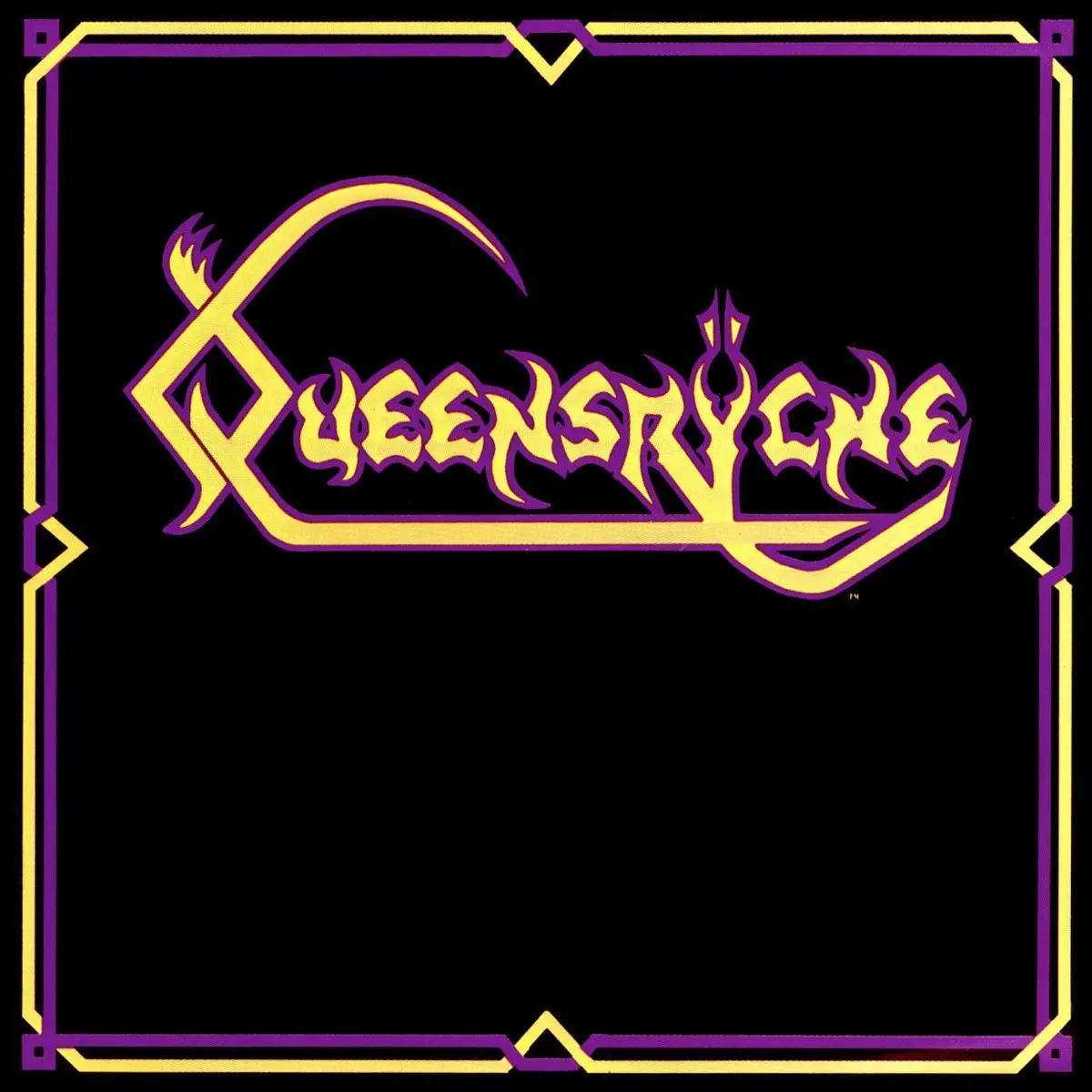 Queensrÿche released their self-titled EP, Queensrÿche, in May 1983 on 206 Records.
Queensrÿche leans on sharp rhythm changes, ringing guitar space, and a darker attack than the band’s later full-length work. Geoff Tate carries the songs with a high, sustained vocal line, while the twin guitars cut across Eddie Jackson’s active bass motion and Scott Rockenfield’s hard backbeat. Chris DeGarmo wrote the music for “Queen of the Reich” and “The Lady Wore Black,” Michael Wilton wrote the music for “Nightrider” and “Blinded,” DeGarmo wrote the lyrics for the first three songs, and Tate wrote the lyrics for “The Lady Wore Black.”
“Queen of the Reich” opens the record with rapid bass motion, open chord spreads, and long vocal peaks over a fast, driving rhythm. “Nightrider” and “Blinded” tighten the pressure through faster-picked verses, screaming lead lines, and a rougher guitar edge. “The Lady Wore Black” drops the tempo, opens with clean guitar, and broadens the vocal range before the arrangement breaks into heavier chord strikes and simpler drum accents.
A1. “Queen of the Reich” (4:23) — DeGarmo
A2. “Nightrider” (3:47) — Wilton
B1. “Blinded” (3:06) — Wilton
B2. “The Lady Wore Black” (6:15) — DeGarmo, Tate
Queensrÿche recorded Queensrÿche at Triad Studios in Redmond during 1982 with engineer Tom Hall. The band handled production, and Ron Luder mastered the EP at the Mastering Lab in Los Angeles.
Wes Griswold created the artwork, Todd Rockenfield supplied the logo concept, and Hans Hugli shot the photography.
206 Records issued “Queen of the Reich” (b/w “The Lady Wore Black”) as a single in 1983. EMI-America reissued the EP later that year, and that pressing reached No. 81 on the Billboard chart.
The Warning
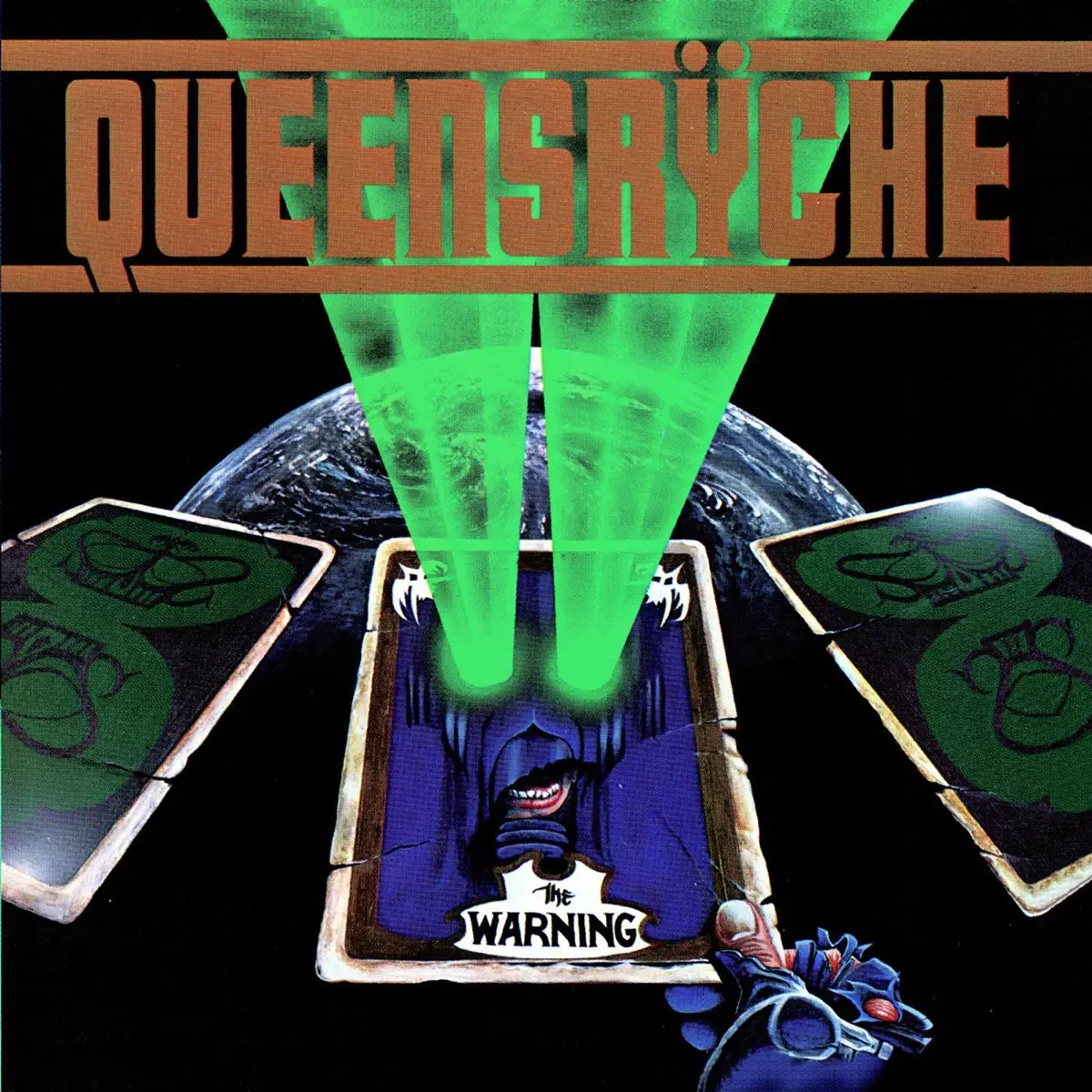 Queensrÿche released their first album, The Warning, on September 7, 1984, on EMI America.
The album widens the band’s first-record formula through longer song forms, cleaner guitar space, and a heavier use of layered detail inside the arrangements. Geoff Tate drives the material with sustained upper-register lines, while Chris DeGarmo and Michael Wilton divide the music across the tracklist and stretch several songs beyond compact verse-chorus design.
“Warning” opens with a stern mid-tempo pull and a vocal refrain that lands like an alarm call. “En Force” rides a faster charge with bell accents and a harder rhythmic thrust, while “No Sanctuary” drops into clean guitar, low bass movement, and a slower emotional climb that later adds violin color. “N M 156” sharpens the album’s dystopian edge through clipped riff attacks and a colder mechanical pulse. “Take Hold of the Flame” begins with a subdued guitar entry, then rises into a broader chorus built for Tate’s long peak notes. “Child of Fire” threads a more frantic attack into a slower break, and “Roads to Madness” closes the album with bass-led tension, orchestral detail, and an extended second half built around long vocal cries and lead-guitar lines.
A1. “Warning” (4:46) — Tate, Wilton
A2. “En Force” (5:16) — DeGarmo
A3. “Deliverance” (3:21) — Wilton
A4. “No Sanctuary” (6:05) — DeGarmo, Tate
A5. “N M 156” (4:38) — DeGarmo, Tate, Wilton
B1. “Take Hold of the Flame” (4:57) — DeGarmo, Tate
B2. “Before the Storm” (5:13) — Tate, Wilton
B3. “Child of Fire” (4:34) — Tate, Wilton
B4. “Roads to Madness” (9:40) — DeGarmo, Tate, Wilton
Queensrÿche recorded The Warning in London at Angel Recording, Audio International, Abbey Road, and Mayfair with producer James Guthrie, engineer Neil Kernon, mixer Val Garay, and orchestral arranger Michael Kamen.
Matt Bazemore created the cover illustration, and first pressings carried a printed inner sleeve with lyrics and band photos.
EMI issued “Warning” (b/w “Deliverance”) as a 7-inch in 1984. The label also issued “Take Hold of the Flame” (b/w “Nightrider”) as a 7-inch that same year, and the album reached No. 61 on the Billboard 200.
Rage for Order
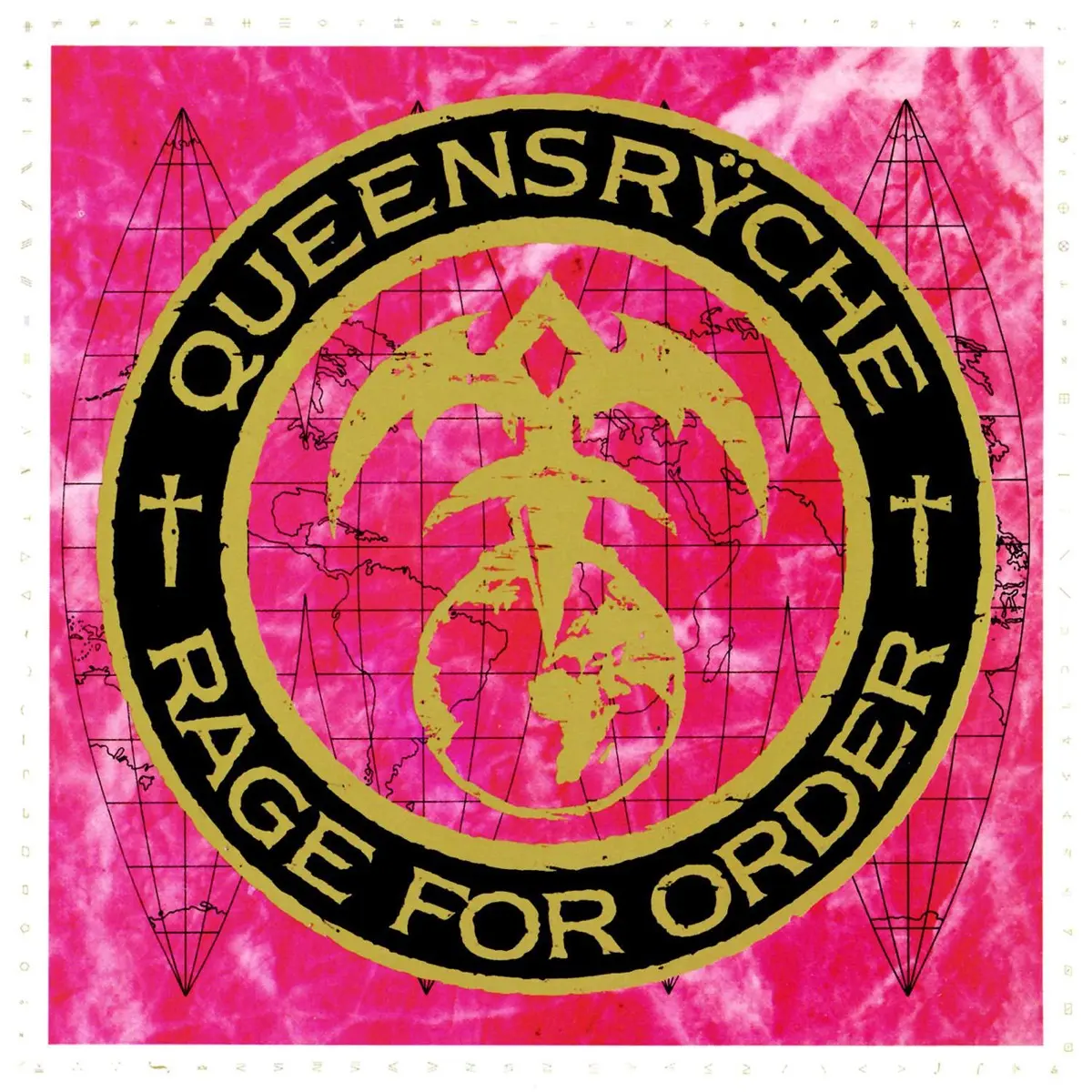 Queensrÿche released their second album, Rage for Order, on June 27, 1986, on EMI America.
Keyboards step closer to the front on Rage for Order, and the arrangements thread digital textures through clipped riff figures, open-chord guitar layers, and stop-start accents. Reverse-echo vocals, staccato patterns, and longer harmonic suspensions give the record a colder surface than the debut while the band stretches the songs across denser internal detail.
“Walk in the Shadows” opens the album with a bright guitar figure, a fast charge, and a sharp solo break. “I Dream in Infrared,” “The Whisper,” and “London” favor cleaner space and broader choruses, while “The Killing Words” rises from a keyboard-led opening into a larger refrain. “Gonna Get Close to You” turns Lisa Dalbello’s song into a tenser, harder piece, “Chemical Youth (We Are Rebellion)” hits with a quicker gallop, and “I Will Remember” closes the album in a slower, softer frame built around a more restrained vocal line.
A1. “Walk in the Shadows” (3:32) — DeGarmo, Tate, Wilton
A2. “I Dream in Infrared” (4:19) — Tate, Wilton
A3. “The Whisper” (3:35) — DeGarmo
A4. “Gonna Get Close to You” (4:37) — Lisa Dalbello
A5. “The Killing Words” (3:56) — DeGarmo, Tate
A6. “Surgical Strike” (3:20) — DeGarmo, Wilton
B1. “Neue Regel” (4:58) — DeGarmo, Tate
B2. “Chemical Youth (We Are Rebellion)” (4:15) — Tate, Wilton
B3. “London” (5:04) — DeGarmo, Tate, Wilton
B4. “Screaming in Digital” (3:39) — DeGarmo, Tate, Wilton
B5. “I Will Remember” (4:24) — DeGarmo
Queensrÿche recorded Rage for Order at M.D.H. Studios in Bellevue with Le Mobile Remote Sound Studio and at Mushroom Studios in Vancouver, then completed additional recording and mixing at Yamaha Studios in Glendale with producer, engineer, and mixer Neil Kernon, additional engineers Dave Ogilvie, Rob Porter, and Keith Cohen, and mastering engineer Howie Weinberg at Masterdisk.
The sleeve marks the first prominent use of the Tri-Ryche logo on a Queensrÿche album. Moshe Brakha shot the photography, Henry Marquez handled art direction, Glenn Parsons handled design, and early pressings carried a blue-silver ring later changed to black.
EMI issued “Gonna Get Close to You” (b/w “Prophecy”) as a single in August 1986. The band lifted “The Whisper” as a promotional 12-inch in 1986 with “I Dream in Infrared” on the reverse.
On May 9, 1986, “Walk in the Shadows” became the first promotional 12-inch from Rage for Order. The album reached No. 47 on the Billboard 200 and later received a gold certification in the United States.
Operation: Mindcrime
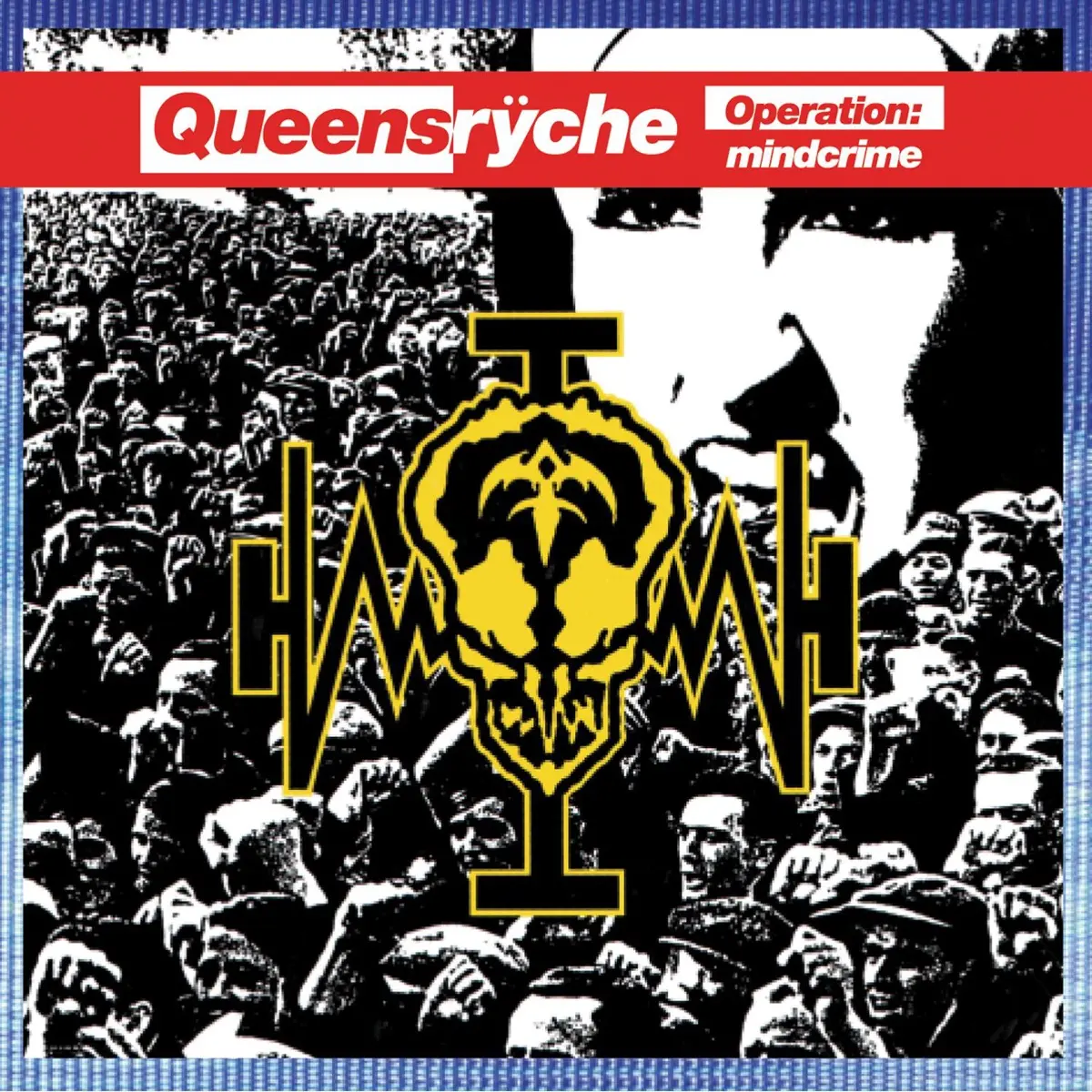 Queensrÿche released their third album, Operation: Mindcrime, on May 3, 1988, on EMI Manhattan.
Linked scenes tie Operation: Mindcrime into one uninterrupted arc. The arrangements use spoken fragments, keyboard tension, acoustic bridges, and abrupt guitar surges to mark each turn in the story. The vocals stay at the front while the guitars alternate clipped riffs, suspended chords, and longer lead passages across the sequence.
“I Remember Now” and “Anarchy—X” open the program with hospital voices, crowd noise, and electronic pressure. “Revolution Calling” enters on a firm stride and carries one of the album’s broadest refrains, while “Operation: Mindcrime” tightens the pressure through a harder vocal attack and sharper rhythmic cuts. “The Mission” opens more space around the vocal line, then “Suite Sister Mary” expands the scale through acoustic passages, orchestral weight, choir, and Pamela Moore’s duet with Geoff Tate. “The Needle Lies” lands as the quickest direct hit on the record, “Electric Requiem,” “Waiting for 22,” and “My Empty Room” strip the motion back to short narrative fragments, and the closing run of “Breaking the Silence,” “I Don’t Believe in Love,” and “Eyes of a Stranger” restores the full band for a final rise in tension and release.
A1. “I Remember Now” (1:17) — DeGarmo
A2. “Anarchy—X” (1:27) — DeGarmo
A3. “Revolution Calling” (4:42) — Tate, Wilton
A4. “Operation: Mindcrime” (4:43) — DeGarmo, Tate, Wilton
A5. “Speak” (3:42) — Tate, Wilton
A6. “Spreading the Disease” (4:07) — Tate, Wilton
A7. “The Mission” (5:45) — DeGarmo
B1. “Suite Sister Mary” (10:41) — DeGarmo, Tate
B2. “The Needle Lies” (3:08) — Tate, Wilton
B3. “Electric Requiem” (1:22) — Rockenfield, Tate
B4. “Breaking the Silence” (4:34) — DeGarmo, Tate
B5. “I Don’t Believe in Love” (4:23) — DeGarmo, Tate
B6. “Waiting for 22” (1:05) — DeGarmo
B7. “My Empty Room” (1:25) — Tate, Wilton
B8. “Eyes of a Stranger” (6:39) — DeGarmo, Tate
Queensrÿche recorded Operation: Mindcrime at Kajem/Victory Studios in Gladwyne, Pennsylvania, and Le Studio in Morin Heights, Quebec, with producer Peter Collins, engineers James Barton and Paul Northfield, orchestral arranger Michael Kamen, and mastering engineer Bob Ludwig.
EMI issued “Breaking the Silence” as a promotional single in 1988.
In October 1988, “Revolution Calling” became a promotional 12-inch from Operation: Mindcrime.
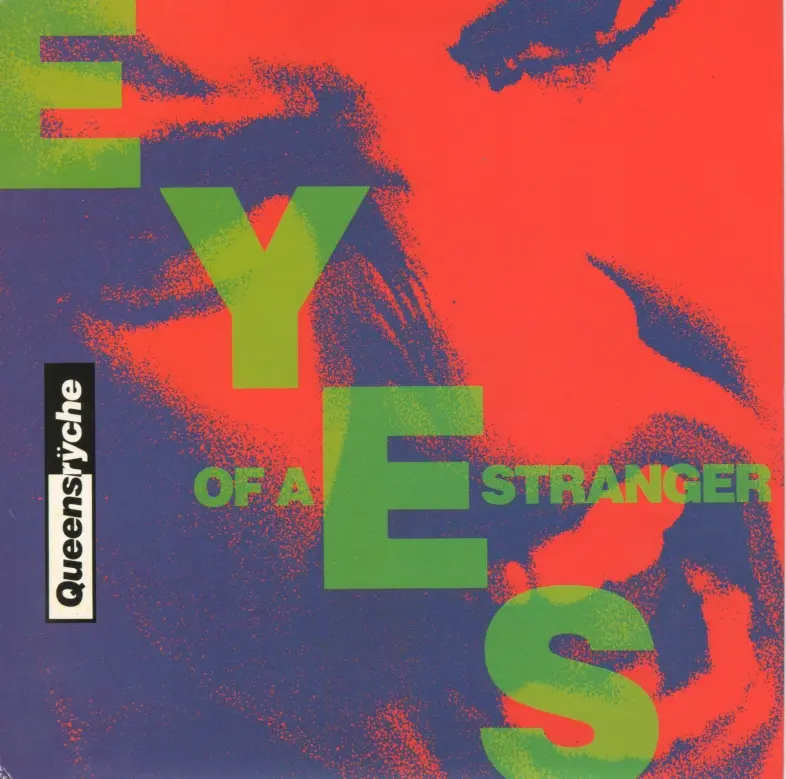 “Eyes of a Stranger” appeared as a single in April 1989. The U.S. cassette paired a radio edit with “The Mission,” and the song gave Queensrÿche their first U.S. Mainstream Rock hit at No. 35; it also reached No. 59 in the UK.
EMI issued “I Don’t Believe in Love” as a single in July 1989 in album and extended versions. The song reached No. 41 on the U.S. Mainstream Rock chart, and Operation: Mindcrime reached No. 50 on the Billboard 200 before gold certification on April 14, 1989, and platinum certification two years later.
Empire
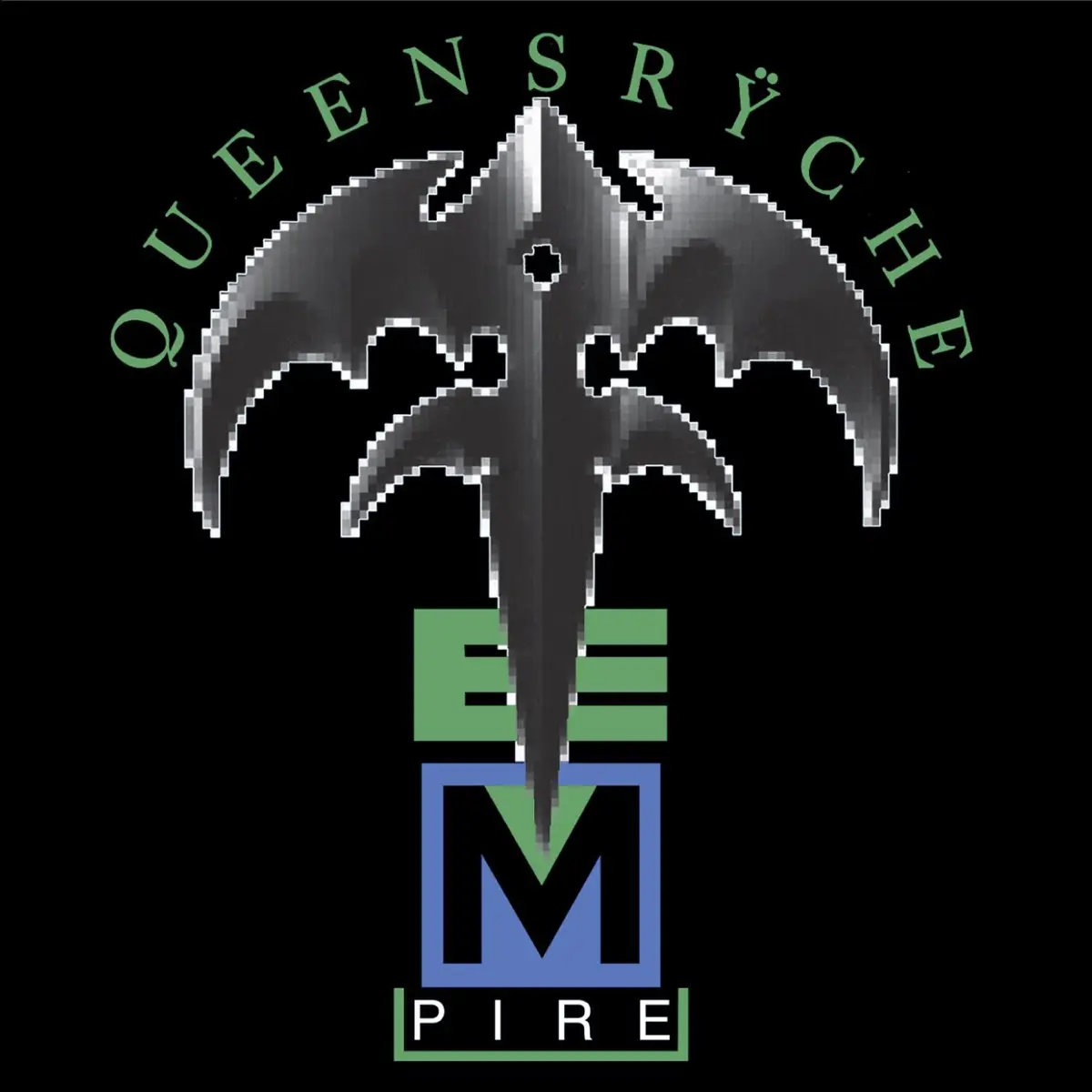 Queensrÿche released their fourth album, Empire, on September 4, 1990, on EMI USA.
Empire favors compact song design and polished dynamic control. Broad choruses, acoustic passages, sustained guitar lines, and keyboard detail shape the record across eleven tracks. Chris DeGarmo wrote “Best I Can” and “Silent Lucidity” alone, co-wrote six more songs, and shares most of the writing load with Geoff Tate and Michael Wilton.
“Best I Can” opens with a wash of sound, a scream, staccato keys, and children’s voices. “The Thin Line” folds synth blasts and reverse-delay vocals into a denser arrangement, while “Silent Lucidity” begins with acoustic guitar and voice before Michael Kamen’s orchestral writing expands the song into the album’s widest dynamic rise. “Empire” lands with a harder rhythmic pull and a more severe lyrical angle, and “Jet City Woman” and “Anybody Listening?” hold the later sequence with longer vocal lines and a broader emotional pitch.
A1. “Best I Can” (5:30) — DeGarmo
A2. “The Thin Line” (5:42) — DeGarmo, Tate, Wilton
A3. “Jet City Woman” (5:20) — DeGarmo, Tate
B1. “Della Brown” (7:04) — DeGarmo, Rockenfield, Tate
B2. “Another Rainy Night (Without You)” (4:44) — DeGarmo, Jackson, Tate
B3. “Empire” (5:07) — Tate, Wilton
C1. “Resistance” (4:47) — Tate, Wilton
C2. “Silent Lucidity” (5:45) — DeGarmo
C3. “Hand on Heart” (5:30) — DeGarmo, Tate, Wilton
D1. “One and Only” (5:52) — DeGarmo, Wilton
D2. “Anybody Listening?” (7:40) — DeGarmo, Tate
Queensrÿche recorded Empire at Vancouver Studios in Vancouver and tracked “Empire” at Triad Studios in Redmond with producer Peter Collins, engineers James Barton and Paul Northfield, and mastering engineer Bob Ludwig.
EMI issued “Empire” (b/w “Scarborough Fair”) as a 7-inch on October 29, 1990. The 12-inch and CD formats added “Prophecy,” and the CD also added “Della Brown.” The single reached No. 22 on the U.S. Mainstream Rock chart and No. 61 in the UK.
“Silent Lucidity” appeared as a single in March 1991 with live versions of “The Mission” and “Eyes of a Stranger.” The song reached No. 1 on the U.S. Mainstream Rock chart, No. 9 on the Billboard Hot 100, and No. 18 in the UK.
The band lifted “Best I Can” as a single on June 24, 1991 with the 1991 acoustic remix of “I Dream in Infra Red” on the reverse. Maxi formats added “Prophecy” from Tokyo. The single reached No. 28 on the U.S. Mainstream Rock chart and No. 36 in the UK.
In August 1991, “Jet City Woman” became the fourth single from Empire. The 7-inch paired it with the 1991 acoustic remix of “I Dream in Infrared,” while CD formats added live “Empire,” live “Walk in the Shadows,” or “Queen of the Reich.” The single reached No. 6 on the U.S. Mainstream Rock chart and No. 39 in the UK. Empire reached No. 7 on the Billboard 200, No. 13 in the UK, and later received triple-platinum certification in the United States.
Discography:
- Queensrÿche (EP, 1983)
- The Warning (1984)
- Rage for Order (1986)
- Operation: Mindcrime (1988)
- Empire (1990)
- Promised Land (1994)
Sources:
- Discogs: Queensrÿche
- RYM: Queensrÿche
- 45cat: Queensrÿche
- MetalArchives: Queensrÿche
- MusicBrainz: Queensrÿche
Artist/Album Pages:
Icon was an American metal band behind the 1984/85 Capitol albums Icon and Night of the Crime, fo...
The Sonics were an American garage-rock band that released the 1965–66 albums Here Are the Sonics!!!...
Rena Rama was a Swedish jazz band that issued two albums on Caprice and one on Japo between 1973 a...
Taeko Ohnuki — 大貫妙子 (Nov. 28, 1953) — is a Japanese art-pop vocalist and songwriter who fronted th...
Steel Pulse are an English roots-reggae band from Birmingham that released the 1978–80 Island albu...
Richard Thompson is an English singer, guitarist, and songwriter who formed the folk rock band Fai...
UFO was an English hard-rock band from Enfield, Middlesex, that released two albums on Beacon in 1...
Sugar Minott — aka Lincoln Barrington Minott (May 25, 1956 – July 10, 2010) — was a Jamaican regga...
Bobby Caldwell (August 15, 1951 – March 14, 2023) was an American blue-eyed soul singer and songwr...
Matia Bazar are an Italian pop group that released nine studio albums on Ariston between 1976 and ...
Pink Floyd was an English rock band that released twelve studio albums and two soundtracks between 1...
Rory Gallagher (March 2, 1948 — June 14, 1995) was an Irish blues-rock and hard-rock guitarist act...