

Bobby Caldwell (August 15, 1951 – March 14, 2023) was an American blue-eyed soul singer and songwriter known for the hits “What You Won’t Do for Love” and “Don’t Lead Me On.” Between 1978 and 2015, he released fifteen studio albums. His style evolved soft-rock and jazz-pop to retro R&B and big-band sounds.
Background
He was born Robert Hunter Caldwell on August 15, 1951, in Manhattan. He grew up in Miami with a twofold musical intake. The city streets exposed him to Haitian, Latin, reggae, and R&B sounds, while Frank Sinatra and Ella Fitzgerald played at home. He took up piano and guitar at 12 and gravitated toward rock and roll, jazz, and rhythm and blues.
Caldwell entered professional music in South Florida during his teens. He joined the Miami group Katmandu and took the bass role in a lineup with organist-vocalist Norman Harris, guitarist-vocalist Bob Jabo, and drummer Kenny Zale. The band worked clubs in Miami and Fort Lauderdale, held down house-band duties at The Image, and took larger support slots that placed them on bills with Jimi Hendrix, Cream, the Amboy Dukes, the Chambers Brothers, and an early Allman Brothers engagement. At 17, Caldwell worked Las Vegas dates with the group.
Bob Shad then brought Katmandu into Criteria for a session that produced the 1971 Mainstream album Katmandu. The record split most of its material between Norman Harris and Robert Joseph songs and included two group-written instrumentals, “G Minor” and “Cotton Mouth.” Caldwell handled bass on the album beside Jabo, Harris, and Zale.
After Katmandu, Caldwell moved west and joined Little Richard’s road band on rhythm guitar during the early 1970s. He then remained in Los Angeles, worked bar bands, and pursued a solo contract until TK signed him in 1978.
Bobby Caldwell
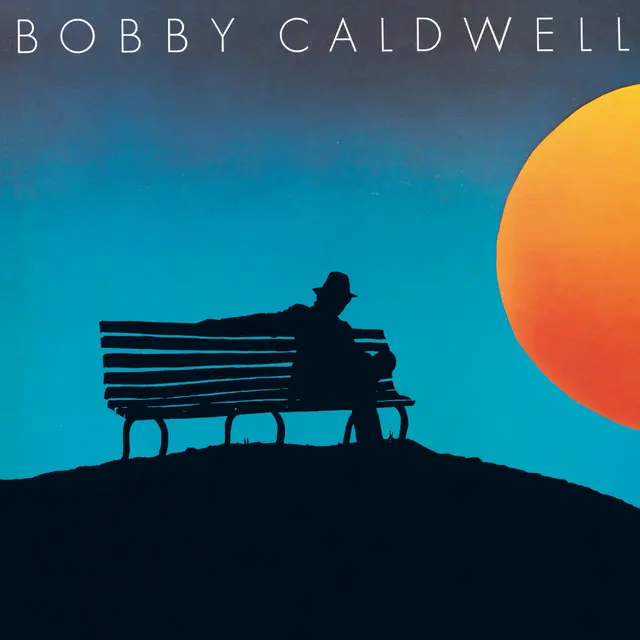 Bobby Caldwell released his self-titled debut album in June 1978 on Clouds.
Caldwell plays keyboards, synthesizers, guitars, and bass across the album. Guitarist Alfons Kettner and keyboardist Benny Latimore shape much of the upper texture, while George “Chocolate” Perry and Ed Greene give the rhythm section its backbone. Ann Holloway produced most of the set, with Marsha Radcliffe and Perry handling selected cuts.
The songs run on soft keyboard shimmer, clipped guitar figures, firm backbeat placement, and a vocal line that stays close to the beat. “Special to Me” and “Can’t Say Goodbye” hold to a polished mid-tempo pace, “Down for the Third Time” carries more weight through a denser rhythmic pull, and “What You Won’t Do for Love” builds its identity from a taut bass figure and smooth keyboard motion.
A1. “Special to Me” (3:31) — Caldwell, Radcliffe, Shane
A2. “My Flame” (4:12)
A3. “Love Won’t Wait” (4:08)
A4. “Can’t Say Goodbye” (5:03) — Caldwell, George Perry
B1. “Come to Me” (2:52) — Caldwell, Sax Kari
B2. “What You Won’t Do for Love” (4:46) — Caldwell, Alfons Kettner
B3. “Kalimba Song” (1:19)
B4. “Take Me Back to Then” (3:30)
B5. “Down for the Third Time” (4:48)
Caldwell recorded the album at TK Studios in Hialeah with producer Ann Holloway, plus Marsha Radcliffe on “Special to Me” and “My Flame” and George “Chocolate” Perry on “Can’t Say Goodbye.”
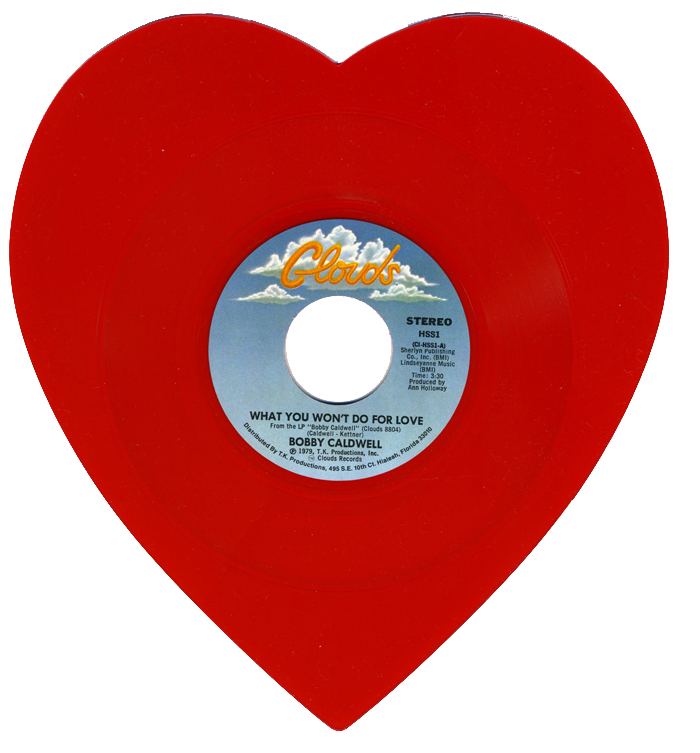 Clouds issued “What You Won’t Do for Love” (b/w “Love Won’t Wait”) as a single in September 1978. It reached No. 9 pop, No. 6 R&B, No. 10 adult contemporary, and No. 10 on the Cash Box chart. Early copies appeared on heart-shaped red vinyl, sold for the price of an album as a 1979 Valentine’s Day promo item. Clouds followed with “My Flame,” which reached No. 40 R&B, then “Can’t Say Goodbye,” which reached No. 103 pop and No. 36 R&B. “Down for the Third Time” also came out from the album.
Bobby Caldwell reached No. 21 on the Billboard 200 and No. 7 on the R&B album chart, and it later took double-platinum status in the United States.
Outside the album, Caldwell quickly became a song source for other singers. Cheryl Lynn cut “I’ve Got Faith in You” in 1979, while Roy Ayers, Natalie Cole, and others soon drew on “What You Won’t Do for Love.”
Cat in the Hat
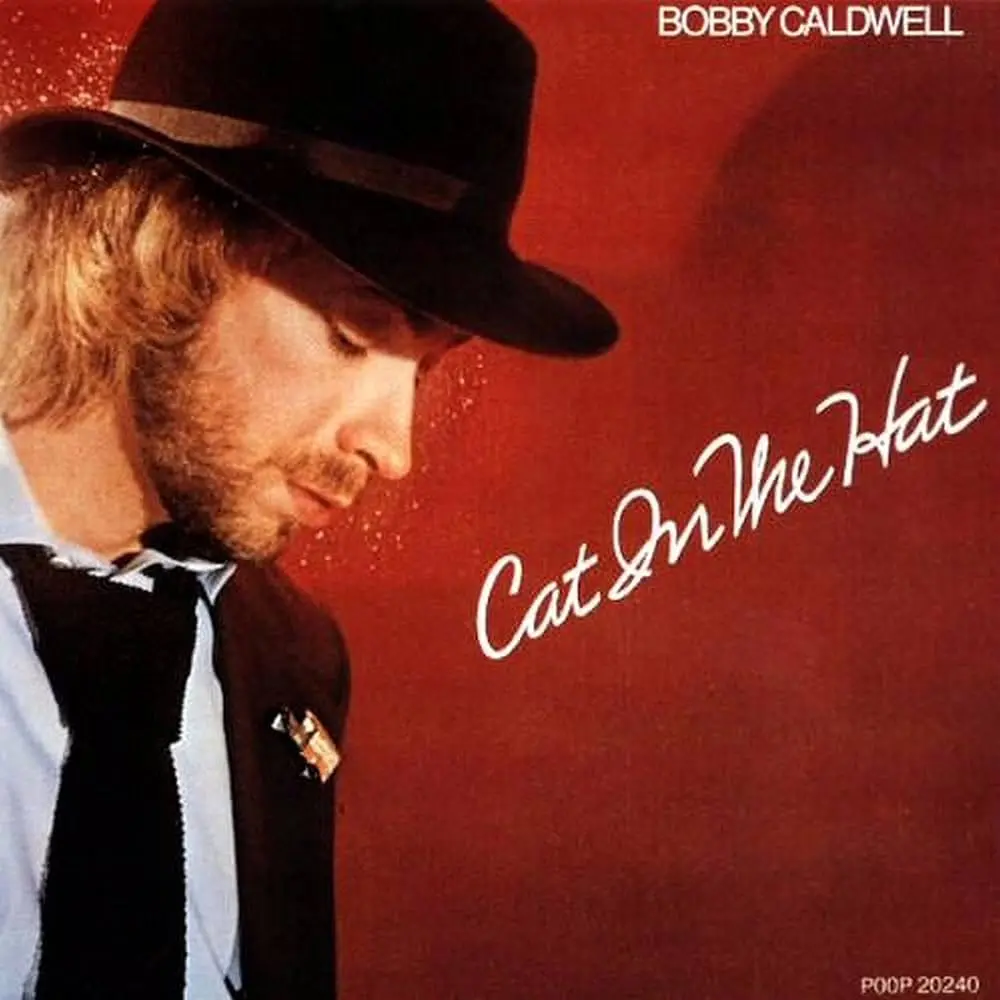 Bobby Caldwell released his second album, Cat in the Hat, in March 1980 on Clouds.
Caldwell handles the album’s core instrumentation: guitar, bass, drums, vibraphone, keyboards, and synthesizer. Bruce Malament adds keyboards, Mike Lewis directs the horn parts, and Ed Greene, Andy Newmark, Harold Seay, and Joe Galdo supply the drum parts across the session.
The album tightens the surface with firmer rhythm placement, brighter keyboard color, and more active horn writing. “Coming Down from Love” runs on a brisk pulse, “To Know What You’ve Got” keeps a shorter, cleaner shape, “Open Your Eyes” eases into a gentler pace, and “Mother of Creation” opens into a longer, more layered arrangement.
A1. “Coming Down from Love” (4:01)
A2. “Wrong or Right” (4:56)
A3. “To Know What You’ve Got” (3:08)
A4. “You Promised Me” (4:01)
B1. “It’s Over” (2:56)
B2. “Open Your Eyes” (3:43) — Caldwell, Bruce Malament
B3. “Mother of Creation” (5:05) — Caldwell, Bruce Malament, Harold Seay, John Paulus
B4. “I Don’t Want to Lose Your Love” (4:35)
Caldwell recorded Cat in the Hat at Criteria Recording Studios with co-producer Steve Kimball and engineers Don Gehman and Steve Kimball.
Clouds issued “Coming Down from Love” as a single in 1980. It reached No. 42 pop, No. 28 R&B, and No. 94 on the Cash Box chart.
Cat in the Hat reached No. 113 on the Billboard 200 and No. 46 on the R&B chart, and it later took gold status in the United States.
Caldwell’s outside writing kept pace. Regina James had already cut “Alfie,” and 1980 brought another Caldwell title into circulation when Willie “Beaver” Hale recorded “I Feel Like Crying.”
Carry On
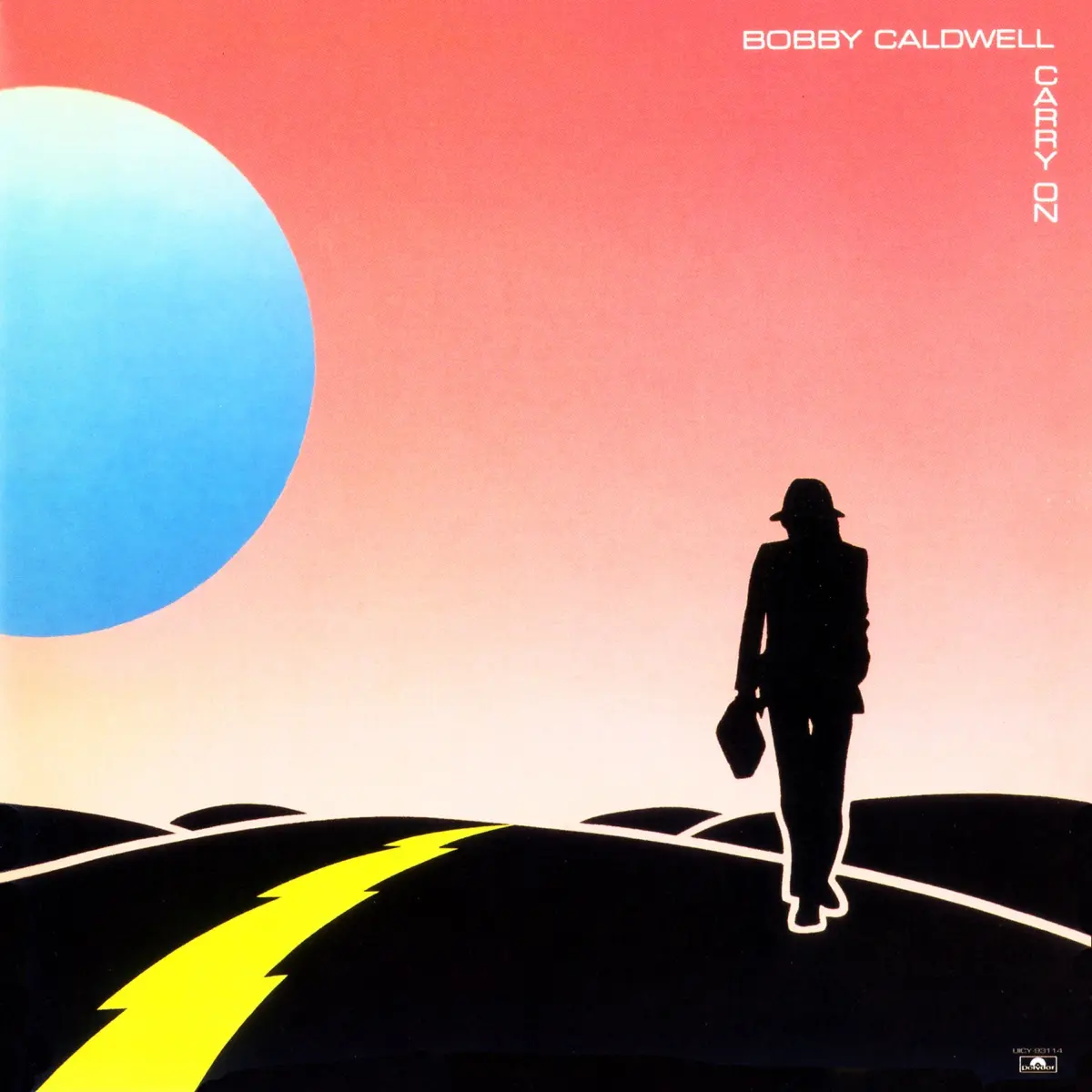 Bobby Caldwell released his third album, Carry On, in March 1982 on Polydor.
Caldwell produced the album and sings within a cleaner, more controlled studio design. Guitarists David Williams and Steve Lukather add short accents around his own parts, Jeff Porcaro and Joe Galdo hold the backbeat in place, and David Paich’s Moog bass adds extra weight to selected passages.
The album uses shorter rhythmic figures, cleaner drum placement, and a brighter upper range. “All of My Love” moves at a smooth mid-tempo pace, “Catwalk” tightens around a bass-led pulse, “Jamaica” opens into a longer travel piece, and the title cut closes on a steadier line.
A1. “All of My Love” (3:29)
A2. “Sunny Hills” (4:26)
A3. “Loving You” (3:40) — Caldwell, Henry Marx
A4. “Words” (4:30)
B1. “Catwalk” (4:45) — Caldwell, George Perry
B2. “Jamaica” (5:02)
B3. “You Belong to Me” (3:12)
B4. “Carry On” (3:56)
Caldwell recorded Carry On for Ram Associates and Polydor with his own production, Kyle Lehning on the mix, and Bernie Grundman on the master.
Polydor issued “Jamaica” as a single in 1982. It reached No. 105 pop and No. 54 R&B. Polydor then issued “All of My Love,” which reached No. 77 pop, No. 67 R&B, and No. 70 on the Cash Box chart. Carry On reached No. 133 on the Billboard 200 and No. 41 on the R&B chart.
At the same time, Caldwell’s songs kept moving into other catalogs. Roberta Flack recorded “Never Loved Before” in 1982, and Stevie Woods later cut “Loving You,” which extended the Carry On writing stream beyond Caldwell’s own release.
August Moon
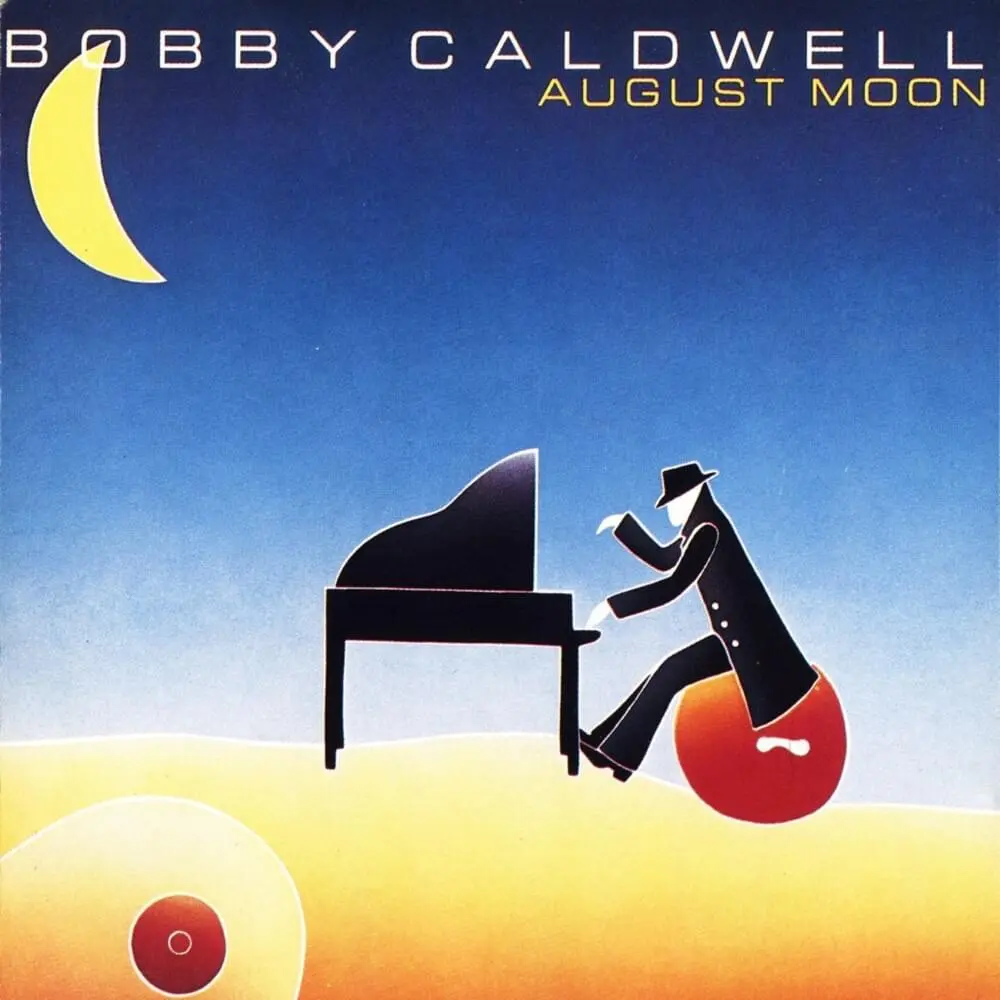 Bobby Caldwell released his fourth album, August Moon, in 1983 on Polydor in Japan.
Caldwell again builds the core sound himself on vocals, bass, drums, guitar, and keyboards. Drummer Jeff Porcaro underpins the session sound with Toto bandmate David Hungate.
The songs compress his writing into shorter, sharper pop forms with brisk starts and close-cut endings. “Sherry,” “She Loves My Car,” and “Cover Girl” push on quick bright momentum, “Saying Goodnight” eases the pace, and “Never Loved Before” closes the set on a compact ballad line.
A1. “Sherry” (3:37)
A2. “She Loves My Car” (3:27) — Bill LaBounty, Roy Freeland
A3. “Fraulein” (3:29)
A4. “She Does It Better” (3:01)
A5. “Cover Girl” (3:22)
B1. “Loaded Gun” (2:48)
B2. “Class of 69” (3:27)
B3. “Saying Goodnight” (3:44)
B4. “Once You Given In” (2:56)
B5. “Never Loved Before” (2:41)
Caldwell recorded and mixed August Moon at Morningstar Sound Studio and Bill Schnee Studios with engineer Kyle Lehning and mastering by Bernie Grundman at A&M.
Outside work continued to grow around the same period. Akira Fuse recorded “I Needed You,” Stevie Woods recorded “Loving You,” and New Edition cut “Baby Love” in 1984.
Mid-late 1980s writing and session work
After TK collapsed, Caldwell focused on songwriting for other artists, including the Commodores (“Janet”), Neil Diamond (“Angel”), and Chicago (“Niagara Falls,” “What Kind of Man Would I Be?”). He scored his biggest hit with the 1986 ballad “The Next Time I Fall,” a No. 1 duet between Amy Grant and Peter Cetera. Caldwell also served as an instrumentalist on releases by Yellowjackets, B.B. King, Michael Sembello, and Betty Wright.
Heart of Mine
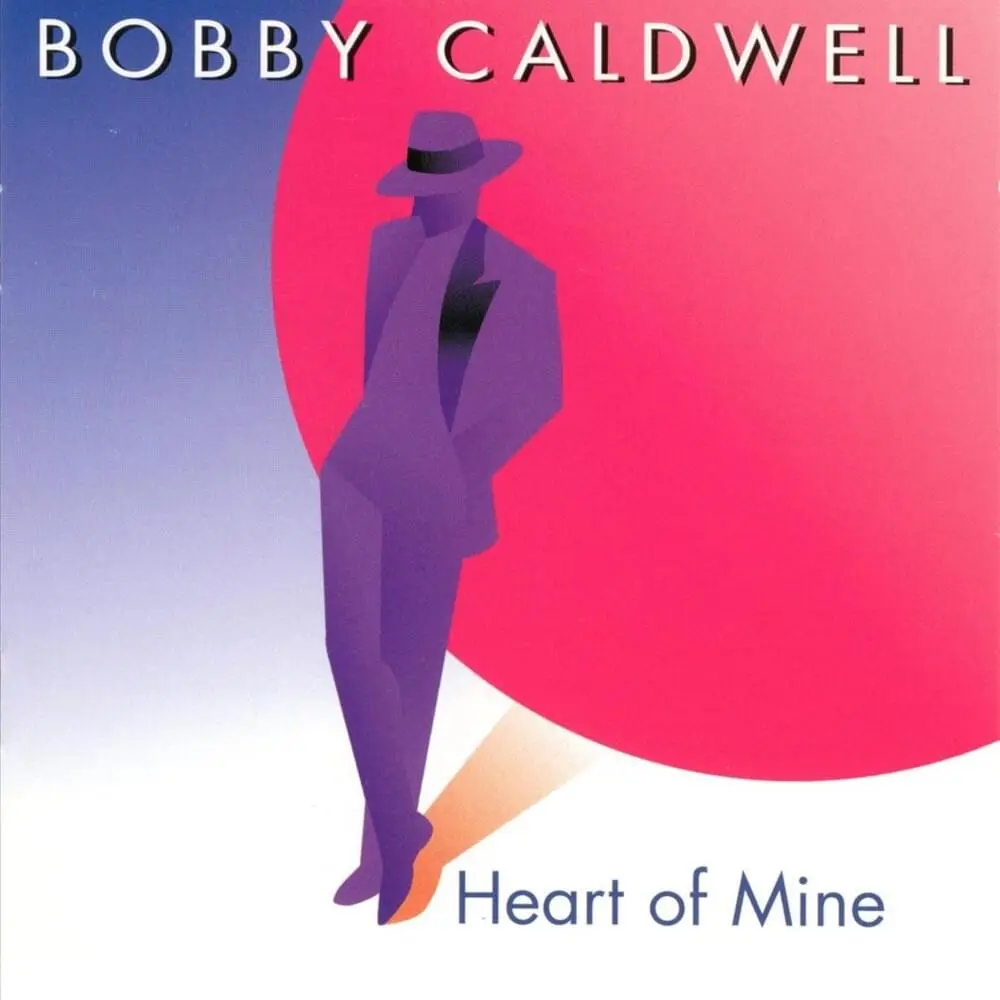 Bobby Caldwell released his fifth album, Heart of Mine, in 1989 on Sin-Drome.
Caldwell handles guitar, bass, keyboards, and synthesizer across the album. Bobby Martin arranged the horn charts, which interject with guitarist Michael Landau, bassist Jimmy Haslip, percussionist Mike Fisher, and saxophonists Dave Koz and Richard Elliot.
The album relies on layered keyboards, measured programmed rhythm, and a smoother adult-pop surface. “Heart of Mine” opens with a broad arrangement, “Real Thing” keeps a firmer pulse, “All or Nothing at All” cuts to a tighter shape, and “Stay With Me” and “China” close the set in softer tones.
1. “Heart of Mine” — Caldwell, Matkosky, Scheff
2. “Real Thing” — Caldwell, George
3. “Next Time (I Fall)” — Caldwell, Gordon
4. “All or Nothing at All” — Caldwell, Matkosky
5. “Saying It’s Over”
6. “In the Name of Love” — Caldwell, Bercovici
7. “Even Now” — Caldwell, Haslip
8. “First Time”
9. “Stay With Me” — Caldwell, Parker
10. “China”
Caldwell recorded and mixed Heart of Mine at Bossa Nova Hotel with engineer Hilary Bercovici and mastering by Michele Stone at Amigo. Dennis Matkosky took a co-producer credit on “All or Nothing at All.”
The album sat inside a period when Caldwell’s outside songs traveled just as far as his own recordings. Boz Scaggs had already recorded “Heart of Mine” for his 1988 comeback album Other Roads while Al Jarreau recorded “All or Nothing at All” the same year.
Stuck on You / Solid Ground
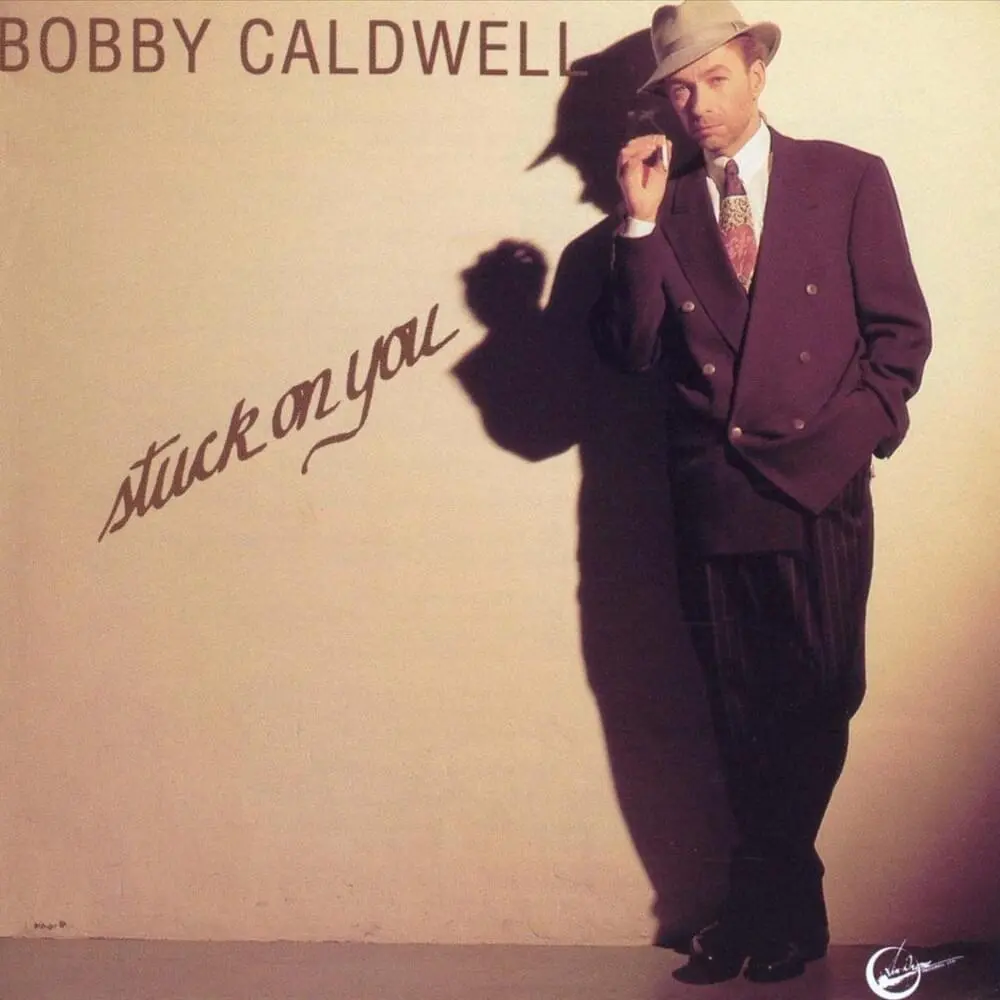 Bobby Caldwell released his sixth album, Stuck on You, in 1991 on Sin-Drome. Polydor issued the same program in Japan as Solid Ground.
Caldwell builds the record from vocals, bass, keyboards, guitar, programming, and arranging under his own name. Tower of Power horns, Dave Koz, Richard Elliot, John Patitucci, Emil Richards, Randy Waldman, Allen Hinds, Dennis Budimir, and Michael Thompson widen the tonal range, but Caldwell still controls the rhythmic anchor and harmonic layout.
The songs put more weight on adult-jazz phrasing, programmed texture, and soft-rock contour. “Don’t Lead Me On” and “Stuck on You” ride the album’s bright upper register, “Cry” and “Without Your Love” slow the pace into more reflective space, “Janet” turns a tighter pop line into the main pull, and “Back to You” adds Marilyn Scott for a duet close.
1. “Don’t Lead Me On” (5:12) — Caldwell, Matkosky
2. “Stuck on You” (4:04) — Caldwell
3. “Cry” (4:41) — Caldwell, Cross
4. “Janet” (4:26) — Caldwell, Fox, Golde
5. “Without Your Love” (4:40) — Caldwell, Cross
6. “Promised Land” (3:45) — Caldwell, Gordon
7. “Don’t Give Me Bad News” (3:22) — Caldwell, Gordon
8. “Solid Ground” (4:06)
9. “Back to You” (4:23) — Caldwell, Rushen
10. “Every Man” (5:24) — Caldwell, Datchler
Caldwell recorded the album at Amigo Studios with Woody Woodruff, mixed it with Paul Brown, and mastered it at Amigo Mastering. Hilary Bercovici took the associate-producer credit and shared programming work with Caldwell.
Sin-Drome issued “Janet” from the album, and it reached No. 88 R&B. The same release cycle also included “Real Thing,” which reached No. 41 adult contemporary.
Stuck on You reached No. 65 on the R&B chart and No. 5 on the jazz chart. “Don’t Lead Me On” later gained traction on smooth-jazz playlists.
Discography:
- Bobby Caldwell (1978)
- Cat in the Hat (1980)
- Carry On (1982)
- August Moon (1983)
- Heart of Mine (1989)
- Stuck on You (1991)
- Where Is Love (1993)
- Soul Survivor (1995)
- Blue Condition (1996)
- Come Rain or Come Shine (1999)
- Perfect Island Nights (2005)
- Live at the Blue Note Tokyo (2007)
- House of Cards (2012)
Sources:
Artist/Album Pages:
Rictus was a French symphonic-rock band that released three albums on assorted labels between 1981...
The Cure are an English rock band that released eight albums and eighteen singles between 1978 and...
Urszula Kasprzak (born February 7, 1960) is a Polish pop-rock singer from Lublin who rose to promi...
Wagner Tiso is a Brazilian keyboardist, composer, and arranger who played in the Sixties samba-jaz...
Jordi Sabatés (born Oct. 23, 1948) is a Spanish jazz pianist who emerged in mid-Sixties Barcelona ...
Tom Harrell (born June 16, 1946) is an American post-bop/jazz-funk trumpeter, flugelhornist, comp...
Mandré — aka Michael Andre Lewis (Dec. 7, 1948 — Jan. 31, 2012) — was an American electro-funk mus...
Taka Boom (born Oct. 8, 1954) is an American soul singer from Chicago and the younger sister of C...
Nina Hagen is a German singer and media personality who made two late-Seventies bandleader albums ...
Junko Yagami — 八神純子 (born Jan. 5, 1958) — is a Japanese art-pop singer who released eight albums ...
José Cid is a Portuguese keyboardist, vocalist, and composer who emerged with Estoril psych legend...
Xmal Deutschland was a German goth-rock band fronted by songwriter Anja Huwe. They cut two 1981/82...