

Vanilla Fudge was an American psych-rock band from New York that released five albums on Atco between 1967 and 1969. The rhythm section of bassist Tim Bogart and drummer Carmine Appice subsequently recorded four albums in hard-rockers Cactus and two in the powertrio Beck, Bogart and Appice with guitarist Jeff Beck.
Members: Mark Stein (lead vocals, organ, keyboards), Vince Martell (lead guitar, vocals, 1966-70), Tim Bogert (bass, vocals), Joey Brennan (drums, 1966), Carmine Appice (drums, vocals), Sal D’Nofrio (bass, 1970), Jimmy Galluzi (drums, 1970), Ron Mancuso (guitar, 1982-84)
Background
Vanilla Fudge formed in 1966 as The Electric Pigeons, assembled by singer/organist Mark Stein and bassist Tim Bogert. They first interacted in the New Jersey beat group Rick Martin & the Showmen.
Inspired by the organ-dominated soul-rock of The Rascals, they formed The Pigeons with Bronx-born guitarist Vince Martell, formerly of east coast beatsters Ricky T & the Satans Three. After two short-term drummers, they hired Carmine Appice from the 43rd St cover band Thursday’s Children.
In April 1967, The Pigeons signed to Atlantic Records, which insisted they change their name. They chose Vanilla Fudge, a reference to their mix of white pop and soul.
Vanilla Fudge
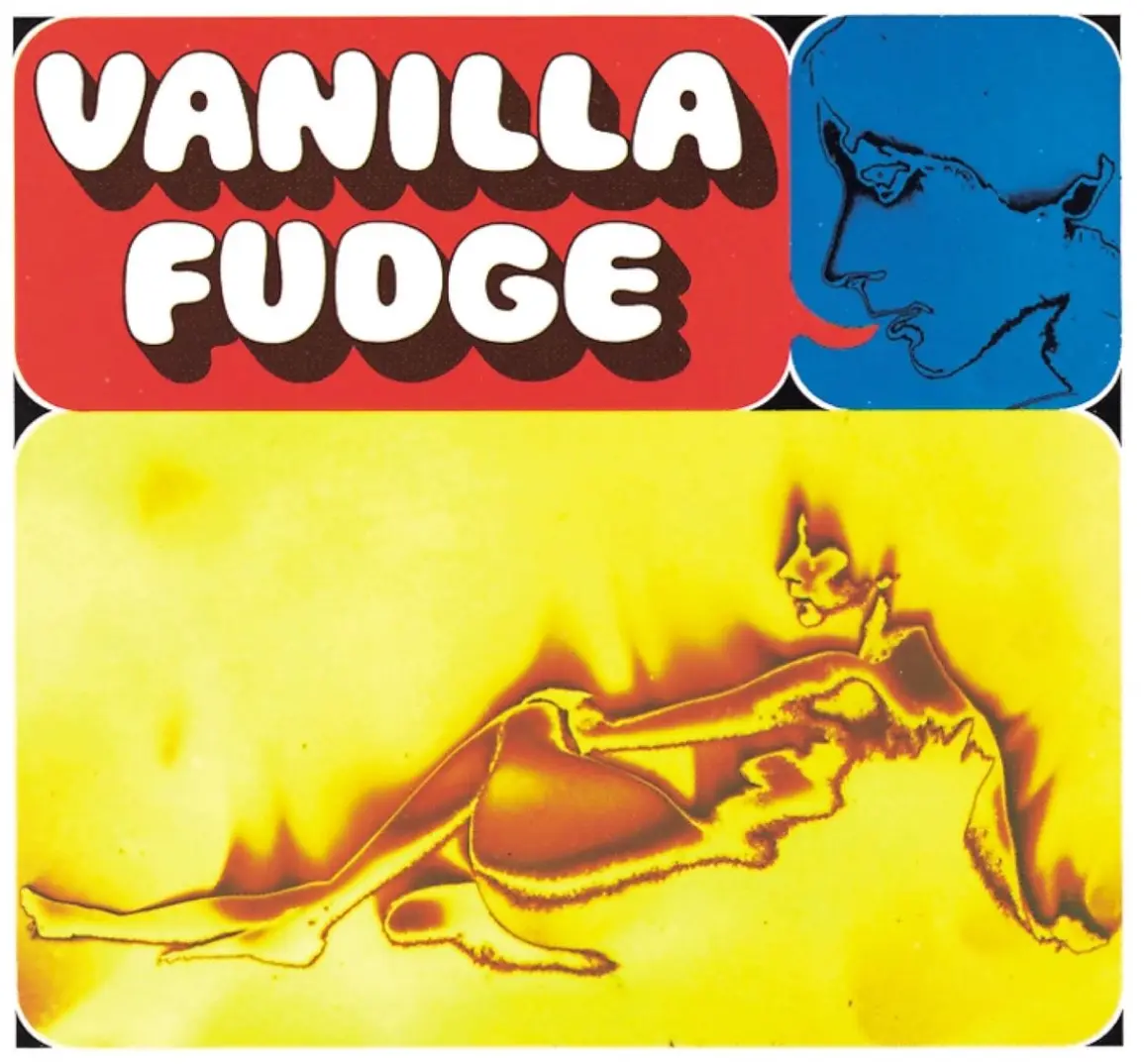 Vanilla Fudge released their self-titled debut album in August 1967 on Atco (US) and Polydor (UK).
The album contains six slowed-down covers of contemporary rock and soul songs, including hits by The Impressions (“People Get Ready”), The Supremes (“You Keep Me Hangin’ On”), The Zombies (“She’s Not There”), and the Beatles staples “Ticket to Ride” and “Eleanor Rigby.” Side B intersperses three short original sound-collage interludes titled “Illusions of My Childhood.”
Vanilla Fudge features the classic quartet of organist Mark Stein, guitarist Vince Martell, bassist Tim Bogert, and drummer Carmine Appice — the steady lineup throughout their five-album run.
A1. “Ticket to Ride” (5:40)
A2. “People Get Ready” (6:30)
A3. “She’s Not There” (4:55)
A4. “Bang Bang” (5:20) originated as a 1966 solo single by Cher, written by her then-husband Sonny Bono.
 B1. “Illusions of My Childhood – Part One” (0:20)
B2. “You Keep Me Hangin’ On” (7:20)
B3. “Illusions of My Childhood – Part Two” (0:23)
B4. “Take Me for a Little While” (3:27) is a song by Sixties pop producer Trade Martin, first recorded in 1965 by Evie Sands and covered since by The Koobas and Patti Labelle & The Bluebelles.
B5. “Illusions of My Childhood – Part Three” (0:22)
B6. “Eleanor Rigby” (8:24)
Sessions occurred in 1967 with producer Shadow Morton and engineers Bill Stahl and Joe Veneri. Mastering was handled by Customatrix.
 Vanilla Fudge appeared in a single sleeve with cover photography by Richard Stevens (front) and Bruce Laurance (back). Design was overseen by Haig Adishian.
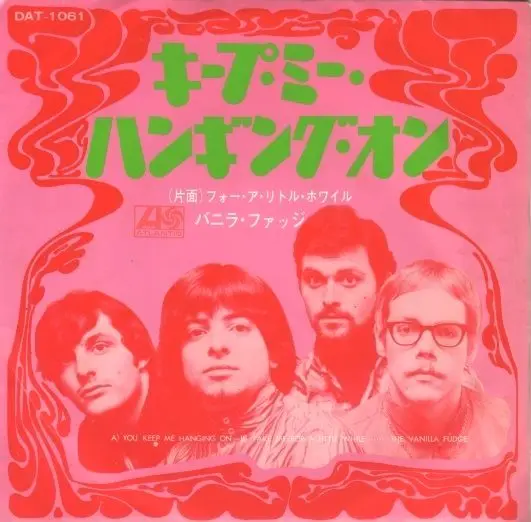
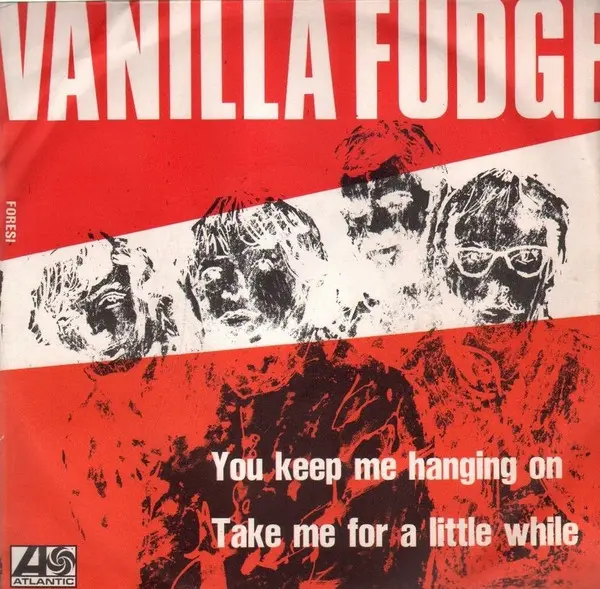
Atco lifted “You Keep Me Hangin’ On” as the album’s lead single (b/w “Take Me for a Little While”). A shorter edit of “Hangin’ On” entered the Billboard Hot 100 and helped drive the album to No. 6 on the Billboard 200 and No. 8 in Finland.
In 1968, Atlantic reissued “You Keep Me Hangin’ On” with “Come By Day, Come By Night,” a non-album Mark Stein original.
B. “Come By Day, Come By Night” (2:53)
“Where Is My Mind”
 In January 1968, Vanilla Fudge released a non-album single: “Where Is My Mind,” a Mark Stein original backed with “The Look of Love,” a Burt Bacharach/Hal David song popularized by Dusty Springfield.
A. “Where Is My Mind” (2:43)
B. “The Look of Love” (2:46)
“Where Is My Mind” peaked at No. 73 on the Billboard Hot 100. In Germany and Italy, Atlantic issued the single in psychedelic picture sleeves. Multiple issues, including the US Atco release, bill this single to “The Vanilla Fudge.” Italian copies flip the two sides.
The Beat Goes On
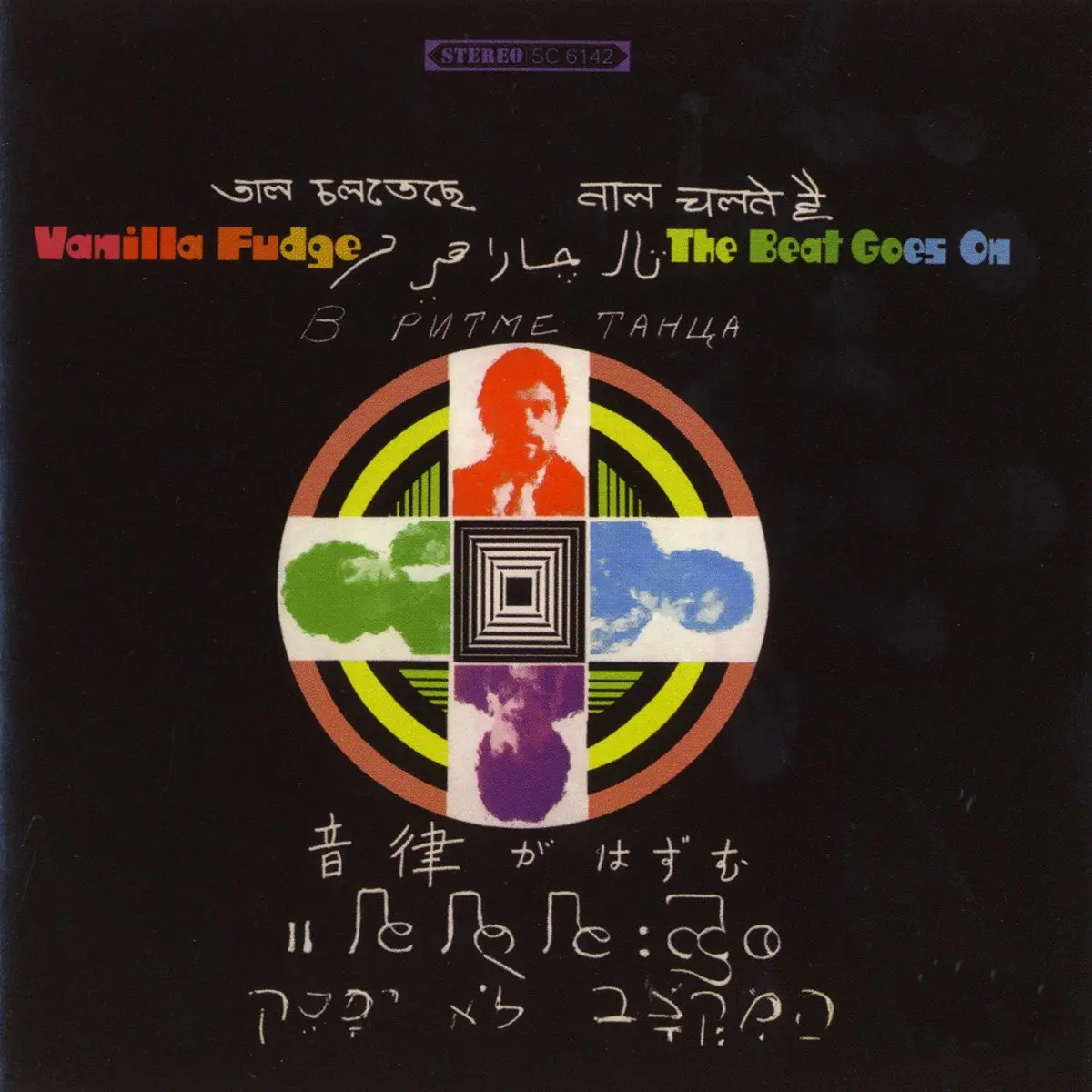 Vanilla Fudge released their second album, The Beat Goes On, in February 1968 on Atco.
The album contains one continuous sound collage across four phases, interspersed with multiple variations on the Sonny Bono title theme.
Side A includes brief thematic segments on classical, traditional, and pop music history, covering Mozart’s Divertimento No. 13, “Old Black Joe,” “Don’t Fence Me In,” “12th Street Rag,” “In the Mood,” and “Hound Dog.” A Beatles medley follows with abbreviated renditions of “I Want to Hold Your Hand,” “I Feel Fine,” “Day Tripper,” and “She Loves You.” Side B opens with historical soundbites from Neville Chamberlain, Winston Churchill, Franklin D. Roosevelt, Harry S. Truman, and John F. Kennedy. The album closes with “Merchant/The Game Is Over,” a four-part spoken exchange among the band members set to a moody backdrop.
Vanilla Fudge co-wrote the opening sketch and closing “Merchant” sequence, but had little creative input elsewhere, as producer Shadow Morton directed the album as a conceptual studio experiment.
A1. “Sketch” (2:55)
Phase One
A2. “Intro: The Beat Goes On” (1:57)
A3a. “Eighteenth Century: Variations on a Theme by Mozart – Divertimento No. 13 in F Major” (0:45)
A3b. “Nineteenth Century: Old Black Joe” (0:46)
A3c. “Twentieth Century: Don’t Fence Me In” (0:52)
A3d. “12th Street Rag” (0:49)
A3e. “In the Mood” (0:45)
A3f. “Hound Dog” (0:43)
A3g. Beatles Medley: “I Want to Hold Your Hand” / “I Feel Fine” / “Day Tripper” / “She Loves You” (1:45)
Phase Two
A4. “The Beat Goes On” (1:32)
A5. “Beethoven: Für Elise & Moonlight Sonata” (6:33)
A6. “The Beat Goes On” (1:05)
B1. “The Beat Goes On” (1:00)
Phase Three
B2. “Voices in Time” (8:09) features sound clips of prominent 20th-century political figures layered with ambient keyboard and percussive accents.
Phase Four
B3. “The Beat Goes On” (1:50)
B4a–d. “Merchant / The Game Is Over” (8:57) features alternating spoken-word parts by Vince, Tim, Carmine, and Mark over brooding instrumental passages.
B5. “The Beat Goes On” (2:20)
Sessions occurred in early 1968 at Ultra-Sonic Studios in Hempstead, Long Island, where producer Shadow Morton directed The Beat Goes On with assistance from Bill Stahl and John Linde. Don Casale and John Bradley engineered the album amid work on titles by The Vagrants and Iron Butterfly.
The Beat Goes On appeared in a single sleeve with photography by Jay P. Halpin and cover design by Marvin Israel, whose layouts also appeared on jazz and avant-garde titles for Atlantic and its affiliates.
Atco lifted “The Beat Goes On” as a single in several abridged versions. While the album divided fans and critics, it reached No. 17 on the Billboard 200 and remains one of the most unusual entries in the proto-prog and psychedelic rock canon.
Renaissance
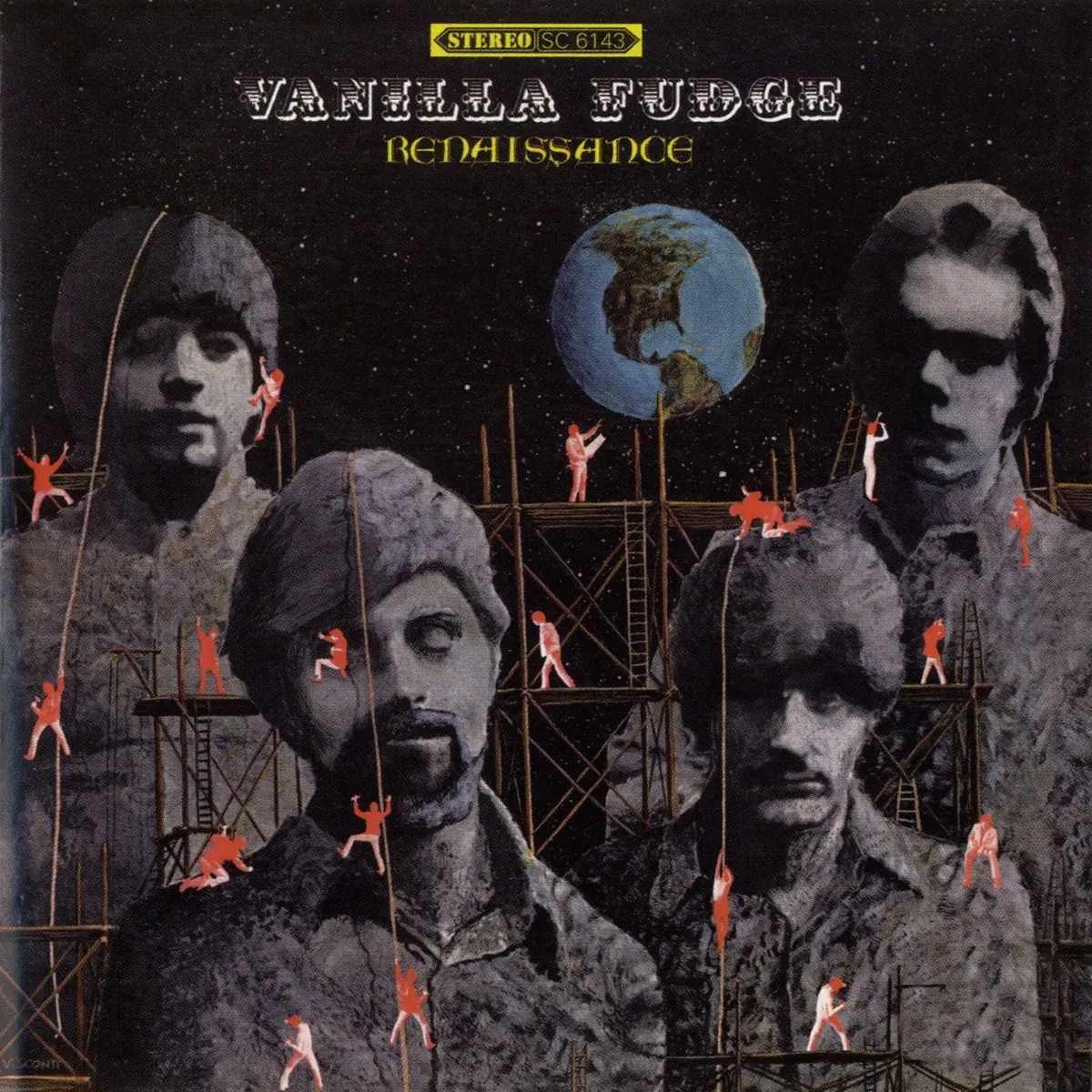 Vanilla Fudge released their third album, Renaissance, on June 14, 1968, on Atco.
The album contains five originals written by members of the band. Organist Mark Stein composed “That’s What Makes a Man” and co-wrote “Paradise” with drummer Carmine Appice and “The Sky Cried – When I Was a Boy” with bassist Tim Bogert. Guitarist Vince Martell contributed “Thoughts,” while Appice penned “Faceless People.”
Side B includes two external compositions: “The Spell That Comes After” (credited to Cal Schenkel but actually written by Essra Mohawk) and a reimagined take on Donovan’s “Season of the Witch,” which interpolates lyrics from Mohawk’s “We Never Learn.”
A1. “The Sky Cried – When I Was a Boy” (7:36)
A2. “Thoughts” (3:28)
A3. “Paradise” (5:59)
A4. “That’s What Makes a Man” (4:28)
B1. “The Spell That Comes After” (4:29) features moody verses and sustained organ tones with a lyrical sense of mysticism.
B2. “Faceless People” (5:55) explores identity and isolation in a slowly building, heavy arrangement.
B3. “Season of the Witch” (8:40) expands the Donovan original into a multipart psych-prog suite with interwoven lyrics from Essra Mohawk’s “We Never Learn.”
Sessions occurred in early 1968 at Ultra-Sonic Recording Studios in Hempstead, Long Island, where engineer Bill Stahl recorded Renaissance for Shadow Morton’s Phantom Productions.
Renaissance appeared in a single sleeve with abstract cover art designed by Jim Visconti, featuring layered op-art effects and color inversion motifs.
Atco issued Renaissance in both mono and stereo formats. Though less experimental than its predecessor, it reached No. 20 on the Billboard 200 and No. 8 in Finland. Later CD reissues include three non-album singles from the same period.
Near the Beginning
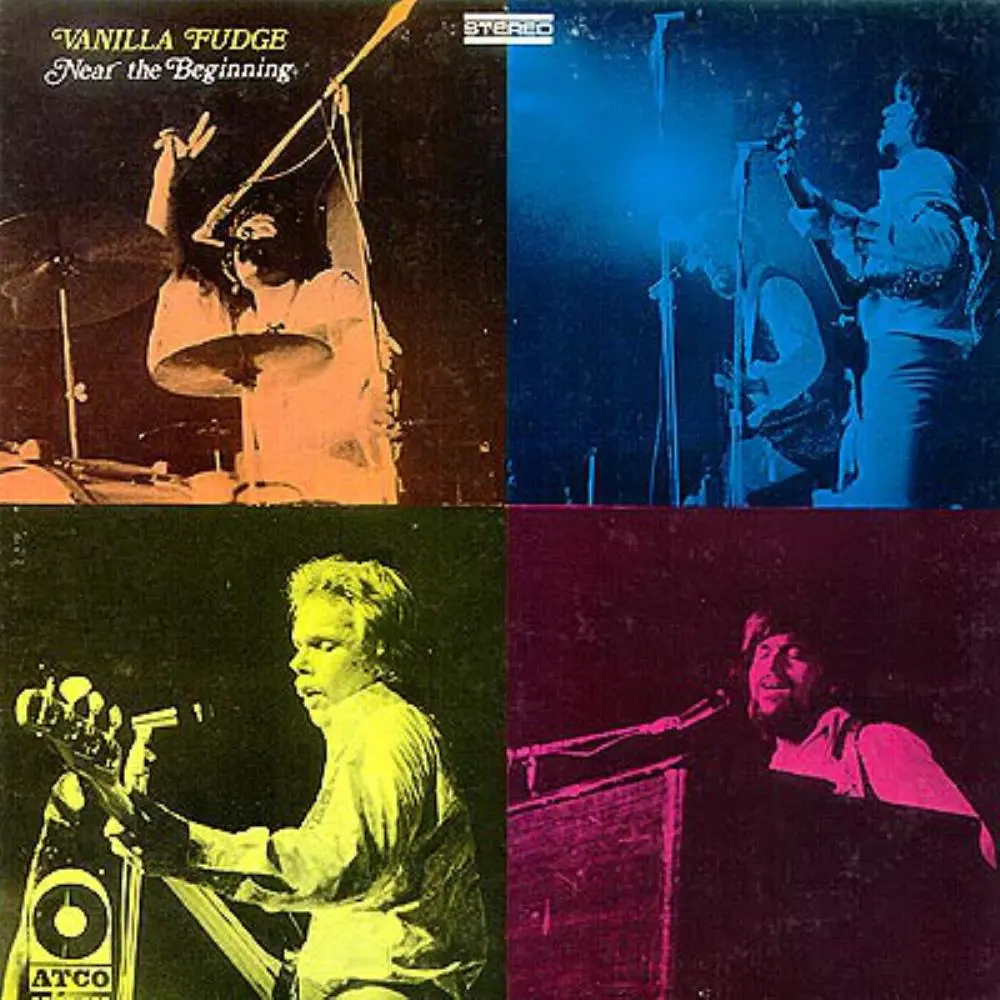 Vanilla Fudge released their fourth album, Near the Beginning, in February 1969 on Atco.
The self-produced album contains three studio cuts and a side-long live jam.
Side A contains one original studio track by drummer Carmine Appice (“Where Is Happiness”), and covers of “Shotgun” by Jr. Walker & the All Stars and “Some Velvet Morning” by Lee Hazlewood, originally a duet with Nancy Sinatra.
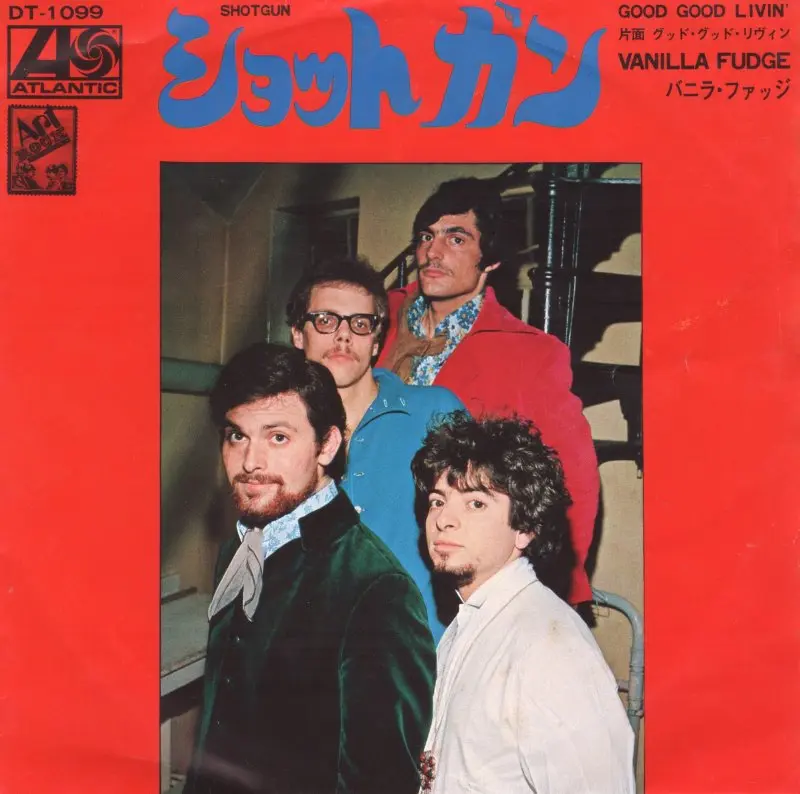
A1. “Shotgun” (6:10) reinvents the Jr. Walker funk classic with slowed pacing and distorted riffs.
A2. “Some Velvet Morning” (7:34) replaces Hazlewood’s duet format with moody organ swells and hazy psych passages.
A3. “Where Is Happiness” (6:59)
 B1. “Break Song” (23:27) is a side-long instrumental jam recorded live at the Shrine Auditorium in Los Angeles, built on riff-based interplay and extended solos.
Studio sessions occurred in late 1968 with three engineers: Bob Hughes (“Shotgun,” “Where Is Happiness”), and Eddie Kramer and Tony Bongiovi (“Some Velvet Morning”). “Break Song” was recorded by Bill Halverson at the Shrine Auditorium. Mastering took place at Atlantic Studios.
Near the Beginning appeared in a single sleeve designed by Jim Visconti with photography by Robert Kahn.
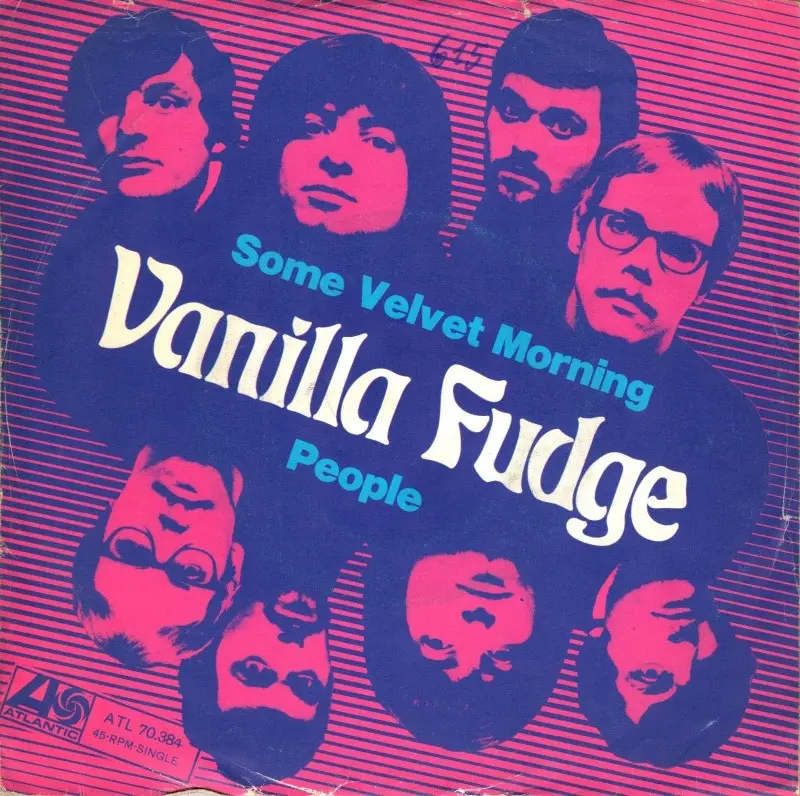 Atco lifted “Shotgun” and “Some Velvet Morning” as singles in select territories, backed with the respective non-album b-sides “Good Good Lovin'” and “People,” both group compositions.
B. “Good Good Lovin'” (2:57)
B. “People” (3:28)
Near the Beginning reached No. 16 on the Billboard 200 in March 1969 and No. 1 in Italy.
Rock & Roll
 Vanilla Fudge released their fifth album, Rock & Roll, in September 1969 on Atco.
The album contains four originals and covers of songs by Goffin–King (“I Can’t Make It Alone”), Rudy Clark (“If You Gotta Make a Fool of Somebody”), and the Legrand–Bergman standard “The Windmills of Your Mind.”
Organist Mark Stein composed “Lord in the Country” and “Church Bells of St. Martins.” He shares vocals with guitarist Vince Martell and drummer Carmine Appice. They group-wrote “Need Love” and “Street Walking Woman” with bassist Tim Bogert.
Rock & Roll features group-arrangements apart from the opening fanfare on “Lord in the Country,” arranged by composer Charles Morrow.
A1. “Need Love” (4:57) opens with fuzzed riffs and call-and-response vocals.
A2. “Lord in the Country” (4:30) pairs Stein’s soul-tinged vocals with a majestic intro arranged by Charles Morrow.
A3. “I Can’t Make It Alone” (4:45) is a Goffin–King ballad popularized by Dusty Springfield.
A4. “Street Walking Woman” (6:00) builds on descending riffs with a vocal by Martell.
B1. “Church Bells of St. Martins” (4:40)
B2. “The Windmills of Your Mind” (8:52) reimagines the 1968 Michel Legrand film theme as a slow-building psychedelic dirge.
B3. “If You Gotta Make a Fool of Somebody” (6:00) recasts the Rudy Clark R&B staple with Stein and Appice trading verses.
Sessions occurred at Atlantic Studios in New York with producer and engineer Adrian Barber, known for his work with the Allman Brothers Band and Cream.
Rock & Roll appeared in a single sleeve designed by the band with photography by Jim Cummins.
Atco issued no singles from the album. Rock & Roll reached No. 34 on the Billboard 200 in October 1969. It was Vanilla Fudge’s final studio release before their spring 1970 breakup.
Breakup and Offshoots
Vanilla Fudge played their farewell concert on March 14, 1970, at Phil Basile’s Action House in Island Park, New York. Afterward, bassist Tim Bogert and drummer Carmine Appice left to form Cactus, a hard rock supergroup with guitarist Jim McCarty (ex-Mitch Ryder & the Detroit Wheels) and singer Rusty Day (ex-Amboy Dukes). Cactus released four albums on Atco between 1970 and 1972. Bogert and Appice left the group in 1972 to form Beck, Bogert & Appice with former Yardbirds guitarist Jeff Beck.
Organist Mark Stein attempted to keep Vanilla Fudge active with new recruits: bassist Sal D’Nofrio and drummer Jimmy Galluzi, both former members of Poughkeepsie heavy-rockers The Dirty Elbows. When that lineup failed to gain traction, Stein and Galluzi formed Boomerang, which released a self-titled album on RCA in 1971.
Reunions
Vanilla Fudge reunited in 1982 to support the release of Best of Vanilla Fudge on Atco. This led to Mystery, an album of new material released in 1984. Guitarist Vince Martell was not involved in the reunion; Ron Mancuso played guitar on Mystery, which also features a guest appearance by Jeff Beck (credited as “J. Toad”).
Further reunions followed in 1987 and 1988 for live dates, with Paul Hanson on guitar.
Discography:
- Vanilla Fudge (1967)
- The Beat Goes On (1968)
- Renaissance (1968)
- Near the Beginning (1969)
- Rock & Roll (1969)
- Mystery (1984)
Sources:
Artist/Album Pages:
I Roy — aka Roy Samuel Reid (June 28, 1944 — Nov. 27, 1999) — was a Jamaican dub/reggae artist and...
Argent was an English art-rock band that released six studio albums and a live double-LP on Epic bet...
The Awakening was an American spiritual-jazz ensemble from Chicago that released two albums on the...
Svanfríður was an Icelandic art-rock/psych band that existed for 17 months between 1972 and 1973, ...
Badfinger was a Welsh pop-rock band first called The Iveys, which released the 1969 album Maybe T...
Kellee Patterson is an American singer who released the 1973 album Maiden Voyage on Black Jazz Rec...
Alexander Rabbit was an American psych-rock band behind the 1970 Mercury album The Hunchback of Notr...
Norman Connors is an American drummer, composer, producer, and arranger who emerged in the Seventi...
Indian Summer was an English post-psych band from the industrial Midlands that released a self-tit...
Leroy Hutson (born June 4, 1945) is an American R&B singer, songwriter, and producer from Newa...
Dana Gillespie is an English singer and actress who made the 1968 album Foolish Seasons on London ...
Fever Tree was an American psych-rock band from Houston that released three albums on Uni in 1968...