

Prince — aka Prince Rogers Nelson (June 7, 1958 — April 21, 2016) — was an American vocalist, composer, multi-instrumentalist, bandleader, and producer from Minneapolis who was musically active for four decades. He released six albums on Warner Bros. between 1978 and 1984, followed by another round of titles on his own Paisley Park imprint during the subsequent decade.
Prince’s prolific output began with the albums Controversy and 1999, establishing his sound and yielding hits that included “Controversy,” “Let’s Work,” “1999,” “Little Red Corvette,” and “Delirious.” His widespread breakthrough came with the 1984 film and soundtrack, Purple Rain, which included the songs “When Doves Cry,” “Let’s Go Crazy,” “Purple Rain,” and “I Would Die 4 U,” with contributions from his band, the Revolution.
Following the success of Purple Rain, Prince continued to record with the Revolution, releasing albums including Parade, which coincided with the film Under the Cherry Moon and yielded the hit “Kiss.” He later disbanded the Revolution, with guitarist Wendy Melvoin and keyboardist Lisa Coleman leaving to form a duo. He continued to evolve his sound, producing the album Sign o’ the Times, which featured the title track, “U Got the Look,” and “I Could Never Take the Place of Your Man.” He embarked on a major European tour in support of the record.
In 1987, Prince completed his tenth album, The Funk Bible, but cancelled its release days before its scheduled debut, leading it to be bootlegged as The Black Album. Citing a spiritual epiphany, he immediately recorded a new album, Lovesexy. This collection featured a continuous single track, with contributions from collaborators Sheila E., Eric Leeds, and Dr. Fink. The album included the hit single “Alphabet St.,” whose music video contained a hidden message referencing the cancelled album. The album was also supported by a major international tour.
As the decade closed, Prince continued to release new music, including the 1989 soundtrack for the film Batman, which yielded the hits “Batdance” and “Partyman.” His creative output extended to his Paisley Park label, where he acted as an A&R executive, launching the career of artist Sheila E. The 1991 album Diamonds and Pearls included the hits “Gett Off” and “Cream.” In 1993, amid a dispute with Warner Bros. over the ownership of his master recordings, he changed his name to an unpronounceable symbol, an action that led him to be referred to as “The Artist Formerly Known as Prince.” He fulfilled the remainder of his contract by releasing albums in rapid succession.
After his contract with Warner Bros. expired, Prince officially reclaimed his birth name in 2000. He continued to explore new methods of distributing his music, including through his NPG Music Club and by distributing albums with newspapers. He released the instrumental album N.E.W.S. and the jazz-influenced The Rainbow Children. He was inducted into the Rock and Roll Hall of Fame in 2004 and performed at the Super Bowl XLI halftime show in 2007. In the final years of his life, he continued to tour, including his stripped-back Piano & A Microphone Tour, which began in early 2016.
Background
Prince was born Prince Rogers Nelson on June 7, 1958, in Minneapolis, Minn. He was the son of jazz singer Mattie Della (1933–2002) and pianist/songwriter John Lewis Nelson (1916–2001). His parents performed in a jazz group called the Prince Rogers Trio, in which John Lewis was “Prince,” the pseudonymic namesake. He passed down the name because he wanted his son to accomplish all that he (John Lewis) wished to achieve in life.
The parents divorced when Prince was 10. After his mom remarried and started a second family, Prince lived with his father due to tensions with his half-brother. John Lewis bought Prince his first guitar but kicked him out when he was a teenager. Prince then lived in the basement of his father’s neighbors, the Anderson’s, where he befriended their son Andre, later known as musician André Cymone.
Prince and Cymone joined local funksters 94 East, formed in 1975 by guitarist/singer Pepe Willie, the ex-husband of Prince’s cousin. Despite a 1977 test-press on Polydor, their material remained vaulted until the six-song archival release Minneapolis Genius (The Historic 1977 Recordings), first released in 1985. It was later combined with alternate takes and seven additional tracks, recorded between 1975 and 1979, on the 1995 Charly Records CD Symbolic Beginning. The disc starts with “Just Another Sucker,” one of the first-recorded songs composed by Prince.
In 1976, Prince cut a demo with Minneapolis producer Chris Moon, who handed the tape to local mogul Owen Husney, who took Prince under his managerial wing. A second demo, cut at Sound 80 Studios with producer David Z, aroused interest from several labels. At age 19, Prince signed to Warner Bros. The contract gave him complete creative control for three albums plus retention of his publishing rights.
For You
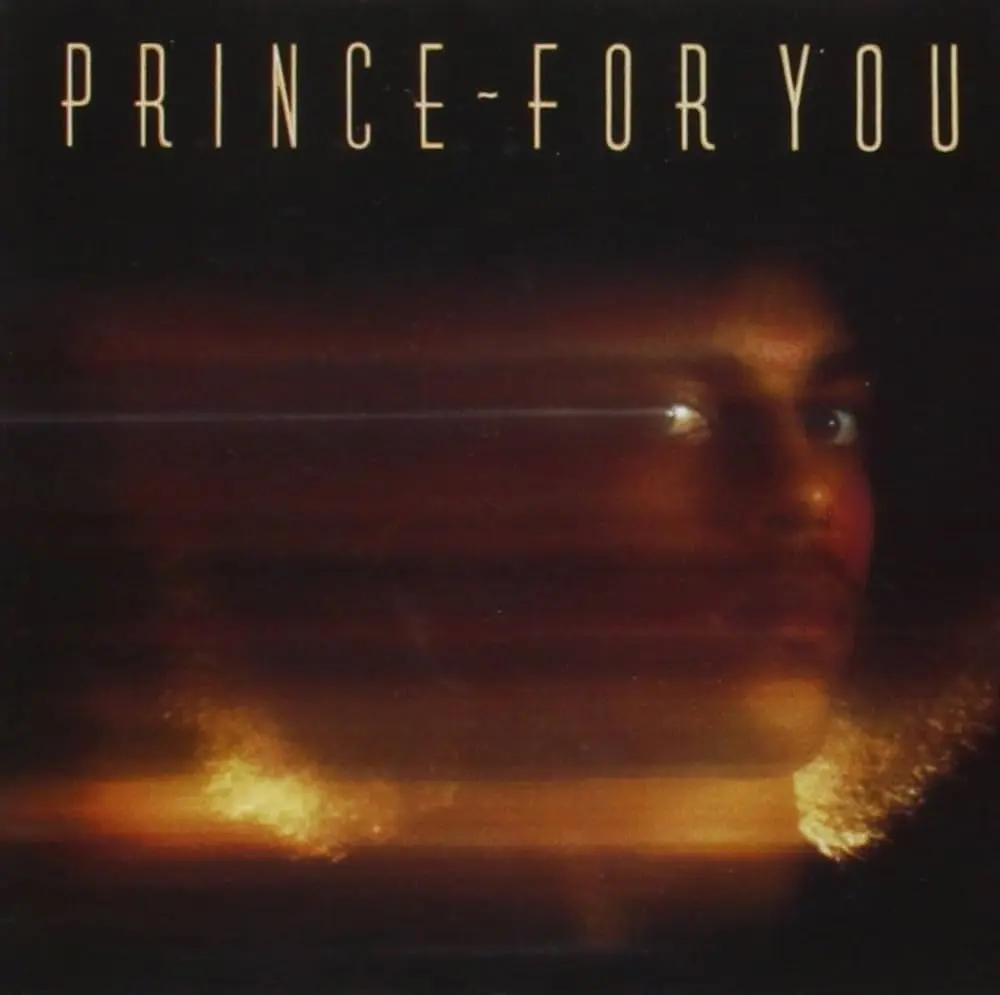 Prince released his debut album, For You, on April 7, 1978, on Warner Bros.
For You showcases the 19-year-old’s multi-instrumental abilities on a record where he performed, composed, arranged, and produced every track himself. The sound is a blend of R&B, rock, funk, and disco, and while it’s heavily produced, it maintains a cohesive sound.
Prince is the primary songwriter on all nine tracks. Chris Moon is credited with co-writing the lyrics to “Soft and Wet,” and is an uncredited co-writer on “My Love Is Forever.” Prince played all instruments, including acoustic and electric guitars, bass guitar, acoustic and electric pianos, and a variety of synthesizers including the Polymoog, Oberheim Four Voice, ARP Pro Soloist, ARP String Ensemble, and Minimoog. Patrice Rushen provided uncredited synth programming.
The album tells a story of a relationship, starting with the bright, upbeat songs of a new romance. “In Love” is a funky disco track about a boy pursuing a girl, and “Soft and Wet” is a bouncy ode to sex. The album’s pace shifts with the introduction of acoustic ballads like “Crazy You” and “So Blue,” which are both minimal and allow Prince to show his singer-songwriter abilities. The relationship’s narrative turns serious on the ballad “Baby,” a song about commitment and an unplanned pregnancy. “I’m Yours” concludes the album with a brash, loud sound, a contrast to the album’s romantic themes, featuring a primal scream at the beginning and a blend of R&B vocals with hard rock guitar.
A1. “For You” (1:06) – brief a cappella track features layered falsetto vocals.
A2. “In Love” (3:38) – upbeat disco-funk track with a Moog synthesizer.
A3. “Soft and Wet” (3:01) – bouncy track with a synthesized and vocalized bass, drums, and slapsticks.
A4. “Crazy You” (2:17) – short ballad with acoustic guitar and odd synth sounds.
A5. “Just as Long as We’re Together” (6:24) – jovial disco romp with an instrumental coda that allows for a final jam.
B1. “Baby” (3:09) – slow ballad with a deeper mixture of fear and commitment in its lyrics.
B2. “My Love Is Forever” (4:09) – buoyant, joyful song with confident guitar work, synths, and heartfelt lyrics.
B3. “So Blue” (4:26) – gloomy acoustic guitar ballad with brooding bass that conveys vulnerability.
B4. “I’m Yours” (5:01) – loud jam with Prince’s falsetto juxtaposed with hard rock guitar. The track begins with a primal scream and builds into a great instrumental section with more screaming and guitar solos.
Sessions for the album occurred from October to December 1977 at Record Plant in Sausalito, California, with overdubs and final mixing taking place in January and February 1978 at Sound Labs in Hollywood. Tommy Vicari was the executive producer and also engineered and remixed the album. Dave Rivkin provided advice and assistance with engineering, with Steve Fontano and Dave Roeder serving as assistant engineers.
The album features artwork by Jeff Farmakes and Joe Giannetti. The dust cover was designed by Prince.
“Soft and Wet” was released as the lead single and reached No. 12 on the Billboard R&B chart and No. 92 on the Hot 100. “Just as Long as We’re Together” became the second single and peaked at 91 on the R&B chart.
Prince
 Prince released his self-titled second album on October 19, 1979, on Warner Bros.
Prince is the sole songwriter, composer, arranger, producer, and performer on every track. He also played every instrument himself, including electric and acoustic guitars, piano, Fender Rhodes piano, clavinet, bass guitar, drums, and percussion. Prince used a variety of keyboard models on the album, including the Oberheim Four Voice, Polymoog, Minimoog, and Yamaha CP-70 electric grand piano. He also used Pollard Syndrums.
The album’s songs are a blend of uptempo dance numbers and emotional ballads. “Why You Wanna Treat Me So Bad?” is a rock-inspired track with a prominent guitar as its focal point and a soaring solo at the end. “Sexy Dancer” is a disco number with prominent bass guitar, grunts, and screams. The track builds on repetition, with a jazz-like keyboard solo. “Bambi” is a heavy metal-leaning song with distorted guitars, a much lower tone, and a wailing guitar over a dangerous-sounding riff. The album’s emotional ballads include “Still Waiting,” a piano, acoustic guitar, and synth-based ballad. The closer, “It’s Gonna Be Lonely,” is a deep, impactful song with a descending bassline and dynamic cymbal crashes.
A1. “I Wanna Be Your Lover” (5:49) – A funk song in A flat minor, detailing Prince’s love for a woman. Prince’s falsetto drives the vocals. The arrangement features a jam of keyboards and synthesizers at the end.
A2. “Why You Wanna Treat Me So Bad?” (3:49) – A rock and roll-inspired track with a prominent guitar and bass arrangement, and a soaring guitar solo at the end. The lyrics explore a relationship with a cruel lover.
A3. “Sexy Dancer” (4:18) – A disco number with prominent bass guitar, grunts, and screams, and a jazz-like keyboard solo. The song has few lyrics and runs on repetition.
A4. “When We’re Dancing Close and Slow” (5:23) – A slow song with a change in pace.
B1. “With You” (4:00)
B2. “Bambi” (4:22) – A heavy metal-leaning track with a much lower tone. The arrangement is aggressive with guitar distortion and a wailing guitar solo.
B3. “Still Waiting” (4:12) – Prince’s first ballad released as a single. The track is mainly piano, acoustic guitar, and synth-based, and the lyrics are from the perspective of a young man yearning for love.
B4. “I Feel for You” (3:24) – A funk track with prominent clavinet work and falsetto vocals.
B5. “It’s Gonna Be Lonely” (5:27) – A deep and impactful ballad. The arrangement includes slow drumming with dynamic cymbal crashes and synthesizer work that mimics the sound of a string section. The vocal performance is lovely, and the guitar kicks in while staying in the background.
Sessions occurred from April to June 1979 at Alpha Studios in Burbank, California. Gary Brandt engineered the album, with Mark Ettel as assistant engineer. Bob Mockler remixed the album, and Bernie Grundman mastered it at A&M Studios.
Front cover photography is by Jurgen Reisch, and back cover photography is by Chris Callis. The album design is by Lynn Barron and George Chacon, with calligraphy by Terry Taylor.
“I Wanna Be Your Lover” was the album’s lead single, reaching No. 11 on the Hot 100 and No. 1 on the Hot Soul Singles chart. “Why You Wanna Treat Me So Bad?” peaked at No. 13 on the R&B Singles chart. “Still Waiting” was Prince’s first ballad single and reached No. 65 on the R&B chart. “Sexy Dancer” reached No. 2 on the US Dance/Disco Singles chart.
In 1984, “I Feel for You” became a global hit for R&B singer Chaka Khan. Her version, produced by Arif Mardin, features rapping from Melle Mel, bass synthesizer programming by David Frank, and harmonica playing from Stevie Wonder. The repetition of Khan’s name at the beginning was a production mistake that was kept. Khan’s version earned two Grammy Awards, one for Best R&B Song for Prince as its songwriter, and one for Best Female R&B Vocal Performance for Khan. While touring with Prince in 1998, Khan and Prince performed “I Feel for You” as a duet.
Dirty Mind
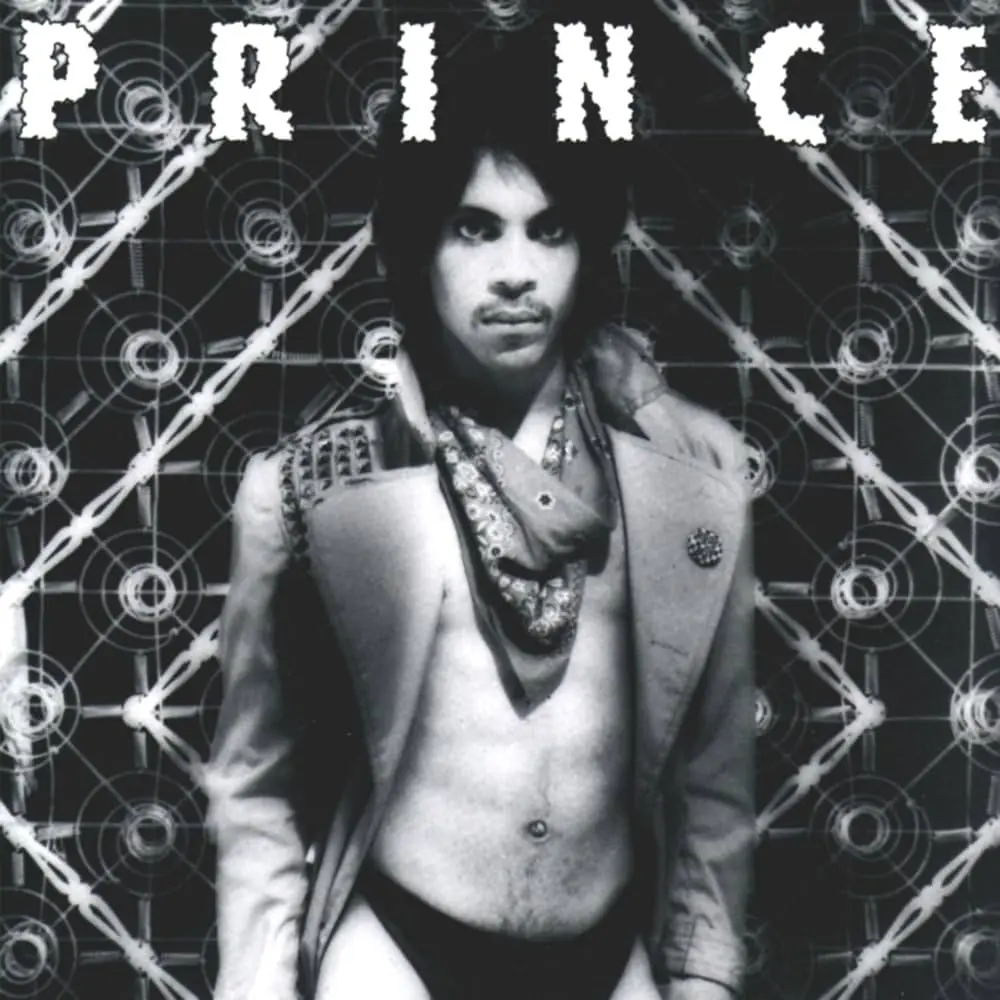 Prince released his third album, Dirty Mind, on October 8, 1980, on Warner Bros.
Dirty Mind is a fusion of funk, new wave, R&B, and dance with more rock-oriented beats than Prince’s previous albums. The album is notable for its raw, unpolished sound and sexually explicit lyrical themes. This is the only Prince album that doesn’t feature a slow-paced song.
Prince is the sole credited songwriter on six of the eight tracks, with keyboardist Doctor Fink co-writing “Dirty Mind” and Morris Day receiving credit for the music on “Partyup.” Prince played nearly every instrument on the album, with Doctor Fink adding ARP Omni and ARP Omni 2 to “Dirty Mind” and “Head” respectively, and Lisa Coleman providing spoken vocals on “Head.” On the album, Prince used a Yamaha CP-70 electric grand piano, an Oberheim OB-SX synthesizer, and an Oberheim OB-X.
The songs on Dirty Mind are a brief glimpse into Prince’s complex mind. “Dirty Mind” is a meld of Minneapolis funk and post-punk with a metronomic disco beat, falsetto singing, and percussive guitar. The track features descending key changes and ascending church organ chords. “Do It All Night” is a sultry funk track with urgent sixteenth-note keyboards underscoring the lyrical eagerness. The album’s only ballad, “Gotta Broken Heart Again,” is a minimalistic track with breezy piano, effortless falsetto, and soulful crooning. The most furious punk track on the album, “Sister,” toys with sexual identity with its Ramones-like guitars and constantly changing time signatures.
A1. “Dirty Mind” (4:14) – This new-wave/post-punk track has a metronomic disco beat with tinny keyboard hooks, percussive guitar, and a falsetto vocal. Descending key changes mixed with ascending church organ chords.
A2. “When You Were Mine” (3:47) – This new-wave rock song contains frantic guitars and squidgy keyboards. The lyrics contain elements of voyeurism, cuckoldry, and gender bending.
A3. “Do It All Night” (3:42) – sultry funk song with a prominent bass guitar, rhythm guitar, and live drums. The chorus features urgent sixteenth-note keyboards that underscore the lyrical theme. The bridge contains a keyboard solo.
A4. “Gotta Broken Heart Again” (2:16) – minimalistic ballad featuring breezy piano and soulful crooning in an effortless falsetto.
B1. “Uptown” (5:32) – An anti-war funk-rock song about racial and sexual tolerance. It starts with a lone drum intro before it explodes with the keyboards in the chorus. The verses feature a more prominent funk guitar. The song includes a ’60s-worthy closing chant.
B2. “Head” (4:44) – has a slower tempo than the rest of the album, with squiggly sci-fi keyboards that outline the lyrical theme about seducing a bride-to-be with the promise of oral delights.
B3. “Sister” (1:31) – This piss-take punk song celebrates incest with Ramones-like guitars and constantly changing time signatures.
B4. “Partyup” (4:24) – good-time freak-out jam with loud guitars and an anti-war lyrical theme. The song starts with an intro of just bass and drums before becoming an uncut funk track.
Sessions occurred at Prince’s home on Lake Minnetonka in May and June of 1980, with Prince engineering the album himself under the pseudonym Jamie Starr. Don Batts was the engineer, and Mick Guzauski and Bob Mockler mixed the album.
The album cover features photography by Allen Beaulieu, whose image depicts Prince in a trench coat and black briefs.
“Uptown” was the first single, with “Dirty Mind” and “Head” also being released as singles. “Uptown” reached No. five on both the Billboard Hot Soul Singles and Billboard National Disco Action Top 30 charts. The title track was modestly successful on the R&B chart.
The album peaked at No. 45 on the Billboard 200 and No. 7 on the Top Black Albums chart. Its fusion of genres set the style for much of the urban soul and funk of the early ’80s and influenced sexually explicit music that followed. Critics and music historians have retrospectively ranked the album as one of the greatest of the 1980s.
Following Prince’s death in 2016, the album re-entered the Billboard 200 and charted in France, Switzerland, and the UK for the first time.
Controversy
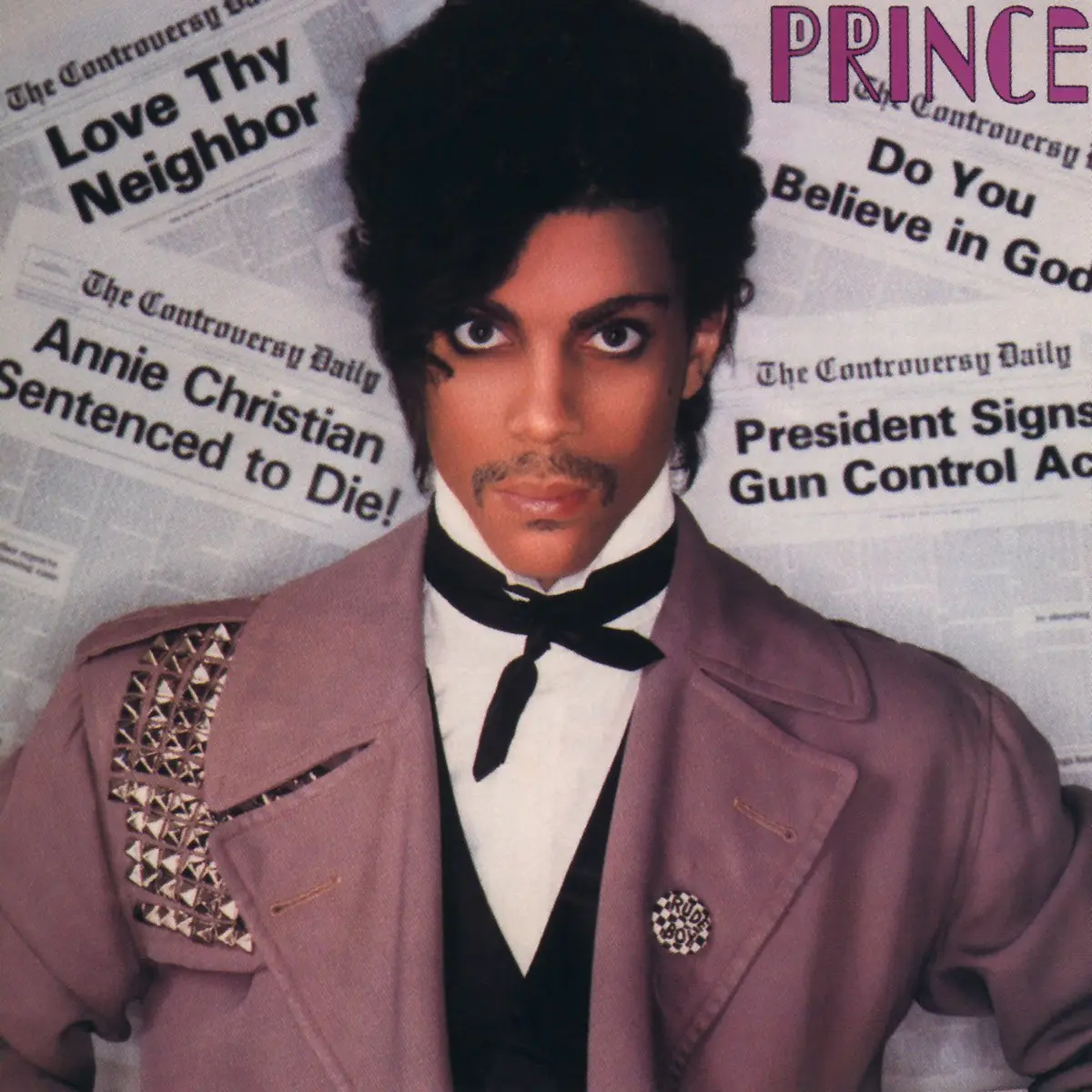 Prince released his fourth album, Controversy, on October 14, 1981, on Warner Bros.
Controversy refines the new-wave funk of Prince’s previous album, emphasizing his fascination with synthesizers and blending disparate pop music styles. It is the first of his albums to associate Prince with the color purple and the first to use sensational spelling in its song titles.
Prince is the primary songwriter for all eight tracks on the album. He plays nearly all instruments himself, with contributions from others on “Jack U Off.” Keyboardist Doctor Fink and backing vocalist Lisa Coleman add synthesizers to the song, with Bobby Z. on drums. Prince utilizes a Korg Mini Pops SR-120 drum machine on “Annie Christian,” and a Linn LM-1 on “Private Joy,” which he would use throughout his career. The album also features his staples, the Oberheim OB-X and Yamaha CP-70.
Lyrically, the album is more political than his previous releases, with several tracks taking on broader social themes. The title track addresses questions about Prince’s race and sexuality, while also featuring a full recitation of The Lord’s Prayer. “Ronnie, Talk to Russia” is a plea to then-President Ronald Reagan, and “Annie Christian” lists historical events like the death of John Lennon. The album also features several explicit funk and rock songs. “Private Joy” is a bouncy pop-funk tune, and the synthesized rockabilly closer “Jack U Off” details a specific sexual act.
A1. “Controversy” (7:15) – track with a steady 4/4 drumbeat, synthesized bass, guitar, and keyboards. Midway through, a full recitation of The Lord’s Prayer adds a flirtation with blasphemy.
A2. “Sexuality” (4:21)
A3. “Do Me, Baby” (7:43) – An extended ballad with a smooth, thumping bass line and additional guitar and synth bits. Prince offers an intimate, passionate vocal performance, moving into his upper register with a bright streak of vocals.
A4. “Private Joy” (4:29) – bouncy disco-pop number with guitar riffs and feedback.
B1. “Ronnie, Talk to Russia” (1:58)
B2. “Let’s Work” (3:54) – mid-tempo dance track with a sinuously insistent bass line and a shouted title. Keyboards create a sensual rhythm in the verses and deliver quick solos during the choruses.
B3. “Annie Christian” (4:22) – The drum programming is lowkey and bass-heavy. The synths are off-beat and harmonically clashing, with Prince delivering the lyrics in a spoken word form.
B4. “Jack U Off” (3:09) – This track has a synthesized rockabilly style.
Sessions occurred between August 14 and 23, 1981, at Kiowa Trail Home Studio in Chanhassen, Minnesota, Hollywood Sound Recorders, and Sunset Sound in Hollywood, California. Prince produced the album. Bob Mockler, Mick Guzauski, Ross Pallone, and Peggy McCreary engineered the recording. Bernie Grundman mastered the album at A&M Studios.
“Controversy” was the lead single, with “Sexuality,” “Let’s Work,” and “Do Me, Baby” also being released. “Controversy” and “Let’s Work” were the first of Prince’s seven number one songs on the dance chart.
The album peaked at No. 21 on the Billboard 200 and No. 3 on the Top R&B Albums chart. The album’s fusion of genres set the style for much of the urban soul and funk of the early ’80s and influenced the use of drum machines in production.
1999
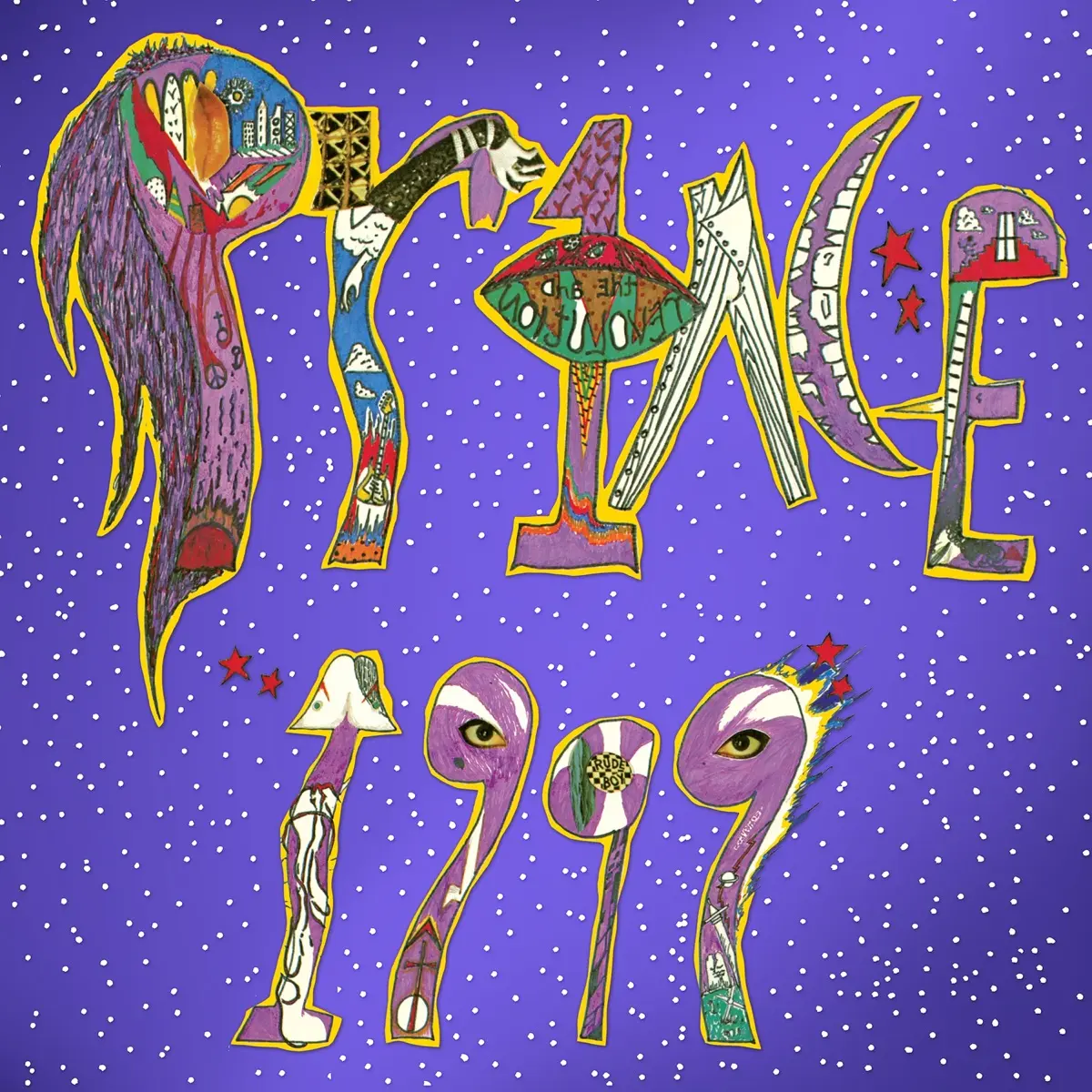 Prince released his fifth album, the two-record 1999, on October 27, 1982, on Warner Bros. This was his first of three studio albums billed as “Prince and the Revolution.”
1999 is a diverse, two-record set that introduced Prince’s work with his band the Revolution. A synthesis of funk, synth-pop, and new wave, the album codified the Minneapolis sound that would influence mid-’80s R&B and pop.
Prince wrote, composed, produced, and arranged all songs, while also performing all instruments. He is joined by vocalist Dez Dickerson on the electric guitar solo for “Little Red Corvette,” and Dez Dickerson and Lisa Coleman lend co-lead vocals to “1999” and backing vocals throughout. Jill Jones also contributes co-lead vocals to “1999” and moans on “Lady Cab Driver.” On “International Lover,” Morris Day plays drums. The track “Do Yourself a Favor,” which appears on the Super Deluxe edition, was written by Pepé Willie and Jesse Johnson.
The album’s sound is a dynamic mix of synth-driven dance tracks and introspective ballads. The title track, “1999,” opens with a low-pitched monster voice before a famous synth riff kicks in, driving a celebratory feel despite the lyrics’ apocalyptic theme. “Little Red Corvette,” a pop-rock track, combines a Linn LM-1 beat and synth build-up with a rock chorus. It uses automobile metaphors to recall a one-night stand with a promiscuous woman. The rockabilly-influenced “Delirious” is a standard 8-bar blues number with a fast, bouncy rhythm and a rubbery bass guitar.
“Automatic” is a long and diverse track with an automatic, robotic feel. Its rhythmic Linn drum beat and light synths drift along with Prince speaking in a whiny voice over bondage-inspired lyrics. “Something in the Water (Does Not Compute)” is a New Wave, ethereal, and slightly industrial track with an Art Pop tendency. “Lady Cab Driver” is a full-fledged funk jam with deft guitar licks and a notable slap bass part. In the middle of the track, a notorious sex scene unfolds. The album closes with “International Lover,” a Smooth Soul track where Prince, as “pilot Prince,” welcomes the listener aboard his plane, “Seduction 747.” The song builds slowly with a relaxed piano and synth rhythm that swells to a climax.
A1. “1999” (6:15) – A synth-pop song in A flat major. The track features a well-known synth riff, a funk guitar part, and squeaky voices asking “Mommy, who does everybody have a bomb?”
A2. “Little Red Corvette” (5:03) – A pop-rock song that builds with a Linn LM-1 beat and synth build-up. The contoured chorus is sung with Dez Dickerson, and the track features an electric guitar solo.
A3. “Delirious” (4:00) – A fast and bouncy rockabilly number with a rubbery bass guitar and a synth-driven texture. The lyrics are a standard 8-bar blues telling of being driven crazy by a beautiful woman. The track ends suddenly with the sound of a baby cooing.
B1. “Let’s Pretend We’re Married” (7:21) – An electronic track with a Hi-NRG feel. The song features a long intro with a hard-hitting drum machine and an acid synth. It includes an instrumental section with Prince repeating, “I wanna fuck you,” and a final a cappella part where he states his philosophy on life.
B2. “D.M.S.R.” (8:17) – A long jam with a thick bass line. The vocals are layered and echoed, and the instrumental parts put the synths in the forefront with few but effective changes in the rhythm.
C1. “Automatic” (9:28) – An experimental song with a rhythmic Linn drum beat and light synths. The track shifts musically into a feverish dream, with Prince speaking with an affected voice over bondage-inspired lyrical imagery.
C2. “Something in the Water (Does Not Compute)” (4:02) – A blues track disguised as an ’80s synth song with dominating drum machine programming, melancholic synths, and deeply passionate vocals where Prince screams in despair.
C3. “Free” (5:08) – A quiet Soul track with “aching” vocals and quieter backing vocals that add a great deal of emotional weight. It is a piano-based song about being grateful for freedom.
D1. “Lady Cab Driver” (8:19) – A funky track with prominent bass. The song’s extended bridge precedes a rousing guitar showcase.
D2. “All the Critics Love U in New York” (5:59) – A Hi-NRG-inspired Disco track. It is hard and driven by a drum machine, with Prince reciting the lyrics instead of singing them. The chorus features some well-made moments.
D3. “International Lover” (6:37) – A Smooth Soul and R&B closing track. Prince plays the role of a pilot on the “Seduction 747” plane, with the lyrics comparing sex to air travel. The song features a relaxed piano and a synth rhythm of sexual excitement that slowly builds to a climax.
Sessions occurred from January to August 1982 at Kiowa Trail Home Studio in Chanhassen, Minnesota, and Sunset Sound Recorders in Hollywood, California. Prince produced the album. Don Batts engineered “1999,” “Little Red Corvette,” and “Something in the Water (Does Not Compute),” while David Leonard and Peggy McCreary handled mixing and engineering for the rest of the album. Bernie Grundman mastered the album at A&M Records.
The album’s cover features elements from the cover of Prince’s previous album, *Controversy*, including the eyes, the “Rude Boy” pin, the jacket studs, and the smile. The “I” in “Prince” contains the words “and the Revolution” written backward (“dna eht noituloveR”), acknowledging his backing band.
The album produced several singles. “1999” reached No. 12 on the Hot 100 and No. 4 on the R&B chart. The music video, directed by Bruce Gowers, depicts a live performance by Prince and his band. It was added to MTV’s rotation in December 1982, helping the album reach gold status and making Prince one of the first Black artists prominently featured on the channel.
“Little Red Corvette” became his highest-charting single to date, peaking at No. 6 on the Hot 100 and No. 15 on the R&B chart. Directed by Bryan Greenberg, the music video was filmed during tour rehearsals and was the second Prince video played on MTV. “Delirious” peaked at No. 8 on the Hot 100 and No. 18 on the R&B chart. “Let’s Pretend We’re Married” peaked at No. 52 on the Hot 100 and number 55 on the R&B chart. The music video for “Automatic” was deemed too sexual for MTV in 1983, as it depicted Prince being tied up and whipped by band members Lisa Coleman and Jill Jones.
1999 was Prince’s first top 10 album, peaking at No. 9 on the Billboard 200. Following Prince’s death in 2016, the album re-entered the Billboard 200 and surpassed its original peak, reaching No. 7. The album was inducted into the Grammy Hall of Fame in 2008.
In the UK, “1999” peaked at No. 25 upon its release but reached No. 2 upon its 1985 re-release as a double A-side with “Little Red Corvette.” By the time 1999 (the year) arrived, the album achieved triple-Platinum status for sales of 300,000. As of 2023, worldwide sales are estimated at 7,010,000.
Purple Rain
 Prince released his sixth album, Purple Rain, on June 25, 1984, on Warner Bros. as the soundtrack album to the 1984 film of the same name.
Purple Rain is musically denser than Prince’s previous albums, emphasizing full band performances, and multiple layers of guitars, keyboards, electronic synthesizer effects, drum machines, and other instruments. This album, his first to be officially billed as Prince and the Revolution, has a grandiose, synthesized, and psychedelic sheen. The music is regarded as the most pop-oriented of Prince’s career, but a number of elements point towards the more experimental records he would release later.
The album was composed and arranged by Prince, with the exception of “Computer Blue,” which was co-written by Prince, John L. Nelson (his father), Wendy Melvoin, and Lisa Coleman. Prince performed most of the instruments himself, but the full band appears on six tracks. Apollonia Kotero sings co-lead on “Take Me with U.” The strings on “Take Me with U,” “Baby I’m a Star,” and “Purple Rain” were arranged by Prince and Lisa Coleman and performed by Novi Novog on violin and David Coleman and Suzie Katayama on cello.
Musically, Purple Rain presents a dynamic mix of synth-driven dance tracks and deeply personal ballads. The album opens with the up-tempo “Let’s Go Crazy,” which begins with a funeral-like organ solo and a spoken eulogy before exploding into a hard-driving, Linn LM-1-programmed rhythm and two distinctive guitar solos. The band’s performance on the live recording of “I Would Die 4 U” and “Baby I’m a Star” is electric, with the two tracks often played in sequence. The sparse, bass-less arrangement of “When Doves Cry” is a bold departure for an ’80s dance song, with its looped guttural vocal and a long, multi-layered synthesizer solo that ends with a classical-inspired keyboard piece.
“The Beautiful Ones” is a passionate ballad with a powerful vocal performance, originally intended to woo Susannah Melvoin and later inspired by Prince’s relationship with Vanity. On “Computer Blue,” Wendy and Lisa’s spoken intro precedes an experimental rock number featuring heavy synths and distorted guitars, including a bridge from a song by Prince’s father. “Darling Nikki” was deliberately engineered to have a raw, live feel and contains a message sung in reverse near the end, a raw detail for an otherwise pop-heavy album. The album closes with the title track, “Purple Rain,” which was recorded live. The song, a power ballad combining rock, R&B, and gospel, was originally written as a country song for Stevie Nicks.
A1. “Let’s Go Crazy” (4:39) – Up-tempo dance track driven by a programmed Linn LM-1 drum beat, with a funeral-like organ solo leading into a celebratory rock piece. Lyrically, it’s a call to follow Christian ethics, using the “de-elevator” as a metaphor for the devil, urging listeners to “beat the devil, smash him to the floor.”
A2. “Take Me with U” (3:54) – Duet with Apollonia, this pop-oriented track is defined by its beautiful melodies and well-placed string sections. The lyrics are a heartfelt invitation to a loved one, with a line like “Come on, honey, let’s play the game / Let’s get on the one, get on the B-train” alluding to their relationship.
A3. “The Beautiful Ones” (5:14) – Powerful ballad that builds in vocal intensity and passion. It’s a direct, urgent challenge to a rival, pleading, “Do you want him, or do you want me? / Say yes, or say no, ’cause I can’t take this anymore” to force a choice from a lover.
A4. “Computer Blue” (3:59) – Experimental rock number featuring screaming, heavy synths, and distorted guitars. The track’s lyrical concept, a spoken intro by Wendy & Lisa, likens emotions to different rooms, musing, “Is it always this cold in the human race’s house?” before exploding into the hard-rock song.
A5. “Darling Nikki” (4:14) – Raw, live-sounding track with a raw feel. The song describes a “sex fiend” and is notorious for its explicit content. The reverse-sung message at the end is a hidden declaration of faith: “Hello, how are you? I’m fine, ’cause I know that the Lord is coming soon.”
B1. “When Doves Cry” (5:52) – Stark, bass-less dance song in the key of A minor, driven by a Linn LM-1 drum machine and a looped guttural vocal. The lyrics were inspired by Prince’s parental difficulties, noting, “You see, a body without a soul / Is like a mind without control.”
B2. “I Would Die 4 U” (2:59) – Up-tempo dance track with a feverish, ecstatic feel. The lyrics express devotion and divine love, with the line “I’m not a woman / I’m not a man / I am something that you’ll never understand” hinting at a more profound identity beyond human labels.
B3. “Baby I’m a Star” (4:24) – Celebratory live recording with a frantic pace, capturing the energetic feel of a concert. The song’s lyrics exclaim a theatrical self-confidence and ambition, with lines like “We are gathered here today to get through this thing called life / Electric word, life, it means forever and that’s a mighty long time.”
B4. “Purple Rain” (8:40) – Majestic power ballad in B-flat major, blending rock, R&B, gospel, and orchestral elements. Originally intended for Stevie Nicks, the song’s lyrics describe the end of the world, offering a powerful, spiritual reassurance, “I only want to see you laughing in the purple rain.”
The album’s live material was recorded at a benefit concert at the First Avenue nightclub in Minneapolis on August 3, 1983, with engineers David Hewitt and Kooster McAllister from Record Plant and David Rivkin. Studio sessions occurred at Kiowa Trail Home Studio, The Warehouse, Record Plant, and Sunset Sound. David Leonard, Susan Rogers, Peggy McCreary, and Don Batts handled engineering. Bernie Grundman mastered the album.
The album cover, shot by Ron Slenzak and Ed Thrasher and Associates, was photographed at the Warner Bros. Studio Backlot in California. It depicts Prince on a motorcycle, with clothing by Prince, Louis & Vaughn, and Marie France.
The album produced four Top 10 singles on the Billboard Hot 100. The lead single “When Doves Cry” became Prince’s first No. 1 hit, topping the chart for five weeks. Its music video, directed by Prince, was controversial for its sexual nature. “Let’s Go Crazy” became his second consecutive No. 1 on the Hot 100, and its music video featured a slightly edited version of the “Special Dance Mix” from the film. “Purple Rain” peaked at No. 2, while “I Would Die 4 U” reached No.8.
The album became Prince’s first to reach No. 1 on the Billboard 200, where it spent 24 consecutive weeks. Purple Rain became a global commercial juggernaut, selling over 25 million copies worldwide. In Canada, it peaked at No. 1. Following Prince’s death, the album re-charted internationally, hitting No. 1. in Australia and France. The risqué lyrics of “Darling Nikki” drew the attention of Tipper Gore and the Parents Music Resource Center (PMRC), contributing to the implementation of the Parental Advisory stickers on album covers. Prince won two Grammy Awards for the album and also won the Academy Award for Best Original Song Score for the film.
The movie stars Prince as the Kid, a troubled Minneapolis musician who grapples with his turbulent home life and a musical rivalry with Morris Day while pursuing a relationship with Apollonia. The film’s climactic scene has the Kid perform “Purple Rain” for the first time, a song dedicated to his father, and the performance wins over the club crowd, Morris, and Apollonia. The film was preserved in the U.S. National Film Registry by the Library of Congress for being “culturally, historically, or aesthetically significant.”
Around the World in a Day
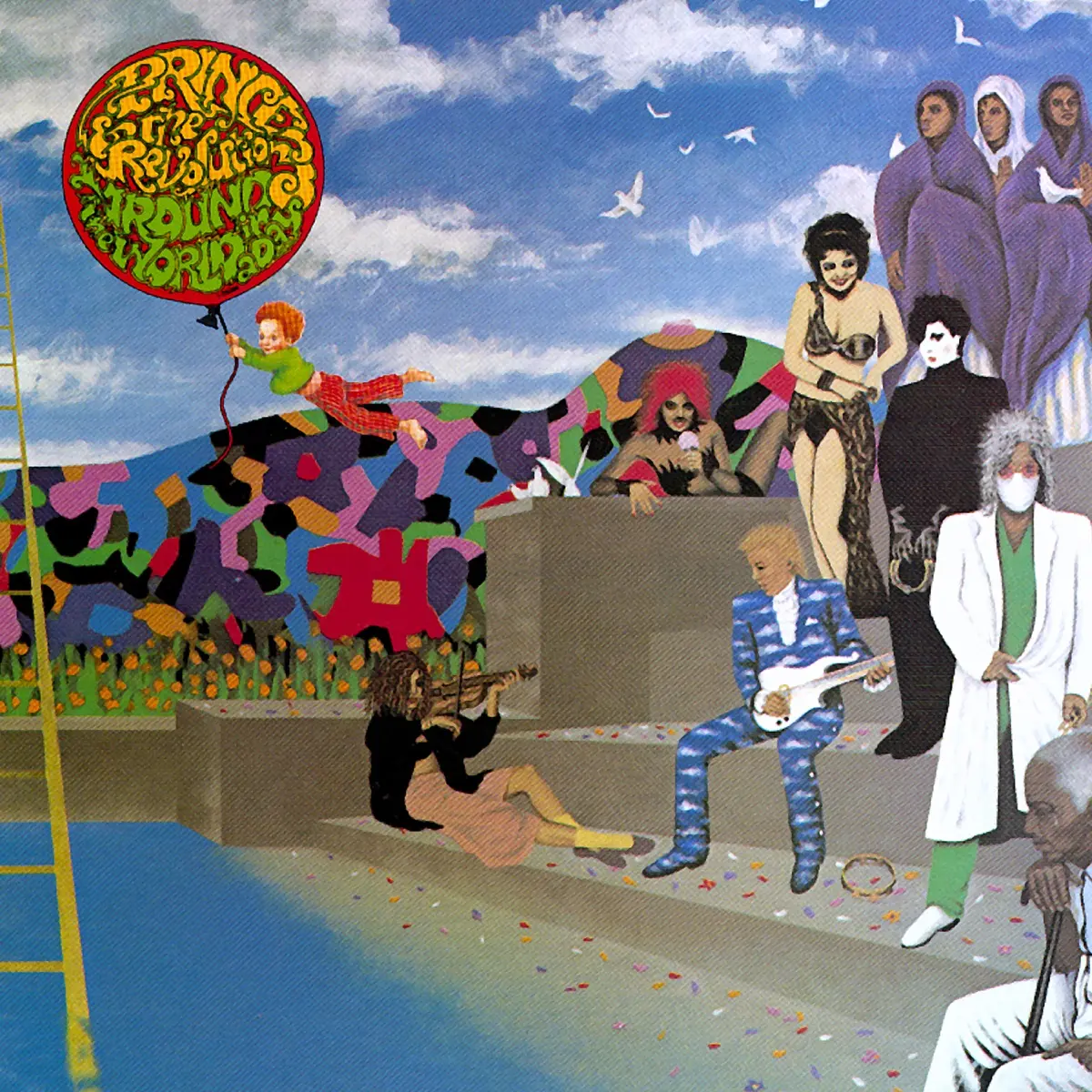 Prince released his seventh album, Around the World in a Day, on April 22, 1985, on Paisley Park/Warner Bros.
Around the World in a Day is a bold shift from the populist Purple Rain. The album experiments with opulent textures, dense arrangements, ecclectic instruments, and cryptic lyrics. Its psychedelic approach drew frequent comparisons to Sgt. Pepper’s Lonely Hearts Club Band.
Prince wrote all the songs on the album, with a few exceptions. David Coleman and Prince’s father, John L. Nelson, co-wrote the opening track, “Around the World in a Day,” while Nelson also co-wrote “The Ladder.” The Revolution and a host of additional musicians perform on the album. This includes Prince on vocals, electric and acoustic guitar, and bass; Wendy Melvoin on electric and acoustic guitar and backing vocals; Lisa Coleman and Dr. Fink on synthesizers and backing vocals; Bobby Z. on drums and programming; and Brown Mark on bass. Additional musicians include David Coleman (cello, oud, darbuka), Jonathan Melvoin (tambourine), Susannah Melvoin (backing vocals), Novi Novog (violin), and Suzie Katayama (cello), among others.
The album takes listeners on a sonic journey, beginning with the title track, a psychedelic piece that uses oud and darbuka to create a worldly feel. “Paisley Park” is an astonishing slice of psych rock with a spiritual feel, its lyrics using whimsical imagery to talk about finding inner peace. The album also features two pop-leaning singles: “Raspberry Beret” is a sitar-laced number with baroque arrangements, while “Pop Life” is a commentary on celebrity life with a smooth bass line overalaid with piano flourishes. This is juxtaposed against the more political and biting funk-rock of “America,” which uses intense slap bass work and a defiant guitar riff. The album’s ballads include “Condition of the Heart,” a soulful piano number with a synthesizer simulating a full orchestra, and the gospel-tinged “The Ladder,” which builds to a shriek and heavier vocals as it tells a spiritual fable. The album closes with “Temptation,” a wild “mini rock opera” that uses a frantic guitar riff and jazzy saxophone before descending into a bizarre dialogue with God.
A1. “Around the World in a Day” (3:28) – The opening track is a minimalist and psychedelic piece. It uses a Linn-1 drum machine, oud, and darbuka to create a worldly feel. The lyrics invite you to “Open your heart, open your mind,” setting the stage for the album’s unique journey.
A2. “Paisley Park” (4:42) – A psych-rock song with a spiritual feel, driven by a Linn-1 drum machine and finger cymbals. The lyrics use whimsical imagery to depict a place of refuge where “whoever said that elephants are stronger than mules?”
A3. “Condition of the Heart” (6:48) – A soulful piano ballad that begins with a “free jazz” piano opening and builds with synthesizer embellishments. The lyrics lament a fruitless search for love, with the line “I’m blinded by the daisies in your yard?” hinting at a relationship’s unrequited beauty.
A4. “Raspberry Beret” (3:33) – A psychedelic pop song with a steady pulse, featuring an orchestral arrangement with a violin and cello. The lyrics describe an unexpected encounter, with the line “The rain was a-fallin’, a-drip, drip, drippin’ down” setting the scene for a romantic moment.
A5. “Tamborine” (2:47) – A sparse, minimalistic funk track defined by a tight, funky bassline and frantic drumming. Its cryptic lyrics are a stream of consciousness, as in the line, “one night stands with trolley cars that juggle 17.”
B1. “America” (3:42) – A biting funk-rock track with a minor key funk grind and a tough, driving guitar riff. The sardonic lyrics reference politics and nuclear proliferation, warning that “Jimmy Nothing ends up on a mushroom cloud for not reciting the pledge of allegiance.”
B2. “Pop Life” (3:43) – A funk track with a smooth bass guitar and heavy drum thuds that explores the pressures of fame. The lyrics are a biting commentary on the stresses of celebrity, with the line, “What you putting in your nose? Is that where all your money goes?”
B3. “The Ladder” (5:29) – A gospel-tinged song that builds in intensity with traditional gospel chords and saxophone flourishes. The lyrics are a spiritual fable, telling of a king in the land of “Sin-a-Plenty, who didn’t deserve to be.”
B4. “Temptation” (8:18) – A track that begins with a strident guitar riff and features jazzy saxophone work before devolving into a frantic dialogue with God. The lyrics are sexually provocative, with one line stating, “My vice is the opposite of ice.”
Recording sessions occurred from February to December 1984 at Flying Cloud Drive Warehouse in Eden Prairie, Minnesota, Sunset Sound in Hollywood, Capitol in Los Angeles, and Paisley Park in Minneapolis. Susan Rogers, David Leonard, Peggy McCreary, Robert “Cubby” Colby, and David Tickle served as engineers. Prince produced the album, and Bernie Grundman handled mastering.
The cover features a colorful, neo-hippy painting by Doug Henders, with design and assembly by Laura LiPuma. The artwork was a deliberate attempt by Prince to let the music speak for itself.
The album produced four singles. “Raspberry Beret” was the lead single in the US, reaching No. 2 on the Billboard Hot 100 and No. 3 on the Hot Black Singles chart. Its video combines live performance footage with animations. “Pop Life” reached No. 7 on the Hot 100 and No. 8 on the Hot Black Singles chart. The final US single, “America,” peaked at No. 46 on the Hot 100 and No. 35 on the Hot Black Singles chart; its video is a 10-minute live version from a concert in France.
Around the World in a Day reached No. 1 on the Billboard 200, becoming Prince and the Revolution’s second album to top the chart. It also reached No. 1 in Switzerland and the Netherlands. The album’s unpromoted release was a “flex” by Prince to prove his artistic power in the wake of Purple Rain‘s massive success.
Parade
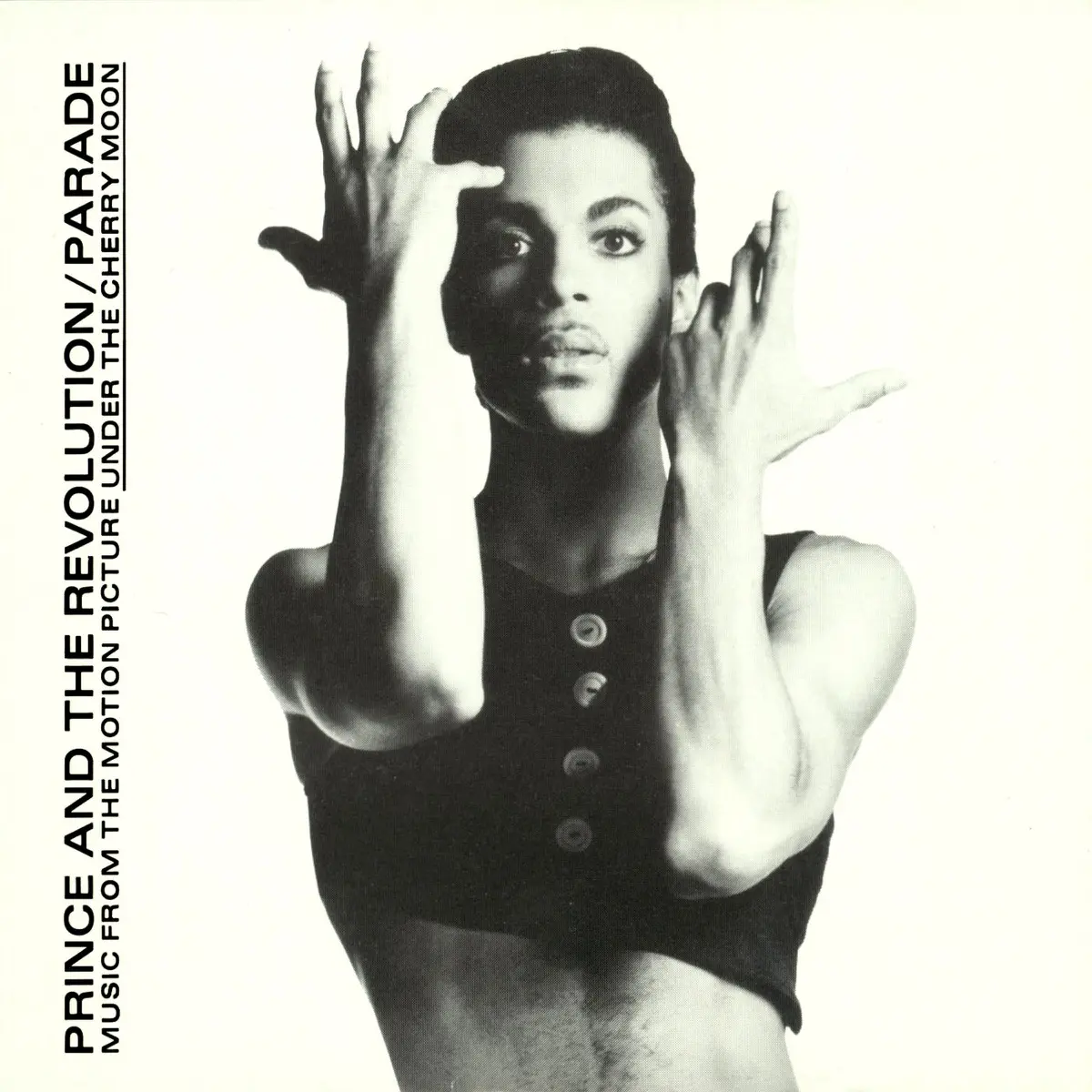 Prince released his eighth album, Parade, on March 31, 1986, on Paisley Park/Warner Bros. It served as the soundtrack to his accompanying period dramedy, Under the Cherry Moon.
The album departs from the rock elements of Purple Rain in favor of a new sound that blends psychedelia, austere funk, and soundtrack compositions. It weaves together jazz, soul, and a French cultural influence, creating a unified sonic identity. This stands as the final album with the Revolution.
Prince wrote all the songs on the album, with a few exceptions. His father, John L. Nelson, co-wrote the opening track, “Christopher Tracy’s Parade,” and “Under the Cherry Moon.” The Revolution members Lisa Coleman and Wendy Melvoin co-wrote “Mountains” and “Sometimes It Snows in April.” Prince performs lead and backing vocals, electric and acoustic guitar, bass, drums, programming, and various synthesizers and effects. The Revolution members Wendy Melvoin, Lisa Coleman, Brownmark, Bobby Z., and Dr. Fink contribute vocals, guitar, bass, and drums. Other musicians include Susannah Melvoin on vocals, Eric Leeds on saxophone, Atlanta Bliss on trumpet, and Sheila E. on drums and vocals. The orchestra on several tracks was arranged by Clare Fischer.
The album unfolds with a series of short, interconnected pieces. The opening medley of “Christopher Tracy’s Parade,” “New Position,” “I Wonder U,” and “Under the Cherry Moon” sets a cinematic tone, with songs that feel like distinct scenes. “Life Can Be So Nice” is a maximalist track with a tight, busy pace, while “Mountains” has an instrumental foundation that sounds almost disco-like. The album’s most austere track is “Kiss,” a masterwork of minimalist funk. The final song, “Sometimes It Snows in April,” is a reflective acoustic ballad that closes the album with a somber atmosphere.
A1. “Christopher Tracy’s Parade” (2:11) – The opening song is based on a piece by Prince’s father, John L. Nelson. It features syncopated horn lines and high vocal harmonies.
A2. “New Position” (2:20) – Brief uptempo funk piece with prominent steel drums that transitions seamlessly from the previous track.
A3. “I Wonder U” (1:39) – Featuring lead vocals from Wendy Melvoin, this track has a murky, mischievous texture with synthesized flute lines and soft, booming drums.
A4. “Under the Cherry Moon” (2:57) – Sublime piano ballad with a somber tone. It features finger cymbals and a deep vocal performance that gives it a unique energy.
A5. “Girls & Boys” (5:29) – Upbeat track with thin guitar phrases and squonky horns. The song incorporates French lyrics and a spoken part towards the end.
A6. “Life Can Be So Nice” (3:13) – Layered number with a harpsichord counterpoint and flute riff that eventually collapses into a denser breakdown.
A7. “Venus de Milo” (1:55) – Short instrumental driven by piano and synthesizers. The track features a beautifully wistful trumpet in its final seconds.
B1. “Mountains” (3:57) – Upbeat funk song with a disco-like foundation. Its pace is built on orchestral arrangements and a prominent Linn-1 drum machine.
B2. “Do U Lie?” (2:44) – Bouncy piano track with French street accordion.
B3. “Kiss” (3:37) – Minimalist funk with a kick drum run through an AMS RMX-16 reverb and a guitar line run through a Kepex noise gate.
B4. “Anotherloverholenyohead” (4:00) – Funk track in a minor key built on a piano chord sequence. Its instrumentation is built around an upfront guitar synth and a Linn-1 drum machine.
B5. “Sometimes It Snows in April” (6:48) – Gentle acoustic ballad that closes the album. It features acoustic guitar and piano, with lyrics that evoke a sense of lonely, reflective melancholy.
Sessions for the album occurred from April 1985 to early 1986 at Washington Avenue Warehouse in Edina, Minnesota, and Sunset Sound in Hollywood, California. Prince produced the album, along with Lisa Coleman and Wendy Melvoin on “New Position” and “Venus de Milo” and David Z. on “Kiss.” Recording engineers included Susan Rogers, David Z., Peggy McCreary, and David Tickle.
The album cover, designed by Laura LiPuma with photography by Doug Henders, is minimalist. The black-and-white image features Prince in a new, sharper look that matches the album’s direct sound.
The album spawned four singles. “Kiss,” the lead single, topped the Billboard Hot 100 chart and the Hot Black Singles chart. The accompanying video, directed by Rebecca Blake, features Prince in a leather jacket and half-shirt, performing choreography alongside a veiled dancer and Wendy Melvoin playing guitar.
“Mountains” peaked at number 23 on the Hot 100 and number 15 on the Hot Black Singles chart. Its video uses clips from the film Under the Cherry Moon. “Anotherloverholenyohead” reached number 63 on the Hot 100. Its video is a live performance from a concert in Detroit. In the UK, “Girls & Boys” was released as a single, reaching number 11, while in the US, it was the B-side to “Anotherloverholenyohead.” The video for “Girls & Boys” combines clips from the film with separate footage of the Revolution.
Parade reached number 3 on the Billboard 200 and number 2 on the Top R&B/Hip-Hop Albums chart. The album’s success helped him gain a new audience in Europe.
The film Under the Cherry Moon follows the story of two American gigolos, Christopher Tracy and his friend Tricky, living on the French Riviera. They attempt to con a wealthy heiress, Mary Sharon, into marriage for her family’s fortune. Christopher, however, genuinely falls in love with Mary, which complicates their plan. This leads to a confrontation with Mary’s powerful father, resulting in Christopher’s death. The film ends with Mary investing in Tricky’s Miami business.
Sign “☮” the Times
 Prince released his ninth album, the two-record Sign “☮” the Times, on March 30, 1987, on Paisley Park/Warner Bros.
The album is Prince’s first solo work since disbanding the Revolution, and it was originally conceived as a sprawling triple album. The final double album is a wide-ranging collection that touches upon electro, funk, soul, psychedelic pop, and grinding rock. It finds Prince experimenting with a kaleidoscopic palette of sounds.
All songs on the album were written by Prince, though he co-wrote “Starfish and Coffee” with Susannah Melvoin, “Slow Love” with Carole Davis, and “It’s Gonna Be a Beautiful Night” with Doctor Fink and Eric Leeds. Prince performed and recorded most of the instrumentation himself, including vocals, guitars, bass, piano, and drums. A wide range of other musicians contributed, including Wendy and Lisa, Sheila E., Sheena Easton on lead vocals for “U Got the Look,” and a live audience on “It’s Gonna Be a Beautiful Night” under the name “6,000 wonderful Parisians.”
The album is stylistically diverse, with each song exploring a different musical direction. “The Ballad of Dorothy Parker” has a distinctly muffled, submerged sound created by a technical error during its recording. The album’s central tracks, including “Housequake,” “Strange Relationship,” “U Got the Look,” and “If I Was Your Girlfriend,” all feature a higher-pitched vocal effect. The title track, “Sign o’ the Times,” is a stripped-down composition with a bare-bones electronic arrangement and a funk-influenced guitar solo. The album is a balance of sounds that Prince had explored up to that point, including “The Cross,” which has a folk-like style, and “Adore,” a lush soul ballad.
A2. “Play in the Sunshine” (5:05) – Psychedelic pop composition with a relentless bounce in its keyboard part makes up this track. Energetic vocals feature a shrieked call-and-response bridge. Its tone is relentlessly bright.
A3. “Housequake” (4:38) – This funk composition has a strong rhythmic foundation. The arrangement incorporates Eric Leeds’s saxophone and horn section, along with lead guitar licks. A high-pitched vocal uses the persona of Camille.
A4. “The Ballad of Dorothy Parker” (4:04) – Atmospheric and moody, the song builds on a sparse bass line and a Linn drum pattern. A fragile falsetto vocal performance is present. A technical error during the recording process resulted in a distinct “underwater dream state” quality to the sound.
B1. “It” (5:10) – Raw vocals, slippery synth riffs, and heavy drum fills feature in a hypnotically repetitive arrangement. Prince performs the song in a minor key and a high, pleading vocal register. The arrangement becomes progressively unhinged as it proceeds.
B2. “Starfish and Coffee” (2:51) – Swirling keyboard patterns and harmonies reminiscent of the Beatles characterize the song’s arrangement. The production opens with an alarm clock sound before introducing a sequence of piano chords and a reversed drum machine.
B3. “Slow Love” (4:18) – Soul ballad, this song has a jazzy arrangement that includes nocturnal piano lines and a saxophone performance by Eric Leeds. Prince delivers the vocals in a sensual and soulful way.
B4. “Hot Thing” (5:39) – Heavy beat and a clattering synth line build this synth-driven hard rock track. Fiery saxophone soloing by Eric Leeds and a vocal performance that includes vocal chord shredding are featured.
B5. “Forever in My Life” (3:38) – An acoustic guitar drives this sparse folk-pop ballad. The arrangement features a simple drum machine and a solitary synthesizer that repeats a note. Prince creates two interwoven vocal lines.
C1. “U Got the Look” (3:58) – The song combines hard rock and funk sounds with nasty guitar work and throbbing drums. Prince and Sheena Easton perform a duet. High-pitched vocal effect from the Camille persona, along with an eerie synthesizer line, is present throughout.
C2. “If I Was Your Girlfriend” (4:54) – This minimalist synth-funk composition features a squelching bass line, Linn drums, and plush organ sounds. Prince performs the high-pitched Camille vocal. Warped organ fills are continually pitched upward in the outro.
C3. “Strange Relationship” (4:04) – Heavy percussion, a thumping sitar sound buried in the mix, and psychedelic overtones feature in this funk track. Listeners can hear backing vocals from Wendy and Lisa pushed back in the mix.
C4. “I Could Never Take the Place of Your Man” (6:31) – Bouncy pop keyboards and a descending pattern build this pop-rock song. An extended coda contains two guitar solos: one is gritty and hard rock in style, while Prince plays the closing solo in a bluesier and more subdued manner.
D1. “The Cross” (4:46) – Rock ballad, the song builds from a quiet beginning to an intense, high-energy climax. A guitar-driven arrangement transitions into a sound with Middle Eastern and garage rock influences.
D2. “It’s Gonna Be a Beautiful Night” (8:59) – Live recording, the song is a funk-rock composition. Eric Leeds leads a blistering horn section and Sheila E. provides powerful drum fills in a call-and-response track. Prince sings a chanted vocal part.
D3. “Adore” (6:29) – Smooth soul ballad, this song has a lush arrangement. Plush keyboard work, a jazzy rhythm section, and punchy horn parts are present. A silky smooth falsetto vocal performance and crowd noise from the previous live track are audible at the beginning.
Most of the album was recorded from March to December 1986. During recording, Prince often worked alone, asking his engineer Susan Rogers to leave the control room while he recorded vocals. A new custom-made console was installed at his home studio, and a technical issue with it during the recording of “The Ballad of Dorothy Parker” created a distinctive underwater sound that remained on the final track.
The album’s cover was photographed by Jeff Katz at a warehouse in Eden Prairie, Minnesota. The image features a drum kit atop the front of a 1971 Pontiac Grand Prix, surrounded by various objects like bouquets and a plasma globe. In the foreground, Prince’s face appears out of focus. The props were gathered from Prince’s home and studio, and the backdrop was borrowed from a stage production.
The album produced three singles that charted on the Billboard Hot 100. “Sign o’ the Times,” the lead single, reached No. 3 on the Hot 100 and No. 1 on the Hot Black Singles chart. Its video, directed by Bill Konersman, is considered one of the earliest “lyric videos” due to its use of text animation. “U Got the Look” peaked at No. 2 on the Hot 100. The video is a dream sequence in which Prince, dozing in his dressing room, imagines himself performing with Sheena Easton, with choreography by Cat Glover. “I Could Never Take the Place of Your Man” reached No. 10 on the Hot 100. Its video is a live take of the song from the film of the same name. The B-side, “Hot Thing,” received enough airplay to chart at number 63.
Sign o’ the Times peaked at No. 6 on the Billboard 200 and No. 4 on the US Billboard R&B Albums chart. It was nominated for Album of the Year at the 30th Grammy Awards and was inducted into the Grammy Hall of Fame in 2017. The B-side “Shockadelica” was written as a “Camille” track to be played on Minneapolis radio before the release of a Jesse Johnson album of the same name, creating the perception that Johnson had copied Prince’s song.
The Black Album
Prince prepared his tenth album, The Funk Bible, for a scheduled release date of December 8, 1987, on Paisley/Warner. Days before its intended release, Prince cancelled the album, which leaked on the black market under the informal title The Black Album. The contents remained vaulted until a November 1994 archival disc on Warner Bros.
The Black Album is a collection of minimal, repetitive, and aggressive funk jams. The album’s pace is often minimal due to a basic Linn drum machine being a starting point for most of its songs. Its lyrics are infused with sexual frustration and anger. A number of tracks feature Prince using sped-up or slowed-down vocals. The informal title refers to the album’s all-black cover design and Prince’s attempt to regain credibility with his black audience.
Prince wrote all of the album’s material with two exceptions. Steve Hurley co-wrote “Cindy C.” and Eric Leeds co-wrote “Rockhard in a Funky Place.” Prince performs lead and backing vocals and handles most of the instrumentation, including electric guitar, bass, various synthesizers and keyboards, drums, and percussion. Atlanta Bliss contributes trumpet on four tracks, and Eric Leeds adds saxophone on four tracks and flute on one. Boni Boyer, Sheila E., Jill Jones, and Susannah Melvoin all contribute backing vocals and claps on “Le Grind” and “Cindy C.” Cat Glover performs rap on “Cindy C.” and provides spoken vocals on “2 Nigs United 4 West Compton.”
The album opens with “Le Grind,” a jam with a repetitive rhythm. “Cindy C.” is a serenade with a simple, wonderful vocal contour, prominent horn section, and a rap by Cat Glover. “Dead on It” is a hip-hop parody where Prince uses humor to assert that rappers are inept musicians. “When 2 R in Love” is the album’s only ballad, a sultry and beautiful song where its vocals and music create a feeling of ascending. “Bob George” is an atypical Prince song with a profane, growling, pitched-down monologue that’s almost unrecognizable as Prince’s voice. “Superfunkycalifragisexy” is an aggressive funk track with a mean disposition, and “2 Nigs United 4 West Compton” is a free-for-all jazz-funk jam. The album closer, “Rockhard in a Funky Place,” winds things down to a mellow pace.
A1. “Le Grind” (6:44)
A2. “Cindy C.” (6:15)
A3. “Dead on It” (4:37)
A4. “When 2 R in Love” (3:59)
B1. “Bob George” (5:36)
B2. “Superfunkycalifragisexy” (5:55)
B3. “2 Nigs United 4 West Compton” (7:01)
B4. “Rockhard in a Funky Place” (4:31)
Sessions for the album occurred at Prince’s Paisley Park Studios in 1987 with Susan Rogers as the recording engineer. Prince produced the album. The album’s informal title derives from its all-black cover design, which contains no text or images.
After an alleged spiritual epiphany, Prince believed the album represented anger and licentiousness, blaming the music on a demonic alter-ego named Spooky Electric. He cancelled its release days before its intended shipping date, a decision rumored to have been influenced by a bad experience with MDMA. This prompted Warner Bros. to destroy about 500,000 copies, though a small number escaped and made it the most bootlegged album in history at the time. Prince later referenced this cancellation in the “Alphabet St.” music video with the on-screen message, “Don’t buy The Black Album, I’m sorry.” The album was officially released in 1994 as part of a deal to release Prince from his contract.
Lovesexy
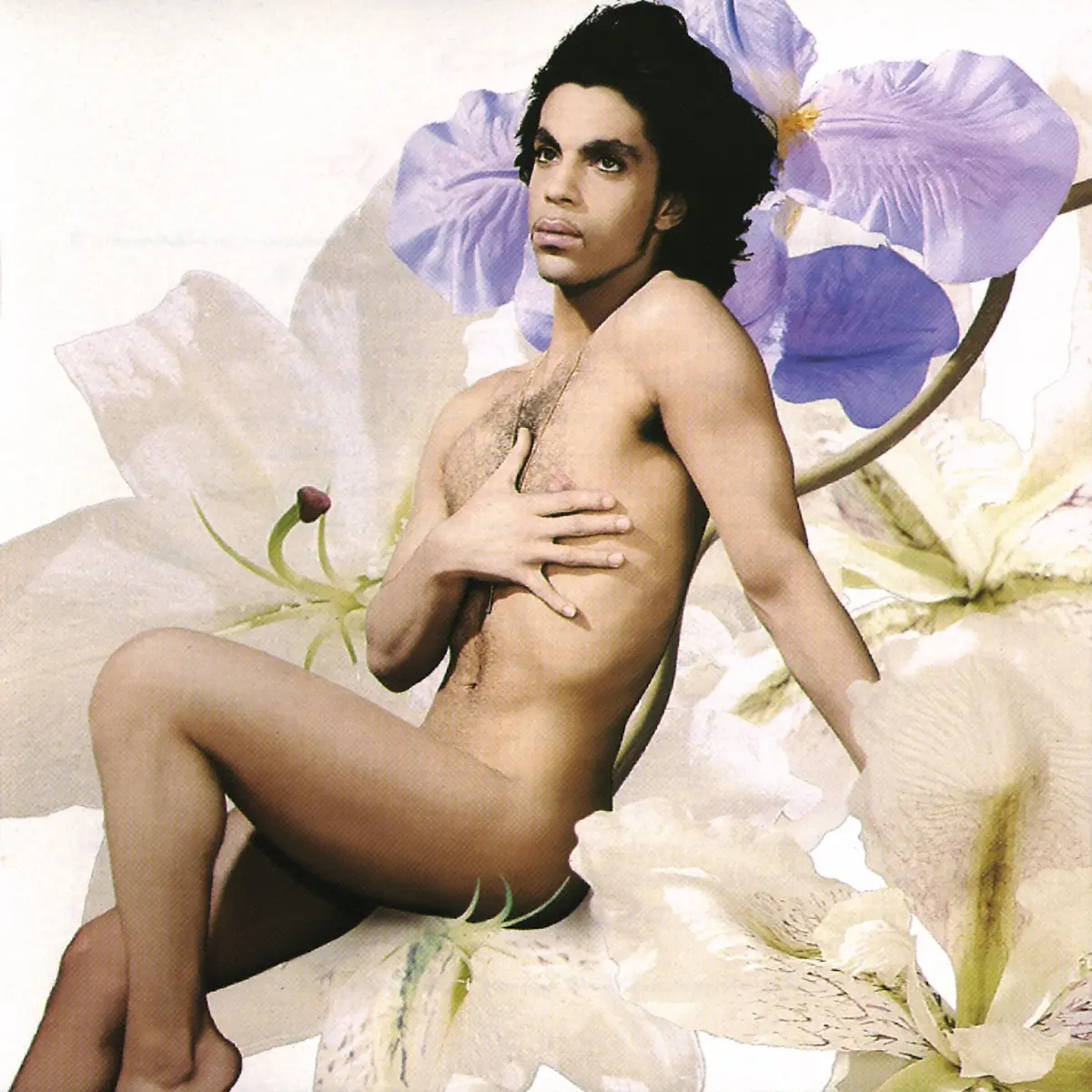 Prince released his eleventh-recorded album, Lovesexy, on May 10, 1988, on Paisley Park/Warner Bros.
The album’s sound is a “Love Symphony,” a highly futuristic, symphonic synth album. It experiments with keyboard sounds and radical beats. Described as a magnum opus, Prince created the album from a need to produce something, infusing it with his own blend of spirituality, love, and sexuality. It has a crisp sound and was released as a single, continuous track on its initial CD and vinyl pressings.
Prince wrote all of the album’s material. He handles most of the instrumentation, including electric and acoustic guitars, various keyboards and synthesizers, bass guitar, drums, and percussion. Sheila E. contributes drums, percussion, and backing vocals, while Boni Boyer and Dr. Fink provide keyboards. The horn section consists of Eric Leeds on saxophone and Atlanta Bliss on trumpet. Miko Weaver and Levi Seacer, Jr. play guitar and bass on some tracks, respectively. Ingrid Chavez provides spoken vocals and Cat Glover contributes rap and backing vocals.
The album opens with a full-band arrangement on “Eye No,” a gospel number that sets the spiritual mood for what Prince is trying to convey. The hit single, “Alphabet St.,” is a mix of dance, rock, and rap, and is considered an outlier from the rest of the album’s material. “Glam Slam,” a busy dance track, concludes with a synth string instrumental coda. A harrowing midtempo ballad, “Anna Stesia,” features a searching piano sequence and a visceral guitar solo that builds tension. Prince experiments with large-scale orchestration on synthesizers throughout this track.
“Dance On” has a motoring rhythm and a machine-gun-like pace, with lyrics that address societal issues. The title track, “Lovesexy,” is a funk composition with triumphant synth horns and sped-up vocals from Prince and Cat Glover. A ballad recorded for a prior album, “When 2 R in Love,” is described as intimate and lush. “I Wish U Heaven” is a spiritual song with few lyrics and a simple musical and vocal approach. “Positivity” is a dark guitar-meets-electronica treatise that sounds musically downbeat despite its title, with spoken rap-type vocals.
A1. “Eye No” (5:47)
A2. “Alphabet St.” (5:38)
A3. “Glam Slam” (5:04)
A4. “Anna Stesia” (4:56)
B1. “Dance On” (3:44)
B2. “Lovesexy” (5:48)
B3. “When 2 R in Love” (4:01)
B4. “I Wish U Heaven” (2:43)
B5. “Positivity” (7:15)
Recording sessions for the album occurred at Prince’s Paisley Park Studios over a period of about two months, and the album was reportedly recorded from beginning to end in the order it appears on the final release.
The album’s cover features a photograph by Jean Baptiste Mondino that depicts Prince in the nude on a backdrop of flowers. This artwork prompted some record stores to either refuse to stock the album or wrap it in black.
The album produced three singles. The first, “Alphabet St.,” reached No. 8 on the Hot 100 and No. 3 on the Hot R&B Songs chart. Its video, directed by Patrick R. Epstein, shows Prince walking and driving through an environment made of letters and contains hidden messages. The B-side is a remix of the same track. The second single, “Glam Slam,” reached No. 44 on the Hot R&B Songs chart. The B-side, “Escape,” is a remix of the main track with new lyrics and a different bass line. The third single, “I Wish U Heaven,” reached No. 18 on the Hot R&B/Hip-Hop Songs chart. Its B-side, “Scarlet Pussy,” is credited to Prince’s Camille persona, with a very sexual lyrical theme using metaphors and sped-up Camille vocals.
Lovesexy did not break the top 10 on the US Billboard 200, peaking at No. 11. The album did reach number one in several countries, including the UK, where it was Prince’s first chart-topping album.
Discography:
- For You (1978)
- Prince (1979)
- Dirty Mind (1980)
- Controversy (1981)
- 1999 (2LP, 1982)
- Purple Rain (OST, 1984 • Prince and The Revolution)
- Around the World in a Day (1985 • Prince and The Revolution)
- Parade: Music From the Motion Picture “Under the Cherry Moon” (OST, 1986 • Prince and The Revolution)
- Sign “☮” the Times (2LP, 1987)
- The Black Album (1987)
- Lovesexy (1988)
- Batman (OST, 1989)
- Graffiti Bridge (OST, 1990)
- Diamonds and Pearls (1991 • Prince & The New Power Generation)
Sources:
Artist/Album Pages:
Heatwave was a multi-national soul-funk band formed by American servicemen stationed in Germany du...
Omni was an American soul-funk band that made the 1980–82 albums Omni Says It All and All for the ...
Chic was an American soul-funk band from New York, best known for the disco-era hits "Everybody Da...
Amnesty was an American funk band from Indianapolis that released two singles circa 1972/73 on Lam...
The Brothers Johnson were an American soul-funk duo that made seven albums between 1976 and 1988 o...
The Brooklyn, Bronx & Queens Band — commonly billed as the B. B. & Q. Band — was an Americ...
Manchild was an American soul-funk band behind the 1977/78 albums Power and Love and Feel the Phuf...
The Blackbyrds were an American soul-funk band from Washington, D.C., named after the 1973 album b...
The Split Decision Band was an American Midwest soul-funk group that cut a 1978 standalone single...
Sine was a soul-funk project headed by American producer/keyboardist Patrick Adams, who used the m...
Thomas Buck-Nasty was an American soul-funk band that released the 1980 RCA album Blast-O-Funk. ...
Mazarati was an American synth-funk band from Minneapolis that released a 1986 self-titled album o...