

Kaipa is a Swedish symphonic/art-rock band from Uppsala, formed in 1973. During the band’s first two years they performed as Ura Kaipa, issuing a single under that name on Four Leaf Records. Between 1975 and 1978, the band released three albums on Decca, followed by two additional albums during the early 1980s on Polar and Piglet. Since 2002, a more prolific stream of discs have appeared under the reactivated nameplate.
Members: Hans Lundin (vocals, keyboards), Tomas Eriksson (bass, vocals, 1973-77), Roine Stolt (vocals, guitar, 1974-79, 2000-05), Ingemar Bergman (drums, vocals, 1974-81), Mats Löfgren (vocals, 1977-80), Mats Lindberg (bass, 1977-80), Max Åhman (guitar, 1979-82), Mats “Microben” Lindberg (bass, 1980-82), Pelle Andersson (drums, 1982)
Background
The band was formed in 1973 as Ura Kaipa by singer/keyboardist Hans Lundin and bassist /singer Tomas Eriksson. Both hailed from the organ-psych band San Michael’s, which issued a self-titled album on Sweden’s California label in 1971. Lundin also played in its beat-era predecessor S:t Michael Sect, which issued three singles during the mid-1960s.
As Ura Kaipa, they issued the single “För Sent” (b/w “Bay-e Bay-o”) in 1974 on Four Leaf Clover Records. Soon thereafter, singer/guitarist Roine Stolt joined just months shy of his 18th birthday. Drummer Ingemar Bergman completed the lineup, which shortened its name to Kaipa, Swedish for “to long for,” “to yearn for,” or “to miss.”
Kaipa
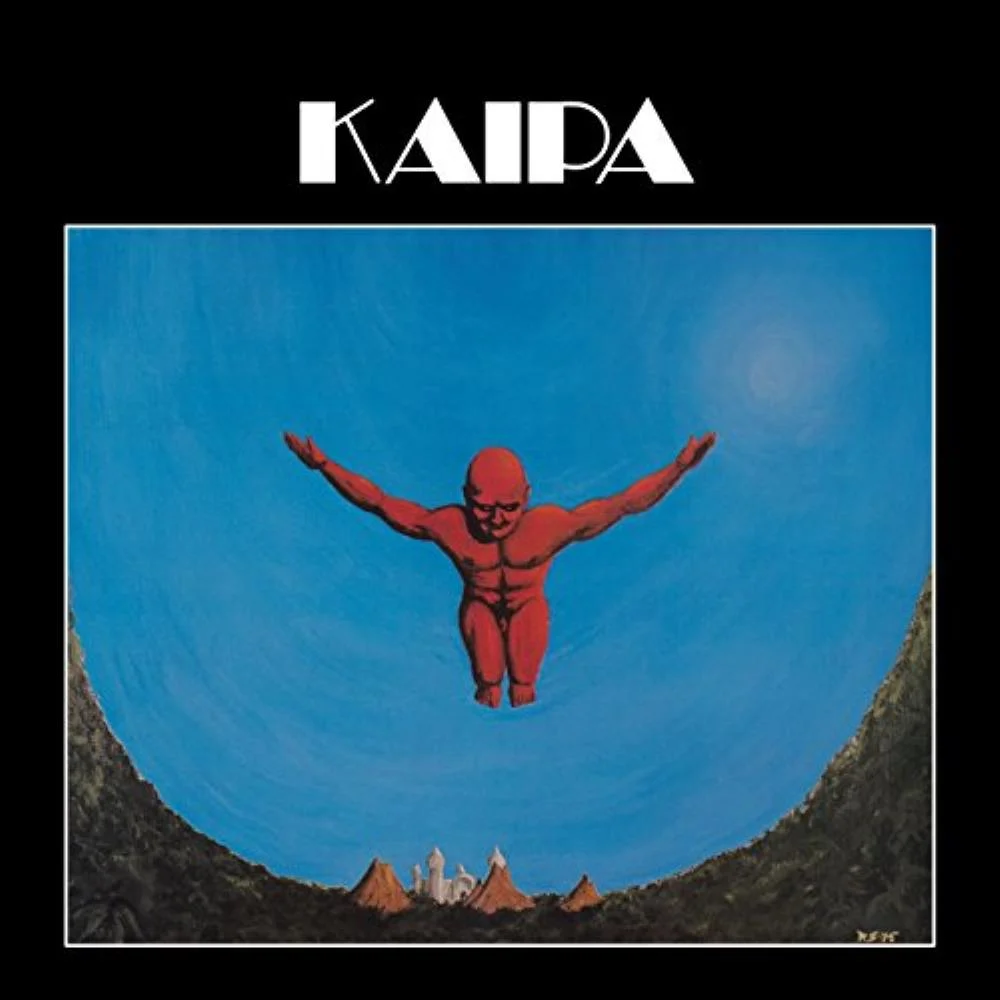 Kaipa released their self-titled debut album in November 1975 on Decca.
The album presents a sequence of elaborate instrumental passages framed by dense keyboard layers and alternating vocal sections, grounded in symmetrical motifs and extended rhythmic development.
Hans Lundin threads Hammond, Rhodes, Moog, and harpsichord textures through Roine Stolt’s acoustic and electric guitar phrasing, with both players trading sustained lines and cascading runs in closely woven arrangements. Bassist Tomas Eriksson and drummer Ingemar Bergman underpin the material with steady backbeats and rhythmic pivots that allow the extended instrumental sections to expand and contract without losing direction.
“Musiken är ljuset” rises from sustained string‑machine tones into floating vocal space, then expands with organ swells and weighty low‑end motion before settling into quieter passages, while “Saker har två sidor” builds from piano‑led restraint toward denser organ, bass, and guitar interplay that locks into a forceful mid‑section pulse. “Ankaret” moves from delicate keyboard framing to stronger guitar presence and recurring dynamic surges, its contour alternating between calm suspension and renewed drive.
“Allting har sin början” pivots around a defined rhythmic beat that opens into more volatile keyboard activity and intensified ensemble exchange. Faster motion appears in “Förlorad i Istanbul,” where tightly packed figures accelerate the pace, whereas “Oceaner föder liv” balances prominent bass and rising synthesizer color against gradual tempo lifts, vocal entry, and later deceleration into reflective stillness.
A1. “Musiken är ljuset” [The Music Is the Light] (7:03) – Lundin, Stolt
A2. “Saker har två sidor” [Things Have Two Sides] (4:31) – Lundin
A3. “Ankaret” [The Anchor] (8:38) – Lundin
A4. “Skogspromenad” [Forest Walk] (3:39) – Lundin
B1. “Allting har en början” [Everything Has a Beginning] (3:09) – Lundin
B2. “Se var morgon gry” [See Each Morning Dawn] (8:52) – Lundin
B3. “Förlorad i Istanbul” [Lost in Istanbul] (2:22) – Stolt
B4. “Oceaner föder liv” [Oceans Give Birth to Life] (9:29) – Stolt
Kaipa recorded the album at Marcus Music in Solna during July 1975 with engineer Marcus Österdahl. Roine Stolt designed the cover art and Per Metérus handled layout duties.
Inget Nytt Under Solen
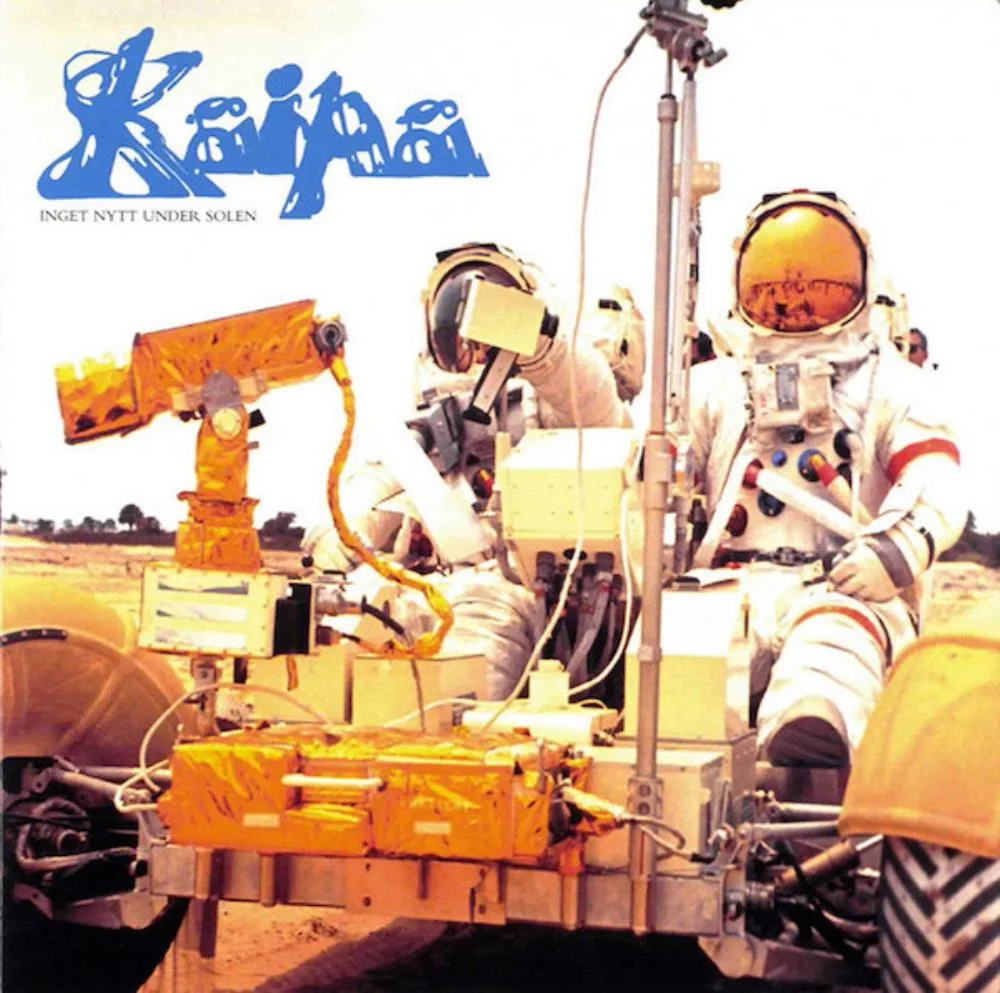 Kaipa released their second album, Inget Nytt Under Solen, in December 1976 on Decca.
The album expands their sound with denser arrangements, extended instrumental sections, and sustained interplay between keyboardist Hans Lundin and guitarist Roine Stolt.
Lundin layers Mellotron, Hammond, Fender Rhodes, and marimba into sweeping passages that pivot around Stolt’s twelve-string lines and focused electric runs. Bassist Tomas Eriksson anchors the material with alternating electric and synth bass parts that reinforce shifts in harmonic direction, while Ingemar Bergman’s kit and temple block work underpin the extended forms with tight rhythmic control and precise accenting.
“Skenet bedrar” opens in subdued space, builds toward pulsing organ and weighty bass beneath extended guitar lines, then cycles through renewed acceleration, spoken passages, and late‑stage calm that closes the span in reflective stillness. Shorter second‑side pieces compress this dynamic language into tighter frames: “Ömsom sken” drifts from restrained vocal entry into a quiet instrumental fade, “Korståg” centers on prominent bass and layered keyboards in a sustained instrumental drive, and the title track rises from an energized opening toward heavier low‑end motion before settling into slower vocal repose and a closing guitar‑led resolution.
A. “Skenet bedrar” [Appearances Are Deceiving / The Light Deceives] (21:44) – Lundin
B1. “Ömsom sken” [Alternating Light / Alternating Shine] (3:21) – Stolt, Bergman
B2. “Korståg” [Crusade] (5:23) – Stolt
B3. “Stengrodornas parad” [Parade of the Stone Frogs] (0:59) – Stolt
B4. “Dagens port” [The Gate of the Day / Today’s Gate] (2:39) – Lundin
B5. “Inget nytt under solen” [Nothing New Under the Sun] (6:17) – Stolt
Across the album, shifting pace, strong bass presence, and interwoven keyboard‑guitar dialogue maintain forward momentum while allowing frequent contraction into softer, suspended passages.
Kaipa recorded Inget Nytt Under Solen between June 30 and August 1976 with co-producer Leif Mases at the controls. Fredrik Brofalk assisted in engineering. Ingemar Bergman contributed to the album’s visual presentation with cover photography alongside Bernt Johansson, and Pelle Metérus handled the layout design.
Solo
 Kaipa released their third album, Solo, in May 1978 on Decca.
The album introduces a new lead vocalist, Mats Löfgren, and expands the band’s sound palette with more concise structures and textured layering.
Hans Lundin integrates Polymoog, Claviola, and Mellotron across shifting passages that counter Roine Stolt’s twelve-string arpeggios and electric guitar phrasings, often intertwining in short thematic exchanges. Bassist Mats Lindberg anchors the material with a combination of electric runs and Moog Taurus pedal foundations, while Ingemar Bergman underpins the arrangements with a firm backbeat and crisp percussive accents.
“Den Skrattande Grevinnan” sets a nimble tone with interwoven synth layers and darting guitar figures that trade off in short, elliptical phrases. “Flytet” pivots to a slower register, with stretched guitar phrasing that rises in weeping arcs over subdued organ support. “Anar Dig” drifts through a restrained tempo with spare vocal phrasing and soft piano undercurrents, only to give way to the tightly pulsed “Frog Funk,” where clipped guitar stabs and syncopated rhythm suggest a tongue-in-cheek detour.
“Visan I Sommaren” layers voice and keys in a slow, suspended cadence, where synth shading drapes over the vocal line in narrow harmonic intervals. “Tajgan” drops further into atmospheric pacing, with a Mellotron-heavy texture that clears for a sparse, blues-toned guitar close. “En Igelkotts Död” pushes a regal contour, carried by long sustain guitar lines that stagger against somber rhythmic swells. On “Total Förvirring,” synth guitar pulses and looped legato phrases spiral in fast alternation before “Sist På Plan” closes the album with tightly coiled synth–guitar exchanges that accelerate and retreat across an active rhythm base.
A1. “Den skrattande grevinnan” [The Laughing Countess] (4:50) – Lundin
A2. “Sen repris” [Late Rerun / Late Repeat] (3:21) – Lundin
A3. “Flytet” [The Flow / The Smoothness] (2:47) – Lundin
A4. “Anar dig” [Sense You / Guess You] (4:05) – Lundin
A5. “Frog funk” [Frog Funk] (3:34) – Lundin
A6. “Visan i sommaren” [The Song in Summer] (3:40) – Lundin
A7. “Taijgan” [Taijgan] (3:26) – Lundin
B1. “Respektera min värld” [Respect My World] (6:13) – Stolt, Bergman
B2. “En igelkotts död” [A Hedgehog’s Death] (3:40) – Stolt
B3. “Total förvirring” [Total Confusion] (7:25) – Stolt
B4. “Sist på plan” [Last on the Field / Pitch] (7:39) – Stolt
Kaipa recorded Solo at Europa Film Studio 3 in December 1977 and mixed it at Grammofonverket “Bastun” in January 1978. Olle Ramm produced and engineered the sessions. Ingemar Bergman contributed band photography.
Händer
 Kaipa released their fifth album, Händer, in 1980 on Polar.
The album shifts toward more compact arrangements while maintaining layered instrumental interplay across electric, acoustic, and electronic textures.
Keyboardist Hans Lundin moves between acoustic piano and synthesizer lines that dovetail with Max Åhman’s electric guitar accents in sequences that emphasize tonal layering over extended improvisation. Mats Lindberg underpins the material with firm electric bass lines that provide grounding beneath Lundin’s harmonic structures, while Ingemar Bergman supplies steady backbeats and dynamic punctuation that push and pull against the vocal phrasing.
A1. “Äntligen” [Finally] (5:25) – Lundin, Bergman, Löfgren
A2. “Händer” [Hands / Happens] (6:10) – Lundin, Bergman, Löfgren
A3. “Regn” [Rain] (5:40) – Lundin
A4. “Staden Lever” [The City Lives] (4:15) – Lundin, Bergman, Löfgren
B1. “Elgrandi” [play on words] (2:40) – Lundin
B2. “Krig” [War] (5:05) – Lundin, Bergman, Löfgren
B3. “Älska Med Mig Igen” [Love With Me Again] (6:45) – Lundin, Bergman, Löfgren
B4. “Med Trasiga Segel” [With Tattered / Broken Sails] (4:55) – Lundin, Bergman, Löfgren
Kaipa recorded Händer at Polar Studios in Stockholm with engineers Leif Mases and Lennart Östlund. Torbjörn Calvero handled band photography, and Ermalm’s Egenart designed the sleeve.
Nattdjurstid
 Kaipa released their fifth album, Nattdjurstid, in 1982 on Piglet.
The album continues their shift toward shorter song forms, placing vocal arrangements at the center of tightly arranged synth-driven tracks.
Hans Lundin threads compact synthesizer lines through guitarist Max Åhman’s clipped electric figures, with each phrase kept close to the vocal cadence and frequently doubled or mirrored in tone. Mats Lindberg’s bass and Taurus pedal work lays a constant harmonic anchor, while Pelle Andersson reinforces the material with direct backbeats and accent placement that binds the rhythm section to the layered vocal textures.
A1. “Galen” [Mad / Crazy] (2:45) – Lundin
A2. “Nattdjurstid” [Night Beast Time] (6:03) – Lundin
A3. “Timmar av glas” [Hours of Glass] (2:17) – Lundin
A4. “Zepapo” [Zepapo] (3:30) – Lundin, Lindberg, Åhman, Andersson
A5. “Identitetskris” [Identity Crisis] (4:45) – Lundin
B1. “Cellskräck” [Claustrophobia] (5:01) – Lundin
B2. “Speglarna” [The Mirrors] (5:50) – Lundin
B3. “Närmare” [Closer] (4:46) – Lindberg
B4. “Väntar en storm” [A Storm Is Waiting] (5:57) – Lundin
Kaipa recorded and produced Nattdjurstid at Eugen Petrén’s Studio in Uppsala. Hans Lundin later remixed the album at HGL Studio, and Martin Igelström handled the remastering at MI Sound Design. Håkan Uppgren photographed the front cover, which appeared on the original Piglet release.
Discography:
- “För Sent” / “Bay-e Bay-o” (as “Urakaipa”, 1974)
- Kaipa (1975)
- Inget nytt under solen (1976)
- Solo (1978)
- Händer (1980)
- Nattdjurstid (1982)
Sources:
Artist/Album Pages:
This Oneness was an American jazz-rock band from Minneapolis that released the album Surprize in 1...
Enzo Capuano is an Italian singer/songwriter who released the 1975 album Storia Mai Scritta on Div...
Paris was an American post-psych hard rock trio that released two albums on Capitol in 1976. The b...
Sunhouse was a Belgian jazz-rock band behind a 1977 self-titled album on JW's Records. Bassist Ala...
Gina X Performance was a German electronic project led by Gina Kikoine and producer Zeus B. Held, ...
Paul-André Thibert is a Québécois vocalist and flutist who emerged in the rock band Dionysos, whic...
Affirmation was an American west coast jazz-rock band behind the 1980 album Lost Angeles on Inner ...
Native Son was a Japanese jazz-funk band that released five albums between 1979 and 1983 on JVC, f...
Solar Plexus was a Swedish jazz-rock band that released four albums between 1972 and 1975 on EMI O...
Cláudia (born Maria das Graças Rallo on May 10, 1948) is a Brazilian samba-pop singer who emerged ...
The Whispers were an American soul group from Watts, Calif., formed in 1964. A four-year run of si...
Bootsy's Rubber Band was an American funk band from Detroit that released four albums between 1976...