

Quella Vecchia Locanda was an Italian symphonic-rock band that released a 1972 self-titled album on Help!, followed by the 1974 title Il Tempo Della Gioia on RCA Italiana.
Members: Giorgio Giorgi (vocals, flute), Raimondo Maria Cocco (guitar, vocals, clarinet), Massimo Roselli (keyboards, vocals), Romualdo Coletta (bass), Patrick Traina (drums, percussion), Donald Lax (violin, 1972-74), Massimo Giorgi (bass, vocals, 1974), Claudio Filice (violin, 1974)
Background
Quella Vecchia Locanda (Italian for “That Old Inn”) formed in 1970 in Rome. Singer/flutist Giorgio Giorgi wrote songs with keyboardist Massimo Roselli and guitarist/singer Raimondo Coco. The initial five-piece lineup featured bassist Romualdo Coletta and drummer Patrick Traina.
In November 1971, they performed at Rome’s VoomVoom Club. Their setlist mixed Giorgi co-writes with Roselli (“Immagini Sfocate”) and Coco (“Mistery Land,” “Bombardment Music”) with covers of Traffic (“Dear Mr. Fantasy”), Free (“Fire and Water”), Jethro Tull (“It’s Breaking Me Up”), Pink Floyd (“Cymbaline”), Canned Heat (“On the Road Again,” “Time Was”), Santana (“Evil Ways”), Otis Rush (“All Your Love”), and the blues standard “You Don’t Love Me,” Willi Cobb’s 1961 rewrite of Bo Diddley’s 1955 number “She’s Fine, She’s Mine” (covered since by The Pretty Things).
Locanda expanded to six with violinist Donald Lax. They linked with producer/composer Gianni Dell’Orso, a Sixties-era creative director for singers on the Parade label.
Quella Vecchia Locanda
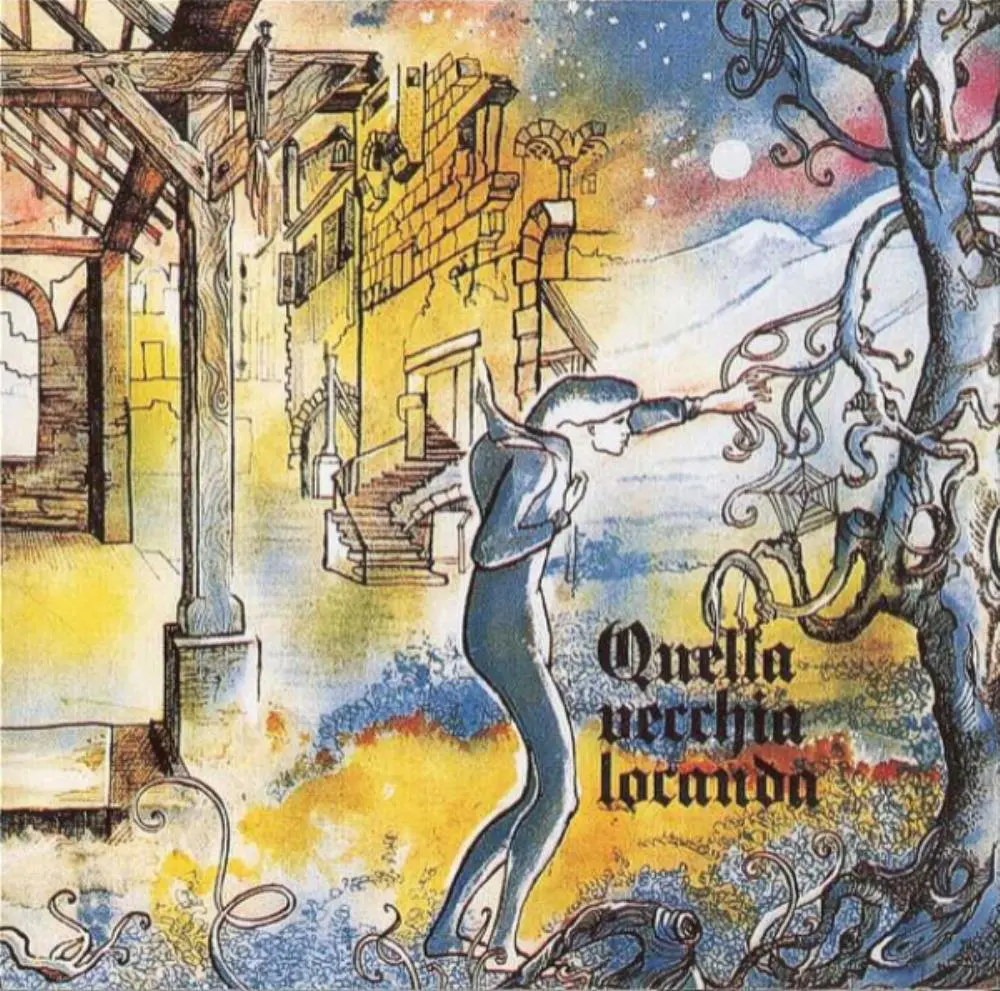 Quella Vecchia Locanda released their self-titled first album in June 1972 on Help!, the short-lived rock division of RCA Italiana.
The album contains eight originals co-credited to Giorgio Giorgi, Massimo Roselli, and producer Gianni Dell’Orso. Giorgi interweaves flute and piccolo with the electric/acoustic guitar of Raimondo Maria Cocco and the classical flourishes of Roselli, whose arsenal includes piano, organ, Mellotron, Moog, and spinet, a miniature harpsichord. Roselli also plays the cithara, an ancient Greek yoke lute.
“Prologo” veers between contrapuntal urgency and quieter acoustic passages with shifts marked by flute and synthesizer. “Un Villaggio, Un’Illusione” opens with stately violin that heralds sharp rhythmic turns. “Realtà” rests on finger-picked acoustic guitar interwoven with vocal harmonies and lyrical flute contours. “Immagini Sfuocate” moves from airy textures into a dense, fuzzed-out rock pattern.
“Il Cieco” alternates primal drum-and-bass patterns with expansive violin–flute dialogues over sustained organ. “Dialogo” layers shifting time signatures and abrupt textural changes, balancing jagged, dissonant sections with softer piano-led moments. “Verso La Locanda” begins with spare piano, then cycles through abrupt contrasts—quiet electric guitar and flute, heavy bass-driven passages, and spiraling synthesizer runs. Closer “Sogno, Risveglio e…” centers on a poised piano performance, joined by lyrical violin and flute in a slow build that tapers to a subdued finish.
A1. “Prologo” [“Prologue”] (5:02)
A2. “Un villaggio, un’illusione” [“A Village, an Illusion”] (3:53)
A3. “Realtà” [“Reality”] (4:15)
A4. “Immagini sfocate” [“Blurred Images”] (3:02)
B1. “Il cieco” [“The Blind Man”] (4:15)
B2. “Dialogo” [“Dialogue”] (3:43)
B3. “Verso la locanda” [“Toward the Inn”] (5:17)
B4. “Sogno, risveglio e…” [“Dream, Awakening and…”] (5:13)
Sessions occurred at Roma’s Globe Records studio where Gianni Dell’Orso produced the album in sequence with Procession‘s debut, Frontiera.
Quella Vecchia Locanda features a surreal blended-image gatefold illustration by Armando Mancini and an inner-gate blue-scale photo collage by Giancarlo Impiglia, also credited on Per….un Mondo di Cristallo by Raccomandata Ricevuta Ritorno.
Between albums, Romualdo Coletta and Donald Lax cleared out for bassist Massimo Giorgi and violinist Claudio Filice. Giorgi played in pre-record lineups of Living Music and Il Ritratto di Dorian Gray, a Cherry Five precursor.
Il Tempo Della Gioia
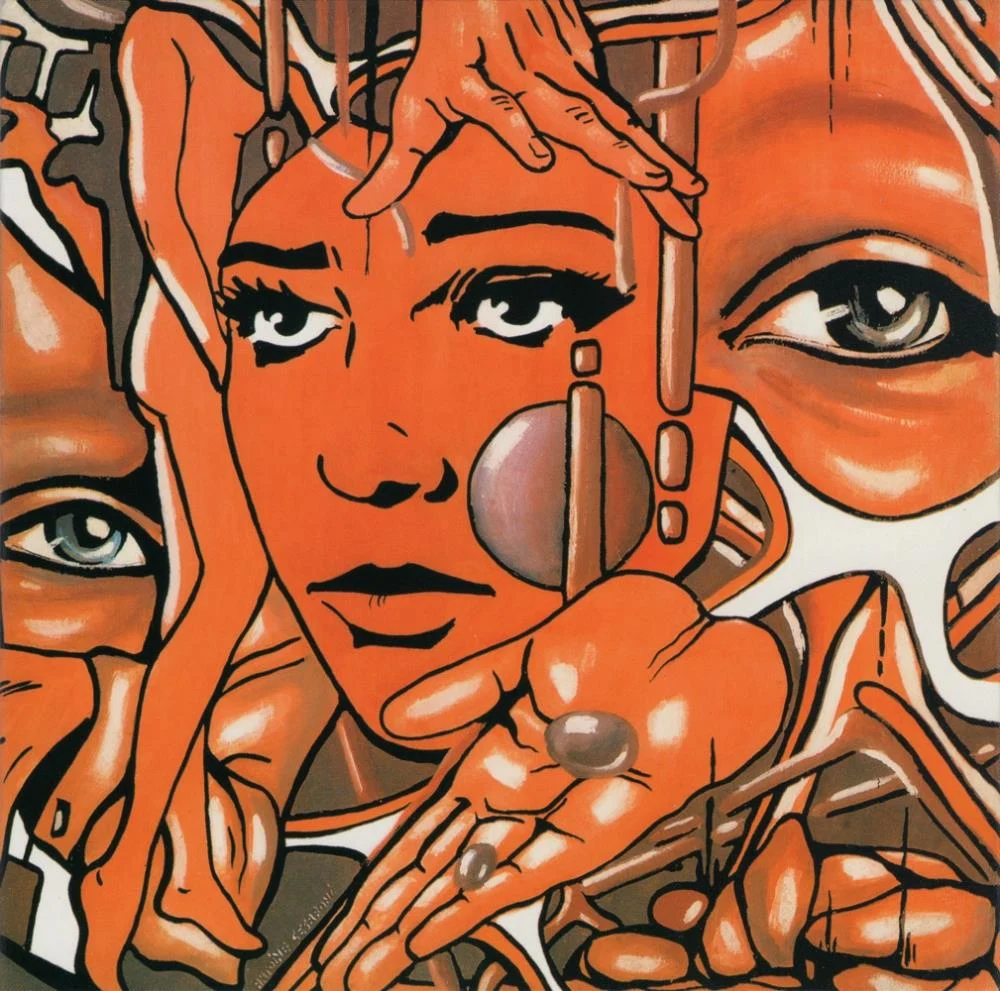 Quella Vecchia Locanda released their second album, Il Tempo Della Gioia, in January 1974 on RCA Italiana.
Il Tempo della Gioia unfolds as a chamber-like fusion of classical structure and rock instrumentation, its arrangements alternating pastoral delicacy and sudden surges of intensity.
“Villa Doria Pamphili” opens with piano joined by acoustic guitar and violin before vocals rise in soft arcs, shifting between hushed verses and fuller, brightened passages. “A forma di…” layers violin, counter-bass, flute, harpsichord, and wordless voices through a steadily evolved frame. The title track moves from gentle piano and violin lines into sharper rhythmic turns, alternating airy passages with heavier, shadowed sections.
“Un giorno, un amico” shifts between intense violin and clarinet passages, reserved vocals, and full ensemble surges, moving through tight and subdued tempos. “È accaduto una notte” opens with choral voices and acoustic textures, soon overrun by harpsichord, violin, and piano in a shifting, soaring race to the song’s abrupt, explosive end.
A1. “Villa Doria Pamphili” (5:32)
A2. “A forma di…” [“In the Shape of…”] (4:11)
A3. “Il tempo della gioia” [“The Time of Joy”] (6:19)
B1. “Un giorno, un amico” [“A Day, a Friend”] (9:42)
B2. “È accaduto una notte” [“It Happened One Night”] (8:18)
Quella Vecchia Locanda recorded the album in late 1973 with producer Rodolfo Bianchi, a prior soundman for Brainticket, Morgan, and Il Rovescio Della Medaglia. RCA Italiana soundman Leandro Leandri engineered Il Tempo della Gioia amid albums by Angelo Branduardi, Festa Mobile, and Lucio Dalla.
Claudio Filice also played on the 1974 CBS release Chiaro by Loy & Altomare, a West Coast-styled duo.
Il Tempo Della Gioia features a gatefold illustration of disembodied faces and hands. The inner-gate illustration has the Italian lyrics ink-written in cursive onto a roll-sheet.
Discography:
- Quella Vecchia Locanda (1972)
- Il Tempo Della Gioia (1974)
Sources:
- Discogs: Quella Vecchia Locanda
- MusicBrainz: Quella Vecchia Locanda
- RYM: Quella Vecchia Locanda
- ItalianProg: Quella Vecchia Locanda
- ProgArchives: Quella Vecchia Locanda
Artist/Album Pages:
Gaetano Liguori (born May 19, 1950) is an Italian jazz pianist and composer who issued the 1975 al...
Blocco Mentale was an Italian symphonic-rock band that released the 1973 album Πόα (Poa) on Titani...
Hero was an Italian symphonic/hard-rock trio that recorded an album in Germany, where its 1974 rel...
Patty Pravo (born April 9, 1948) is an Italian singer and media personality who emerged from the R...
Fabio Celi e Gli Infermieri were an Italian symphonic-rock band that released the album Follia on ...
Campo di Marte was an Italian symphonic/psych band that released a 1973 self-titled album on Unite...
Perigeo was an Italian jazz-rock band that released five albums between 1972 and 1976 on RCA Itali...
Freedom Power was the name of a library/studio project comprised of Italian jazz musicians. The pr...
Metamorfosi was an Italian symphonic-rock band that released the 1972/73 albums ...E fu il Sesto G...
Blue Phantom was a studio-psych project headed by Italian library musician Armando Sciascia, perfo...
La Seconda Genesi were an Italian symphonic/jazz-rock band that released the album Tutto deve Fini...
Mauro Pagani (born Feb. 5, 1946) is an Italian composer and multi-instrumentalist who served as th...