

Red Noise was a French post-psychedelic musique concrète band that released the 1971 album Sarcelles – Lochères on Futura. Guitarist Patrick Vian later released the seminal electronic album Bruits et Temps Analogues. Saxophonist Francis Lemonnier and drummer Serge Catalano formed Komintern.
Members: Patrick Vian (guitar, 1968-72), Serge Catalano (drums, 1968-70), Daniel Geoffroy (bass, 1968-71), Francis Lemonnier (saxophone, 1968-70), Claude Senin (saxophone, 1970-71), Jean-Claude Cenci (saxophone, 1971-72), Philip Barry (drums, 1970-71), Marc Blanc (drums, 1971-72), Daniel Ceccaldi (bass, 1971-72)
For the English new wave band led by Be-Bop Deluxe frontman Bill Nelson, go to his solo page.
Background
Red Noise formed in May 1968 amid the uprising at Sorbonne (the University of Paris), where Patrick Vian (1942–2023) teamed with saxophonist Francis Lemonnier, bassist Daniel Geoffroy, and drummer Serge Catalano.
Patrick was the son of French polymath Borian Vian (1920–1959), a crime novelist, trumpeter, and jazzologist who organized local shows for Duke Ellington and a young Miles Davis. Lemonnier cut a prior EP, Tout Est Fini, in 1964 on French Decca.
The initial Red Noise shows were clandestine free-form events with young radical attendees. In January 1969, they played L’Open, a five-day French Rock Festival. They backed singer/actress Marie-Blanche Vergne on her 1970 Columbia a-side “La Veuve du Hibou.” Catalano and Lemonnier cleared for drummer Philip Barry and saxophonist Jean-Claude Cenci.
Red Noise secured a deal with Futura Records, a progressive jazz label started in 1969 by Moroccan entrepreneur Gérard Terronès.
Sarcelles – Lochères
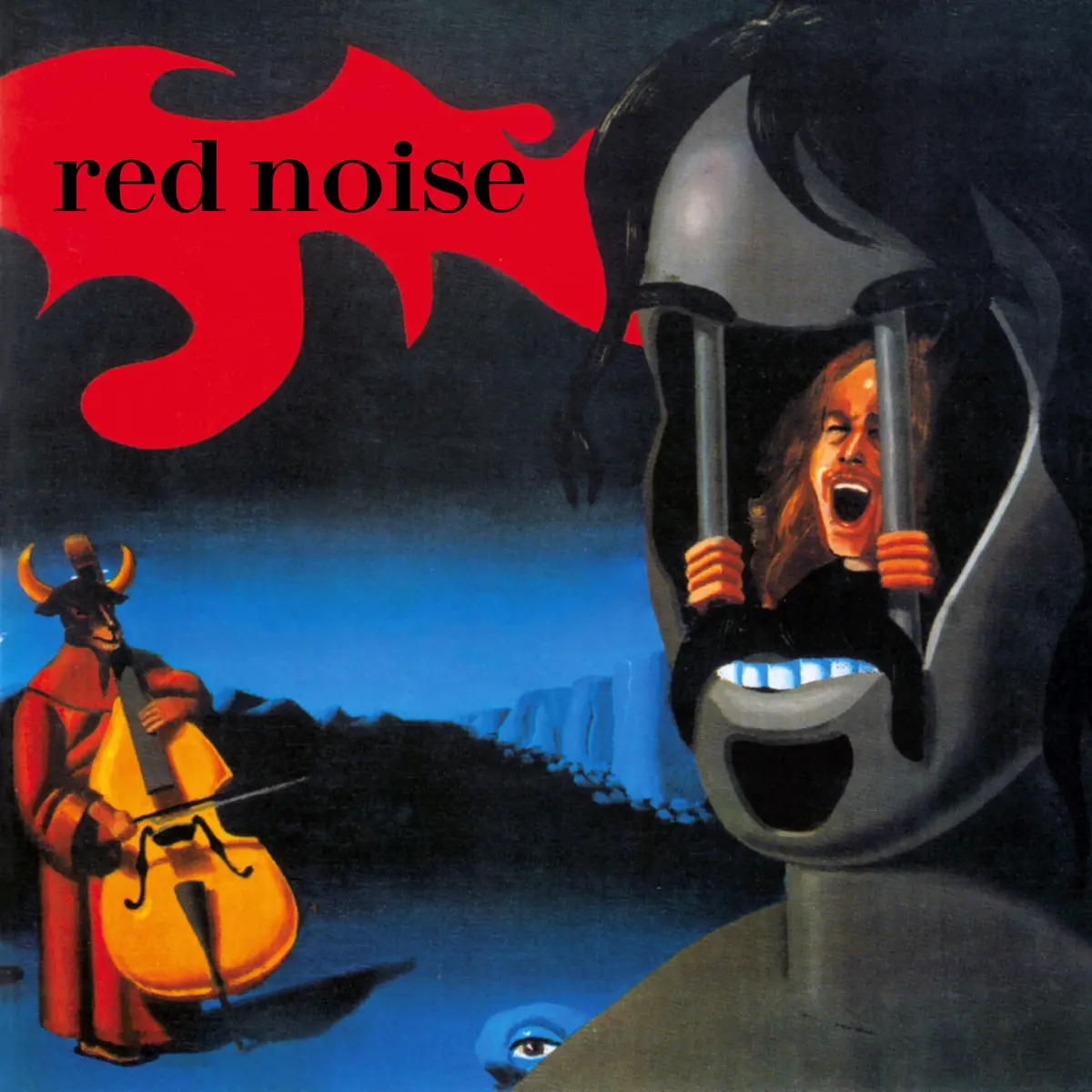 Red Noise released their singular album, Sarcelles – Lochères, in 1971 on Futura.
Patrick Vian plays lead guitar, backed by Jean-Claude Cenci (flute, sax), bassist Daniel Geoffroy, and drummer Philip Barry (also guitar). They’re supplemented by guest percussionist Austin Blue and (future Spacecraft) organist John Livengood.
A1. “Cosmic Toilet Ditty” (0:40) is the sound of a toilet being used and flushed.
A2. “Caka Slow / Vertebrate Twist” (4:21) — a medley credited to Geoffroy, Vian, and Barry. “Caka Slow” is mock doo-wop with drunken low vocals and free-form sax. “Vertebrate Twist” is a deconstructed folk singalong.
A3. “Obsession Sexuelle N°1” (0:29) — distorted multi-tracked sax noise by Cenci.
A4. “Galactic Sewer-Song” (4:04) starts as a skewed folk-pop ditty with scatological lyrics, then becomes a jazz-rock instrumental in 10/8 (ala Supersister) with a fuzzy, staccato guitar figure and wah-wah leads.
A5. “Obsession Sexuelle N°2” (0:13)
A6. “Red Noise Live au Café des Sports” (2:08) is a group-composed mid-tempo jazz instrumental (in E) with crisp, free-flowing sax and subdued backing.
A7. “Existential-Import of the Screw-Driver Eternity Twist” (2:03) is Barry alone playing picked, sparse guitar notes with subtle vibrato.
A8. “20 Mirror Mozarts Composing On Tea Bag and 1/2 Cup Bra” (2:29) is a Barry-credited jazz-rock instrumental with twangy wah-wah leads against a brisk, arching ostinato.
A9. “Red Noise en Direct du Buffet de la Gare – 2e partie” (2:15) is a slower group-credited jazz jam with fluttering sax and misty ride cymbal.
A10. “À la Mémoire du Rockeur Inconnu” (0:40) — a Cenci sax interlude that skews Fifties R&B.
B1. “Petit Précis D’Instruction Civique” (0:36) – Vian-credited interlude of sampled spoken-word dialogue.
B2. “Sarcelles C’Est L’Avenir” (18:56) is a group-credited “freakout” jam with multiple passages: 1) fast free-form rock section with hyperactive percussion, fractious guitar, and sputtering organ; 2) rhythmless section with split-channel guitar/organ/saxophone dissonance; 3) further free-form dissonance with renewed velocity.
Red Noise recorded the album on November 28, 1970, in Paris at Europa Sonor. Gérard Terronès produced Sarcelles – Lochères in sequence with 1971 Futura titles by Perception, Triode, and Théâtre du Chêne Noir. French soundman Pierre Guichon engineered the album amid projects by Majority One, and the Chico Magnetic Band; his subsequent credits include 1972/73 titles by Bachdenkel, Iris, Pyranha, and Laurent Petitgirard.
 Sarcelles – Lochères features a gatefold cover painting credited to H. van der Meer, whose art presents a Dali-esque nighttime scenario on a glacial plane, where a man cries out from a head-shaped prison cell while a robed bull plays cello. The name Red Noise appears in an overhead flame, which extends to the back where a nude female presses against a standalone green door while one-eyed blue droplets line the ground. Vian designed the inner-gates, which features text and a monochrome photo collage.
Later Activity
In its final year, Red Noise featured Vian with bassist Daniel Ceccaldi, saxist Jean-Claude Cenci, and Ame Son drummer Marc Blanc, who also played in Banana Moon, a side-project of Gong mastermind Daevid Allen.
Vian folded Red Noise after a hash arrest in the Netherlands. Elsewhere, Catalano and Lemonnier (both adherents of Bolshevik martyr Leon Trotsky) formed Komintern, which cut the 1971 album Le Bal du Rat Mort on Harvest.
In 1976, Vian resurfaced with Bruits et Temps Analogues, an experimental electronic album on Egg Records.
Sarcelles – Lochères first reappeared in 1996 as a CD on the reactivated Futura label. In 2014, the album appeared as a blue-vinyl reissue courtesy of French archivists SouffleContinu Records.
Discography:
- Sarcelles – Lochères (1971)
Sources:
Artist/Album Pages:
Rockets was a French electro/space-funk band whose 1976–84 run produced On the Road Again, Plaster...
St-Erhart was a French jazz-rock band that released the 1981 album Paprika on Oméga. Members: P...
Indochine are a French new wave band that released five studio albums and a live disc between 1982...
Mona Lisa was a French symphonic-rock band that released the 1974/75 Arcane albums L'escapade and ...
Volapük were a French avant-rock band that released four studio albums and a live disc between 199...
Orchestre Rouge was a French post-punk band that released the 1982/83 RCA albums Yellow Laughter a...
Benoît Widemann (born 1957) is a French pianist and composer who emerged at age 18 in a mid-1970s ...
Eden Rose was a French organ-rock band that released the album On the Way to Eden on Katema in 197...
Emmanuelle Parrenin is a French multi-instrumentalist and composer who played in the Seventies fol...
Est-ce bien Raisonnable? was a French avant-garde/proto-zolo trio that released a 1981 self-titled...
Jean-Louis Bucchi is a French keyboardist, composer, and conductor who released the 1978 jazz-rock...
Moving was a French jazz-rock band behind a 1980 self-titled album on Amo. They featured two ex-me...