

Wolfgang Riechmann (May 14, 1947 — Aug. 24, 1978) was a German keyboardist who joined Streetmark for their 1977 second album, Eileen. Concurrently, he prepared a solo album before his murder by two assailants on the streets of Düsseldorf. His only album, Wunderbar, appeared later that year on Sky Records.
Background
Wolfgang Riechmann got his start in The Spirits of Sound, a Dusseldorf school band with future NEU! guitarist Michael Rother and eventual Kraftwerk drummer Wolfgang Flür.
In 1976, he joined symphonic-rockers Streetmark and played on their 1977 second album, Eileen. Meanwhile, he cut a solo album of electronic music. Three weeks before its release date, he was murdered in a random attack.
Wunderbar
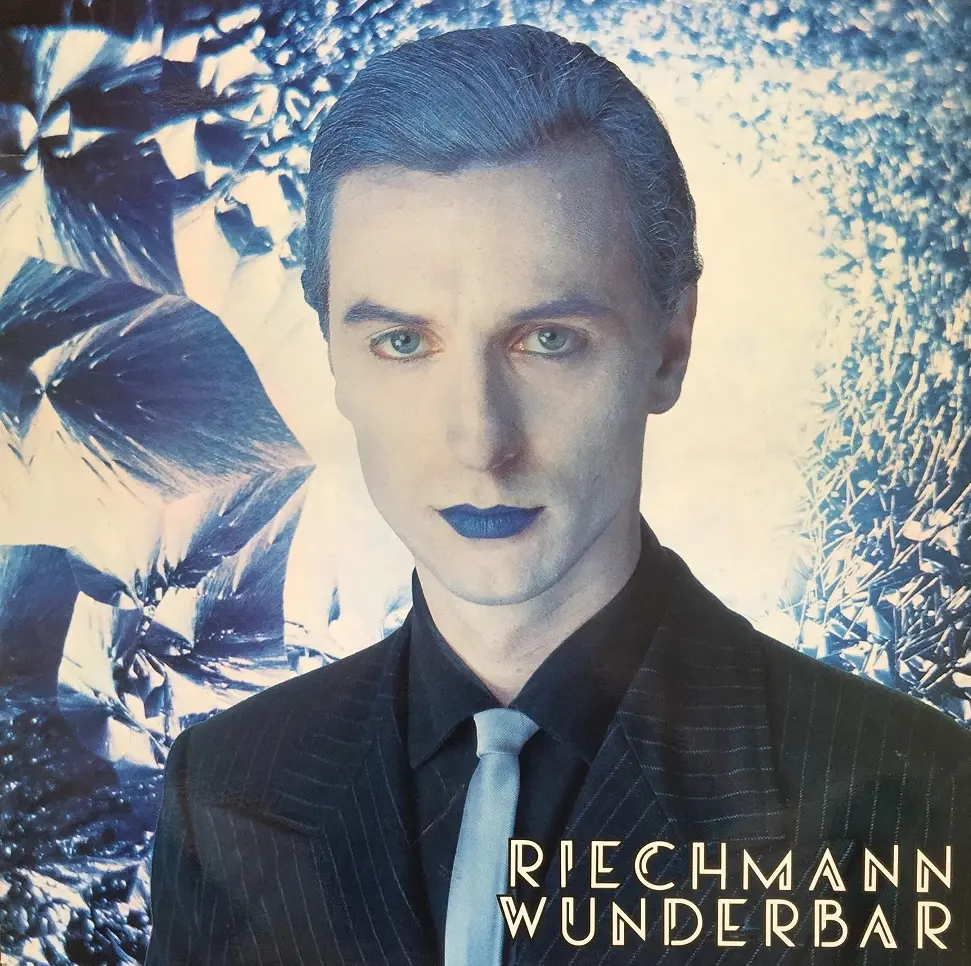 In September 1978, Sky Records released Wunderbar, the only solo album of the recently slain musician Wolfgang Riechmann.
Riechmann threads layered sequences and slow-developing textures across six tracks, alternating between Arp synthesizer runs and cyclical electric piano patterns. He and drummer Hans Schweiß trade lead and rhythm roles across extended passages, with Riechmann shifting between electric violin and vibraphone coloration while Schweiß anchors the set with steady, understated momentum.
Wunderbar unfolds across six compact instrumentals built on overlapping synth figures and understated electroacoustic details. The title track sets the tone with clipped phrasing and filtered “la la” vocals, but deeper contrasts emerge with “Abendlicht,” where Riechmann constructs a layered progression of analog textures that pulse with restrained tension. “Weltweit” centers on a shifting sequencer pattern stretched over steady internal pacing, reaching a clarity not present in the surrounding tracks.
On side two, “Silberland” builds gradually, holding back resolution as it cycles through rounded tones and gauzy overlays. “Himmelblau” carries a soft shimmer atop a static frame, with tonal swells interrupted by another vocalized refrain. “Traumzeit,” though brief, condenses the album’s mood into a final minute of low-lit atmosphere and fading resonance. Throughout, Riechmann favors contour and space over propulsion, letting each piece accumulate slowly without structural interruption.
A1. “Wunderbar” [Wonderful] (5:40)
A2. “Abendlicht” [Evening Light] (4:21)
A3. “Weltweit” [Worldwide] (7:00)
B1. “Silberland” [Silver Land] (7:41)
B2. “Himmelblau” [Sky Blue] (8:38)
B3. “Traumzeit” [Dreamtime] (1:11)
Riechmann recorded and mixed the album between November 1977 and January 1978 at Star-Studio Hamburg. Released by Sky and distributed by Deutsche Austrophon, Wunderbar was cut at Tonstudio Pfanz and pressed by Pallas. Riechmann co-designed the cover with Van Afferden; photography is credited to Ann.
The cover of Wunderbar presents Wolfgang Riechmann in hyper-stylized, icy tones: blue hair, matching lipstick, and a metallic blue tie against a pinstriped charcoal suit. He faces the viewer with pale skin and glassy turquoise eyes, standing in front of a crystalline abstract background that radiates frozen luminescence. The overall aesthetic frames him as a futurist figure—detached, immaculate, and sculpted into an androgynous icon, with typography that echoes early 20th-century modernism through geometric, angled lettering.
Discography:
- Wunderbar (1978)
Sources:
Artist/Album Pages:
The Storm was a Spanish hard-rock band that released a 1974 self-titled album on BASF, then return...
The Three Degrees were an American soul group from Philadelphia, formed in 1963. After nineteen si...
Bibiano Adonis Morón Giménez (Dec. 21, 1950 — Dec. 28, 2016) was a Spanish singer/songwriter who p...
Ungava was a Québécois symphonic/space-rock band behind a 1977 self-titled album on the 36 label. ...
Grinderswitch was an American blues-rock/boogie band from Warner Robins, Ga., that released three...
Pattie Brooks is an American soul and disco singer who teamed with producer Simon Soussan on the ...
The Lyman Woodard Organization was an American jazz-funk ensemble from Detroit led by Hammond orga...
Pacific Express was a South African jazz-funk/soul septet behind the 1976 EMI release Black Fire, ...
Jimmy Owens is an American jazz-funk trumpeter, composer, and arranger who emerged as a mid-Sixti...
Jürgen Pluta is a German bassist and keyboardist who played in the bands Prosper and Wallenstein d...
Fosterchild was a Canadian hard-rock band behind the 1977/78 Columbia albums Fosterchild and Troub...
Himmel Expressen — alternately spelled Himmelexpressen — was a Danish Latin-jazz/rock band behind ...