

Crack of Dawn was a soul-funk band from Kingston, Jamaica, that settled in Toronto, Ontario, during the mid-1970s. In 1976, they released a self-titled album with accompanying singles on Canadian CBS, followed in 1981 by a second album on TTR.
Members: Jackie Gabriel (vocals), Rupert “Ojiji” Harvey (rhythm guitar), Trevor Daley (trombone), Mark Smith (bass), Alvin Jones (saxophone, flute), Dwight Gabriel (trumpet), Glenn Ricketts (vocals), Carl Harvey (guitar), Jacek Sobotta (keyboards), Carl Otway (drums), Andre King (bass), Andree Smith (bass)
Background
Crack of Dawn formed in Kingston, Jamaica, when singers Jackie and Grant Gabriel teamed with guitarist Rupert Harvey and drummer Carl Otway. The band relocated to Toronto, Ontario, after several lineup changes. The Gabriels returned to Jamaica while Crack of Dawn settled around Harvey, Otway, singer Glen Ricketts, bassist Mark Smith, keyboardist Jacek Sobotta, and a horn line of trumpeter Dwight Gabriel, trombonist Trevor Daley, and reedist Alvin Jones (saxophone, flute). Rupert’s brother, Carl Harvey, joined as a second guitarist.
The Harveys moved as children from Jamaica to Canada, where the boys took up instruments and attended Toronto boarding school. Jacek Sobotta came from Poland and played classical music and jazz before his invitation to join the group.
Crack of Dawn built its early circuit in Ontario bars and clubs. A booking agency placed the band in towns around Toronto and as far north as Thunder Bay. They rehearsed in Little Jamaica and on Reggae Lane, where producer Bob Gallo encountered the band. Crack of Dawn signed a Columbia contract in January 1975 and became the first Black Canadian band on a major label. They recorded with Gallo during the next months and issued “The Key” (b/w “Mind Wrecker”) in May 1975 as their first single.
Crack of Dawn
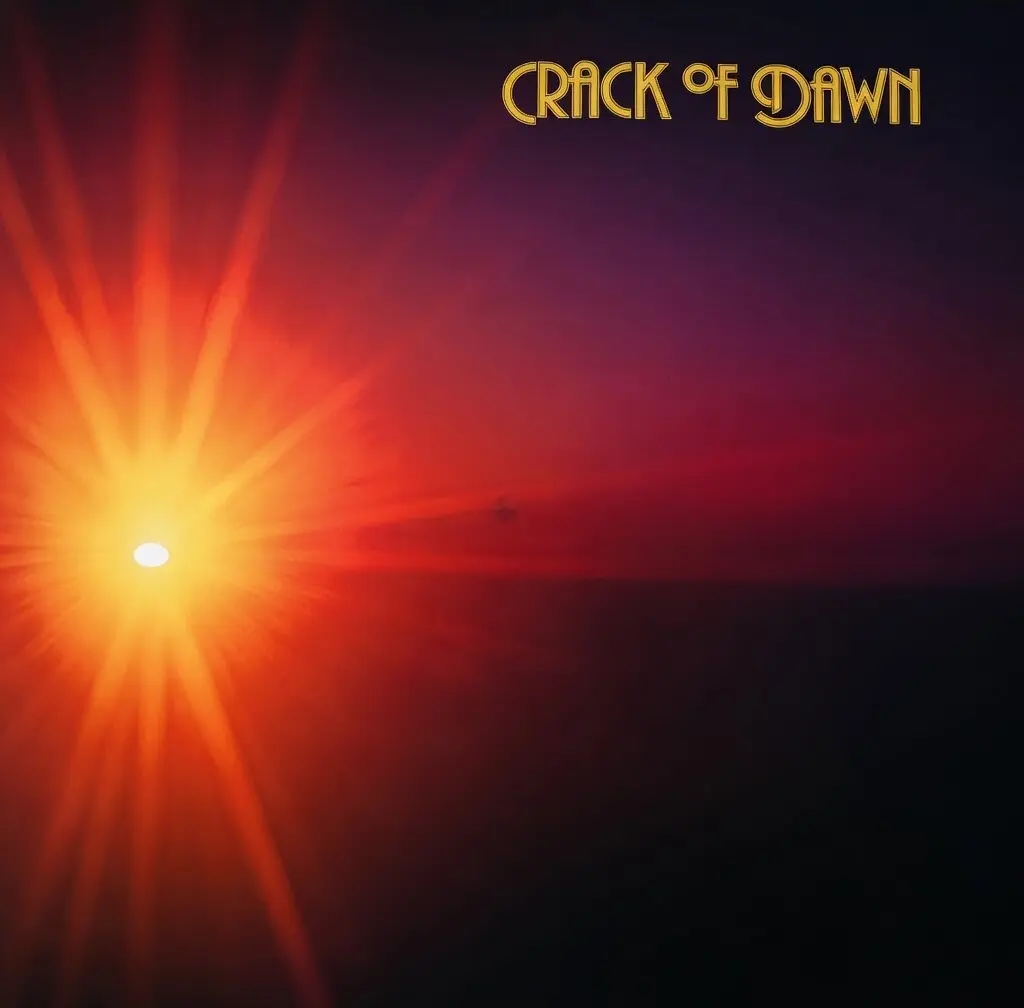 Crack of Dawn released their self-titled debut album in 1976 on Columbia.
The album presents a mix of vocal soul, funk, and disco with brisk single-length forms, performed by the Harveys with Ricketts, Smith, Otway, Sobotta, and the Daley–Jones–Gabriel horn section.
“Keep the Faith” sways through a bouncy refrain, with the lead vocal set against firm group replies. “Somebody’s Watching You” leans into restrained ensemble motion, where call-and-response phrasing carries the verse pressure. “Boobie Ruby” snaps through a blunt dancefloor figure, with the bassline placed high in the song’s physical drive. “It’s Alright (This Feeling)” claps into a gospel-edged chorus, and the organ flares under the vocal lift. “The Key” and “I Can’t Move No Mountains” keep the album close to clipped single form, with short phrases and direct chorus resolution.
A1. “Keep the Faith” (2:49) – James
A2. “Board Walking” (3:05) – Gray, Capreol
A3. “Somebody’s Watching You” (3:14) – Ricketts
A4. “The Key” (2:50) – Gallo
A5. “Oh What a Feeling” (2:40)
B1. “It’s Alright” (2:41) – Jackson, Yancy
B2. “I Can’t Move No Mountains” (2:32) – John, Gately
B3. “Boobie Ruby” (2:22) – Ricketts
B4. “Put Your Money Where Your Mouth Is” (2:52) – Ricketts
B5. “Stand Tall” (2:46)
Bob Gallo produced the album in sequence with titles by Aut’Chose, Patsy Gallant, Fosterchild, and The Diodes.
Columbia issued “The Key” in advance of the album, followed by “Keep the Faith” (b/w “Somebody’s Watching You”) and “It’s Alright (This Feeling)” (b/w “I Can’t Move No Mountains”), which reached No. 45 on Canada’s RPM Singles Chart. “Boobie Ruby” followed as a fourth single (b/w “Put Your Money Where Your Mouth Is”).
Horizons
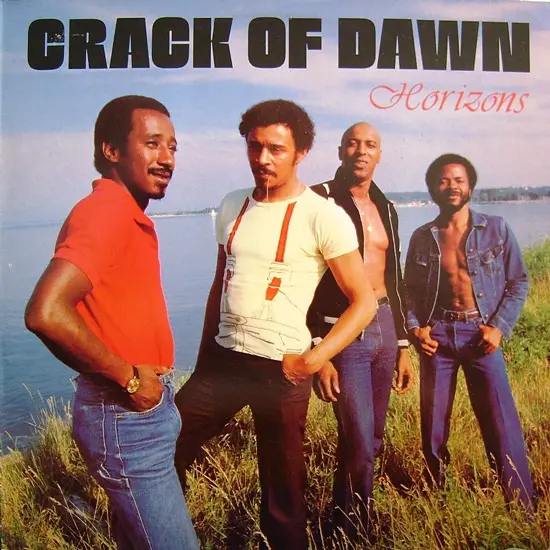 Crack of Dawn released their second studio album, Horizons, in 1981 on TTR in the Netherlands.
The album blends funk, soul, and disco with synth-bright keyboards, horn-trimmed sections, and string arrangements, performed by singer James McGee, drummer Gary Steed, bassist–guitarist George Flint, keyboardist Douglas Buchanan, and saxophonist–horn arranger Dwight Gabriel.
“How Many Times” opens the later lineup in streamlined form, with compact vocal phrasing over a polished studio surface. “If You Want To Groove” cruises as the album’s single, with the title phrase set for direct dancefloor use. “Got To Be” glows in mellow mid-tempo form, while “Certain Kind Of Woman” slows into a soft ballad register. “Fresh Bananas” clips the record back toward the band’s dance material. “Wait Till After Dark” stretches into late-night phrasing before “Dance Your Ass Off” closes the side with a brief coda.
A1. “How Many Times” (2:59)
A2. “Just Time for Lovin’” (3:04) – Flint, Steed
A3. “If You Want to Groove” (3:31) – Flint, Steed, McGhee, Buchanan, Gabriel
A4. “Give Me Your Love” (5:07)
A5. “Got to Be” (3:42)
B1. “Fresh Bananas” (3:43)
B2. “Have I Got Your Love” (3:49)
B3. “Certain Kind of Woman” (2:57)
B4. “Wait Till After Dark” (3:52)
B5. “Dance Your Ass Off” (1:16)
Crack of Dawn and Vezi Tayebb produced and arranged the sessions at Kensington Sound Studios in Toronto with engineer Dan Durbin and string arranger Chris Dedrick. TTR issued “If You Want to Groove” as a 1981 Netherlands single with “Just Time For Lovin’” on the reverse.
Discography:
- Crack of Dawn (1976)
- Horizons (1981)
Sources:
Artist/Album Pages:
The Four Seasons are an American pop-rock band that first rose to fame in the early 1960s with a s...
King Tubby (January 28, 1941 – February 6, 1989) was a Jamaican sound engineer and producer who de...
The Sailor Band was an American jazz-rock quartet from Minnesota that self-released the 1974 albu...
Roy Haynes (March 13, 1925 — November 12, 2024) was an American jazz drummer and bandleader from ...
Fantasia was a Finnish symphonic-rock band that issued a 1975 self-titled album on Hi-Hat. Membe...
Cedric Im Brooks (April 27, 1943 – May 3, 2013) was a Jamaican saxophonist, clarinetist, flutist, ...
Harriet Schock is an American singer/songwriter from Dallas who released three albums between 1974...
Robben Ford is an American jazz and blues guitarist whose career spans work with Joni Mitchell, Mi...
Randy Pie was a German jazz-rock/funk band behind two Atlantic singles and the 1973–77 Polydor/Zeb...
Point Blank are an American Southern rock band from Texas that released the 1976/77 Arista albums...
Sinto was a German Latin-rock/funk band behind the 1972 Philips album Right on Brother, followed b...
Shabby Tiger was an English hard-rock/pop band that released five 1974–76 singles on RCA Victor, c...