

White Door was an English electro/art-pop trio that cut three singles and the 1983 album Windows. They spun from Grace, a later-reactivated symphonic band.
Members: Mac Austin (vocals), Harry Davies (synthesiser, flute), John Davies (synthesiser)
Background
White Door formed in Stoke-on-Trent between singer Mac Austin and synthesist brothers Harry Davies and John Davies. Austin and Harry played beforehand in Grace, a neo-symphonic band that cut a 1981 album on MCA. With John, they embraced modern electronic arrangements with clean, refined arrangements, which made them the outlier act on Clay Records, a local upstart focused on aggressive music.
1982 Singles
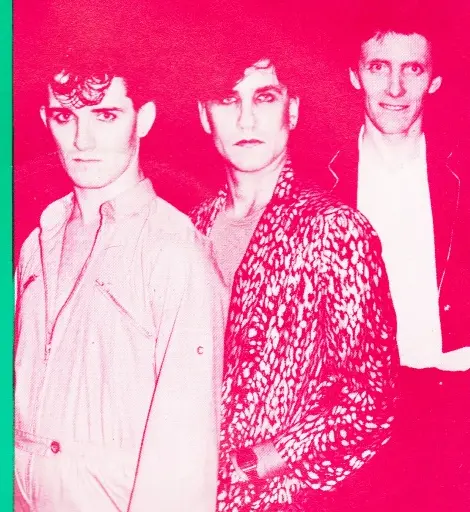 In April 1982, White Door debuted with “Way of the World” backed with “The Extra,” both Austin/Davies originals. “Way of the World” runs on a light electronic thrust with sharp synth figures, while “The Extra” presages the spatial textures of their album.
A. “Way of the World” (3:41)
B. “The Extra” (4:08)
The single set out the trio’s core method in compact form. Austin sings in a calm, level tone while the Davies brothers drive the arrangement with sequenced keyboards and clipped rhythmic programming. Colin Richardson produced the single in sequence with titles by the Diagram Brothers, Ludus, and the Poison Girls.
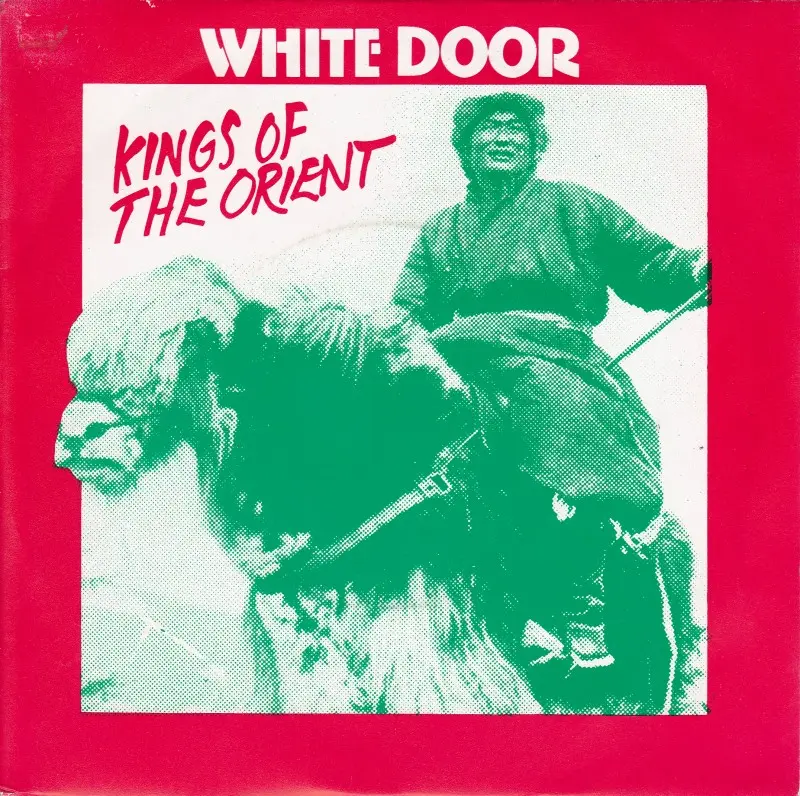 Later in 1982, White Door issued “Kings of the Orient” backed with “New Jealousies,” two further originals by Austin and the Davies brothers. “Kings of the Orient” runs on a faster galloping pulse with searing rays of synth. “New Jealousies” emits bubbling electro sounds with motorik precision.
A. “Kings of the Orient” (3:16)
B. “New Jealousies” (3:20)
White Door cut both sides at FSR Studios in Birmingham with producer Frank Skarth, a soundman on Clay titles by Demon, Discharge, G.B.H., and a reactivated Lurkers.
Windows
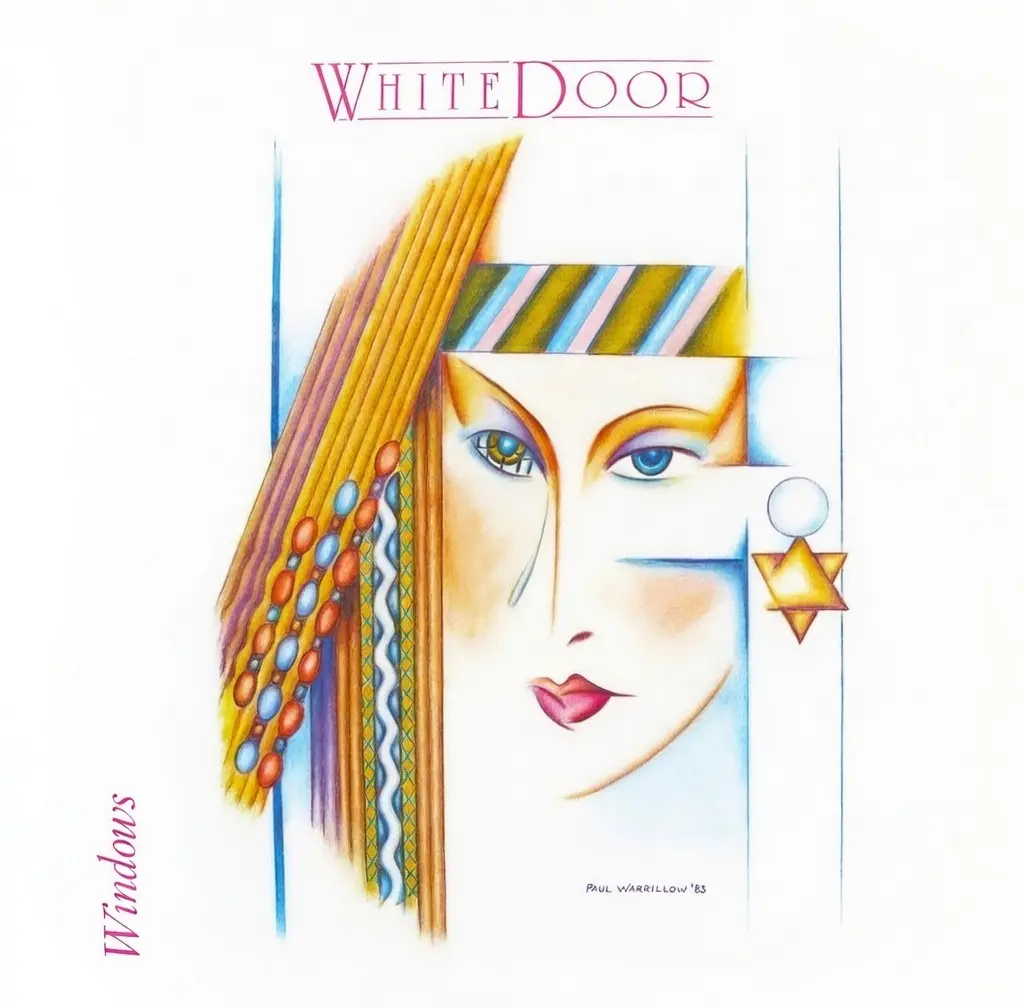 White Door released their singular album, Windows, in 1983 on Clay Records.
Musically, Windows layers synthesizers and electronic percussion with programmed details, performed by the Austin/Davies trio with backing singer Sue Quin and programmer Andy Richards.
“Jerusalem” opens with a broad keyboard sweep and a light, rising pulse under Austin’s vocal. “Americana” follows with quicker motion and a brighter electronic push. “Windows” locks into a firm synth-bass line and a stronger rhythmic drive. “In Heaven” hangs on a softer keyboard bed with a more suspended pace, while “Love Breakdown” tightens around a rising chorus. “Where Do We Go (From Here)” and “School Days” show thematic clarity within compact synth arrangements, and “Behind the White Door” closes the album in a longer, more expansive form.
A1. “Jerusalem” (4:38) — places Austin’s vocal inside a broad, rising arrangement with bright shimmering synth overlays.
A2. “Americana” (3:55) — lays myriad electro details across a brisk rhythmic track.
A3. “Windows” (5:03) — runs on throbbing synth bass and a firm electronic beat, while Austin glides above the dense keyboard motion.
A4. “In Heaven” (3:45) — crawls with a softer, suspended structure.
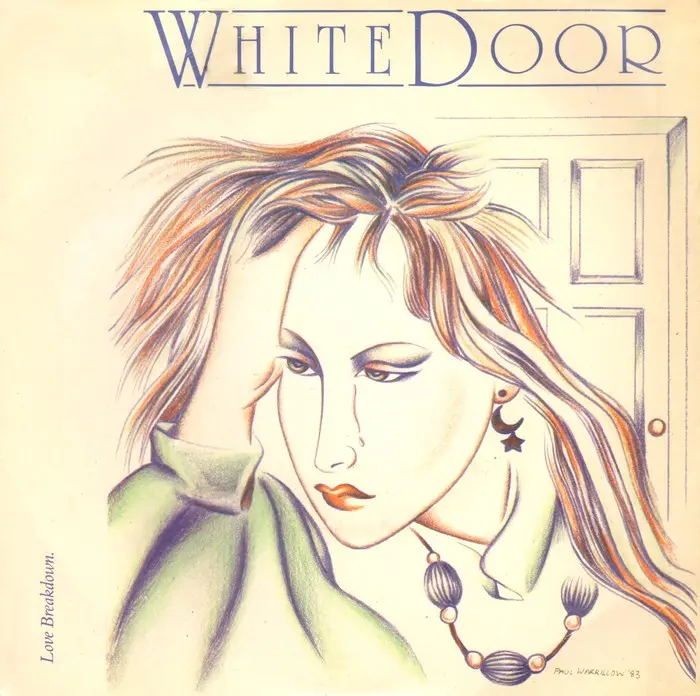 B1. “Love Breakdown” (4:39) — presents compact structure with a curved, darting vocal line.
B2. “Where Do We Go (From Here)” (3:25)
B3. “School Days” (3:58)
B4. “Behind the White Door” (5:30)
White Door recorded Windows at Pluto Studios in Manchester with producer Andy Richards, the late-period Strawbs keyboardist who worked beforehand with Michael Chapman and Supertramp associate Peter Bennett. Pluto staffer Phil Bush co-engineered Windows with Buggles soundman Julian Mendelsohn, who worked in sequence with Trevor Horn on the 1983 Yes comeback album 90125. Quin also appeared as a backing vocalist on 1982/83 albums by Sheena Easton and Nightwing.
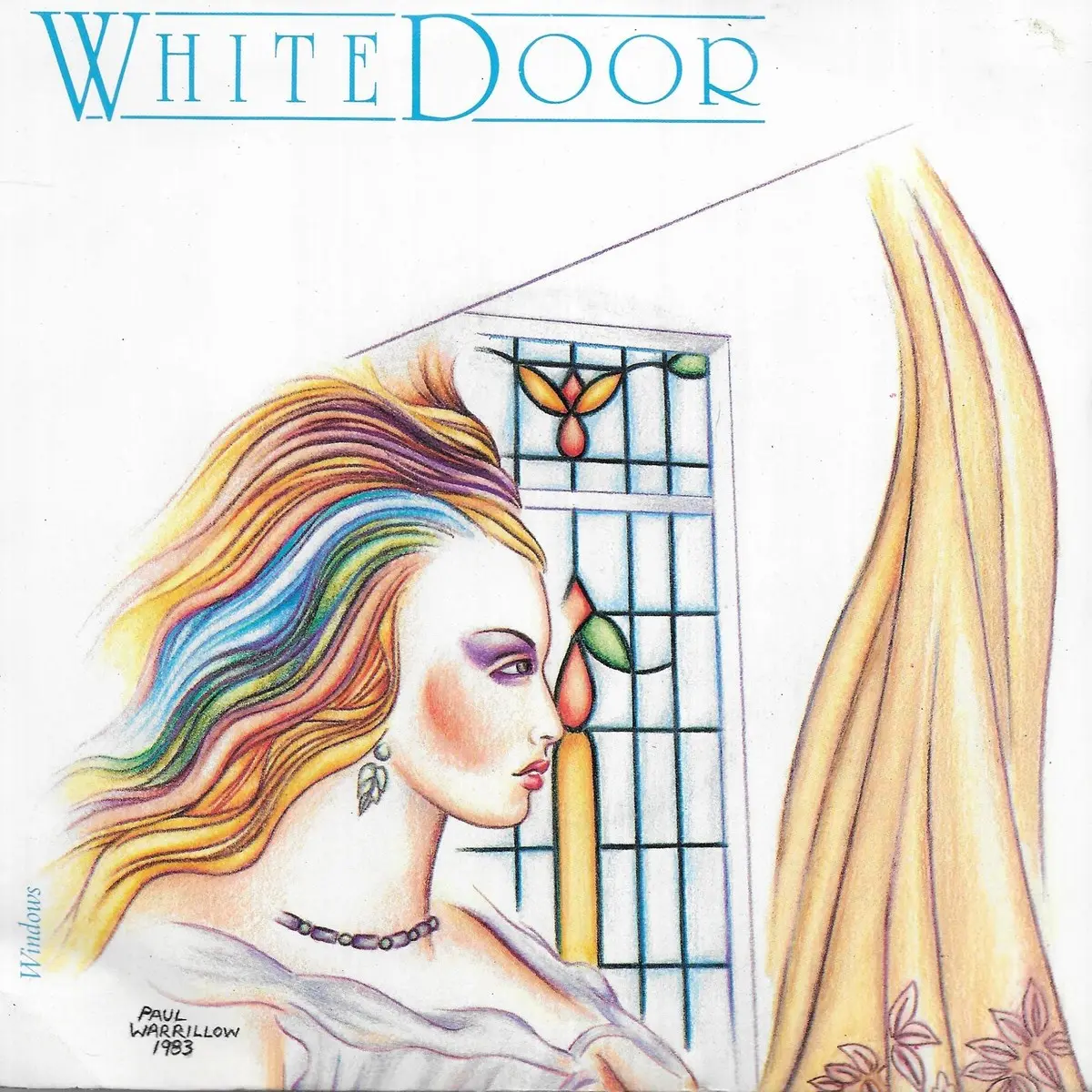 Clay issued “Love Breakdown” as June 1983 12″ single backed with “Breakdown (Instrumental),” which illuminates the track’s sequenced pattern, keyboard voicing, and rhythmic design. In September, “Windows” became the album’s second single (b/w “In Heaven”). “Jerusalem” followed in December as the third and final single (b/w “Americana”).
Paul Warrillow supplied the cover illustrations for Windows and its three singles. His sleeves use a unified soft-focus fashion-illustration style built from colored-pencil shading, thin contour lines, and large areas of white space. Each design centers on a single stylized female face or bust rendered with elongated features, narrow eyes, fine brows, small rose-tinted lips, and highly controlled asymmetry. Each line is delicate and precise, while the colors hew airy: pastel violets, pinks, yellows, pale blues, and peach tones, giving the images a light, floating surface.
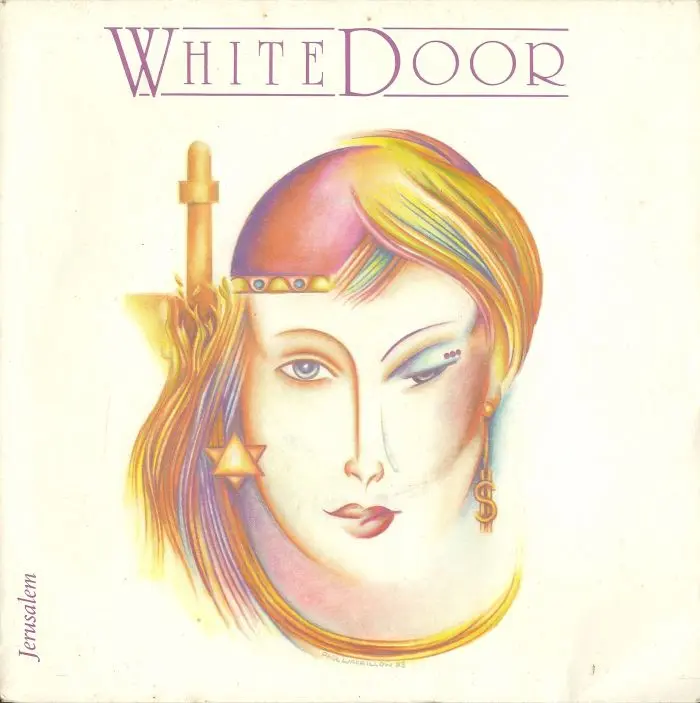 Like his contemporary Patrick Nagel, Warrillow’s faces evoke fashion plates, boutique window art, and soft New Romantic sleeve design, replete with geometric stained-glass frames and decorative accents rooted in Art Deco — details evocative of the White Door name. His “Love Breakdown” illustration moves closer to portraiture with the subject’s shoulder, hand, and jewelry.
“Flame in My Heart”
 White Door issued “Flame in My Heart” in 1984 as a standalone 12-inch single on Clay Records, backed with “Behind the White Door.”
“Flame in My Heart” places Austin’s vocal in a smooth, bright synth arrangement with a clean electronic pulse. “Behind the White Door,” lifted from the album, provides a longer, more atmospheric counterpart.
Andy Richards produced each side, engineered by Richard Scott (A) and Steve Lipson (B). They mixed the single at Sarm West for UK/European distribution in a sleeve designed by Stella Watts.
Postlude
Mac Austin and Harry Davies reemerged in a ’90s-era iteration of Grace. Meanwhile, Windows attained cult status and influenced Swedish synthesist Johan Baeckström, who covered “Jerusalem” on his 2016 Like Before EP, then summoned Austin as guest vocalist on “Heaven Opened,” a track on the 2017 disc Play Rewind Repeat by Johan’s group, Daily Planet.
In 2019, Austin and the Davies brothers joined Baeckström onstage in London for performances of “Jerusalem” and “School Days.” This spawned a White Door reunion that culminated in the 2020 album The Great Awakening, recorded as a four-piece with Baeckström.
Discography:
- “Kings of the Orient” / “New Jealousies” (1982)
- “Way of the World” / “The Extra” (1982)
- Windows (1983)
- “Flame in My Heart” / “Behind the White Door” (1984)
Sources:
Artist/Album Pages:
Anita Ward is an American soul singer who made two 1979 albums, Songs of Love and Sweet Surrender,...
The Parlour Band was an English rustic art-pop band that released the album Is a Friend? on Deram ...
Richard Clapton (born May 18, 1949) is an Australian singer-songwriter from Sydney who released ei...
Gordon Giltrap (born April 6, 1948) is an English classical guitarist and composer who released tw...
Agathorn was a Danish art-rock band behind a 1981 self-tilted album on Telefunken, followed by a...
Ausgang was an English goth-rock band from Birmingham that released two EPs on Criminal Damage Rec...
Young Marble Giants were a Welsh bare-pop trio from Caerdydd that released two EPs and the album ...
Xoliso was a South African Afrobeat ensemble that issued the 1974 album Shingwanyana on the Soweto...
Gang of Four are an English post-punk band that released four albums between 1979 and 1983 on EMI/Wa...
Автограф (Avtograf) were a Russian symphonic/hard-rock band formed in Moscow in 1979. The band rec...
Lene Lovich is an American-English new wave singer, best known for the hits "Lucky Number," "Say W...
You was the German electro/space-rock band behind the 1980 album Electric Day, followed by the 198...