

The Human Instinct was a New Zealander band that released five 1967/68 singles as a freakbeat quartet on Mercury/Deram. As a post-psych jam trio, they cut the 1969–71 albums Burning Up Years, Stoned Guitar, and Pins In It. After their 1972 release Snatmin Cuthin?, Glenn Mikkelson (aka Zaine Griff) joined for The Hustler and their vaulted swan song Peg Leg.
Members: Maurice Greer (drums, lead vocals), Bill Ward (lead guitar, 1966-69), Dave Hartstone (guitar, 1966-69), Frank Hay (bass, 1966-69), Bill TeKahika (lead guitar, 1969-71, 2002), Michael Brown (bass, 1969), Peter Barton (bass, 1969), Larry Waide (bass, 1969-71), Neil Edwards (bass, lead vocals, 1971-73, 1982, 2002-06), Graeme Collins (keyboards, 1971-72), Martin Hope (guitar, 1972-75), John Donoghue (guitar, 1972-74), Zaine Griff (bass, lead vocals, 1973-75), Phil Whitehead (guitar, vocals, 1975), Steve McDonald (keyboards, vocals, 1975-76), Peter Cuddihy (bass, 1976-77)
Background
The Human Instinct evolved from the Four Fours, a Tauranga dance group formed in 1958 by drummer Trevor Spitz, who ran the Inferno Coffee Lounge. By 1960, the group included guitarist Bill Ward and Dave Hartstone. They cut the 1963 singles “That Happy Feeling” and “The Wolf” on Allied International.
Bassist Frank Hay joined in late 1964 as beat music penetrated New Zealand. The following year, Spitz cleared out for drummer–singer Maurice Greer, a prior member of Auckland beatsters The Saints (not the later punk band). Six further singles appeared through November 1965 on AI, followed by the April 1966 Zodiac single “This Time Tomorrow” (b/w “Trucking Blues”), both Hartstone/Ward numbers.
In August 1966, the reconfigured group (Ward, Hartstone, Hay, and Greer) renamed their act The Human Instinct during a voyage from Auckland to Southampton, England, aboard the Fairsky.
1966–68 Mercury/Deram Singles
In London, the Human Instinct linked with Mercury and released the November 1966 single “Can’t Stop Around” (b/w “Want to Be Loved By You”), followed in March 1967 by “The Rich Man” (b/w “Illusions”) and the June release “Go-Go” (b/w “I Can’t Live Without You”), all Hartstone originals.
The Human Instinct moved to Deram for their December 1967 fourth single “A Day In My Mind’s Mind,” a Hartstone original backed with “Death of the Seaside” by songwriters Cliff Hall and Dave Christie. In February 1968, the Human Instinct completed their UK phase with “Pink Dawn,” a psychedelic Hartstone cut placed on the back of “Renaissance Fair,” a Byrds cover recorded simultaneously by Orange Bicycle.
Power-trio Lineup
In April 1968, three-fourths of the band returned to New Zealand, where Greer retained the Human Instinct name while Hartstone stayed in London. Greer recruited Auckland bassist Peter Barton and Sinners guitarist Billy Te Kahika.
The trio returned briefly to London during 1969 but found little work. During the stay, they heard demo recordings by New Zealand guitarist Doug Jerebine, who recorded under the name Jesse Harper name. Back in Auckland, the Human Instinct secured a Bo Peep residency with four Harper songs in their setlist. As sessions advanced on their first album, Barton cleared out for bassist Larry Waide.
Burning Up Years
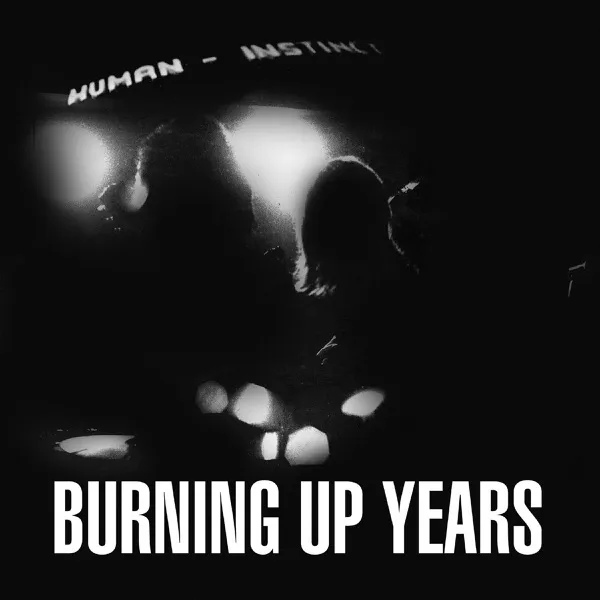 The Human Instinct released their debut album, Burning Up Years, in late 1969 on Marble Arch.
The album captures the first Greer–Billy TK trio on a program dominated by reworked external material. Burning draws on Jesse Harper demos and songs by Hard Meat (“Burning Up Years”), The Kinks (“You Really Got Me”), Ashton Gardner and Dyke (“Maiden Voyage”), and Neil Young and Crazy Horse material retitled “I Think I’ll Go Back Home.” Barton appears on “Maiden Voyage” and “You Really Got Me,” while Waide completed the remaining titles.
“Maiden Voyage” lopes through a country-leaning turn. “Ashes and Matches” smolders through a blues-leaning line. “You Really Got Me” lurches through wah-wah curls and speak-sung phrasing. “Burning Up Years” sprawls into an exploratory jam, with Billy TK’s guitar breaking into long freak-out passages.
A1. “Blues News” (3:35) – Harper
A2. “Maiden Voyage” (5:21) – Greer
A3. “Fall Down” (2:52) – Harper
A4. “I Think I’ll Go Back Home” (3:21) – Harper
A5. “Ashes and Matches” (4:04) – Harper
B1. “You Really Got Me” (3:24) – Davies
B2. “Burning Up Years” (14:10) – Dolan–Carless–Dolan
Sessions occurred in late 1969 at Peach-Weymess Astor Recording Studios in Auckland with producer Guy Morris and engineers Gary Potts and Wahanui Wynyard. Peter Lumb created the monochrome sleeve, which shows backlit group silhouettes under a small angled nameplate, with block title lettering along the lower edge.
Pye lifted “I Think I’ll Go Back Home” in December 1969 (b/w “You Really Got Me”).
Stoned Guitar
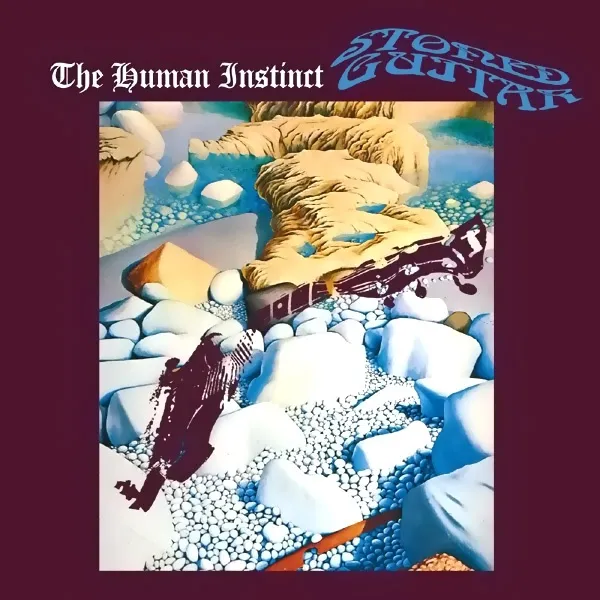 The Human Instinct released their second album, Stoned Guitar, in late 1970 on AIR/Pye.
Stoned retains Greer and Billy TK with Waide as the full-session bassist. Derek Neville adds baritone saxophone to “Midnight Sun.” The album includes the Jesse Harper titles “Jugg-a-Jug Song” and “Midnight Sun” alongside covers linked to Mecca (“Black Sally”), John Kongos (“Tomorrow”), and Rory Gallagher (“Railway and Gun”).
“Black Sally” stomps through a heavy riff, with Waide’s bass locked under the lead breaks. “Stoned Guitar” uncoils from feedback into an effects-soaked guitar jam. “Jugg-a-Jug Song” sprawls through onomatopoeic phrasing and layered lead swirls. “Midnight Sun” hammers from cowbell and a blunt riff into baritone-sax replies, falsetto flashes, and widening distortion. “Tomorrow” drifts on acoustic strum beneath Greer’s sung line. “Railway and Gun” grinds through an extended studio jam under overdubbed crowd noise.
A1. “Black Sally” (6:38) – Wilson
A2. “Stoned Guitar” (6:45) – Te Kahika–Greer–Waide
A3. “Jugg-a-Jug Song” (8:03) – Harper
B1. “Midnight Sun” (9:41) – Harper
B2. “Tomorrow” (4:23) – Kongos
B3. “Railway and Gun” (9:22) – Gallagher
Sessions occurred in June 1970 at Stebbing Studios in Auckland with Greer as producer. The cover adapts Two Rock Pools by New Plymouth painter Michael Smither, with maroon border type over rounded stones and pale rock-pool imagery.
Pye lifted “Midnight Sun” during 1970 (b/w “Idea”), followed by “Black Sally” (b/w “Tomorrow”). Between albums, Waide cleared out for bassist Neil Edwards.
Pins In It
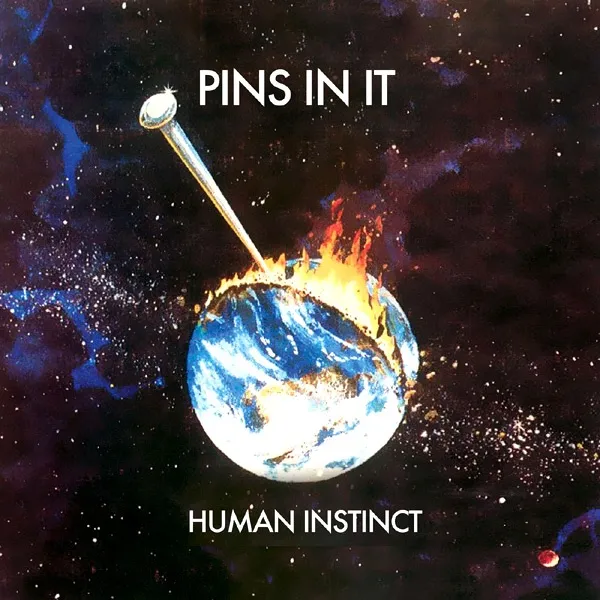 The Human Instinct released their third album, Pins In It, in June 1971 on Pye.
Pins welcomes Edwards and marks their final studio appearance with Billy TK. The album contains all originals apart from “The Nile Song,” a Pink Floyd number from the More soundtrack. Jazz flautist and Headband member Dick Hopp appears on “The Nile Song” and “Rainbow World.” Auckland keyboardist Bob Smith, credited as Robert Hooper-Smith, plays organ on “Play My Guitar” and “Highway.”
“Hazy Days” coils into a tight Billy TK feature. “Play My Guitar” narrows into a compact display. “Highway” cuts the same pressure into a short, focused run. “Rainbow World” eases into flute-traced pastoral drift before TK’s solo section. “The Nile Song” hangs in a languid haze before the guitar steps forward.
A1. “Pinzinet” (4:02) – Edwards–Khayam
A2. “Stand Up” (3:44) – Edwards–Greer–Thompson
A3. “Duchess of Montrose” (3:56) – Edwards
A4. “Hazy Days” (3:36) – Te Kahika
A5. “The Washing Song” (2:50) – Edwards
B1. “The Nile Song” (3:17) – Waters
B2. “Play My Guitar” (2:53) – Te Kahika
B3. “Highway” (2:22) – Te Kahika
B4. “Rainbow World” (4:27) – G.R. Edwards–N. Edwards–Greer
Sessions occurred in May 1971 at Mascot Studios in Auckland with producers John Kerr and Maurice Greer. The cover uses Dick Frizzell artwork with a pin driven into a globe across a black star field.
Pye lifted “Rainbow World” during 1971 (b/w “Highway”). The non-album “Texas Sparrow” followed later that year (b/w “Children of the World”).
Snatmin Cuthin?
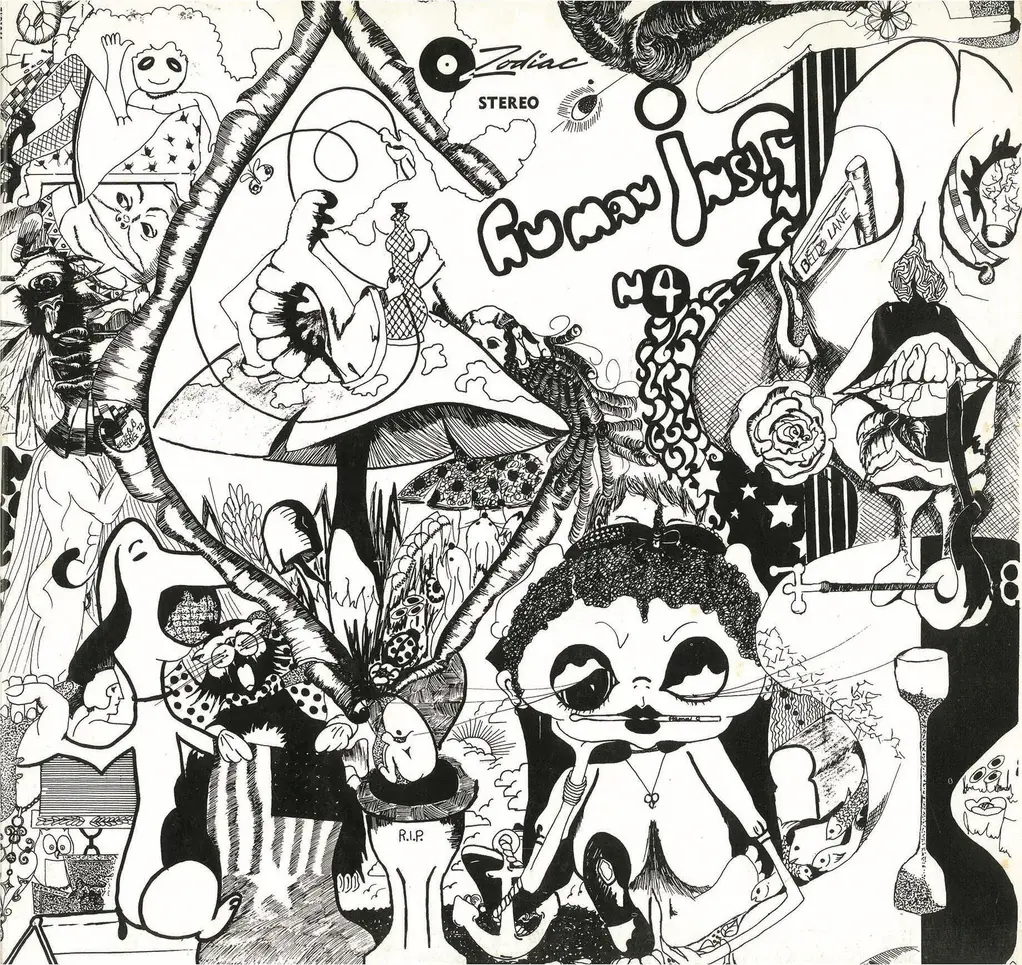 The Human Instinct released their fourth album, Snatmin Cuthin?, in 1972 on Zodiac.
The album features a reconfigured lineup with Greer, Edwards, flutist Dick Hopp, guitarist Harvey Mann, and Fourmyula guitarist–singer Martin Hope.
“Jacques Le Mere” rolls through a country-leaning pattern. “Turn Your Back On the Wind” unfolds as a ballad under Hopp’s flute line. Hope salvaged the latter track from the cancelled 1970 Fourmyula album.
A1. “Say to Me” (2:45) – Edwards
A2. “It’s a Blessing” (2:45) – Mann
A3. “122” (1:00) – Hope
A4. “Since We” (3:26) – Hope
A5. “Rockin Lockin Baby” (2:59) – Edwards
B1. “Up Country City Down” (3:35) – Hope
B2. “Simple Man” (3:08) – Hope
B3. “Jacques Le Mere” (2:31) – Edwards
B4. “Turn Your Back on the Wind” (3:19) – Wayne Mason
B5. “Seen the Light” (2:52) – Greer
The Zodiac sleeve uses a dense black-and-white cartoon collage of winged figures, a mushroom form, fragmented faces, and the label logo.
Zodiac issued “Down the Hall on Saturday Night” during 1972 (b/w “Simple Man”).
After Snatmin Cuthin?, Greer and Hope continued with bassist–singer Glenn Mikkelson and guitarist John Donoghue, the former Timberjack leader behind the 1971 single “Come to the Sabbat.”
The Hustler
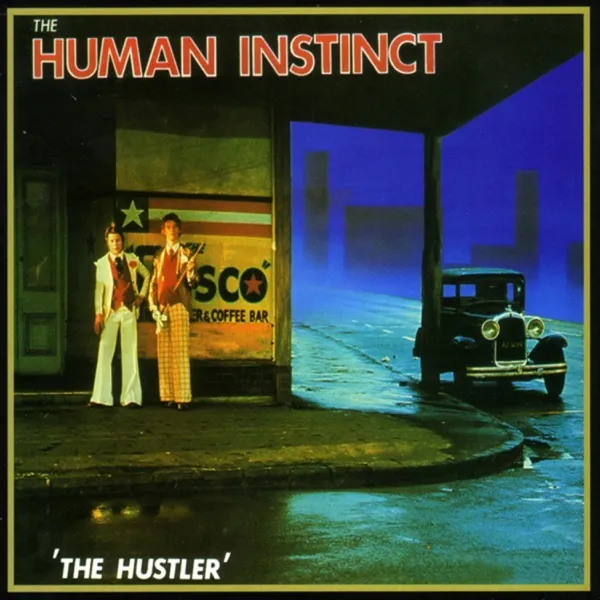 The Human Instinct released their fifth album, The Hustler, in 1974 on Zodiac.
The album presents the reconfigured quartet of Greer, Edwards, Mikkelson, and Donoghue. Mikkelson wrote five titles, including the linked gangster-era pieces “The Hustler” and “Mae West and My Gangster Hero.” Donoghue supplied “Johnny Blade” and “Gypsy Lady.”
“The Hustler” cues footsteps, a struck match, gunshots, and squealing tyres. “Mae West and My Gangster Hero” shuffles around barroom piano. “Funky Monkey” swings through speakeasy stride. “Stoned Mary” sways through a poised ballad-shuffle haze.
A1. “The Hustler” (4:12) – Mikkelson
A2. “Mae West and My Gangster Hero” (4:25) – Mikkelson
A3. “Funky Monkey” (3:55) – Mikkelson
A4. “Johnny Blade” (3:25) – Donoghue
A5. “Last Breakfast” (3:37) – Gorrie–Travis
B1. “Passing Lines” (7:11) – Gordon–Reilly
B2. “Gypsy Lady” (4:18) – Donoghue
B3. “Nothing’s Changed” (2:39) – Mikkelson
B4. “Stoned Mary” (6:14) – Mikkelson
The Human Instinct recorded The Hustler at Stebbings Studio during the Greer brothers’ Granny’s nightclub period in Auckland. Susy Pointon photographed the sleeve, which shows two suited figures outside a coffee bar at night beside a period car.
Zodiac prepared “Gypsy Lady” as a 1973 white-label single (b/w “The Hustler”).
Peg Leg (The Lost Tapes)
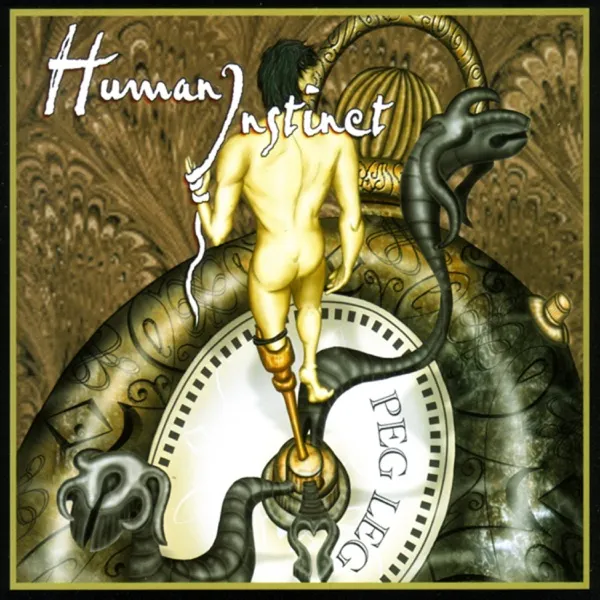 The Human Instinct recorded their intended sixth album, Peg Leg, during late 1975; Rajon issued the tapes as Peg Leg (The Lost Tapes) in 2002 on Rajon Music Group.
The lineup pairs guitarist Phil Whitehead and keyboardist–singer Steve McDonald with Mikkelson and Greer. Mikkelson wrote three titles while McDonald and Whitehead account for the two-part “For a Friend” and “Find Your Heart.” Greer wrote “Peg Leg,” and the full quartet receives the credit for “Instinct.”
“Freebird” sprawls through a long cover with duelling guitars and McDonald’s rewritten string part. “Find Your Heart” climbs through a lightly progressive contour and a prominent lead passage. “For a Friend Pt. 1” swells around choir lines and a broad solo section. “All Time Loser” strides through broad dramatic turns. “Fallen Star” climbs through declamatory phrasing and a high cello figure. “Tight Rope Lover” projects contoured phrases with theatrical emphasis.
1. “Freebird” (9:17) – Collins–Van Zant
2. “All Time Loser” (4:32) – Mikkelson
3. “Find Your Heart” (7:39) – McDonald–Whitehead
4. “Peg Leg” (3:05) – Greer
5. “For a Friend Pt. 1” (5:25) – McDonald–Whitehead
6. “For a Friend Pt. 2” (3:41) – McDonald–Whitehead
7. “Fallen Star” (5:09) – Mikkelson
8. “Hey You” (4:11) – Whitehead
9. “Tight Rope Lover” (4:46) – Mikkelson
10. “Instinct” (2:22) – Greer–Mikkelson–McDonald–Whitehead
Sessions occurred in late 1975 at Stebbing Studios after an eighteen-month Shantytown residency below the Civic Theatre in Auckland. Eldred Stebbing helped Greer locate the 16-track master during 2001, and Phil Yule prepared the rough mix used for release.
Postlude
Billy TK formed Powerhouse, which cut HMV studio material for an unreleased 1972 album later compiled as Move On Up: The Unreleased HMV Tapes. EMI issued his 1980 single “Dance With the Spirit,” and his Wharemana band combined Māori vocals with electrified six/eight haka rhythm.
In 1975, Glenn Mikkelson surfaced in London as Zaine Griff. He cut two singles in 1976/77 with glam-rockers Screemer and played bass on the 1978 Kinks album Misfits. As a reinvented NuRo synthpop artist, he made the 1980–82 albums Ashes and Diamonds and Figures. In 1983, he demoed further material with Midge Ure and Gary Numan.
John Donoghu went solo with the 1973–75 albums Spirit of Pelorus Jack and Timberjack Donoghue. In 1986, he joined Barry Saunders and Wayne Mason in The Warratahs.
Discography:
- Burning Up Years (1969)
- Stoned Guitar (1970)
- Pins in It (1971)
- Snatmin Cuthin (1972)
- The Hustler (1974)
- Peg Leg (The Lost Tapes) (2002, recorded 1975)
Sources:
- Discogs: The Human Instinct
- RYM: The Human Instinct
- 45cat: The Human Instinct
- AudioCulture: The Human Instinct
Artist/Album Pages:
Baby Huey (1944–1970) was an American soul singer who recorded an album in 1970 just prior to his ...
Copperhead was an American psych-rock band behind a 1973 Columbia album led by Quicksilver Messen...
Vashti Bunyan is an English singer–songwriter who released two mid-'60s singles and the 1970 Phili...
Daughters of Albion were an American vocal-pop/psych duo from Los Angeles that released a 1968 al...
Santana are an American Latin-rock jam band from San Francisco, formed in 1966 by guitarist Carlos...
PYG was a Japanese hard-rock/psych band behind the 1971/72 Polydor albums PYG! and Free With PYG. ...
Life was a Swedish psych-rock trio that made two singles and a 1970 album on Columbia (EMI). Mem...
John Cale (born March 9, 1942) is a Welsh multi-instrumentalist and songwriter who emerged on the ...
Fynn McCool was an English psych-rock band that made a 1970 self-titled album for RCA Victor. M...
Dragon are a New Zealander rock band that released nine studio albums between 1974 and 1989 and scor...
Omega are a Hungarian rock band from Budapest that formed in 1962 and built one of Central Europe’...
Alan Sorrenti (born Dec 9, 1950) is an Italian vocalist who emerged with the experimental 1972/73 ...