

Napoli Centrale was an Italian jazz-rock band that released three albums between 1975 and 1977 on Ricordi.
Members: James Senese (saxophone, flute, vocals), Franco Del Prete (drums, percussion 1974-77), Mark Harris (keyboards, 1974-75), Tony Walmsley (bass, 1974-75), Bruno Biriaco (drums, 1975), Ciro Ciscognetti (keyboards, 1975), Pino Daniele (bass, 1975), Pippo Guarnera (keyboards, 1976-77), Kelvin Bullen (bass, 1976-77)
Background
Napoli Centrale formed in 1974 in Napoli as a new project by saxophonist–vocalist James Senese and drummer Franco Del Prete following the dissolution of their prior group, Showmen. They developed a raw, rhythm-driven sound that fused jazz-rock with Neapolitan melodic elements and street-level lyricism.
The pair welcomed two foreign musicians then active in Italy: American keyboardist Mark Harris and English bassist Tony Walmsley. This original lineup laid the foundation for a distinctly southern Italian musical voice grounded in improvisation and dialect expression.
Napoli Centrale
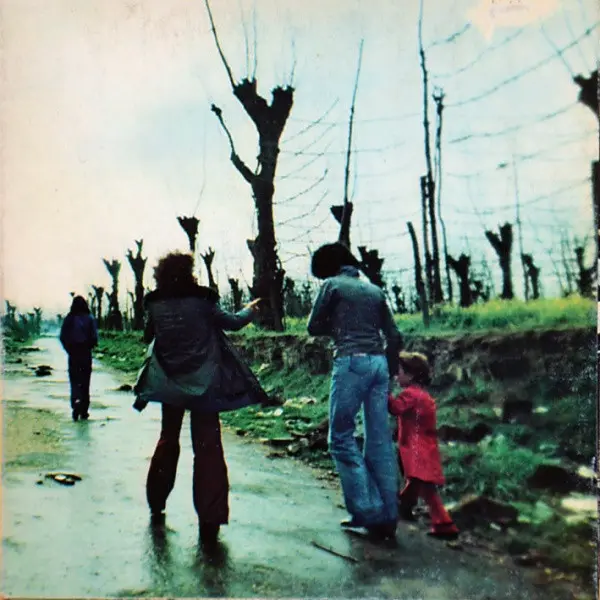 Napoli Centrale released their self-titled debut album in March 1975 on Ricordi.
James Senese fronts the band with amplified tenor saxophone and lead vocals, alternating between rhythmic chants and expressive sax phrasing that punctuates transitions and intensifies cadences. Mark Harris plays Fender electric piano throughout, layering phrased runs and modal chord cycles across contrasting sections. Tony Walmsley drives the momentum with forward-mixed basslines, maintaining pulse across both tight figures and freer passages. Franco Del Prete anchors the group with layered, precisely accented drum patterns and interjects brief whistling interludes between sectional peaks.
All six tracks feature lyrics by Del Prete and music by Senese, arranged collectively by the group. The material emphasized political and social themes drawn from working-class life in Naples and the broader Mezzogiorno.
“Campagna” and “Viecchie, Mugliere, Muorte E Criaturi” alternate spoken passages, chant vocals, and spiraling ensemble builds, with sudden tempo breaks and extended solo stretches. “’A Gente ‘E Bucciano” and “Vico Primo Parise N. 8” contrast rhythmic urgency with melodic phrasing between the Fender piano and saxophone. “Pensione Floridiana” unfolds more dreamily as a mid-tempo instrumental. The final track “‘O Lupo S’Ha Mangiato ‘A Pecurella” ends with ambient street sounds and layered ensemble play over shifting textures.
A1. “Campagna” [Countryside] (8:00) — depicts the exploitation of rural laborers; builds from flute and electric piano into a vocal-led sequence with chant-like refrains and sax interjections
A2. “‘A Gente ‘E Bucciano” [The People of Bucciano] (8:40) — describes southern emigration to northern factories; alternates verse passages with instrumental sequences driven by bass and drums
A3. “Pensione Floridiana” [Floridiana Guesthouse] (3:30) — instrumental; features repeating Rhodes motifs and restrained sax over a smooth jazz rhythm
B1. “Viecchie, Mugliere, Muorte E Criaturi” [Old Women, Wives, Dead and Children] (9:55) — portrays a village emptied of working men; layered with dark sax figures and hypnotic keyboard repetitions
B2. “Vico Primo Parise N. 8” (7:30) — instrumental titled after Senese’s childhood address; uptempo jazz-funk with vocal interjections used as instrumentation
B3. “‘O Lupo S’Ha Mangiato ‘A Pecurella” [The Wolf Has Eaten the Little Sheep] (6:55) — builds from sparse melodic interplay into a street-scene sequence with ambient chatter and festive percussion
Napoli Centrale co-produced the album at Chantalain Studio in Rome with engineer Paul Nunn. Jubal and Modulo Uno published the music. Grafica Pozzoli handled the printing, and Dischi Ricordi S.p.A. released the album.
The front cover photograph depicts three figures—two adults and a child—walking down a desolate tree-lined road under overcast skies. The image conveys post-industrial melancholy and everyday realism, consistent with the album’s social themes. Photographer uncredited.
Ricordi issued “Campagna” (b/w “Vico Primo Parise N. 8”) as a single in early 1975. The A-side received national airplay and became a surprise hit in Italy.
Mattanza
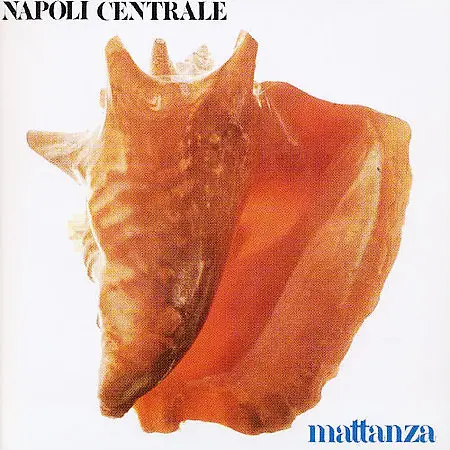 Napoli Centrale released their second album, Mattanza, in June 1976 on Ricordi.
The album introduced a new core lineup with James Senese joined by keyboardist Pippo Guarnera, bassist Kelvin Bullen, and drummer Agostino Marangolo.
Mattanza embraces synthesizers, woodwinds, and auxiliary percussion, pushing further into modal jazz, layered polyrhythms, and atmospheric interludes. Senese composed the music with lyrics on select tracks by sidelined drummer Franco Del Prete, who plays auxiliary percussion.
Senese alternates between tenor and soprano sax, layered woodwinds, and sections of declamatory or scat-styled vocals. Guarnera plays both Fender Rhodes and acoustic piano, adding synthesizer textures on select tracks. Bullen’s bass parts range from grounded ostinati to nimble lines.
A1. “Simme Iute E Simme Venute” [We Went and We Came Back] (7:41)
A2. “Sotto A’ Suttana” [Under the Skirt] (9:03)
A3. “Sotto E ‘N Coppa” [Below and Above] (8:00)
B1. “‘O Nonno Mio” [My Grandfather] (1:46) — acoustic piano and sax vignette reflecting a grandfather’s parting words before death
B2. “Sangue Misto” [Mixed Blood] (13:25)
B3. “Forse Sto Capenno” [Maybe I’m Understanding] (4:38) — deviates from fusion format into freer, spiritually-inclined sax phrasing over sparse piano
B4. “Chi Fa L’Arte E Chi S’Accatta” [Those Who Make Art and Those Who Buy It] (4:32)
Napoli Centrale produced the album at Chantalain Studio in Rome, with engineering split between Bobby Solo (A1, B1–B4) and Franco Patrignani (A2–A3). Jubal and Modulo Uno published the music, and Dischi Ricordi S.p.A. handled the release.
The front cover features a close-up image of an open conch shell against a plain white background, suggesting Mediterranean iconography stripped of ornamentation. Concept and layout by Franca Ponti; photography by Antonio Cesareo.
Qualcosa ca nu ‘mmore
 Napoli Centrale released their third album, Qualcosa ca nu ‘mmore, in 1977 on Ricordi.
The album marked a return to a studio-based lineup centered on co-founders James Senese and Franco Del Prete with support from auxiliary players. Compared to the prior albums, Qualcosa ca nu ‘mmore emphasizes sparser textures, spoken-word phrasing, and personal themes, moving further from rhythmic fusion into stripped-down jazz forms and emotional expression. The arrangements are looser, with extended solo space and minimal embellishment.
Senese intermixes vocals with soprano and tenor saxophone, woodwinds, and Roland echo-processed effects, alternating lyrical phrasing with declamatory passages, often delivered in Neapolitan dialect. Franco Del Prete returns on drums and barattolo percussion, anchoring the rhythm section with a rawer, stripped-down presence. Ernesto Vitolo plays Hammond C3 organ and acoustic piano, supplying the harmonic foundation and punctuating sectional transitions. Guest contributors include Alfonso Adinolfi on auxiliary percussion and Ngtù Mabutu, who plays Fender bass and electronic effects on the opening track.
A1. “O Nemico Mio” [My Enemy] (8:42)
A2. “O Specchio Addo’ Me Guardo” [The Mirror Where I Look at Myself] (8:30)
A3. “Qualcosa Ca Nu’ Mmore” [Something That Isn’t Love] (4:34)
B1. “A Musica Mia Che R’e’” [What My Music Is] (5:58) — self-portrait of the artist; intimate delivery over subdued accompaniment
B2. “‘A Musica Si Tu” [You Are the Music] (6:06)
B3. “Nun Song Na Vacca” [I’m Not a Cow] (4:17)
Napoli Centrale self-produced the album at Splash Recording Studio with engineering by Attilio Ruggiero. Dischi Ricordi S.p.A. handled its distribution and release.
The front cover consists of a textured red wall framed by a baroque wooden border, resembling a blank museum plaque or faded family portrait space. Artwork by Antonio De Pascale.
Postlude
After the group’s initial run ended, James Senese launched a solo career, releasing his first two albums in 1983 and 1984. Both he and Franco Del Prete remained active as session musicians throughout the 1980s. Mark Harris, still residing in Italy, founded the Saint Rock label to promote emerging Italian artists.
Senese revived Napoli Centrale in the late 1980s with a new lineup. The group released Jesceallàh in 1992, which featured updated versions of early material, followed by ‘Ngazzate nire in 1994. A further album, Zitte! Sta arrivanne ‘o mammone, appeared in 2001. Subsequent releases were issued under the abbreviation JNC (James Napoli Centrale).
In 2005, journalist Carmine Aymone published Je stò ccà…..James Senese, a biographical book accompanied by a bonus CD, released by the independent label Suonidelsud.
James Senese—founder of Showmen and Napoli Centrale, and a key figure in the Neapolitan Sound—passed away in 2025 at the age of 80.
Discography:
- Napoli Centrale (1975)
- Mattanza (1976)
- Qualcosa ca nu ‘mmore (1977)
Sources:
- Discogs: Napoli Centrale
- MusicBrainz: Napoli Centrale
- RYM: Napoli Centrale
- ItalianProg: Napoli Centrale
- rogArchives: Napoli Centrale
Artist/Album Pages:
Kandahar was a Belgian art-rock/jazz-rock band that released the 1974/75 albums Long Live the Sliced...
Randy Crawford is an American soul and jazz singer featured on albums by Harvey Mason, Steve Hacke...
Games were an American art-rock band from California that released the 1977 album Stargazer on sel...
I Signori Della Galassia were an Italian electro/space-funk band behind the 1978 album Qualcosa Si...
Mike Nock (born Sept. 7, 1940) is a New Zealander jazz pianist with an international career in music...
Michael Farneti is an American singer, songwriter, and multi-instrumentalist from Palm Beach Shore...
Bambibanda e Melodie were an Italian jazz-rock band that released a self-titled album on Fonit Cet...
Lakeside was an American soul-funk band from Dayton, Ohio, that released a self-titled debut on AB...
Kill Devil was an American rustic-rock band from Merrifield, Virginia, that issued the 1977 priva...
The Tymes were an American soul group from Philadelphia that scored a 1963 Billboard No. 1 with th...
Impuls was a Czech jazz-rock band from Praha that debuted with two numbers on the 1975 live comp J...
To Be was a German jazz-rock band that released a self-titled album on Brain in 1977. Five years l...