

Il Baricentro was an Italian jazz-rock band that released the 1976–78 EMI Italiana albums Sconcerto and Trusciant.
Members: Francesco Boccuzzi (keyboards, guitar, percussion), Vanni Boccuzzi (keyboards, percussion), Tonio Napolitano (bass, percussion), Piero Mangini (drums, percussion)
Inception
Il Baricentro formed in 1974 as an offshoot of Festa Mobile, a Bari symphonic trio with bassist Tonio Napolitano and keyboardist brothers Francesco and Vanni Boccuzzi. Francesco served as chief composer.
Sconcerto
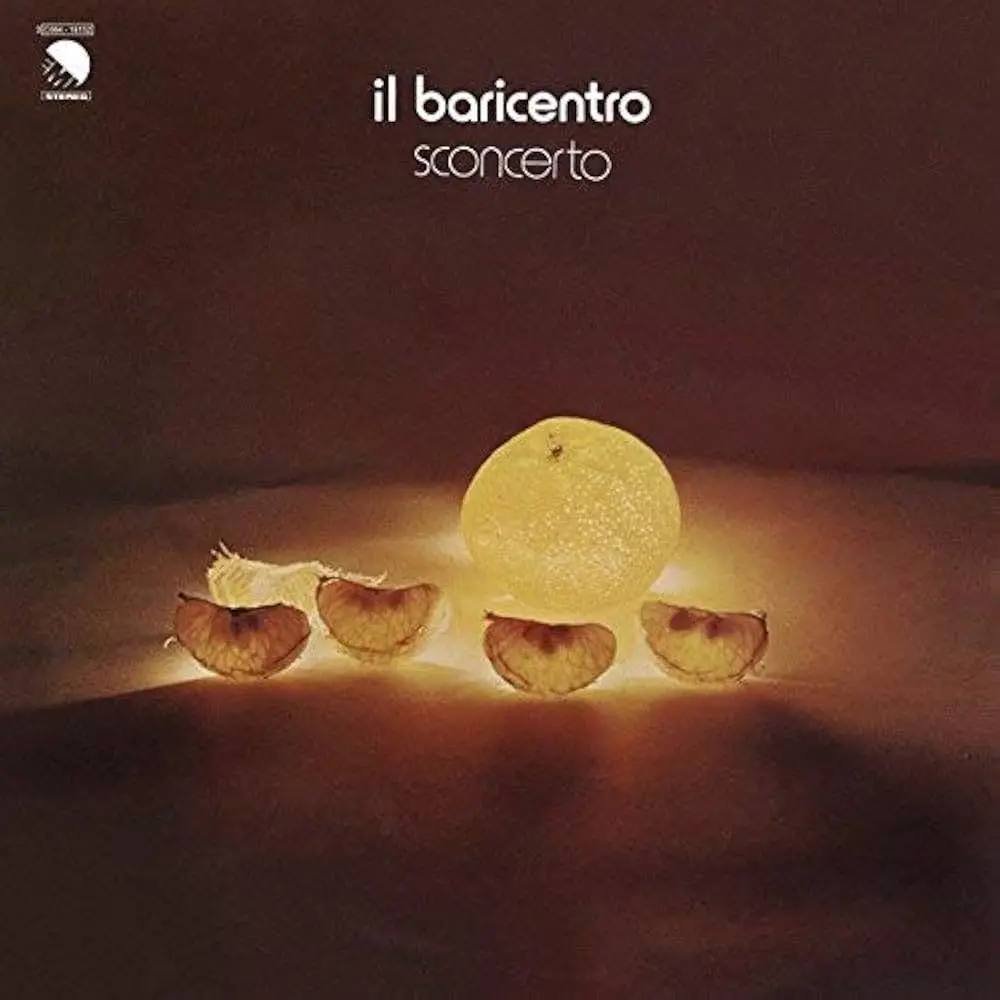 Il Baricentro released their first album, Sconcerto, in 1976 on EMI Italiana. The album presents a keyboard-centered sound with shifts between cinematic textures, syncopated funk, and light symphonic passages.
Vanni and Francesco Boccuzzi alternate roles between harpsichord, Fender Rhodes, clavinet, piano, and synthesizers. Francesco often shapes the primary themes through acoustic piano runs or clavinet riffs, while Vanni injects electric textures and modal accents from synths and Rhodes. Bassist Tonio Napolitano anchors the harmonic motion and often leads transitions into funk-based motifs. Drummer Piero Mangini uses tight fills and disco-tinted fusion patterns to accentuate sectional shifts and maintain rhythmic momentum.
Sconcerto opens with its title track, where layered keyboards pivot around a staggered funk pulse. The clavinet and Fender Rhodes intertwine atop crisp hi-hat figures, while a harpsichord line cuts through with tight, bright phrasing. The bass leads with staccato figures that thread through the entire track. “Afka” returns to this terrain, opening with clipped clavinet syncopations and staggered drum accents that eventually cohere into a brisk, percussive framework, allowing Rhodes flourishes and a reedy lead synth to unfold in short, lyrical arcs.
The album’s longest piece, “Lido bianco,” evolves through three distinct sections: ambient synth textures and brittle chimes drift into a mid-tempo pattern driven by layered keys, before yielding to a sparse, slow-turning motif marked by clustered piano phrasing and overlapping synth voices. “Comunque… (Todo modo)” favors a more angular rhythm built from slap bass, syncopated drums, and sharp keyboard interjections; a brief bass-led breakdown precedes a turn toward tighter funk-disco propulsion in the final stretch.
On the restrained end, “Della Venis” hinges on electric piano clusters and a muted horn-like synth voice that spiral through slow, suspended cadences, with cymbal detail as the only percussive anchor. “Pietre di luna” follows a similar path, but uses a more dynamic keyboard dialogue—one voice climbing in short swells while another traces arpeggios in soft contrast. “Meridioni e paralleli” centers on steady-motion interplay with sustained Rhodes chords, while synth and lead lines trace clean, almost placid trajectories above the rhythm section’s mid-tempo swing. Across these contrasts, the Boccuzzi brothers maintain a balance between ornamental detail and elastic phrasing, with arrangements that prioritize motion and dialogue over climactic peaks.
A1. “Sconcerto” [Disconcert] (4:58) — Opens in a clavinet–bass–drum funk pattern with Rhodes lead; includes a harpsichord segment and extended Fender Rhodes solo.
A2. “Lido bianco” [White Beach] (10:04) — Evolves from ambient textures to layered synths and harpsichord, later merging funk rhythms with cinematic keyboard phrasing.
A3. “Meridioni e paralleli” [Meridians and Parallels] (6:15) — Mid-tempo sequence of syncopated jazz-fusion phrasing and light synth motifs.
B1. “Afka” (6:25) — Built on a funk-clavinet base with lyricon-like synth solo and intricate rhythm section interplay.
B2. “Pietre di luna” [Moonstones] (4:29) — Alternates Rhodes and piano figures, forming dynamic shifts and suspended transitions.
B3. “Della Venis” [Of Venis] (4:16) — Sparse Rhodes motifs over ambient synth pads; minimal percussion.
B4. “Comunque… (Todo modo)” [Anyway… (Every Means)] (5:27) — Clavinet-driven funk progression featuring spotlighted bass solo and shift into disco-fusion finale.
Sessions took place between December 1975 and January 1976 at Chantalain Studio in Rome with engineer Giorgio Loviscek.
Sconcerto presents a backlit citrus fruit with five tangerine segments on a dark surface, arranged in a semicircle, photographed by Leonardo Bellezza. The stark lighting emphasizes the pulpy texture, casting soft shadows across the flat background.
Trusciant
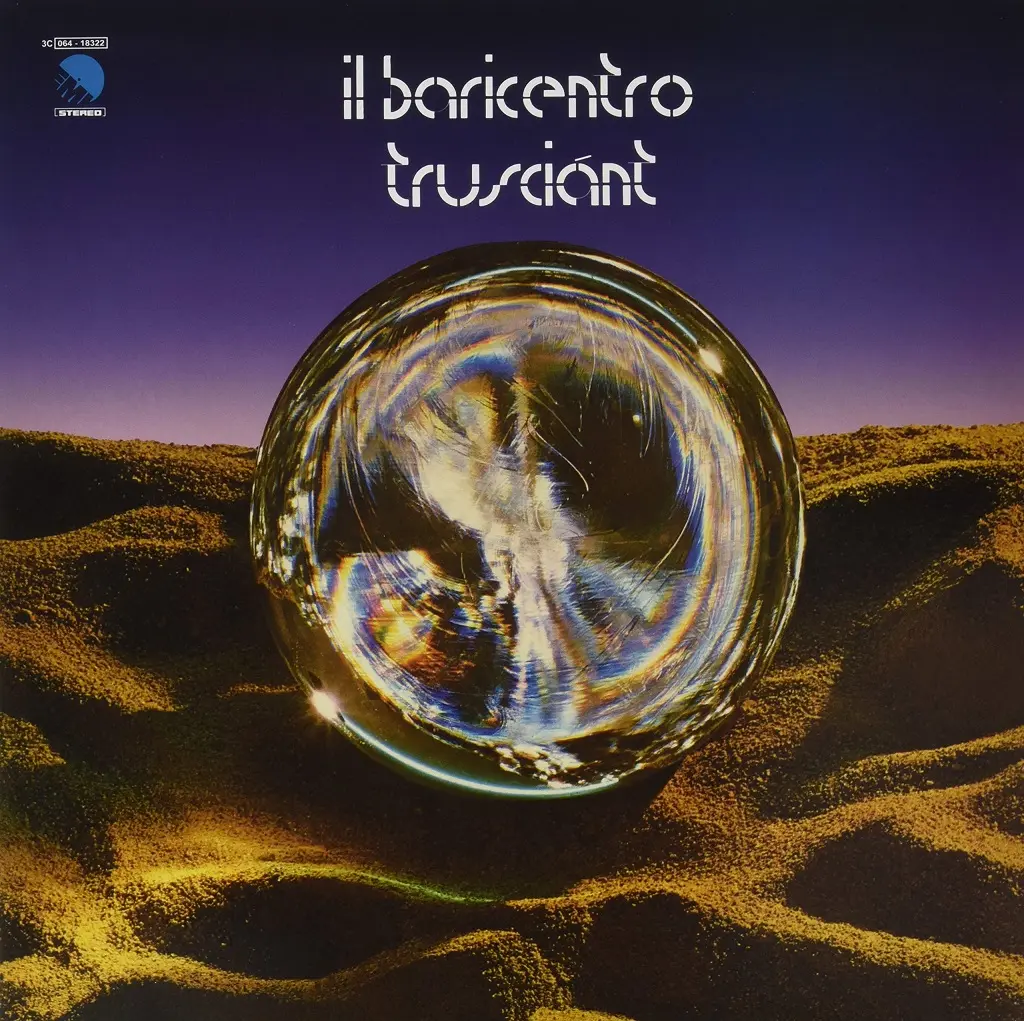 Il Baricentro released their second album, Trusciant, in 1978 on EMI Italiana.
The album builds on the group’s jazz-fusion orientation with a denser rhythmic core and heightened percussive detail, contrasting with the more spacious textures of Sconcerto. While still structured around contrapuntal keyboard figures, Trusciant integrates Latin–African percussion into its core arrangements and features tighter compositional framing, often moving from tonal lyricism into syncopated funk motifs.
Francesco Boccuzzi plays electric and acoustic piano, synthesizer, clavinet, and occasional guitar, frequently shifting between angular riffs and tightly phrased runs. Vanni Boccuzzi commands organ, synth textures, and electric piano counter-lines, often phrasing against or beneath his brother’s themes. Bassist Tonio Napolitano drives the funk-rooted motifs with a bold front-loaded attack. Drummer Piero Mangini punctuates the ensemble with crisp snare bursts and metric redirections. Guest percussionists Luis Agudo and Max Rocci contribute layered rhythms on cuica, berimbau, agogo, and congas, often coalescing into extended transitional codas or punctual interludes.
Trusciant opens with “Karwan,” a tightly coiled percussion piece driven by insistent congas, cymbal splashes, and clipped organ pulses. The keyboards flicker in short, syncopated bursts, occasionally widening into shimmering vibraphone-like runs that lift the tempo without diffusing its tension. The title track follows with a stark contrast—solo piano in sparse, baroque phrasing that slowly yields to a staggered drum cadence and cascading Rhodes lines. Halfway through, the piece transitions into layered call-and-response motifs between right-hand synth trills and a rolling piano undercurrent, then dissolves back into fragmented chords.
“Falò” locks into a sharply articulated rhythm built on hand percussion and rhythmic piano stabs, with syncopated guitar accents and spring-loaded drum fills threading through. “Akua” retreats into hushed tones: soft, echoed synths arc across a suspended mid-tempo rhythm while acoustic piano traces fluid shapes beneath, holding to a subdued harmonic range that remains understated throughout. “Flox” returns to interlocking forward motion, using wah-filtered keyboards and propulsive tom patterns to build momentum; the electric piano phrasing loops and pivots over the tightly clustered rhythm.
“Font’amara” opens in a near-static ambient haze with slow turns between piano and processed electric tones before shifting into an interlaced rhythmic engine, where harpsichord, clavinet, and electric piano lock into angular cadences with pinched precision. “Vivo” begins with compressed piano chords in a sharp motif, then breaks into agile interplay between kinetic piano runs, slap bass accents, and polyrhythmic hi-hat strokes. Across the album, the Boccuzzi brothers lean into harmonic displacement and syncopated texture, while the percussion team favors short-strike patterns and rapid transitions, giving Trusciant a clipped intensity that rarely softens, even in its most spacious moments.
A1. “Karwan” (3:23) — Syncopated organ and piano phrasing over congas and layered carnival percussion.
A2. “Trusciant” (5:39) — Opens with Baroque acoustic piano; develops through layered synth figures, militaristic drumming, and textured Rhodes patterns.
A3. “Falò” [Bonfire] (3:16) — Rhythm-forward funk motif with tightly interlocked piano, guitar, bass, and Latin percussion.
A4. “Akua” (4:03) — Ethereal synth and piano lines over soft percussion; subdued and atmospheric.
B1. “Flox” (3:38) — Wah-electric piano over upbeat funk rhythm and rhythmic keyboard syncopation.
B2. “Font’amara” [Bitter Spring] (7:26) — Shifts from ambient first half to complex second section with harpsichord, moog, organ, and layered piano figures.
B3. “Vivo” [Alive] (4:18) — Opens with Emerson-like piano; develops into rapid-fire keyboard and drum interplay with bass-driven cadence.
Sessions occurred at Sonic Recording Studio with producer Pierluigi Galluzzi and engineers Franco Patrignani and Marco Streccioni.
Trusciant desplays a distorted crystal orb suspended above wind-swept sand dunes under a dark violet sky gradient. The orb reflects spectral streaks and abstract imagery within its warped surface.
“Vivo” appeared as a b-side of “Endless Man,” a non-album cover of a tune by veteran Italian composer Carlo Savina.
Discography:
- Sconcerto (1976)
- Trusciant (1978)
- “Endless Man” / “Flox” (1978)
- “Tittle Tattle” (1983)
Sources:
Artist/Album Pages:
Zzebra was an English ethno jazz-funk band that released the 1974–75 Polydor albums Zzebra and Pan...
Metro was an English symphonic/art-pop combo that was active through two iterations between 1976 and...
Locomotiv GT was a Hungarian rock band from Budapest. Ringasd el magad and Bummm! established the ...
Popol Vuh was a German new age group led by Florian Fricke. They debuted as a trio with the 1971 Mo...
Kaipa is a Swedish symphonic/art-rock band from Uppsala, formed in 1973. During the band's first t...
P.P. Zahl was a German symphonic-rock project named after an imprisoned author, whose poetry becam...
Pop Mašina was a Yugoslav hard-rock band from Beograd, Serbia, that issued five singles, two album...
Tempest was an English hard-rock supergroup on Bronze that released a self-titled album in 1973 wi...
Litto Nebbia (born 1948) is an Argentinian multi-instrumentalist, vocalist, and composer with a care...
Opposite Corner was a Swedish avant-garde jazz ensemble on the 1972 split-release Club Jazz 5 with...
First Aid was an English symphonic-rock band that released the album Nostradamus on Decca in 1976. T...
Flea was an Italian symphonic/hard-rock band that appeared with a 1971 album as Flea on the Honey....