
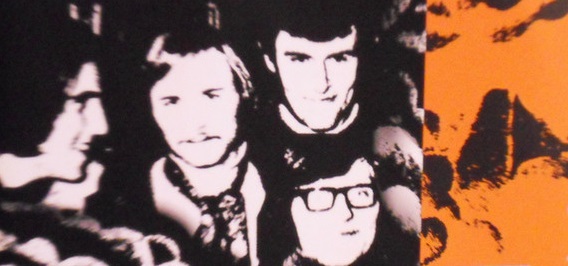
Dżamble was a Polish jazz-rock/psych band, active for fifteen years through multiple lineups. They released the 1971 album Wołanie o słońce nad światem on Polskie Nagrania Muza and three 1978/79 singles on Tonpress.
Members: Wiesław Wilczkiewicz (guitar, 1966-72), Tadeusz Gogosz (bass, 1966-67), Jan Budziaszek (percussion, 1966-67), Edward Anioł (saxophone, 1966-67), Czesław Styczeń (trombone, 1966-67), Jan Kaleta (vocals, 1966-67), Andrzej Zaucha (vocals, trumpet, saxophone, percussion, 1967-81), Marian Pawlik (bass, 1967-81), Benedykt Radecki (drums, percussion, 1967-70, 1978-81), Jerzy Horwath (piano, organ, 1967-72), Marek Pawlak (vocals, 1967), Andrzej Ibek (piano, organ, 1967), Marian Koster (vocals, 1967), Jerzy Bezucha (percussion, 1970-72), Ryszard Styła (guitar, 1978-81), Stefan Sendecki (piano, 1978-81), Ryszard Kwaśniewski (saxophone, clarinet, 1978-81), Andrzej Pawlik (bass guitar, 1981)
Early Lineups
Dżamble formed in 1966 in Kraków when bassist Tadeusz Gogosz teamed with singer Jan Kaleta and drummer Jan Budziaszek. They original septet included guitarist Wiesław Wilczkiewicz, pianist Jerzy Horwath, tenor saxophonist Edward Anioł, and trombonist Czesław Styczeń.
Kaleta came from Antoni Krupa’s The Lessers, where he played rhythm guitar alongside drummer Marian Pawlik. Gogosz came from the Kraków big-beat group Szwagry. Horwath graduated from Liceum Muzyczne in Kraków and made his jazz debut with Playing Family at Jazz nad Odrą. Manager Igor Jarecki named Dżamble, which worked around Piwnica pod Baranami with standards such as “My Funny Valentine” and songs by Kaleta. The group appeared at the Kraków Zaduszki Jazzowe and folded in February of the following year.
Dżamble returned in autumn 1967 with Wilczkiewicz, singer Marian Koster, keyboardist Andrzej Ibek, bassist Marian Pawlik, and drummer Benedykt Radecki. Pawlik started as a drummer in The Lessers and switched to bass when Radecki joined the group. Ibek came from the Kraków groups Ametysty, Bitni, and Szwagry, while Koster also came from Szwagry. The lineup appeared at another Kraków Zaduszki Jazzowe and soon split. In March 1968, Wilczkiewicz, Ibek, and Radecki joined Michał Burano in Burano and Leske Rom.
Legacy Version
Pawlik rebuilt Dżamble late in 1968 under the patronage of Kraków jazz club Helikon. He summoned pianist Horwath from the first lineup and drummer Radecki from the recent configuration. Singer Marek Pawlak initially fronted the group, but irregular attendance at rehearsals for Jazz nad Odrą prompted a search for another vocalist. Pawlik and Radecki heard Andrzej Zaucha with Telstar at the Polfa club in Kraków and recruited him following a performance of “Georgia on My Mind.” Zaucha was a self-taught singer and drummer who played in Czarty and sang with Telstar.
By March 1969, Dżamble worked as the quartet of Zaucha, Horwath, Pawlik, and Radecki. At the Jazz nad Odrą festival, they performed prepared “Every Day I Have the Blues,” “Pozwól mi,” “Try a Little Tenderness,” and “Dock of the Bay.” The festival awarded Dżamble a special ensemble prize and gave Zaucha an individual vocal award. The quartet toured Hungary and Czechoslovakia that spring. Dżamble later won the ensemble prize at the II Młodzieżowy Festiwal Muzyczny and appeared at Jazz Jamboree in Warsaw with saxophonist Michał Urbaniak.
In February 1970, Dżamble opened for Marmalade at Sala Kongresowa in Warsaw in February and played Stockholm the next month. They also appeared at the Lubelskie Spotkania Wokalistów Jazzowych and the Opole festival that spring. Radecki left in autumn 1970 to join Niebiesko-Czarni, and Jerzy Bezucha took the drum chair. The quartet assembled songs by Horwath and Pawlik around texts by Leszek Aleksander Moczulski, Tadeusz Śliwiak, Jerzy Ficowski, and Adam Kawa. Dżamble entered the Polskie Nagrania studio on Długa Street in Warsaw in February 1971 with Zaucha, Horwath, Pawlik, and Bezucha for the sessions that produced Wołanie o słońce nad światem.
Discography:
- Wołanie o słońce nad światem (1971)
- “Jak Zmienić Świat” / “Just The Way You Are” (1978)
- “Szczęście nosi twoje imię” / “Lady Love” (1978)
- “Bezsenność We Dwoje” / “Jeszcze W Sercu Radość” (1979)
Resources and notes:
- Marian Pawlik, Jazz Forum, “Życie kontra bas (cz. I)” — the strongest source here because Pawlik gives a first-person account of The Lessers, his switch from drums to bass, the late-1968 rebuild, Helikon rehearsals, the search for Zaucha, the Polfa audition, Jazz nad Odrą repertoire, foreign dates, radio sessions, and the Długa Street LP sessions. (Jazz Forum)
- Cyfrowa Biblioteka Polskiej Piosenki: Dżamble — formation, early lineup, 1967 reactivation, 1968 rebuild, festival awards, radio work, and personnel changes. (Biblioteka Polskiej Piosenki)
- Jazz Forum: Jerzy Horwath — Horwath’s Kraków music-school background, 1966 Playing Family debut, and Dżamble membership. (Jazz Forum)
- Jazz Forum: Benedykt Radecki — Radecki’s The Lessers background and October 1970 move into Niebiesko-Czarni. (Jazz Forum)
- Szwagry / Andrzej Ibek documentation — Gogosz and Koster in the earlier Szwagry lineup; Ibek in Ametysty, Bitni, Szwagry, Dżamble, and Burano and Leske Rom. (Biblioteka Polskiej Piosenki)
- Polskie Radio, Jazz.PL archival release — confirms Studio Rytm and Polish Radio recordings from 1969 onward, including specific surviving 1969–71 performances. (Polskie Radio)
- Archiwum Polskiego Rocka — confirms the original Muza LP catalog and the core recorded lineup of Zaucha, Horwath, Pawlik, and Bezucha. (Archiwum Polskiego Rocka 1960 – 2026)
Artist/Album Pages:
Wilson Pickett (March 18, 1941 – Jan. 19, 2006) was an American soul singer who released ten albums ...
Nucleus was an English jazz-rock ensemble formed in 1969 by trumpeter Ian Carr, who spent much of ...
Bloodstone was an American soul-psych group from Kansas City that released eight albums on Decca/L...
The Seeds were an American garage-rock band that released four 1966–67 studio albums and a 1968 live...
Blackfeather was an Australian post-psychedelic hard-rock band that released the 1971 Infinity alb...
Daryl Hall and John Oates — commonly known as Hall & Oates — were an American musical duo, activ...
Hardin & York were the English blues-rock-soul duo of drummer Pete York and keyboardist–singer...
Lindisfarne was an English folk-rock band from Newcastle upon Tyne that released four albums and a...
Quiet World was an English folk-psych band that released the concept album The Road on Dawn in 197...
Irma Thomas is an American soul singer who emerged with the 1959 R&B hit "Don't Mess with My ...
Eumir Deodato is a Brazilian pianist, composer, arranger, and producer who emerged from the Rio de...
George Gruntz (June 24, 1932 — Jan. 10 2013) was a Swiss pianist, composer, arranger, and bandlead...