

Dug Dug’s were a Mexican garage-psych band that issued a string of shortplayers on RCA Victor during the late 1960s. Between 1971 and 1973, a harder rocking iteration of the band released two albums on RCA, followed by a second pair of albums on the label’s Camden imprint in 1975.
Members: Jorge de la Torre (vocals), Armando Nava (keyboards, guitar, vocals), Gustavo Garayzar (guitar), Genero Garcia (bass), Jorge Torres Aguayo (drums, bass), Enrique Nava (drums, backing vocals), Gabino Araujo (bass, backing vocals)
Background
Xippos Rock formed in Durango, Durango, in 1960 when local high school students built a seven-piece rock ’n’ roll group around guitarist Roberto Miranda and bassist Moisés Muñoz. Armando Nava joined during their college years after the group recruited him off the local circuit; Nava also brought in his cousin Jorge Luján, whom he coached on guitar. Drummer Sergio Orrante and singer Francisco Alcalde rounded out the working lineup before Jorge de la Torre entered as a second singer. Early gigs ran on improvised gear: the band used acoustic guitars fitted with homemade pickups and treated a steel chair as a drum substitute for radio appearances and local theater dates in Durango, including Cine Principal, while the set leaned on covers from Mexican rock acts.
Nava’s family relocation to Tijuana shifted the band’s center of gravity. Nava pushed to relocate the group west, and a touring run through cities en route preceded a name change to Los Dug Dug’s—tied to Durango, Durango—under the management of Nava’s father. In Tijuana, the band took bar and strip-club work on both sides of the border, then locked into a regular spot at Mike’s Bar and expanded its English-language cover repertoire; Orrante soon exited and returned to Durango. An extended residency at the club Fantasitas preceded a move to Mexico City, where the band worked a sequence of café stages that included El Harlem Café, El Trip Café, and Hullabaloo Café, and the lineup narrowed until Nava and de la Torre carried the continuity through personnel turnover.
In Mexico City, TV bookings drove the first releases. The band cut “Chicotito si” as its debut single for children’s programming, then secured an RCA deal and issued additional 45s that included cover versions of “California Dreamin’” and “Hanky Panky.” RCA Victor formalized the early catalog with the 1966 7-inch EP Brinca Brinca (MKE-788), which paired Spanish-language titles with their source songs: “Brinca Brinca (Ain’t That Just Like Me),” “La Forma De Los Cosas (Shapes Of Things),” “A-Go-Go (Ooh My Soul),” and “California En Sueños (California Dreaming).”
In 1967, the band backed Roberto Jordan on the RCA Victor single “Prefieres Estar Junto A Mi” / “Juntos Esta Noche” (76-2458), credited as a cover of Cinco De Chocolate Y Uno De Fresa, then returned in 1968 on the RCA Victor EP Los Dug Dug’s / Angélica María – Cinco De Chocolate Y Uno De Fresa (MKE-1067). A 1968 return to Tijuana produced a regular booking at Sans Souci, where American tourist Frank Mangano financed a move to New York City; the group recorded original material there before returning to Mexico. The Nava–de la Torre split followed, and the band continued without de la Torre into the period that produced the 1971 self-titled LP and the quartet appearance at the Avándaro festival.
Dug Dug’s
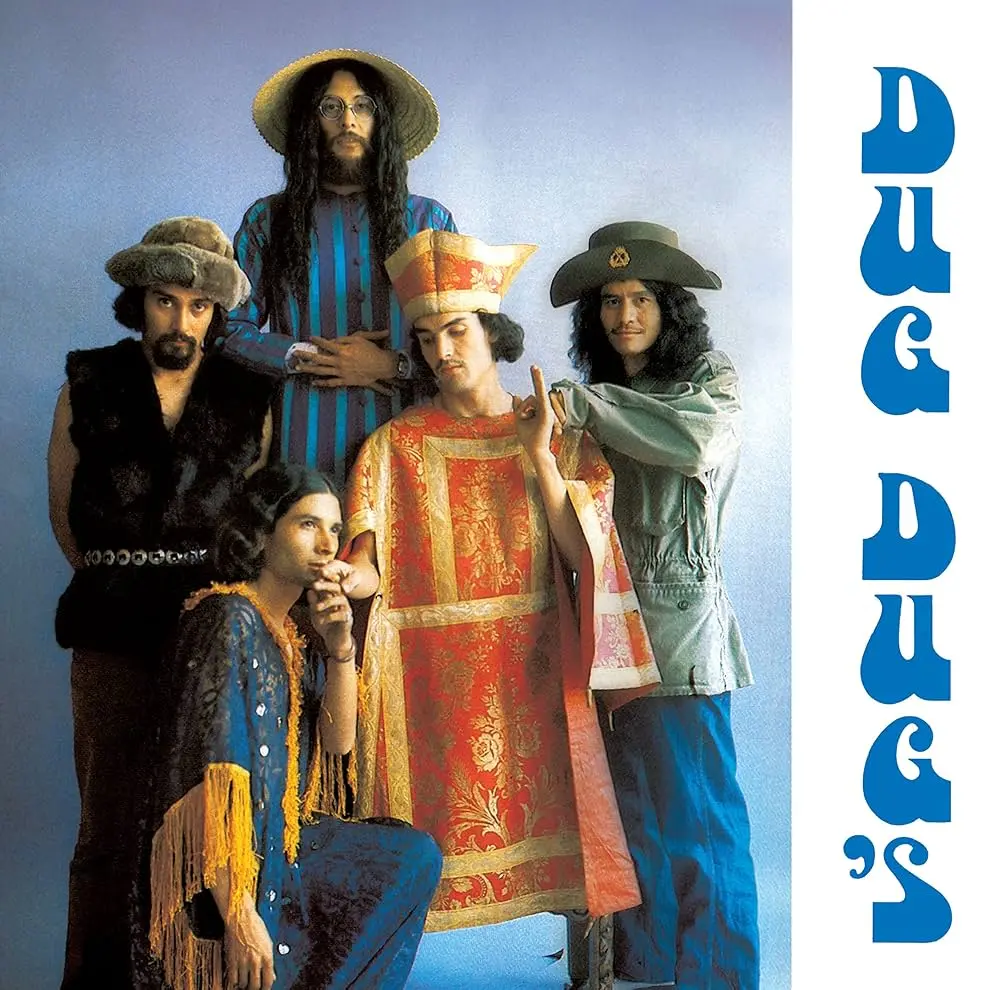 Dug Dug’s released their self-titled debut album in 1971 on RCA Victor.
The album centers on psychedelic rock structure with compact turns, led by guitarist Armando Nava and singer-guitarist Jorge Luján alongside singer Jorge de la Torre. Bassist Moisés Muñoz and drummer Sergio Orrante carry the pace across both sides.
Dug Dug’s runs as a set of compact, English-language songs that lean on brisk tempos, bright chord changes, and a guitar-forward mix that switches between clean shimmer and thick fuzz. “Lost in My World” opens with a pointed guitar riff that sets the band’s tight, forward drive, then “Eclipse” pushes the same momentum harder with saturated fuzz and a denser midrange. “Let’s Make It Now” keeps the pulse high and hinges on a chant-like chorus lift, then breaks the flow with an extended drum solo; the take here stays short-form compared to the later expansion on Smog. Two shorter cuts, “Without Thinking” and “Sometimes,” scale down the volume and intensity with “Sometimes” shaped around a calm, almost pastoral close that welcomes bird sounds. “Word of Love” tilts toward a more woozy, keyboard-touched color, where the melody line takes sharper turns over a lighter frame.
A1. “Lost in My World” [Perdido en mi mundo]
A2. “Without Thinking” [Sin pensarlo]
A3. “Eclipse”
A4. “Sometimes” [Algunas veces]
A5. “Let’s Make It Now” [Hagámoslo ahora]
B1. “World of Love” [Mundo de amor]
B2. “I Got the Feeling” [Tengo el sentimiento]
B3. “It’s Over” [Se acabó]
B4. “Going Home” [Yendo a casa]
B5. “Who Would Look At Me?” [¿Quién me mirará?]
RCA Victor issued the album as MKSJ 8005. Early copies also included the single “Stupid People” b/w “Joy to People,” later re-recorded for El loco (1975), while the original versions appeared on the 1985 compilation 15 éxitos de los Dug Dug’s.
The album features guitarist Armando Nava, singer-guitarist Jorge Luján, singer Jorge de la Torre, bassist Moisés Muñoz, and drummer Sergio Orrante.
Smog
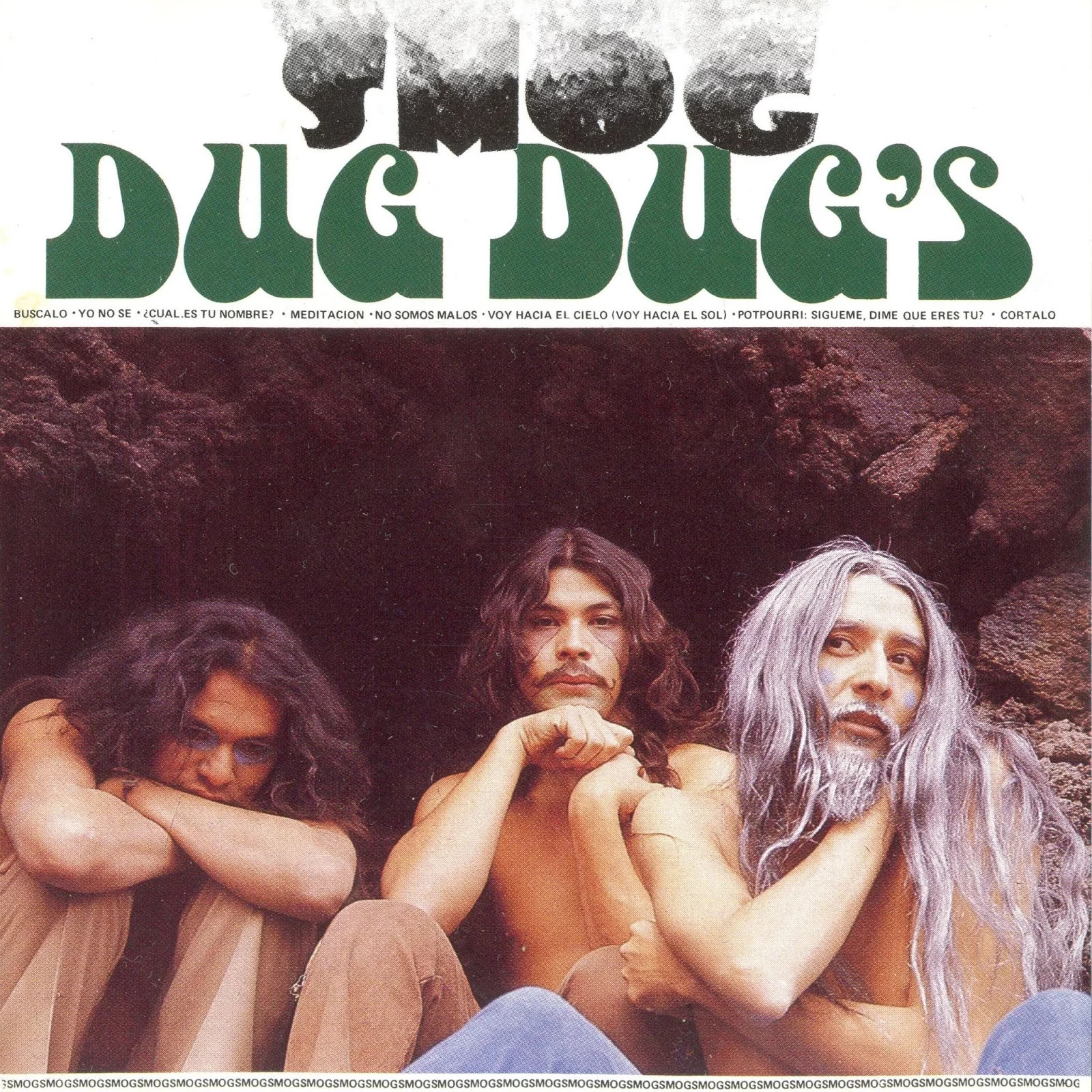 Dug Dug’s released their second album, Smog, in 1973 on RCA Victor.
Riveted by the censorship in early-1970s Mexico, Armando Nava leads this heavier set on multiple guitars, flute, and piano; joined by bassist Jorge Torres Aguayo, percussionist Daniel Tello, and singer Enrique Nava.
Smog opens with traffic-and-motor sounds, then snaps into a forceful riff where flute and electric guitar move in parallel and the Spanish vocal sits high in the mix. “Búscalo” drops to a short acoustic interlude that spots sharp, percussive taps against the guitar body. “Hagámoslo ahora (2a. parte)” stretches past eleven minutes and moves in linked sections: a heavy, instrumental front end, a brief drum break, a return to vocal passages, then a second span that starts quiet and climbs fast into harder riffing, a mid-song bass solo, and a late drum feature before a theme reprise; the final span restates the main figure, adds longer guitar lead space, and brings flute back into the foreground.
“Yo no sé” keeps the sound thick with fuzzed guitars and a distorted bass line under a springy vocal contour, while “¿Cuál es tu nombre?” rides a smoother, sliding pulse with falsetto accents and a second half where the guitars take the lead. “Meditación” resets the pace on slow acoustic chords and a pensive tone, then “No somos malos” restores the album’s main force through flute–guitar interplay and sustained, forward-driving electric rhythm. “Voy hacia el cielo (Voy hacia el Sol)” starts soft on acoustic voice-and-guitar, adds bass and a flute solo, then folds in piano and string parts that sit at a slight angle in the blend before the closing section fills out the arrangement for the finish.
A1. “Smog”
A2. “Búscalo” [Look for It]
A3. “Hagámoslo ahora (2a. parte)” [Let’s Do It Now (Part 2)]
A4. “Sígueme” [Follow Me]
A5. “Dime ¿quién eres tú?” [Tell Me, Who Are You?]
A6. “Córtalo” [Cut It Out]
A7. “Ven, ven, ven” [Come, Come, Come]
A8. “Hagámoslo ahora” [Let’s Do It Now]
B1. “Yo no sé” [I Don’t Know]
B2. “¿Cuál es tu nombre?” [What Is Your Name?]
B3. “Meditación” [Meditation]
B4. “No somos malos” [We’re Not Bad]
B5. “Voy hacia el cielo (Voy hacia el Sol)” [I’m Going to the Sky (I’m Going to the Sun)]
Armando Nava writes all songs and produces the sessions. “Voy hacia el cielo (Voy hacia el Sol)” adds an arrangement credit for Pocho Pérez.
Cambia, Cambia
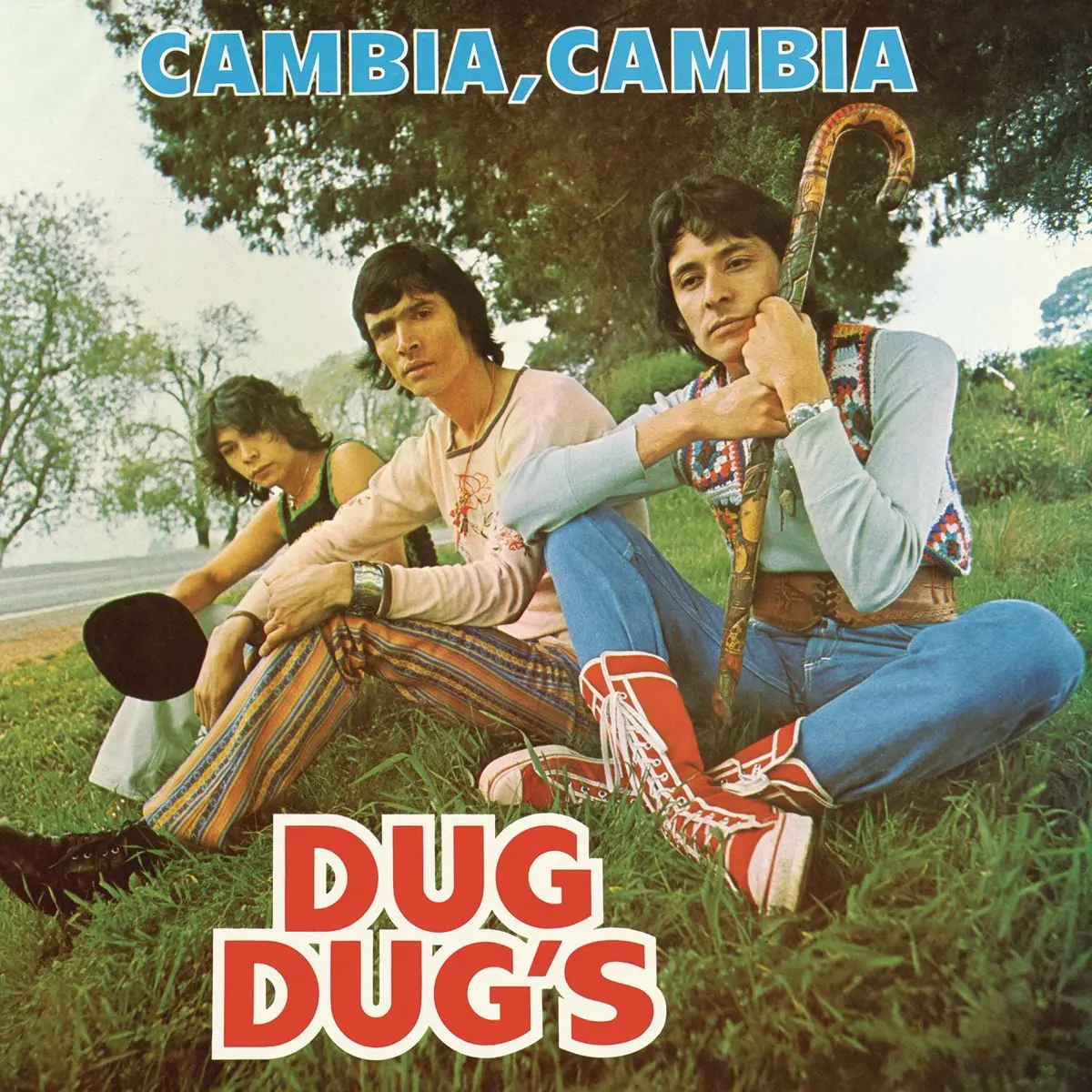 Dug Dug’s released their third album, Cambia, Cambia, in 1975 on RCA Camden.
The album shifts the group into psychedelic pop with more impressionistic textures across ten songs. Armando Nava leads the set on acoustic and electric guitars, and synthesizer, adding bass and 12-string guitar on “¿Donde está A.N.?”
Cambia, Cambia centers on slower, mid-tempo writing across “Tímido,” “Brillo de sol,” “Te quiero,” and “Ya te dejé,” with arrangements that keep the rhythm steady and open short lanes for guitar turns. “Brillo de sol” and “No te asustes” emphasize riff-led motion, and several tracks place brief guitar solos as punctuation inside the vocal frame. Tempo and intensity rise on “Felicidad,” “No, si, yo, tú, ya,” and “Cambia, Cambia.” “Al diablo…” closes the set as a live recording with a firmer attack.
Bassist Jorge Torres Aguayo takes lead vocals on “No te asustes (Es sólo vivir)” and “Brillo de Sol,” while drummer Enrique Nava adds backing vocals across the remaining tracks, joined by Pájaro Alberto on backing vocals for “Tímido.”
A1. “No te asustes (Es sólo vivir)” [Don’t Be Scared (It’s Only Living)]
A2. “Tímido” [Shy]
A3. “Brillo de Sol” [Sunshine]
A4. “Te quiero” [I Love You]
A5. “Felicidad” [Happiness]
B1. “Ya te dejé (No volveré)” [I Already Left You (I Won’t Return)]
B2. “No, sí, yo, tú, ya” [No, Yes, Me, You, Now]
B3. “Cambia, cambia” [Change, Change]
B4. “¿Donde está A.N.?” [Where Is A.N.?]
B5. “Al diablo…” [To Hell With It…]
The album features guitarist/synthesist/vocalist Armando Nava, bassist/vocalist Jorge Torres Aguayo, and drummer/vocalist Enrique Nava, with backing vocals by Pájaro Alberto on “Tímido.”
El Loco
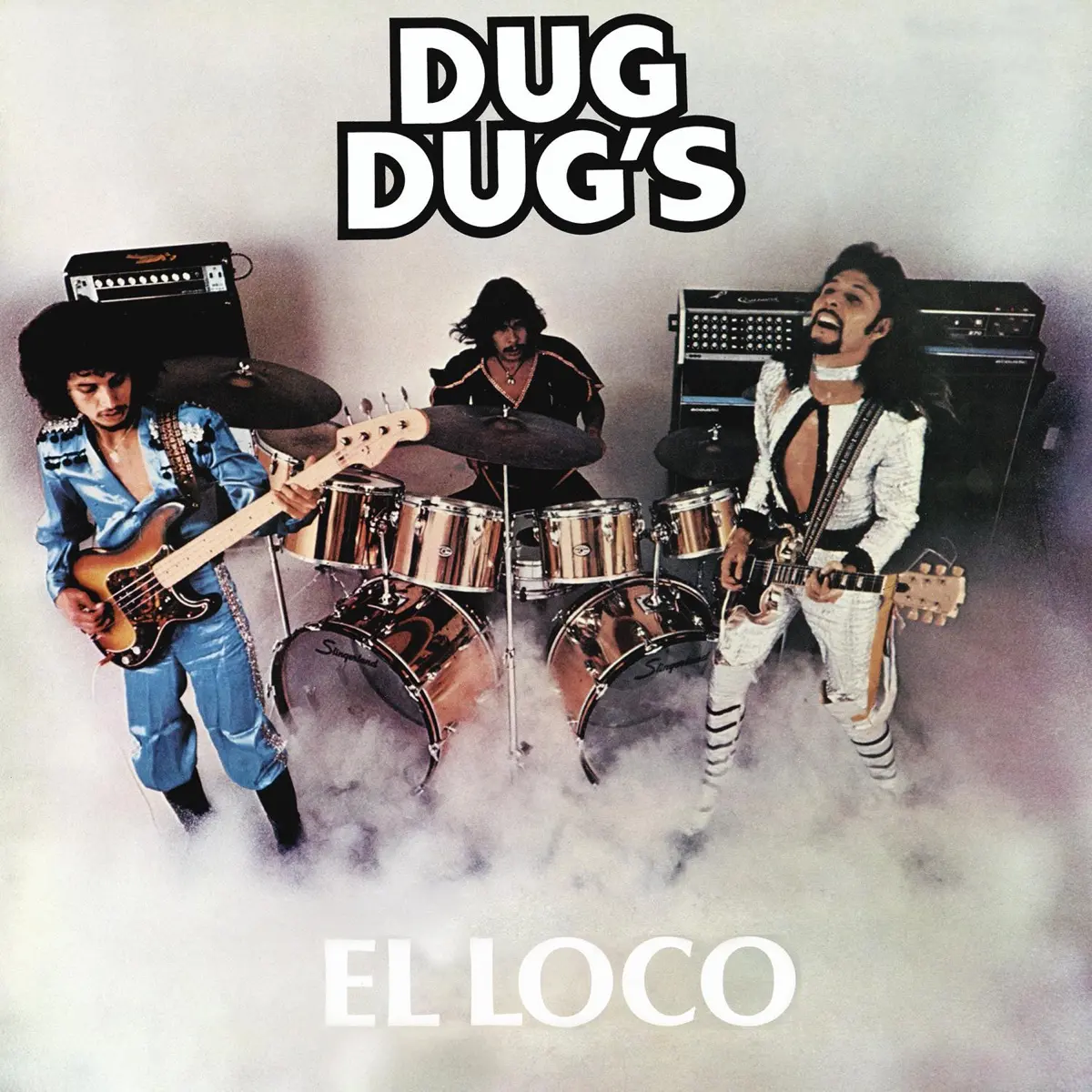 Dug Dug’s released their fourth album, El Loco, in 1978 on RCA Camden.
El Loco moves between brisk, riff-led tracks and slower, softer passages, with added brass and keyboards widening the palette. “Stupid People” rides a steady beat with trumpet lines set behind the guitars, keeping the vocal phrasing clear and direct. “Joy to People” pushes a faster, brighter pulse with fuzzed guitar and a compact solo that locks to the rhythm. “We Always Hate Your Manners” opens on a marching cadence, drops into a quieter, off-kilter middle, then snaps back into a heavier return; the band shifts pace again inside the instrumental break.
“Let Me Breath” slows the tempo and holds a hazier, dreamlike flow that inches upward in speed and intensity, while “La gente” keeps the volume low with soft guitar and layered “oooh” choruses that thicken into choir-like vocals near the end. The title track starts on fuzzy guitars and keyboards with scattered, manic vocal fragments, then turns mostly instrumental as the second half accelerates and cycles through repeated tempo changes. “La flauta del Fauno” works as a short flute feature that starts gently and then raises the energy, and “I Got My Emotion” closes on a relaxed gait where the synthesizer holds the center before the track turns heavier midstream.
A1. “Stupid People” [Gente Tonta] – arranged (mariachi) Jorge Domínguez; directed Sergio Guerrero; features El Mariachi Vargas de Tecalitlán
A2. “Let Me Breath” [Déjame Respirar]
A3. “Joy To The People” [Alegría Para La Gente]
A4. “We Always Hate Your Manners” [Odiamos Sus Maneras]
B1. “La Gente”
B2. “El Loco”
B3. “Quiero Verte (Junto A Mí)”
B4. “La Flauta Del Fauno” (Instrumental)
B5. “I Got My Emotion” [Estoy En Onda]
Armando Nava wrote, arranged, and directed El Loco. RCA issued the LP on Dynaflex vinyl with blue RCA Camden labels carrying the “dynaflex” logo.
Discography:
- Brinca brinca (EP, 1966)
- Dug Dug’s (1971)
- Smog (1973)
- Cambia, cambia (1975)
- El Loco (1975)
Sources:
Artist/Album Pages:
Pan & Regaliz were a Spanish folk/psych combo that released two singles and a 1971 self-titled...
Gary Wright (April 26, 1943 – September 4, 2023) was an American singer, musician, and songwriter ...
Jun Fukamachi — 深町純 (May 21, 1946 — Nov. 22, 2010) — was a Japanese jazz keyboardist. He moved int...
Moose Loose was a Norwegian jazz-rock band behind the 1974 Mai release Elgen er Løs, followed by t...
The Masters Apprentices were an Australian rock band from Adelaide that emerged as one of the nati...
Rastus was an American brass-rock band that released a 1971 live/studio double-album on GRT, foll...
Scorpions are a German hard-rock/metal band, best known for the songs "Loving You Sunday Morning,"...
Valhalla was an American psych-rock band from New York that released a 1969 album on United Artist...
Zorch was an English electronic duo that formed as a four-piece in 1973, eventually pairing down t...
Peggy's Leg was an Irish symphonic-folk band that was active for three years during the early 1970...
Hiroki Tamaki — 玉木宏樹 (born March 13, 1943) — is a Japanese violinist, composer, and conductor from...
Metal Urbain was a French synth-punk band, active between 1977 and 1979 with one single per-label ...