

Danny O’Keefe is an American singer/songwriter, best known for his 1972 hit “Good Time Charlie’s Got the Blues” and the acclaimed 1973 album Breezy Stories.
Between 1970 and 1984, O’Keefe made seven albums for assorted labels. His songs inspired covers by Jackson Browne (“The Road”), Donny Hathaway and Leo Sayer, who both covered the Breezy Stories ballad “Magdalena.”
Early Career
Danny O’Keefe was born on May 20, 1943, in Spokane, Washington. His first album, Introducing Danny O’Keefe, appeared in 1966 as a limited run on Panorama, a folk/pop subsidiary of Jerden Records, owned by Seattle music promoter Jerry Dennon.
Introducing features seventeen originals, including “All The Little Soldiers,” “Graveyard Pistol,” and “Tony Glover, You Better Learn to Smile.” Jerden’s other subsidiary, Piccadilly, lifted two singles: “That Old Sweet Song” (b/w “Don’t Wake Me In the Morning”) and “Baby” (originally titled “Been Nice Knowing You Baby,” b/w “Today One Day Later”). Select tracks reappeared on The Seattle Tapes, a two-volume O’Keefe compilation issued in 1977 by First American Records.
Calliope
In 1968, O’Keefe surfaced in Calliope, a psychedelic rock band with guitarist Paul Goldsmith (ex-Nitesounds, Emergency Exit), bassist Clyde Heaton, and drummer John Simpson (ex-Bumps, later Christopher). They made one album, Steamed, on the Manhattan-based Buddah label.
Steamed features two originals each by O’Keefe (“Rainmaker’s Daughter,” “Atlas”) and Goldsmith (“I Wanna Thank You,” “How About You (Clyde’s Tune)”), plus covers of The Mamas & The Papas (“California Dreaming”), Elvis Presley (“Hound Dog”), Chuck Berry (“Nadine”), Bob Dylan (“Like a Rolling Stone”), and Lee Michaels (“Hello, Hello”).
Danny O’Keefe
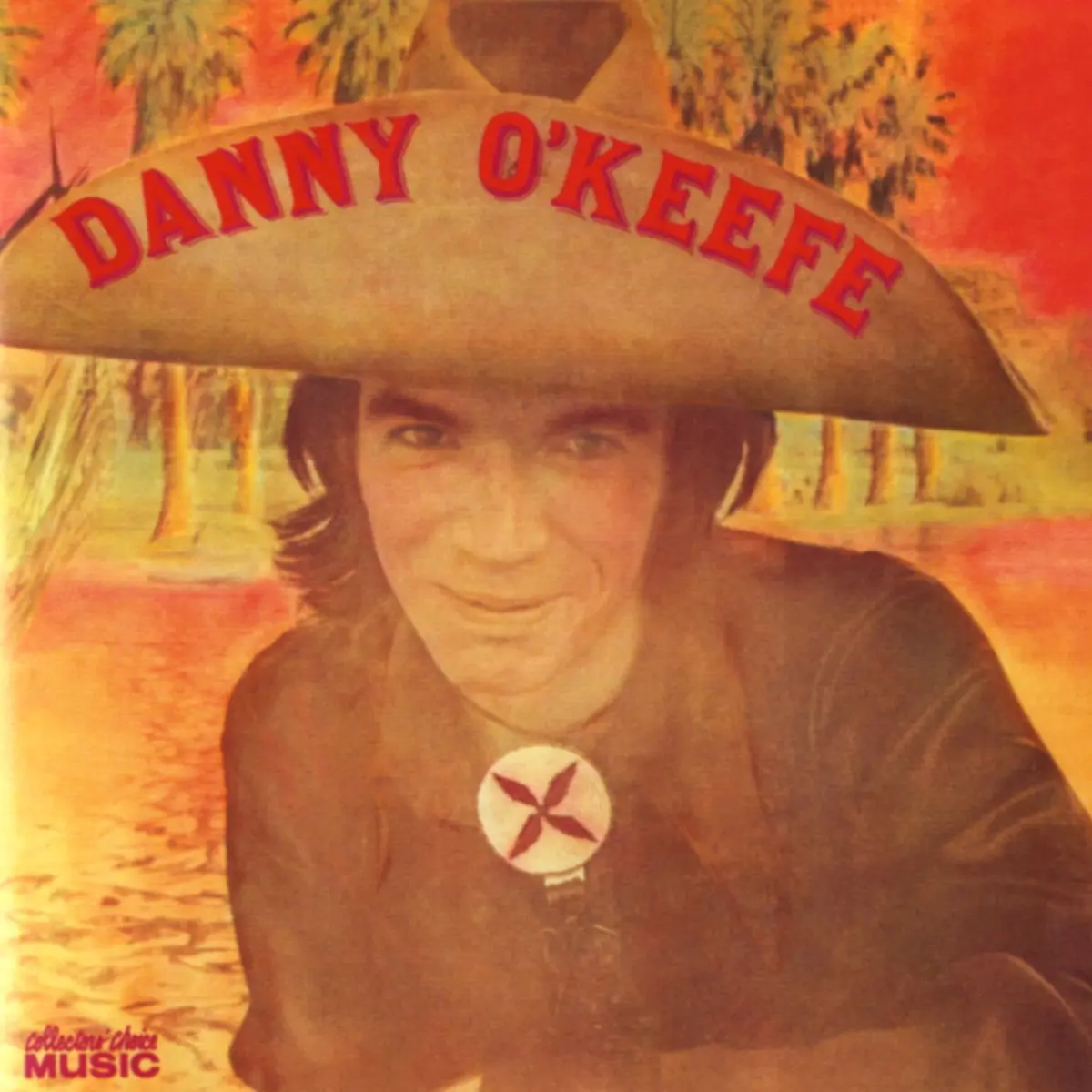 Danny O’Keefe released his self-titled second solo album in November 1970 on Cotillion.
The album contains eleven originals, including the first version of “Good Time Charlie’s Got the Blues.” Danny O’Keefe moves between acoustic balladry and country-inflected arrangements, centered on his voice and guitar. He draws on blues, folk, and country idioms with alternating full-band and stripped-down arrangements.
Guitarists Eddie Hinton and Jimmy Johnson play on the Muscle Shoals sessions, while Doug Hastings contributes to the United tracks. David Hood and Chris Ethridge alternate on bass across the two recording locations. Drummers Roger Hawkins and Rich Crooks split percussion duties by session. Barry Beckett and Bob Nixon divide keyboard duties, joined by Billy McPherson on flute, saxophone, and additional keyboards on the West Coast tracks.
A1. “Covered Wagon” (2:44)
A2. “3:10 Smokey Thursday” (3:30)
A3. “The Drover” (4:07)
A4. “A Country Song” (3:32)
A5. “Good Time Charlie’s Got the Blues” (2:41)
A6. “Steel Guitar” (4:06)
B1. “Saturday Morning” (3:44)
B2. “Sweet Rollin'” (4:08)
B3. “Bottle Up and Go” (2:22)
B4. “Come Dance With Me” (4:48)
B5. “Canary” (4:03)
B6. “Rev. Stone” (4:04)
Sessions took place at Muscle Shoals Sound Studios in Alabama and United Recording in Hollywood, California. Ahmet Ertegun produced the album with Jackson Howe assisting. Lennie Roberts engineered the United tracks while Martin Greene handled recording at Muscle Shoals. Gene Paul and Jack Adams oversaw remix duties. Arif Mardin arranged vocals and strings for the Muscle Shoals material, while Jimmy Haskell arranged the later sessions. Eve Babitz designed the LP and contributed inside photography; Nancy Donald shot the front and back covers.
“Good Time Charlie’s Got the Blues” first appeared here before becoming a hit in re-recorded form two years later.
O’Keefe
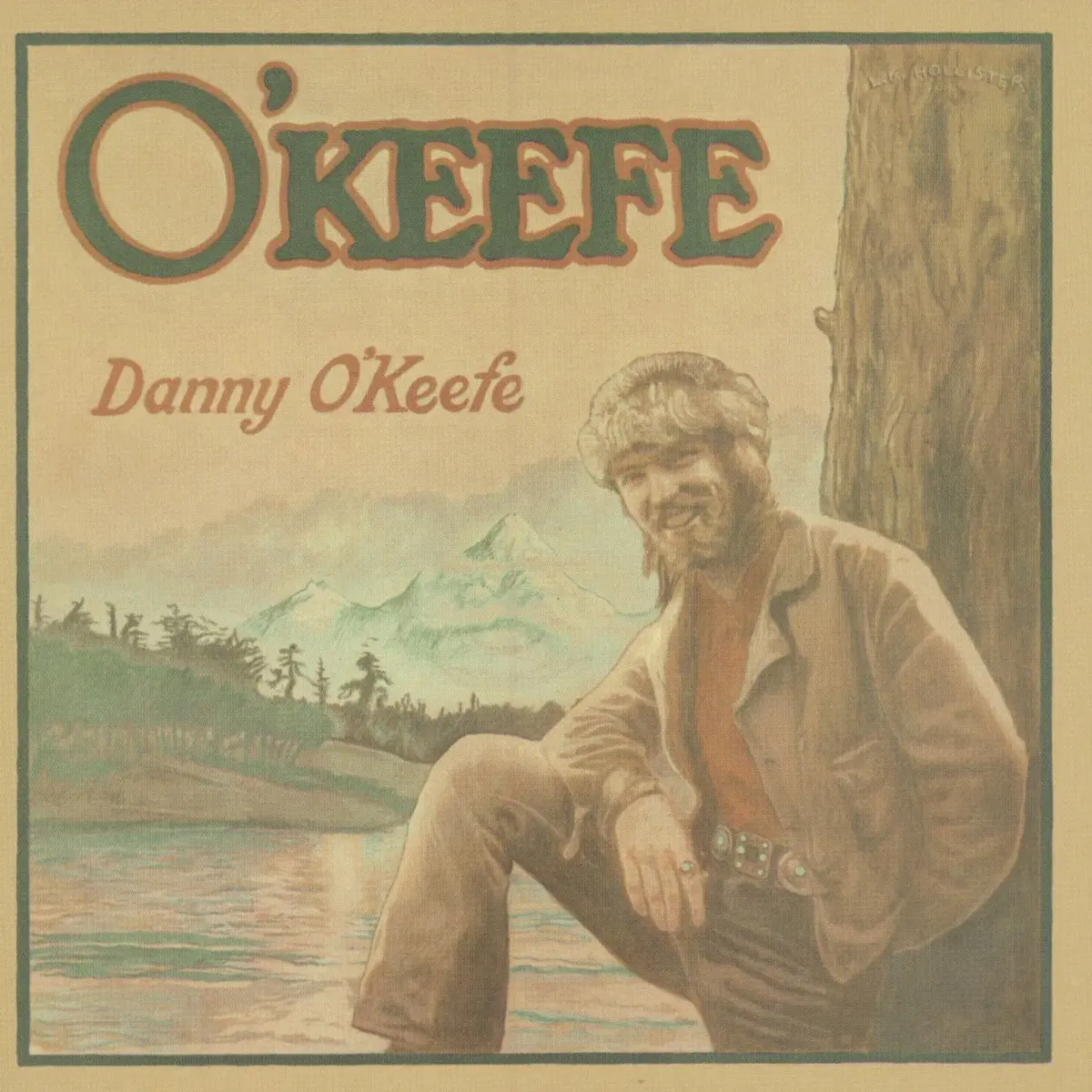 Danny O’Keefe released his third solo album, O’Keefe, in August 1972 on Signpost.
O’Keefe features a re-recorded “Good Time Charlie’s Got the Blues,” which became the signature version. The album blends narrative songwriting with understated country, folk, and electric rhythm arrangements, built around acoustic foundations and ensemble interplay.
Guitarists Reggie Young and Johnny Christopher back O’Keefe along with steel player Leo LeBlanc, bassist Mike Leech and drummers Gene Chrisman and Hayward Bishop. Keyboardists include e-pianist Bobby Wood, pianist Shane Keister, and organist Bobby Emmons. O’Keefe also features trumpeter Irwin “Marky” Markowitz, violinist Howard McNatt, clarinetist Phil Olivella, and backing vocalists David and Eddie Brigati.
A1. “Good Time Charlie’s Got the Blues” (3:00)
A2. “Shooting Star” (2:39)
A3. “The Question (Obviously)” (3:39)
A4. “Honky Tonkin’” (2:49)
A5. “The Road” (3:49)
A6. “Grease It” (3:16)
B1. “An American Dream” (5:14)
B2. “Louie the Hook vs. the Preacher” (3:37)
B3. “The Valentine Pieces” (3:17)
B4. “I’m Sober Now” (2:45)
B5. “Roseland Taxi Dancer” (2:47)
B6. “I Know You Really Love Me” (0:59)
Arif Mardin produced the album and handled mixing. Ahmet Ertegun and Neil Rosengarden served as assistant producers. Stan Kesler and Gene Paul engineered the sessions. O’Keefe appeared in a sleeve designed by George Hunter with illustration by L.K. Hollister.
“Good Time Charlie’s Got the Blues” appeared as the lead single in August 1972, backed with “The Valentine Pieces.” It reached No. 9 on the Billboard Hot 100, No. 5 on the Adult Contemporary chart, No. 10 on Cash Box, and No. 63 on the Country chart. Jackson Browne covered “The Road” on his 1977 album Running on Empty.
O’Keefe peaked at No. 87 on the Billboard Top LPs chart. Wounded Bird reissued O’Keefe on CD in 2006.
Breezy Stories
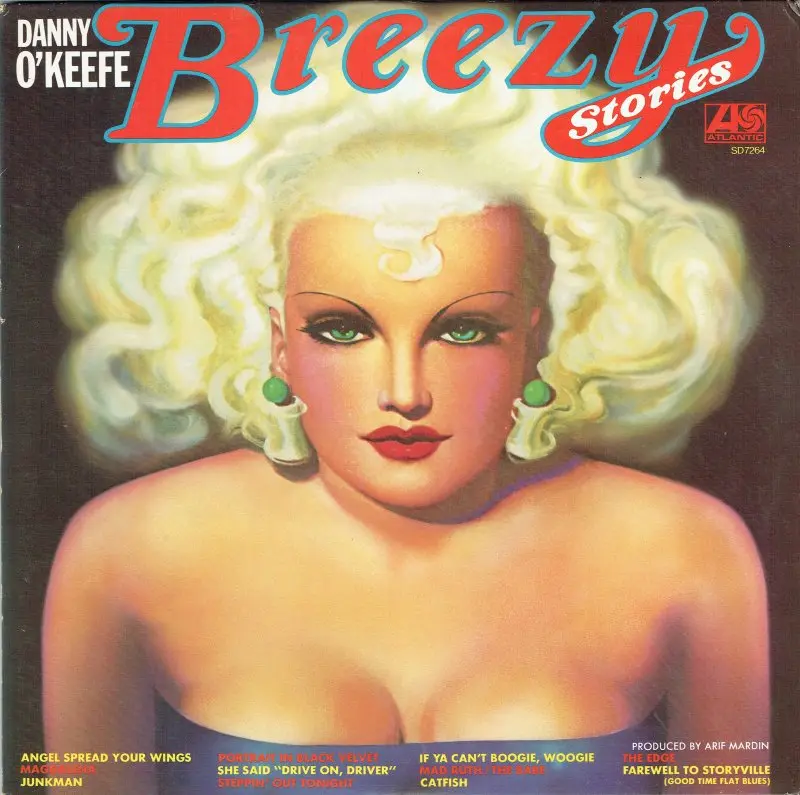 Danny O’Keefe released his fourth album, Breezy Stories, in June 1973 on Atlantic.
Breezy Stories expands O’Keefe’s stylistic range with a broader instrumental palette and heightened emphasis on ensemble arrangements. The album frames his songwriting in settings that incorporate electric rhythm sections, horns, layered keyboards, and acoustic ornamentation drawn from blues, folk, jazz, and early Americana traditions.
O’Keefe plays select lead amid guitarists Reggie Young and Johnny Christopher, supplemented by Hugh McCracken (wah-wah, slide) and David Bromberg (acoustic/electric, dobro). Breezy Stories features multiple bassists (Gordon Edwards, Hugh McDonald, Richard Davis) and drummers (Bernard Purdie, Steve Mosley). Guest stars include percussionist Airto Moreira, e-pianist Donny Hathaway, and Cajun legend Dr. John, who plays piano on the three final tracks. Producer Arif Mardin adds marimba and vibraphone.
Additional players include accordionist Dominic Cortese, fiddler Ken Kosek, mandolinist Andy Statman, tenor saxophonist John Payne, and trumpeter Peter Ecklund. “Mad Ruth / The Babe” features a five-part string section led by Gene Orloff. The Sweet Sensations (Cissy Houston, Sylvia Shemwell, Myrna Smith) appear as backing vocalists.
A1. “Angel Spread Your Wings” (3:28)
A2. “Magdalena” (4:32)
A3. “Junkman” (4:09)
A4. “Portrait in Black Velvet” (4:12)
A5. “She Said ‘Drive On, Driver'” (5:46)
B1. “Steppin’ Out Tonight” (2:13)
B2. “If Ya Can Boogie, Woogie (You Sure Can’t Rock & Roll)” (3:08)
B3. “Mad Ruth / The Babe” (5:29)
B4. “Catfish” (2:14)
B5. “The Edge” (5:18)
B6. “Farewell to Storyville (Good Time Flat Blues)” (4:07)
Sessions took place with Mardin at Atlantic Studios and Regent Sound Studios in New York City. Gene Paul, Jimmy Douglass, and Lew Hahn engineered the Atlantic sessions, with Bob Liftin recording at Regent. Hahn also handled remix duties. Stanislaw Zagorski designed the album cover. Photography is credited to Joel Brodsky (backliner) and David Gahr (inner sleeve).
Breezy Stories features a stylized illustration of a voluptuous, platinum-blonde Jean Harlow lookalike, who stares forward with piercing green eyes, arched brows, and bold red lips. The overall image evokes classic pulp cover art with a postmodern, soft-focus twist.
“Angel Spread Your Wings” appeared as the lead single, backed with “Mad Ruth / The Babe.” Hathaway covered “Magdalena” on his simultaneous release Extension of a Man, recorded with overlapping personnel. Leo Sayer cut an upbeat version on his 1976 release Endless Flight.
So Long Harry Truman
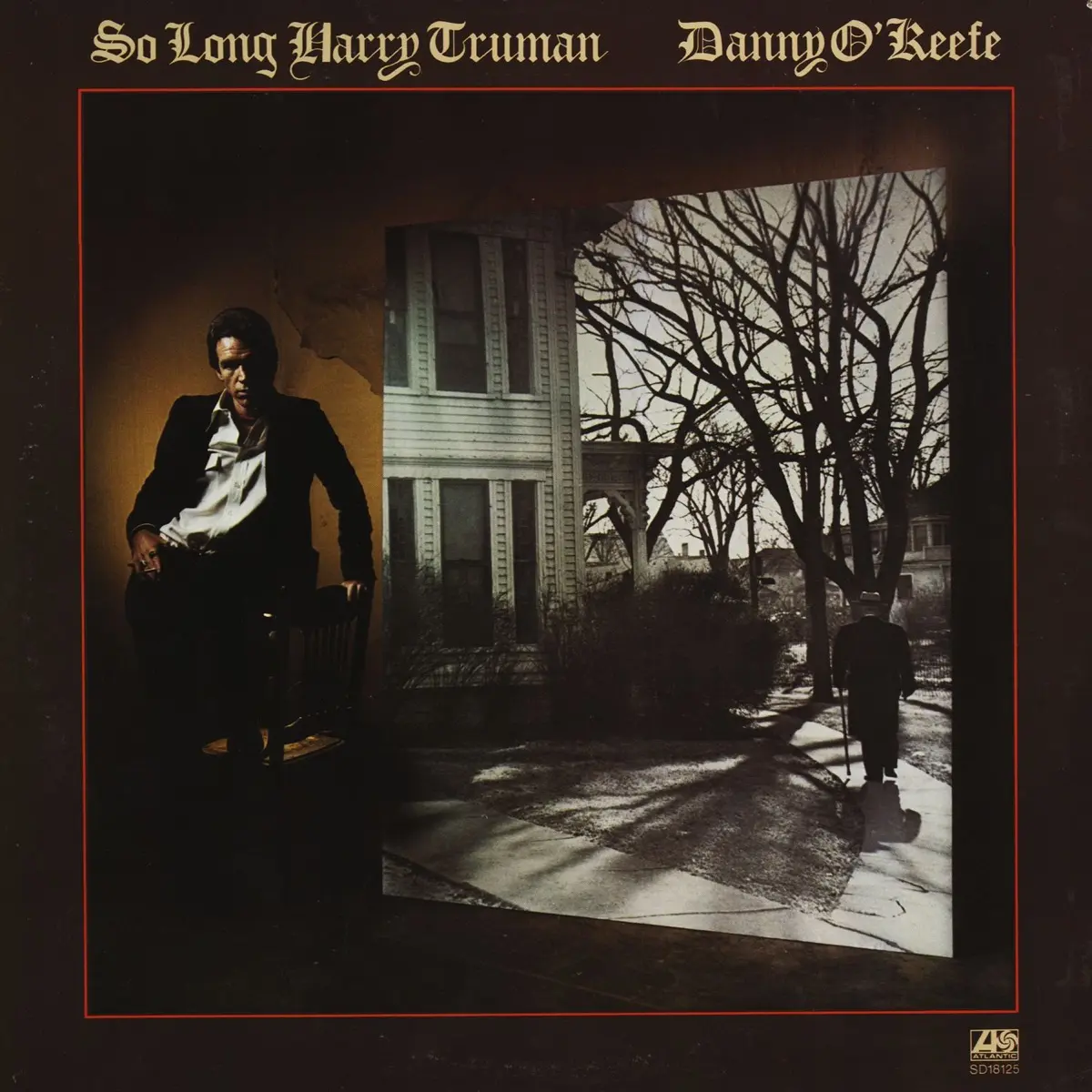 Danny O’Keefe released his fifth album, So Long Harry Truman, in March 1975 on Atlantic.
So Long Harry Truman blends acoustic-based songwriting with polished studio textures, arranged around alternating rhythm sections, layered piano parts, and select country and folk instrumentation. The album draws on both West Coast and Nashville players, combining electric and acoustic settings with vocal harmonies and stringband elements.
O’Keefe plays guitar throughout alongside Glenn Frey, who adds steel guitar to “Steel Guitar,” with fellow Eagles Don Henley, Bernie Leadon, and Randy Meisner contributing drums, harmony vocals, and bass, respectively.
Harry Truman also features multiple bassists (Jim Fielder, Chuck Domanico, Jimmy Bond, Larry Knechtel) and drummers (Gary Mallaber, John Guerin) along with star players Andrew Gold (piano), Sneaky Pete Kleinow and David Lindley (both steel guitar). Select tracks feature John Boylan (Mellotron on “Rainbow Girl”) and reedist Tom Scott (“It’s Been a Good Day”). “Fiddler’s Jamboree” features mandolinist David Grisman and fiddlist Richard Greene. Joyce Everson appears as backing vocalist.
A1. “So Long Harry Truman” (3:13)
A2. “Quits” (3:15)
A3. “Rainbow Girl” (3:00)
A4. “The Delta Queen” (3:24)
A5. “The Kid / The Last Days” (4:40)
B1. “Covered Wagon” (2:59)
B2. “It’s Been a Good Day” (3:37)
B3. “Fiddler’s Jamboree” (2:01)
B4. “Steel Guitar” (3:37)
B5. “Hard Times” (4:20)
John Boylan produced the album. Jim Gaines, Paul Grupp, and Rick Heenan engineered the sessions. Wally Traugott mastered the record at Capitol. Atlantic issued the LP through Monarch Record Mfg. Co., with copyright handled by Warner Communications.
“Quits” backed with “The Delta Queen” appeared as a single in May 1975 on Atlantic 45-3267. The same year, Chicago released “Harry Truman,” a Tin Pan Alley-style nod to the former president (1884–1972), who completed FDR’s fourth term from the tail end of WWII and scored a landslide 1948 win over Thomas E. Dewey.
American Roulette
 Danny O’Keefe released his sixth album, American Roulette, in 1977 on Warner Bros.
American Roulette frames O’Keefe’s songwriting in a studio-centered sound marked by electric rhythm sections, layered keyboard textures, and percussive detail. The album balances West Coast players and arrangements with expanded instrumentation that includes steel guitar, strings, and Latin percussion.
O’Keefe plays guitar throughout, joined by Peter Woodford on multiple tracks and David Lindley on steel and rhythm guitar. American Roulette features two bassists (Dave Parlato, Reggie McBride), four drummers (Gary Mallaber, Alvin Taylor, Roger Bethelmy, Steve Schaeffer), and five keyboardists (Mike Melvoin, John Hobbs, Roger Kellaway, Vince Melamed, Charles Irwin).
Additional guests saxophonist Tom Scott (“You Look Just Like a Girl Again”) fiddlist David Lindley (“In Northern California”), and cellist Frederick Seykora (“Just Jones”) and string arranger Mike Melvoin. King Errisson adds percussion along with Bobbye Hall, Oliver Brown, and Chicago member Laudir de Oliveira.
A1. “The Runaway” (4:21)
A2. “Islands” (3:35)
A3. “On Discovering a Missing Person” (4:13)
A4. “The Hereafter” (3:45)
A5. “You Look Just Like a Girl Again” (4:20)
B1. “All My Friends” (4:10)
B2. “Plastic Saddle” (3:13)
B3. “In Northern California (Where the Palm Tree Meets the Pine)” (3:23)
B4. “American Roulette” (7:37)
B5. “Just Jones” (3:23)
Sessions took place at Heritage Studios, Westlake Studios, and Studio 55 in Los Angeles. Lee Miller and Randy Nicholaus engineered the Heritage sessions, with Howard Steele and Larry Emerine at Studio 55 and Steve Hodge at Westlake. Kenny Vance produced the album except for “The Hereafter,” “Plastic Saddle,” and “American Roulette,” produced by John Court.
The Global Blues
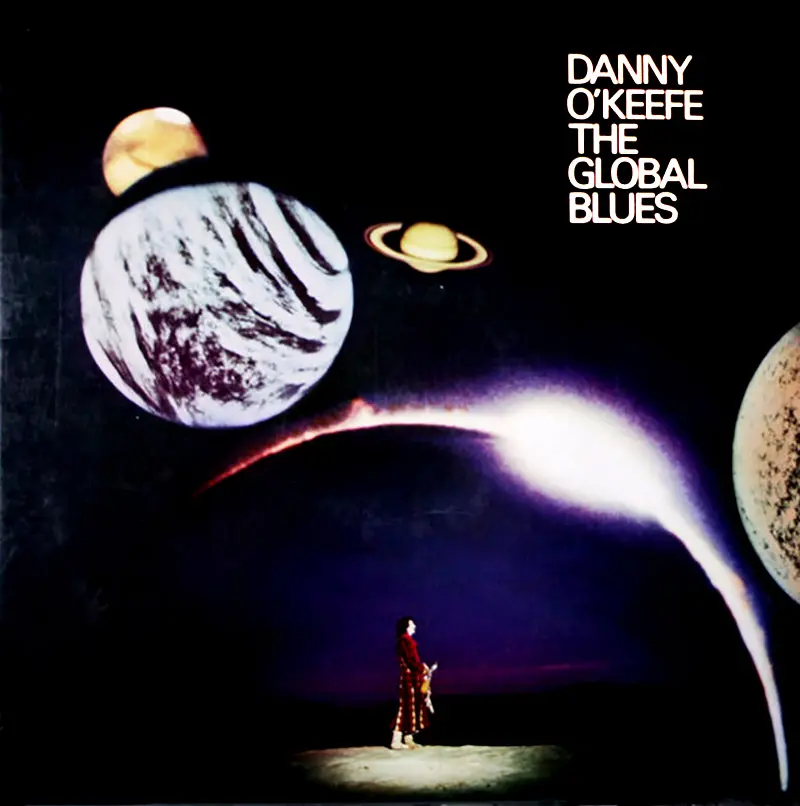 Danny O’Keefe released his seventh album, The Global Blues, in 1979 on Warner Bros.
The Global Blues presents O’Keefe’s songwriting in a stylized studio environment shaped by electric rhythm sections, layered keyboard textures, Latin and global percussion, horn and string arrangements, and a rotating ensemble of session players. The album integrates expanded instrumentation into tightly structured compositions that reflect broader thematic concerns.
O’Keefe plays guitar across the album, joined by fellow guitarists Joel Tepp, Scott Strong, and Jay Lewis, who also contributes steel guitar and synthesizer. Veyler Hildebrand handles bass on all tracks. Drummers include Jim Keltner, Jim Gordon, Tony Williams, and Thom Mooney. Keyboard duties rotate between Roger Kellaway, Vince Melamed, Larry Muhoberac, Bill Cuomo, Charles Irwin, and Mike Boddicker.
Steve Foreman plays percussion throughout, joined on select tracks by Bill Braun and Laudir de Oliveira. Jerry Yester conducts the horn arrangement on “Livin’ in the Modern Age,” performed by Johnny Rotella, Richard Nash, and others. Additional instrumentation includes accordion by Frank Marocco and shakuhachi by Kazu Matsui. Kellaway also contributes string arrangements. Background vocals appear on multiple tracks, performed by Bobby King, Ronnie Barron, Carmen Twillie, and others.
A1. “The Global Blues” (3:46)
A2. “Livin’ in the Modern Age” (3:09)
A3. “Falsetto Goodbye” (4:51)
A4. “The Street” (5:04)
A5. “On the Wheel of Love” (2:37)
B1. “The Jimmy Hoffa Mem. Bldg. Blues” (3:16)
B2. “(Keep Your) Back to the Wall” (3:22)
B3. “Square Sun” (4:03)
B4. “鯨を救おう。” (5:06)
B5. “Atlas” (5:23)
Sessions took place at United Western Recorders in Hollywood. Jay Lewis engineered the album and co-produced with O’Keefe. Mike Reese mastered the LP at The Mastering Lab, where lacquer cutting also occurred. Warner Bros. issued the album with design by Louise Spencer, art direction by Peter Whorf, and cover photography by Fred Valentine and Veyler Hildebrand.
The Day to Day
 Danny O’Keefe released his eighth album, The Day to Day, in 1984 on Coldwater Records.
The Day to Day consists of nine O’Keefe originals, including five songs written in collaboration with William Braun, Kerry Chater, and J.C. Young. He recorded the album in Los Angeles with Motown sessionists.
A1. “Call the Nomads” (3:48) – O’Keefe, Braun
A2. “Protection” (3:45) – O’Keefe, Chater
A3. “The Prize” (4:12)
A4. “Hold Your Fire” (4:33)
B1. “Along for the Ride” (4:40) – O’Keefe, Braun
B2. “Night School” (3:40) – O’Keefe, J.C. Young
B3. “Someday” (4:17) – O’Keefe, Braun
B4. “If It Weren’t for the Rain” (4:50)
B5. “The Sidewalk Symphony” (4:42)
Recording took place at Amigo Studios and Motown/Hitsville U.S.A. with engineers Mark Linett and Paul Brown. Matthew McCauley produced the album apart from “Call the Nomads,” “Hold Your Fire,” and “Along for the Ride,” produced and engineered by Tony Peluso. Aaron Rappaport photographed O’Keefe for the The Day to Day cover, designed by Laurie Hare.
Discography:
- Introducing Danny O’Keefe (1966)
- Danny O’Keefe (1971)
- O’Keefe (1972)
- Breezy Stories (1973)
- So Long Harry Truman (1976)
- American Roulette (1977)
- The Global Blues (1979)
- The Day to Day (1984)
- Runnin’ from the Devil (2000)
Sources:
- Discogs: Danny O’Keefe
- 45worlds: Danny O’Keefe
- 45cat: Danny O’Keefe
- RYM: Danny O’Keefe
- MusicBrainz: Danny O’Keefe
Artist/Album Pages:
Henry Gaffney (March 8, 1949 — May 23, 2010) was an American singer/songwriter from Brooklyn who r...
Dug Dug's were a Mexican garage-psych band that issued a string of shortplayers on RCA Victor duri...
Clarence Carter (Jan. 14, 1936 – May 13, 2026) was an American R&B singer, songwriter, and guita...
The World of Oz was an English pop-psych band from Birmingham that released four singles and a self-...
Bad Company was an English hard-rock supergroup led by Free vocalist Paul Rodgers. They released s...
Bo Hansson (April 10, 1943 – April 23, 2010) was a Swedish keyboardist and composer best known for h...
Necronomicon was the German Krautrock band behind the 1972 album Tips zum Selbstmord. In 1990, the a...
The Daly-Wilson Big Band was an Australian hard-bop/jazz-funk ensemble led by drummer Warren Daly ...
Blackwater Park was a German hard-rock band behind the 1972 BASF album Dirt Box. Members: Richar...
Sandra Wright (Oct. 1, 1948 — Jan. 11, 2010) was an American soul singer from Memphis who recorde...
GoodThunder was an American post-psych hard rock band from Los Angeles that released a 1972 self-t...
Pinnacle was an English space-rock band from Liverpool that released the album Assasin on Stag Mus...