

Kaleidoscope was an American psychedelic folk-rock band from Los Angeles led by banjo, fiddle, and mandolin player David Lindley. They released the 1967 Epic albums Side Trips and A Beacon From Mars, followed by the 1969–70 titles The Incredible Kaleidoscope and Bernice.
Members: David Lindley (banjo, fiddle, mandolin, guitar, vocals), Solomon Feldthouse (saz, bouzouki, Dobro, vina, dumbek, dulcimer, fiddle, guitar, clarinet), Chester Crill [Max Buda] (violin, bass, organ, harmonica), Chris Darrow (banjo, mandolin, fiddle, autoharp, harmonica, clarinet), John Vidican (percussion), Paul Lagos (drums, vocals), Stuart Brotman (bass, vocals), Jeff Kaplan (vocals)
Background
Kaleidoscope evolved from Dry City Scat Band, an LA jug band formed by multi-string players David Lindley and Chris Darrow. Lindley played beforehand in the Mad Mountain Ramblers. Darrow hailed from the Re-Organized Dry City Players, a rival group on the local folk circuit. Dry City also featured (later Seatrain) fiddlist Richard Greene.
Lindley, a Topanga Banjo/Fiddle Contest champion, drew early influence from flamenco, Indian classical, and folk-blues, absorbing techniques from mentors like Don “Sugarcane” Harris at LA’s Ash Grove club.
Darrow studied American folk traditions under Guy Carawan and played jazz clarinet alongside his father, a New Orleans–style traditionalist. Darrow briefly led the garage-rock group the Floggs before reconnecting with Lindley, who had begun gigging with Solomon Feldthouse, a singer and multi-instrumentalist raised partly in Turkey, where he picked up the saz, oud, and dumbek.
Lindley and Feldthouse performed briefly as a duo before expanding to a quintet with keyboardist–violinist Chester Crill (a.k.a. Max Buda) and drummer John Vidican. Darrow rejoined in late 1966, finalizing the lineup that debuted the following year as Kaleidoscope.
Side Trips
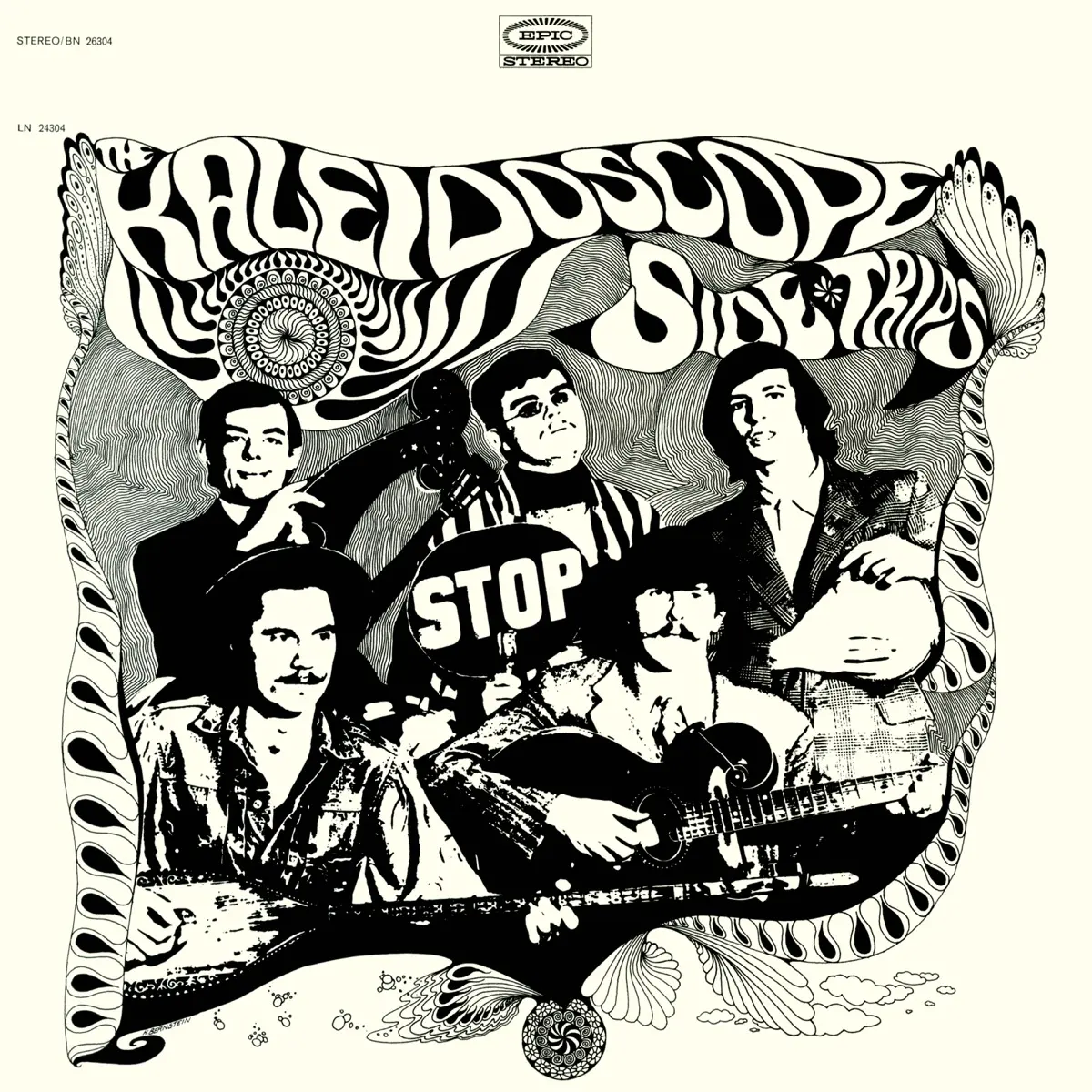 Kaleidoscope released their debut album, Side Trips, in May 1967 on Epic.
Side Trips combines original material with American trad numbers from the early 20th-century. The 26-minute album contains two songs each by Solomon Feldthouse (saz, bouzouki, resonator guitar, veena, goblet drum, dulcimer, fiddle, twelve-string) and Chris Darrow (bass, banjo, mandolin, fiddle, autoharp, harmonica, clarinet), plus one by David Lindley (banjo, fiddle, mandolin, guitar, harp guitar, 7-string banjo) and the group-written “Pulsating Dream.”
Covers include the 1920s string band tune “Hesitation Blues” (Charlie Poole), the Appalachian death ballad “Oh Death” (Dock Boggs), and the 1931 jazz-novelty standard “Minnie the Moocher” (Cab Calloway). Percussionist John Vidican and string/keyboard player Fenrus Epp (violin, viola, bass, piano, organ, harmonica) round out Side Trips.
“Egyptian Gardens” spotlights modal themes on saz and bouzouki (Balkan long-neck lutes). “Keep Your Mind Open” extends the Eastern influence with a drone-based, antiwar arrangement. “Oh Death” retains its Appalachian starkness with a slow, dirge-like pacing. Darrow’s “If the Night” and “Pulsating Dream” bring clipped, rhythmic folk-rock with tightly arranged parts. “Please” adopts a soft, Byrds-like tone with a harmonized refrain. “Why Try” leans toward introspective psych-folk. “Minnie the Moocher” is reworked as acoustic vaudeville, stripped of its brass swing but retaining theatrical cadence.
A1. “Egyptian Gardens” (Feldthouse | 3:08) – modal lead line over saz and bouzouki with a rhythmic base drawn from dumbek, evoking early experiments in East–West hybrid psych
A2. “If the Night” (Darrow | 1:51) – short and brisk, a clipped arrangement in folk-rock rhythm with faint backward-glancing imagery
A3. “Hesitation Blues” (2:27) – a faithful rendition of Charlie Poole’s version, played with jug band instrumentation and clipped syncopation
A4. “Please” (Feldthouse | 3:18) – folk-pop tone with phrasing that parallels Sunday Morning, built around a soft harmonized refrain
A5. “Keep Your Mind Open” (Darrow | 1:56) – an atmospheric antiwar piece steeped in echo, shadowed chords, and modal progression
B1. “Pulsating Dream” (2:16) – twinned harmonies over rapidly interlocking rhythms; brief but densely arranged
B2. “Oh Death” (3:25) – stark, slow, and brooding with repeated refrain and a death-ballad cadence in the tradition of Boggs
B3. “Come On In” (2:07) – upbeat traditional reworked into a taut acoustic frame with brisk vocal group delivery
B4. “Why Try” (Lindley | 3:39) – reflective in tone, led by Lindley, with a more conventional psych-folk structure
B5. “Minnie the Moocher” (2:15) – old-time theatrical jazz tune reworked for jug-band instrumentation, delivered with studied irony
Sessions occurred at Columbia Studios in Los Angeles in November–December 1966 with producer Barry Friedman and production supervision by Mike Goldberg.
The single “Please” backed with “Elevator Man” preceded the album in December 1966. A second single, “Why Try” backed with non-album track “Little Orphan Nannie,” followed in August.
A Beacon From Mars
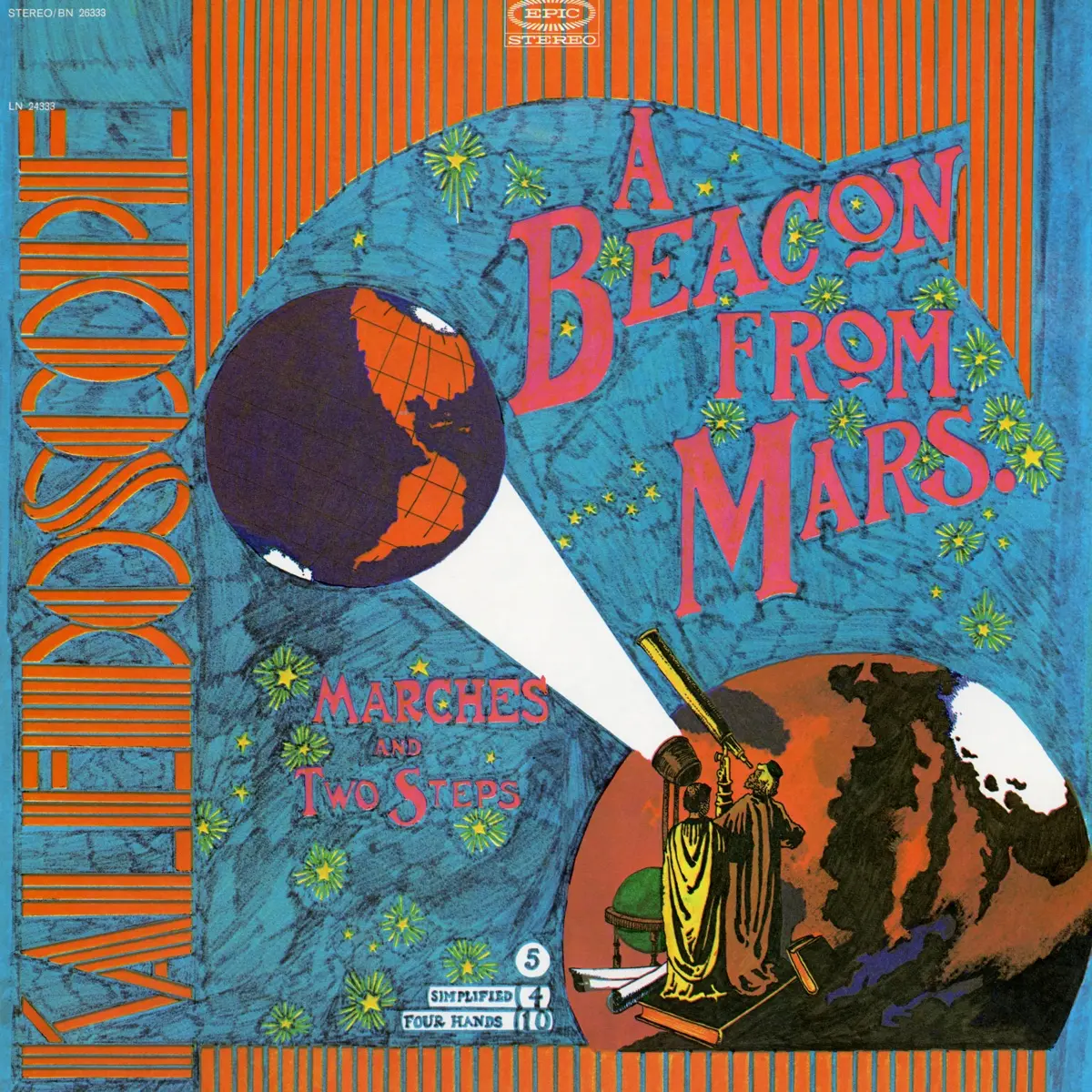 Kaleidoscope released their second album, A Beacon From Mars, in November 1967 on Epic.
The album expands into lengthier instrumental sections and bolder East–West fusions. Chris Darrow composed “Life Will Pass You By.” Each side concludes with a lengthy group-composed piece.
Outside material includes Doug Kershaw’s Cajun country tune “Louisiana Man,” the traditional Anglo-Scottish murder ballad “Greenwood Sidee,” Willie Cobbs’ blues standard “You Don’t Love Me,” and early 20th-century material like “Baldheaded End of a Broom.”
“Taxim” leads the first side’s climax with over 11 minutes of modal improvisation on Turkish and North African themes, performed on oud, saz, and harp guitar. “Beacon from Mars” closes the second side with a 12-minute blues psych expansion that starts in raga-like repetition and unravels into guitar feedback tonalism. “Greenwood Sidee” delivers stark Appalachian fatalism with bowed fiddle and slow toms. “You Don’t Love Me” moves into fuzzed-out blues rock with shrill harmonica and tense rhythm. “Life Will Pass You By” is a clipped, Dylanesque folk song with mandolin and plaintive cadence. “Baldheaded End of a Broom” and “Louisiana Man” revisit the group’s ragtime and country leanings, with emphasis on mandolin and square phrasing.
A1. “I Found Out” (2:11) – Early psych-folk track with acoustic guitar interplay and moderate pacing
A2. “Greenwood Sidee” (4:17) – Grim ballad based on The Cruel Mother, featuring bowed fiddle and slow, heavy rhythm
A3. “Life Will Pass You By” (3:26) – Dylanesque composition with clipped phrasing and hill-country vocal harmony
A4. “Taxim” (11:23) – East–West modal improvisation anchored by oud, saz, and harp guitar, with extended narrative pacing
B1. “Baldheaded End of a Broom” (3:15) – Ragtime-rooted novelty tune with Dobro, harmonica, and square phrasing
B2. “Louisiana Man” (2:46) – Cajun cover with fiddle in a bagpipe register and drum accents
B3. “You Don’t Love Me” (4:00) – Blues-rock adaptation with sharp fuzz guitar and piercing harmonica
B4. “Beacon from Mars” (12:32) – Electric raga-blues with gradual disintegration into guitar feedback and tonal drones
Sessions occurred at Columbia Studios in Los Angeles with producers Mike Goldberg and Stu Eisen. The album was issued alongside the single “I Found Out” backed with “Rampè Rampè.”
Following A Beacon From Mars, Kaleidoscope underwent multiple lineup changes: Chris Darrow left and was replaced by ex-Canned Heat bassist Stuart Brotman, while jazz–R&B drummer Paul Lagos took over from John Vidican. Chester Crill adopted the alias Templeton Parcely for live work and Max Buda for harmonica credits. The group made select outside appearances, backing Johnny “Guitar” Watson and Larry Williams on a 1967 single and contributing to Leonard Cohen’s debut. They also provided incidental music for educational films and appeared at the 1968 Newport Folk Festival.
The Incredible Kaleidoscope
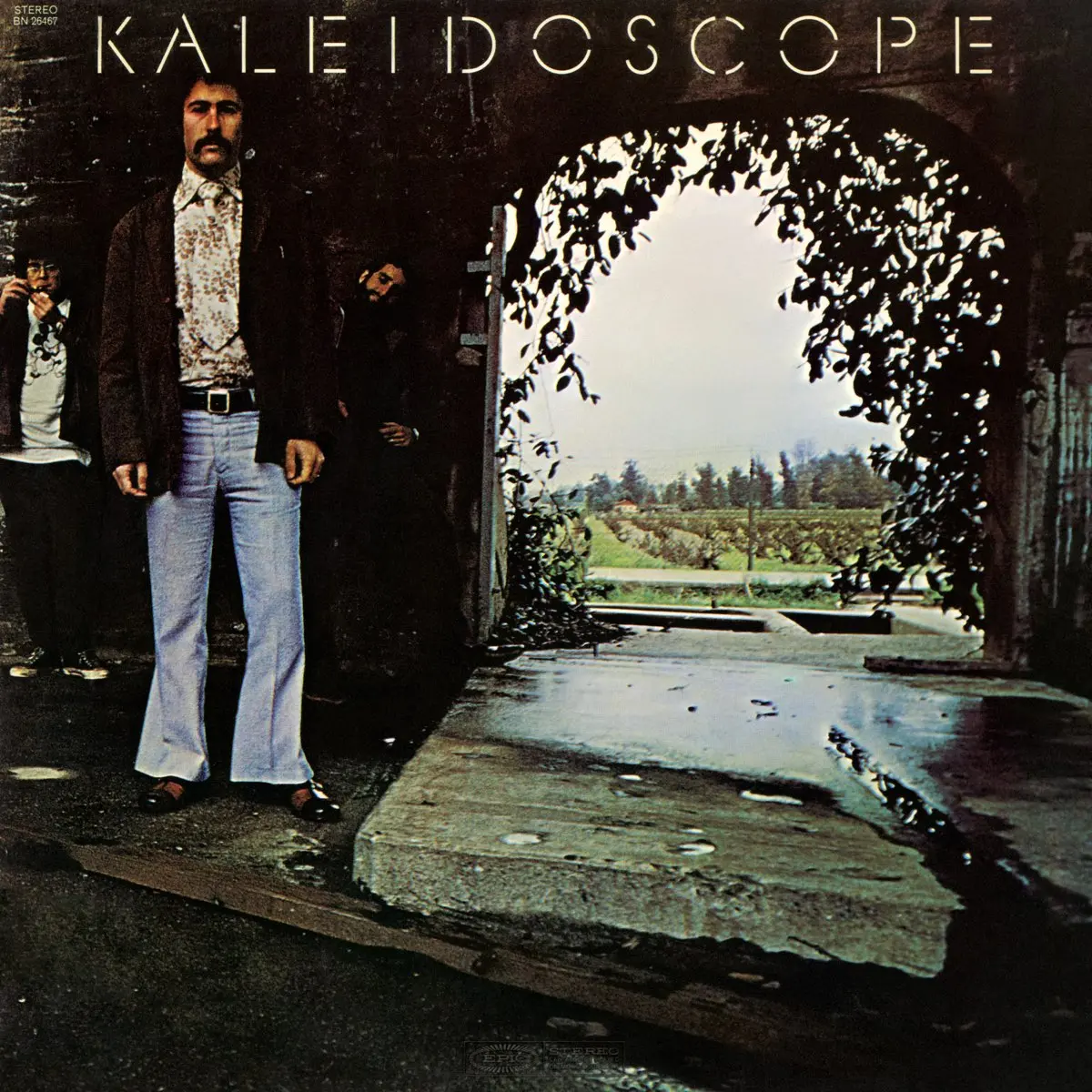 Kaleidoscope released their third album, The Incredible Kaleidoscope, in May 1969 on Epic.
The album introduces a new rhythm section with bassist Stuart Brotman and drummer Paul Lagos joining core members David Lindley, Solomon Feldthouse, and Chester Crill. The band expands on its mix of psych, folk, and Middle Eastern idioms with added elements of blues, fiddle tunes, and early country rock, shifting further from the modal improvisation of earlier releases.
Lindley and Feldthouse lead the writing, joined by Crill (credited as Templeton Parcely). Outside sources include a cover of Howlin’ Wolf’s “Killing Floor,” the traditional Anglo-American ballad “Cuckoo,” and the ragtime fiddle tune “Whiskey for Breakfast” (retitled “Banjo”).
The album divides between short, style-hopping songs on Side A and two extended pieces on Side B. “Lie to Me” leads with uptempo fiddle-flecked rock, while “Let the Good Love Flow” pursues a laid-back country shuffle with faux-steel leads. “Killing Floor” reworks the blues standard into a taut, syncopated jam with clipped rhythms and stinging leads. “Petite Fleur” evokes Cajun textures through swampy pacing. “Banjo” offers a retooled take on the traditional fiddle tune with exaggerated twang and rickety pacing. “Cuckoo” delivers a thick psych-blues stomp driven by distorted violin and drums, while the 11-minute “Seven-Ate Sweet” cycles through saz, violin and oud improvisations over asymmetric percussion and sustained modal tension.
A1. “Lie to Me” (2:47) – fiddle-charged opener with brisk pacing and tight ensemble vocal
A2. “Let the Good Love Flow” (2:11) – country-leaning tune with drawling rhythm and sliding leads
A3. “Killing Floor (aka Tempe Arizona)” (2:44) – cover of Howlin’ Wolf’s blues with syncopated rhythms and distorted leads
A4. “Petite Fleur” (3:31) – swamp-tinged instrumental with slow gait and layered ornamentation
A5. “Banjo” (3:34) – rework of traditional fiddle piece played with exaggerated attack and staggered rhythm
B1. “Cuckoo” (4:16) – psych-blues rendering of the traditional tune with raw vocals and heavy toms
B2. “Seven-Ate Sweet” (11:31) – shifting 7/8 jam with alternating saz, violin, and oud passages over rolling percussion
Sessions occurred at Epic Studios with producer Jackie Mills.
The album reached No. 139 on the Billboard 200, Kaleidoscope’s only release to chart during their original run.
Bernice
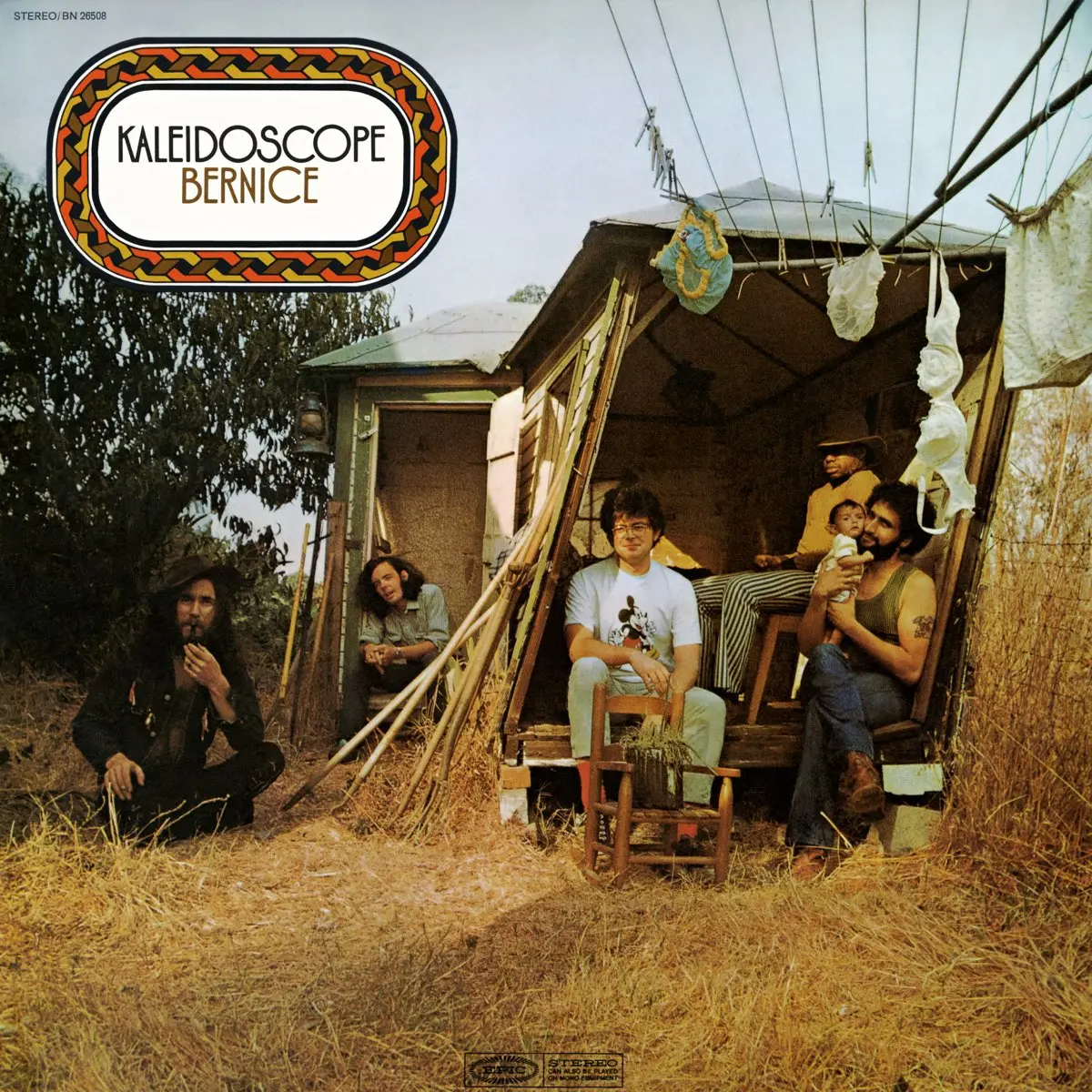 Kaleidoscope released their fourth album, Bernice, in February 1970 on Epic.
Discography:
- Side Trips (1967)
- A Beacon From Mars (1968)
- The Incredible Kaleidoscope (1969)
- Bernice (1970)
- When Scopes Collide (1976)
Sources:
Artist/Album Pages:
Antonello Venditti (born March 8, 1949) is an Italian singer/songwriter who emerged in the duo The...
H.P. Lovecraft were an American psych-rock band from Chicago that released two albums with accomp...
Wanderléa — full name Wanderléa Charlup Boere Salim (born June 5, 1946) — is a Brazilian samba-pop...
Raw Material was an English post-psych band that released a self-titled album in 1970 on small-press...
Fire was a Yugoslav hard-rock/psych trio that released the 1973 album Could You Understand Me. M...
The Aztecs were an Australian rock band formed as a Shadows-style instrumental act by guitarist V...
Ramases was the performance moniker of English folk-psych musician Kimberley Barrington Frost, who...
Lily (りりィ) — 鎌田小恵子 (Feb. 1952 — Nov. 11, 2016) — was a Japanese singer/songwriter who released ten...
Mellow Candle was an Irish folk-rock band, first formed in 1963 as a girl trio. After a one-off si...
Dogfeet were an English hard-rock/psych band from Shrewsbury, Shropshire, that released a self-tit...
Rupert Hine (1947–2020) was an English musician, songwriter, and producer who first recorded with ...
François Wertheimer is a French chanson-folk singer/songwriter who emerged in the pop-psych combo ...