

White Witch was an American art-rock/psych band from Tampa that released two albums between 1972 and 1974 on Capricorn.
Members: Beau Fisher (drums, bass, vocals), Ron Goedert (vocals, percussion), Buddy Pendergrass (keyboards, backing vocals), Bill Peterson (percussion), Buddy Richardson (lead guitar), Bobby Shea (drums, percussion, backing vocals), Charlie Souza (bass, percussion)
Background
White Witch was a Tampa, Florida, art-rock/psych band that released two albums on Capricorn Records between 1972 and 1974. They formed in 1971 with vocalist Ron Goedert, guitarist Buddy Richardson, keyboardist Buddy Pendergrass, drummer Bobby Shea, and bassist Beau Fisher. Several members — Pendergrass, Shea, and Charlie Souza (who later joined as bassist) — had played in the popular mid-’60s Tampa group The Tropics, a regional beat-psych act that issued seven singles between 1965 and 1969, including one Christmas release as Chipper.
After a year on the southeastern club circuit, White Witch signed to Capricorn, becoming the label’s only non–southern rock signing. They cut their debut album at Capricorn’s Macon, Georgia, studio and toured nationally in support, opening for acts such as Alice Cooper, Grand Funk Railroad, and Billy Preston. The band’s name referenced benevolent “white magic,” in contrast to the occult associations of groups like Black Sabbath.
White Witch (first album)
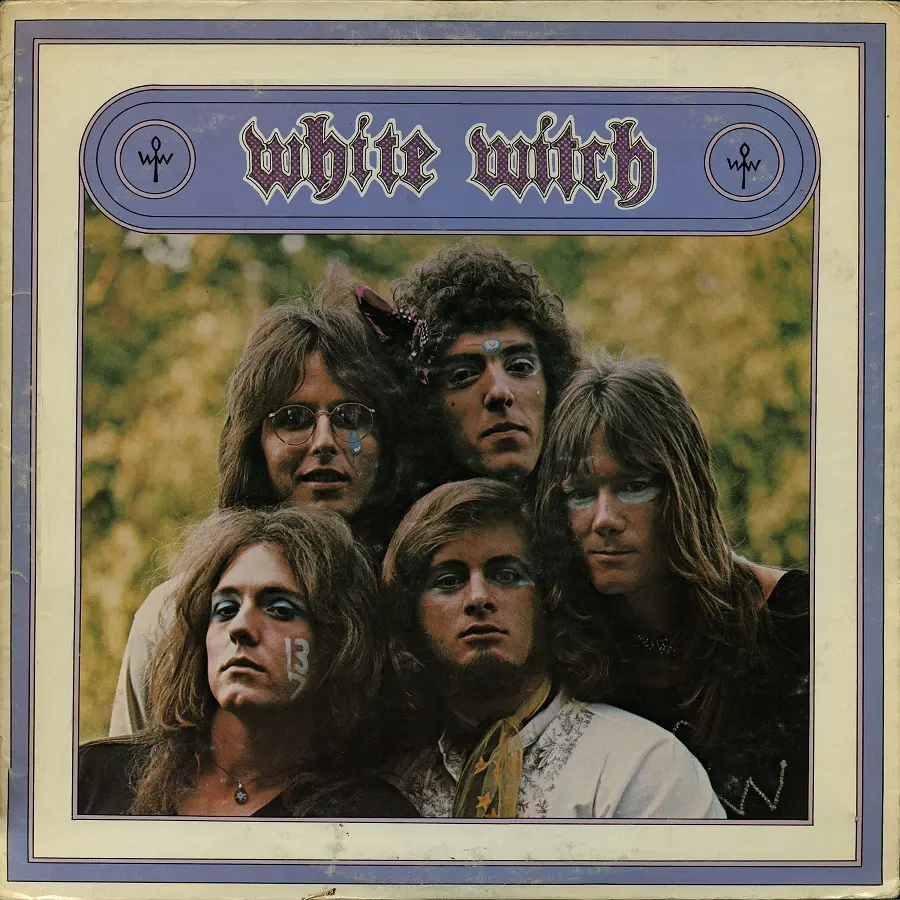 White Witch released their self-titled debut album in July 1972 on Capricorn.
The album blends glam-laced hard rock with keyboard-driven psych, baroque pop, and progressive elements — performed by the original five-piece lineup: Ron Goedert (lead vocals, percussion), Buddy Richardson (lead guitar), Buddy Pendergrass (keyboards), Bobby Shea (drums), and Beau Fisher (bass). Johnny Sandlin produced and engineered the album with assistance from Carl Hornsby and Ovie Sparks.
The album opens with “Parabrahm Greeting” and “Dwellers of the Threshold,” a single track pairing that leads from eerie keyboard textures to anthemic intensity. “Help Me Lord” builds around moody organ and layered vocal harmonies. “Don’t Close Your Mind,” the album’s centerpiece, features wah-wah leads, synth flourishes, and a midsection jam of acoustic guitar and fuzzed-out keyboards. “You’re the One” and “Sleepwalk” follow with a lush synth-pop feel, the latter culminating in a melodic jazz-rock solo.
Side B shifts gears with the barroom shuffle “Home Grown Girl” and the anthemic “And I’m Leaving,” a power ballad released as their first single. “Illusion” returns to hard rock terrain with gritty riffs and ELP-style organ work. “It’s So Nice to Be Stoned” fuses satirical lyrics with music hall flair, while the final suite — “Have You Ever Thought of Changing?” / “Jackson Slade” and the short epilogue “The Gift” — brings the album full circle with a return to cosmic thematics.
A1. “Parabrahm Greeting” / “Dwellers of the Threshold” (3:13)
A2. “Help Me Lord” (3:09)
A3. “Don’t Close Your Mind” (7:00)
A4. “You’re the One” (3:15)
A5. “Sleepwalk” (4:27)
B1. “Home Grown Girl” (3:05)
B2. “And I’m Leaving” (2:58)
B3. “Illusion” (5:11)
B4. “It’s So Nice to Be Stoned” (3:38)
B5. “Have You Ever Thought of Changing?” / “Jackson Slade” (3:30)
B6. “The Gift” (1:45)
Sessions occurred in May–June 1972 at Capricorn Sound Studios in Macon, Georgia. Produced and engineered by Johnny Sandlin with engineering assistance from Carl Hornsby and Ovie Sparks. Album design by Barry Feinstein and Vicki Hodgetts; photography by Capricorn. Original pressing issued by Capricorn Records (a Warner Bros. affiliate).
Capricorn spread eight of the album’s eleven tracks across four singles:
– Oct. 1972: “And I’m Leaving” b/w “Parabrahm Greeting / Dwellers of the Threshold”
– Feb. 1973: “Don’t Close Your Mind” b/w “You’re the One”
– June 1973: “Home Grown Girl” b/w “It’s So Nice to Be Stoned”
– Aug. 1973: “Help Me Lord” b/w “Home Grown Girl”
Bassist Beau Fisher left shortly after the album’s release and was replaced by Charlie Souza of Tampa hard-rock trio Bacchus.
A Spiritual Greeting
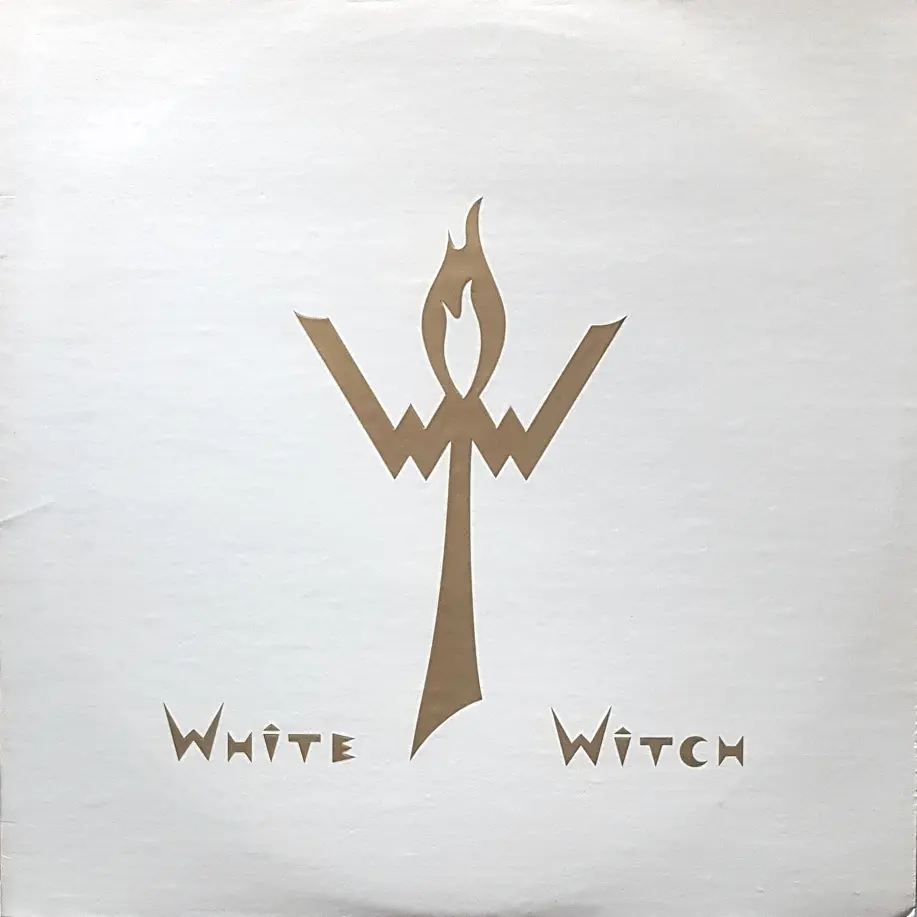 White Witch released their second and final album, A Spiritual Greeting, in May 1974 on Capricorn. It expands on the stylistic eclecticism of their debut with a bolder fusion of glam rock, Southern boogie, hard psych, and progressive textures.
Recorded during a period of internal change, A Spiritual Greeting features core members Ron Goedert (vocals), Buddy Richardson (guitar), Buddy Pendergrass (keyboards), and Bobby Shea (drums), joined by new recruits Charlie Souza (bass) and Bill Peterson (percussion), both of whom cut prior singles in Bacchus. Rabbi Barbee, briefly in the band between albums, co-wrote the two side-closers with Richardson and Goedert, who co-wrote the rest with Pendergrass.
The album opens with “We’ll All Ride High (Money Bags),” a riff-driven track that evokes Aerosmith with quirky glam touches. “Slick Witch” combines Southern boogie with glitter rock flair, while “Walk On” stands out as a mellow ballad with layered harmonies and bluesy soloing. “Class of 2000,” the album’s epic track, pairs sci-fi lyrical fantasy with prog instrumentation and soaring vocals.
Side B opens with the organ-heavy rocker “Showdown,” followed by the dreamlike “Crystallize and Realize,” a delicate mix of synth and acoustic textures. “Black Widow Lover” blends Southern rock and glam in a catchy pop structure. The closer, “Auntie Christy / Harlow,” surges with heavy prog intensity, driven by Goedert’s dramatic vocals and Richardson’s blistering guitar leads.
A1. “We’ll All Ride High (Money Bags)” (5:08)
A2. “Slick Witch” (4:51)
A3. “Walk On” (3:35)
A4. “Class of 2000” (6:15)
B1. “Showdown” (4:07)
B2. “Crystallize and Realize” (4:53)
B3. “Black Widow Lover” (3:53)
B4. “Auntie Christy / Harlow” (5:17)
Produced by brother Ron and Howard Albert (aka Fat Albert Productions), the album was mastered by Karl Richardson. Capricorn lifted “Walk On” as a single (b/w “Showdown”).
Aftermath
Despite strong musicianship and adventurous songwriting, A Spiritual Greeting struggled to find its audience within the Southern rock-dominated roster of Capricorn. The band folded shortly after the album’s release, leaving behind two cult records revered by glam-prog aficionados.
Ron Goedert surfaced with the 1980 Polydor release Breaking All the Rules, recorded with future Molly Hatchet bassist Riff West.
Discography:
- White Witch (1972)
- A Spiritual Greeting (1974)
Sources:
- Discogs: White Witch
- MusicBrainz: White Witch
- RYM: White Witch
- 45cat: White Witch
- ProgArchives: White Witch
Artist/Album Pages:
Illustration was a Québécois brass-rock band that released a 1969 self-titled album on Janus. Me...
Hodges, James & Smith were an American vocal trio that released four albums between 1973 and 1...
Hackamore Brick was an American band from Brooklyn that released the album One Kiss Leads to Another...
Velvett Fogg was an English psych-rock band that released a 1969 self-titled album and the Tornado...
Laura Nyro (Oct. 18, 1947 — April 8, 1997) was an American singer, songwriter, and pianist from th...
Balance was an American rock band that released the 1981/82 albums Balance and In for the Count an...
Sandy Denny — aka Alexandra Elene Maclean Denny (Jan. 6, 1947 — April 21, 1978) — was an English s...
Every Which Way was an English psych-rock/soul band that released a self-titled album on Charisma ...
Hero was an Italian symphonic/hard-rock trio that recorded an album in Germany, where its 1974 rel...
Cactus was an American hard-rock|blues band that released four albums between 1970 and 1972 on At...
White Noise was the electronic/experimental musical project of English keyboardist, composer, and ...
Il Balletto di Bronzo was an Italian symphonic/psych band that released the 1970 album Sirio 2222,...