

The Work was an English avant/art-punk band that issued the single “I Hate America” on self-press Woof Records in 1981, followed by the album Slow Crimes in 1982. A later round of activity yielded the discs Rubber Cage (1989) and See (1992), both again on Woof.
Multi-instrumentalist Tim Hodgkinson hailed from 1970s avant/chamber-rockers Henry Cow. Bassist Mick Hobbs played with early 1980s art-punks Family Fodder.
In 1989, they teamed with Unrest Work & Play drummer Andy Wake in side-trio The Momes, which issued the disc Spiralling on Woof. Work guitarist/vocalist Bill Gilonis collaborated with Belgian singer Catherine Jauniaux in The Lowest Note on the Organ and The Hat Shoes, the latter featuring Curlew/Nimal cellist Tom Cora and Quiet Sun/This Heat/Camberwell Now drummer Charles Hayward.
Members: Bill Gilonis (guitar, vocals), Tim Hodgkinson (guitar, keyboards, vocals), Mick Hobbs (bass), Rick Wilson (drums, vocals)
Background
The Work formed in 1980 as the full-band outgrowth of a Tim Hodgkinson–Bill Gilonis partnership. Hodgkinson, a reedist and keyboardist, studied social anthropology at Cambridge and co-founded Henry Cow with Fred Frith during his student period. He remained with Henry Cow until its 1978 breakup, then formed a local community street orchestra with Ken Hyder and took solo improvisation dates. Gilonis met Hodgkinson at a workshop at his former school and later joined him in the Wandsworth Municipal Street Orchestra. The pair recorded the hand-silkscreened EP I Do – I Do – I Don’t – I Don’t and founded Woof Records for its 1980 release.
Hodgkinson and Gilonis advertised for a rhythm section after the duo material established the label. Bassist Mick Hobbs, formerly of the University of London Jazz Quartet, answered the notice after an earlier Henry Cow bassist advert had passed him by. Hobbs recommended drummer Rick Wilson, who first sat in with the pair and then joined the group. The lineup paired reedist–keyboardist Hodgkinson and guitarist Gilonis with bassist Hobbs and drummer Wilson.
The Work prepared structured instrumental material for the International Festival of New Music at Reims. During summer 1980, the group shifted toward short songs built from rhythm and electric-guitar noise. Through 1981, The Work toured Holland, Belgium, Switzerland, Sweden, Finland, Norway, Germany, France, Italy, and Yugoslavia.
“I Hate America” / “Fingers & Toes” / “Duty”
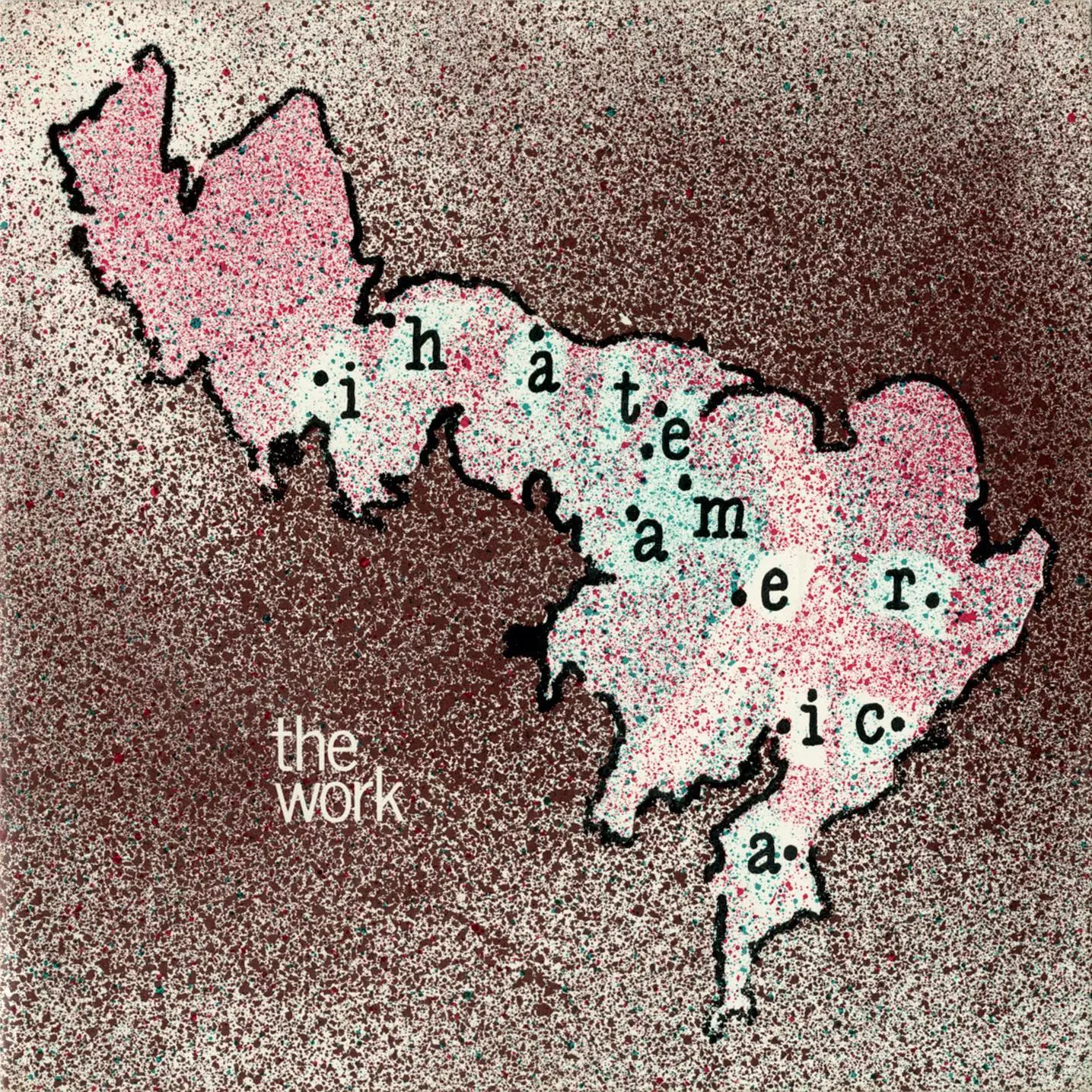 The Work issued their first single, “I Hate America,” in March 1981 on Woof Records. The clear-vinyl 7-inch pairs the A-side with “Fingers & Toes” and “Duty” on the reverse. The single features multi-instrumentalist Tim Hodgkinson (vocals, organ, Hawaiian guitar), guitarist Bill Gilonis, multi-instrumentalist Mick Hobbs (bass, guitar), and drummer Rick Wilson with voice.
“I Hate America” charges with serrated accents, disjointed ensemble cuts, and strident, shouted lyrics. “Fingers & Toes” jerks through shorter jolts and blunt phrase breaks. “Duty” truncates the single’s damaged attack into a compressed fragment.
A. “I Hate America” (5:50)
B1. “Fingers & Toes” (2:50)
B2. “Duty” (1:00)
The Work recorded the single on a four-track Teac in January 1981 and engineered the session with Maggie Thomas as mixer. Woof assigned the release catalog number WOOF 002. The sleeve depicts Britain on its side with “I Hate America” presented as a national slogan, attributed letter-by-letter to the cities of Irvine, Hawick, Alnwick, Thirsk, Easingwold, Accrington, Manchester, Evesham, Rolvenden, Innsworth, Chichester, and Ashcombe.
Slow Crimes
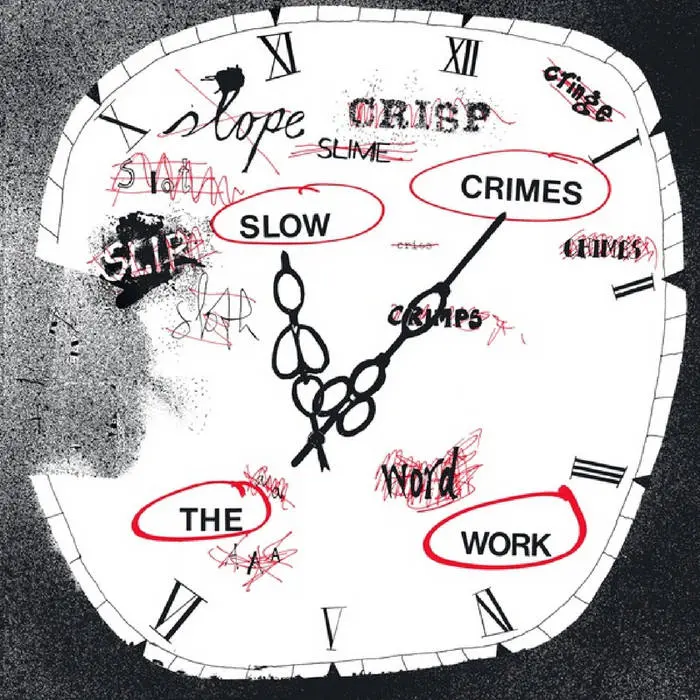 The Work released their debut album, Slow Crimes, in April 1982 on Woof Records.
The album contains twelve group compositions, performed by multi-instrumentalists Bill Gilonis (guitar, bass, euphonium, Jew’s harp, vocals), Mick Hobbs (bass, guitar, drums, recorder, ukulele, vocals), Tim Hodgkinson (Hawaiian guitar, saxophone, keyboards, vocals), and Rick Wilson (drums, bass, vocals), with guest singer Catherine Jauniaux on “Pop,” “Cain & Abel,” “Le Travail,” and “Maggot Song.”
“Balance” careens through a polka-tilted pulse, abrupt accent turns, and collective vocal agitation. “Pop” convulses through clipped calls, skewed chant patterns, and abrupt phrase cuts. “Like This” jabs at the same brittle song shape with sharper stop-start pressure. “Knives” barrels through a grotesque group surge and hard-edged clatter.
“Cain & Abel” prowls through angular lines and a warped dance pulse. “State Room” clamps noise pressure to bent syncopation. “Brickyard” sets layered percussion against a straight drive and serrated guitar figures. “Do It” jolts from a false-start opening into bent syncopation and noise pressure. “Le Travail” withdraws into atmospheric restraint before Jauniaux’s formal vocal entry stiffens the line.
A1. “Nearly Empty” (2:55)
A2. “Balance” (2:10)
A3. “Pop” (4:42)
A4. “Flies” (2:22)
A5. “Like This” (2:53)
A6. “Knives” (3:27)
B1. “Cain & Abel” (4:11)
B2. “State Room” (3:24)
B3. “Brickyard” (4:37)
B4. “Do It” (2:18)
B5. “Le Travail” (3:34)
B6. “Maggot Song” (2:57)
The Work produced Slow Crimes during sessions between September 1981 and January 1982 at Cold Storage Studios in London, Surrey Sound Studios in Leatherhead, Sunrise Studios in Kirchberg, and 50 Rue De Rittweger in Brussels. Peter Bullen engineered the Cold Storage tracks with additional engineering by Charles Bullen. Chris Gray engineered the Surrey Sound tracks, and Etienne Conod engineered the Sunrise tracks with additional engineering by Bubu Steiner. Maggie Thomas engineered the first part of “Pop” in Brussels.
Interim Activities
After the June 1982 Japan tour, The Work stopped as a working band. Hodgkinson and Gilonis kept Woof active with The Worst of Everywhere, a cassette drawn from earlier Work tapes, and Fluvial, a 1983 album by Catherine Jauniaux and Hodgkinson.
Hodgkinson and Gilonis then issued The Lowest Note on the Organ’s 1983 EP and the 1984 single “Piggy Bank,” which continued the Gilonis–Jauniaux partnership. The 1984 benefit EP The Last Nightingale placed Hodgkinson and Gilonis in a Cold Storage session with Robert Wyatt and former Henry Cow players Lindsay Cooper and Chris Cutler. Gilonis played guitar and bass on Letters Home, the second News from Babel album.
Mick Hobbs made Officer! his main outlet through the rest of the decade. Officer! opened with the 1982 cassette 8 New Songs By Mick Hobbs. Hobbs followed it with Ossification and recorded the 1985 album Cough in France. Officer! closed its first run with the 1988 album Yes Yes No No Yes No Yes. Rick Wilson played with Hobbs at Cold Storage on “Life at the Water’s Edge,” an Officer! song from the 1983 cassette 8 New Songs By Mick Hobbs.
Hodgkinson issued the 1985 solo album Splutter. In February 1987, Hodgkinson played with Kalahari Surfers at the Rote Lieder DDR Festival of Political Songs. Hodgkinson and Hobbs then formed The Momes with drummer Andy Wake from Unrest Work & Play. The trio cut Spiralling at Cold Storage, and Hodgkinson and Gilonis issued it on Woof before the 1989 Work reunion.
The Momes – Spiralling
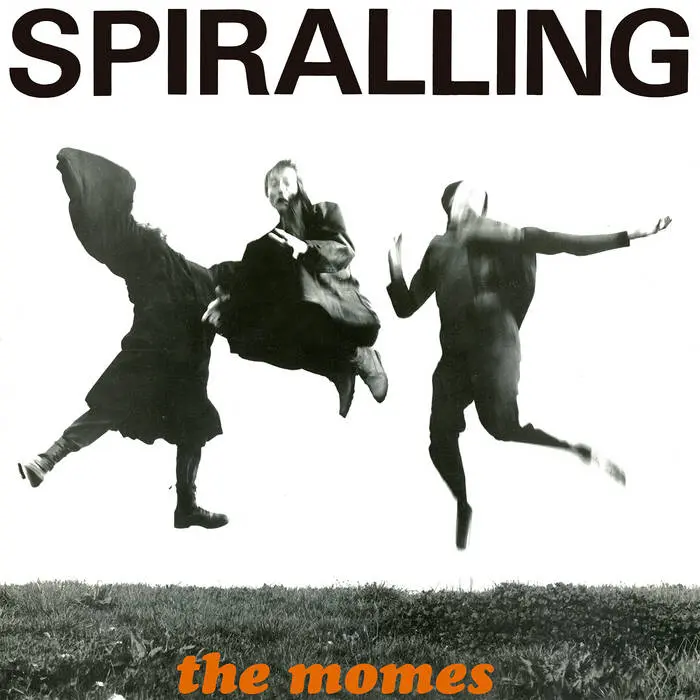 The Momes released their only album, Spiralling, in 1989 on Woof Records.
The album contains eleven Hodgkinson/Hobbs/Wake titles, performed by multi-instrumentalists Tim Hodgkinson (flat-guitar, keyboards, voice) and Mick Hobbs (bass, guitar, sequencer, voice) with drummer Andy Wake.
Spiralling lurches through abrasive trio pressure, crooked meter changes, noisy surface detail, and stop-start construction. The album keeps vocal phrases inside the instrumental clash, with chants and clipped lines folded into dry-edged scrape. The arrangements sound unstable at first contact, but repeated accents, phrase returns, and tight ensemble jolts hold the pieces in intricate shapes.
A1. “Lobby” (0:34)
A2. “Friday” (2:11)
A3. “Mirror Egg” (4:56)
A4. “Bloodsucking Babies” (3:18)
A5. “Ghosts” (4:39)
A6. “Locust Swarm” (5:48)
B1. “Core of Water” (5:36)
B2. “Dog” (3:33)
B3. “World Is Only Turning” (3:20)
B4. “Nitrate Mine” (7:14)
B5. “Slab” (3:11)
The Momes produced Spiralling at Cold Storage Studios in London with engineers Charles Bullen and Hodgkinson. Woof assigned the album catalog number WOOF 011. Bill Gilonis photographed the cover and label package, and Delga Press Limited printed the cover.
Rubber Cage
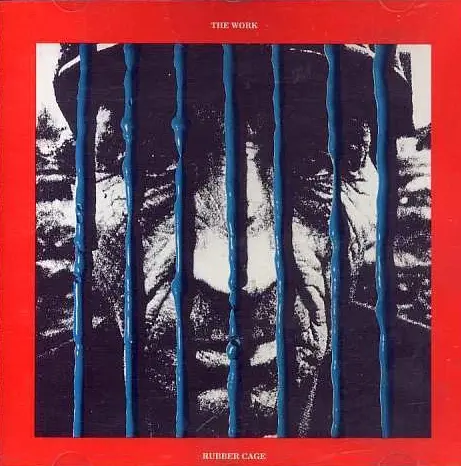 The Work released their second album, Rubber Cage, in December 1989 on Woof Records, Ayaa, and In-Poly-Sons.
The album contains twelve tracks, performed by guitarist Bill Gilonis (sampling, vocals on “Quack”), bassist Mick Hobbs (guitar, MIDI-horn), multi-instrumentalist Tim Hodgkinson (flat guitar, keyboards, alto and baritone saxophones, bass clarinet, vocals), and drummer Rick Wilson (percussion, cello on “Dangerfish,” vocals on “Trauma”).
Rubber Cage concentrates compact pressure, mobile low-register movement, abrupt sectional cuts, and self-contained blocks. “Abdomen” skitters on a mobile bassline and clipped ensemble stabs. “Jay” straightens into an unsyncopated drive with blunt forward motion. “The Great Climax” suspends pulse through echo, sparse events, and a near-stilled sense of time.
A1. “Poise” (0:57)
A2. “Abdomen” (2:26)
A3. “Felt” (1:20)
A4. “Commerce and Despair” (2:46)
A5. “Dangerfish” (4:33)
A6. “1992” (5:58)
B1. “Coloured Water” (3:10)
B2. “Stone” (4:19)
B3. “Trauma” (3:44)
B4. “Knee” (1:52)
B5. “Jay” (2:20)
B6. “Quack” (3:40)
The Work recorded and mixed the album at Cold Storage Studios in London from October 23–30, 1989. Woof assigned the album catalog number WOOF 012, with Ayaa number DT 1090 and In-Poly-Sons number IPS 1289.
See
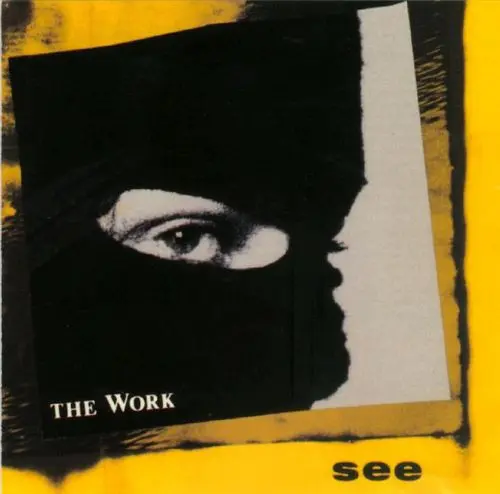 The Work released their third album, See, in 1992 on Woof Records and Megaphone.
The album contains twelve titles, performed by guitarist Bill Gilonis, bassist Mick Hobbs, multi-instrumentalist Tim Hodgkinson (guitar, keyboards, saxophone, clarinet, vocals), and drummer Rick Wilson.
See hardens the later Work method into dry rhythmic cells, gritted refrains, and tighter sectional blocks. “Warehouse” knots a bent refrain to a mechanized pulse. “The Rim” coils around similarly gritted song motion and blunt accent pressure. “Tell” suspends dry guitar figures inside an unusual rhythmic shell. “Shine” compresses formal sectional turns into a miniature suite.
1. “Blind” (3:00)
2. “Steam” (1:10)
3. “Eat” (5:37)
4. “Disgrace” (1:45)
5. “Shock” (3:27)
6. “The Rim” (4:41)
7. “Hive” (5:32)
8. “Shine” (4:54)
9. “Tell” (3:58)
10. “Repossession” (2:19)
11. “Warehouse” (5:47)
12. “Pursuit” (2:43)
The Work produced See at Foel Studios in Powys, Wales, with engineer Dave Anderson during May–June 1992. Woof assigned the album catalog number WOOF 015; the Spanish CD appeared through Discmedi and Nova Era as DM-NE-CD-4001.
Discography:
- “I Hate America” / “Fingers & Toes” / “Duty” (1981)
- Slow Crimes (1982)
- Rubber Cage (1989)
- See (1992)
Sources:
Artist/Album Pages:
Gunesh was a Turkmenistanian jazz-rock ensemble, active twenty years through numerous lineups. For...
Frigidaire Tango was an Italian new wave band that released the album The Cock in 1982 on small-pr...
André Marie Tala (born Oct. 29, 1950) is a Cameroonian guitarist, percussionist, and vocalist who ...
Logg was an American soul-funk band that released a 1981 self-titled album on Salsoul Records. M...
John Entwistle (1944–2002) was an English rock bassist and songwriter, known as "the quiet one" in...
Ambiance was an American jazz-funk/soul band from Los Angeles that released the 1979/80 albums Ebu...
Loverboy was a Canadian AOR band that released five albums on Columbia between 1980 and 1987. Thei...
Bingo Miki & Inner Galaxy Orchestra were a Japanese jazz-rock big band behind the 1978/79 albu...
Novela (ノヴェラ) was a Japanese symphonic-rock band that released six albums on Nexus between 1980 an...
If was an English sax-rock band from London that released two albums on Island in 1970, followed b...
Sweet Slag was an English jazz-rock/blues band from Luton that released the album Tracking With Cl...
The Pointer Sisters were an American soul-pop group from Oakland, formed in 1969 by sisters Anita,...