

Jack the Lad was an English folk-rock band from Newcastle that released three albums during 1974/75 on Charisma, followed by a 1976 fourth on United Artists. They emerged from the initial breakup of Lindisfarne. For their 1976 Jackpot tour, they donned jester hats and toured with jester-haired Kiwi art-rockers Split Enz.
Members: Simon Cowe (guitar, bass, vocals, mandolin), Ray Laidlaw (drums), Billy Mitchell (guitar, banjo, vocals), Rod Clements (bass, violin, guitar, vocals), Ian Fairbairn (guitar, mandolin, banjo, violin, vocals), Phil Murray (bass, vocals)
Background
Jack the Lad formed on Tyneside in 1973 when Lindisfarne multi-instrumentalists Rod Clements, Simon Cowe, and drummer Ray Laidlaw recruited Canadian guitarist–banjoist and singer Billy Mitchell. The first lineup featured the sundry skills of Clements (bass, violin, guitar, vocals) and Cowe (guitar, mandolin, banjo, vocals).
Roderick Parry Clements was born on November 17, 1947, in North Shields, Northumberland. He attended King’s School, Tynemouth, and Durham University, where he studied English, anthropology, and ancient history. Clements started guitar at fourteen and bass at fifteen, then played school parties and concerts before he formed Impact with Laidlaw in North Shields. In summer 1966, Clements and Laidlaw launched Downtown Faction.
Ray Laidlaw was born on May 28, 1948, in North Shields. Laidlaw attended St Cuthbert’s Catholic Grammar School, Newcastle, and Newcastle College of Art and Industrial Design. He started drums at fourteen, played with the Aristokats and the Druids, then joined Clements in Impact and Downtown Faction.
Simon Cowe was born on April 1, 1948, in Jesmond Dene, Newcastle upon Tyne. Cowe attended King’s School, Tynemouth, and Fettes College, Edinburgh, and took piano lessons from childhood. During school holidays in 1963, Cowe played guitar in the Aristokats with Laidlaw. In early 1968, Downtown Faction added Cowe as second guitarist. With singer Alan Hull, they morphed into Brethen, then settled as Lindisfarne with fifth member Ray Jackson.
Billy Mitchell started guitar in the early Sixties and formed the Triffids with youth-club friends. The group became Model T before Mitchell moved into Newcastle folk clubs with The Callies, which cut the 1971 album On Your Side, released on Tyneside-press Rubber Records. Mitchell lived in Vancouver before Clements, Cowe, and Laidlaw called him back to England.
The original Lindisfarne became an inaugural Charisma Records act with their 1970 debut Nicely Out of Tune, followed by their popular 1971 released Fog on the Tyne. After their 1972 album Dingly Dell, Lindisfarne split into two camps. Hull and Jackson formed a new lineup, while Clements, Cowe, and Laidlaw built Jack the Lad as a separate group. Cowe traced the band name to a phrase Status Quo used during an Australian tour with Lindisfarne. The group booked early shows before the name decision.
Charisma retained the breakaway group and issued their May 1973 debut single: “One More Dance,” a Clements original backed with “Draught Genius (Polka),” a trad adaptation.
It’s Jack the Lad
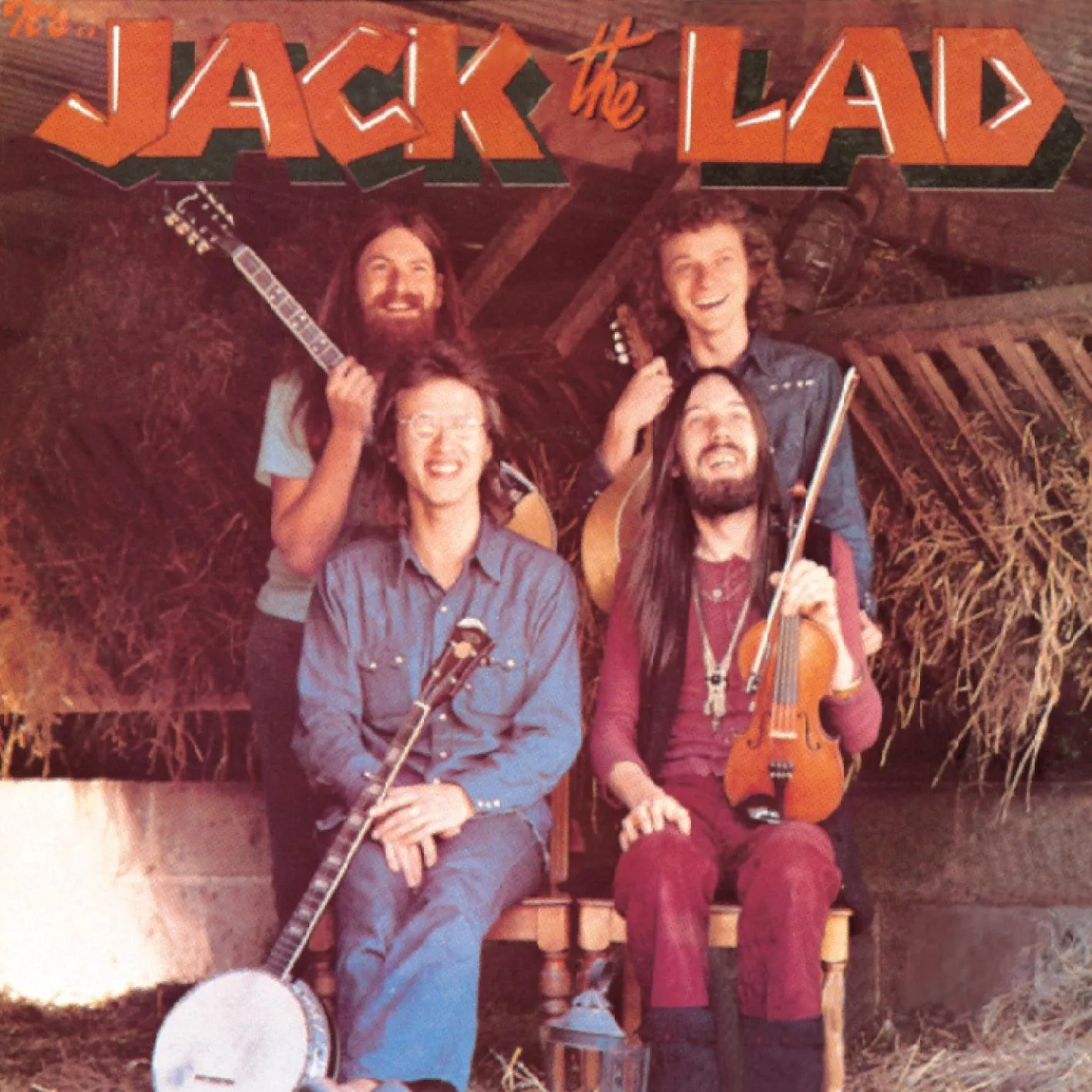 Jack the Lad released their debut album, It’s Jack the Lad, in March 1974 on Charisma.
The album contains ten originals and the traditional medley “A Corny Pastiche.” Mitchell supplies three titles and shares two with Tony Grey; Clements contributes three and Cowe two. Guest credits place Maddy Prior on “Song Without a Band,” with keyboards by Tommy Eyre and concertina by Jimmy Wrightson.
“Boilermaker Blues” barges through a fade-in surge, banjo attack, busy bass, fiddle flashes, spiky guitar, and close harmonies. “Back On the Road Again” lingers on close group harmonies, then jolts into car-engine effects and a brief electric charge before a plucked riff. “Plain Dealing” shuffles through half-spoken narration, oompah backing, brass-band color, and tack-piano saloon accents.
“Fast Lane Driver” climbs from a growled opening into a power-stepped middle eight, a mournful horn figure, feedback slashes, a screamed crest, and a closing keyboard figure. “Turning Into Winter” rests on muted mandolin and faint strings, then breaks its stillness with a brisk closing jig. “Why Can’t I Be Satisfied?” tramps on a walking line, then lifts through a late key change into unaccompanied group harmony.
“Song Without a Band” pivots between homebound replies and road-worn lines, with Maddy’s double-tracked cameo and an abrupt piano break. “Rosalee” struts through period-band flourishes and a Cowe–Mitchell harmony turn. “A Corny Pastiche” races through hornpipe, shanty, electric–fiddle crossings, and a lopsided closing jig. “Lying On the Water” passes the lead between players every few bars and ends in rattled hand-percussion noise.
A1. “Boilermaker Blues” (2:44) – Mitchell, Grey
A2. “Back on the Road Again” (4:07) – Mitchell
A3. “Plain Dealing” (3:14) – Clements
A4. “Fast Lane Driver” (5:52) – Clements
A5. “Turning into Winter” (5:29) – Mitchell
B1. “Why Can’t I Be Satisfied” (4:06) – Clements
B2. “Song Without a Band” (3:50) – Cowe
B3. “Rosalee” (2:27) – Cowe
B4. “Promised Land” (3:53) – Mitchell
B5. “A Corny Pastiche (Medley): The Black Cock of Whickham / Chief O’Neill’s Favourite / The Golden Rivet / Staten Island / The Cook in the Kitchen” (4:49) – traditional, arranged by Jack the Lad
B6. “Lying on the Water” (3:38) – Mitchell, Grey
Hugh Murphy produced the album with engineer Phil Chapman and assistant engineers Jon, Nigel, and Andy. Frank Sansom handled art direction, Roc Advertising handled artwork, and Paul Harris supplied photography.
“Why Can’t I Be Satisfied” first appeared in November 1973 as their second single, backed with the non-album “Make Me Happy,” a Mitchell-penned Callies remake.
The Old Straight Track
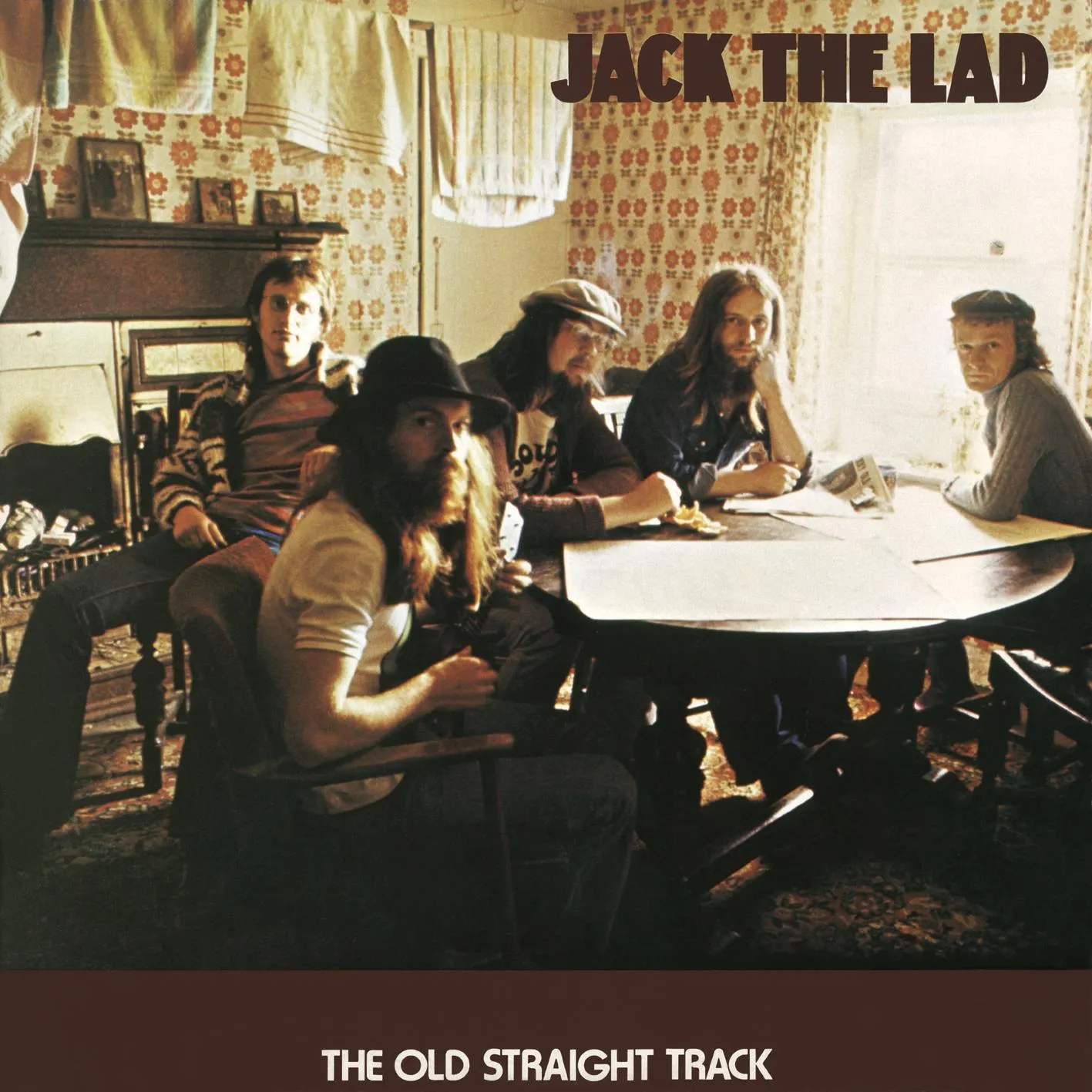 Jack the Lad released their second album, The Old Straight Track, in October 1974 on Charisma.
Straight Track replaces Clements with bassist Phil Murray and adds multi-instrumentalist Ian Fairbairn. The program shifts toward arranged traditional material, with six folk-source titles beside four Cowe originals and Mitchell’s side-long “The Wurm.”
“Oakey Strike Evictions” surges through rotating lead voices, a massed chant, counterpointed guitar riffs, and a low line that drops from the gallows scene. “Jolly Beggar” crawls under quick-snapped vocal rhymes, a moody rhythm section, and a background laugh. “The Third Millennium” darts from antiqued peasant narrative into sharper electric strikes and a straight-faced doomsday chant.
“Fingal the Giant” divides the human and giant parts between separate voices, then recedes under bell-toll accents. “Weary Whaling Grounds” heaves across wave effects, a bouncing bass figure, and a half-heard closing chant. “The King’s Favourite/The Marquis of Tullybardine” picks through quiet figures before crashing into a riotous jig.
“Peggy (Overseas With a Soldier)” flickers with an opening flute run, clipped vocal rhymes, an a cappella passage, and staccato accents. “Buy Broom Buzzems” veers into a middle section where fiddle and mandolin cross electric figures in a waltz pattern. “De Havilland’s Mistake” chirps through mandolin lead and odd spoken-account inserts. “The Old Straight Track” glides through long narrative lines and a flowing chorus. “The Wurm” shifts across a march tread, an angry burst, a major–minor fiddle passage, a Cowe solo turn, a lilting rescue, and a final electric jolt.
A1. “Oakey Strike Evictions” (3:07) – T. Armstrong, arranged by Jack the Lad
A2. “Jolly Beggar” (2:53) – traditional, arranged by Jack the Lad
A3. “The Third Millennium” (2:00) – Cowe
A4. “Fingal the Giant” (3:23) – Cowe
A5. “Weary Whaling Grounds” (5:15) – traditional, arranged by Jack the Lad
A6. “King’s Favourite / The Marquis of Tullybardine” (2:35) – traditional, arranged by Jack the Lad
B1. “Peggy (Overseas With a Soldier)” (2:55) – traditional, arranged by Jack the Lad
B2. “Buy Broom Buzzems” (2:30) – traditional, arranged by Jack the Lad
B3. “De Havilland’s Mistake” (2:27) – Cowe
B4. “The Old Straight Track” (2:56) – Cowe
B5. “The Wurm” (8:02) – Mitchell
Hugh Murphy produced the album. Frank Sansom handled sleeve art direction, P. Promotion handled artwork, and James Upton Ltd. printed the sleeve.
Rough Diamonds
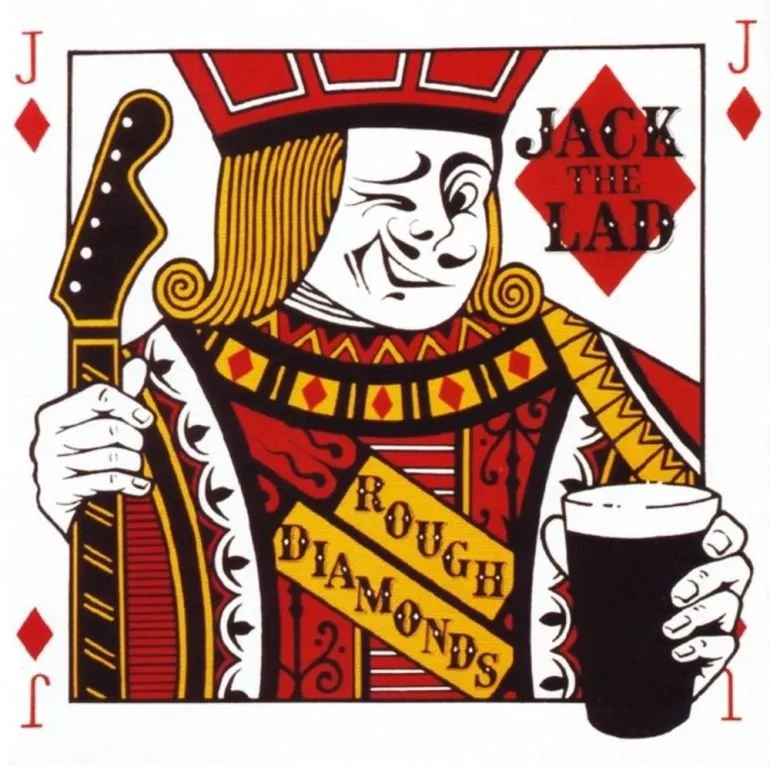 Jack the Lad released their third album, Rough Diamonds, in 1975 on Charisma.
Rough Diamonds retains the Murray–Fairbairn lineup and pairs eight Mitchell–Cowe originals with three arranged traditional pieces. Mitchell and Cowe split the original material evenly. Ray Jackson adds harmonica to “Rocking Chair”; John Kirkpatrick adds button accordion to “Gentleman Soldier.”
“Rocking Chair” swaggers through a bouncy arrangement, fiddle figures, heavy bass, acoustic strums, and Jackson’s harmonica break. “Smoker’s Coughin’” clatters through twin banjos, music-hall phrasing, close group harmonies, whispered replies, and staged coughs. “Captain Grant” snaps through stop-start entries as players drop in and out of the highwayman narrative. “My Friend the Drink” bounces on a loud low-line riff while the lyric turns the bottle into a substitute lover.
“A Letter From France” sways through honky-tonk accents, banjo backing, mock-formal dialogue, and a giggled escape plot. “Gentleman Soldier” claps through stacked opening voices, brisk mandolin–banjo strums, a squeezebox jig, and a sudden full-tilt guitar-and-fiddle break. “Gardener of Eden” softens into a spare traditional-leaning vocal line and a restrained devotional scene. “One for the Boys” sinks into dark pub-address lines, then opens the singer’s inventory into communal replies.
“The Beachcomber” drifts through foxtrot shadow and film-noir shading, with harmonies set behind Billy Mitchell’s narration. “The Ballad of Winston O’Flaherty” starts with slow precision, accelerates into manic feedback, and carries a Celtic-edged medley. “Jackie Lusive” snaps open with a cappella voices, old-card-table language, quick string figures, and a shouted game-name coda.
A1. “Rocking Chair” (3:38) – Mitchell
A2. “Smokers Coughin’” (2:45) – Cowe
A3. “Captain Grant” (2:48) – traditional, arranged by Jack the Lad
A4. “My Friend the Drink” (2:23) – Mitchell
A5. “A Letter From France” (3:56) – Mitchell
B1. “Gentleman Soldier” (2:58) – traditional, arranged by Jack the Lad
B2. “Gardener of Eden” (3:25) – Cowe
B3. “One for the Boy” (3:10) – Mitchell
B4. “The Beachcomber” (3:52) – Cowe
B5. “The Ballad of Winston O’Flaherty (Instr.)” (2:22) – traditional, arranged by Jack the Lad
B6. “Jackie Lusive” (2:56) – Cowe
Sessions occurred in July 1975 at Sound Techniques, where Simon Nicol produced the album and Vic Gamm recorded the sessions. Ray Jackson supplied the cover artwork.
Charisma lifted “Gentleman Soldier” as a May 1975 single (b/w “Oakey Strike Evictions”). “Rocking Chair” followed as an October 1975 single (b/w “My Friend the Drink”).
Jackpot
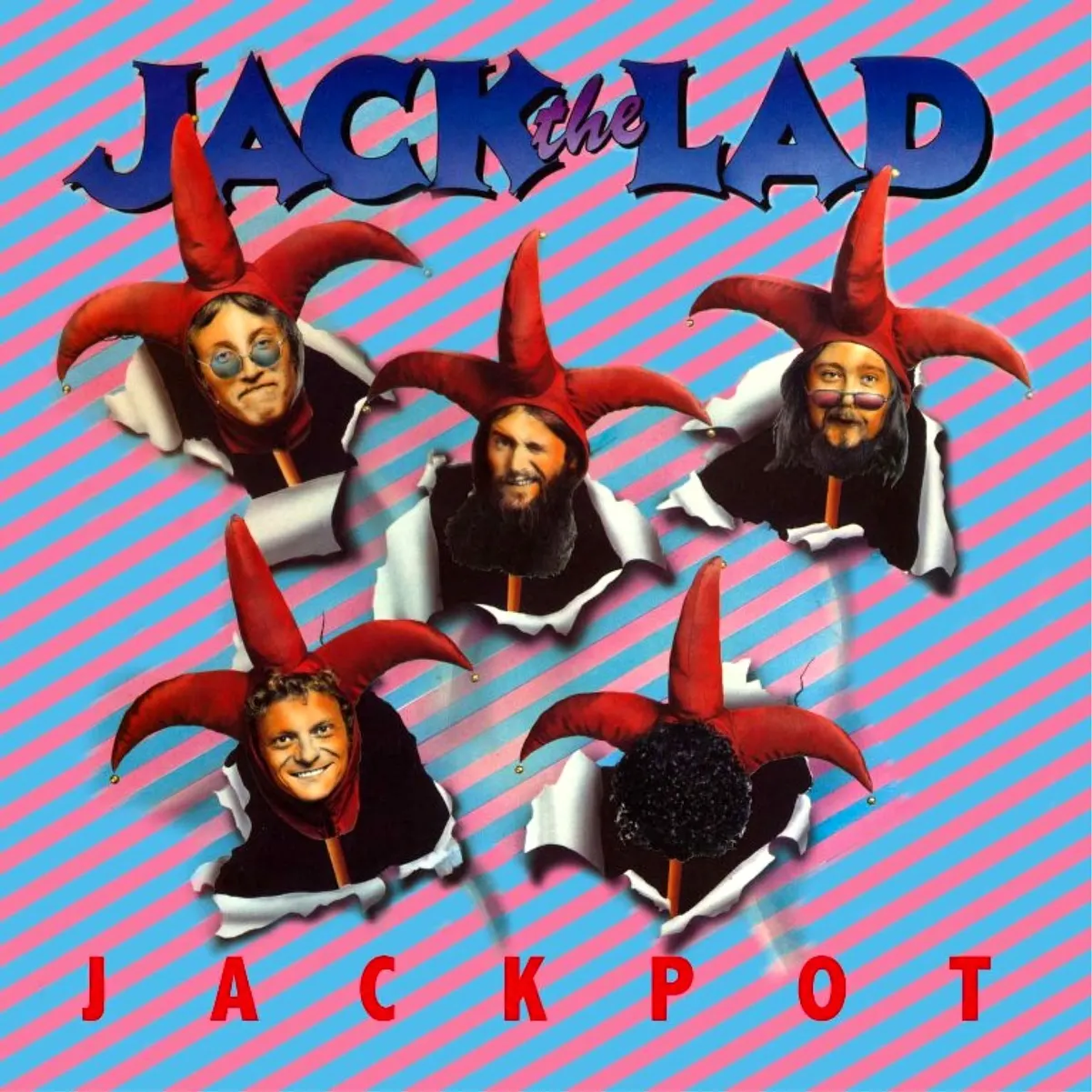 Jack the Lad released their fourth album, Jackpot, in 1976 on United Artists.
Jackpot reduces Jack the Lad to the four-piece lineup of Mitchell, Fairbairn, Laidlaw, and Murray. The album contains six Mitchell originals, two trad arrangements, and covers of Andy Fairweather Low (“Eight Ton Crazy”) and John Hartford (“Steamboat Whistle Blues”).
Harpist Ray Jackson makes a second guest appearance. Jackpot also courts keyboardist Andy Bown and assorted hornists (Bud Beadle, Chris Mercer, Steve Gregory) and steelpanists (Howdon-on-Tyne Illegal Immigrants Club).
A1. “Eight Ton Crazy” (3:38) – Fairweather Low
A2. “Amsterdam” (4:12) – Mitchell
A3. “Steamboat Whistle Blues” (2:55) – Hartford
A4. “Walter’s Drop” (2:44) – traditional, arranged by Jack the Lad
A5. “We’ll Give You The Roll” (4:45) – Mitchell
B1. “Trinidad” (4:08) – Mitchell
B2. “You, You, You” (4:25) – Mitchell
B3. “Let It Be Me” (2:50) – Mitchell
B4. “The Tender” (2:42) – traditional, arranged by Jack the Lad
B5. “Take Some Time” (2:49) – Mitchell
Tom Allom produced the album with engineers Bill Price, Dave Bellotti, and Gary Edwards. BilBo mastered the album. ROC Advertising handled art direction.
United Artists lifted “Eight Ton Crazy” as a September 1976 single (b/w “Walter’s Drop”). “Trinidad” followed as an October 1976 single (b/w “Let It Be Me”).
Jack the Lad embarked on a late 1976 tour with Split Enz, a New Zealander septet promoting Second Thoughts, their second album and Norther Hemisphere debut. The two groups did cameos during each other’s sets. Enz members streaked across the stage during Lad’s closing number on the final night at Manchester’s Free Trade Hall.
Discography:
- It’s Jack the Lad (1974)
- The Old Straight Track (1974)
- Rough Diamonds (1975)
- Jackpot (1976)
Sources:
Artist/Album Pages:
Monk Montgomery (Oct. 10, 1921 — May 20, 1982) was an American jazz-funk bassist from Indianapolis...
Plamp was a Swiss jazz-rock band that released the album ... und überhaupt ... in 1978 on Canova M...
Scope was a Dutch instrumental jazz-rock band that released two albums in 1974/75 on Atlantic. M...
John Tropea is an American jazz-funk guitarist who emerged as a New York sessionist and made the ...
Blind Faith was an English rock band that released a self-titled album on Atco in 1969. The band a...
Octopus was a German symphonic-rock band fronted by Jennifer Hensel. On Sky Records, they made the...
Alan Hawkshaw (born March 23, 1937) is an English pianist and composer from Leeds who released 25 ...
The Pyramids are an American spiritual-jazz ensemble from Yellow Springs, Ohio, that released the ...
Fusioon was a Spanish jazz-rock band that made the 1973/74 albums Fusioon and Fusioon 2, followed ...
Flying Island was an American jazz-rock band that released two albums in 1975 and 1976 on Vanguard...
The Deviants were an English psych-rock band that self-released the album Ptooff! in 1968. It was pi...
Samson was an English brass-psych band from Manchester that made the 1969 album Are You Samson. Paul...