

Yellow Sunshine was an American soul-funk band from Philadelphia that released a self-titled album on Gamble in 1973.
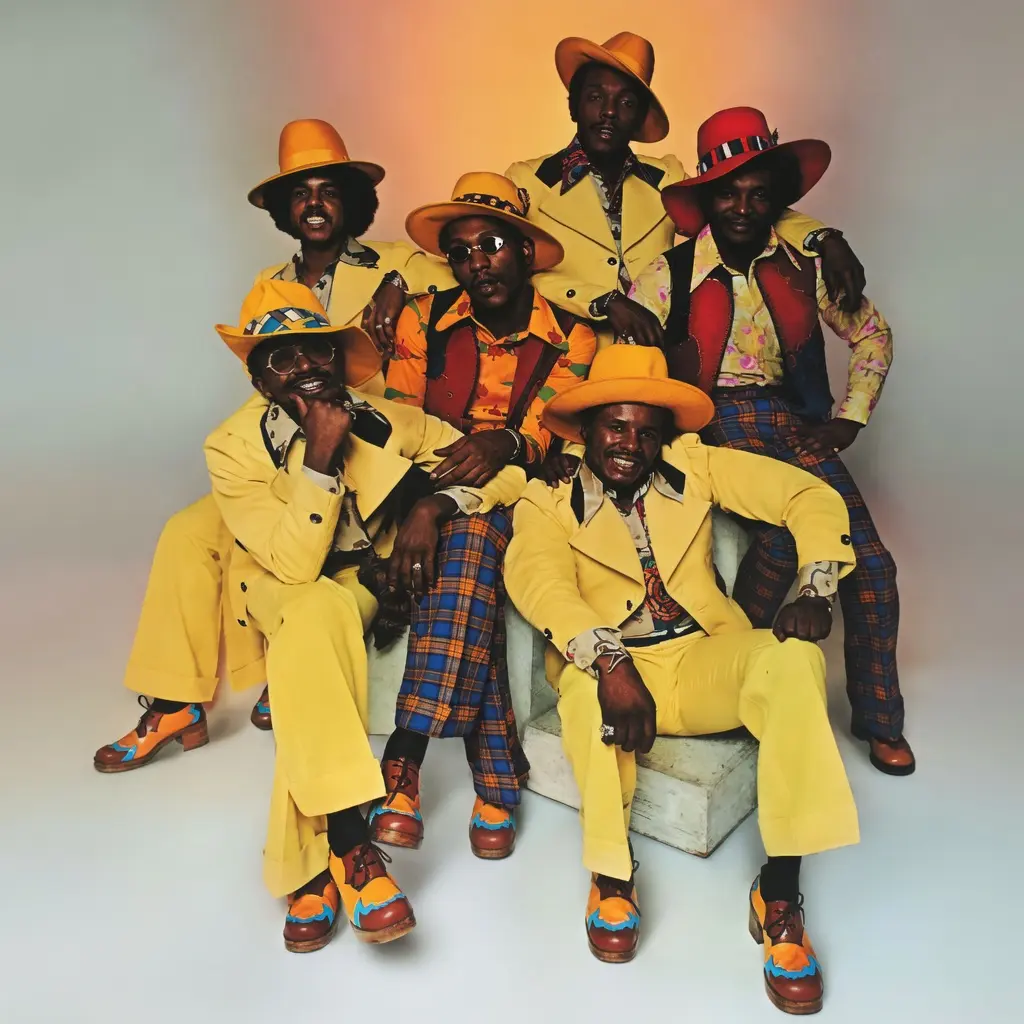
Members: Karl Chambers (drums), Roland Chambers (guitar), Lester Young (percussion), Idres Young (bass), Dexter Wansel (keyboards), Ron Harding (saxophone)
Background
Yellow Sunshine formed in Philadelphia when drummer Karl Chambers and guitarist Roland Chambers, brothers from the city’s Gamble/Huff studio circle, teamed with percussionist Lester Young and bassist Idres Young.
Both Chambers played with Kenny Gamble and the Romeos, an early Philly group tied to the same circle that included Leon Huff and Thom Bell. The brothers also appeared in The Producers, a studio-linked group credited on the 1968 Huff Puff single “Love Is Amazing” (b/w “Lady, Lady, Lady”) alongside Gamble, Huff, Bell, Mikki Farrow, and Winnie Wilford.
Karl then joined Toomorrow, the Don Kirshner–Harry Saltzman film-and-record project with Olivia Newton-John. Roland remained in the Philly studio network as a guitarist, songwriter, and producer.
Keyboardist Dexter Wansel joined after his return from the Army and his entry into Sigma Sound Studios. Wansel had worked backstage at the Uptown Theater as a teenager, then auditioned for piano sessions at Sigma and began programming Putney and ARP synthesizers. He met Karl and Roland Chambers at Sigma, where they asked him to join Yellow Sunshine. Saxophonist Ron Harding completed the group before Gamble issued Yellow Sunshine’s first recordings.
Yellow Sunshine
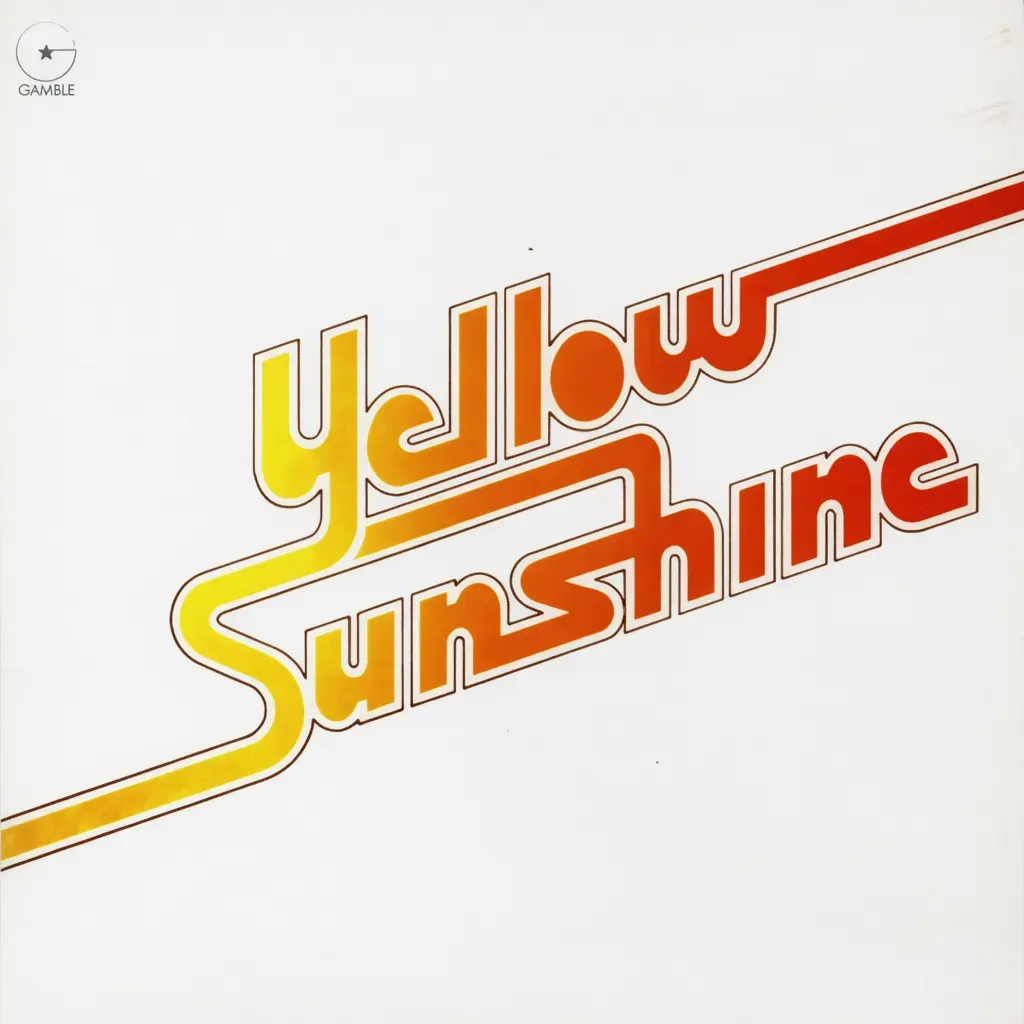 Yellow Sunshine released their self-titled singular album in July 1973 on Gamble.
The album presents seven soul-funk originals, all co-written by the Chambers brothers apart from “Happiness,” a full group composition.
“Yellow Sunshine” charges through shouted title chants before a guitar solo and compact percussion break. “The Greetch” rides dry percussion and clipped guitar figures through an instrumental vamp. “All Along the Seashore” drifts from misted keyboard tone into a longer, firmer ensemble run.
“Tell Me Who Can Say” snaps through a rough vocal lead and short replies. “Apollo 17” grinds through slow, heavy backbeat and fuzz guitar. “Don’t Tell Me Later Girl” works the same hard-edged vocal rhythm in shorter form, while “Happiness” closes with a lighter instrumental cadence and faint Latin accent.
 A1. “Yellow Sunshine” (4:09)
A2. “The Greetch” (5:48)
A3. “All Along the Seashore” (7:59)
B1. “Tell Me Who Can Say” (2:59)
B2. “Apollo 17” (6:03)
B3. “Don’t Tell Me Later Girl” (3:29)
B4. “Happiness” (6:18)
Yellow Sunshine cut the album at Sigma Sound Studios in Philadelphia, where Karl and Roland Chambers produced the sessions around engineer Carl Paruolo.
Yellow Sunshine appeared in a sleeve designed by Ed Lee with photography by Don Hunstein.
Gamble issued “Yellow Sunshine” backed with “Don’t Tell Me Later Girl” as a 1973 single. TSOP reissued the same pairing in June 1974.
Postlude
Dexter Wansel emerged as a solo artist with the 1976 jazz-funk album Life on Mars, his first of four straight albums on PIR.
Discography:
- Yellow Sunshine (1973)
Sources:
Artist/Album Pages:
Hard Meat was an English psychedelic hard-rock band from Birmingham that released the 1969/70 Warner...
Maze was an American soul-funk band from San Francisco that released six studio albums and two liv...
Roger Bunn (1942–2005) was an English singer-songwriter who released the 1971 album Piece of Mind on...
Heron was an English folk-rock band from Maidenhead, Berkshire, that released two albums on Dawn d...
Horace Andy is a Jamaican dub/roots-reggae artist who cut multiple Kingston singles before the 197...
Eela Craig was an Austrian rock band that made a 1971 post-psych album and the 1974 single "Storie...
Heavy Cruiser was an American hard-rock/psych band that released the 1972/73 albums Heavy Cruiser...
Rufus Zuphall was a German jazz-rock/psych band behind the 1970/71 albums Weiß der Teufel... and P...
Gryphon was an English Elizabethan symphonic folk and rock band that released four albums on Trans...
Zafer Dilek (August 30, 1944 — December 11, 2025) was a Turkish musician, composer, and arranger w...
Luv Machine was a U.K.-based hard-rock/psych band behind a 1971 Polydor album. Three members haile...
Aphrodite's Child was a Greek symphonic/psych-rock band that released numerous singles and three a...