

Procession was an Italian symphonic/hard-rock band that released the 1972–74 albums Frontiera and Fiaba.
Members: Gianfranco Gaza (vocals, harmonica, 1971-74), Marcello Capra (guitar, 1971-73), Angelo Girardi (bass, mandolin), Ivan Fontanella (drums), Roby Munciguerra [Roberto Bonfiglio] (guitar, vocals, 1972-present), Giancarlo Capello (drums, percussion, 1972-74), Paolo D’Angelo (bass, 1974), Maurizio Gianotti (saxophone, flute, 1974)
Background
Procession formed in early 1971 in Torino with vocalist Gianfranco Gaza, guitarist Marcello Capra, bassist Angelo Girardi, and drummer Ivan Fontanella. Keyboardist Mario Bruno and drummer Nicola Spallino briefly passed through the lineup before the group stabilized in 1972 with the entry of guitarist–vocalist Roby Munciguerra (aka Roberto Bonfiglio) and percussionist Giancarlo Capello.
By spring 1972, Procession hit the local concert circuit. That May, they played before a crowd of 50,000 at the Villa Pamphili Festival in Rome. Though unsigned at the time, the band gained support from artistic director Pino Tuccimei and commenced work on their first album.
Frontiera
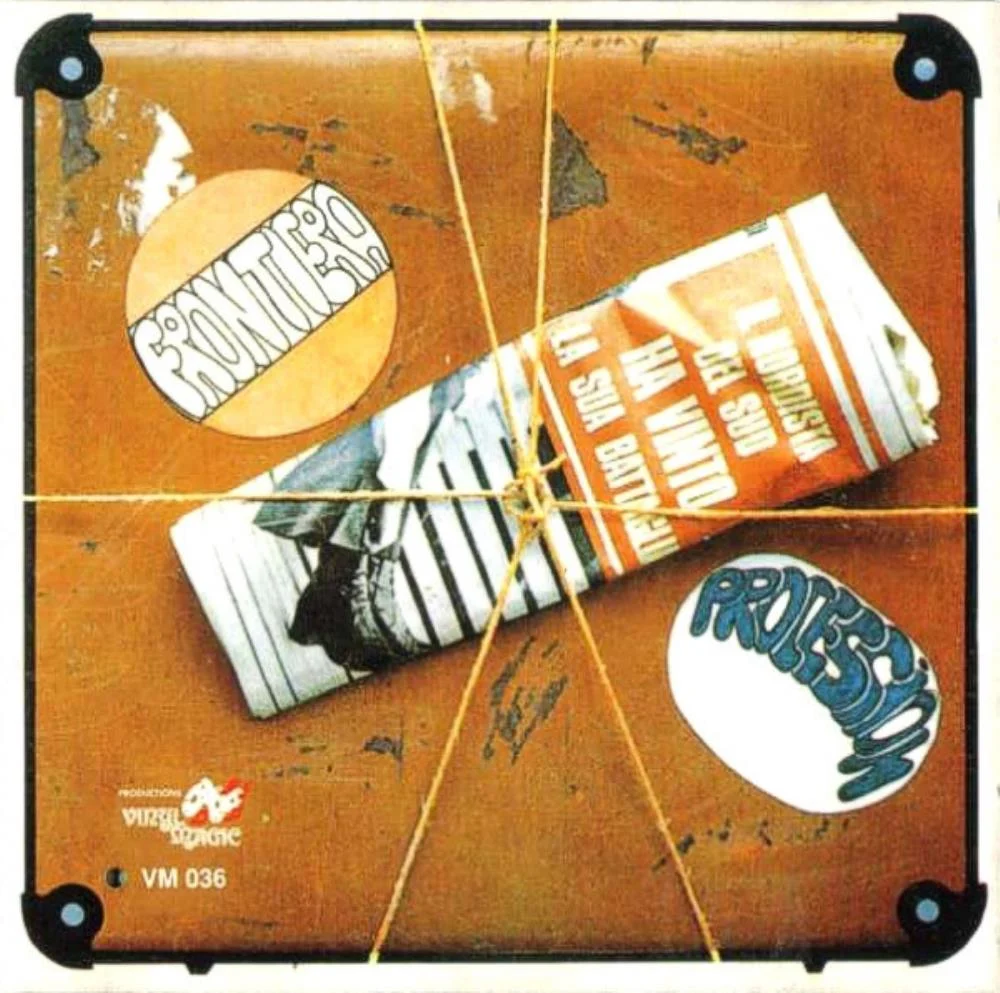 Procession released their first album, Frontiera, in late 1972 on Help!
The album presents Procession’s original lineup in a guitar-centric, hard–acoustic interplay across a nine-track sequence with recurring themes and musical motifs. They group-wrote the songs with outside lyricist Marina Comin, whose verses trace the experience of southern Italian migrants confronting industrial displacement and cultural alienation in northern cities.
Frontiera features duel electric/acoustic guitar by Marcello Capra (six-string) and Roby Munciguerra (12-string), anchored by bassist/mandolinist Angelo Girardi and drummer Giancarlo Capello, adorned with uncredited mellotron and flute.
Several tracks open with delicate fingerpicking before erupting into riff-driven sections marked by fuzz guitar, double leads, and volatile rhythmic shifts. “Ancora Una Notte” sets this template with acoustic framing and electric surges around Gaza’s vocal phrasing. “Uomini e Illusioni” emphasizes clipped staccato riffing under sustained vocal lines.
“Un Mondo di Libertà” follows a two-part form, beginning with a heavy sequence of angular riffs and urgent drumming, then pivoting mid-track to a strummed acoustic section with solo voice. “Solo 1” introduces rock-and-roll patterns that dissolve into modal passages with overlapping arpeggios. “Un’Ombra Che Vaga” cycles between layered acoustic figures and abrupt reintroductions of electric motifs established earlier in the album.
A1. “Ancora Una Notte” [Another Night] (5:24) — describes the migrant’s final night before departure from the south; music shifts from acoustic reflection to electric unease.
A2. “Uomini e Illusioni” [Men and Illusions] (2:42) — portrays the train journey north, filled with anxiety and displacement; set to a tense, electric rhythm.
A3. “Città Grande” [Big City] (5:15) — alternating acoustic and full-band segments express loss, struggle, and tentative hope upon arrival.
A4. “Incontro” [Meeting] (2:43) — features mandolin and flute; describes a dialogue on freedom and love.
A5. “Anche Io Sono Un Uomo” [I’m a Man As Well] (3:59) — addresses inequality and the desire to be seen as human; includes prominent mellotron.
B1. “Un Mondo di Libertà” [A World of Freedom] (8:41) — opens with intense riff-driven aggression and transitions to acoustic lamentation.
B2. “Solo 1” [Alone 1] (3:29) — contrasts swaggering electric riffing with subdued acoustic interludes.
B3. “Un’Ombra Che Vaga” [A Wandering Shadow] (5:09) — juxtaposes ghostlike introspection with violent eruptions of prior riffs.
B4. “Solo 2” [Alone 2] (2:10) — reprises themes of alienation and abrupt tonal fracture with harmonica and layered distortion.
Sessions occurred in October 1972 at Globe Records in Rome with producers Pino Tuccimei and Gianni Dell’Orso.
Frontiera features a unique suitcase-style sleeve with faux-handle flaps and a central image of a bundled newspaper on a worn leather case. The mock newspaper headline reads “Il Nordismo Ha Vinto La Sua Battaglia,” reinforcing the album’s lyrical theme of north–south displacement. The back cover mirrors the front layout, emphasizing its conceptual packaging.
Between albums, Giancarlo Capello, Marcello Capra, and Angelo Girardi departed the band.
Fiaba
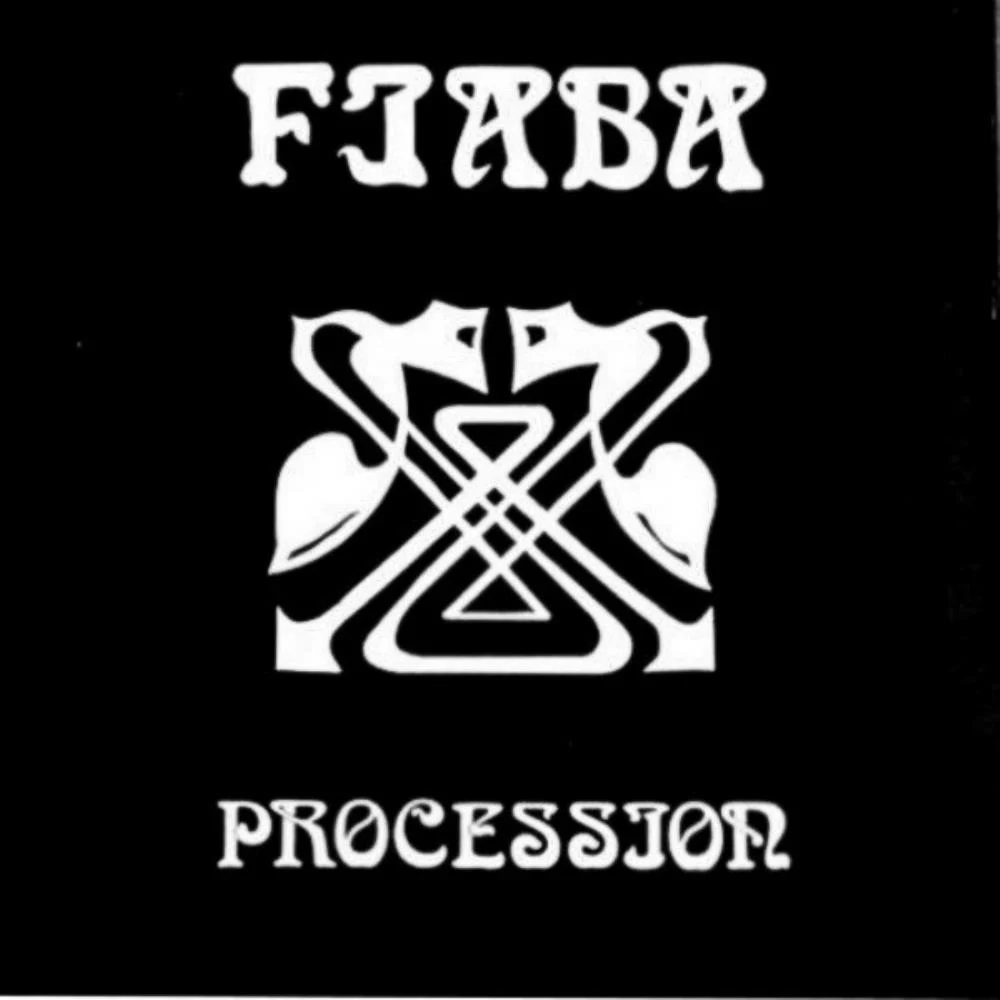 Procession released their second album, Fiaba, in 1974 on Fonit Cetra.
Fiaba introduces a new lineup with saxophonist–flutist Maurizio Gianotti and bassist Paolo D’Angelo alongside returning singer Gianfranco Gaza and guitarist Roby Munciguerra. Here, they alternate open-ended acoustic passages with full-band sections that layer flute, sax, and guitar in slow-building or episodic sequences.
The album contains six group-written originals with lyrics by Marina Comin. Delirium keyboardist Ettore Vigo contributes to “C’Era Una Volta,” which also features vocals by Silvana Aliotta (ex-Circus 2000). Franco Fernandez sings guest parts on two tracks.
Fiaba opens with “Uomini Di Vento,” which alternates a brisk acoustic strum and funk-inflected rhythm with midtempo flute and sax lines. “Un Mondo Sprecato” shifts into a dark, slow-paced texture with long sax tones and vocal lines that rise in intensity before falling into a quiet electric guitar descent. “C’Era Una Volta” opens with an extended cymbal-and-sax intro, transitions through quiet acoustic interludes, and ends with a female wordless vocal climax.
“Notturno” develops from a slow flute-and-acoustic sequence into a mid-tempo instrumental jam with delayed resolution. “Il Volo Della Paura” revolves around arpeggiated acoustic guitar and lyrical sax overlays. The title track uses upward flute runs and busy drum–bass motion to frame Gaza’s sung narrative, with recurring rhythmic shifts between soft and assertive passages.
A1. “Uomini Di Vento” [Men of Wind] (3:51)
A2. “Un Mondo Sprecato” [A Wasted World] (4:35) — features guest vocals by Franco Fernandez
A3. “C’Era Una Volta” [Once Upon a Time] (8:05) — features guest vocals by Ettore Vigo and Silvana Aliotta
B1. “Notturno” [Nocturne] (8:03)
B2. “Il Volo Della Paura” [The Flight of Fear] (4:47)
B3. “Fiaba” [Fable] (5:28) — features guest vocals by Franco Fernandez
Sessions occurred in 1974 at Fonit-Cetra Studios with producer Pino Tuccimei and engineer Danilo Girardi.
Fiaba features a black front cover with a symmetrical white abstract emblem beneath stylized lettering. The inner gatefold depicts a medieval fantasy procession: musicians and robed figures ascend a pastel-lit hill toward a castle, reinforcing the album’s allegorical themes of escape, community, and imagined refuge.
Postlude
Procession disbanded quietly after Fiaba, despite steady live activity and critical regard. Gianfranco Gaza contributed vocals to Arti + Mestieri’s 1975 second album Giro di Valzer per Domani. Early member Marcello Capra released the acoustic–folk album Aria Mediterranea in 1978 after a stint with Tito Schipa Jr., followed by further solo work in the late 1990s. Maurizio Gianotti later joined the jazz-rock group Combo Jazz. Roby Munciguerra remained musically active in Turin, performing with local ensembles into the 2000s.
Discography:
- Frontiera (1972)
- Fiaba (1974)
Sources:
- Discogs: Procession
- MusicBrainz: Procession
- RYM: Procession
- ItalianProg: Procession
- ProgArchives: Procession
Artist/Album Pages:
Triangle was a French sax-rock/psych band that debuted with a pair of singles on Odeon in 1969, fo...
Mandy More (born Sept. 10, 1945) is an English singer/songwriter from Leeds who released the 1972 ...
Mary Hopkin (born May 3, 1950) is a Welsh folk-pop singer from Pontardawe, Glamorgan, who released...
Canarios were a Spanish rock band that originated as Los Ídolos, a prominent Madrid beat group. Th...
Gygafo was an English symphonic-folk rock band that recorded an album in 1973 that was ultimately ...
Mantis was a Québécois hard-rock band behind a 1973 self-titled album on Sweet Plum. Backgroun...
Laurie Styvers (Aug. 3, 1951 – Feb. 18, 1998) was an American singer/songwriter who recorded a 197...
Gas Mask was an American brass-rock band from N.Y.C. that released one album, Their First Album, o...
Catharsis was a French jazz-rock/psych band that made two albums in 1971/72 on Saravah, followed ...
Savoy Brown was an English blues-rock band that released eleven albums on Decca between 1967 and 197...
Free was an English hard-rock band that released six studio albums and a live set between 1969 and 1...
Okko Bekker is a German raga-psych sitarist behind the 1971 BASF album Sitar & Electronics. He...