

Cherry Five was an Italian symphonic-rock band that released a 1975 self-titled album on Cinevox. Guitarist Massimo Morante and bassist Fabio Pignatelli continued in Goblin.
Members: Tony Tartarini [aka Toni Gionta] (vocals), Claudio Simonetti (keyboards), Massimo Morante (guitar), Fabio Pignatelli (bass), Carlo Bordini (drums)
Background
Cherry Five formed in 1973 in Rome. The group originally operated under the name Oliver, founded by keyboardist Claudio Simonetti and guitarist Massimo Morante. That year, they traveled to England to audition vocalists and briefly recruited Clive “Artman” Haynes (also known as Clive Heinz), who recorded some tracks before being dismissed.
Back in Italy, the band completed its lineup with bassist Fabio Pignatelli, drummer Carlo Bordini (formerly of Rustichelli e Bordini), and vocalist Tony Tartarini, previously known as Toni Gionta from L’Uovo di Colombo. Under the working name Oliver, they entered Titania Studios in 1974 to record their first and only album.
Cherry Five (the album)
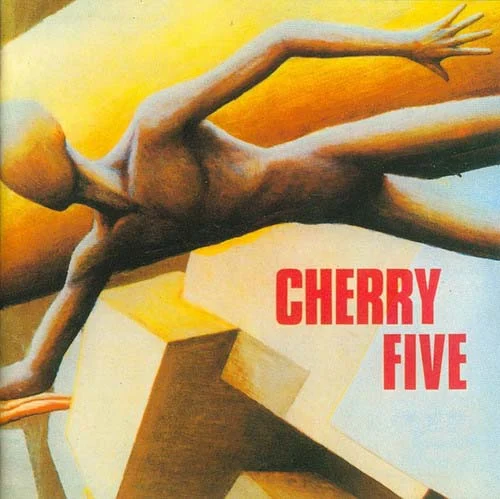 Cherry Five released their self-titled album on Cinevox, recorded under the name Oliver in 1974 at Titania Studios in Rome. By the time the album appeared in January 1976, three members had already debuted as Goblin on Profondo Rosso.
The lineup features Claudio Simonetti on keyboards, Massimo Morante on guitar, Fabio Pignatelli on bass, Carlo Bordini on drums and percussion, and Tony Tartarini on vocals. Tartarini joined after the departure of English singer Clive “Artman” Haynes. Simonetti, Morante, and Pignatelli later became Goblin’s core trio, while Bordini moved on to Samadhi. Tartarini had previously recorded with L’Uovo di Colombo.
Simonetti, Morante, and lyricist Giancarlo Sorbello wrote all six tracks. The compositions reflect the group’s English-language ambitions and include references to earlier incarnations, with “Oliver” and “The Picture of Dorian Gray” named after prior band identities.
Cherry Five centers on long-form pieces built around rapid keyboard figures, contoured bass lines, and brisk tempo shifts. “Country Grave‑Yard” moves in quick cycles: bright organ patterns cut into rising Mellotron layers, then tighten around short vocal passages before the track swings back into dense ensemble runs and a siren‑like closing section. “The Picture of Dorian Gray” opens in a quiet span of acoustic phrasing and soft Mellotron, then expands into fast organ passages and clipped rhythm changes that build toward a call‑and‑response exchange between synth and guitar.
The two parts of “The Swan Is a Murderer” pivot between energetic, drum‑driven phrases and sudden retreats into sparse textures marked by wind noise and music‑box figures, before the second part rebuilds with firm bass accents and piano‑led motion. “Oliver” stretches the band’s pacing the furthest: an opening piano line yields to aggressive organ bursts and a midsection drop into slow piano and guitar, followed by a long rise that layers Mellotron swells over accelerating patterns. “My Little Cloud Land” closes the record with a more measured pace, shaped by saturated organ, steady rhythmic drive, and vocal lines that lift slightly above the shifting instrumental turns.
A1. “Country Grave-Yard” (8:19) – Features rapid-fire keyboard themes, siren effects, and frequent rhythmic pivots; closes with layered horns and an accelerating fadeout.
A2. “The Picture Of Dorian Gray” (8:28) – Opens with acoustic guitar and organ textures; develops through staccato riffs, contrasting breaks, and bass-driven crescendos.
A3. “The Swan Is A Murderer (1 Parte)” (3:53) – Presents a dense, ominous sequence with chamber-style instrumentation; ends with wind effects and music box fragments.
B1. “The Swan Is A Murderer (2 Parte)” (5:05) – Rebuilds from atmospheric intro to a full-band climax; alternates piano motifs and vocal refrains over shifting meter.
B2. “Oliver” (9:30) – Begins with piano; unfolds through rhythmic turns, layered keyboards, and a climactic Mellotron section.
B3. “My Little Cloud Land” (7:43) – Emphasizes saturated organ, kinetic instrumental turns, and vocal passages with sharp sectional contrasts.
Cherry Five recorded the material at Titania Studios in Rome during 1974 and completed mixing at Orthophonic Recording Studio in September 1975 with producer Carlo Bixio.
Cinevox released the album and assigned distribution to Fonit Cetra. The surrealist cover image depicts a stylized human figure falling or reaching across a geometric plane of intersecting blocks, rendered in ochre, tan, and muted orange hues.
Discography:
- Cherry Five (1975)
Sources:
- Discogs: Cherry Five
- MusicBrainz: Cherry Five
- RYM: Cherry Five
- ItalianProg: Cherry Five
- ProgArchives: Cherry Five
Artist/Album Pages:
Lou Courtney (1943–2021) was an American soul singer and songwriter who scored R&B hits with ...
Blue Morning were an Italian jazz-rock band that released a self-titled album on small-press Tomor...
Byron Morris & Unity were an American avant-garde jazz ensemble from N.Y.C. that released two ...
Litfiba are an Italian new wave band that debuted with the 1982 EP Guerra, followed by the 1983 En...
Circus was the Swiss symphonic-rock band behind the 1976–78 Zytglogge albums Circus, Movin' On, Al...
Claude Engel is a French guitarist and songwriter behind the 1972 instrumental jazz-funk album 99%...
Peter Herbolzheimer Rhythm Combination & Brass were a German jazz-funk big band led by trombon...
Tantra was a Portuguese symphonic-rock band that made the 1977/78 Epic albums Mistérios e ...
Finn Olafsson is a Danish jazz-rock guitarist who emerged in the psych-rock combo Ache. He went so...
Zé Ramalho is a Brazilian singer/songwriter who collaborated with Lula Côrtes on the 1975 album Pa...
The Daly-Wilson Big Band was an Australian hard-bop/jazz-funk ensemble led by drummer Warren Daly ...
MFSB — an acronym for Mother Father Sister Brother — was an American jazz-funk big band that serve...