

B.T. Express was an American soul-funk band from Brooklyn that charted with their 1974 debut Do It ‘Til You’re Satisfied on Scepter Records. After their 1975 Roadshow release Non-Stop, they cut four albums (1976–80) on Columbia.
Members: Bill Risbrook (saxophone, vocals), Dennis Rowe (percussion), Rick Thompson (guitar), Carlos Ward (saxophone, flute), Kashif (keyboards), Pike (guitar, vocals), Leslie Ming (drums), Louis Risbrook (bass, organ, vocals), Barbara Joyce (vocals), Terrell Wood (drums)
Background
B.T. Express evolved from the King Davis House Rockers, a Brooklyn R&B combo that included guitarist Richard “Rick” Thompson and saxophonist Bill Risbrook. In 1967, the House Rockers issued the Verve single “Baby You Satisfy Me” (b/w “We All Make Mistakes Sometimes”). They underwent a sequence of mutations before issuing the 1972 small-press single “Holiday In Love” (b/w “Rum Punch”) as The Visitors. Both sides were co-written by Risbrook and Panamanian reedist Carlos Ward (b. 1940), who backed German bandleader Karl Berger during the 1960s.
Thompson, Risbrook, and Ward subsequently formed Madison Street Express with bassist Louis Risbrook (aka Jamal Rasool), percussionist Dennis Rowe, drummer Terrell Wood, and vocalist Barbara Joyce Lomas, who cut the two-part single “Together” with Dwight Jones in 1971.
In 1974, the septet linked with producer Jeff Lane, who had them record the song “Do It (‘Til You’re Satisfied)” by songwriter Billy Nichols. After shopping the recording to several labels, they were signed to Scepter Records, which insisted they change their name to the Brooklyn Transit Express, hence B.T. Express. That August, the song became their debut single.
Do It ‘Til You’re Satisfied
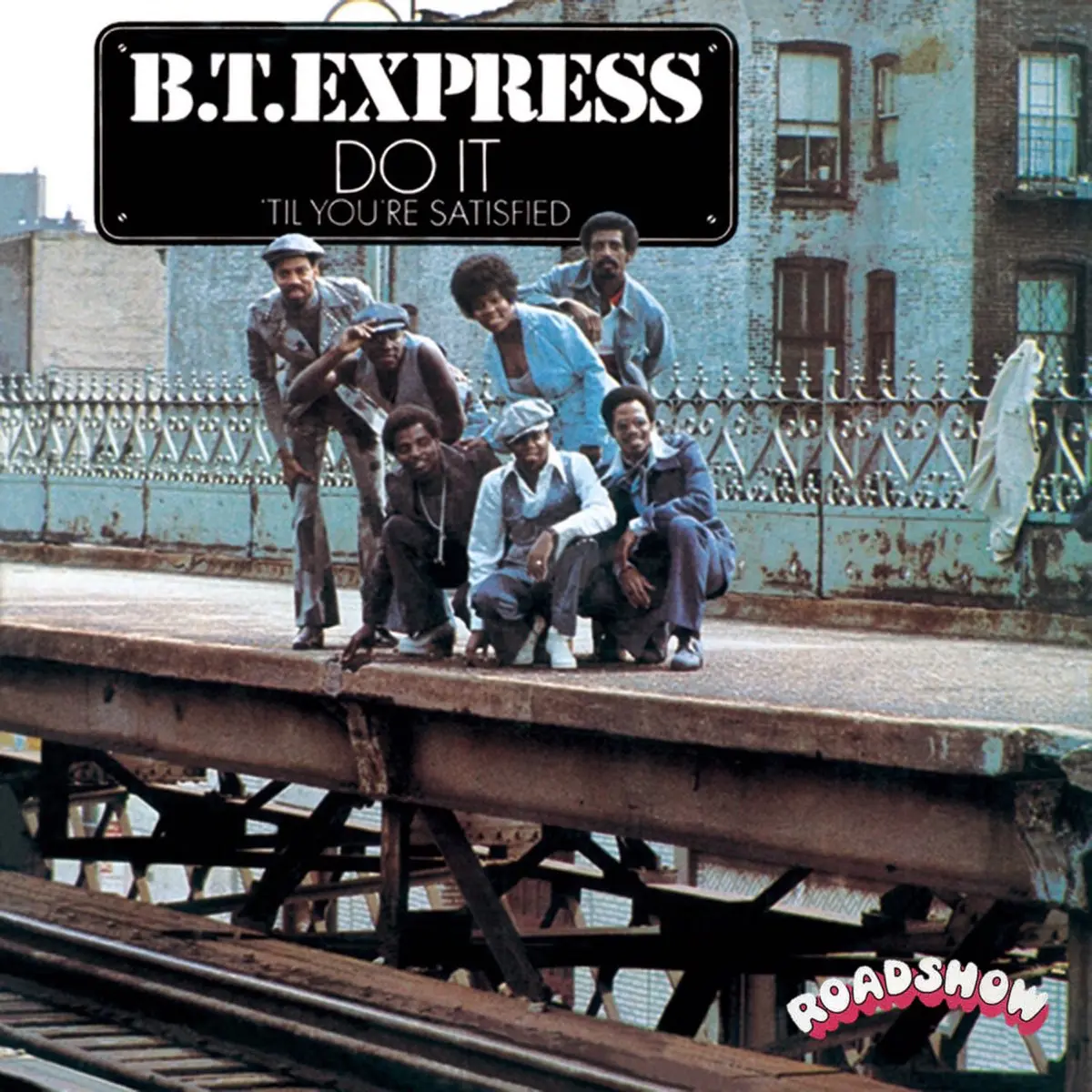 B.T. Express released their debut album, Do It ‘Til You’re Satisfied, in November 1974 on Scepter.
The record moves between deep funk, early-disco drive, and horn-punctuated soul. It contains the group’s two signature tracks, “Express” and “Do It (‘Til You’re Satisfied),” both of which became major dancefloor staples.
Songwriting credits are split across insiders and outside contributors. Guitarist Rick Thompson, saxophonist Bill Risbrook, reedist Carlos Ward, bassist Louis Risbrook, drummer Terrell Wood, percussionist Dennis Rowe, and singer Barbara Joyce Lomas collectively wrote “Express.” Songwriter Billy Nichols authored the title track and co-penned “If It Don’t Turn You On (You Oughta’ Leave It Alone)” and “That’s What I Want For You Baby” with A. Williams. Trade Martin wrote “Once You Get It” and co-wrote “Mental Telepathy” with Doc Boston, while Sam Taylor supplied “Everything Good to You (Ain’t Always Good for You).” Ward composed “Do You Like It,” and George Burton with Joe Constantino contributed “This House Is Smokin’.”
The tracklist centers on hypnotic rhythms shaped by bass, congas, and strings. “Express” rides a surging pulse, its strings darting in sharp figures against wah-wah guitar and flute. “Do It (‘Til You’re Satisfied)” stretches over nearly six minutes of steady propulsion, marked by organ accents and layered vocals. “Do You Like It” uses a commanding horn line, while “This House Is Smokin’” drives forward on a monster bass figure that leaves a brief but heavy impact. “Everything Good to You (Ain’t Always Good for You)” layers gospel-styled phrasing with flute and sax interplay, while “That’s What I Want For You Baby” extends across seven minutes of persistent rhythm, string drama, and extended guitar passages. Other cuts such as “Mental Telepathy” and “Once You Get It” supply leaner funk frameworks that support the heavier tracks.
A1. “Express” (5:03)
A2. “If It Don’t Turn You On (You Oughta’ Leave It Alone)” (5:27)
A3. “Once You Get It” (3:18)
A4. “Everything Good To You (Ain’t Always Good For You)” (3:00)
A5. “Mental Telepathy” (4:03)
B1. “Do It (‘Til You’re Satisfied)” (5:52)
B2. “Do You Like It” (5:52)
B3. “That’s What I Want For You Baby” (6:48)
B4. “This House Is Smokin'” (2:12)
Sessions occurred at Ultra-Sonic Recording Studios in Hempstead, New York, with producers Jeff Lane and Trade Martin. John Bradley engineered the tracks, and Randy Muller arranged strings on multiple cuts.
The cover features art direction by Sid Maurer and design by Michael Mendel, with photography by Gene Ward.
“Do It (‘Til You’re Satisfied)” topped the R&B chart and reached No. 2 on the Billboard Hot 100, while “Express” hit No. 4 on the pop chart, No. 1 R&B, and No. 1 on the US dance chart for five weeks. The album itself peaked at No. 5 on the Billboard 200 and topped the R&B albums chart.
Non-Stop
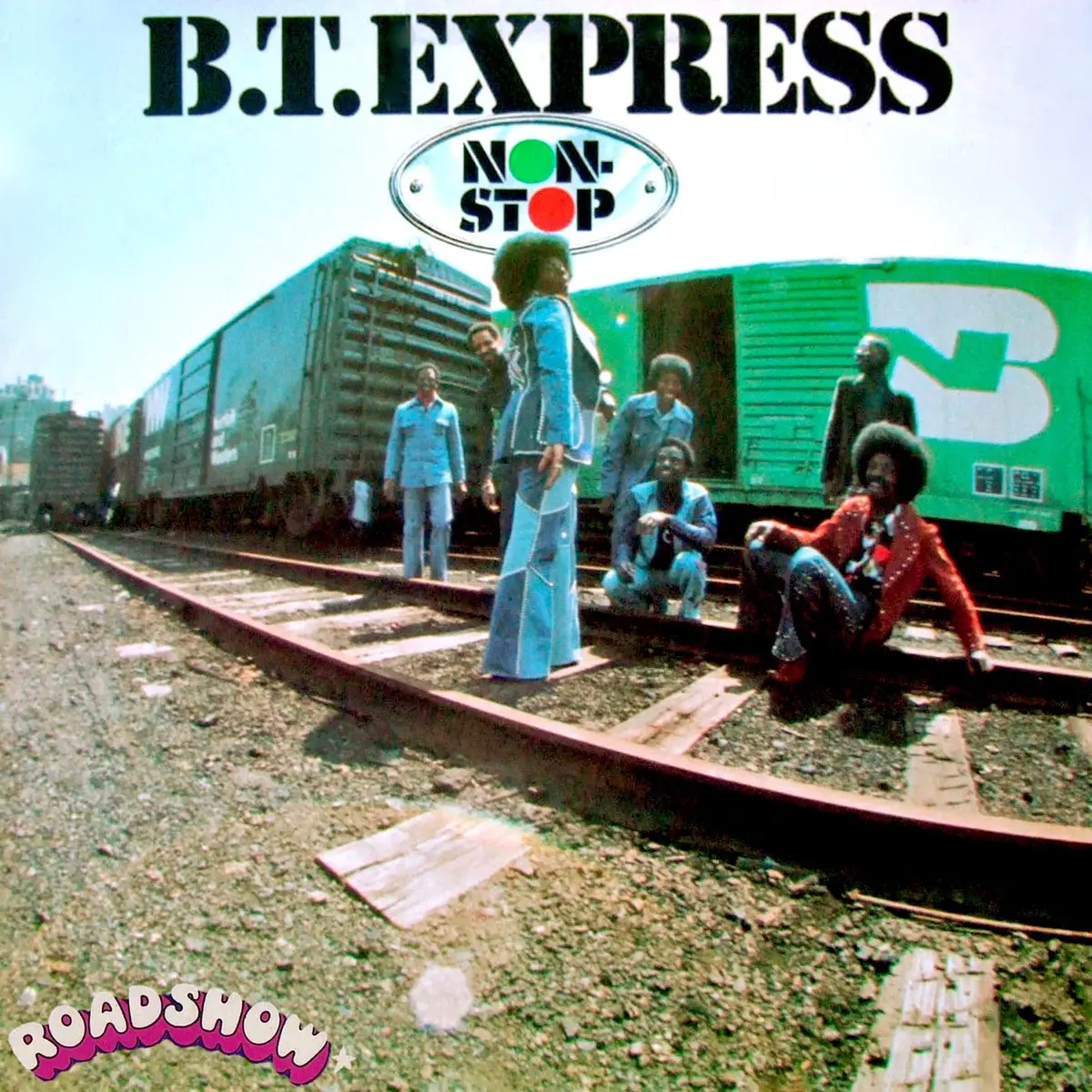 B.T. Express released their second album, Non-Stop, in July 1974 on Roadshow.
The record sustains their blend of funk and disco-minded propulsion, shaped around extended vamps, layered horns, and tightly arranged strings.
Songwriting credits split between band members and outside contributors. Guitarist Richard Thompson authored “Whatcha Think About That?” while reedist Carlos Ward supplied “Happiness.” Barbara and William Risbrook co-wrote “Devil’s Workshop,” and Sam Taylor penned “Still Good – Still Like It.” Solomon Roberts contributed “Give It What You Got,” and Mark Barkan co-wrote “Peace Pipe” with Taylor. Hirum Bullock and Larry Alexander wrote “Discotizer.” The album’s lone cover, “Close to You,” comes from Burt Bacharach and Hal David. Additional material came from B. Barnes, B. Levine, D. Thomas, and Trade Martin, who co-authored “You Got It – I Want It.”
Non-Stop emphasizes hard-driving dance tracks. “Peace Pipe” stretches across six minutes of punctuated horns and pulsing rhythm, while “Give It What You Got” pushes a sharp bass figure beneath dense string layers. “Discotizer” runs brisk and concise, aimed squarely at the floor, and “Still Good – Still Like It” carries forward with lean intensity. “Happiness” delivers a more compact funk exercise, while “Devil’s Workshop” locks around bass and reed interplay. By contrast, “Close to You” softens into slow ballad phrasing with orchestrated strings, though its sentiment differs from the otherwise kinetic set.
A1. “Peace Pipe” (6:04)
A2. “Give It What You Got” (4:19)
A3. “Discotizer” (3:28)
A4. “Still Good – Still Like It” (4:28)
B1. “Close To You” (5:37)
B2. “You Got It – I Want It” (5:25)
B3. “Devils Workshop” (4:00)
B4. “Happiness” (3:38)
B5. “Whatcha Think About That?” (4:05)
Sessions occurred at Ultra-Sonic Recording Studios in Hempstead, New York with producer Jeff Lane. John Bradley engineered the material, with Tom Moulton mixing selected tracks. Carlos Ward handled horn arrangements, while strings were arranged by Andrew Smith, Randy Muller, and Trade Martin.
The cover features art direction by Sid Maurer and design by Michael Mendel, with photography by Curtis Brown.
“Peace Pipe” and “Give It What You Got” both reached No. 5 on the R&B singles chart, with “Peace Pipe” also topping the US dance chart. Non-Stop topped the Billboard R&B albums chart.
Energy to Burn
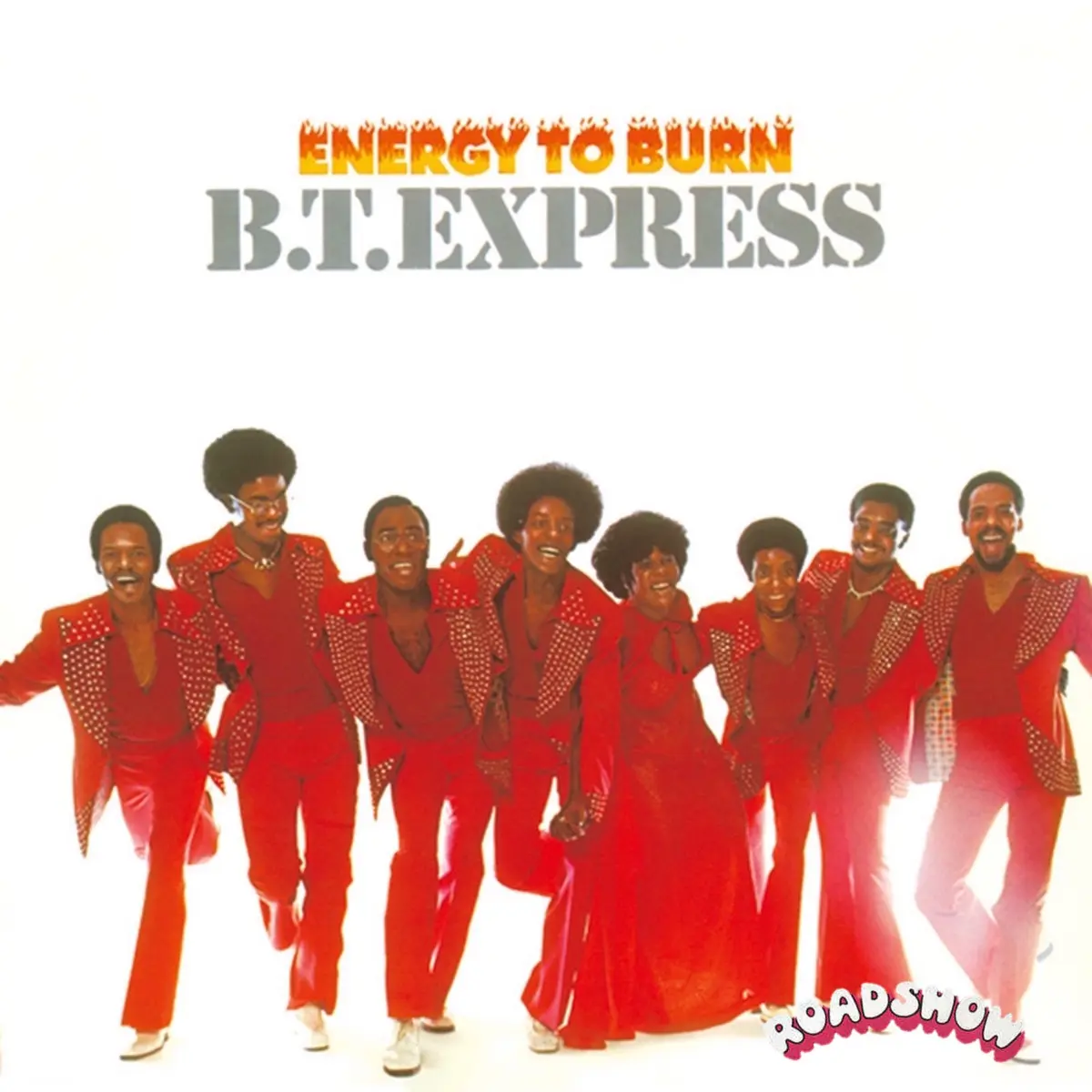 B.T. Express released their third album, Energy to Burn, in 1976 on Columbia.
Singer Barbara Joyce made her final appearance on this album, which heralded teenage keyboardist Michael Jones, later known as Kashif.
Saxophonist Bill Risbrook supplied “Depend On Yourself,” while reedist Carlos Ward contributed three tracks: “Make Your Body Move,” “Herbs,” and “Energy Level.” Guitarist Sam Taylor co-wrote the title track with Tash Howard. Jones, newly added on keyboards, wrote “Time Tunnel.” Billy Nichols provided “Can’t Stop Groovin’ Now, Wanna Do It Some More,” and Gamble & Huff authored the lone cover, “Now That We Found Love.”
Energy to Burn opens with “Depend On Yourself,” a stretched-out funk workout built on sax-led refrains. “Can’t Stop Groovin’ Now, Wanna Do It Some More” drives forward with hypnotic momentum, while the title track sustains a similar pulse across six minutes. “Herbs” departs from the formula with reggae inflections woven into its rhythm, contrasting with the string-laden disco of “Make Your Body Move” and “Energy Level.” “Now That We Found Love” sits apart as the record’s lone outside ballad, arranged more conventionally but less aligned with the group’s strengths.
A1. “Depend On Yourself” (7:03)
A2. “Can’t Stop Groovin’ Now, Wanna Do It Some More” (5:54)
A3. “Now That We Found Love” (6:30)
B1. “Energy To Burn” (6:01)
B2. “Time Tunnel” (3:29)
B3. “Make Your Body Move” (5:15)
B4. “Herbs” (2:47)
B5. “Energy Level” (3:50)
Sessions occurred at Ultra-Sonic Recording Studios in Hempstead, New York with producer Jeff Lane. John Bradley and Steve Goetz engineered the album, with Randy Muller arranging most string parts and Carlos Ward directing horn and select string arrangements.
The cover features album art direction by Sid Maurer and design by Michael Mendel, with photography by Don Hunstein.
“Can’t Stop Groovin’ Now, Wanna Do It Some More” reached No. 6 on the R&B chart, while the title track also charted within the R&B Top 40.
Function at the Junction
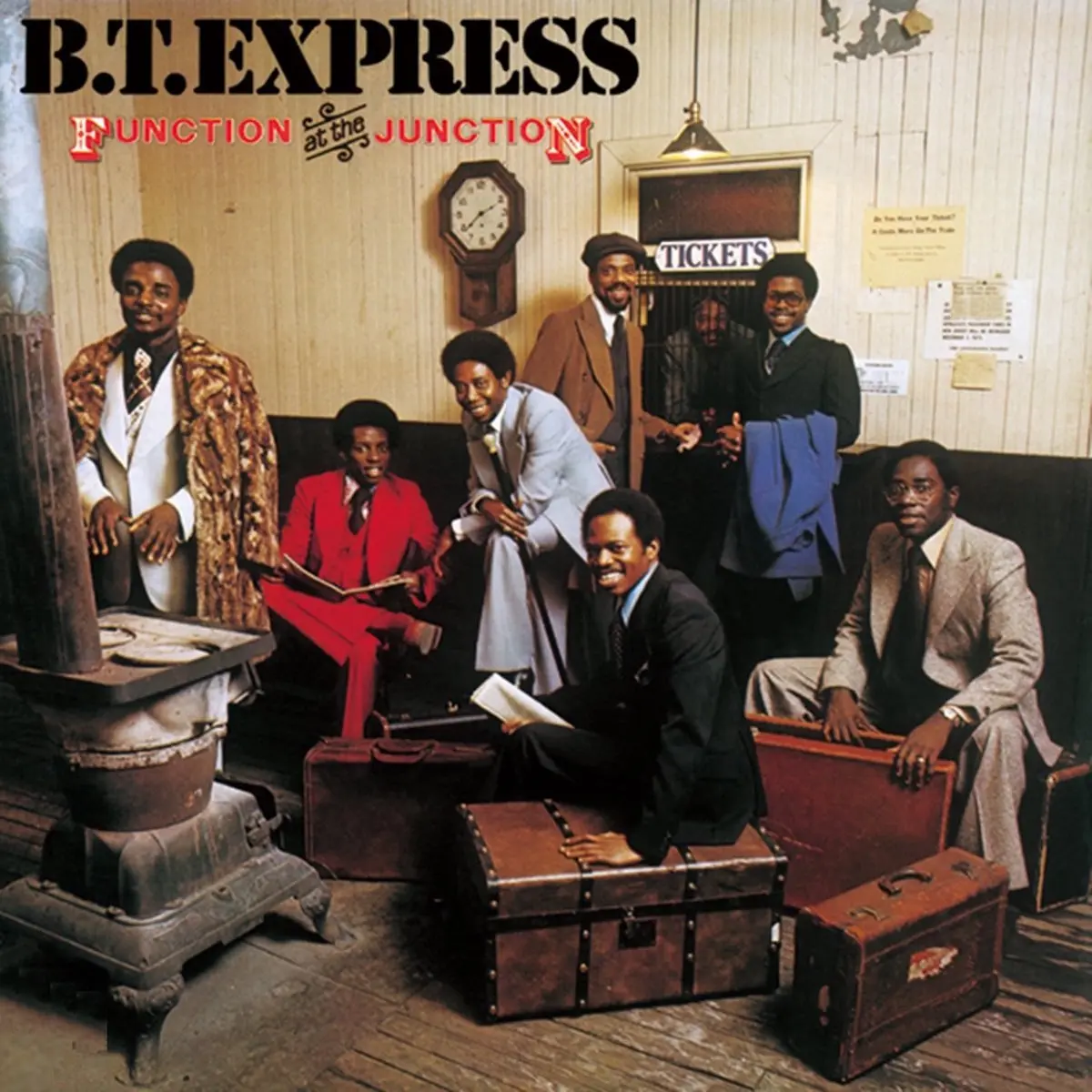 B.T. Express released their fourth album, Function at the Junction, in May 1977 on Columbia.
The band now functioned as an all-male septet. Saxophonist Bill Risbrook wrote “Funky Music” and “How Big Can You Dream.” Carlos Ward contributed “Eyes” and “We Got It Together,” while keyboardist Michael Jones authored “Sunshine.” Bassist Louis Risbrook co-wrote “The Door to My Mind” with G. Risbrook, and guitarist Sam Taylor co-wrote “Scratch My Itch” with Tash Howard. Howard also co-wrote “Expose Yourself” with Michael Stokes and E. Johnson. Ken Williams and R. Clark supplied “Star Gazer,” while Ward arranged its strings.
Function at the Junction opens with the percussive “Funky Music,” one of the more direct funk workouts. “Expose Yourself” and “Scratch My Itch” both sustain disco-tempo rhythms tailored for the dancefloor. Ward’s “Eyes” and “We Got It Together” show the band’s tighter ensemble writing, while Jones’ “Sunshine” leans toward smoother instrumental interplay. “The Door to My Mind” and “How Big Can You Dream” close the album with shorter, more compact structures, offset by the string-led textures of “Star Gazer.”
A1. “Funky Music” (4:23)
A2. “Expose Yourself” (3:55)
A3. “Scratch My Itch” (4:00)
A4. “Eyes” (3:56)
B1. “We Got It Together” (3:49)
B2. “Sunshine” (4:13)
B3. “The Door To My Mind” (3:33)
B4. “Star Gazer” (3:08)
B5. “How Big Can You Dream” (3:39)
Sessions occurred at Ultra-Sonic Recording Studios in Hempstead, New York with producer Jeff Lane. Carlos Ward handled horn arrangements, Randy Muller arranged most string passages, and engineering was completed at the studio under Lane’s direction.
Shout!
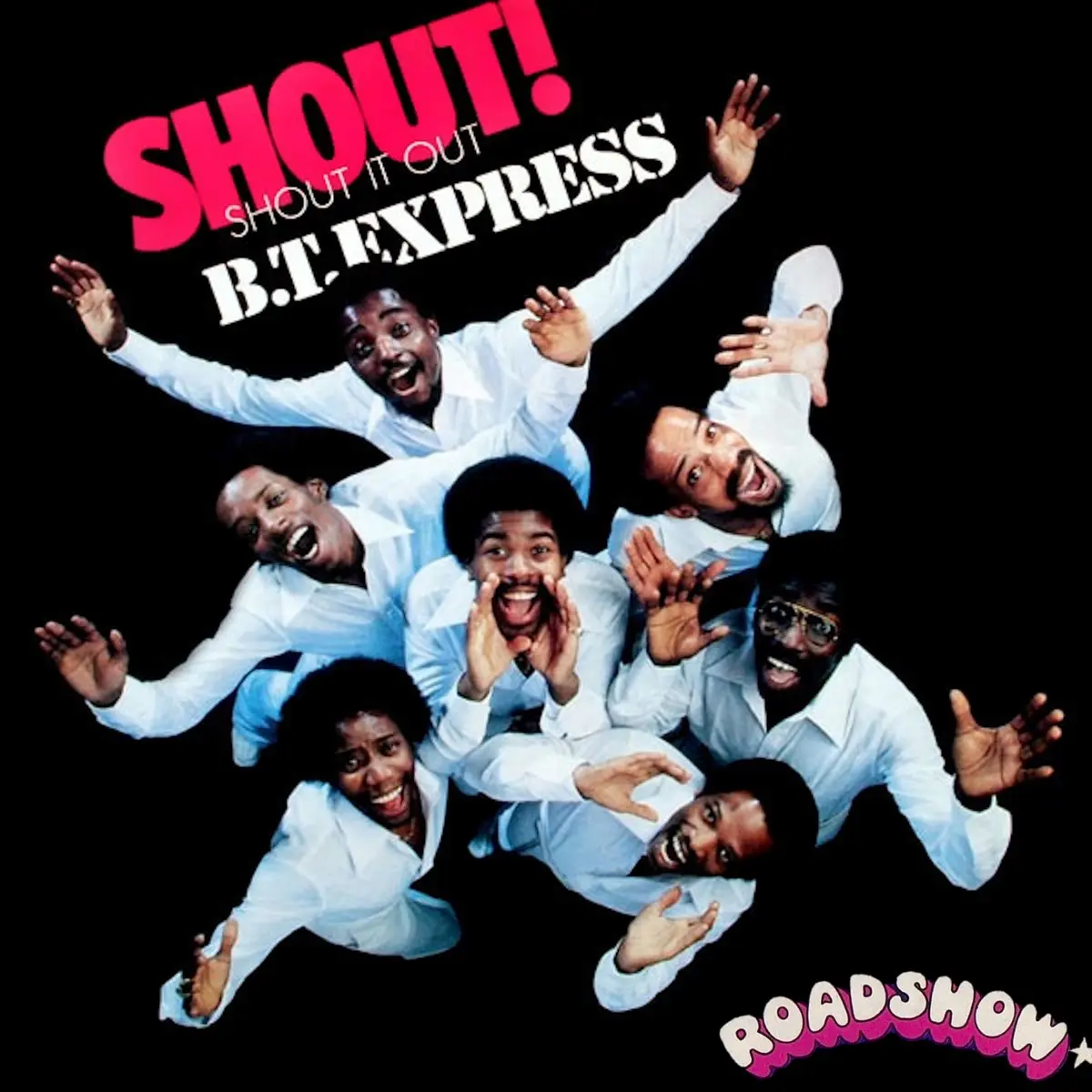 B.T. Express released their fifth album, Shout!, in 1978 on Columbia.
The record marked a shift in production: instead of Jeff Lane, the band produced the album with guitarist–songwriter Billy Nichols. It kept the funk–disco foundation of earlier work while serving as the final B.T. Express release to feature Kashif Saleem.
Nichols wrote “Put It In (In the Pocket)” and “Shake It Off,” and co-wrote “Look at the People” with Ron Mindseed, “It’s in Your Blood” with Allen Williams, and the opening cut “Shout It Out” with Williams and Maxwell Romer. Williams also co-wrote “What You Do in the Dark” with Nichols and Mel Sheppard. Saxophonist Carlos Ward authored “You Got Something” and “Ride On B.T.,” while guitarist Richard Thompson co-wrote “I Want You With Me” with Bill Risbrook.
The set opens with the title track, which surges on a hard-driving pace and horn accents. “Look at the People” layers pointed lyrical themes over sharp ensemble lines, while “Put It In (In the Pocket)” and “Shake It Off” lean into straight-ahead dance tempos. Ward’s “Ride On B.T.” stretches out the band’s instrumental side, closing the album with extended rhythm passages.
A1. “Shout It Out” (5:43)
A2. “What You Do in the Dark” (5:25)
A3. “Put It In (In the Pocket)” (5:08)
A4. “I Want You With Me” (5:14)
B1. “Shake It Off” (5:18)
B2. “You Got Something” (3:40)
B3. “Look at the People” (3:21)
B4. “It’s in Your Blood” (3:44)
B5. “Ride On B.T.” (5:02)
Sessions occurred at ODO Studio in New York City with production by B.T. Express and Billy Nichols. Joe Barbaria engineered, with George Marino handling mastering.
Shout! features photography by Don Hunstein and art direction by Michael Mendel for Maurer Productions.
The title track, issued as a single, reached No. 11 on Billboard’s R&B chart.
1980
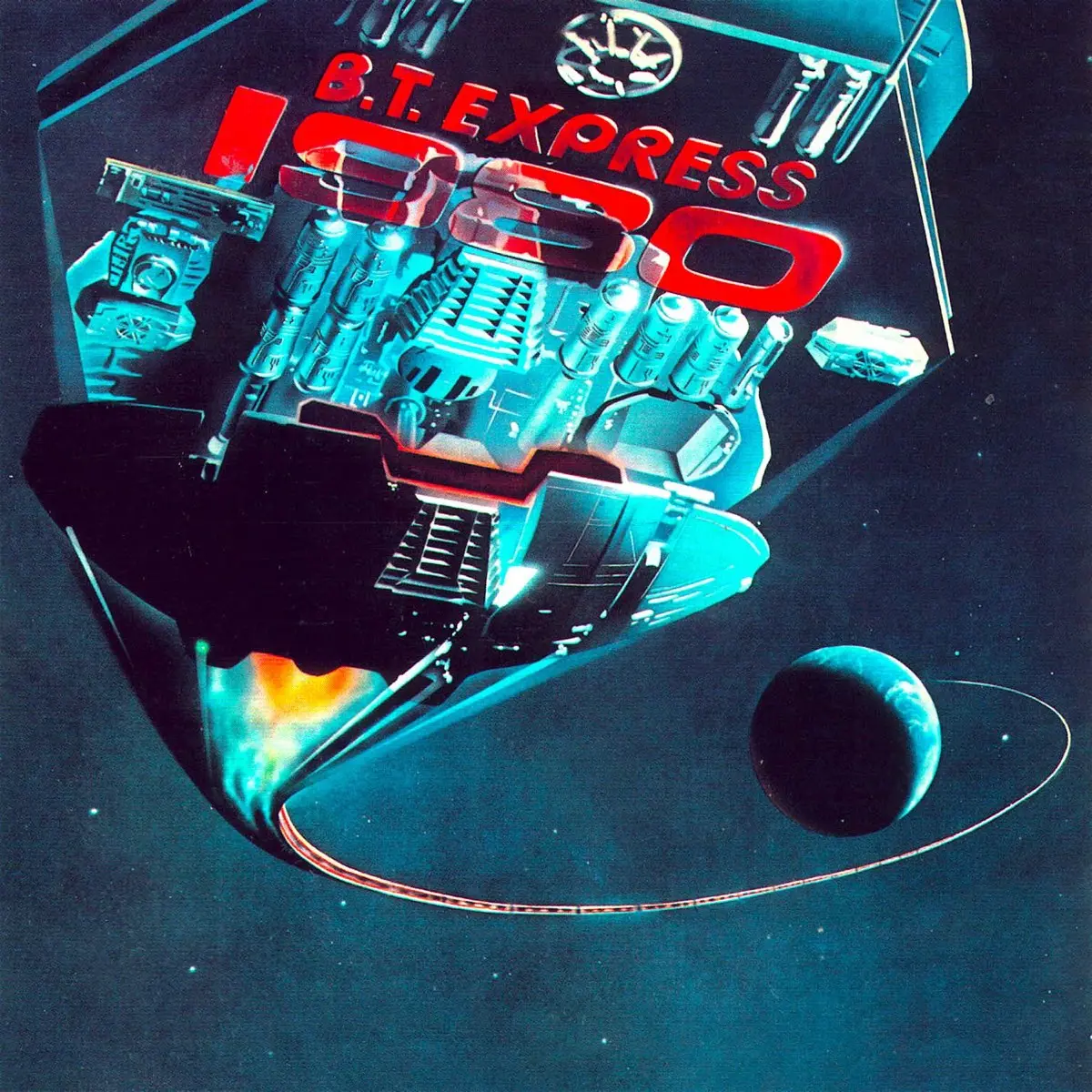 B.T. Express welcomed the new decade with their sixth album, 1980, their last on Columbia.
The record carried a heavier reliance on outside writers and session players, shifting the group away from its earlier self-contained sound. Produced by Morrie Brown, the set blends brass-driven funk with disco pacing and string-laden textures.
Carlos Ward contributed “Give Up the Funk (Let’s Dance)” and “Have Some Fun,” while Jamal Rasool supplied “Better Late Than Never.” Guitarist Wesley “Pike” Hall Jr. penned “Does It Feel Good,” and Rick Thompson shared lead vocals alongside his guitar work. External writers included Morrie Brown (“Takin’ Off”), P. Henderson (“Heart of Fire”), M. Durio (“Closer”), and the team of B. Blue, G. Shury, and R. Rokeo (“Funk Theory”).
The title cut “Give Up the Funk (Let’s Dance)” drives with a dense horn arrangement and a prominent bass line, balancing group chants with percussive layers. “Takin’ Off” and “Heart of Fire” lean toward brisk disco rhythms, while “Funk Theory” stretches into extended instrumental interplay. Rasool’s “Better Late Than Never” slows the pace, centering bass and vocal delivery over steady rhythm accents.
A1. “Takin’ Off” (3:52)
A2. “Heart of Fire” (3:52)
A3. “Does It Feel Good” (5:43)
A4. “Give Up the Funk (Let’s Dance)” (6:25)
B1. “Closer” (3:35)
B2. “Have Some Fun” (5:23)
B3. “Better Late Than Never” (5:33)
B4. “Funk Theory” (4:22)
Sessions occurred at Counterpoint Studios in New York City with additional recording at Music Grinder Studios in Los Angeles. Morrie Brown produced with Alan Meyerson and Gary Chester handling recording and mixing. Greg Calbi mastered the album.
The single “Give Up the Funk (Let’s Dance)” reached No. 24 on Billboard’s R&B chart.
Keep It Up
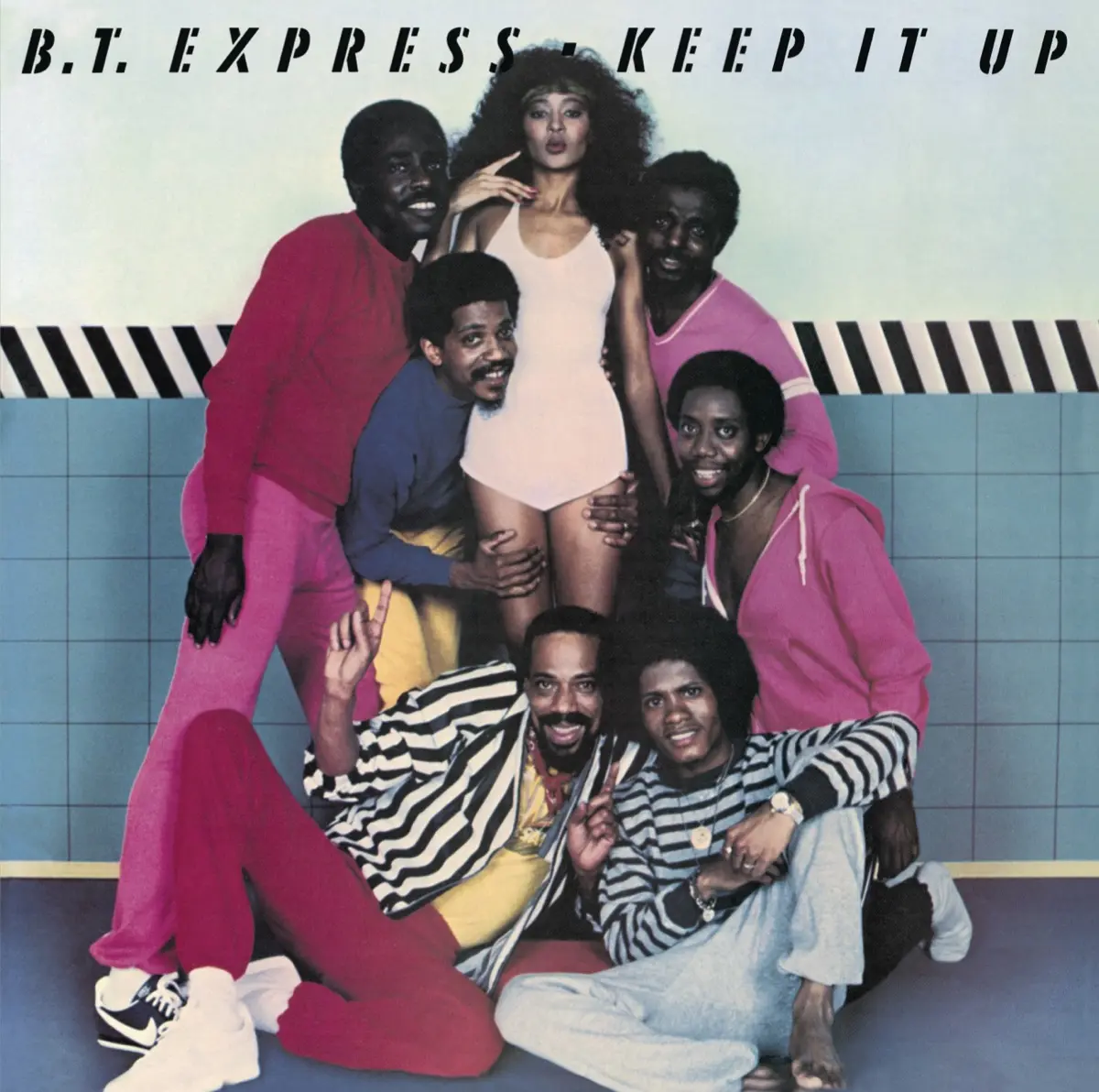 B.T. Express released their seventh and final album, Keep It Up, in 1972 on Roadshow.
The record leaned on extended dancefloor arrangements built from layered percussion, flute and saxophone lines, and group vocal exchanges. Its sound carried a polished studio edge compared to the group’s earlier raw funk style.
All songs were credited collectively to the band, with bassist Jamal Rasool, guitarist Rick Thompson, saxophonist Bill Risbrook, and percussionist Dennis Rowe sharing instrumental and vocal roles. William Robinson handled lead vocals across the set.
“This Must Be the Night for Love” and “It’s Got to Be You” stretch past six minutes with steady midtempo rhythms, highlighting woodwind textures. The title track moves briskly, balancing chant-driven refrains with sharp rhythm guitar. “Just Can’t Stop Dancin’” and “Dancin’ Dream” extend into layered, percussion-heavy passages, while “Star Child” and “Let Yourself Go” keep closer to concise funk-disco structures.
A1. “This Must Be the Night for Love” (6:57)
A2. “It’s Got to Be You” (6:32)
A3. “Star Child” (4:08)
B1. “Keep It Up” (3:23)
B2. “Just Can’t Stop Dancin'” (6:18)
B3. “Dancin’ Dream” (4:47)
B4. “Let Yourself Go” (4:50)
Sessions occurred at Eras Recording and Nola Recording in New York City with Glen Kolotkin producing and handling recording. Brad Baker served as associate producer.
Keep It Up features cover photography by Brian Hagawara with art direction by Allen Weinberg.
Discography:
- Do It ‘Til You’re Satisfied (1974)
- Non-Stop (1975)
- Energy to Burn (1976)
- Function at the Junction (1977)
- Shout! (1978)
- 1980 (1980)
- Keep It Up (1982)
Sources:
- Discogs: B.T. Express
- RYM: B.T. Express (Funk Albums directory)
- 45worlds: B.T. Express
- 45cat: B.T. Express
- MusicBrainz: B.T. Express
Artist/Album Pages:
Rasa was an American jazz-funk/soul band that released the 1978 album Everything You See Is Me on ...
Richard Tee (Nov. 24, 1943 — July 21, 1993) an American jazz-funk pianist, organist, arranger, an...
Brick was an American soul-funk band from Atlanta that released six albums between 1976 and 1982 o...
Cold Fire was an American soul-funk band that released the 1981 Capitol album Too Cold. Members:...
Sweet Smoke was a German-based jam-rock/psych band comprised of expat Americans. In 1970, they rel...
George Clinton (born July 22, 1941) is an American R&B-funk singer, songwriter, bandleader, a...
Gary Toms Empire was an American soul-funk band from N.Y.C. that released the 1975 album 7-6-5-4-3...
Niteflyte was an American soul-funk duo that released two albums between 1979 and 1981 on Ariola. ...
High Fashion was an American soul-funk trio that released the 1982/83 albums Feelin' Lucky and Mak...
Rhyze was an American soul-funk band from Jersey City that released the 1980 album Just How Sweet ...
Funk, Inc. was an American soul-funk band from Indianapolis that released five albums between 1971...
Xavier was an American soul-funk band that released the 1982 Liberty album Point of Pleasure and s...