
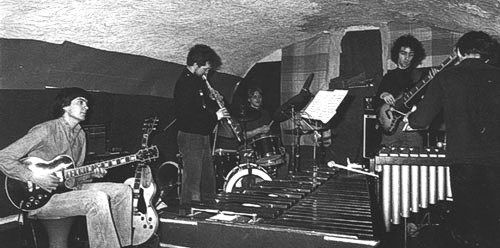
Abus Dangereux was a French jazz-rock band that released three studio albums and a live disc on assorted labels between 1980 and 1985. A name truncation to Abus yielded three further albums over the ensuing half decade.
Members: Pierrejean Gaucher (guitar), Eric Bono (piano, keyboards), Laurent Kzrewina (saxophone), Alain Mourey (drums), Pascal Gaillard (bass), Sylvie Voise (vocals), Caitriona Walsia (vocals), Dan Ken (vibraphone), Arnaud Jarlan (percussion), Nigel Warren Green (cello), Arnaud Devos (vibraphone, marimba, percussion), Bobby Rangell (saxophone, flute), Philippe Euvrard (bass), Guillermo Benavides (bass), François Verly (drums, percussion), Frédéric Martin (trumpet), Jacques Marugg (vibraphone), Philippe Talet (bass)
Background
Guitarist Pierrejean Gaucher (b. December 17, 1958; Boulogne-Billancourt) formed Abus Dangereux in 1977 after a decade of self-driven study sparked by the Beatles single “Let It Be,” which he received for his tenth birthday. He absorbed Deep Purple and Pink Floyd, then pursued the advanced structures of Yes, Genesis, and King Crimson before exploring jazz-leaning acts like Soft Machine, Gong, Magma, and Mahavishnu Orchestra. Gaucher practiced alone through his teens, committed to music after secondary school.
Keyboardist Eric Bono (b. 1956) entered early in the group’s formation. Active as a composer since 1975, Bono worked on piano and keyboards and, across his wider career, occasional guitar, bass, percussion, balafon, and vocals. Saxophonist Laurent Kzrewina joined soon after, completing the initial creative nucleus. Their name referenced a health warning on a cigarette pack, a nod to the chain-smoking habit of their first bassist.
Abus Dangereux (Dangerous Abuse) functioned as Gaucher’s evolving workshop, eventually cycling through nearly fifty musicians across twelve years. Early sessions produced two hours of material that Gaucher condensed to a forty-minute program.
A temporary recording lineup—guitarist Pierrejean Gaucher, keyboardist Eric Bono, saxophonist Laurent Kzrewina, drummer Alain Mourey, bassist Pascal Gaillard, vocalists Sylvie Voise and Caitriona Walsia, vibraphonist Dan Ken, percussionist Arnaud Jarlan, and cellist Nigel Warren Green—tracked the debut in London and secured release through A.J. Records. The band premiered the music live in 1979.
Le Quatrième Mouvement
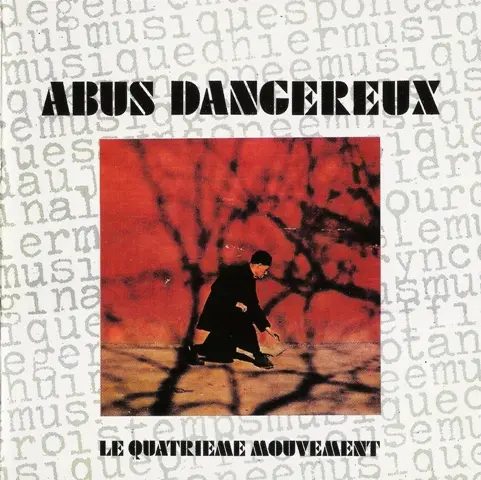 Abus Dangereux released their debut album, Le Quatrième Mouvement (The Fourth Movement), in 1980 on A.J. Records.
The record presents rapid, rhythmic fusion with firm low-end momentum and shifting passages that place winding saxophone themes and layered voices against quick turns in pace.
Guitarist Pierrejean Gaucher composed and arranged five of the album’s pieces, and keyboardist Eric Bono contributed one. The studio ensemble comprised guitarist Pierrejean Gaucher, keyboardist Eric Bono, saxophonist Laurent Kzrewina, drummer Alain Mourey, bassist Pascal Gaillard, vocalists Sylvie Voise and Caitriona Walsia, vibraphonist Dan Ken, percussionist Arnaud Jarlan, and cellist Nigel Warren Green.
“Le Roy Est Mort, Vive le Roy” moves from liquid keyboard figures into accelerated vocal motion before easing toward a calm close with saxophone lines. The title track jumps between rhythmic frames with high-pitched vocals and clipped percussion. “Funk au Château” places fluttering saxophone above light rhythmic pulses, while “Thème d’Hiver” rises from subdued cello and bass to brighter accents. “Ballade Courte” alternates between vocal passages, saxophone interjections, and brief guitar spots, and “Danse du Paques” pivots through multiple tempo changes with saxophone, keys, and angled guitar patterns.
A1. “Le Roy Est Mort, Vive le Roy” [The King Is Dead, Long Live the King] (7:40)
A2. “Le Quatrième Mouvement” [The Fourth Movement] (5:15)
A3. “Interlude” (1:00)
A4. “Funk au Château” [Funk at the Castle] (2:55)
B1. “Thème d’Hiver” [Winter Theme] (3:00)
B2. “Ballade Courte” [Short Ballad] (9:10)
B3. “Danse du Paques” [Easter Dance] (5:57)
Sessions took place at Rockstar Studios in London in December 1979, followed by remixing at Studio Darras in Paris in March 1980.
After the debut, the lineup dissolved apart from Mourey. Gaucher steered the project toward a sharper jazz-rock focus, applying concepts he developed during a six-month 1981 stint at the Berklee College of Music in Boston. For live shows, vibraphonist Benoît Moerlen augmented the band.
Bis
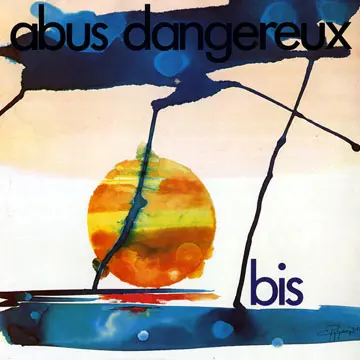 Abus Dangereux released their second album, Bis, in 1982 on Elanore Productions.
The material leans toward airy, pace-driven fusion built around marimba voicings and occasional nods to Canterbury phrasing.
Guitarist Pierrejean Gaucher led the lineup of multi-instrumentalist Arnaud Devos (vibraphone, marimba, percussion), saxophonist and flautist Bobby Rangell, bassist Philippe Euvrard, and drummer Alain Mourey.
“Phaedra” advances with tight, technical lines, while “Summer Homework” shifts from measured movement into more forceful mid-track surges. The set maintains a bumpy rhythmic surface with independently wandering bass figures and keyboard accents that flare around the edges.
A1. “Radio Pékin” [Radio Beijing] (4:03)
A2. “Phaedra” (8:35)
A3. “Nostalgy Square” (8:43)
B1. “Bulletin Météo” [Weather Report] (8:13)
B2. “Summer Homework” (8:20)
Sessions occurred at d’Aguesseau Studio in February 1982.
Happy French Band
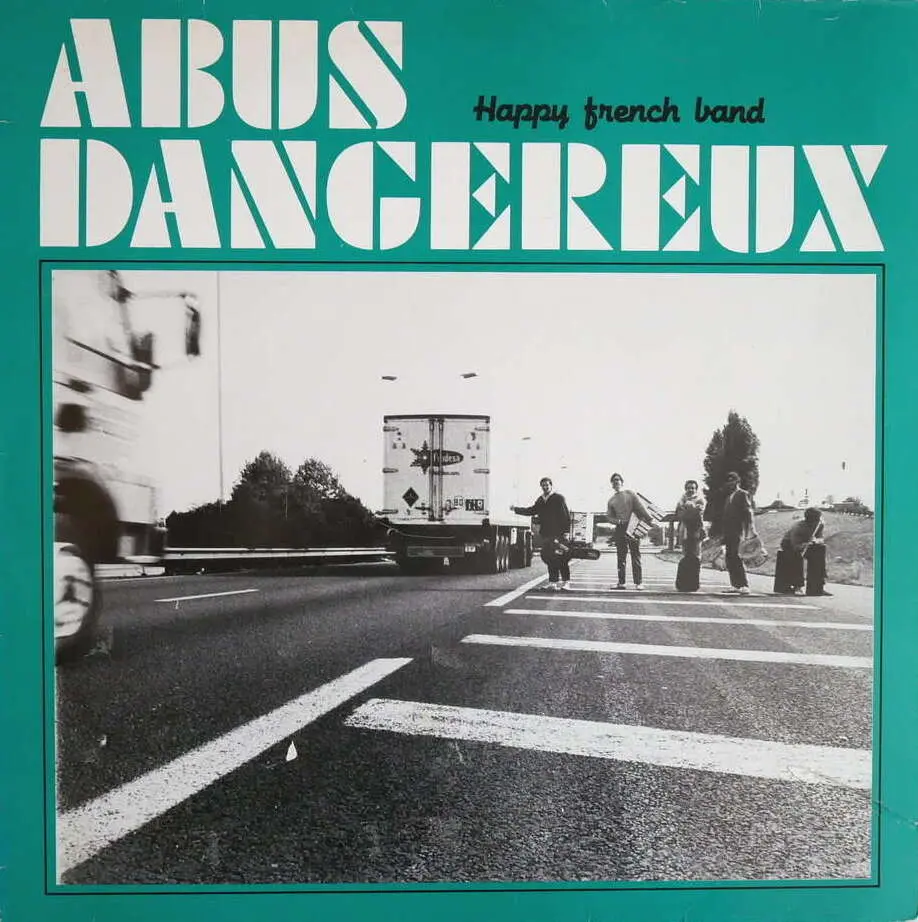 Abus Dangereux released their third album, Happy French Band, in 1983 on Metro Records.
The disc broadens the project’s marimba-centered, rhythm-forward direction across short, upbeat tracks and one long-form multi-part suite.
Guitarist Pierrejean Gaucher fronted a revised ensemble of multi-instrumentalist Arnaud Devos (vibraphone, marimba, percussion), saxophonist and flautist Bobby Rangell, bassist Guillermo Benavides, multi-instrumentalist François Verly (drums, percussion), and trumpeter Frédéric Martin.
“Abu’s Blues” and “Aye Schingao” keep to light, steady motion, while “Voyage Sans Étiquettes” spans five connected sections that shift through contrasting themes.
A1. “Happy Band” (7:54)
A2. “Abu’s Blues” (5:33)
A3. “Aye Schingao” (4:43)
B. “Voyage Sans Étiquettes” [Voyage Without Labels] (23:46)
Sessions took place at Witas Studio in October 1983.
Abus Dangereux issued a live album in 1985, shortened its name to Abus the following year, and incorporated computer-based elements into the arrangements. The group continued through 1991 with three more studio albums and roughly four hundred performances.
Discography:
- Le Quatrième Mouvement (1980)
- Bis (1982)
- Happy French Band (1983)
- Live au New Morning (1985)
Sources:
Artist/Album Pages:
Wham! was an English pop-soul duo from London that released four 1982–83 singles on Columbia–Inner...
China Crisis are an English art-pop band from Kirkby, Merseyside, that released five albums on Vir...
Girl was an English pop-metal band from London that released the 1980–82 albums Sheer Greed and Wa...
Steel Pulse are an English roots-reggae band from Birmingham that released the 1978–80 Island albu...
Yasuaki Shimizu — 清水靖晃 (Aug. 9, 1954) — is a Japanese jazz-funk saxophonist who debuted as a solo ...
Sylvester James (Sept. 6, 1947 — Dec. 16, 1988) was an American soul-funk singer from Los Angeles ...
Shiva was an English hard-rock band that released the 1982 album Firedance on Heavy Metal Records....
The Comsat Angels were an English post-punk band that co-developed the ethereal neo-psych subgenre...
Manu Lann Huel (born 1949) is a French folk-psych singer/songwriter who released a 1977 self-title...
Ratata was a Swedish synthpop band from Stockholm that released seven studio albums, starting with...
Flamen Dialis was a French electro-symphonic/folk project headed by Didier Le Gallic, responsible ...
Josipa Lisac is a Croatian vocalist who briefly sang with the Zagreb pop groups O'Hara and Zlatni ...