
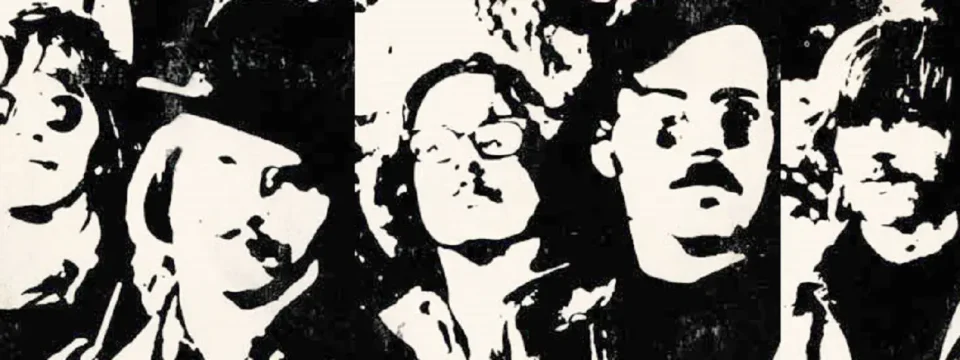
Mad River was an American psychedelic-rock band that self-released a 1967 EP and signed to Capitol for the 1968/69 albums Mad River and Paradise Bar and Grill.
Members: Lawrence Hammond (vocals, bass, guitar, piano, recorder), David Robinson (guitars, banjo, vocals), Rick Bockner (guitars, vocals), Tom Manning (12-string guitar, bass, vocals), Gregory Leroy Dewey (drums, vocals). Greg Druian played rhythm guitar in the founding lineup.
Background
Mad River sprung from a partnership between guitarists David Robinson and Tom Manning, a folk duo from Yellow Springs, Ohio. In the spring of 1966, they formed the Mad River Blues Band at Antioch College with bassist–singer Lawrence Hammond and rhythm guitarist Greg Druian. Drummer Gregory Leroy Dewey, then a high-school student, completed the group. Their early sets combined electric blues and soul material with folk songs and original compositions.
Guitarist Rick Bockner joined in early 1967 as the musicians prepared to leave Ohio. Before the move, they recorded a Dayton demo that included early versions of “Wind Chimes” and “Timothy.” Mad River relocated to Berkeley later that year and shared a house where the members rehearsed between appearances at Provo Park, the Avalon Ballroom, the Fillmore, and the Straight Theater.
Wee Records issued the three-song Mad River EP in 1967 with “A Gazelle,” “Orange Fire,” and “Windchimes.” The first title became “Amphetamine Gazelle” on the Capitol debut, while the group recorded “Wind Chimes” for a third time. The EP brought approaches from Vanguard producer Samuel Charters and Capitol Records.
Poet Richard Brautigan became a regular visitor at the Berkeley house and connected the musicians with local writers. Mad River financed 500 copies of his 1968 seed-packet collection Please Plant This Book. The group signed with Capitol in February 1968.
Mad River
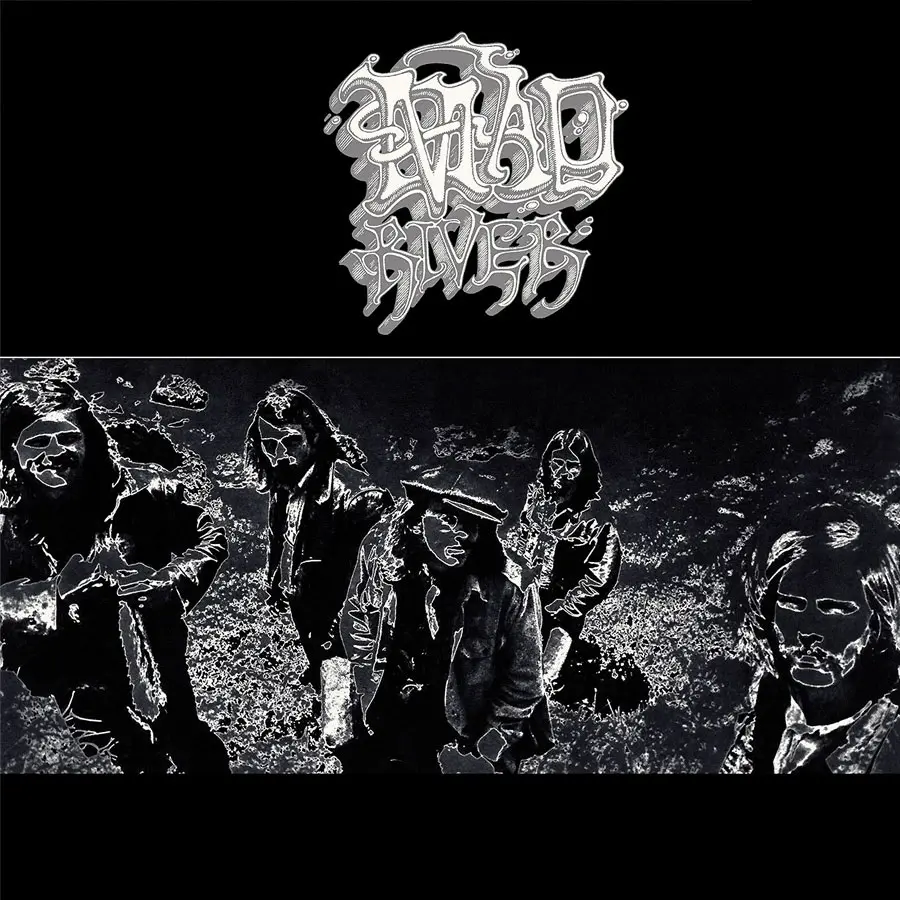 Mad River released their self-titled debut album in October 1968 on Capitol.
Hammond wrote everything part from the Dewey co-write “Eastern Light” and the group-composed “Wind Chimes.” Manning moves from 12-string guitar to bass on “Wind Chimes” and “The War Goes On.” Hammond adds recorder and piano, then takes the 12-string part on the latter composition. Bockner shares the lead-guitar passage on “Wind Chimes” with Hammond and Robinson.
“Merciful Monks” lurches through jagged chord shifts, dissonant turns and strained cries. “High All the Time” drifts across a slower blues-scale figure under piercing lines and grimy sustain. “Amphetamine Gazelle” careens through hard-charging riffs and abrupt breaks beneath a fevered spoken preamble. “Eastern Light” coils along a minor-key scale through a mournful bridge toward a wistful peak.
“Wind Chimes” swells from gentle harmonics through panning distortion and winding eastern scales to a martial tattoo and quiet resonance. “The War Goes On” grinds through martial syncopation, jagged breaks and anguished antiwar declamation. “Hush, Julian” murmurs a chilling lullaby through spare, haunted phrases.
A1. “Merciful Monks” (3:40)
A2. “High All the Time” (4:04)
A3. “Amphetamine Gazelle” (2:50)
A4. “Eastern Light” (7:55) – Dewey, Hammond
B1. “Wind Chimes” (7:20) – Mad River
B2. “The War Goes On” (12:30)
B3. “Hush, Julian” (1:10)
Sessions totaled 125 hours at Golden State Recorders in San Francisco with producer Nick Venet and engineer Leo De Gar Kulka. Venet, then an A&R executive at Capitol, recently produced Fred Neil’s Sessions and the 1968 Hearts & Flowers album Of Horses, Kids, and Forgotten Women. Kulka founded Golden State Recorders and worked on recordings by the Great Society and Syndicate of Sound.
The final Mad River mix used speed adjustment to fit the material onto two LP sides.
San Francisco poster artist Rick Griffin created the interlaced title lettering around a high-contrast group photograph by George Jerman. The black front sleeve confines the photograph to a rectangular panel, while the turquoise back cover places another group image beside the musician credits. Mad River dedicated the album to Richard Brautigan.
After Mad River, Manning resumed studies at Antioch College while Hammond, Robinson, Bockner, and Dewey continued as a quartet.
Paradise Bar and Grill
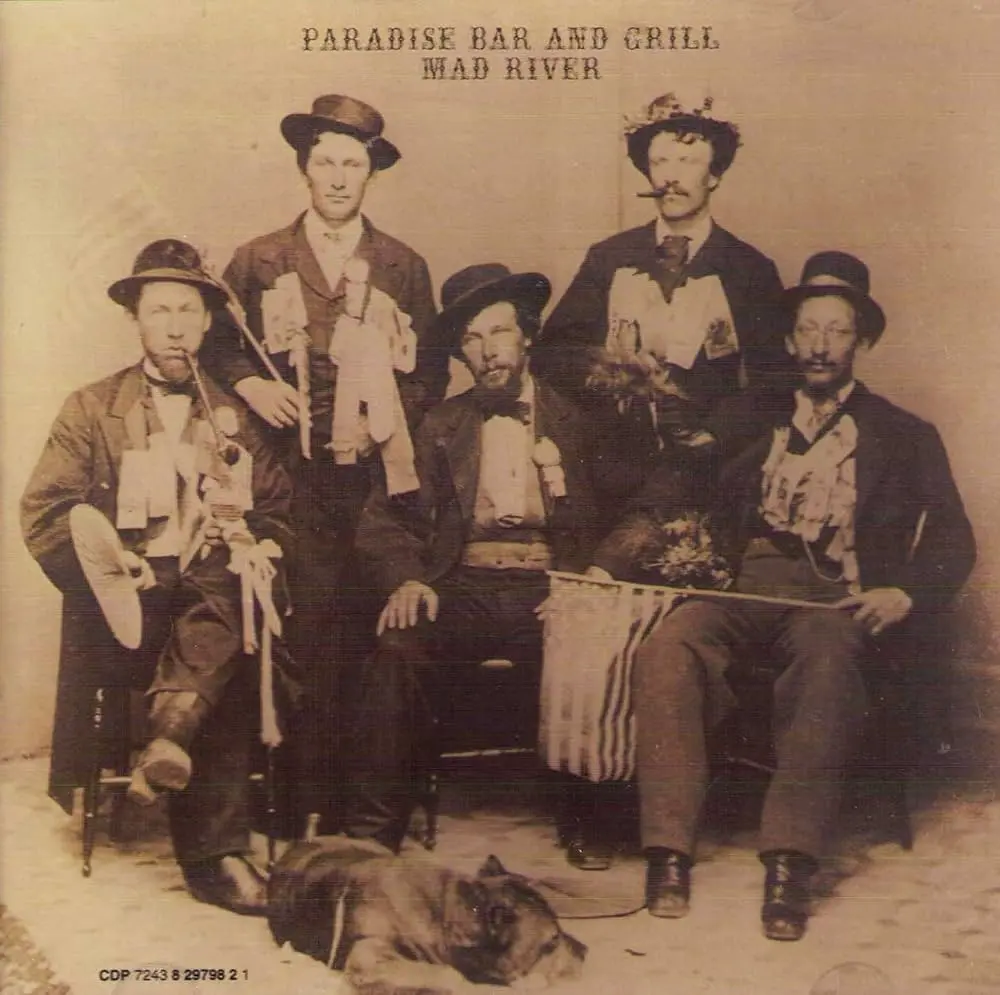 Mad River released their second album, Paradise Bar and Grill, in August 1969 on Capitol.
Robinson, Bockner, and Dewey contribute compositions alongside Hammond. Poet Richard Brautigan reads “Love’s Not the Way to Treat a Friend,” which he wrote with Robinson, while former Antioch writer-in-residence Carl Oglesby supplies “Cherokee Queen.” Youngbloods guitarist Lowell “Banana” Levinger adds pedal steel to the title track. Producer Jerry Corbitt plays Hawaiian steel on “Cherokee Queen,” and conguero Ron Wilson appears on two selections.
“Harfy Magnum” skips through interlocked acoustic picking and angular turns. “Love’s Not the Way to Treat a Friend” threads Brautigan’s recitation through mellow acoustic accompaniment. “Leave Me/Stay” mourns through anguished distortion and downcast phrases. “Equinox” glides through quasi-classical figures, recorder phrases and a medieval contour.
“Revolution’s in My Pockets” struts through taut syncopation, a serene acoustic interlude and wordless humming. “Academy Cemetery” curls through a winding electric lead above Latinesque accents. “They Brought Sadness” dates from the Manning era.
A1. “Harfy Magnum” (2:40) – Robinson
A2. “Paradise Bar and Grill” (3:35) – Hammond
A3. “Love’s Not the Way to Treat a Friend” (2:00) – Brautigan, Robinson
A4. “Leave Me/Stay” (7:10) – Hammond
A5. “Copper Plates” (2:30) – Hammond
A6. “Equinox” (1:55) – Bockner
B1. “They Brought Sadness” (4:50) – Dewey, Hammond
B2. “Revolution’s in My Pockets” (6:04) – Hammond
B3. “Academy Cemetery” (3:02) – Mad River
B4. “Cherokee Queen” (4:05) – Oglesby
The album incorporates two recordings from the debut sessions with later work at Golden State Recorders and Sierra Sound Laboratories. Nick Venet produced “Love’s Not the Way to Treat a Friend” and “They Brought Sadness” at Golden State with Kulka engineering. Robinson produced “Harfy Magnum” at the same studio with engineer Mike Larner. Jerry Corbitt produced the remaining seven tracks at Sierra Sound Laboratories in Berkeley with engineer Bob de Sousa.
Corbitt co-founded the Youngbloods as a guitarist and singer. He followed the Mad River sessions with production work on the 1970 Don McLean debut Tapestry and the 1971 Janis Ian release Present Company. De Sousa founded and operated Sierra Sound Laboratories.
Manager Harry Sobol designed the newspaper-style sleeve and wrote the back-cover notes. Baron Wolman, then the first chief photographer for Rolling Stone, supplied the liner portrait. Ornamental borders, track columns, and long text blocks surround the sepia-toned band photograph.
Paradise Bar and Grill reached No. 192 on the Billboard 200.
Breakup
Mad River dissolved in July 1969, before Paradise Bar and Grill reached stores the following month. Military-service decisions, financial pressure, and dissatisfaction with the Capitol arrangement contributed to the split. Hammond and Robinson returned to university, while Dewey joined Country Joe and the Fish. Bockner moved to British Columbia and continued through teaching and session work.
In 2000, Edsel paired Mad River with Paradise Bar and Grill on one CD and restored the debut material to its intended playback speed.
Discography
EP
1967 — Mad River (Wee)
Studio Albums
1968 — Mad River (Capitol)
1969 — Paradise Bar and Grill (Capitol)
Sources:
Artist/Album Pages:
Curtis Mayfield (June 3, 1942 — December 26, 1999) was an American soul-funk musician, composer, a...
Houston Person (born Nov. 10, 1934) is an American post-bop/jazz-funk tenor saxophonist and recor...
Storyteller was an English folk-rock band that released the 1970–71 albums Storyteller and More Pa...
Shawn Phillips (born Feb. 3, 1943) is an American singer/songwriter who released the 1965/66 Columbi...
Necronomicon was the German Krautrock band behind the 1972 album Tips zum Selbstmord. In 1990, the a...
Janis Joplin (Jan. 19, 1943 — Oct. 4, 1970) was an American singer who fronted Bay Area blues-rocker...
Sigmund Snopek III (born Oct. 21, 1951) is an American multi-instrumentalist, composer, and produc...
Hungry Wolf was an English brass-rock/psych studio project that yielded a self-titled album on Phi...
Mount Everest was a Swedish post-bop/jazz-rock ensemble that debuted in 1972 and made five albums ...
Ann Odell is an English keyboardist, vocalist, songwriter, and arranger who played on albums by Sh...
Cesar Camargo Mariano (born Sept. 19, 1943) is a Brazilian pianist and composer who released eight...
Gulliver was an American rock quartet formed in Philadelphia by singer-keyboardist Daryl Hall, si...