

Jigsaw was an English pop-rock band from Coventry that released a trio of singles on MGM/Music Factory in 1968, followed by two albums on Philips between 1970 and 1972, a second pair of albums on BASF in 1973/74, and a further trio of longplayers on Chelsea and Splash between 1975 and 1978. They are best known for their 1975 single “Sky High,” a Top 10 hit in several nations.
Members: Clive Scott (keyboards, vocals), Dave “Biffo” Beech (vocals, drums, 1966-67), Barrie Bernard (bass, 1966-78), Tony Campbell (guitar, 1966-79), Tony Britnell (saxophone, 1966-74), Kevin Mahon (saxophone, 1966-70), Des Dyer (drums, vocals, 1967-81), Jon Fox (bass guitar, 1978-81), Rod Godwin (guitar, 1979-81), Tim Stone (guitar, 1981-83), Peter Dennis (bass, 1981-83)
Background
Jigsaw was formed in 1966 by six musicians from Coventry and nearby Rugby. By 1967, the lineup stabilized with singer/keyboardist Clive Scott, guitarist Tony Campbell, bassist Barrie Bernard, drummer Des Dyer, and saxophonists Tony Britnell and Kevin Mahon. They took their name from the Jigsaw Club in Manchester.
The band had links to prior beatsters The Antarctics (Scott), The Surfcyders and Clockwork Shoppe (Dyer), The Mighty Avengers (Campbell, Mahon), Pinkerton’s Assorted Colours (Bernard), and The Fortunes (Britnell).
Inspired by the stage antics of The Who and The Move, Jigsaw’s early concerts featured amp explosions and fire-eating.
In May 1968, Jigsaw made their vinyl debut with the MGM pink-label single “One Way Street” (b/w “Then I Found You”). Their next two singles, “Mr. Job” (b/w “A Great Idea”) and “Let Me Go Home” (b/w “Tumblin'”), appeared that fall on Music Factory.
In 1970, Jigsaw served as the backing band for American soulster Arthur Conley on a European tour. Around this time, Mahon left the band. Their fourth single, “Lollipop and Goody Man,” appeared in July on Fontana (b/w “Seven Fishes”).
Leatherslade Farm
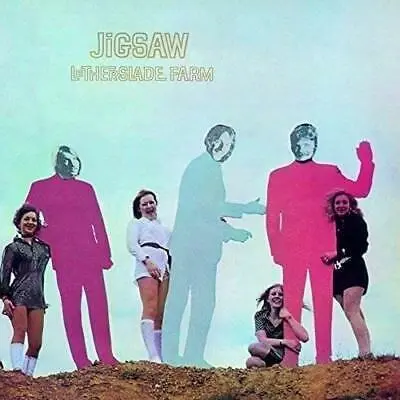 Jigsaw released their debut album, Leatherslade Farm, in 1970 on Philips.
The album presents a surreal mixture of satirical spoken-word sketches, theatrical interludes, and art-pop arrangements with a psychedelic edge. It functions loosely as a concept piece chronicling the downfall of a fictional pop singer through interviews, character skits, and reinterpretations of familiar themes, wrapped in a pastiche of styles reminiscent of contemporary acts like the Bonzo Dog Doo-Dah Band. Titles range from Shakespeare adaptations to Bach chorales, with juxtapositions of slapstick humor and earnest musicianship.
As on all Seventies-era Jigsaw albums, Des Dyer sings lead and plays drums throughout, surrounded by guitarist Tony Campbell, bassist Barrie Bernard, and keyboardist Clive Scott, who plays piano, organ, harpsichord, Mellotron, and also arranged several of the musical numbers. Tony Britnell adds saxophone on key selections.
A1. “Tap Dance” (0:05)
A2. “Weaver’s Answer” (5:04)
A3. “Interview (1)” (0:52)
A4. “Je t’aime / If You Were the Only Girl in the World” (1:48)
A5. “Interview (2)” (0:14)
A6. “Can I Save This Dance” (1:54)
A7. “Interview (3)” (0:04)
A8. “School Sketch” (2:38)
A9. “Blow Blow Thou’ Winter Wind” (4:02)
A10. “Interview (4)” (0:38)
A11. “Vicar’s Sermon” (2:38)
A12. “Jesu Joy of Man’s Desiring” (5:24)
A13. “Tap Dance (2)” (0:05)
B1. “Tap Dance (3)” (0:05)
B2. “Agent Sketch” (1:07)
B3. “Danny” (1:54)
B4. “Interview (5)” (0:05)
B5. “Northern Sketch (1)” (1:01)
B6. “A Nightingale Sang In Berkeley Square” (0:26)
B7. “Northern Sketch (2)” (0:30)
B8. “Say Hello to Mrs Jones” (2:49)
B9. “Northern Sketch (3)” (0:35)
B10. “Interview (6)” (0:04)
B11. “Diesel Blues” (8:22)
B12. “Interview (7)” (0:20)
B13. “Group Sketch” (0:24)
B14. “Morning” (3:00)
B15. “Interview (8)” (0:32)
B16. “Seven Fishes” (2:40)
B17. “Record Company Sketch” (0:22)
B18. “Interview (9)” (0:53)
B19. “Tap Dance (4)” (0:11)
Jigsaw recorded the album in 1970 with Chas Peate producing. The arrangement of “Jesu Joy of Man’s Desiring” features layered keyboards, saxophone, electric guitar, and a chamber-influenced structure, signaling the band’s technical capability beneath the comedic concept. Librettist credits for most of the sketches and interview segments are attributed to Yettey, an affiliate of Splash Records.
Philips issued “Jesu Joy of Man’s Desiring” as a single on July 16, 1971, backed with “No Questions Asked.” Earlier that year, they released “One Way Street” (b/w “Confucious Confusion”) on April 30, followed by “Keeping My Head Above Water” (b/w “It’s Nice But It’s Wrong”) on December 3. None of these singles charted, and the album did not register commercially at the time, though it has since drawn retroactive attention for its ambition and offbeat humor.
Aurora Borealis
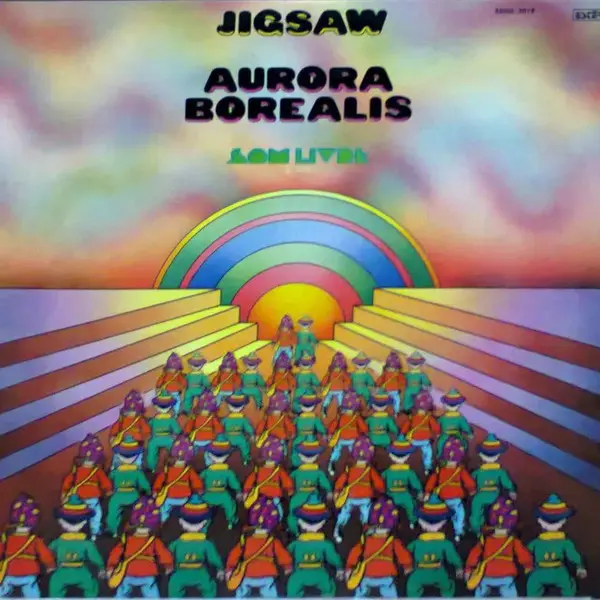 Jigsaw released their second album, Aurora Borealis, in 1972 on Philips.
The album shifts from the theatrical satire of their debut to a more song-oriented approach rooted in orchestrated pop and reflective balladry, interspersed with uptempo rock and light conceptual elements. Clive Scott and Des Dyer contribute all compositions, often pairing introspective lyrics with intricate instrumental textures. String arrangements by Richard Hewson underscore the more cinematic pieces, while brass and saxophone lines inject tonal variety.
Tony Campbell plays electric guitar and splits acoustic tracks with Des Dyer, who plays drums, accordion, and piano, the latter two shared with Clive Scott, who also plays organ and electric piano. Tony Britnel contributes saxophone parts. Sam Pinkington adds extra percussion and backing vocals.
A1. “Keeping My Head Above Water” (3:27)
A2. “Autumn” (3:09)
A3. “Come With Me” (3:00)
A4. “Life Insurance” (2:57)
A5. “Sitting On a Bomb” (1:52)
A6. “When the Sun Is in Your Eyes” (3:02)
B1. “What’s My Name” (4:10)
B2. “See Me Flying” (2:17)
B3. “Freud Fish” (4:30)
B4. “Hanging Around” (2:42)
B5. “P-R-R-R Blues” (3:04)
B6. “Ready to Ride” (3:50)
Sessions took place at Majestic Studios with engineering by Roger Wilkinson and assistant Derek Chandler. Hewson’s string charts frame several tracks in layered orchestration. The band self-produced the album with Clive Scott, Des Dyer, and Tony Campbell sharing credit. Giorgio Parmigiani designed the LP sleeve, and Belsize Music handled publishing.
BASF issued the single “That’s What It’s All About” backed with “And I Like You” on August 9, 1972. Neither the single nor the album charted upon release.
Broken Hearted
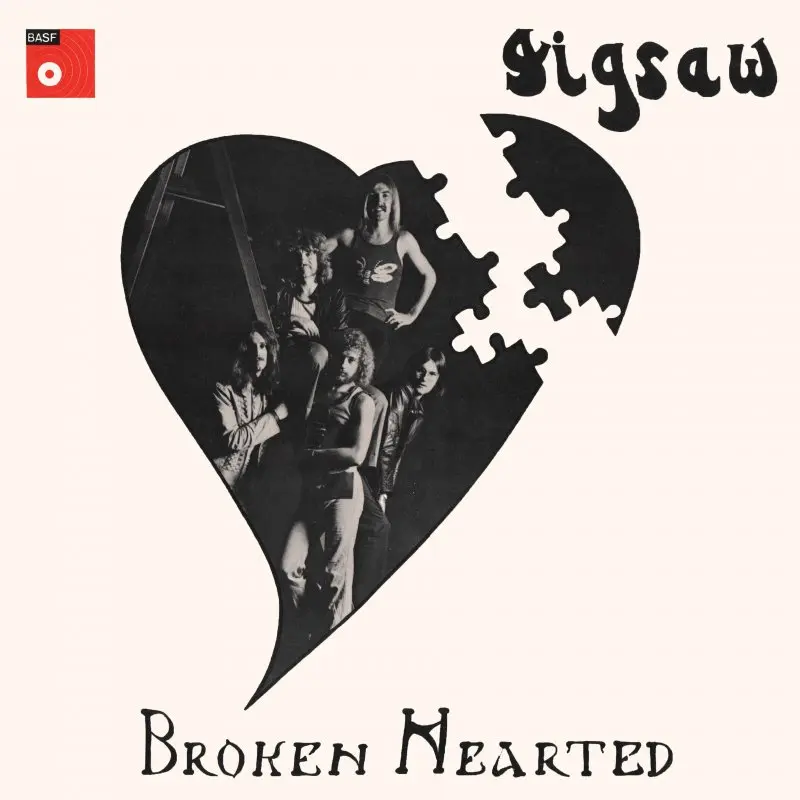 Jigsaw released their third album, Broken Hearted, in 1973 on BASF.
Broken Hearted presents another set of Scott–Dyer originals shaped around melodic songwriting, concise arrangements, and tonal variety. While the style continues to move away from their theatrical debut, the album favors tight instrumentation and structured pop craftsmanship with flourishes of piano-led balladry, sax-led accents, and orchestrated backdrops. Tony Britnell guests on saxophone.
A1. “That’s What It’s All About” (3:26)
A2. “Summertime, Wintertime” (3:23)
A3. “A Bedtime Story” (2:49)
A4. “Gun” (2:10)
A5. “Baby’s Lost Time” (3:33)
A6. “Just Another Clown” (3:55)
B1. “Only Because You’re There” (3:05)
B2. “Have You Heard the Knews” (2:40)
B3. “Linda” (2:53)
B4. “And I Like You” (2:46)
B5. “My Summer Song” (3:04)
B6. “It’s a Sort of Magic” (2:54)
Sessions took place at Majestic Studios and were published through Belsize Music Ltd. BASF handled UK release and distribution. Garrod & Lofthouse manufactured and printed the LP sleeve. Clive Scott and Des Dyer continued to lead songwriting and arrangements without external production involvement credited.
BASF issued “That’s What It’s All About” backed with “And I Like You” as a single on July 6, 1973.
I’ve Seen the Film, I’ve Read the Book
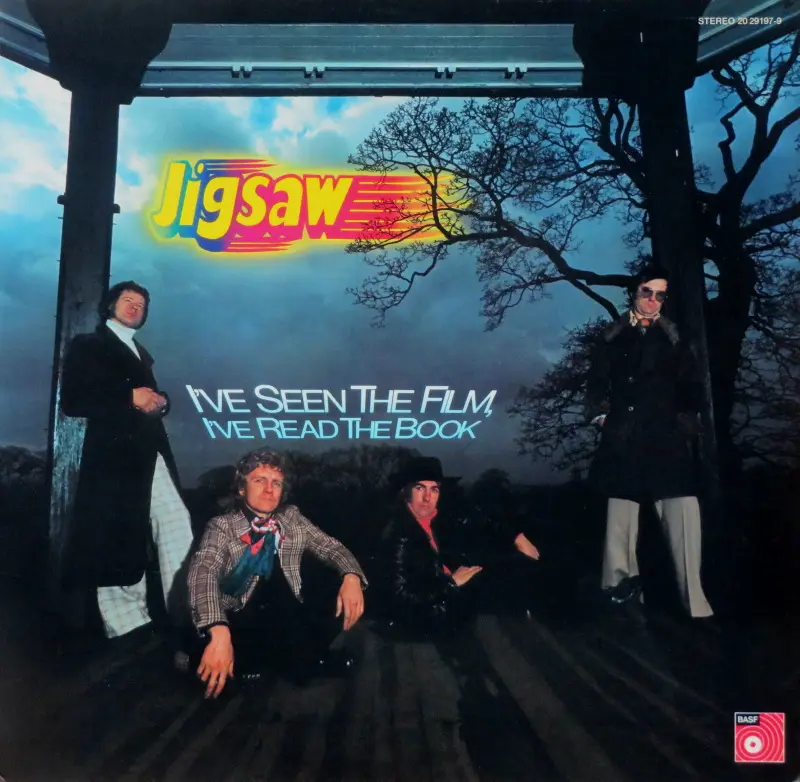 Jigsaw released their fourth album, I’ve Seen the Film, I’ve Read the Book, in 1974 on BASF.
The album continues the group’s pivot toward concise pop songwriting with full-band arrangements and layered harmonies. Clive Scott wrote “Thankful for You” and co-authored the balance with Des Dyer. Instrumental textures balance piano-led refrains with electric guitar motifs and vocal-forward production across twelve original tracks.
Jigsaw scored a hit by proxy with “Who Do You Think You Are?”
A1. “I’ve Seen the Film, I’ve Read the Book” (3:29)
A2. “That’s the Way It Goes” (3:32)
A3. “Look My Way” (2:47)
A4. “Face the Music” (2:47)
A5. “Thankful for You” (2:40)
A6. “Who Do You Think You Are?” (2:53)
B1. “Mention My Name” (3:11)
B2. “Give Me Love to Keep Me Warm” (3:45)
B3. “You’re Not the Only Girl” (3:29)
B4. “The Beginning of the End” (2:32)
B5. “So Sorry and Sad” (4:14)
B6. “Listen to the Joker” (3:35)
Sessions took place with Scott and Dyer sharing production credit. BASF issued the album with executive production oversight from Chas Peate. All tracks were published by Belsize Music, and pressing was handled in the UK under the BASF label system.
“I’ve Seen the Film, I’ve Read the Book” appeared as a single on February 22, 1974, backed with “Mention My Name.” BASF reissued “That’s What It’s All About” on June 28, 1974, paired with “It’s a Sort of Magic.” A third single, “You’re Not the Only Girl” backed with “Face the Music,” followed on July 26. None of the Jigsaw versions charted, but “Who Do You Think You Are?” became a UK hit that same year for Candlewick Green, and later entered the US Top 20 in a version by Bo Donaldson and the Heywoods.
Sky High
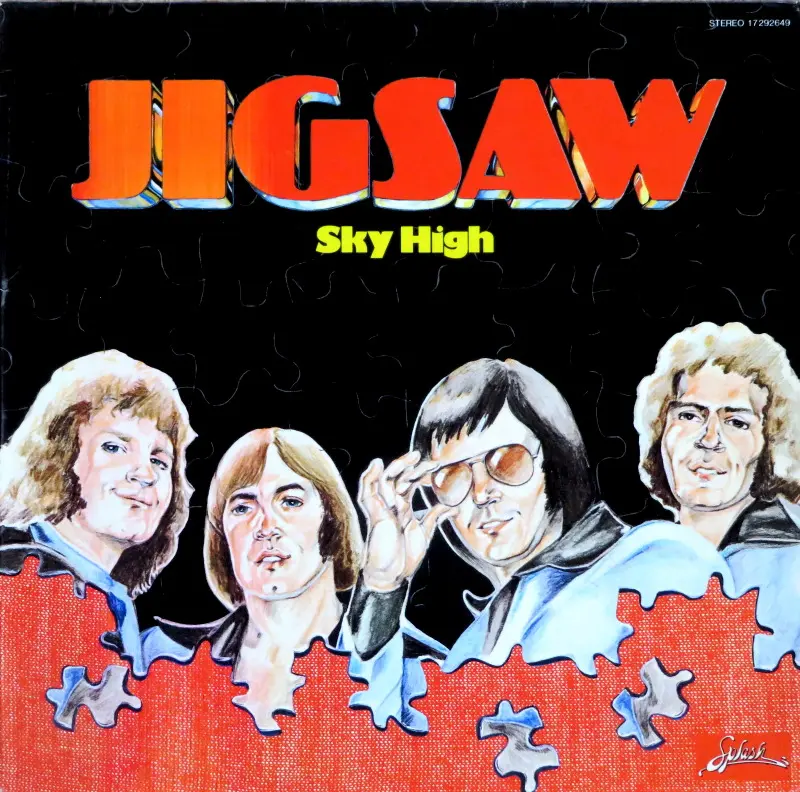 Jigsaw released their fifth album, Sky High, in 1975 on Splash/Chelsea.
Sky High marks a stylistic shift toward lush orchestration, tight rhythm arrangements, and concise songwriting centered on the Scott–Dyer partnership. Vocal layering and string arrangements by Richard Hewson frame much of the material in cinematic textures, blending pop-rock structure with orchestrated dynamics.
The album includes their 1975 breakthrough “Sky High,” originally composed as the theme to The Man from Hong Kong. Also present is their prior BASF single “Baby Don’t Do It” and two subsequent Splash-era tracks, “Love Fire” and “Cry (‘Til the Tears Run Dry),” all released across a span of fifteen months surrounding the LP.
A1. “Sky High” (2:52)
A2. “While You Wait” (3:32)
A3. “Lost and Found” (3:35)
A4. “Stop the Show” (2:43)
A5. “I Thank You” (2:56)
A6. “Tell Me Why” (2:40)
B1. “Back Again” (3:11)
B2. “Call Collect” (3:00)
B3. “In Between the Loving” (3:36)
B4. “Mystic Harmony” (2:50)
B5. “Baby Don’t Do It” (2:57)
B6. “One Step Too Far” (3:10)
Sessions took place at Majestic Studios with Roger Wilkinson as engineer. Richard Hewson arranged the orchestral parts. Chas Peate served as executive producer. The sleeve illustration, design, and cover art are credited to Results.
“Sky High” appeared first as a single on September 26, 1975, backed with “Brand New Love Affair.” Originally composed as the theme to The Man from Hong Kong, it rose to No. 3 on the Billboard Hot 100 and reached No. 4 on the US Adult Contemporary chart. It entered the UK and Irish top 10, climbed to No. 2 in both Japan and New Zealand, and peaked at No. 3 in Australia and Canada. In Australia, the band was billed as “British Jigsaw” due to a name conflict with a local act. The song’s international success elevated the band’s profile and helped drive album sales.
Earlier that year, BASF released “Baby Don’t Do It” backed with “Stand Next to Me” on January 24, 1975. Subsequent Splash singles from the Sky High period included “Love Fire” on January 16, 1976, which reached No. 30 in the US, and “Cry (‘Til the Tears Run Dry)” on August 6, 1976.
Pieces of Magic
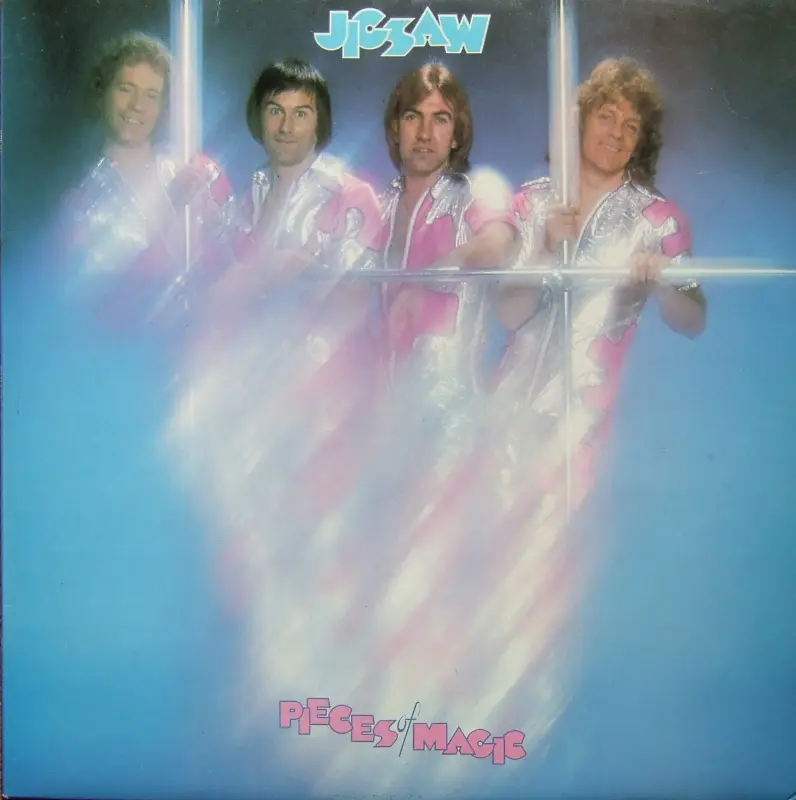 Jigsaw released their sixth album, Pieces of Magic, in 1977 on Splash/EMI.
The album continues the band’s focus on concise piano-driven ballads with uptempo numbers framed by string flourishes and layered harmonies.
Steven Fearn wrote “Spellbound” and co-wrote “You” with Des Dyer. James Millard and Malcolm West supplied “Broken Down Love Affair.” Tetsuji Hayashi composed the music for “If I Have to Go Away,” with lyrics added by Marci Sutin. Scott and Dyer authored the remaining tracks. The album builds on the Sky High sound while expanding into a broader stylistic palette.
A1. “Count Me In” (3:18)
A2. “Only When I’m Lonely” (3:29)
A3. “High and Dry” (3:13)
A4. “Spellbound” (3:09)
A5. “Broken Down Love Affair” (3:32)
A6. “Go Slow” (3:35)
B1. “Lonely, Lonely Love” (3:40)
B2. “If I Have to Go Away” (3:09)
B3. “You’re My Magic” (3:28)
B4. “Paint the Smile On” (2:40)
B5. “Lying” (3:10)
B6. “Give Up While You’re Winning” (2:50)
CD reissues include seven bonus tracks:
13. “Cry (‘Til the Tears Run Dry)” (3:05) – 1976 single A-side, issued August 6 on Splash CP 8.
14. “Fool to Fool” (3:06) – from the 1977 US Jigsaw album, released on Chelsea Records.
15. “Love” (3:06) – also from the 1977 US Jigsaw album.
16. “With Love” (3:00) – from the 1982 US Jigsaw album, issued on Towerbell.
17. “Every Question” (3:05) – recorded in 1983; unreleased until later anthologies.
18. “You” (3:57) – 1985 single A-side, released under the alias Jack & Jill.
19. “Fly Away” (3:35) – B-side to the 1986 UK single “Don’t Waste My Time.”
Scott and Dyer co-produced the album in 1976–77 at Majestic Studios. Splash Records issued the album in conjunction with EMI distribution, with titles published under Belsize Music.
“If I Have to Go Away” appeared as a single on June 3, 1977, backed with “One More Time for Love.” It reached No. 36 in the UK and No. 93 in the US. “Only When I’m Lonely” followed on September 23, backed with “Handle With Care,” but did not chart. The single “Cry (‘Til the Tears Run Dry),” released prior in August 1976, appears here as a bonus track.
1978–79
In 1978, Jigsaw entered a transitional phase marked by internal change and limited activity. Founding bassist Barrie Bernard departed the band during this period, prompting further lineup reshuffles.
They issued two singles on Splash Records during mid-1978. “Everytime” backed with “Afraid of Love” appeared on June 23 as Splash CP 20. A follow-up single, credited to the alias Accident, paired “Who’s Taking You Home” with “Waking Up” and appeared on July 21 as Splash CP 22.
In 1979, Jigsaw re-entered the spotlight when they were commissioned to write music for the feature film Home Before Midnight, directed by Pete Walker. They composed the full soundtrack, which appeared later that year as an album on the Splash label.
Meanwhile, they issued two further Splash singles. On August 24, “Sky High (Disco)”—a remixed version of their 1975 hit—appeared as Splash SP 002, backed with “Hard to Find.” On November 9, they released “Looking for Me” backed with “Every Move You Make” as Splash SP 007.
Discography:
- “One Way Street” / “Then I Found You” (1968)
- “Mr. Job” / “A Great Idea” (1968)
- “Let Me Go Home” / “Tumblin'” (1968)
- Leatherslade Farm (1970)
- Aurora Borealis (1972)
- Broken Hearted (1973)
- I’ve Seen the Film, I’ve Read the Book (1974)
- Sky High (1975)
- Pieces of Magic (1977)
- Journey Into Space (1978)
- Home Before Midnight (1980)
- Jigsaw (1982)
Sources:
Artist/Album Pages:
Bull Angus was an American hard-rock band that released the 1971–72 Mercury albums Bull Angus and ...
Utopia was an American maximalist-rock band that released six studio albums and a live disc on Bea...
Relax was an Argentine hard-rock band that made the 1977 album Padre ... on Vedette. Members: Dan...
Mouse was an English hard-rock/psych band that released the album Lady Killer on Sovereign in 197...
Juliet Lawson is an English singer–songwriter who released the 1972 album Boo on Sovereign. Bac...
The Cars were an American new wave band that released six albums between 1978 and 1987 on Elektra. T...
Jazz Celula was a Czech jazz-rock big band, active eighteen years under trumpeter Laco Deczi. They...
Jay Ferguson (born May 10, 1947) is an American vocalist, keyboardist, and songwriter from Burbank...
Back Street Crawler was an English/American hard-rock band that released two albums on Atco in 197...
Supertramp was an English rock band that released nine studio albums and a live double-LP on A&M...
The Floyd Hunchback Group was a Swiss jazz-rock band that released a 1978 self-titled album on Su...
Pollen was a Québécois symphonic-rock band that released a self-titled album in 1976 on Kébec-Disc...
where is barrie bernard guitarist in jigsaw now in 2024 loved that group