

The Grodeck Whipperjenny was an American psych-rock/funk band that released a 1970 self-titled album on People Records, a label run by James Brown. In 1971, they backed the singer on his King release Sho Is Funky Down Here.
Members: Mary Ellen Bell (vocals), Kenny Poole (guitar, vocals), David Matthews (piano, organ, trombone), Michael Moore (bass), Jimmy Madison (drums)
Background
The Grodeck Whipperjenny assembled in Cincinnati under keyboardist/arranger David Matthews, who began working that year as James Brown’s bandleader and musical director. Their name referenced esoteric psychology — Grodeck, derived from German psychoanalyst Dr. Georg Groddeck, an early influence on Freud — and constant motion: Whipperjenny, a portmanteau of whippersnapper (a vigorous, overconfident youth) and Jenny (a name associated with spinning machines).
The group’s core lineup included guitarist Kenny Poole, bassist Michael Moore, drummer Jimmy Madison, and vocalist Mary Ellen Bell. All were accomplished jazz musicians who came together at Starday-King Studios.
Matthews, born in Sonora, Kentucky, held a composition degree from the University of Cincinnati. Moore toured early on with Woody Herman, then became a sideman to Bill Evans, Stan Getz, Marian McPartland, and Dave Brubeck, among others. Madison played on 1969 albums by folksters Tom Paxton and Tim Buckley.
They recorded their album just weeks before backing Brown on Sho Is Funky Down Here, his 1971 psych-funk experiment.
The Grodeck Whipperjenny (the album)
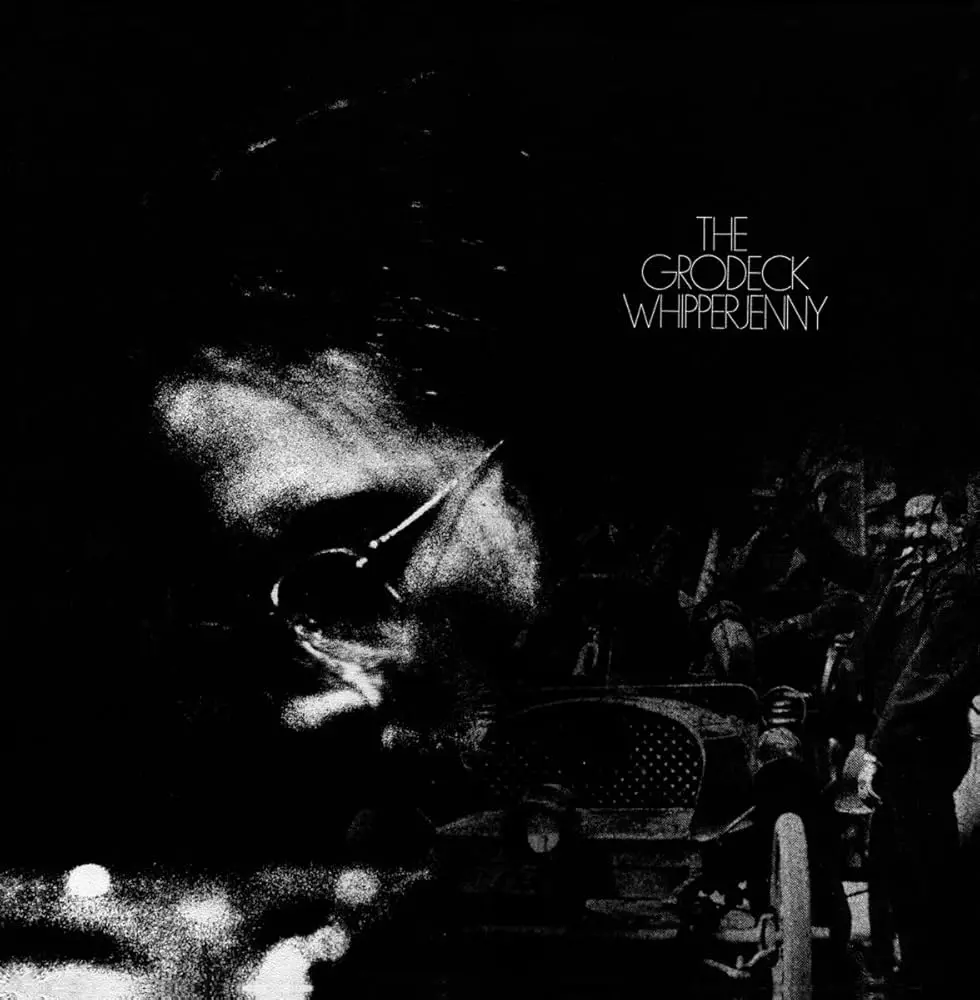 The Grodeck Whipperjenny released their self-titled album in late 1970 on People Records (PS-3000), Brown’s newly formed sublabel. Also released in Canada on Columbia, the album fuses acid rock, funk, chamber pop, and avant-jazz across 31 exploratory minutes.
David Matthews wrote everything apart from co-writes with Kenny Poole (“Put Your Thing on Me”) and associate Tom Banta (the closing piece). Michael Moore submitted the postlude on Side A.
Opener “Sitting Here on a Tongue” mixes fuzz guitar and psych harmonies. “Wonder If” and “Why Can’t I Go Back” blend soul, orchestral pop, and acid folk. “Conclusions” employs a dramatic neoclassical arrangement. The short “You’re Too Young” precedes the heavy funk of “Put Your Thing on Me,” while “Inside or Outside” and the 10-minute closer “Evidence for the Existence of the Unconscious” steer into expansive jam territory with layered organ and extended solos.
A1. “Sitting Here On a Tongue” (2:50)
A2. “Wonder If” (2:55)
A3. “Why Can’t I Go Back” (3:40)
A4. “Conclusions” (4:33)
A5. “You’re Too Young” (1:48)
B1. “Put Your Thing On Me” (4:40)
B2. “Inside Or Outside” (1:00)
B3. “Evidence for the Existence of the Unconscious” (10:28)
Sessions occurred at Starday-King Studios, where David Matthews co-produced the album with Ron Lenhoff for James Brown Productions. The Grodeck Whipperjenny features cover design by Aesthetics, Inc. and photography by Timothy C. Walsh.
Legacy
The Grodeck Whipperjenny stands as one of the earliest examples of psychedelic funk, combining fuzz-rock with orchestral and experimental jazz elements. Along with Sho Is Funky Down Here, it forms a distinct psychedelic chapter in James Brown’s catalog. The album became a sought-after cult item along with similar works by Black Merda and Purple Image.
David Matthews became staff arranger for Creed Taylor’s CTI label, orchestrating seminal albums by George Benson, Grover Washington Jr., Esther Phillips, and Idris Muhammad, and later led both the Manhattan Jazz Quintet and Manhattan Jazz Orchestra.
Kenny Poole became a Cincinnati jazz fixture, acclaimed for his chord melody and bossa nova work.
Jimmy Madison appears on subsequent albums by Nina Simone, Rahsaan Roland Kirk, Chet Baker, George Benson, and Grover Washington Jr.
Discography:
- The Grodeck Whipperjenny (1970)
Sources:
Artist/Album Pages:
Chilliwack was a Canadian rock band from Vancouver that debuted with a 1970 self-titled album on P...
Bennie Maupin (born Aug. 29, 1940) is an American jazz-funk multi-reedist from Detroit. After work...
Kaleidoscope was an American psychedelic folk-rock band from Los Angeles led by banjo, fiddle, an...
Miguel Ríos is a Spanish singer/songwriter. He began recording as Mike Ríos in 1962 and reached an...
Lindisfarne was an English folk-rock band from Newcastle upon Tyne that released four albums and a...
Archie Whitewater was an American brass-rock/soul band that released a self-titled album on Cadet ...
Jerusalem was an English hard-rock band produced by Deep Purple frontman Ian Gillan. They released...
Airto Moreira (born Aug. 5, 1941) is a Brazilian vocalist and percussionist, married to vocalist F...
Luiz Bonfá (Oct. 17, 1922 — Jan. 12, 2001) was a Brazilian samba-jazz guitarist and composer who e...
Norman Feels is an American soul singer who first recorded in the early 1960s as Norman Solomon w...
Lucio Battisti (March 5, 1943 — Sept. 9, 1998) was an Italian singer, songwriter, arranger, and pr...
Colours were an American psychedelic rock band from California that released the 1968/69 albums C...