
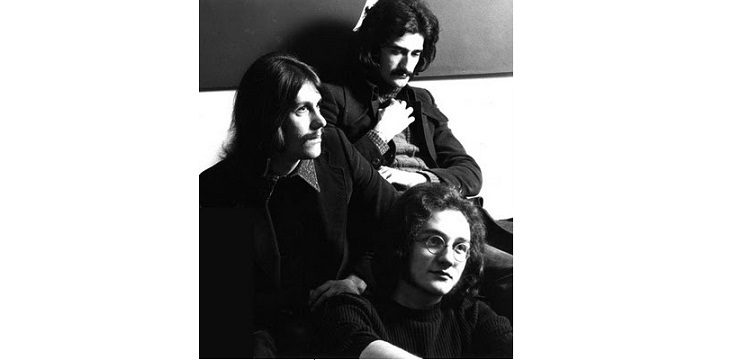
Madrugada was an Italian jazz-rock trio that made a 1974 self-titled album on Philips, followed by the 1977 release Incastro.
Members: Gianfranco Pinto (keyboards, vocals), Alessandro “Billy” Zanelli (bass, vocals), Pietro Rapelli (drums, vocals)
Background
Madrugada formed in 1970 in Bergamo, Lombardia. The name, taken from the Spanish word for “dawn,” followed a sequence of earlier incarnations and personnel shifts tied to the local beat scene.
Bassist Alessandro Zanelli and keyboardist Franco Orlandini both played in I Condor, which evolved into Le Lunghe Storie. Parallel activity stemmed from Le Bugie and Gruppo 3. The core lineup ultimately solidified in Terza Classe, a pre-album unit that also served as the launching ground for the related group Perdio.
By 1973, the working trio—Zanelli, keyboardist Gianfranco Pinto, and drummer Pietro Rapelli—developed a keyboard-led sound with vocal arrangements and light rhythmic textures. Their association with producer Mauro Paoluzzi led to a deal with Philips.
Madrugada
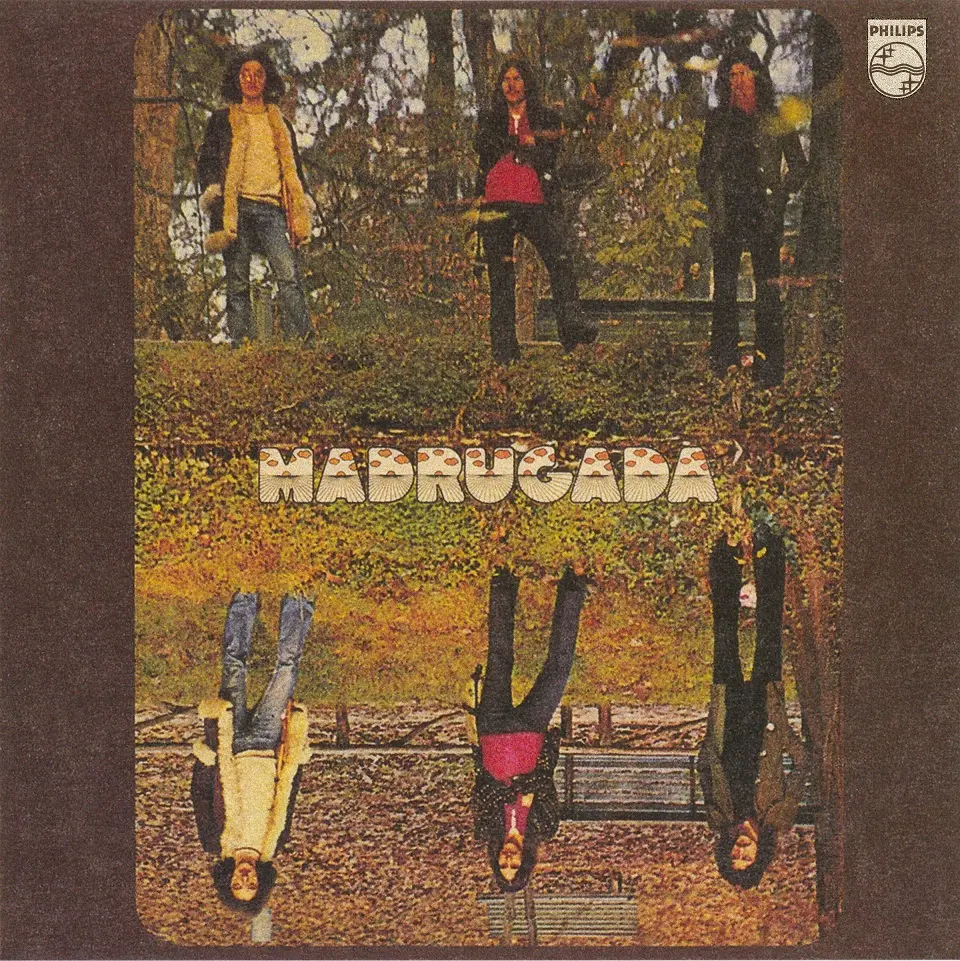 Madrugada released their self-titled first album in 1974 on Philips. The album splits between vocal and instrumental sides.
Incastro
 Madrugada released their second album, Incastro, in 1977 on Philips.
Incastro expands their sound into fragmented, multi-part compositions with abrupt transitions and layered ensemble passages. The six tracks span avant-garde percussion, modal folk interludes, jazz-inflected instrumentals, and theatrical vocal episodes. Madrugada frames these contrasts as self-contained episodes, often pivoting mid-track with no return to prior material.
Gianfranco Pinto leads the ensemble with piano, electric keyboards, and synthesized textures. He introduces and dissolves sections through layered timbres, chromatic transitions, and staccato phrasings. Pietro Rapelli plays drums and percussion, alternating hand-struck sequences with militaristic snare figures and dense rhythmic layering. Alessandro Zanelli anchors tonal movement on bass and sings on multiple tracks, shaping structure with pedal-like lines and front-loaded accents. Vocalist Silvia Annichiarico appears on the closing track, “Hobbit.”
Pinto composed the music with lyrics by singer/songwriter Roberto Vecchioni, credited under the alias Xanto.
“Romanzen” unfolds in five sections: Pinto opens with modal piano under Bertocchi’s flute and Fabbri’s violin, then yields to overlapping percussion, tuned bongos, and upper-register synth noise. A rising rhythm gives way to layered piano counterpoint before the track ends unresolved. “È Triste il Vento” blends organ and violin under staged vocals, dissolving into saxophone improvisation.
“Aragon” begins with sustained drones and drum figures, then shifts between jazz-rock ensemble playing and repeated violin–synth loops. “Katmandu” opens with sitar-style keyboard figures and percussion but cuts abruptly into a major-key vocal song with comic lyrics. “Noter de Berghem” consists of multitracked a cappella vocals with a folk-inflected refrain. “Hobbit” alternates non-metric passages of sax, synth, and flute with tightly locked rhythmic cycles and breakaway ensemble bursts.
A1. “Romanzen” (12:00) — multi-part suite with flute, percussion clusters, and dissonant piano collapse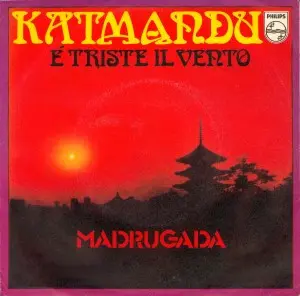 A2. “È Triste il Vento” [The Wind Is Sad] (5:20) — organ–violin ballad with staged vocals and free saxophone coda
B1. “Aragon” (8:22) — alternates drone, jazz-rock figures, and violin–synth loops over marching snare
B2. “Katmandu” (3:40) — faux-Eastern intro cut by upbeat vocal interlude with comic lyrics
B3. “Noter de Berghem” [Nights of Bergamo] (1:20) — a cappella choral piece in folk dialect
B4. “Hobbit” (5:50) — opens in free-form noise, resolves into cyclic ensemble drive with sax and synth
Guest players include violinist Lucio Fabbri, saxophonist Gianluigi Trovesi, flutist Gianni Bertocchi, and guitarist Luciano Ninzatti. Silvia Annichiarico appears as featured vocalist on one track. Philips issued “Katmandu” as a single (b/w “È Triste il Vento”).
Postlude
Pinto later worked extensively as a session keyboardist for both pop and progressive artists, appeared with the revived Perdio project in the late 1990s, and spent his later years teaching music in the Parma region before his passing in 2011.
Zanelli formed Judas, a new wave band that cut the 1978 album Punk on Spaghetti Records. He subsequently joined Roberto Vecchioni’s live ensemble.
Discography:
- Madrugada (1974)
- Incastro (1977)
Sources:
Artist/Album Pages:
Manu Dibango (Dec., 12 1933 — March 24, 2020) was a Cameroonian saxophonist, malletist, and compos...
Mighty Ryeders were an American soul-funk band from Florida that released the 1978 album Help Us S...
Gil Scott-Heron (1949–2011) was an American jazz-funk poet who made fourteen albums between 1970 ...
Petr Novák (September 6, 1945 – August 19, 1997) was a Czech rock singer and songwriter who formed...
Prosper was a German symphonic/jazz-rock band that self-released the 1975 album Broken Door. Three...
Windchase was an Australian symphonic-rock band behind the 1977 album Symphinity on Infinity. They f...
Giuliano Sorgini is an Italian composer and keyboardist who released numerous soundtracks and libr...
Emmanuelle Parrenin is a French multi-instrumentalist and composer who played in the Seventies fol...
Player was an American adult-oriented rock band from Los Angeles that released the 1977/78 RSO alb...
Gianni Ferrio (Nov. 15, 1924 — Oct. 21, 2013) was an Italian composer who recorded numerous soundt...
The Detroit Emeralds were an American soul group from Little Rock, Arkansas. Ivory Tilmon and Abri...
Gustavo Montesano (born Oct. 14, 1955) is an Argentinian guitarist and composer, active locally an...