

L’Engoulevent was a Québécois symphonic-folk band that made the 1977 album L’Île où Vivent les Loups on Tamanoir, followed by the 1979 release Étoifilan on La Courte Échelle.
Members: Pierre Moreau (keyboards), Michel McLean (guitar, vocals), Françoise Turcotte (violin), Russel Gagnon (cello)
Background
L’Engoulevent formed in 1976 in Québec’s Lac-Saint-Jean region when singer-guitarist Michel McLean formed an acoustic quartet with keyboardist Pierre Moreau, violinist Françoise Turcotte, and cellist Russel Gagnon.
McLean came from Les Karrik, the guitar duo he formed with Claude Lafrance after early activity in Lac-Saint-Jean. Les Karrik issued Au chant de l’alouette and Karrik II on Disques Zodiaque. Moreau brought a classical-composition background to L’Engoulevent.
The quartet developed material around McLean and Moreau pieces, with additional texts by André Duchesne, Gilles Vigneault, and Michel Desjardins.
L’Île où Vivent les Loups
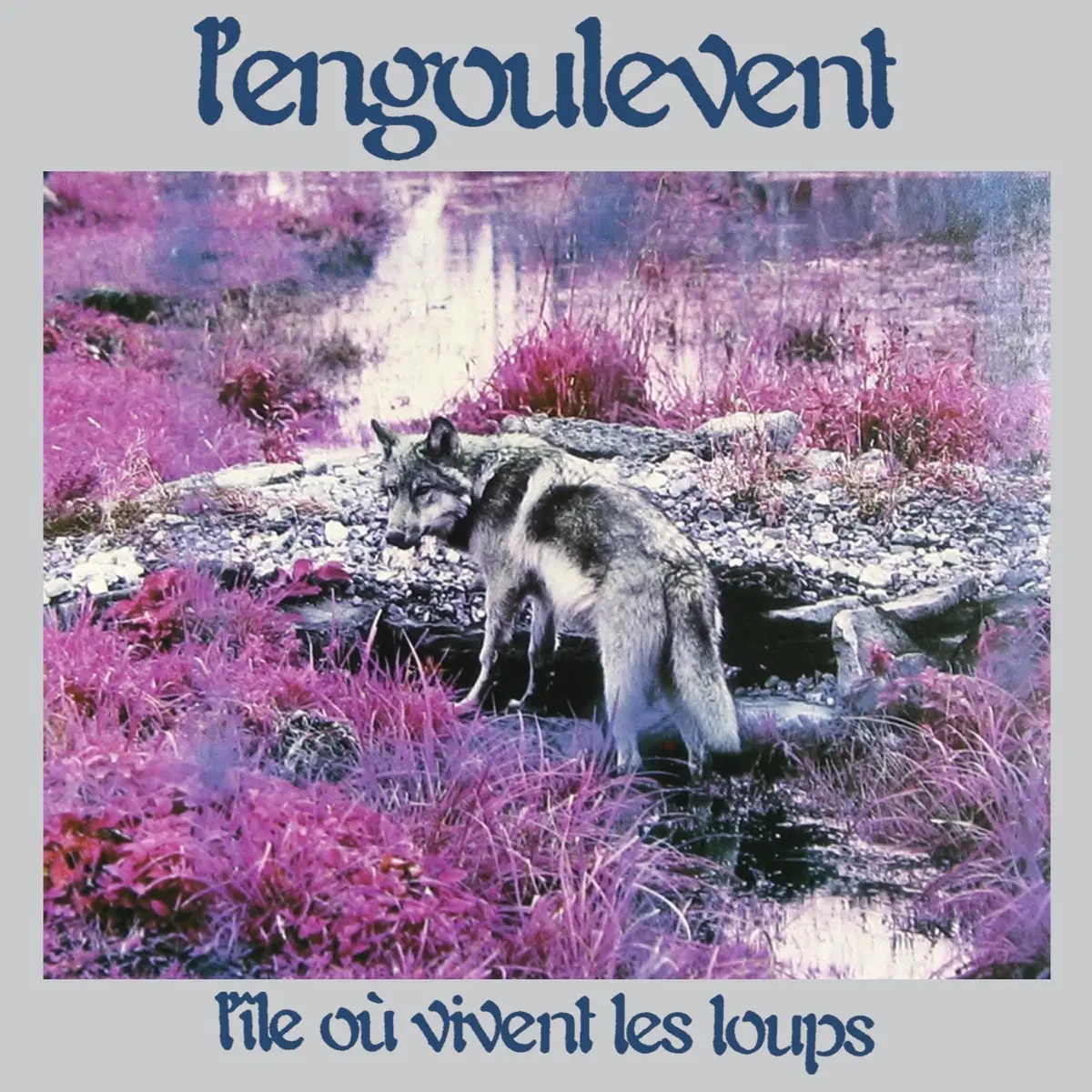 L’Engoulevent released their debut album, L’Île où Vivent les Loups, in 1977 on Le Tamanoir.
The quartet frames Québécois song forms with piano, strings, acoustic guitar, and measured French-language voice placement. Guest musicians include guitarist Claude Lafrance, violinist Bernard Cormier, trombonist Jean-Louis Gagnon, French horn player Claude Blouin, and cellists Jack Cantor and Jacques Laurin.
“Les vieux trains” glides through piano-and-strings reply phrases, and bell accents mark the chamber-scaled cadence. “L’Île où Vivent les Loups” darkens into solemn lead lines and dusk-toned ensemble spacing. “Voix et violon” lingers on bowed lead and close voice placement as the players extend the central phrase. “Légende de la chasse-galerie” chants through the wolf-hunt narrative with grave declamation and a firmer dance cadence. “La nouvelle” pivots through compact section shifts and tightly arranged ensemble turns. “Je me demande” curls through dense inner turns and short phrase figures.
A1. “La gigue du truck rouge” [The Jig of the Red Truck] (2:42) – Michel McLean / Pierre Moreau / Bernard Cormier
A2. “Les vieux trains” [The Old Trains] (5:18) – McLean
A3. “Départ” [Departure] (2:35) – Gilles Vigneault / Moreau
A4. “L’Île où vivent les loups” [The Island Where the Wolves Live] (5:46) – André Duchesne / McLean / Moreau / Cormier / Aline la Pasfine
B1. “Ti-Boutte (1re partie)” [Little Bit (Part One)] (0:19) – Moreau
B2. “Voix et violon” [Voice and Violin] (5:37) – McLean
B3. “Légende de la chasse-galerie” [Legend of the Flying Canoe] (3:11) – Michel Desjardins / McLean
B4. “La nouvelle” [The News] (4:41) – Moreau
B5. “Je me demande” [I Wonder] (3:41) – Duchesne
B6. “Ti-Boutte (2ième partie)” [Little Bit (Part Two)] (0:18) – Moreau
L’Engoulevent recorded nine songs at Studio St-Charles with engineer Réal Leblanc. “Voix et violon” stems from a separate session at Studio Six with engineer Janet Norman.
The gatefold cover shows a tinted photograph of a wolf beside water and rock.
Étoifilan
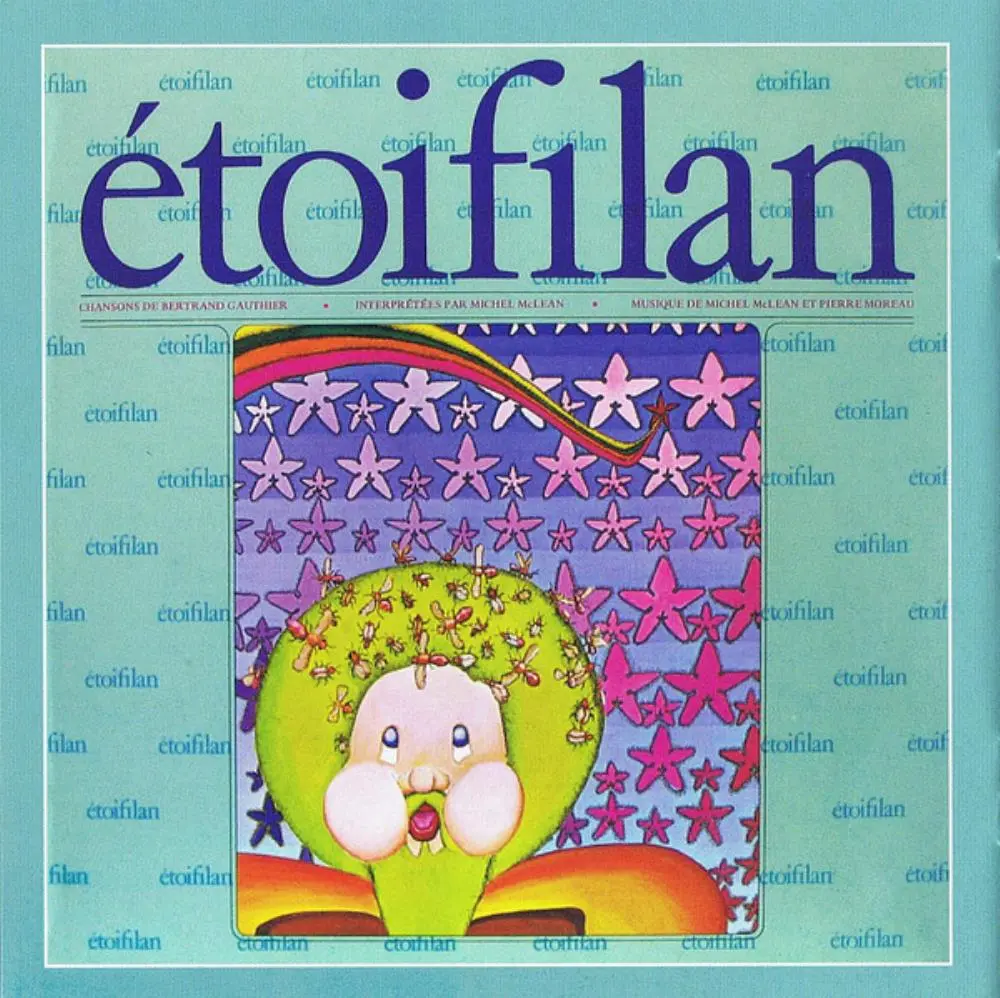 L’Engoulevent released their second album, Étoifilan, in 1979 on La Courte Échelle, which initially billed the title as a Michel McLean solo release.
Étoifilan (Star-spinner) is a musical adaptation of a children’s book by Bertrand Gauthier with music by McLean and Pierre Moreau. The lineup pairs the returning quartet (McLean, Moreau, Turcotte, Gagnon) with bassist André Parenteau, drummer Mathieu Léger, violinist-guitarist Bernard Cormier, trombonist Patrice Dufour, trumpeter Serge Choinière, and a women’s chorus.
“Ouverture” parades through a brass-laden introduction with compact ceremonial accents. “J’ai des étoiles dans le nez” skips through lively child-scaled phrases and quick dance turns. “Le concert océanique” ripples through shared McLean–Moreau contours, with piano figures and chamber replies across the central passage.
“La chanson des planètes” coils around dissonant electric-piano tone and a concise concept refrain. “Je suis Étoifilan” chants the title identity through direct lead lines and answered phrases. “La fête de la musique” brightens into dense ensemble passagework, with complex strings-and-brass turns around the refrain. “Fermeture” lands on a short bookend cadence.
A1. “Ouverture” [Overture] (2:16) – Bertrand Gauthier / Pierre Moreau
A2. “J’ai des étoiles dans le nez” [I Have Stars in My Nose] (3:43) – Gauthier / Michel McLean
A3. “La chanson triste” [The Sad Song] (0:31) – Gauthier / McLean
A4. “Le concert océanique” [The Oceanic Concert] (4:20) – Moreau
B1. “La chanson des planètes” [The Song of the Planets] (2:33) – Gauthier / Moreau
B2. “Je suis Étoifilan” [I Am Étoifilan] (3:36) – Gauthier / McLean
B3. “La fête de la musique” [The Celebration of Music] (6:03) – Gauthier / Moreau / McLean
B4. “Fermeture” [Closing] (2:12) – Moreau
McLean and Moreau produced Étoifilan for La Courte Échelle in 1978 at Studio Bobinason with engineer and mixer Louis Mercier.
Étoifilan features cover illustration by Gilles Pednault, whose image shows a green-faced character against pink stars and a rainbow stripe.
Discography:
- L’Île où Vivent les Loups (1977)
- Étoifilan (1979)
Sources:
Artist/Album Pages:
Lips was an American jazz-rock band that made a 1979 self-titled album, produced by Stanley Clarke...
Miklagård was a Swedish symphonic-rock trio behind a 1979 self-titled album on Edge Records. Mem...
Blackfoot Sue was an English hard-rock/pop band led by rhythm twins Tom and David Farmer. They mad...
Martin Dupont was a French new wave/coldwave trio from Marseille that debuted with a self-pressed ...
Brian Cadd (born Nov. 29, 1946) is an Australian singer/songwriter from Sydney who made two albums...
Louise Forestier is a Québécois chanson singer and actress who debuted with a 1967 self-titled alb...
Moondancer was a Japanese symphonic-rock band behind a 1979 self-titled album on Alfa, recorded wi...
Ethos was an American Midwest symphonic-rock band that released the 1976/77 albums Ardour and Open...
Charly Antolini is a Swiss drummer and bandleader who emerged with the Tremble Kids in the late 19...
City Boy was an English art-rock sextet from Birmingham that released seven albums on Vertigo betwee...
The Sound was an English post-punk band that made the 1980/81 Korova albums Jeopardy and From the ...
Russ Ballard is an English musician and songwriter who recorded with the sixties beat groups The R...