

Jane Getz is an American pianist and songwriter who released an album as Mother Hen on RCA Victor in 1971, followed by No Ordinary Child in 1973.
Background
Jane Getz was born on September 12, 1942, in Los Angeles. Raised between LA and San Francisco, she studied classical piano from a young age but turned to jazz at nine. At fifteen, she left high school and moved alone to New York City, where she immediately entered the local jazz scene, joining saxophonist Pony Poindexter’s band within hours of her arrival.
Between 1960 and 1968, Getz worked as a session pianist and live accompanist for a range of prominent jazz figures. In 1965, she played on Pharoah by Pharoah Sanders, released on ESP-Disk, and recorded with Charles Mingus on Right Now: Live at the Jazz Workshop, issued by Fantasy in 1966. She also appeared on Musart by George Braith, released by Prestige in 1967. During this period, she collaborated onstage and in studio settings with Rahsaan Roland Kirk, Charles Lloyd, and Stan Getz (no relation).
By the early 1970s, Getz returned to Los Angeles and transitioned into the singer-songwriter and country-rock movement, drawing on her studio experience and expanding her role to include vocal composition.
Mother Hen
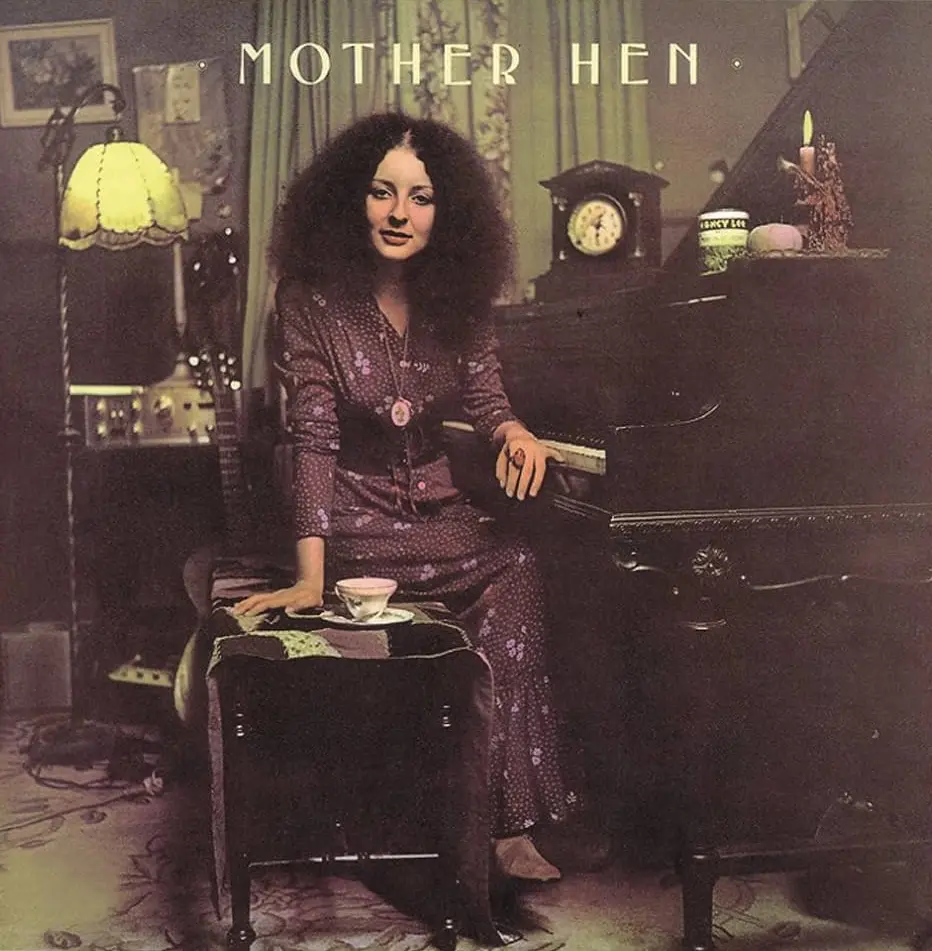 As Mother Hen, Jane Getz released her first album in 1971 on RCA Victor.
The album frames piano-led folk songwriting in country-rock arrangements shaped by overlapping layers of acoustic and electric instrumentation.
Guitarist Jerry McGee plays sitar and dobro alongside acoustic guitarist Clarence White and slide guitarist Sneaky Pete Kleinow, while pianist Jane Getz interweaves harpsichord and organ voicings with violinist David Campbell’s string lines.
“Man From Aberdeen,” highlighted in retrospective fan commentary, reflects Getz’s lyrical tone and arrangement focus during her brief pivot into the singer-songwriter field.
A1. “Sing Evermore” (3:08)
A2. “My Granny’s Face” (3:31)
A3. “Goodbye Old Razzle Dazzle” (3:22)
A4. “Lookout Charlie” (3:12)
A5. “Man From Aberdeen” (3:57)
B1. “America the Landlord’s Dream” (3:33)
B2. “Naked King” (3:39)
B3. “He’s Alive and Remembers” (3:02)
B4. “Old Before Your Time” (2:35)
B5. “Passage Back” (2:55)
David Anderle produced the album at RCA’s Hollywood studios with contributions from session players Danny Kortchmar (guitar), Lee Sklar (bass), Jamie Faunt (bass, vocals), Emil Richards (slide whistle, jew’s harp), and drummers Ronnie Tutt and Russ Kunkel. RCA pressed the album on Dynaflex vinyl at its Indianapolis plant.
No Ordinary Child
 Jane Getz released her second album, No Ordinary Child, in 1973 on RCA Victor.
The album expands her piano-based songwriting into a wide palette of orchestral folk, country textures, and cross-cultural instrumentation. Getz performs eleven originals with support from guitarist Tret Fure and bassist Jamie Faunt, who also sings on “Here Comes the Captain.”
Accordionist Nick DeCaro arranged strings and clarinets across multiple tracks, with pedal steel guitarist Sneaky Pete Kleinow weaving alongside clarinetists Gene Cipriano and Jules Jacob, and violinist David Campbell. Sneaky Pete Kleinow arranged “I Wanna Ride” and co-arranged “Margarita” with Augustin Cervantes, which features a guest performance by the Mariachis Aguila. Drummer John Seiter plays across most of the album, joined by percussionist Maurice Saunders and drummer Sam Goldstein on select tracks.
A1. “No Ordinary Child” (4:16)
A2. “Organ-Grinder Music in My Ear” (4:15)
A3. “On the Shores of Okinawa” (3:37)
A4. “I Shall Build This House Again” (4:19)
A5. “St. John of the Highway” (2:38)
B1. “Here Comes the Captain” (3:46)
B2. “Gonna See If the Madam’s In” (4:30)
B3. “If the Lady in the Song Had Been Your Mother” (4:02)
B4. “I Wanna Ride” (3:02)
B5. “Margarita” (2:53)
B6. “Boy from Portland” (4:27)
Sneaky Pete Kleinow produced the sessions at RCA’s Music Center of the World in Hollywood with engineer Mickey Crofford and in-studio coordinator Jimmy Seiter.
No Ordinary Child appeared in a gatefold with a lyrical inner-spread with portrait photography. RCA pressed the album at its Rockaway plant and published the material through Getz’s own Mother Hen Publishing imprint.
1970s Session Credits
Getz played celesta and piano for singer-songwriter Jimmie Spheeris on the 1973 Columbia release The Original Tap Dancing Kid, named after her songwriting contribution to the album. She also played piano for the Bee Gees on “Come Home Johnny Bridie” from their 1973 album Life In a Tin Can.
Between 1974 and 1977, she played on four albums by Harry Nilsson and titles by Ringo Star, Maxine Sellers, Glenda Griffith, and Geoff Muldaur (Maria’s husband).
“Survival of the Hippest”
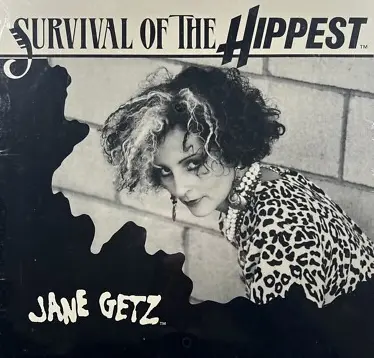 In 1986, Jane Getz released the 12″ maxi-single “Survival of the Hippest” on the Ttriune Studios label.
The single marks a departure from her earlier jazz and singer-songwriter work, framing her writing in a hi-NRG vocal pop setting with programmed instrumentation and extended club mixes. Getz arranged and co-produced the tracks with Gary Otto, handling all lead and backing vocals across three electronic mixes.
A. “Survival of the Hippest” (Extended Mix) (7:32)
B1. “Survival of the Hippest” (Radio Mix) (4:05)
B2. “Survival of the Hippest” (Dub Mix) (7:27)
Ttriune also issued the material as a 7″ single backed with “Stopping Traffic,” another original composed, arranged, and produced by Getz. Both formats appeared in 1986 and circulated briefly in the independent U.S. dance-pop scene.
No Relation
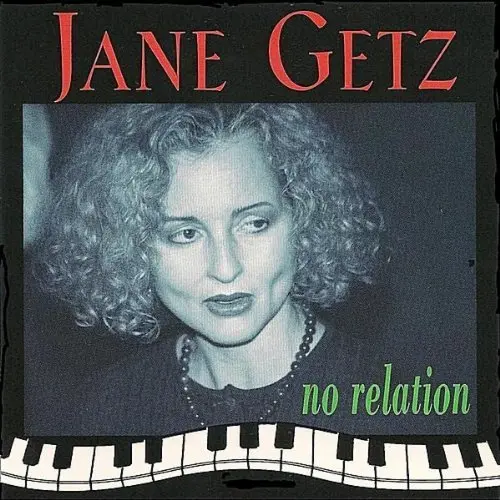 Jane Getz released her third and final studio album, No Relation, in 1996 on Clarion Jazz. The title addresses the common assumption that she was either the daughter or younger sister of be-bop/bossa nova saxophonist Stan Getz.
No Relation presents a set of post-bop originals and reworked standards shaped around her driving piano lines and extended interplay with a rotating horn section. Trumpeter Brian Swartz trades melodic phrases with saxophonists Dale Fielder, Doug Webb, and Phil Vieux, while bassist Darek Oles anchors shifting rhythmic phrasing between drummers Fritz Wise and Russell Bizzett. Fielder contributes the uncredited soprano sax on “Cowboy Music” and composed “J. Reese Waltzes.”
A1. “Enunciation” (4:47)
A2. “Taxi Dance” (7:02)
A3. “Fish Apparel” (4:02)
A4. “J. Reese Waltzes” (7:03) — Fielder
A5. “Cauliflower Alley” (4:05)
B1. “You Don’t Know What Love Is” (7:12) — Gene DePaul
B2. “Cowboy Music” (6:27)
B3. “Javelina Hunt” (5:32)
B4. “A Night at Clifton’s” (6:44)
B5. “Come Sunday” (7:02) — Duke Ellington
Getz co-produced the album with Stuart Goldman at Sonora Recorders in Los Angeles. She composed seven of the ten tracks and assembled a multi-generational band that highlights her return to jazz after more than two decades in the singer-songwriter and studio realm. Clarion reissued the album on CD in 1997.
Discography:
- Mother Hen (1971)
- No Ordinary Child (1973)
- “Survival of the Hippest” (12″, 1986)
- No Relation (1996)
Sources:
Artist/Album Pages:
Leon Thomas (Oct. 4, 1937 — May 8, 1999) was an American jazz, blues, and soul vocalist, percussi...
The Nice was an English psychedelic rock band with keyboardist Keith Emerson. In 1968, they scored...
Burnin Red Ivanhoe was a Danish post-psychedelic jazz-rock that band released five albums (1969–74) ...
The Third Power was an American psych-rock trio from Farmington Hills, Michigan, that released a ...
Lizard was an Australian sax-rock/blues band that released the 1973 Harvest album Bad Companions. ...
Afrique was a studio-funk band assembled in Los Angeles by mostly American musicians for the 1973...
Earth and Fire was a Dutch symphonic art-rock band that released eight albums and numerous singles...
Roberta Kelly is an American soul and disco singer whose career developed through the Munich prod...
The Temprees were an American soul group from Memphis on We Produce, a division of Stax. They rel...
Maxine Weldon is an American soul singer who released the 1970/71 albums Right On and Chilly Wind...
Ripple was an American funk band that made a 1973 self-titled album on GRC, followed by the 1977 S...
Hemlock was an English rustic-rock band behind a 1973 self-titled album on Deram. They were a spinof...