

Doe Maar was a Dutch ska and reggae-pop band formed in 1978 by keyboardist–singer Ernst Jansz, bassist Piet Dekker, guitarist–singer Jan Hendriks, and drummer–singer Carel Copier. Henny Vrienten replaced Dekker before Skunk, which began a three-album run at No. 1 on the Dutch album chart. “De Bom” and “Pa” each reached No. 1 on the Dutch Top 40 survey. Doe Maar announced a split in February 1984 and completed a farewell tour that spring.
Members: Ernst Jansz (vocals, keyboards, steel drum, clarinet), Jan Hendriks (guitar, vocals), Piet Dekker (bass, vocals, 1978–80), Carel Copier (drums, vocals, 1978–81), Henny Vrienten (bass, vocals, 1980–84), René van Collem (drums, vocals, 1981–82), Jan Pijnenburg (drums, vocals, 1982–84); auxiliary member Joost Belinfante (horns, harmonica, percussion, vocals)
Background
Doe Maar formed in 1978 when keyboardist–singer Ernst Jansz and bassist Piet Dekker recruited Steam guitarist Jan Hendriks and drummer Carel Copier for a rehearsal in Heijen. Jansz and Dekker brought experience from the Slumberlandband and the reggae group Rumbones. Hendriks and Copier came from Steam, and the drummer proposed the name Doe Maar after the quartet worked through Jansz’s Dutch-language songs.
Festival of Fools booked the new group for a traveling theatre tour that began on June 24, 1978, at Vera in Groningen. The quartet continued after the tour and recorded a demo in Jansz’s shed at Neerkant. Disc jockey and record executive Joost den Draaijer declined the tape, but the 1979 compilation Uitholling Overdwars included “Blozen.” B.M.I. engineer Peter Vincent then brought the group into the Weert studio for a Telstar album.
Doe Maar
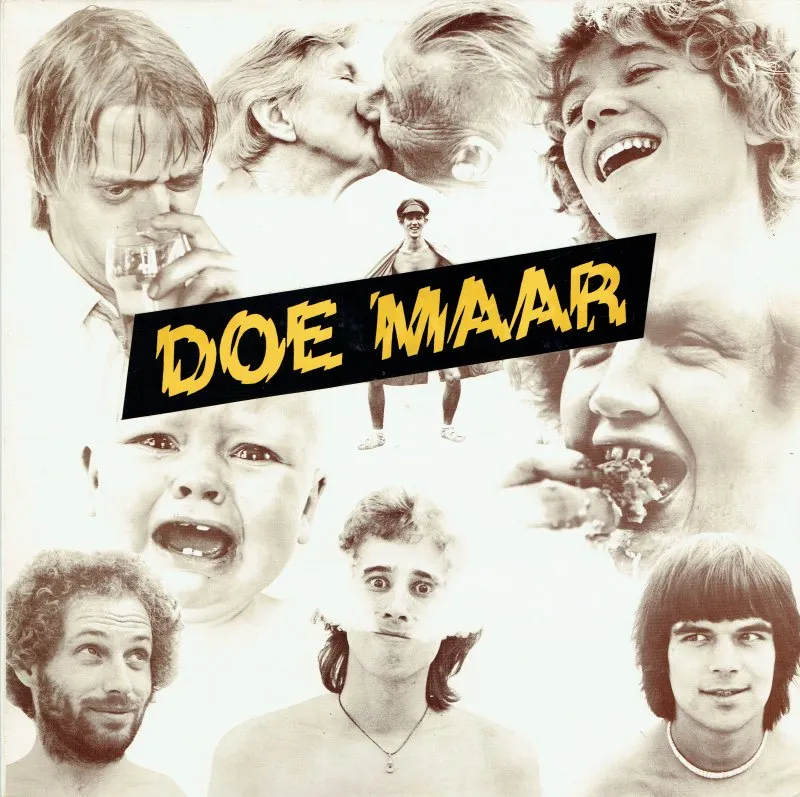 Doe Maar released their self-titled debut album in November 1979 on Killroy.
The debut combines Dutch-language reggae and punk with rock-and-roll and South American forms. Hearts of Soul/Dream Express singers Patricia and Stella Maessen add backing vocals. Massada percussionist Zeth Mustamu supplies auxiliary percussion, while trumpeter Evert Hekkema and accordionist Sjeng Kraft complete the guest cast. “Ik Zou het Willen Doen” lingers through measured phrasing. “Hé, Hé” breaks for a bass solo.
A1. “Anita” (3:28) – Jansz
A2. “Whisky Coke” (2:08) – Dekker
A3. “Wees Niet Bang Voor Mijn Lul” [Don’t Be Afraid of My Dick] (2:12) – Jansz
A4. “Je Liet Me Staan” [You Stood Me Up] (2:19) – Dekker
A5. “Verdomme, Ik Doe Het Wel Alleen” [Damn It, I’ll Do It Alone] (2:04) – Jansz, Dekker
A6. “Hé, Hé” [Hey, Hey] (4:39) – Jansz
A7. “Repelsteel” [Rumpelstiltskin] (1:28) – Jansz, Hendriks
B1. “Ik Zou Het Willen Doen” [I Would Like to Do It] (3:07) – Jansz
B2. “Als De Morgen Komt” [When Morning Comes] (4:26) – Jansz, Copier
B3. “Politiekman” [Political Man] (2:56) – Jansz
B4. “Regen” [Rain] (3:10) – Jansz
B5. “Het Leven Gaat Door–Er Verandert Niks” [Life Goes On–Nothing Changes] (3:01) – Jansz
B6. “Karneval” [Carnival] (2:14) – Jansz
Sessions spanned August through September 1979 at B.M.I. Studios in Weert. Telstar staff engineer Peter Vincent, who brought Doe Maar into the studio after hearing the demo, engineered and mixed the album and co-produced it with Jansz. Jan Bogaerts supplied photography and artwork, four years after his Slumberlandband portrait. The front image places the quartet among friends and acquaintances from Deurne.
Killroy issued “Ik Zou Het Willen Doen” in February 1980 (b/w “Regen”), which reached No. 11 on the Dutch Tipparade. “Anita” followed in June (b/w “Wees Niet Bang Voor Mijn Lul”).
A Music On Vinyl pressing returned the album to circulation in April 2022 and reached No. 70 on the Dutch Albums survey.
Bass Change
Piet Dekker left Doe Maar after the first album. Jansz asked former Rumbones guitarist Henny Vrienten to switch to bass, but Vrienten initially declined the Dutch-language project. Slumberlandband co-founder Joost Belinfante covered the outstanding bookings until Vrienten reconsidered and joined the quartet.
Skunk
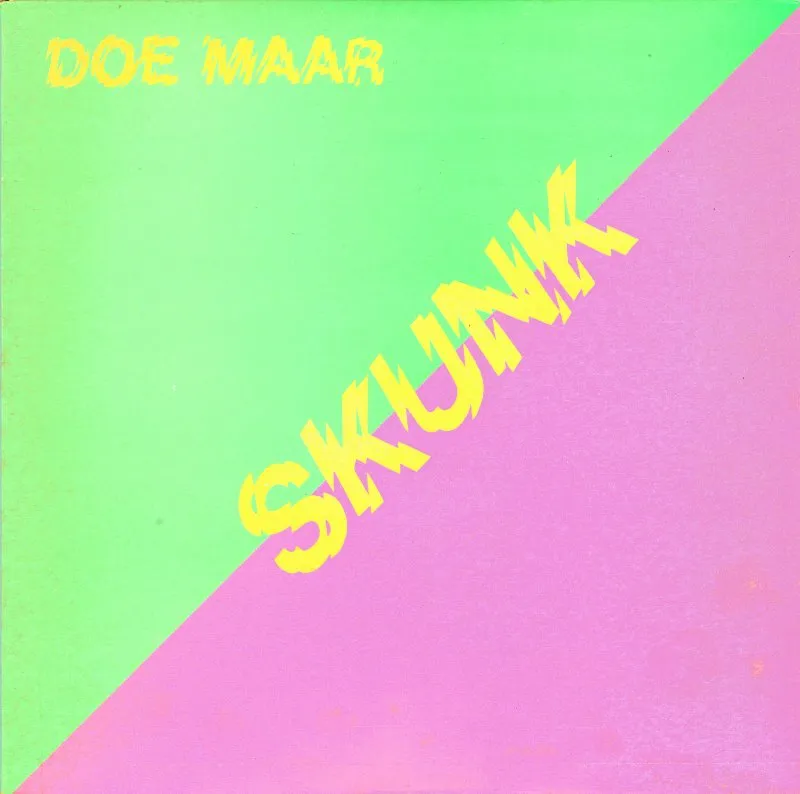 Doe Maar released their second album, Skunk, in March 1981 on Killroy.
The revised lineup confines the program to reggae and ska. Doe Maar formed the title from “ska” and “punk” after recasting two earlier punk songs for the sessions. Belinfante remains an auxiliary presence on horns, harmonica, nose flute, and vocals.
“Sinds 1 Dag of 2” veers toward a guitar solo. “Smoorverliefd” jolts with pogo momentum through a driven three-chord figure. “Nix voor Jou” lurches through off-kilter waltz accents. “De Laatste X” settles through languid backing harmonies.
A1. “Sinds 1 Dag Of 2 (32 Jaar)” [For a Day or Two (32 Years)] (3:18) – Vrienten
A2. “Te Laat” [Too Late] (2:01) – Copier
A3. “Bella Donna” [Beautiful Woman] (3:13) – Hendriks
A4. “Smoorverliefd” [Madly in Love] (3:15) – Vrienten
A5. “Nederwiet” [Dutch Weed] (6:52) – Belinfante
B1. “Nix Voor Jou” [Nothing for You] (4:06) – Belinfante, Copier
B2. “Mis” [Wrong] (2:52) – Jansz
B3. “Ruma Saja” [My House] (4:04) – Jansz
B4. “De Laatste X” [The Last Time] (4:53) – Vrienten
B5. “Dansen Met Alice” [Dancing with Alice] (2:45) – Jansz
Sessions took place in June and September 1980 at B.M.I. Studios in Weert. Vincent engineered and co-produced the album with Doe Maar, extending the B.M.I. partnership established on the debut. Vrienten devised the diagonal logo and introduced fluorescent pink and green inks to the sleeve. The front divides fluorescent green from pink across a diagonal. Yellow lettering names the band and album.
Killroy issued “Sinds 1 Dag Of 2” in March 1981 (b/w “Mis”). Radio presenter Frits Spits recast the title as “32 Jaar,” and the single reached No. 29 on the Dutch Top 40 survey. “Smoorverliefd” followed in September (b/w “Nix Voor Jou”) and reached No. 12 on the Tipparade.
Skunk spent three weeks at No. 1 on the Dutch album chart.
Drum Change
Carel Copier left after a muscle injury ended his career as a full-time drummer. René van Collem, son of film critic Simon van Collem, replaced him for the third album.
Doris Day en andere stukken
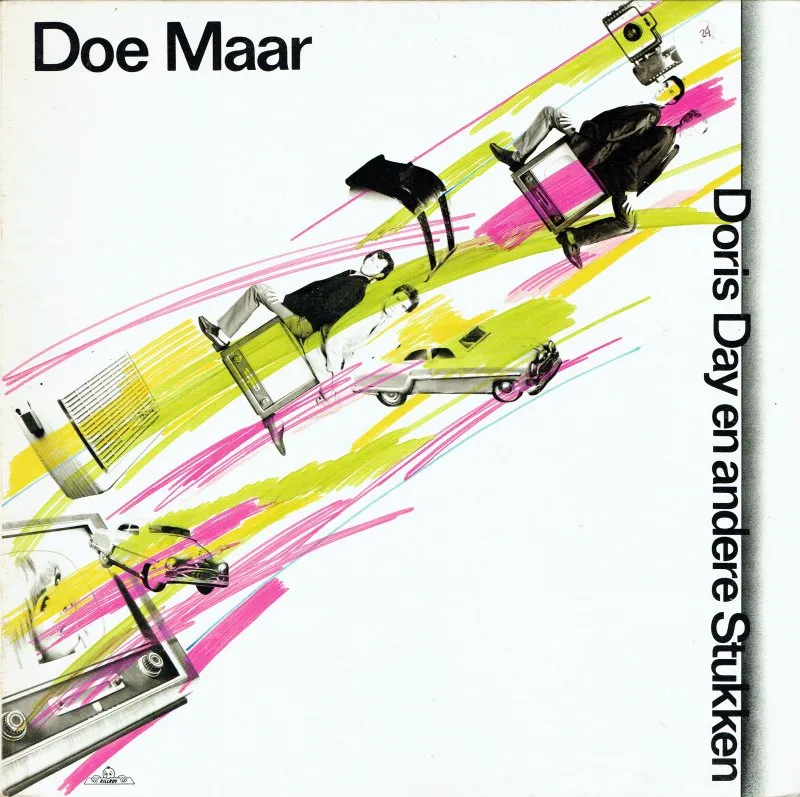 Doe Maar released their third album, Doris Day en andere stukken, in March 1982 on Killroy.
Drummer René van Collem makes his entrance, while Belinfante supplies incidental sounds. Hendriks contributes “Winnetoe,” and Eric van den Boorn joins Vrienten on the title track.
“Is Dit Alles” creeps in behind a door-opening sound cue and a raw, drawn-out lead line. “Okee” lifts into brighter phrasing. “Radeloos” pivots into a guitar solo. “Tijd Genoeg” glides through languid phrases. “Liever Dan Lief” scurries through brisk phrases.
A1. “Is Dit Alles” [Is This All?] (5:21) – Vrienten
A2. “Belle Hélène” [Beautiful Hélène] (2:47) – Jansz
A3. “Vergeet Me” [Forget Me] (2:49) – Vrienten
A4. “Situatie” [Situation] (4:22) – Jansz
A5. “Okee” [Okay] (3:03) – Vrienten
A6. “Winnetoe” (3:16) – Hendriks
B1. “Doris Day” (3:48) – Vrienten, van den Boorn
B2. “Radeloos” [Desperate] (4:04) – Vrienten
B3. “De Eerste X” [The First Time] (2:26) – Jansz
B4. “Tijd Genoeg” [Enough Time] (4:05) – Jansz
B5. “Liever Dan Lief” [Sweeter Than Sweet] (3:13) – Vrienten
B6. “Nachtmerrie (Op Hol)” [Nightmare (Run Wild)] (3:57) – Jansz, Belinfante
Sessions spanned November through December 1981 at B.M.I. Studios in Weert. Doe Maar took the production role while Vincent returned as engineer. In January 1982, Vrienten and Vincent recast seven recordings as Doe de Dub, a companion issued by Killroy later that year.
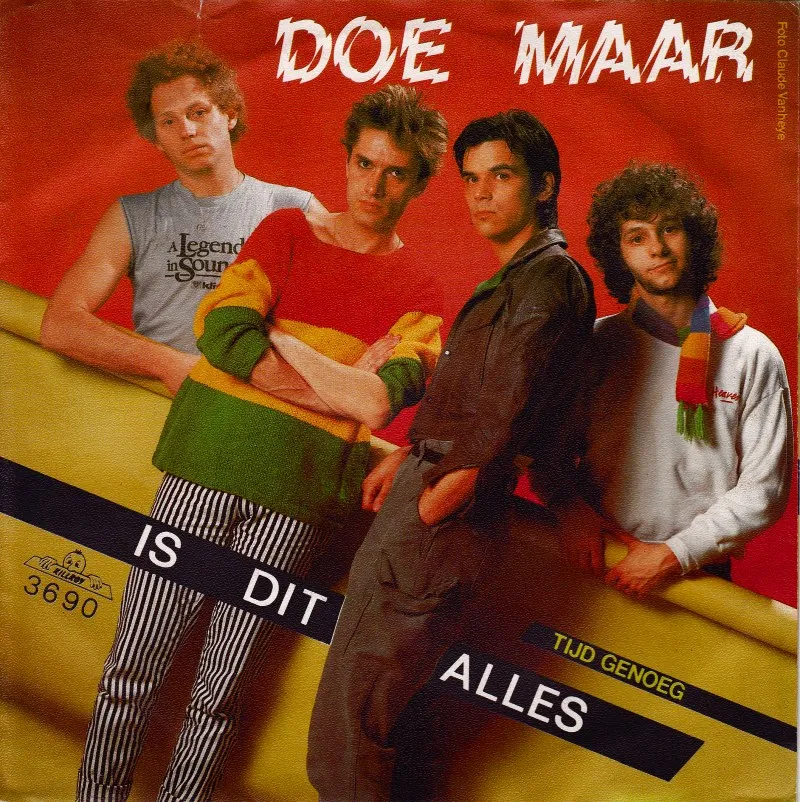 Photographer Claude Vanheye, whose recent sleeve work included Luv’s Forever Yours, designed the cover. Vanheye posed the members in suits, two by two and back to back, amid 1950s cars and domestic appliances. Fluorescent pen marks cross the montage in the established pink-and-green scheme.
Killroy issued “Doris Day” in March 1982 (b/w “Winnetoe”), which reached No. 9 on the Dutch Top 40 survey. “Is Dit Alles” followed in June (b/w “Tijd Genoeg”) and also reached No. 9 on the chart.
Doris Day en andere stukken spent three weeks at No. 1 on the Dutch album chart.
“De Bom”
Sky issued “De Bom” in October 1982, backed with “Skunk” and “Man O Man (1979)” on a two-track reverse. The single spent five weeks at No. 1 on the Dutch Top 40 survey.
Former Partner keyboardist Erwin Musper engineered the band-produced recording, one of his 1982 assignments alongside Toontje Lager’s “Net Als In De Film.”
4us
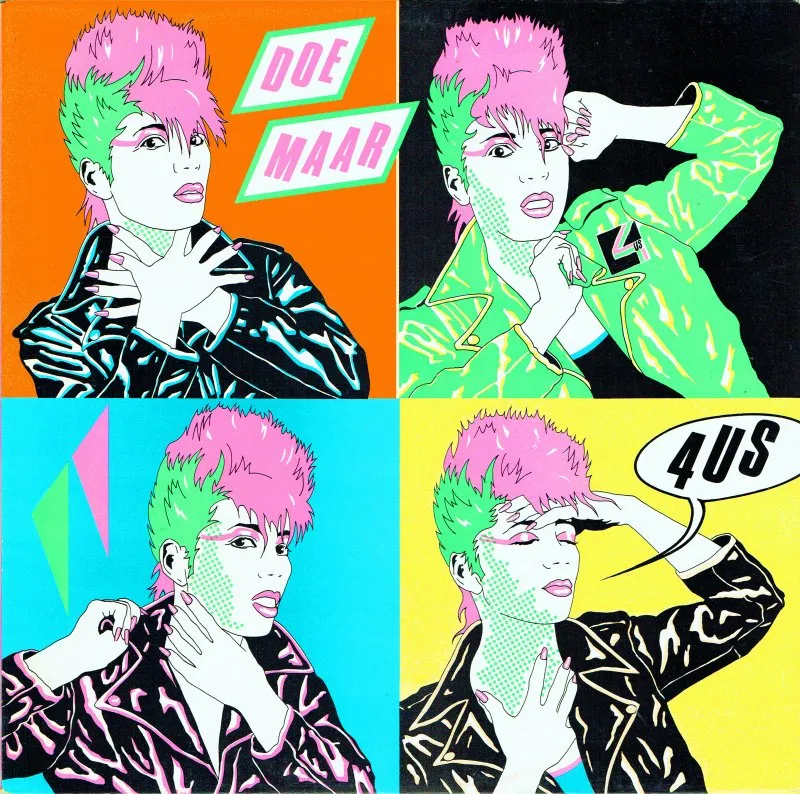 Doe Maar released their fourth album, 4us, in March 1983 on Sky.
The title renders “virus” as “4us.” René van Collem completed the studio recordings before Jan Pijnenburg assumed the live drum role. Joost Belinfante adds horns to “Alles Gaat Voorbij,” while Conny Peters supplies saxophone on “Bang.”
“Doe Maar Net Alsof” ratchets through chopping accents and dub effects. “Nooit Meer Slapen” hovers above sparse bass support and backing harmonies. “1 Nacht Alleen” nags through an insistent synth figure. “Bang” flips its accents between verse and chorus beneath reverberant saxophone. “Heroïne” stutters through staccato phrasing. “Alles Gaat Voorbij” loops around a piano figure.
A1. “Doe Maar Net Alsof” [Just Pretend] (6:10) – Vrienten
A2. “Je Loopt Je Lul Achterna” [You Follow Your Dick] (4:52) – Vrienten
A3. “Lajéninaja” [Don’t Let Yourself Get Screwed] (3:30) – Jansz
A4. “Nooit Meer Slapen” [Never Sleep Again] (4:05) – Jansz
A5. “Nachtzuster” [Night Nurse] (3:43) – Vrienten
B1. “Zoek Het Zelf Maar Uit” [Figure It Out Yourself] (3:03) – Jansz
B2. “1 Nacht Alleen” [One Night Alone] (3:59) – Vrienten
B3. “Bang” [Afraid] (3:49) – Vrienten
B4. “Heroïne” [Heroin] (2:57) – Jansz
B5. “Pa” [Dad] (3:41) – Vrienten
B6. “Alles Gaat Voorbij” [Everything Passes] (4:05) – Jansz, Hendriks
B7. “Walska” [Ska Waltz] (1:20) – Jansz
Sessions spanned November through December 1982 at B.M.I. Studios in Weert. Doe Maar produced 4us with Musper as engineer. Arnhem photographers Hans Toonen and Hans Wientjens began their album-cover partnership with the outer sleeve, built around model Inge Timmermans. Ansje Thépass designed the inner sleeve. The four-panel front repeats Timmermans in fluorescent pop-art portraits with cropped Doe Maar lettering and a “4us” speech balloon.
Sky issued “Pa” in February 1983 (b/w “Lajéninaja”), which spent two weeks at No. 1 on the Dutch Top 40 survey. “1 Nacht Alleen” followed in May (b/w “Alles Gaat Voorbij”) and reached No. 11 on the chart.
4us spent five weeks at No. 1 on the Dutch album chart.
Final Singles and Breakup
Sky issued “Macho” in January 1984 (b/w “Grote Broer”), which reached No. 12 on the Dutch Top 40 survey. Doe Maar abandoned sessions for a fifth album and announced a split the following month. Two farewell concerts followed at Maaspoort in ’s-Hertogenbosch in April, with Carel Copier returning for “Nix Voor Jou.” In August, “Belle Hélène” appeared as a final single (b/w “Bella Donna”).
Discography:
- Doe Maar (1979)
- Skunk (1981)
- Doris Day en andere stukken (1982)
- 4 US (1983)
Sources:
Artist/Album Pages:
Conventum was a Québécois avant/symphonic-folk band that released the 1977–79 albums À l'affût d'u...
George Clinton is an American R&B-funk singer, songwriter, bandleader, and record producer. H...
Alceu Valença (July 1, 1946) is a Brazilian singer, songwriter, and performance artist who release...
Nina Hagen is a German singer and media personality who made two late-Seventies bandleader albums ...
Ahora Mazda was a Dutch ethno/psych band that released a self-titled album on Catfish in 1970. M...
Captain Beefheart was the performance moniker of Don Van Vliet (Jan. 15, 1941 — Dec. 17, 2010), an...
Gerry Rafferty (1947–2011) was a Scottish musician and songwriter who emerged in The Humblebums, a...
Harari was a South African funk band behind the 1976 album Rufaro Happiness on The Sun label, foll...
Shooting Star was an American hard-rock band from Kansas City that released five albums between 19...
Deniece Williams is an American soul singer and songwriter with a musical career that dates back to ...
Norma Winstone (born Sept. 23, 1941) is an English jazz singer and lyricist from London who began ...
Fal Frett was a jazz-funk band from the island of Martinique in the Lesser Antilles. Between 1976 an...