

Burning Spear — aka Winston Rodney (born March 1, 1945) — is a Jamaican dub/roots-reggae artist who issued a round of singles on Bamboo and Studio One between 1969 and 1971, followed by a 1972 debut album on Coxsone.
Signed to Island Records, he released the popular 1975 album Marcus Garvey, followed by a dub version (Garvey’s Ghost) and the 1976/77 titles Man in the Hills and Dry & Heavy. Another round of titles appeared on his namesake self-press between 1978 and 1982.
Background
Burning Spear was born Winston Rodney on March 1, 1945, in Saint Ann’s Bay, Saint Ann parish, Jamaica. Rodney grew up in Saint Ann’s Bay, where he attended St. Ann’s Bay Primary School and took part in a youth club. Rodney heard R&B, soul, and jazz through American radio broadcasts that reached Jamaica. He later named Curtis Mayfield and James Brown as singers that shaped his early conception of voice. Rodney also took political and historical direction from Marcus Garvey, the Saint Ann’s Bay-born Black nationalist whose work centered Pan-Africanism and self-determination.
In January 1969, Rodney met Bob Marley on a rural road in Saint Ann while Marley traveled to a farm. Rodney told Marley that he wanted to enter the music business. Marley directed him to Studio One, the Kingston label where Clement “Coxsone” Dodd had recorded the Wailers. Rodney reached Studio One during an audition week with bass singer Rupert Willington. Dodd selected “Door Peep” from the audition and started Rodney’s recording career under the Burning Spear name.
Studio One Presents Burning Spear
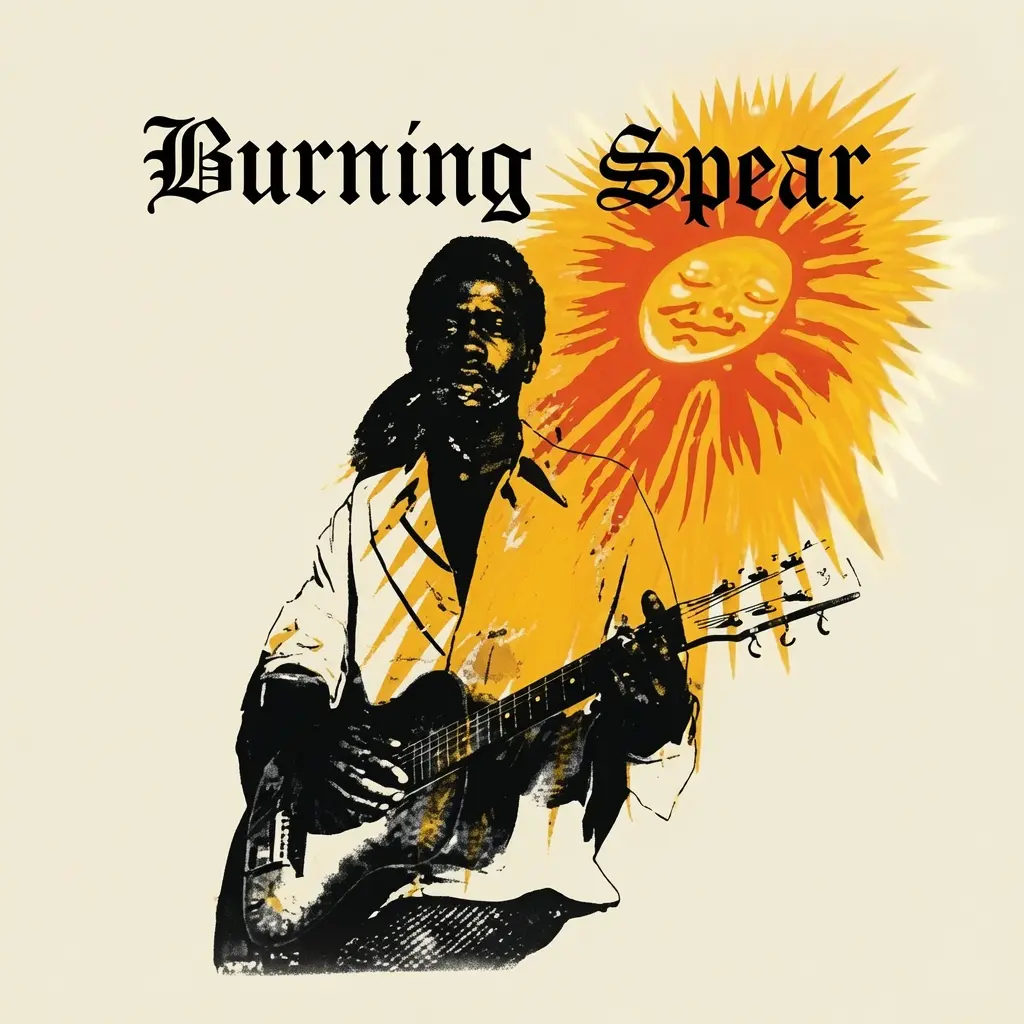 Burning Spear released their debut album, Studio One Presents Burning Spear, in 1973 on Studio One.
The album contains twelve chant-led Studio One originals with repeated vocal phrases, close trio replies, and compact Sound Dimensions backing. Willington returns from the audition-period lineup, with Delroy Hinds completing the same vocal trio.
“Door Peep Shall Not Enter” intones a spoken Jah salutation over a rugged, low-slung pattern. “Pick Up the Pieces” lopes through a firm chant lead and close harmony replies. “Journey” strides through clipped verse calls and compact answers. “He Prayed” lingers on prayer-line repetition with a long, solemn vocal arc. “We Are Free” rises from a direct freedom text into a communal refrain.
A1. “Ethiopians Live It Out” (3:10)
A2. “We Are Free” (2:07)
A3. “Fire Down Below” (3:30)
A4. “Creation” (2:35)
A5. “Don’t Mess With Jill” (2:20)
A6. “Down By the Riverside” (2:59)
B1. “Door Peep Shall Not Enter” (4:39)
B2. “Pick Up the Pieces” (4:40)
B3. “Get Ready” (2:42)
B4. “Journey” (2:44)
B5. “Them a Come” (3:14)
B6. “He Prayed” (5:55)
Sessions occurred at Jamaica Recording and Publishing Studio in Kingston with producer/engineer Clement Dodd.
Studio One Presents Burning Spear features a Studio One sleeve with a blue field, red title text, and a monochrome portrait of Rodney.
Supreme issued “Door Peeper” as a 1970 single with Brentford All Stars “Soul Shake” on the B-side. Coxsone issued “Ethiopians Live It Out” as a 1974 single with Burning Spear and Sound Dimensions “Live It Out” on the B-side.
Rocking Time
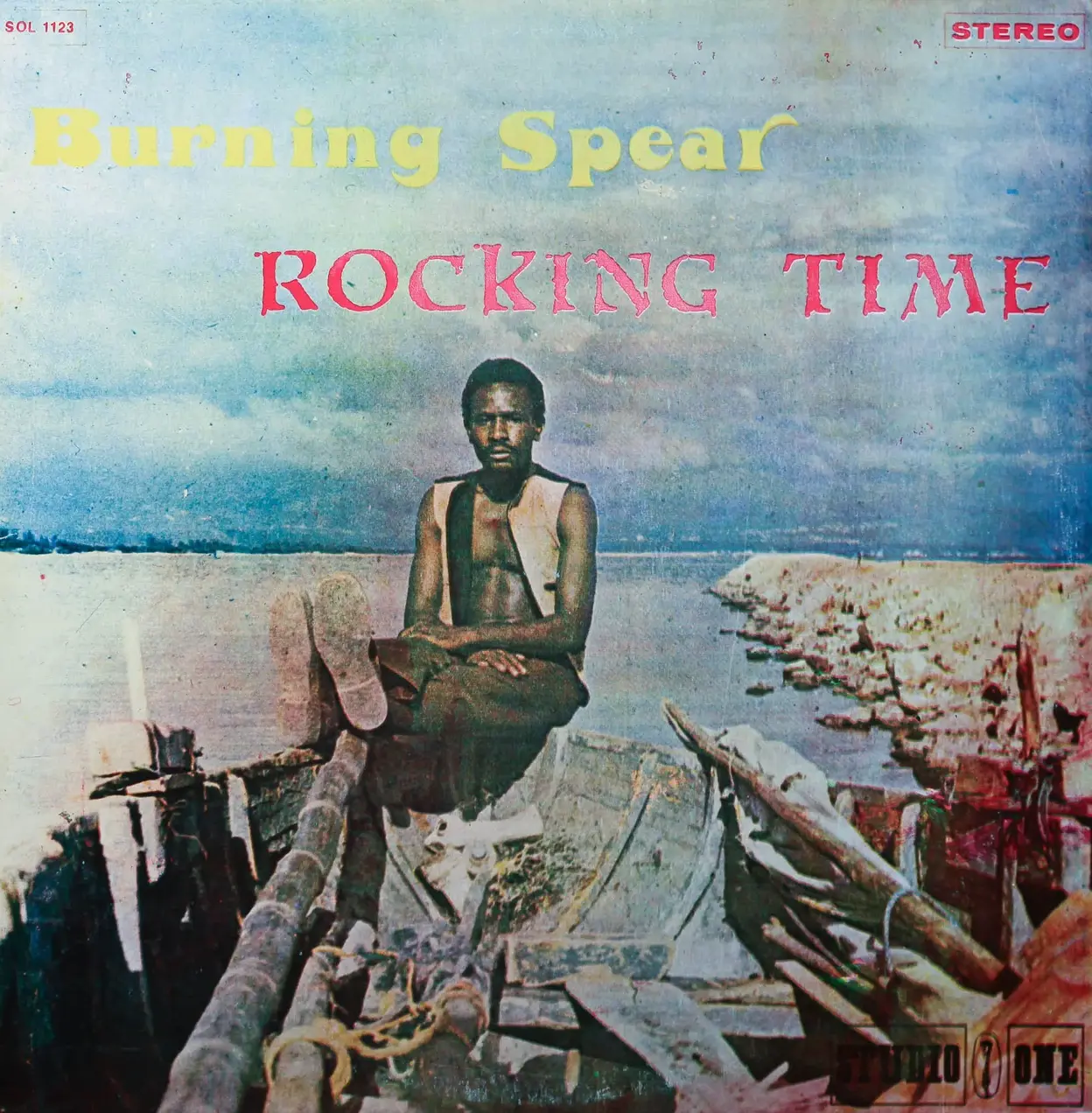 Burning Spear released their second studio album, Rocking Time, in 1974 on Studio One.
Rocking Time contains twelve Rodney–Dodd titles by the Studio One trio. Bassist Leroy Sibbles and drummer Leroy “Horsemouth” Wallace join the credits amid the wider Studio One pool.
“Swell Headed” coils around admonitory repetition and close harmony replies. “Bad to Worst” presses its complaint into a lean, dusk-toned chant. “What a Happy Day” answers Rodney’s chant with close-harmony replies. “This Race” phrases its social text in tight call-and-response blocks. “Rocking Time” rocks repeated title calls against a spare, trance-like pattern. “Weeping and Wailing” laments through long plaintive lines and darker harmony.
A1. “Call On You” (2:45)
A2. “Foggy Road” (3:10)
A3. “Swell Headed” (3:27)
A4. “Girls Like You” (4:04)
A5. “Old Time Saying” (2:20)
A6. “Bad to Worst” (2:42)
B1. “What a Happy Day” (2:49)
B2. “This Race” (2:43)
B3. “Walla Walla” (2:58)
B4. “Rocking Time” (5:12)
B5. “Weeping and Wailing” (3:58)
B6. “Mamie” (4:13)
Sessions occurred at Jamaica Recording and Publishing Studio with Clement Dodd.
Rocking Time appeared in a sleeve with photography by Dodd. The cover shows Rodney seated among pale driftwood near water.
Coxsone issued “Call On You” as a 1972 single (b/w “Version On You” by Sound Dimension). “Foggy Road” appeared as a June 1974 single (b/w “Foggy (Ver.)” by The New Establishment), followed in August by “Swell Headed” (b/w “Part Two” by Winston and The Sound Dimensions).
Supreme had earlier issued “Rocking Time” as a 1970 single (b/w “Tell It All Brother” by Lascelles Perkin), and “Walla Walla” appeared as a 1970 Supreme promo (b/w “I Don’t Want To Lose Your Love” by Owen Grey).
Marcus Garvey
 Burning Spear released the third album, Marcus Garvey, in 1975 on Fox in Jamaica and Island internationally.
Marcus Garvey contains ten Island-sequence titles, including three Rodney–Fullwood numbers and two sole Rodney titles. Bassists Robbie Shakespeare and Aston Barrett anchor a new Black Disciples studio pool with guitarists Earl “Chinna” Smith and Valentine “Tony” Chin, keyboardists Tyrone Downie and Bernard Harvey, flutist Carlton “Sam” Samuels, harmony pair Hines and Willington, and horn players (Bobby Ellis, Vincent Gordon, Herman Marquis, Richard Hall).
“Marcus Garvey” chants the title figure through horn-bright accents and a brief organ turn. “Slavery Days” lopes under a repeated memory call and clipped replies. “The Invasion” presses a minor-key lament into an extended liberty coda. “Live Good” softens the verse line with a winding flute. “Give Me” pleads through a demand refrain and a persistent justice text. “Tradition” steps through march-like accents and a chant of ancestral duration. “Jordan River” climbs through a solemn, hymn-like contour. “Resting Place” settles under a shaded refuge image and a weary pollution text.
A1. “Marcus Garvey” (3:27) – Rodney, Fullwood
A2. “Slavery Days” (3:34) – Rodney, Fullwood
A3. “The Invasion” (3:22) – Rodney, Paisley, Fullwood
A4. “Live Good” (3:14) – Marcus Rodney, Mackba Rodney, Winston Rodney
A5. “Give Me” (3:11) – Winston Rodney
B1. “Old Marcus Garvey” (4:03) – Rodney, Fullwood
B2. “Tradition” (3:30) – Hines, Willington, Winston Rodney
B3. “Jordan River” (3:00) – Rodney, Lawrence, Fullwood
B4. “Red, Gold & Green” (3:14) – Folkes, Rodney, Fullwood
B5. “Resting Place” (3:10) – Winston Rodney
Lawrence Lindo produced Marcus Garvey at Randy’s Recording Studio on North Parade in Kingston. George Philpott and Errol Thompson engineered the sessions. The album was mixed at Joe Gibbs Studio on Retirement Crescent in Kingston.
Fox issued “Marcus Garvey” as a Jamaican single. Island issued “Old Marcus Garvey” as a UK single (b/w “Tradition”).
Garvey’s Ghost
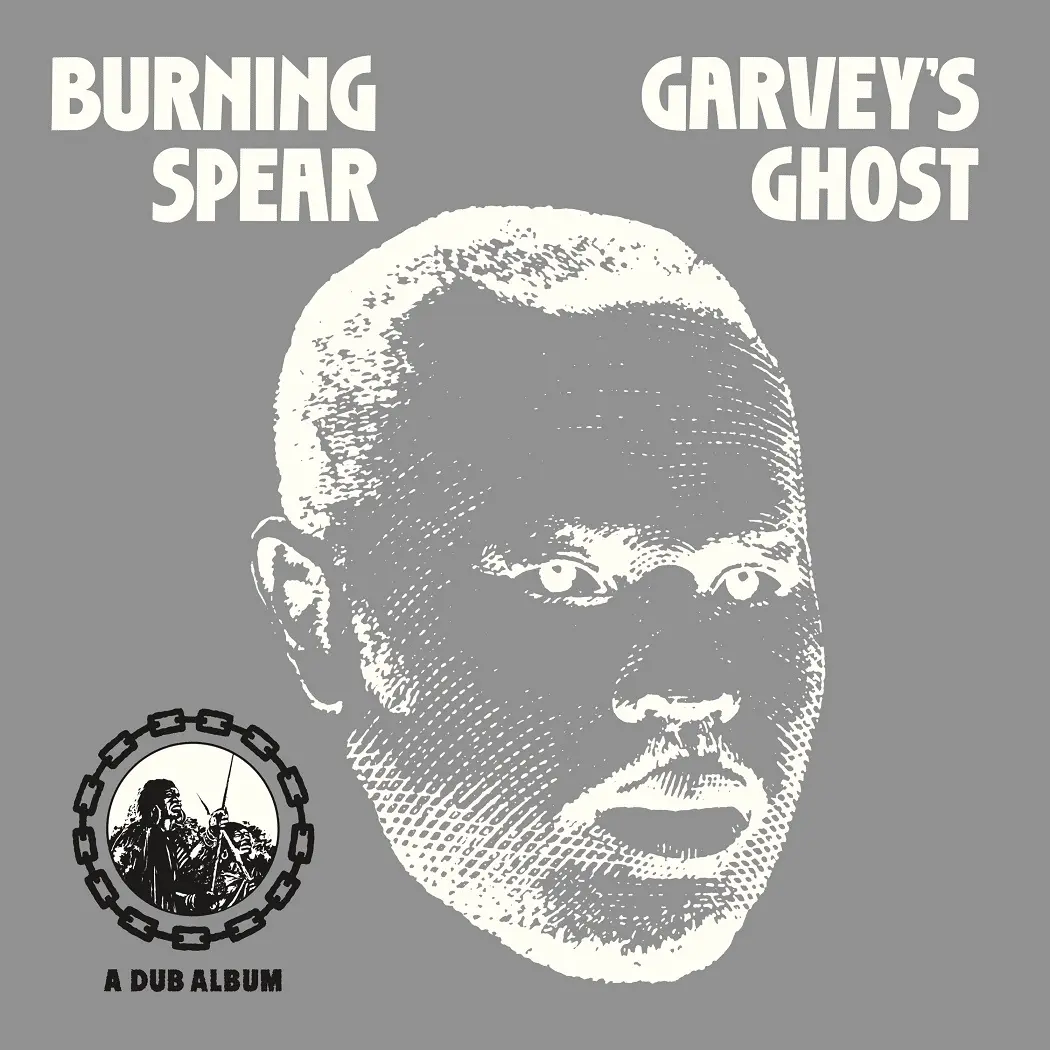 Burning Spear released the fourth album, Garvey’s Ghost, in 1976 on Island.
Garvey’s Ghost versions all ten Marcus Garvey titles in dub form. The album uses the 1975 recordings, with John Burns and Dick Cuthell credited for the Island Studios dub mix.
“The Ghost” thins the title chant into echo, channel shifts, and skeletal horn shadows. “I and I Survive” drops the slavery refrain into spaced vocal fragments. “Black Wa-Da-Da” suspends the minor-key pressure of “The Invasion” inside a recessed rhythm bed. “John Burns Skank” cuts “Live Good” to spare replies and off-center splashes. “Brain Food” leaves the demand phrases in broken outline. “Farther East of Jack” recedes through deeper bass pressure and isolated chant fragments.
A1. “The Ghost” (3:56) – Rodney, Fullwood; versions “Marcus Garvey”
A2. “I and I Survive” (3:55) – Rodney, Fullwood; versions “Slavery Days”
A3. “Black Wa-Da-Da” (3:53) – Rodney, Paisley, Fullwood; versions “The Invasion”
A4. “John Burns Skank” (3:49) – Marcus Rodney, Mackba Rodney, Winston Rodney; versions “Live Good”
A5. “Brain Food” (3:11) – Winston Rodney; versions “Give Me”
B1. “Farther East of Jack” (4:26) – Rodney, Fullwood; versions “Old Marcus Garvey”
B2. “2000 Years” (3:49) – Hines, Willington, Winston Rodney; versions “Tradition”
B3. “Dread River” (3:13) – Rodney, Lawrence, Fullwood; versions “Jordan River”
B4. “Workshop” (4:34) – Folkes, Rodney, Fullwood; versions “Red, Gold & Green”
B5. “Reggaelation” (3:43) – Winston Rodney; versions “Resting Place”
Lawrence Lindo produced Garvey’s Ghost from the 1975 Marcus Garvey recordings. George Philpott and Errol Thompson engineered the recordings at Randy’s Recording Studio and Joe Gibbs Studio in Kingston. John Burns and Dick Cuthell prepared the dub mix at Island Studios in Hammersmith. The album features sleeve design by Bloomfield/Travis.
Island issued “Black Wa-Da-Da (Invasion) (Dub Version)” as a 1976 UK promo single (b/w “I And I Survive (Slavery Days) (Dub Version)”).
Man in the Hills
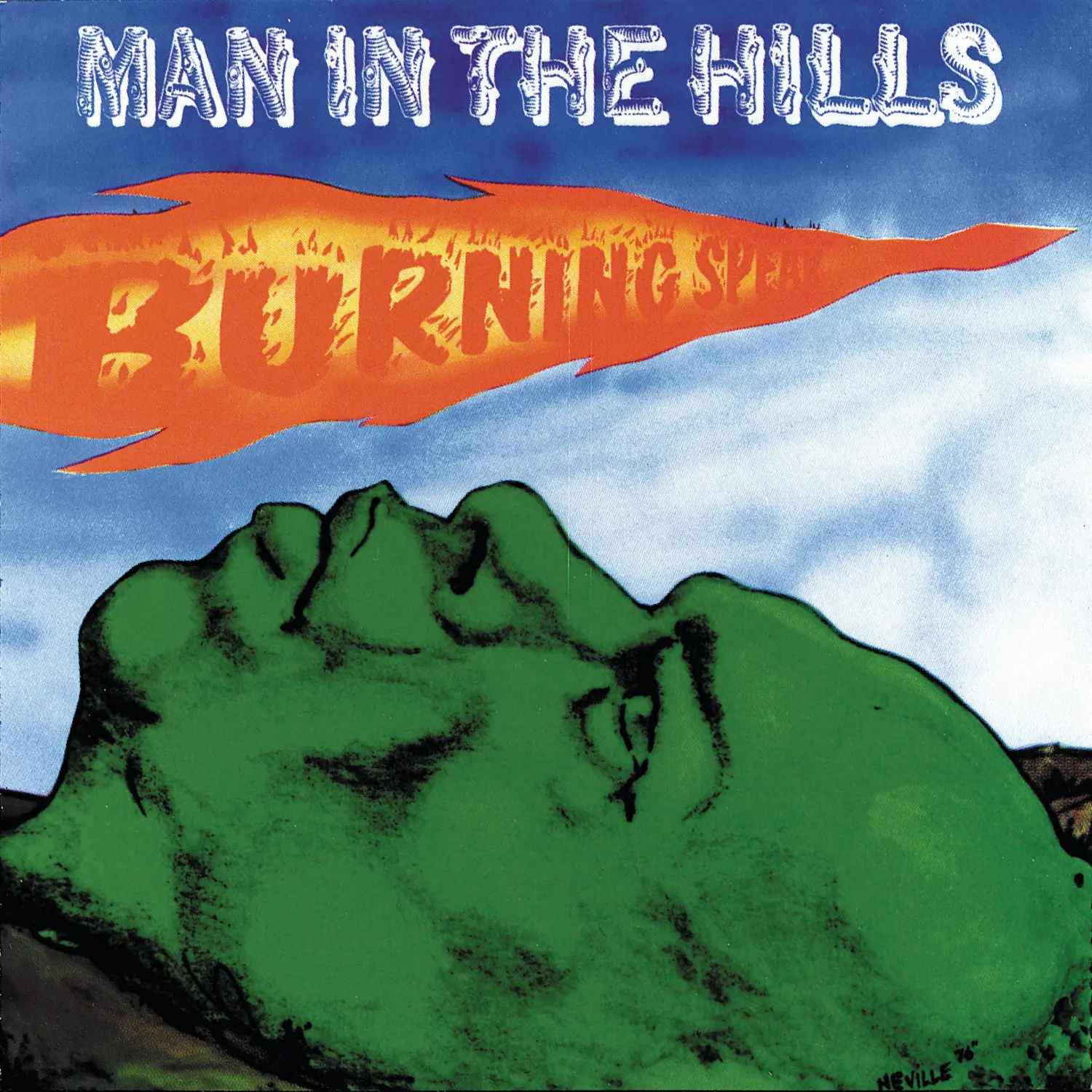 Burning Spear released the fifth album, Man in the Hills, on August 18, 1976 on Island.
Man in the Hills contains nine Rodney titles and “It’s Good,” a Phillip Fullwood co-write. The album retains Hines and Willington with the Black Disciples pool and adds keyboardist Earl “Wire” Lindo; “Door Peep” revisits the 1969 Studio One single.
“Man in the Hills” eases through rural memory and a settled lead line. “It’s Good” repeats self-reliance text through heavy call-and-response blocks. “No More War” scratches its peace appeal with guitar figures and blues-colored lines. “Black Soul” chants ancestry through deep repetition. “Lion” tolls a ritual refrain around Selassie-linked imagery. “People Get Ready” brightens into a unity chant with trilling flute replies. “Door Peep” thickens through push-pull accents and a four-note trombone phrase. “Groovy” locks into a dense, low-end rhythm track.
A1. “Man in the Hills” (4:00)
A2. “It’s Good” (2:45) – Fullwood, Rodney
A3. “No More War” (3:19)
A4. “Black Soul” (3:25)
A5. “Lion” (3:14)
B1. “People Get Ready” (3:22)
B2. “Children” (3:44)
B3. “Mother” (3:37)
B4. “Door Peep” (2:40)
B5. “Groovy” (3:53)
Jack Ruby produced Man in the Hills at Randy’s Recording Studio and Harry J Studio in Kingston.
Man in the Hills features design and illustration by Neville Garrick. The cover shows a green reclining profile under white title lettering and a red Burning Spear banner.
Wolf issued “Man In The Hills” as a Jamaican single (b/w “Cultivation”). Island issued “Lion” as a 1976 UK single (b/w “Door Peep”).
Dry & Heavy
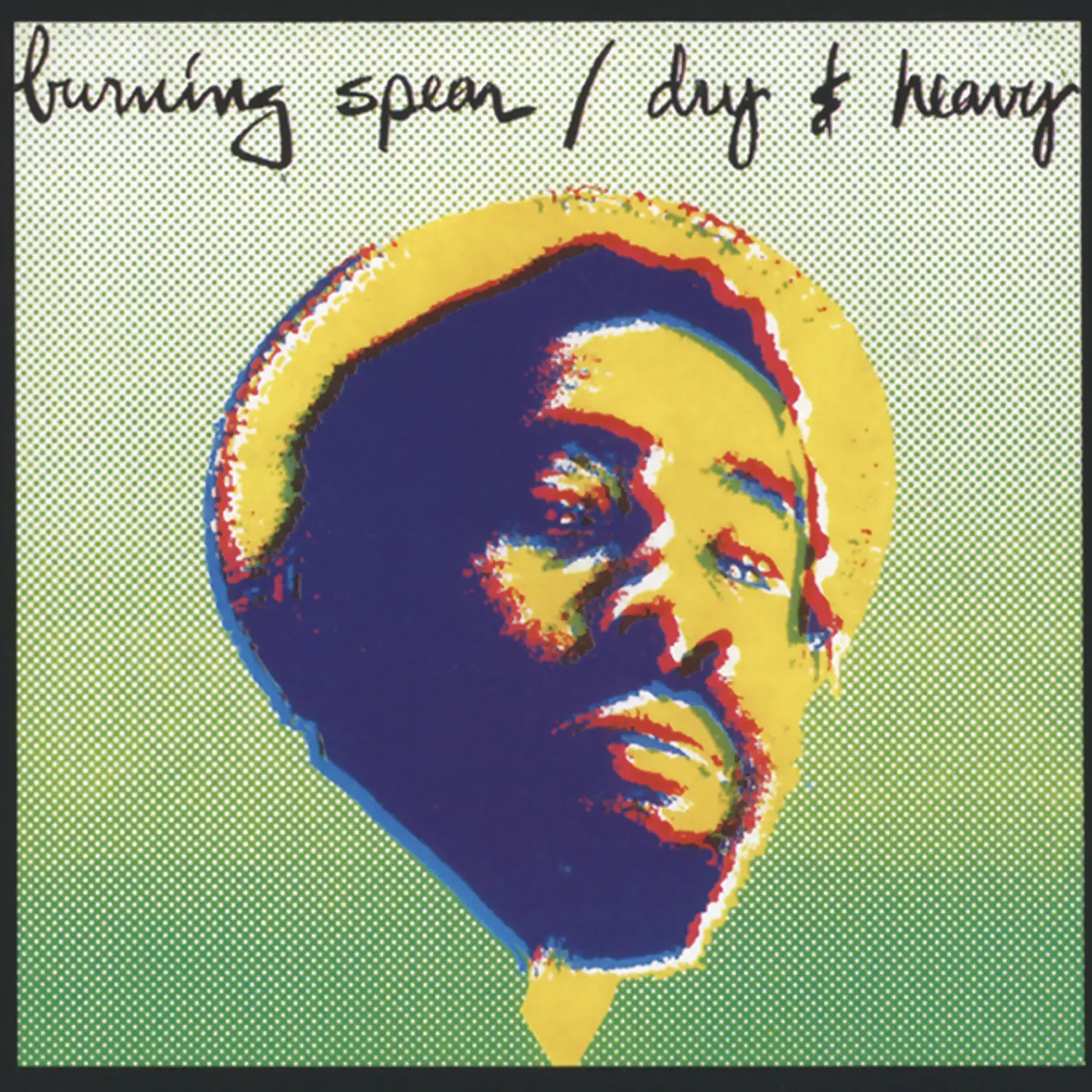 Burning Spear released the sixth studio album, Dry & Heavy, in 1977 on Island/Mango.
Dry & Heavy is the first Island-era studio album after the Hines–Willington harmony configuration. Seven tracks carry sole Rodney credit; “The Sun” and “It’s A Long Way Around” add Fullwood-linked co-writes, with guitarists Donald “Roots” Kinsey and Bertram “Ranchie” McLean plus percussionists Noel “Skully” Simms and Uziah “Sticky” Thompson.
Dry & Heavy eases into a pastoral, low-slung stance, with broad after-verse passages and softened vocal replies. “Any River” glides through a relaxed love chant and a smooth, rocking pulse. “The Sun” calls through repeated readiness phrases before Rodney lifts the end line into a sharper cry. “It’s a Long Way Around” sways through lurching horn phrases, syncopated piano, and a guitar figure.
“Throw Down Your Arms” whispers the surrender refrain over tight hand accents. “Dry and Heavy” sustains piano chords and multi-tracked vocal arcs around schoolday memory. “Black Disciples” darkens the closing stretch. “Shout It Out” lifts a no-more-crying refrain into communal release.
A1. “Any River” (3:22)
A2. “The Sun” (3:43) – Taylor, Fullwood, Rodney
A3. “It’s a Long Way Around” (3:07) – Fullwood, Rodney
A4. “I W.I.N.” (3:46)
A5. “Throw Down Your Arms” (4:05)
B1. “Dry And Heavy” (3:29)
B2. “Wailing” (2:48)
B3. “Black Disciples” (4:27)
B4. “Shout It Out” (3:27)
Winston Rodney produced and arranged Dry & Heavy at Harry J Studio in Kingston. Sylvan Morris engineered the sessions, and Don Taylor served as executive producer.
Dry & Heavy features cover photography by Kim Gottlieb, sleeve photography by David Asher, art direction by Deirdre Morrow, and design and artwork by John William Burke and Rastagrafix.
Spear issued “Throw Down Your Arms” as a 1977 Jamaican single (b/w “I Long To See You”). Spear issued “School Days” as a 1978 Jamaican single (b/w “Dry And Heavy”).
Marcus’ Children
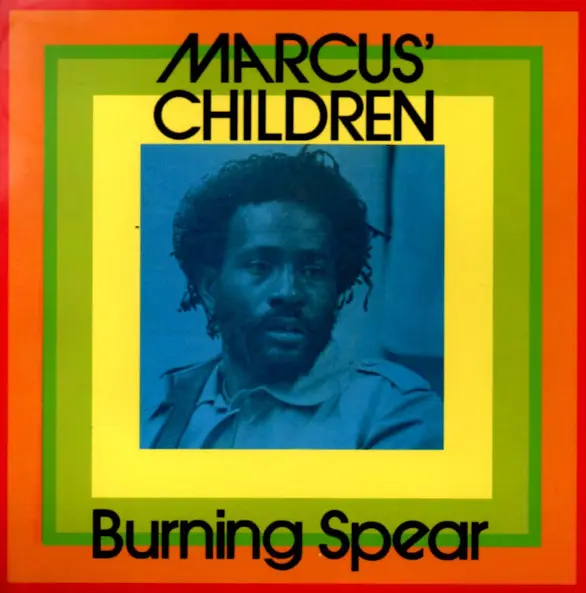 Burning Spear released the seventh studio album, Marcus’ Children, in 1978 on Burning Spear in Jamaica.
Marcus’ Children contains nine Rodney titles in its Jamaican sequence. Abroad, Island issued the album as Social Living with a revised sequence and several alternate edits. Credits retain the Dry & Heavy pool and add drummer Lowell “Sly” Dunbar, bassist George Oban, keyboardist Michael “Ibo” Cooper, and two subsequent Specials: trombonist Rico Rodriguez and trumpeter Dick Cuthell.
“Marcus Children Suffer” moans through overlapping vocal cries around Garvey-linked grief. “Social Living” turns through abrupt chord shifts, repeated title replies, clattering percussion, and a dub-out close. “Nayah Keith” roots an old Rasta hymn in hand-patterned repetition. “Institution” strides under conga rolls and a clipped guitar figure. “Civilized Reggae” swirls through synthesizer haze before baritone saxophone answers the roll call. “Mister Garvey” intones clipped light-strength-energy calls around a cool authority phrase.
A1. “Marcus Children Suffer” (4:38)
A2. “Come” (3:52)
A3. “Social Living” (4:34)
A4. “Marcus Say Jah No Dead” (3:51)
B1. “Marcus Senior” (5:10)
B2. “Nyah Keith” (4:03)
B3. “Inatitution” (3:30)
B4. “Mister Garvey” (3:17)
B5. “Civilize Reggae” (4:03)
Island and later issues standardize “Inatitution” as “Institution.” Island also uses “Nayah Keith” and “Civilized Reggae” on Social Living.
Winston Rodney and Karl Pitterson produced Marcus’ Children. Sessions occurred at Harry J Studio in Kingston and Compass Point Studios in Nassau. Sylvan Morris engineered the recordings, and Pitterson and Benji Armbrister mixed the album at Compass Point Studios.
Spear issued “Children Of Today” as a 1978 Jamaican single (b/w “The Whole A We Suffer”), pairing the dub with the vocal basis for “Marcus Children Suffer.”
Living Dub
Burning Spear released the dub album Living Dub in 1979 on Burning Spear and Island/PRE.
Living Dub versions the Marcus’ Children program across nine dub titles. Rodney produced the album from the 1978 session pool, with Sylvan Morris credited for the original dub mix.
A1. “Children Of Today” (4:52) – versions “Marcus Children Suffer”
A2. “Present” (3:39) – versions “Come”
A3. “Associate” (3:54) – versions “Social Living”
A4. “Jah Boto” (3:48) – versions “Marcus Say Jah No Dead”
B1. “In Those Days” (3:33) – versions “Marcus Senior”
B2. “Irie Niya Keith” (3:52) – versions “Nyah Keith”
B3. “Help Us” (3:45) – versions “Institution”
B4. “Musiya” (3:12) – versions “Mister Garvey”
B5. “All Over” (3:21) – versions “Civilize Reggae”
The album uses the Marcus’ Children session pool. The parent recordings retain the expanded lineup from the 1978 album.
Winston Rodney produced Living Dub from the Marcus’ Children recordings. Sylvan Morris prepared the original dub mix.
Heartbeat issued Living Dub Volume One in 1993 with a new Barry O’Hare mix and the additional title “Hill Street Dub.” Burning Music restored the 1979 mix as Original Living Dub Vol. 1 in 2002.
Hail H.I.M.
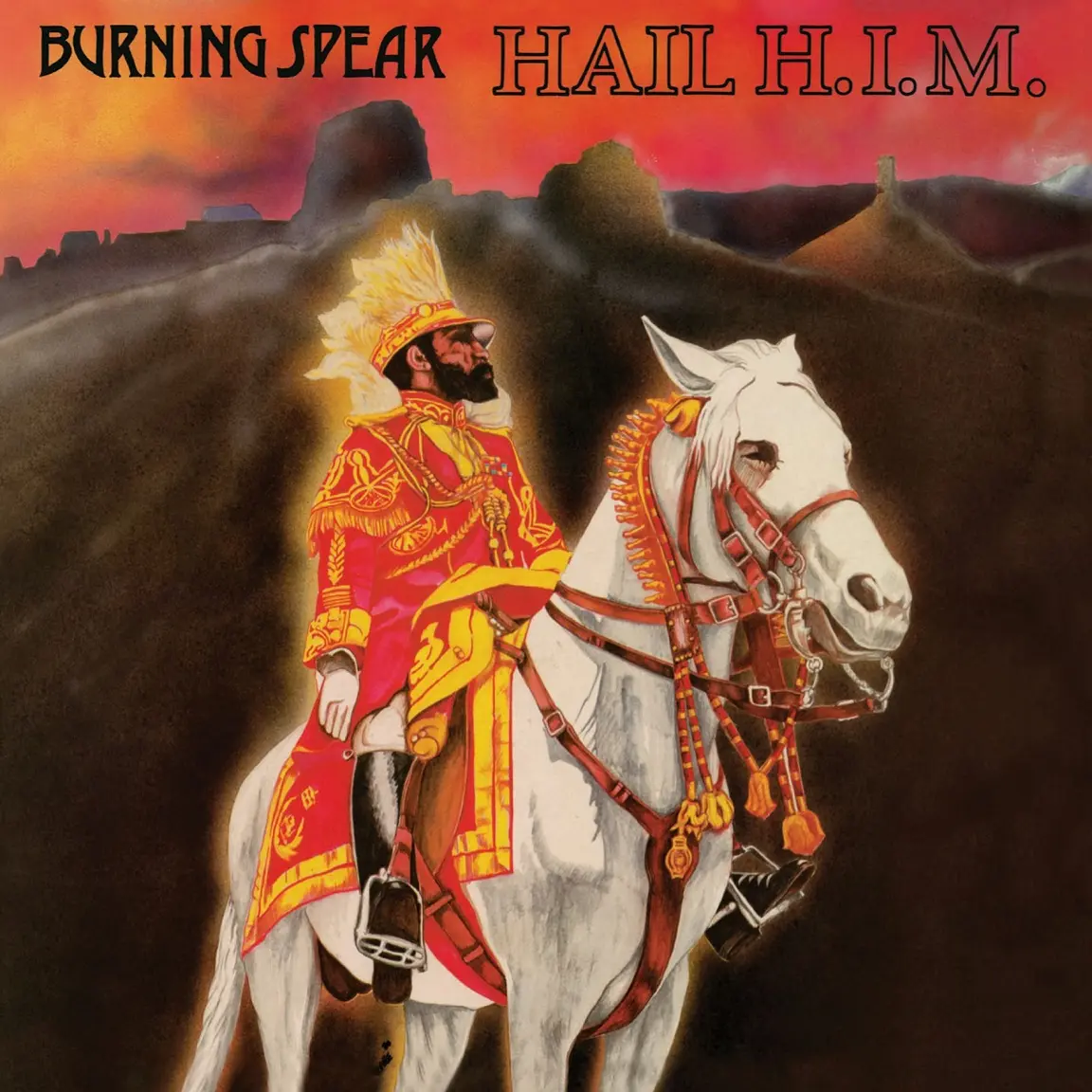 Burning Spear released Hail H.I.M. in 1980 on Burning Spear, with Radic and EMI issues in other markets.
Hail H.I.M. contains nine Rodney titles with Garvey-linked texts and African-historical address. The Tuff Gong credits retain Barrett, Downie, Lindo, Ellis, and Marquis from the Island-era pool, with drummer Nelson Miller, guitarist Junior Marvin, and trombonist Egbert Evans.
“Hail H.I.M.” intones the opening salutation over a low-slung bass line and background title chant. “Columbus” chants the Arawak claim through chugging accents and the repeated liar tag. “Road Foggy” fogs the verse with a horn entry, triangle touches, and a heavy suspended refrain. “Follow Marcus Garvey” lopes under low saxophone figures and Black Star Liner calls.
“African Teacher” pleads through a teacher call and rolling hand accents. “African Postman” rings a chime figure under repeated holy-folk replies. “Cry Blood Africans” cries the continental lament through darker coloring. “Jah A Guh Raid” closes with call-and-response vengeance phrases and sharp keyboard emphasis.
A1. “Hail H.I.M.” (4:17)
A2. “Columbus” (3:37)
A3. “Road Foggy” (3:37)
A4. “Follow Marcus Garvey” (4:27)
A5. “Jah See And Know” (3:36)
B1. “African Teacher” (4:03)
B2. “African Postman” (4:28)
B3. “Cry Blood Africa” (5:03)
B4. “Jah A Guh Raid” (5:34)
Rodney and Barrett produced Hail H.I.M. at Tuff Gong Recording Studio in Kingston. Dennis Thompson and Errol Brown engineered the sessions. Neville Garrick handled the original cover design and photography.
Burning Spear issued “Jah See & Know” as a Jamaican single. Burning Spear issued “African Teacher” as a Jamaican single during the same release period.
Living Dub Vol. 2
Burning Spear released Living Dub Vol. 2 in 1980 on Burning Spear.
Living Dub Vol. 2 versions the Hail H.I.M. program across nine listed dub titles. The album uses the Tuff Gong recordings and Hail H.I.M. lineup; later configurations add “World Dub” and “Over All Dub,” both drawn from material outside the parent sequence.
“Cry Africa” and “Teacher” leave the vocal source in short glimpses. “Offensive Dub” and “Pirate’s Dub” splinter the refrain into delay trails. “Foggy” and “Marcus Dub” recede through recessed horn traces and off-center channel drops. “World Dub” and “Over All Dub” widen the program with raw militant afterimages.
A1. “Cry Africa” (4:11) – Rodney; versions “Cry Blood Africa”
A2. “Telegram In Dub” (3:40) – Rodney; versions “African Postman”
A3. “Teacher” (3:49) – Rodney; versions “African Teacher”
A4. “Offensive Dub” (4:39) – Rodney; versions “Jah A Guh Raid”
B1. “Majestic Dub” (3:43) – Rodney; versions “Hail H.I.M.”
B2. “Pirate’s Dub” (3:59) – Rodney; versions “Columbus”
B3. “Foggy” (4:29) – Rodney; versions “Road Foggy”
B4. “Marcus Dub” (5:19) – Rodney; versions “Follow Marcus Garvey”
B5. “Jah See” (5:08) – Rodney; versions “Jah See And Know”
Living Dub Vol. 2 uses the Hail H.I.M. session lineup. Later listings add “World Dub” and “Over All Dub,” which version material outside the nine-title Hail H.I.M. sequence.
Rodney produced Living Dub Vol. 2 from the Tuff Gong recordings. Dennis Thompson and Errol Brown engineered the source sessions. Neville Garrick handled the original artwork and photography.
Farover
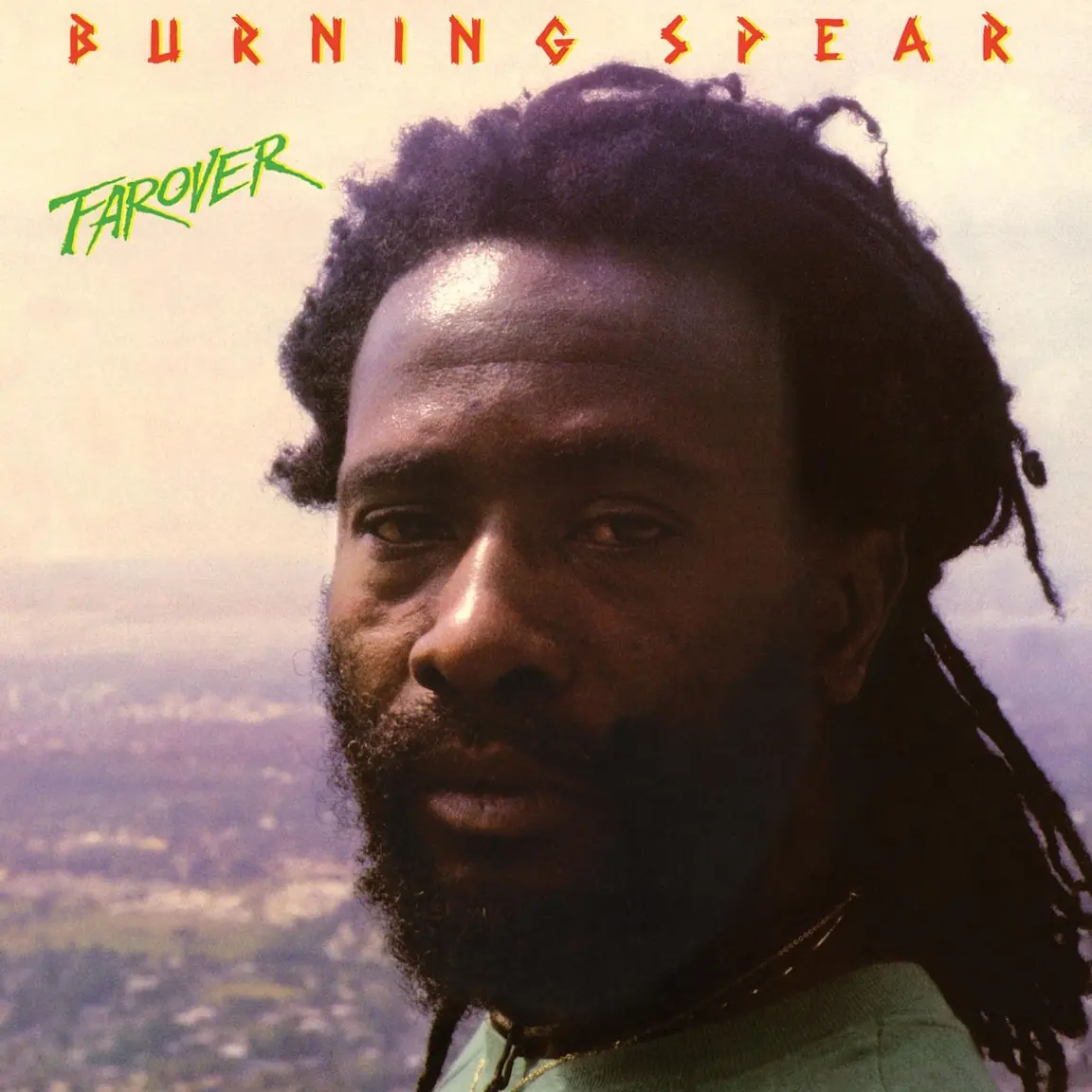 Burning Spear released Farover in 1982 on Burning Spear/Radic, with Heartbeat and EMI issues in other markets.
Farover contains nine titles on the Burning Spear/Radic sequence, including the Garvey reference “Image (Of Marcus Mosiah Garvey)” and devotional closer “Jah Is My Driver.” The compact band features drummer and octoban player Nelson Miller, bassist and backing vocalist Anthony Bradshaw, guitarists Michael Wilson and Devon Bradshaw, keyboardist Richard Johnson, alto saxophonist Marquis, and trumpeter Ellis; Aston Barrett appears on “Jah Is My Driver.”
A1. “Farover” (4:22)
A2. “Greetings” (4:42)
A3. “Image (Of Marcus Mosiah Garvey)” (4:53)
A4. “Rock” (3:32)
A5. “Education” (4:12)
B1. “She’s Mine” (4:48)
B2. “Message” (5:26)
B3. “Oh Jah” (5:33)
B4. “Jah Is My Driver” (4:47)
Rodney produced Farover at Tuff Gong Recording Studio in Kingston. Errol Brown engineered the sessions and mixed the album with Rodney. Neville Garrick handled the original cover.
Radic issued “Jah Is My Driver” as a 1982 UK twelve-inch single (b/w “Distance” and “Farover”). Radic issued “She’s Mine” as a 1982 single.
The Fittest of the Fittest
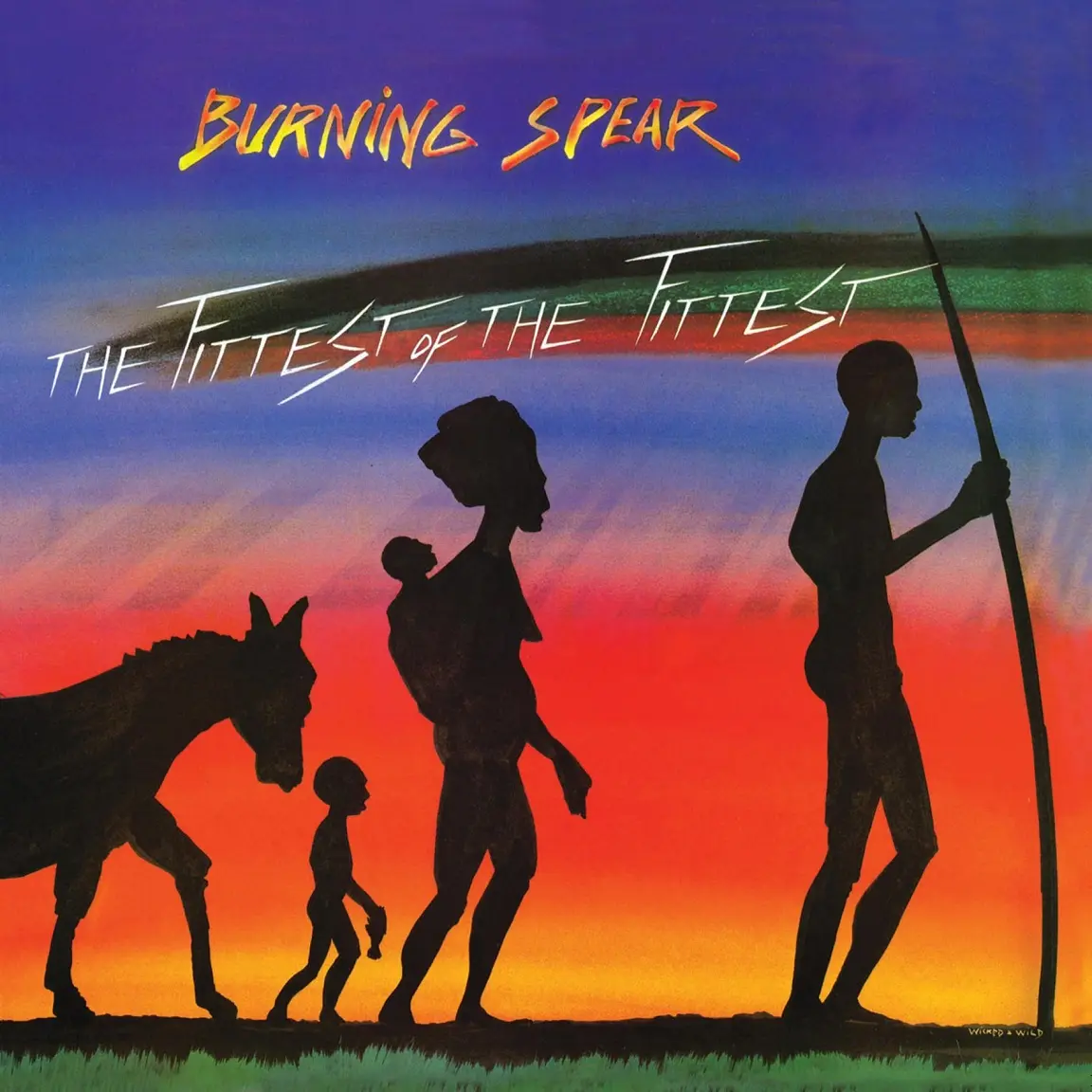 Burning Spear released The Fittest of the Fittest in 1983 on EMI, with Heartbeat handling the U.S. issue.
Fittest contains nine titles in the EMI sequence, with “Fire Man” and “Bad to Worst” revisiting earlier Studio One material. Burning Band core includes Miller, bassist Anthony Bradshaw, guitarists Michael Wilson and Devon Bradshaw, keyboardist Anthony Johnson, Ellis, and Marquis; “Bad to Worst” adds Barrett, Junior Marvin, Downie, and Lindo.
“The Fittest of the Fittest” strides through a travel-like chant and long-range cultural touchpoints. “Repatriation” melts into a softened, patient rhythm bed. “Vision” steadies the later program around unity text. “For You” bends the album toward romance with a lighter vocal stance. “Bad to Worse” keeps Rodney’s complaint text in view. “2000 Years” bubbles from ancestral grievance into a more danceable memory. “In Africa” flashes playful vocal syllables across its opening. “Fire Man” updates an older Studio One source with siren color. “Old Boy Garvey” returns the set to Garvey tribute.
A1. “The Fittest of the Fittest” (3:45)
A2. “Fire Man” (4:10)
A3. “Bad to Worst” (3:32)
A4. “Repatriation” (3:43)
A5. “Old Boy Garvey” (3:45)
B1. “2000 Years” (4:00)
B2. “For You” (4:04)
B3. “In Africa” (4:04)
B4. “Vision” (4:42)
Burning Music Production and the Burning Band produced The Fittest of the Fittest. Sessions occurred at Tuff Gong Recording Studio in Kingston, where Errol Brown engineered and mixed the album with Rodney. Chris Lewis assisted Brown.
The Fittest of the Fittest features original art and design by Wicked and Wild, original photography by Howard Liebowitz, M.D., and original typography and inner-bag design by Keith Breeded, Assorted Images, and The Printed Word.
Resistance
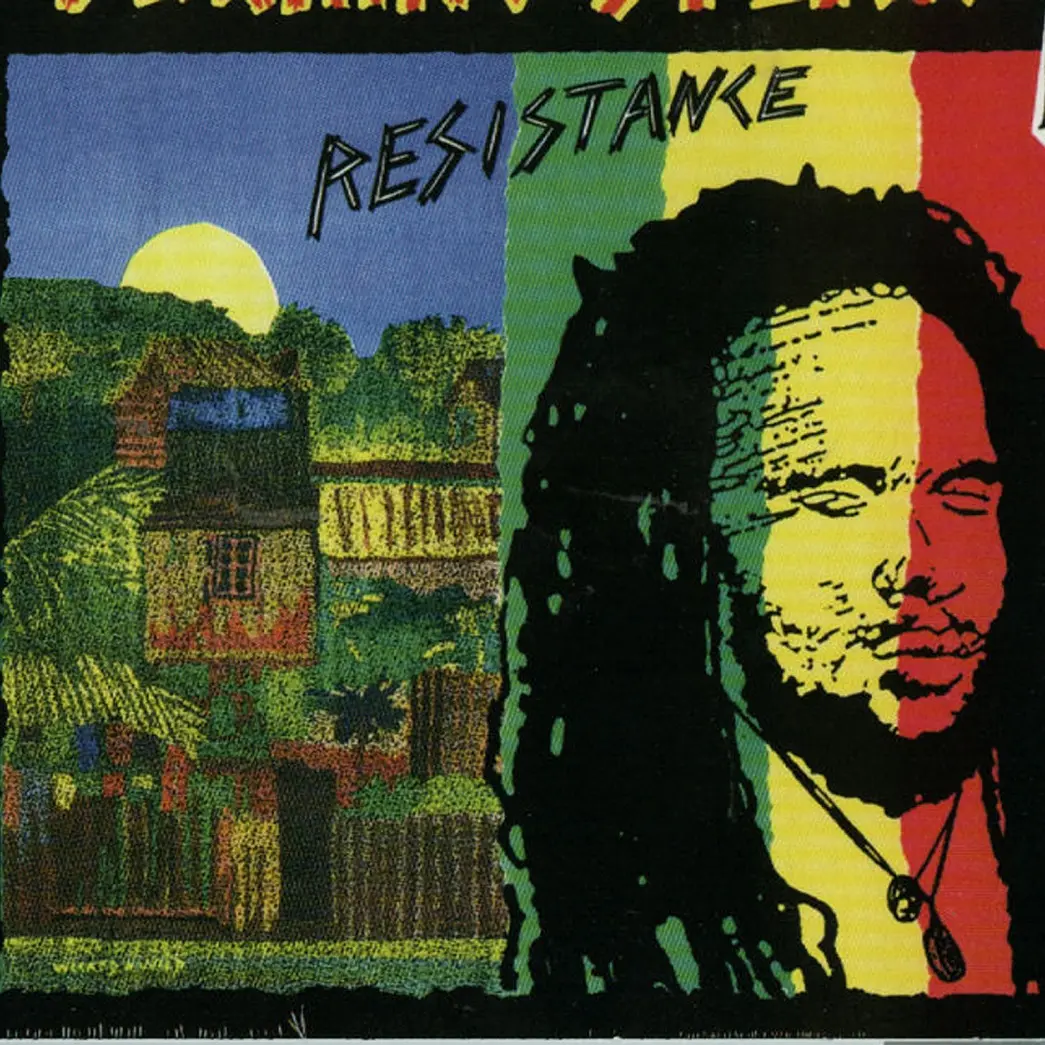 Burning Spear released Resistance in 1985 on Heartbeat.
Resistance contains eight Rodney titles and “Queen of the Mountain,” a Noel Hamil co-write. The lineup expands the Burning Band horn pool with saxophonist Dean Fraser, trombonist Ronald “Nambo” Robinson, and trumpeter Junior “Chico” Chin; lead guitarist Lenford Richard joins the rhythm section.
“Resistance” centers the title chant inside a militant front line. “Queen of the Mountain” crowns the set with a ceremonial vocal lift. “The Force” braces the album around a harder social text. “We Been There” calls on history through repeated witness phrases. “Mek We Yadd” and “Jah Feeling” carry the clearest brass emphasis. “Love to You” closes the set with scat phrasing and a warmer, blues-tinged vocal manner.
A1. “Resistance” (4:13)
A2. “Mek We Yadd” (4:11)
A3. “Holy Foundation” (3:39)
A4. “Queen of the Mountain” (3:40) – Rodney, Noel Hamil
A5. “The Force” (3:43)
B1. “Jah Say” (4:22)
B2. “We Been There” (4:08)
B3. “Jah Feeling” (4:27)
B4. “Love to You” (4:20)
Rodney and Miller produced Resistance at Tuff Gong Recording Studio in Kingston. Errol Brown recorded the sessions. Jack Nuber mixed the album, with David Young assisting. Mervyn Williams assisted on “Mek We Yadd” and “Jah Feeling,” and Christopher Lewis assisted the sessions.
Resistance features art concept and photography by Wicked and Wild.
Resistance received a 1986 Grammy nomination for Best Reggae Album.
People of the World
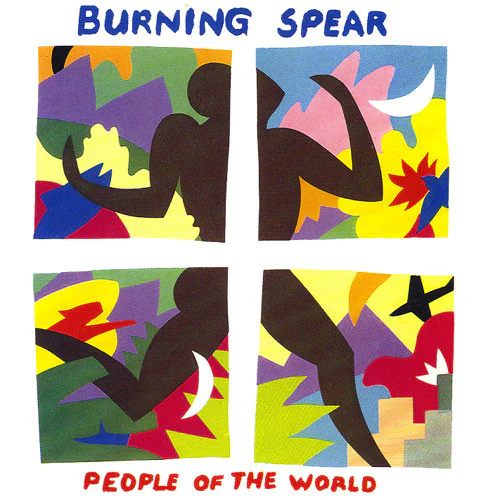 Burning Spear released People of the World in 1986 on Slash.
People of the World contains ten Rodney titles on the Slash sequence. The band retains Miller, Anthony Bradshaw, Richard Anthony Johnson, Robert Lyn, Lenford Richard, and Devon Bradshaw, with Rass Brass assigned to most horn arrangements and Burning Brass credited on “Who’s the Winner?” and “This Experience.”
“Built This City” relocates its borrowed title idea into Kingston terms and a revised rhythm setting. “Who’s the Winner?” punctuates the set with a trumpet solo. “Little Love Song” answers the romance text with a saxophone line. The remaining songs thread communal calls, self-correction phrases, city images, and softer devotional replies through an open-textured band setting.
A1. “People of the World” (4:00)
A2. “I’m Not the Worst” (3:10)
A3. “Seville Land” (2:53)
A4. “Who’s the Winner?” (3:50)
A5. “Distant Drum” (4:07)
B1. “We Are Going” (4:13)
B2. “This Experience” (4:10)
B3. “Built This City” (3:48)
B4. “No Worry You’self” (3:46)
B5. “Little Love Song” (3:48)
Rodney and Miller produced People of the World at Tuff Gong Recording Studio in Kingston. Mervyn Williams recorded the sessions. Michael Sauvage mixed the album, with Gary Sutherland and Ron Victor assisting. Chris Bellman mastered the album.
People of the World features art direction and design by Michael Hodgson, illustration by Scott Baldwin, and photography by Donna Cline.
People of the World received a 1988 Grammy nomination for Best Reggae Album.
Discography:
- Studio One Presents Burning Spear (1973)
- Rocking Time (1974)
- Marcus Garvey (1975)
- Garvey’s Ghost (1976)
- Man in the Hills (1976)
- Dry & Heavy (1977)
- Marcus’ Children (1978)
- Living Dub (1979)
- Hail H.I.M. (1980)
- Living Dub Vol. 2 (1980)
- Farover (1982)
- The Fittest of the Fittest (1983)
- People of the World (1986)
- Resistance (1986)
- Mistress Music (1988)
Sources:
Artist/Album Pages:
Dogfeet were an English hard-rock/psych band from Shrewsbury, Shropshire, that released a self-tit...
Neuronium are a Spanish electronic combo from Barcelona, formed in 1976 by keyboardist Michel Huyg...
The Plastic People of the Universe were a Czech rock group formed in Prague in 1968, with bassist ...
Killing Floor was an English hard-rock band that released a self-titled album on Spark in 1969, foll...
E. A. Poe was an Italian symphonic-rock band that released the 1974 album Generazioni (Storia di S...
Yabby U — aka Vivian Jackson (Aug. 14, 1946 — Jan. 12, 2010) — was a Jamaican dub/roots-reggae art...
Phil Daniels & the Cross were an English rock band that made a 1979 self-titled album on RCA. ...
ADC Band was an American soul-funk band from Detroit that released five albums between 1978 and 19...
Fotomaker was an American hard-rock/pop band from NYC that made the 1978/79 Atlantic albums Fotom...
Tamam Shud was an Australian psych-rock band from Sydney that released the album Evolution on CBS in...
Jacqui Brookes is an English vocalist who cut a 1980 single with the minimal-wave trio Shox, follo...
Alameda was a Spanish flamenco/jazz-rock band that released four albums between 1979 and 1983 on E...