

Asia was an American symphonic hard-rock band from Rapid City, South Dakota, that released the 1979–80 ASI albums Asia and Armed to the Teeth. The lineup united White Wing alumni Mike Coates and Michael English with Free Flite singer–guitarist Larry Galbraith and Nebraska drummer John Haynes. Conflicting claims to the Asia name later led the musicians to continue as Solomon Kane.
Members: Michael English (vocals, bass, percussion), Larry Galbraith (vocals, guitar, mandolin), Mike Coates (guitar, mandolin, piano, harpsichord, Mellotron), John Haynes (drums, percussion, 1977–79), Doug Johnson (drums, percussion, 1980–82)
Background
Asia formed in early 1977 in Rapid City, S.D., when guitarist Mike Coates and singer–bassist Michael English reorganized their post-White Wing project with singer–guitarist Larry Galbraith and Nebraska drummer John Haynes. Coates co-founded White Wing in Rapid City in 1968 and remained through the group’s self-titled ASI album. English came from Hot Springs, where he formed the Shells of Time in junior high and toured the Midwest with the group by tenth grade; subsequent activity included the Rising Suns and White Wing.
Galbraith joined Rapid City band Freeflite as lead singer in 1971 alongside guitarist Peter Diggins, bassist Don Paris, and drummer Roger Groethe. Freeflite worked school dances and clubs across the Midwest, then secured opening dates with national touring acts as the musicians developed original material and demo recordings. Haynes came from the Nebraska band Search.
White Wing recorded a self-titled album for Minneapolis label ASI with company president Dan Holmes as producer and promoted the Coates composition “Hansa” as a single. ASI declined an option for a second White Wing album, despite a completed set of compositions and demos. Holmes advised Coates to replace the White Wing rhythm section, recruit Galbraith, and maintain the ASI connection for another recording project. Former White Wing members retained control of the group name, so Coates, English, Galbraith, and manager Mike Chambers established a separate band. The musicians selected Haynes through auditions, and Galbraith proposed the name Asia.
Chambers purchased The Barbarian in Rapid City as the group base. Asia concentrated on club dates in larger upper Midwestern markets, including Rapid City and Minneapolis, with Canadian work in Winnipeg. The quartet planned recordings around regional airplay and a possible major-label deal.
Asia entered ASI Studios in Minneapolis for two album sessions in early 1978. Holmes produced the opening dates, which yielded “A Better Man for Leavin’” and “The Road of Kings” for Asia.
Asia
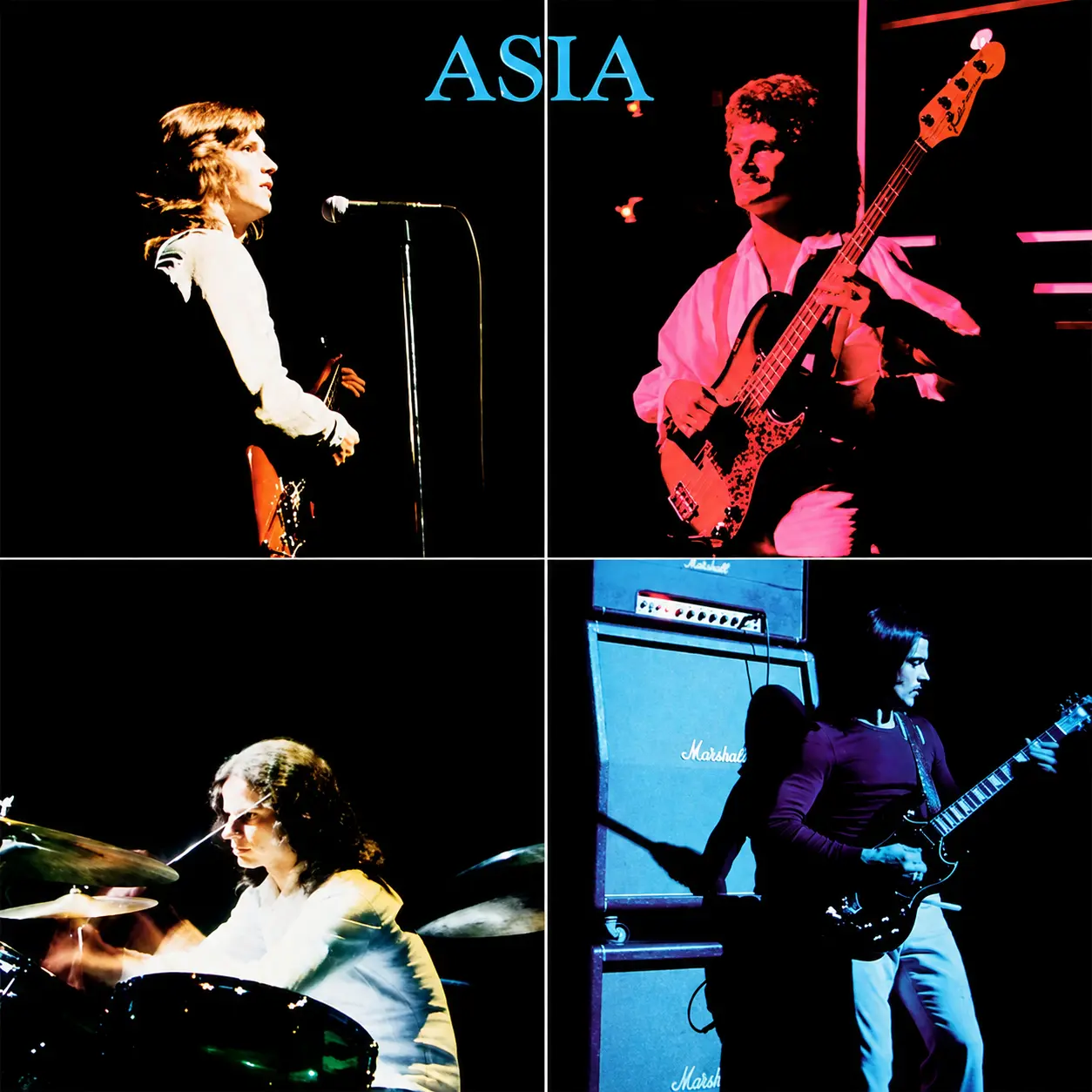 Asia released their self-titled debut album in 1979 on ASI.
Coates wrote all six pieces and adapted several compositions from the unrealized second White Wing project for the new quartet. English and Galbraith divide the lead-vocal assignments across the album.
“Love May Be Gone” drives through twin guitar lines and dual lead singing before breaking into an instrumental bridge. “A Better Man for Leavin’” gathers from blues-based passages into increasingly vigorous guitar exchanges over a propulsive bass line. “The Taming of the Bull” sprawls through complex middle-section workouts, extended soloing and dense Mellotron strings.
“The Road of Kings” eases into lighter passages with harpsichord, mandolin and measured guitar solos. “Law of the Land” surges through blues-based riffing and a harder guitar performance. “Requiem” charges through energetic passages with broad choruses, sharp solos and intricate guitar turns.
A1. “Love May Be Gone (Including Son of Vivace)” (6:37)
A2. “A Better Man for Leavin’” (6:04)
A3. “The Taming of the Bull” (9:18)
B1. “The Road of Kings” (5:22)
B2. “Law of the Land” (5:19)
B3. “Requiem (Including A.M. Radio Blues & Carnal Catacombs)” (8:44)
Sessions occurred in two early-1978 blocks at ASI Studios in Minneapolis. Dan Holmes produced “A Better Man for Leavin’” and “The Road of Kings” on the first dates; Dick Hedlund then co-produced the completed album with Asia and shared engineering with ASI chief engineer John Calder. Hedlund also produced the 1979 ASI album Johnny Holm & the Traveling Fun Show.
Rapid City agency Lyon Advertising, Inc. designed Asia around stage photographs supplied by the band. South Dakota photographer Chad Coppess provided inner-sleeve images; the front sets four performance photographs in a square grid beneath the cyan Asia logotype.
ASI lifted an edit of “The Road of Kings” as a 1979 single (b/w “A Better Man for Leavin’”). Between albums, drummer Doug Johnson stepped in for Haynes, who left to manage family obligations.
Armed to the Teeth
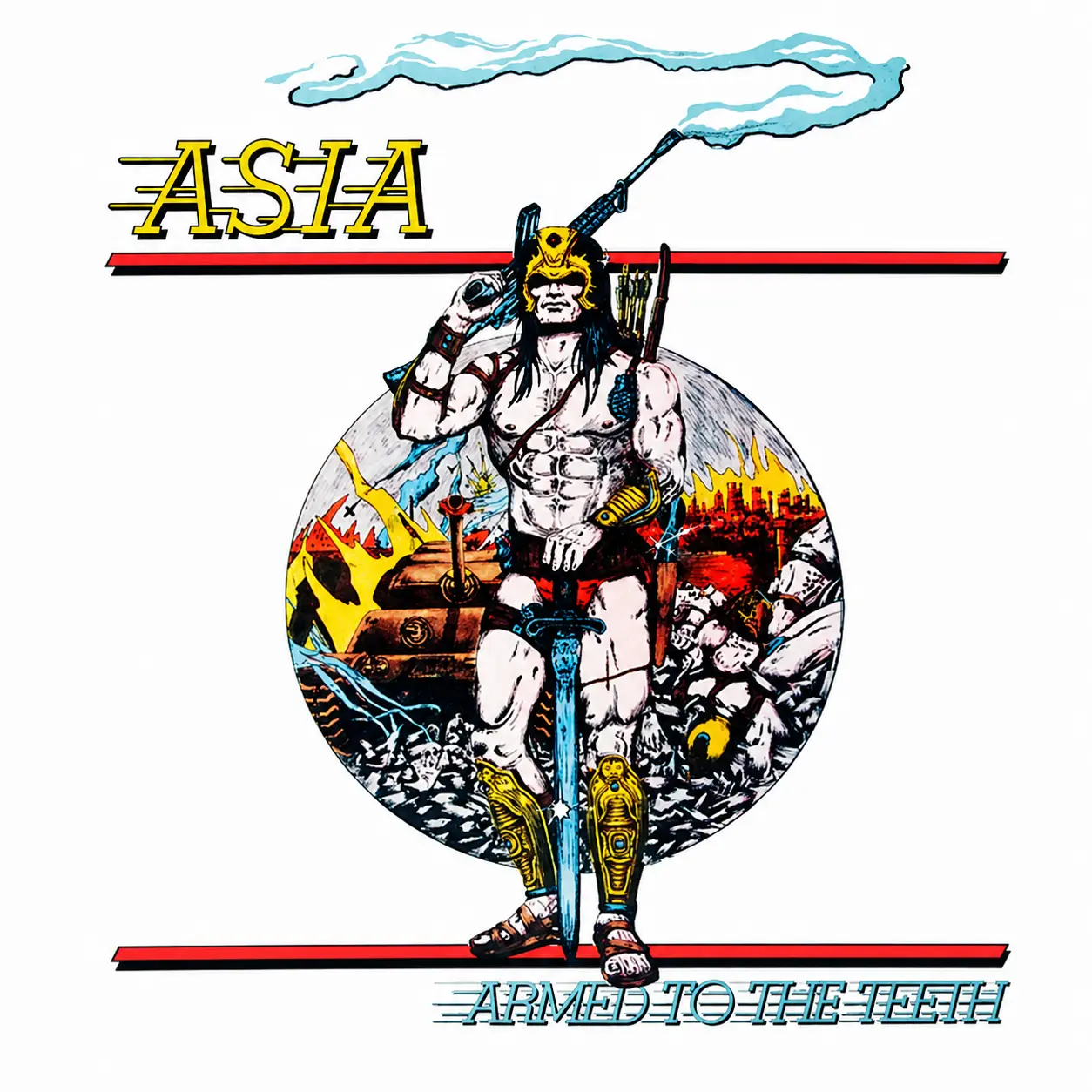 Asia released their second album, Armed to the Teeth, in 1980 on ASI.
Coates again supplied every composition, while the Genghis Khan Singers add choir to “Genghis Khan.”
“Thunder Rider” gallops from a bass-led opening into progressively heavier passages and prominent lead-guitar work. “Xanadu” lingers through melancholy passages under close dual harmonies. “Kamikaze” charges through aggressive sections while retaining sharply contoured melodic lines.
“Paladin” swells through pomp-scaled passages into a broad chorus beneath close harmonies. “Genghis Khan” sprawls through bombastic, multi-part sections with demanding ensemble work and extended soloing. “The Bard” settles into plaintive, country-tinged balladry with flute and cello.
A1. “Thunder Rider” (5:37)
A2. “Xanadu” (7:07)
A3. “Kamikaze” (6:29)
B1. “Paladin” (4:09)
B2. “Genghis Khan” (7:13)
B3. “The Bard” (5:57)
Sessions occurred in February, April, and June 1980 at ASI Studios, where Calder co-produced the album with Asia and served as engineer. His recent Minneapolis credits included co-production, engineering, and mixing on Circus Maxx (3 Ring Circus), another ASI Studios project.
Bill Fleming designed Armed to the Teeth for Lyon Advertising around a mechanical-pencil illustration by Mike Coates, with photography by manager Mike Chambers. Lyon prepared the illustration overlays; the front centers an armored warrior against a circular battle montage with period weapons and a burning London scene.
Through the Asia imprint, the band issued an edit of “Paladin” as a 1979 single (b/w an edit of “Thunder Rider”). Midwestern stations added “Paladin” before the British group’s use of the same name disrupted the campaign.
Collector Michael Piper paired both albums on the 1995 Wild Places CD Armed to the Teeth / Asia after commissioning a DAT transfer from vinyl because the master tapes could not be found. Coates processed the transfer through Sonic Solutions at Precision Tapes in Minneapolis and remastered the set at Moorhead State University. Blood and Iron Records restored the coupling in 2015 through the Progaor series. Cult Rock Classics returned each title to vinyl in 2021 with illustrated four-page inserts.
Solomon Kane and Later Activity
Galbraith left Asia after the delayed release campaign for Armed to the Teeth. The band recruited singer Deb Marquart from Fargo, N.D., who also played keyboards. Coates then prepared material for a third Asia album, including “Die by the Sword,” “Gypsy Queen,” “The Assassin,” and “God Save Rock and Roll.”
In 1981, the British supergroup Asia formed from the breakup of three major symphonic-rock bands. Asia paired U.K. bassist John Wetton (ex-King Crimson) with ELP drummer Carl Palmer and two recent Yes member: guitarist Steve Howe and keyboardist Geoff Downes (an on-off Buggle).
News of the British Asia reached Midwestern radio while “Paladin” remained in coordinated airplay, and several stations dropped the South Dakota single. The South Dakota band filed for federal trademark protection and sent both albums to British Asia manager Brian Lane, a former Yes manager, with an offer of $100,000 for the name or a place on the forthcoming world tour.
Lane claimed that an investigation had uncovered seven bands called Asia and that his organization had acquired the name from a Louisiana group. According to guitarist Mike Coates, Lane attorney Elliot Hoffman supplied purported registration numbers for the Louisiana claim. Lane then offered the South Dakota band $5,000 for the name and promised to accompany manager Mike Chambers and Coates to meetings with four major labels within a year. Lane traveled to Rapid City, watched Asia at The Barbarian, and discussed Geffen and Atlantic as prospective labels.
Chambers and Coates subsequently made more than forty-five unsuccessful attempts to arrange the promised meetings. Their federal application then returned with exclusive registration of the Asia name, contradicting the Louisiana claim presented by Lane. Coates characterized that claim as a scam, and the South Dakota band declared the settlement void and pursued a fraud action against Lane and the British group.
Coates, English, Johnson, and Marquart continued as Solomon Kane while Chambers pursued the Asia dispute. The quartet toured for just over a year, with support dates for Joan Jett, Molly Hatchet, and Rail, and directed much of its income toward mounting legal expenses. They folded in early 1983 with the departures of English and Johnson.
Coates moved to Moorhead, Minn., and later revived material intended for a third Asia album at the Moorhead State University eight-track studio. Deb Marquart sang all parts, while Coates played every instrument on sessions recorded between 1986 and 1991. Coates regarded most of the material as the unrealized Asia III. PROGAOR issued the recordings in 2020 as the Solomon Kane archival release Die by the Sword 1986/1991, which paired five Coates originals with an arrangement of Liszt’s “Hungarian Rhapsody No. 2” and “A Tribute to Clapton.”
In April 2019, the South Dakota Rock and Roll Music Association inducted Asia into the state hall of fame.
Discography:
- Asia (1979)
- Armed to the Teeth (1980)
Sources:
Artist/Album Pages:
Paul Davis (April 21, 1948 — April 22, 2008) was an American keyboardist, singer, and songwriter f...
Hermeto Pascoal (June 22, 1936 – September 13, 2025) was a Brazilian composer, multi-instrumentali...
Spandau Ballet was an English sophisti-pop/soul band that was initially active during the 1980s. The...
Honeyelk was a French Zeuhl band that released the album Stoyz vi Dozévéloy on Oxygène in 1979. ...
The Real Thing was an English soul-funk quartet from Liverpool that released seven singles between 1...
Poison was an American soul-funk band from Richmond, Virginia, that released the album On Our Way ...
Celeste is a Brazilian samba-jazz/pop singer who made the 1978 Tapecar album Cinco e Triste da Man...
Granicus was an American hard-rock band from Cleveland that released a 1973 self-titled album on R...
Kormorán are a Hungarian folk-rock band that formed in Budapest in 1976 under woodwind player Gerg...
Compost was an American jazz-rock band from N.Y.C. that released the 1971–73 albums Take Off Your ...
5 Hand Reel was an English/Scottish folk-rock band that released three albums between 1976 and 197...
Haircut One Hundred was an English new wave band that charted with the 1982 Arista album Pelican W...