

Green on Red was an American rock band that released two 1981–82 small-press EPs and the 1983 Slash album Gravity Talks. They expanded with guitarist Chuck Prophet for the 1985 Enigma release Gas Food Lodging and the Mercury titles No Free Lunch and The Killer Inside Me. Prophet and singer Dan Stuart retained the name for four further albums through Too Much Fun.
Members: Dan Stuart (lead vocals, guitar), Jack Waterson (bass, vocals, 1979-87, 2005-06), Van Christian (drums, 1979-81), Sean Nagore (organ, 1979), Chris Cacavas (organ, keyboards, piano, guitar, vocals, 1979-87, 2005-06), Alex MacNicol (drums, percussion, 1981-85), Chuck Prophet (guitar, vocals, lap steel, piano, 1985-92, 2005-06), Keith Mitchell (drums, percussion, 1985-87)
Background
Green on Red began as The Serfers, a Tucson group formed in 1979 by guitarist–singer Dan Stuart, bassist–singer Jack Waterson, and drummer Van Christian. Organist Sean Nagore joined the first quartet, followed by Chris Cacavas, who entered from the local group The Pills.
They relocated in 1981 to Los Angeles, where Christian jumped ship to Naked Prey. Drummer Alex MacNicol joined the newly renamed Green on Red, which recorded its first two EPs.
Two Bibles
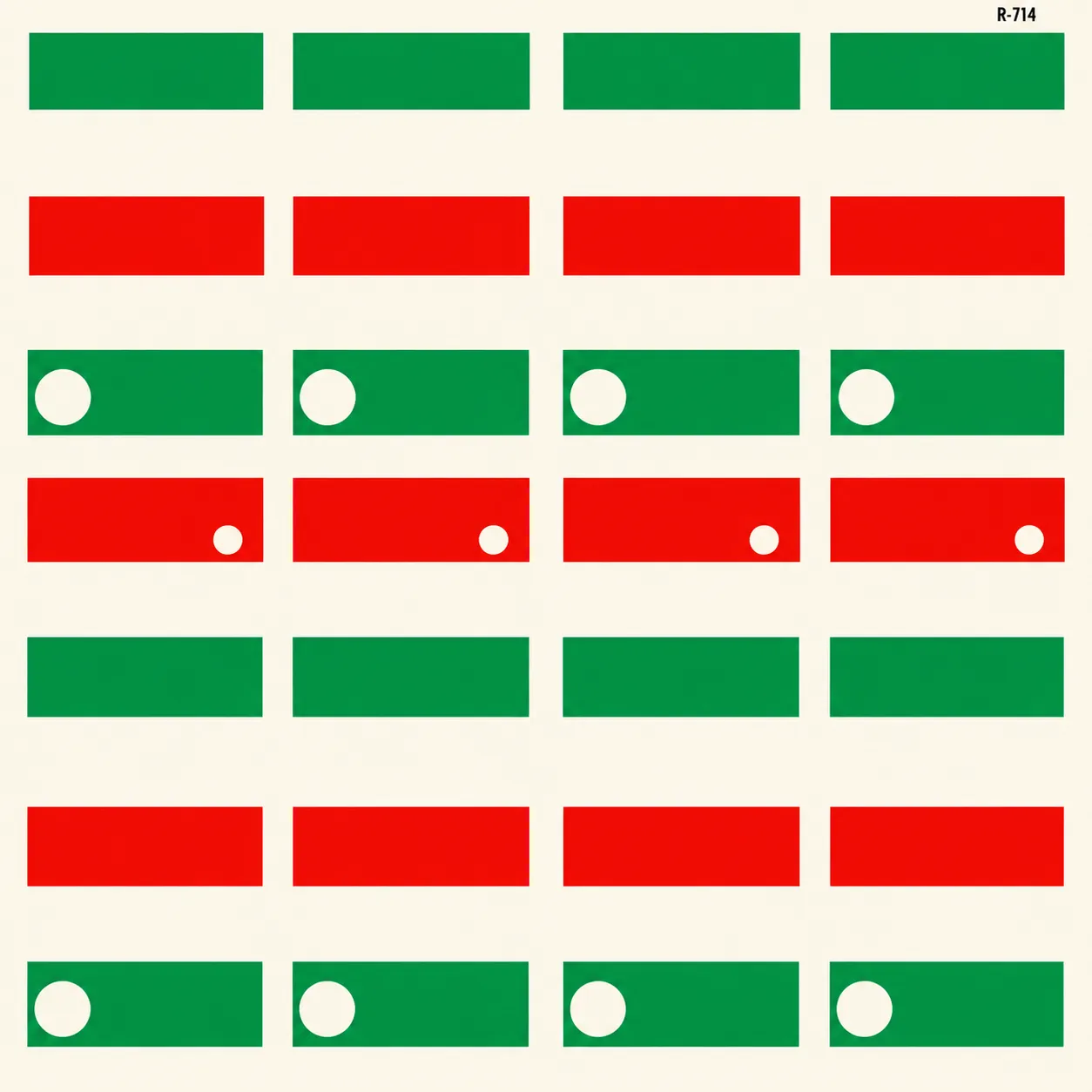 Green on Red self-released their five-song debut EP, commonly titled Two Bibles, in 1981 on Green on Red Records.
Stuart, Cacavas, Waterson, and MacNicol made the record as the first Los Angeles lineup. Green on Red pressed the EP on red vinyl and distributed 500 copies through local shops and mail order. “La Vida Muerta” hangs on a spare keyboard figure amid crude recording grain.
A1. “Two Bibles” (3:23)
A2. “La Vida Muerta” (3:51)
B1. “New World” (2:36)
B2. “Not Today” (3:03)
B3. “A Tragedy” (4:08)
The quartet cut the EP on borrowed equipment at Doug Moody’s former studio on Vine Street in Los Angeles, using the self-financed sessions to prepare the limited pressing.
Waterson found the front image in refuse behind a print shop. The handmade package carried no formal title, and the image of two Bibles supplied the name used by collectors and later digital editions.
Green on Red printed 500 copies. Airplay at a Cleveland college station took the EP to the top position on that station’s local survey.
Green on Red
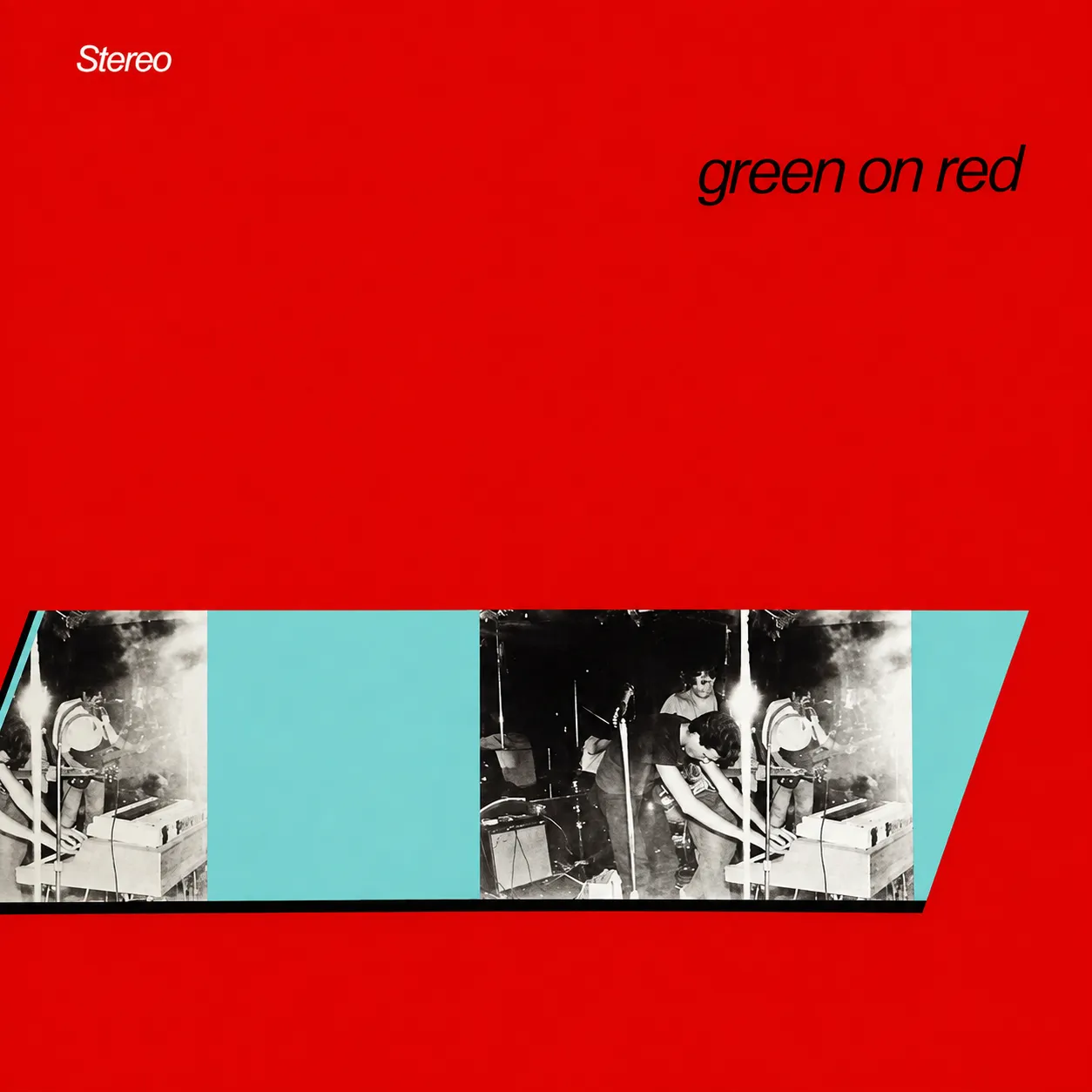 Green on Red released their second EP, Green on Red, in 1982 on Down There Records.
Stuart wrote five selections, while Cacavas supplied “Illustrated Crawling” and “Apartment 6.” Waterson and MacNicol completed the four-piece lineup.
“Death and Angels” races through buzzing organ and group replies beneath Stuart’s abrasive lead. “Hair and Skin” drifts through spoken declamation and a slower, filmic haze. “Black Night” stalks toward a locked ending with closed-in nocturnal menace. “Illustrated Crawling” rattles through acidic stabs and Stuart’s yelped closing declaration. “Aspirin” romps through a raw, fast figure. “Lost World” settles into measured, hallucinatory haze. “Apartment 6” churns through motoric repetition and closed-room tension.
A1. “Death and Angels” (2:14) – Stuart
A2. “Hair and Skin” (3:23) – Stuart
A3. “Black Night” (2:32) – Stuart
A4. “Illustrated Crawling” (3:38) – Cacavas
B1. “Aspirin” (3:27) – Stuart
B2. “Lost World” (3:53) – Stuart
B3. “Apartment 6” (2:54) – Cacavas
Green on Red recorded the EP in May 1982 at Program Studios in Hollywood with engineer Jeff Cranford. Dream Syndicate singer–guitarist Steve Wynn issued the record through his Down There label after establishing the imprint for Los Angeles independent releases.
Restless paired the EP with Gas Food Lodging on a nineteen-track CD in 2003 as a combined edition. Music on CD later restored the same pairing.
Gravity Talks
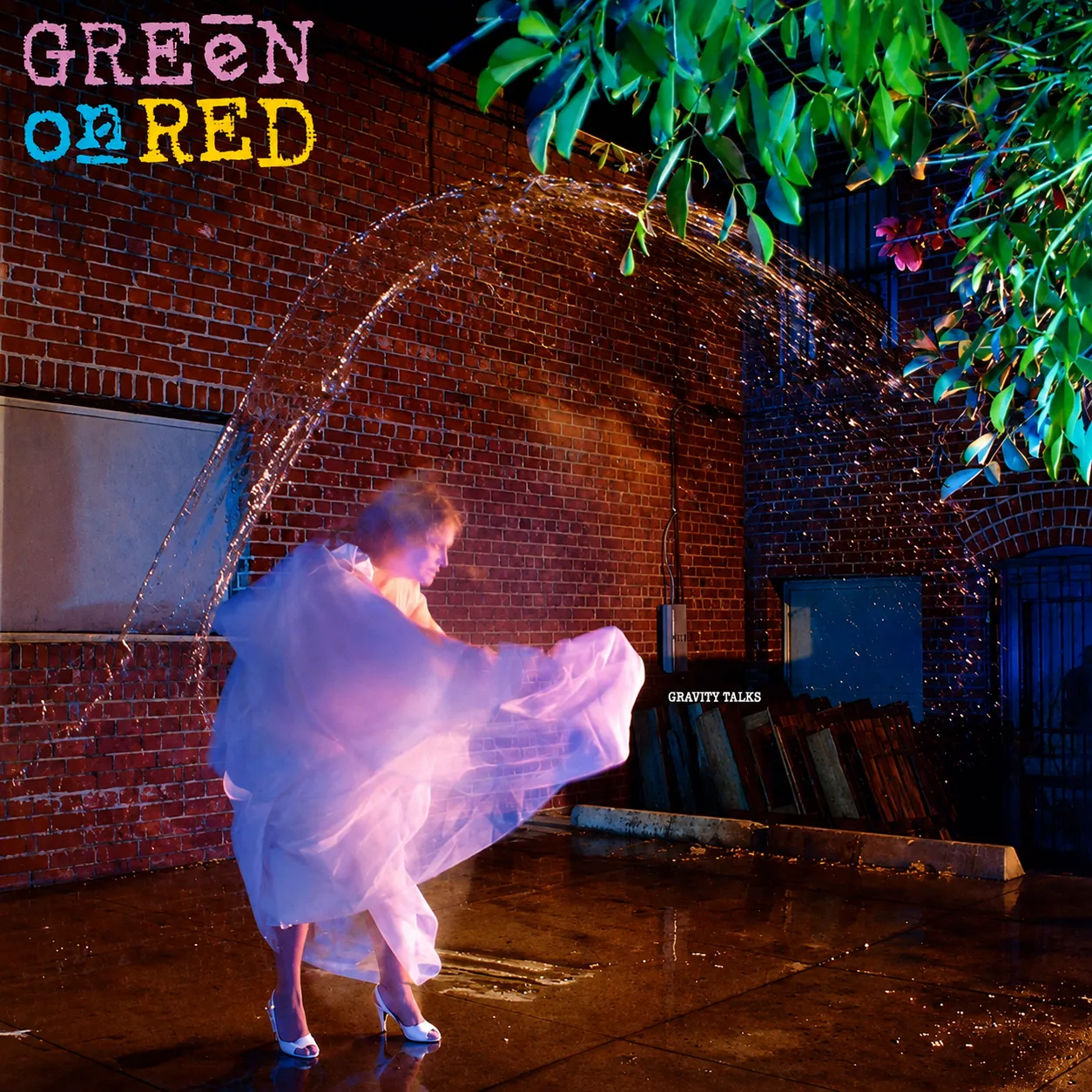 Green on Red released their debut album, Gravity Talks, in July 1983 on Slash Records.
The album retains Stuart, Cacavas, Waterson, and MacNicol. Dream Syndicate guitarist Steve Wynn and Rain Parade guitarist Matt Piucci appear on selected tracks. Stuart supplied most titles, while Cacavas wrote or co-wrote the title cut, “5 Easy Pieces,” and “That’s What You’re Here For.”
“Gravity Talks” romps through bright organ and a reeling lead before a brief solo break. “Old Chief” saunters through campfire simplicity and soft piano tolls. “5 Easy Pieces” rattles through brisk momentum and a heated lead that eases into a looser finish. “Deliverance” grinds through reedy lines and a prolonged distorted-guitar passage. “Snake Bit” stomps through a dark, repetitive beat and murky delivery.
“Blue Parade” drifts through haunting phrases beneath Stuart’s restrained account of death and loss. “Cheap Wine” swells into a reedy hymn with sustained lines held near distortion. “Narcolepsy” tears through fast, chiming flight before a spectral finish.
A1. “Gravity Talks” (2:37)
A2. “Old Chief” (3:30)
A3. “5 Easy Pieces” (2:23)
A4. “Deliverance” (5:46)
A5. “Over My Head” (3:06)
A6. “Snake Bit” (4:29)
B1. “Blue Parade” (4:31)
B2. “That’s What You’re Here For” (2:11)
B3. “Brave Generation” (4:16)
B4. “Abigail’s Ghost” (2:41)
B5. “Cheap Wine” (4:10)
B6. “Narcolepsy” (5:37)
Sessions occurred in July 1983 at Quad Teck Studios in Los Angeles with producer Chris D. and engineer Pat Burnett. Chris D., born Chris Desjardins, fronted the Flesh Eaters and served as a Slash staff producer following work on the Gun Club album Fire of Love and the Dream Syndicate debut The Days of Wine and Roses.
Art director Jeff Price designed the sleeve around photography by Jack O’Neil. The front places the band name and album title above a blurred monochrome portrait.
Australian label Big Time issued “Gravity Talks” in March 1984 (b/w “Narcolepsy”). Wounded Bird reissued the album in 2003 on compact disc. Music on CD followed in 2023 with the non-LP recording “Alice.”
Gas Food Lodging
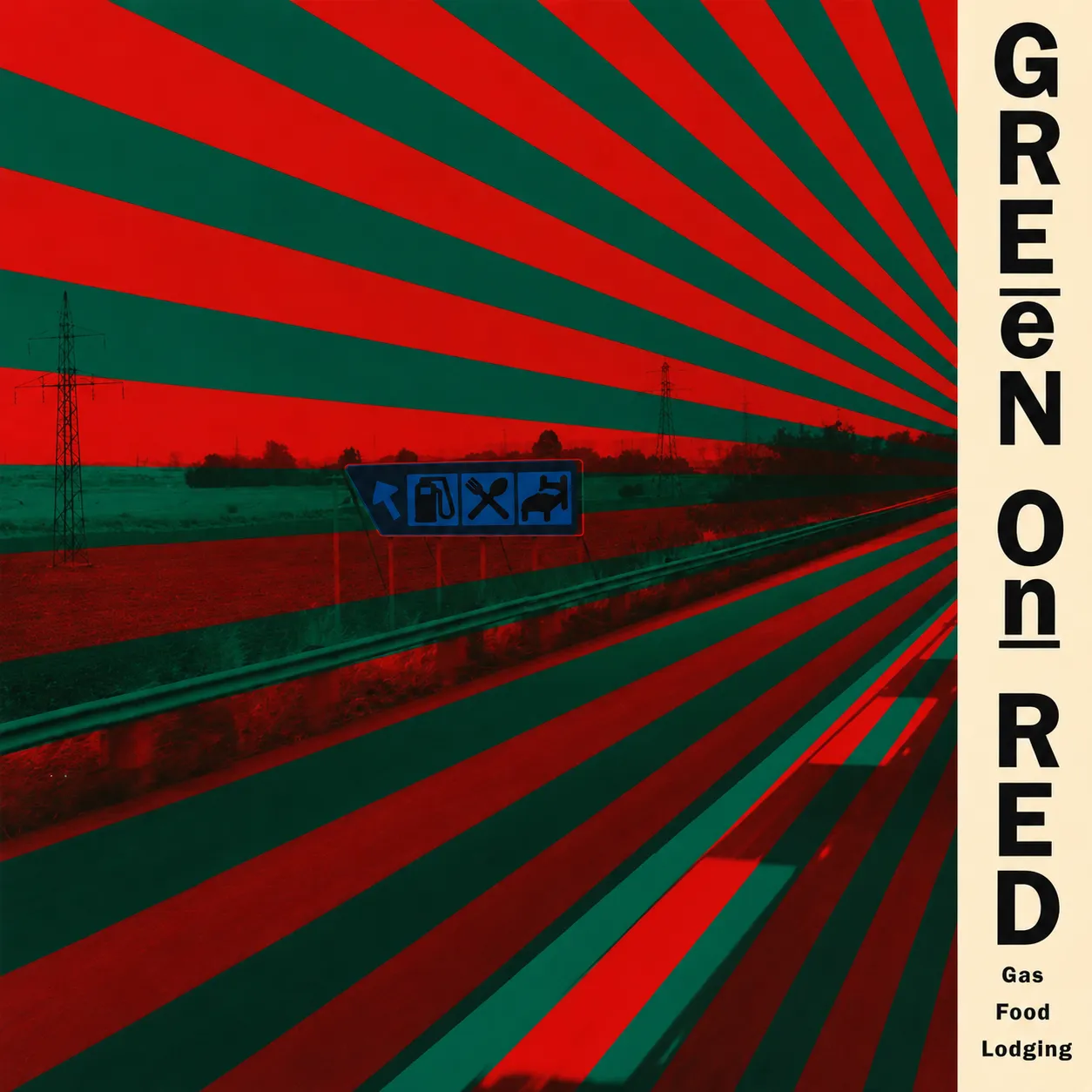 Green on Red released their second album, Gas Food Lodging, in May 1985 on Enigma Records.
Chuck Prophet joined Stuart, Cacavas, Waterson, and MacNicol as second guitarist. The group credited nine originals collectively and closed the album with “We Shall Overcome,” attributed on the sleeve to Frank Hamilton, Pete Seeger, and Zilphia Horton.
“That’s What Dreams Are For” lopes from a plainspoken guitar entrance into a loose, road-worn ensemble. “Black River” drifts through mournful lines, weathered harmonica, and saloon-room languor. “Hair of the Dog” stomps through squalling leads and ragged barroom din. “Sixteen Ways” tramps through reedy organ and blunt, recurring riffs. “The Drifter” roams on a strange recurring figure beneath Stuart’s world-weary delivery. “We Shall Overcome” swells through communal hymn lines and a full gospel treatment.
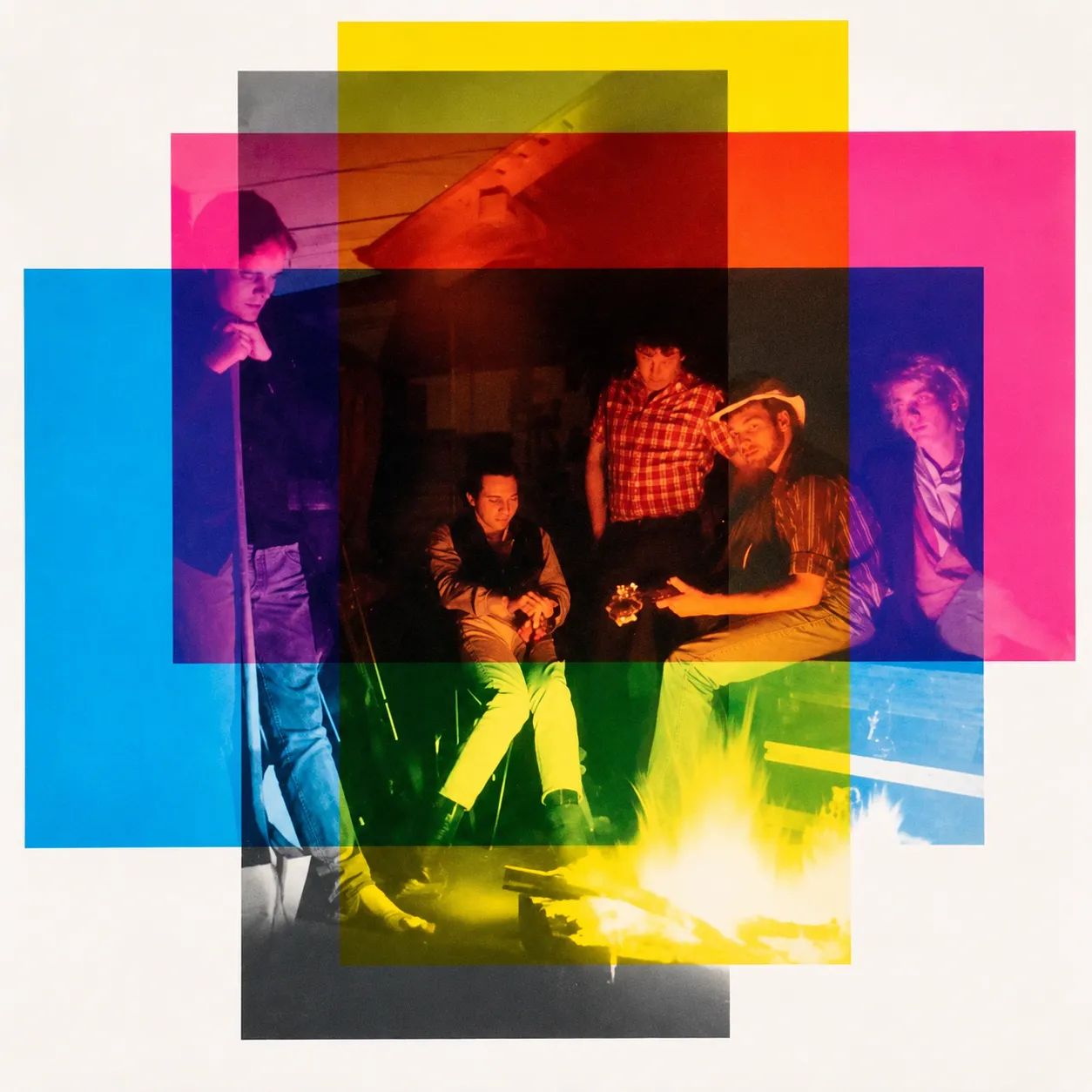 A1. “That’s What Dreams Are For” (4:22)
A2. “Black River” (2:43)
A3. “Hair of the Dog” (2:31)
A4. “This I Know” (2:30)
A5. “Fading Away” (4:35)
B1. “Easy Way Out” (3:05)
B2. “Sixteen Ways” (3:43)
B3. “The Drifter” (2:32)
B4. “Sea of Cortez” (3:51)
B5. “We Shall Overcome” (2:27) – Hamilton, Seeger, Horton
Green on Red recorded the album in December 1984 at Eldorado Recording Studios in Hollywood with producer Paul B. Cutler and engineers Carolyn Collins and Cutler. The producer also played guitar in 45 Grave and worked on the group’s 1983 album Sleep in Safety.
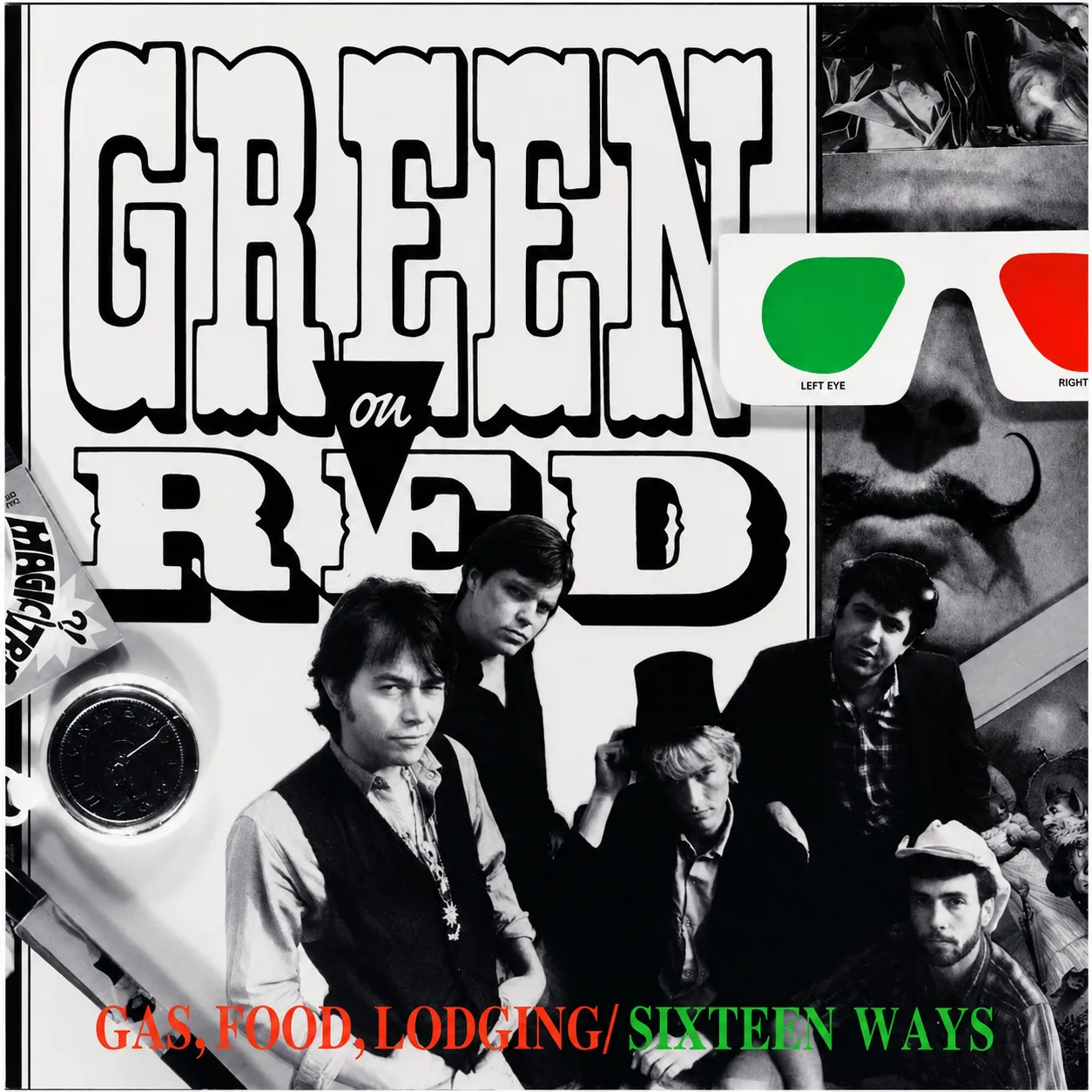
A.B.T.P. designed the package, while Craig Takahashi supplied the group photograph. The front presents a roadside sign with the three title words stacked above the band name.
 Spanish label Victoria paired “Black River” with Rain Parade’s “You Are My Friend” on a split single in 1985 for the domestic market. Spanish Enigma issued “Black River” in 1985 on a split single with Rain Parade’s “You Are My Friend.”
Dutch label Torso also paired the non-LP title track “Gas Food Lodging” with “The Drifter” that year. Green on Red originally recorded “Gas Food Lodging” for the album but withheld the track after producer Paul B. Cutler rejected the mix. The band and Cutler subsequently reworked the recording, and Restless issued the revised version on a US 10-inch single (b/w “This I Know”).
Restless paired Gas Food Lodging with the 1982 Green on Red EP on CD in 2003 and added “Gas Food Lodging” and the alternate “Sixteen Ways II” as bonus tracks.
Danny & Dusty
Stuart and Dream Syndicate singer Steve Wynn organized Danny & Dusty between Green on Red albums. Cacavas and MacNicol joined players from the Dream Syndicate and the Long Ryders for the 1985 A&M release The Lost Weekend.
No Free Lunch
 Green on Red released the seven-song EP No Free Lunch in October 1985 on Mercury.
The five-piece lineup from Gas Food Lodging remained intact. Six group originals surround Willie Nelson’s “(Gee Ain’t It Funny How) Time Slips Away.”
“Time Ain’t Nothing” rolls through crisp production and plainspoken remembrance. “Honest Man” settles into down-home simplicity and worn restraint. “Ballad of Guy Fawkes” stomps through fierce declamation toward Prophet’s extended guitar break. “No Free Lunch” romps through a western barroom figure and comic self-account. “Jimmy Boy” broods beneath anguished lines before a squalling instrumental break. “Keep on Moving” hurtles from opening strums into a feverish piano-led finish.
A1. “Time Ain’t Nothing” (3:15)
A2. “Honest Man” (2:08)
A3. “Ballad of Guy Fawkes” (3:54)
A4. “No Free Lunch” (3:13)
B1. “(Gee Ain’t It Funny How) Time Slips Away” (3:12) – Nelson
B2. “Jimmy Boy” (4:11)
B3. “Keep on Moving” (4:11)
Sessions occurred in July 1985 at the Wool Hall in Beckington and Hot Nights Studios in London. Stuart produced the EP with engineers Stephen Street and Simon Humphries, who also mixed the recordings. Street came from engineering the Smiths album Meat Is Murder.
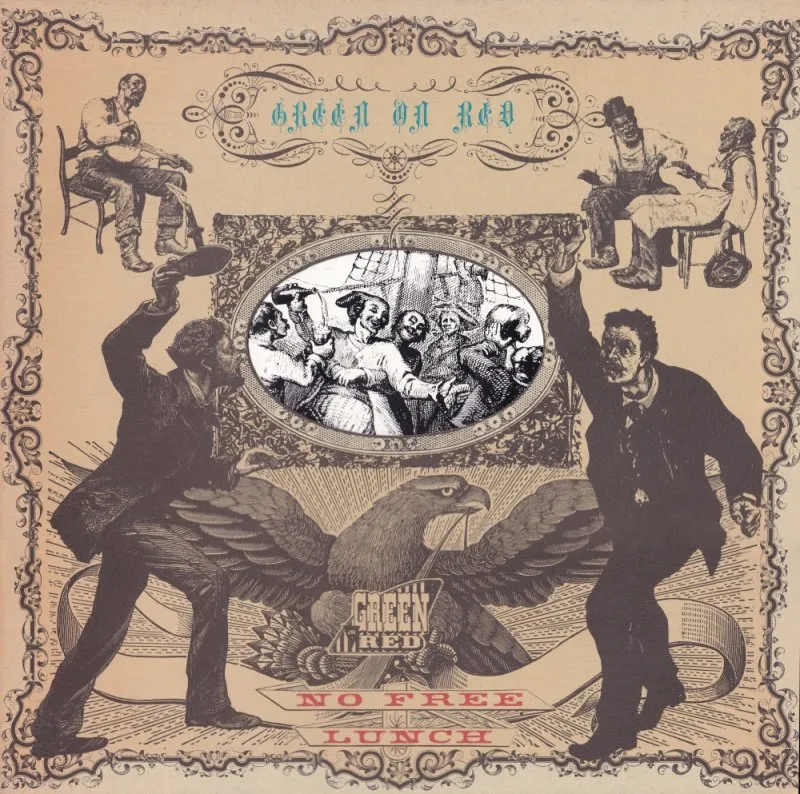
P. St. John Nettleton designed the oval die-cut sleeve, which exposes part of the printed inner bag. Donato Cinicolo III photographed the group for the package.
Mercury issued “Time Ain’t Nothing” in November 1985 (b/w “No Free Lunch”) on seven- and twelve-inch formats. No Free Lunch reached No. 99 on the UK Albums Chart. One Way added the long cassette track “Smokestack Lightning” to a 1994 CD, and Acadia retained the bonus recording on a 2003 edition.
The Killer Inside Me
 Green on Red released their third album, The Killer Inside Me, in March 1987 on Mercury.
Keith Mitchell replaced MacNicol on drums beside Stuart, Cacavas, Waterson, and Prophet. The four established members share credit on all eleven songs, while a backing group billed as the Brown Brothers and White Sisters appears on selected tracks.
“Clarkesville” rolls through a blunt riff, group responses, and repeated closing declarations. “Mighty Gun” trudges through a bitter western lament with Stuart’s strained delivery. “Jamie” lingers in a bruised, bitter lament. “No Man’s Land” broods through impending menace before Prophet’s fevered solo. “We Ain’t Free” swells through gospel replies beneath a jaded, fragile lead. “Killer Inside Me” drifts from brooding lines into a receding guitar spiral.
A1. “Clarkesville” (4:13)
A2. “Mighty Gun” (4:20)
A3. “Jamie” (3:36)
A4. “Whispering Wind” (1:59)
A5. “Ghost Hand” (2:48)
A6. “Sorry, Naomi” (4:25)
B1. “No Man’s Land” (4:50)
B2. “Track You Down (His Master’s Voice)” (3:22)
B3. “Born to Fight” (3:41)
B4. “We Ain’t Free” (3:22)
B5. “Killer Inside Me” (5:43)
Green on Red recorded the album at Eldorado Recording Studios in Burbank and Ardent Studios in Memphis with producer Jim Dickinson and engineers Joe Hardy and Mark Ettel. Memphis pianist and producer Dickinson also oversaw the Replacements album Pleased to Meet Me, recorded at Ardent across the same period.
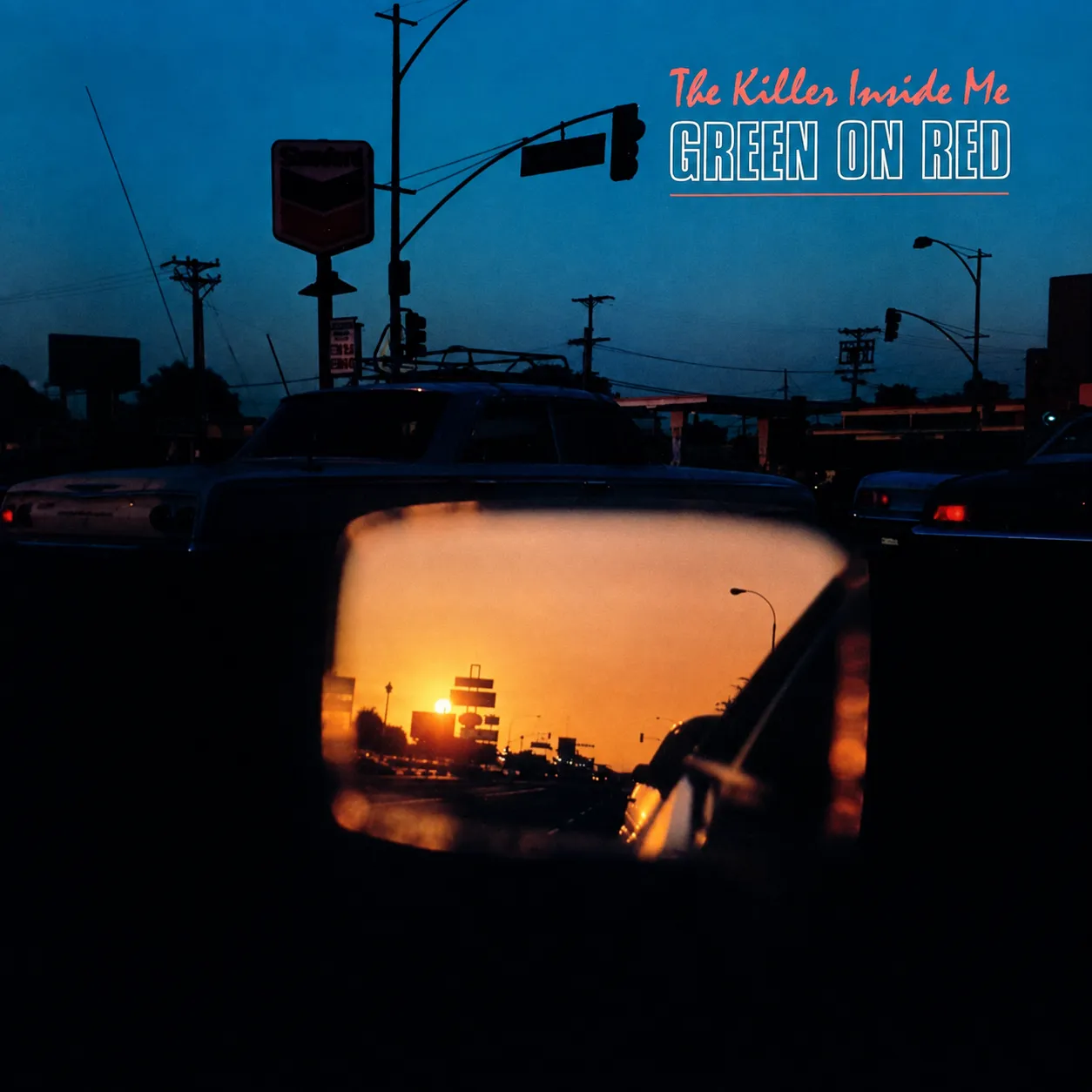
Ian Dawson supplied the front photography. The cover places a close-cropped monochrome face above a red field with black title lettering.
Mercury issued “Clarkesville” in Spain in 1987 (b/w “No Drinkin’”).
Lineup Split
Green on Red dissolved as a working five-piece following the Mercury album and a troubled European tour. Cacavas, Waterson, and Mitchell departed, leaving Stuart and Prophet to resume the name with session players.
Here Come the Snakes
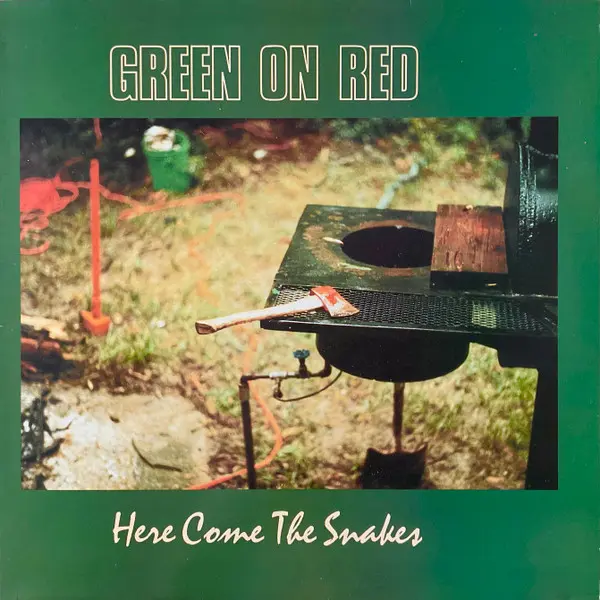 Green on Red released their fourth album, Here Come the Snakes, in Europe in 1988 through China Records. Restless followed with the US edition in April 1989 under a separate catalog sequence.
Stuart and Prophet wrote nine songs and covered “We Had It All,” composed by Donnie Fritts and Troy Seals. Bassist René Coman, drummer Jim Dickinson, pianist Paul Ebersold, and harmonica player Ed Kollis supplied the principal support.
“Keith Can’t Read” romps through concentrated riffs and a dry barroom sneer. “Rock ’n’ Roll Disease” stomps through dirty riffing and a hoarse closing shout. “Morning Blue” saunters through a gentler acoustic setting and world-weary delivery. “Zombie for Love” slinks through a low-slung repeating figure and comic lechery. “Broken Radio” drifts through plaintive lines and worn-down resignation. “We Had It All” lingers over a brief, serious love lament. “D.T. Blues” drags through slow, fuzzy guitar haze and drugged resignation.
A1. “Keith Can’t Read” (3:24)
A2. “Rock ’n’ Roll Disease” (3:10)
A3. “Morning Blue” (4:01)
A4. “Zombie for Love” (3:54)
A5. “Broken Radio” (3:53)
B1. “Change” (5:03)
B2. “Tenderloin” (5:06)
B3. “Way Back Home” (2:31)
B4. “We Had It All” (3:33) – Fritts, Seals
B5. “D.T. Blues” (2:52)
Stuart and Prophet recorded the album at Sam C. Phillips Recording Studio in Memphis with producers Jim Dickinson and Joe Hardy, who also engineered the sessions following work at Ardent on Pleased to Meet Me and Steve Earle’s Copperhead Road.
Peter Black Design assembled the package around front photography by William Eggleston and a rear image by Tom Sheehan. Eggleston’s 1984 photograph shows an axe resting on a barbecue grill near Greenville, Mississippi.
China lifted “Keith Can’t Read” in 1989 (b/w “That’s the Way the World Goes Round”); the twelve-inch added “Tenderloin” and “Vaya Con Dios.” The label also issued Live at the Town & Country Club in August on China Records. Innerstate and Belle expanded Here Come the Snakes in 2005 with demos and outtakes.
This Time Around
Green on Red released their fifth album, This Time Around, in October 1989 on China Records and Polydor.
Stuart and Prophet worked with drummer David Kemper and keyboardist Mike Finnigan across the ten-song set. Bernie Leadon and Spooner Oldham appear on selected tracks. Glyn Johns joined the principal pair on “Cool Million,” while Dewey Oldham shares credit on “Pills and Booze.”
“This Time Around” rolls through a dry riff and brusque delivery. “Cool Million” romps through bright phrases and dry guitar accents. “Rev. Luther” stomps through dirty riffing and Prophet’s loose solo turn. “Good Patient Woman” lingers through a slow, tender lament. “You Couldn’t Get Arrested” crawls through a drawn-out, weary progression. “The Quarter” rambles through dry electric phrases and a sardonic lead. “Foot” tramps through a dirty recurring figure and ragged soloing.
A1. “This Time Around” (3:41)
A2. “Cool Million” (3:47) – Stuart, Prophet, Johns
A3. “Rev. Luther” (4:09)
A4. “Good Patient Woman” (4:21)
A5. “You Couldn’t Get Arrested” (5:50)
B1. “The Quarter” (4:21)
B2. “Foot” (4:09)
B3. “Hold the Line” (3:56)
B4. “Pills and Booze” (3:15) – Stuart, Prophet, D. Oldham
B5. “We’re All Waiting” (3:47)
English producer-engineer Glyn Johns produced the album at Ocean Way Recording in Hollywood with engineer Jack Puig. The sessions followed Johns’s work on John Hiatt’s Slow Turning and coincided with his production of Nanci Griffith’s Storms.
China Records paired This Time Around with Too Much Fun on a 2001 CD.
Scapegoats
Green on Red released their sixth album, Scapegoats, in March 1991 on China Records.
Stuart and Prophet recorded in Nashville with producer-keyboardist Al Kooper. Bassist Michael Rhodes and drummer Daren Hess support the principal sessions, while Spooner Oldham and Tony Joe White contribute selected parts.
“A Guy Like Me” rolls from a warm Hammond figure into loose ensemble sway. “Little Things in Life” bounces through a light acoustic figure beneath sly, plaintive delivery. “Two Lovers (Waitin’ to Die)” drifts through nocturnal harmonica and hushed lines. “Gold in the Graveyard” stomps through slashing leads and fatalistic lines.
“Hector’s Out” lingers on hushed phrases beneath a broad, battered backing. “Sun Goes Down” broods beneath a spare strum and dark delivery. “Blowfly” rattles through a forceful brass chart. “Baby Loves Her Gun” swells around broad, bruised lines beneath an outsized backing.
A1. “A Guy Like Me” (2:54)
A2. “Little Things in Life” (3:41)
A3. “Two Lovers (Waitin’ to Die)” (3:51)
A4. “Gold in the Graveyard” (3:51)
A5. “Hector’s Out” (5:09)
B1. “Shed a Tear (For the Lonesome)” (3:07)
B2. “Blowfly” (3:02)
B3. “Sun Goes Down” (4:22)
B4. “Where the Rooster Crows” (3:27)
B5. “Baby Loves Her Gun” (3:45)
Kooper produced and mixed the Nashville recordings while contributing keyboards and backing vocals. His adjacent work included organ on Bob Dylan’s Under the Red Sky and production for Webb Wilder’s Doo Dad.
China lifted the edited “Little Things in Life” as a 1991 single (b/w “Cherry Kind”). The glossy picture sleeve included an illustrated lyric inner bag. China Records paired Scapegoats with Here Come the Snakes on a 2001 CD.
Too Much Fun
Green on Red released their seventh album, Too Much Fun, in September 1992 on China Records.
Stuart and Prophet wrote ten songs with support from bassist–keyboardist J.D. Foster, drummer Tom Larkins, keyboardist Chris Holland, and multi-instrumentalist Craig Schumacher. Spooner Oldham supplied “Sweetest Thing,” while Paul Williams and Roger Nichols wrote “Rainy Days and Mondays.”
“She’s All Mine” prowls through a lean, wiry riff and blunt delivery. “Frozen in My Headlights” drags through worn roadside lines. “Love Is Insane” rattles from a lean figure into rougher riffing. “Too Much Fun” lingers through subdued lines beneath a funereal hush. “The Getaway” lopes on a dry midtempo riff through highway dust. “Thing or Two” rolls through rough, loose riffing.
A1. “She’s All Mine” (3:46)
A2. “Frozen in My Headlights” (3:14)
A3. “Love Is Insane” (3:57)
A4. “Too Much Fun” (3:23)
A5. “The Getaway” (4:44)
A6. “I Owe You One” (4:46)
B1. “Man Needs Woman” (2:45)
B2. “Sweetest Thing” (2:33) – Oldham
B3. “Thing or Two” (4:01)
B4. “Hands and Knees” (3:10)
B5. “Wait and See” (4:35)
B6. “Rainy Days and Mondays” (3:03) – Williams, Nichols
Stuart and Prophet produced under the Gruesome Twosome tag with co-producer J.D. Foster. Randy McReynolds recorded the album at 7N7 Studio in Tucson, and Mark Ettel mixed the sessions at Alpha Studios in Burbank. Foster also co-produced the concurrent Silos album Hasta la Victoria!.
Nuria Morgado supplied the band photography. The front presents Stuart and Prophet in a tinted close portrait beneath white and red lettering.
China issued the album on LP and CD. The 2001 two-album edition coupled the record with This Time Around.
Reunion and Later Activity
Stuart stopped using the Green on Red name after Too Much Fun. Prophet continued a solo career that began with Brother Aldo, while Cacavas released records under his own name and with Junk Yard Love. Waterson issued the 1990 solo album Whose Dog?, and Mitchell later joined Mazzy Star.
MacNicol’s death in 2004 prompted the surviving members to reconvene for memorial shows. Stuart, Cacavas, Waterson, and Prophet reunited with drummer Daren Hess for concerts in Tucson and London across 2005 and 2006 on a short reunion run. The Tucson performance appeared on the 2006 CD and DVD Valley Fever: Live at the Rialto.
Discography:
- Two Bibles (EP, 1981)
- Green on Red (EP, 1982)
- Gravity Talks (1983)
- Gas Food Lodging (1985)
- No Free Lunch (EP, 1985)
- The Killer Inside Me (1987)
- Here Come the Snakes (1988)
- Live at the Town & Country Club (1989)
- This Time Around (1989)
- Scapegoats (1991)
- Too Much Fun (1992)
- Valley Fever: Live at the Rialto (2006)
Sources:
- Discogs: Green On Red
- RYM: Green on Red
- 45worlds: Green On Red
- 45cat: Green On Red
- MusicBrainz: Green on Red
Artist/Album Pages:
Twice a Man was a Swedish coldwave/synthpop trio behind the 1982 Silence Records release Music for...
Foreigner was an English-American melodic-rock band formed in New York by ex-Spooky Tooth guitari...
Joe Henderson (April 24, 1937 — June 30, 2001) was an American tenor saxophonist with a forty-year...
The Ashby-Ostermann Alliance was an American jazz-rock band from Chicago that released a 1981 self...
Helloween is a German heavy metal band that emerged with a self-titled EP and the 1985 album Walls...
Department S was an English new wave band that released three singles on Stiff Records circa 1980/...
Marc Almond is an English vocalist, songwriter, and arranger from Southport, Merseyside, who rose ...
Mikael Ramel (Jan. 19, 1949) is a Swedish singer/songwriter behind the 1972–74 Ljudspår albums Til...
Living Life was an Italian symphonic/jazz-rock band that established Shirak Records for the 1975 a...
The Universal Togetherness Band was an American soul-funk band from Chicago that was active betwee...
Connivence was a Québécois symphonic-folk band that released two albums between 1977 and 1979 on K...
XTC was an English rock band that released ten albums on Virgin between 1978 and 1992, followed by t...