

America is a rustic folk–pop combo, formed in 1968 in Watford, England, by American musicians Dewey Bunnell, Gerry Beckley, and Dan Peek, the sons of U.S. Air Force personnel stationed in the UK. They rose to fame in the early 1970s with the transatlantic chart-topper “A Horse with No Name,” followed by a string of hit singles including “I Need You,” “Ventura Highway,” “Tin Man,” “Lonely People,” “Sister Golden Hair,” and “Daisy Jane.”
Their early albums America (1971), Homecoming (1972), and Hat Trick (1973) blended acoustic textures with narrative lyricism and vocal harmonies. Between 1974 and 1977, they collaborated with producer George Martin on Holiday, Hearts, Hideaway, and Harbor, refining their sound with orchestration and studio polish. After Peek’s departure in 1977, the remaining duo continued with albums like Silent Letter, Alibi, and the comeback set View From the Ground (1982), which yielded the Top 10 single “You Can Do Magic.”
Members: Gerry Beckley (guitar, bass, piano, vocals), Dewey Bunnell (guitar, vocals), Dan Peek (guitar, bass, piano, vocals, 1968-77)
Background
During the mid-1960s, American teenagers Gerry Beckley, Dewey Bunnell, and Dan Peek met at London Central High School at Bushey Hall. All three were the sons of US servicemen stationed at the RAF South Ruislip Air Force base near London. While at high school, the boys played in two separate bands.
In 1969, after Peek returned from an abortive stateside college stint, the three formed a band. Their spectrum harmonies and acoustic interplay was heavily influenced by Crosby, Stills, and Nash. They chose the name America to emphasize that, despite their headquarters, they were a genuine American band and not merely an English band trying to sound American. Some of their earliest gigs took place at London’s legendary Roundhouse club.
America soon caught the attention of producer Ian Samwell, a one-time musician and songwriter responsible for some of Cliff Richard‘s earliest hits. His business partner, DJ Jeff Dexter, became the band’s manager. Dexter secured their breakthrough show at the Roundhouse event Implosion, where they opened for The Who, Elton John, and Patto. Signed to Warner Bros., America spent March 1971 at Trident and Morgan Studios in London recording their first album with Samwell at the console.
America
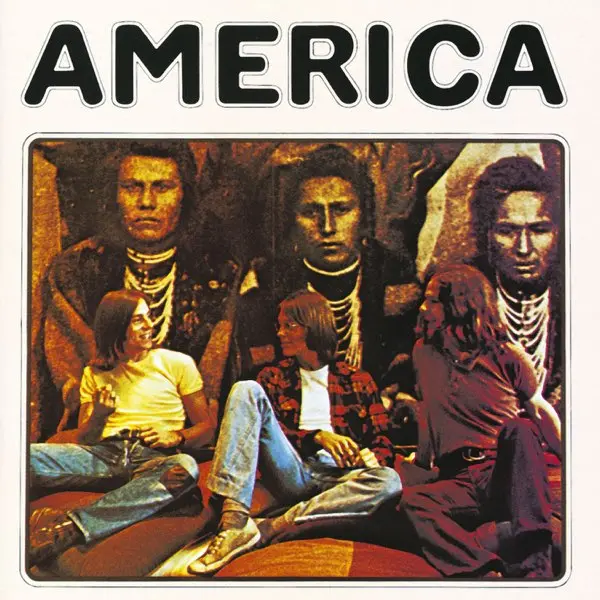 America released their self-titled debut album in December 1971 on Warner Bros., initially issued in Europe in December 1971 without the breakout single “A Horse with No Name.”
The album presents a pastoral acoustic sound rooted in folk-pop and harmony-based songwriting, centered around the trio’s shared vocal duties and interlocking guitar work.
Dewey Bunnell plays six-string acoustic guitar on most tracks and sings lead and backing vocals. Gerry Beckley contributes twelve- and six-string acoustic guitar, lead and backing vocals, piano on two tracks, electric guitar and chimes on “Clarice,” and bass across most of the album. Dan Peek plays twelve- and six-string acoustic guitar, sings lead and backing vocals, and contributes electric guitar on select tracks along with bass on “A Horse with No Name” and “Three Roses,” and piano on “Never Found the Time.” Additional players include percussionist Ray Cooper, drummer Dave Atwood (on “Sandman,” “Here,” “I Need You,” and “Donkey Jaw”), and drummer Kim Haworth (on “A Horse with No Name”). David Lindley plays electric guitar on “Children” and steel guitar on “Rainy Day.”
Tracklist (1972 reissue):
A1. “Riverside” (3:03) – Bunnell
A2. “Sandman” (5:08) – Bunnell
A3. “Three Roses” (3:54) – Bunnell
A4. “Children” (3:07) – Bunnell
A5. “A Horse with No Name” (4:10) – Bunnell
A6. “Here” (5:30) – Beckley
B1. “I Need You” (3:05) – Beckley
B2. “Rainy Day” (2:55) – Peek
B3. “Never Found the Time” (3:50) – Peek
B4. “Clarice” (4:01) – Beckley
B5. “Donkey Jaw” (5:17) – Peek
B6. “Pigeon Song” (2:18) – Bunnell
Sessions took place at Trident and Morgan Studios in London with production by Ian Samwell and executive producer Jeff Dexter. Engineer Ken Scott handled recording, and the band returned to Morgan in late 1971 to cut four additional songs, including “A Horse with No Name.” The album’s artwork, designed by Nigel Waymouth with logo graphics by Flash Fox, features the trio posed before an 1887 image of Crow prisoners.
Warner Bros. released “A Horse with No Name” as a UK single on November 12, 1971, backed with “Everyone I Meet Is from California.” Its US release followed on January 19, 1972. The song hit No. 1 on the Billboard Hot 100, Cash Box, and Record World charts, topping the Canadian RPM chart and reaching No. 3 in the UK and No. 1 in Finland. It was certified gold by the RIAA on March 24, 1972.
“I Need You” followed on April 26, 1972, backed with “Riverside.” It reached No. 9 on the Billboard Hot 100, No. 7 on the Billboard Adult Contemporary chart, and placed Top 10 on Cash Box and Record World.
After the success of “A Horse with No Name,” Warner Bros. reissued the album with the song added to side one. The LP reached No. 1 on the Billboard 200 and stayed at the top for five consecutive weeks. It peaked at No. 1 in Canada, No. 3 in Australia, No. 6 in Spain, No. 9 in Japan, and No. 14 in the UK. The album received platinum certification from the RIAA for exceeding one million units sold in the United States.
Homecoming
 America released their second album, Homecoming, on November 15, 1972, on Warner Bros.
Homecoming advances the trio’s acoustic-based sound with expanded use of electric guitar and piano, integrated across tight vocal harmonies and concise song structures.
Dewey Bunnell sings and plays acoustic guitar throughout, adding percussion on “Head and Heart.” Gerry Beckley contributes acoustic and electric guitar, keyboards, vocals, and handles bass on “Till the Sun Comes Up Again” and “Head and Heart.” Dan Peek plays acoustic and electric guitar, keyboards, and sings lead and harmony vocals. Joe Osborn performs bass on the remaining tracks. Hal Blaine plays drums and percussion across the majority of the album, while Gary Mallaber plays drums and percussion specifically on “Till the Sun Comes Up Again.”
A1. “Ventura Highway” (3:32) – Bunnell
A2. “To Each His Own” (3:13) – Beckley
A3. “Don’t Cross the River” (2:30) – Peek
A4. “Moon Song” (3:41) – Bunnell
A5. “Only in Your Heart” (3:16) – Beckley
B1. “Till the Sun Comes Up Again” (2:12) – Beckley
B2. “Cornwall Blank” (4:19) – Bunnell
B3. “Head and Heart” (3:49) – Martyn
B4. “California Revisited” (3:03) – Peek
B5. “Saturn Nights” (3:31) – Peek
Sessions took place in 1972 at the Record Plant in Los Angeles, engineered by Bill Halverson with assistance from Chuck Leary and Mike D. Stone. The band self-produced the album, which was mastered by Lee Herschberg. Gary Burden handled art direction and design, with photography by Henry Diltz, who also added banjo on “Don’t Cross the River.”
Warner Bros. issued “Ventura Highway” as the lead single in October 1972, backed with “Saturn Nights.” It entered the Billboard Hot 100 on October 21 and peaked at No. 8 during a 12-week run. It reached No. 3 on the Billboard Easy Listening chart, No. 5 in Canada, No. 8 on Cash Box and Record World, and No. 43 in the UK.
“Don’t Cross the River” followed in January 1973, backed with “To Each His Own.” It reached No. 35 on the Billboard Hot 100 and No. 23 on the Billboard Adult Contemporary chart, with moderate Canadian airplay and sustained FM exposure.
“Only in Your Heart” appeared in April 1973 with limited chart movement, peaking at No. 62 on the Billboard Hot 100.
Homecoming peaked at No. 9 on the Billboard 200, No. 6 on RPM’s Top Albums chart in Canada, No. 17 in Australia and Spain, No. 21 in the UK, and No. 42 in Japan. The album earned platinum certification from the RIAA for one million units sold in the US and gold certifications in Canada and Australia.
Hat Trick
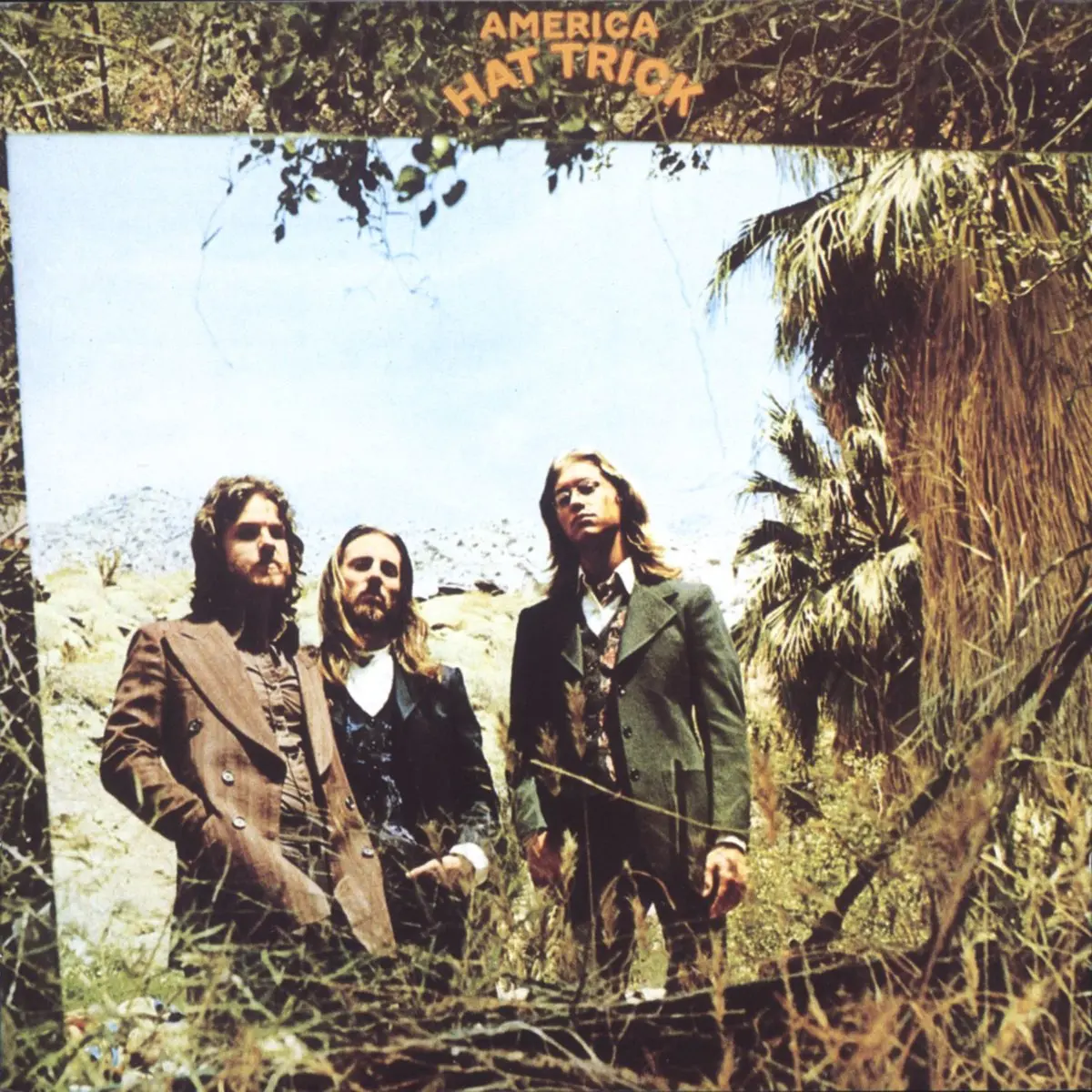 America released their third album, Hat Trick, on October 26, 1973, on Warner Bros.
Hat Trick expands America’s acoustic folk-rock foundation with broader instrumentation, orchestral flourishes arranged by Jim Ed Norman, and select guest contributions. Gerry Beckley, Dewey Bunnell, and Dan Peek share all vocal, guitar, keyboard, and production duties, alternating on lead and harmony parts. The album opens with “Muskrat Love,” a cover of “Muskrat Candlelight” by Texas singer–songwriter Willis Alan Ramsey, originally issued on his 1972 self-titled debut.
Tom Scott adds saxophone on “Rainbow Song.” Henry Diltz plays banjo on “Submarine Ladies,” with Lee Keifer contributing harmonica and assisting as engineer. Lorene Yarnell (of the Shields & Yarnell mime team) adds tap dancing effects on “Hat Trick.” Joe Walsh plays lead guitar on “Green Monkey.”
A1. “Muskrat Love” (3:06) – Ramsey
A2. “Wind Wave” (2:55) – Bunnell
A3. “She’s Gonna Let You Down” (3:41) – Beckley
A4. “Rainbow Song” (3:53) – Bunnell
A5. “Submarine Ladies” (3:13) – Beckley
A6. “It’s Life” (4:00) – Peek
B1. “Hat Trick” (8:29) – Beckley, Bunnell, Peek
B2. “Molten Love” (3:10) – Bunnell
B3. “Green Monkey” (3:38) – Bunnell
B4. “Willow Tree Lullaby” (2:34) – Peek
B5. “Goodbye” (3:10) – Beckley
David Dickey plays bass across the album. Hal Blaine handles drums and percussion except on “Muskrat Love.” Jim Ed Norman arranges the orchestral sections and plays piano on “She’s Gonna Let You Down.” Robert Margouleff contributes synthesizer textures, while Chester McCracken plays congas. Guest vocalists Billy Hinsche, Bruce Johnston, and Carl Wilson appear on the title track.
Sessions occurred at the Record Plant in Los Angeles between May 29 and July 12, 1973. America self-produced the sessions, with Mike D. Stone serving as the primary engineer. Lee Keifer assisted with technical duties and performed on one track. Gary Burden handled art direction with photography by Henry Diltz, who also played on the album.
Warner Bros. issued “Muskrat Love” as the lead single in August 1973, backed with “Cornwall Blank.” It reached No. 67 on the Billboard Hot 100, No. 33 on Cash Box, and No. 11 on the Billboard Adult Contemporary chart. Captain & Tennille covered the song in 1976 and reached No. 4 on the Hot 100 with their version.
“Rainbow Song” followed in November 1973 and “Green Monkey” appeared as a third single in February 1974
Hat Trick peaked at No. 28 on the Billboard 200. It reached No. 24 in both Australia and Spain but failed to achieve RIAA gold certification, marking a downturn after the group’s two prior platinum-selling albums.
Holiday
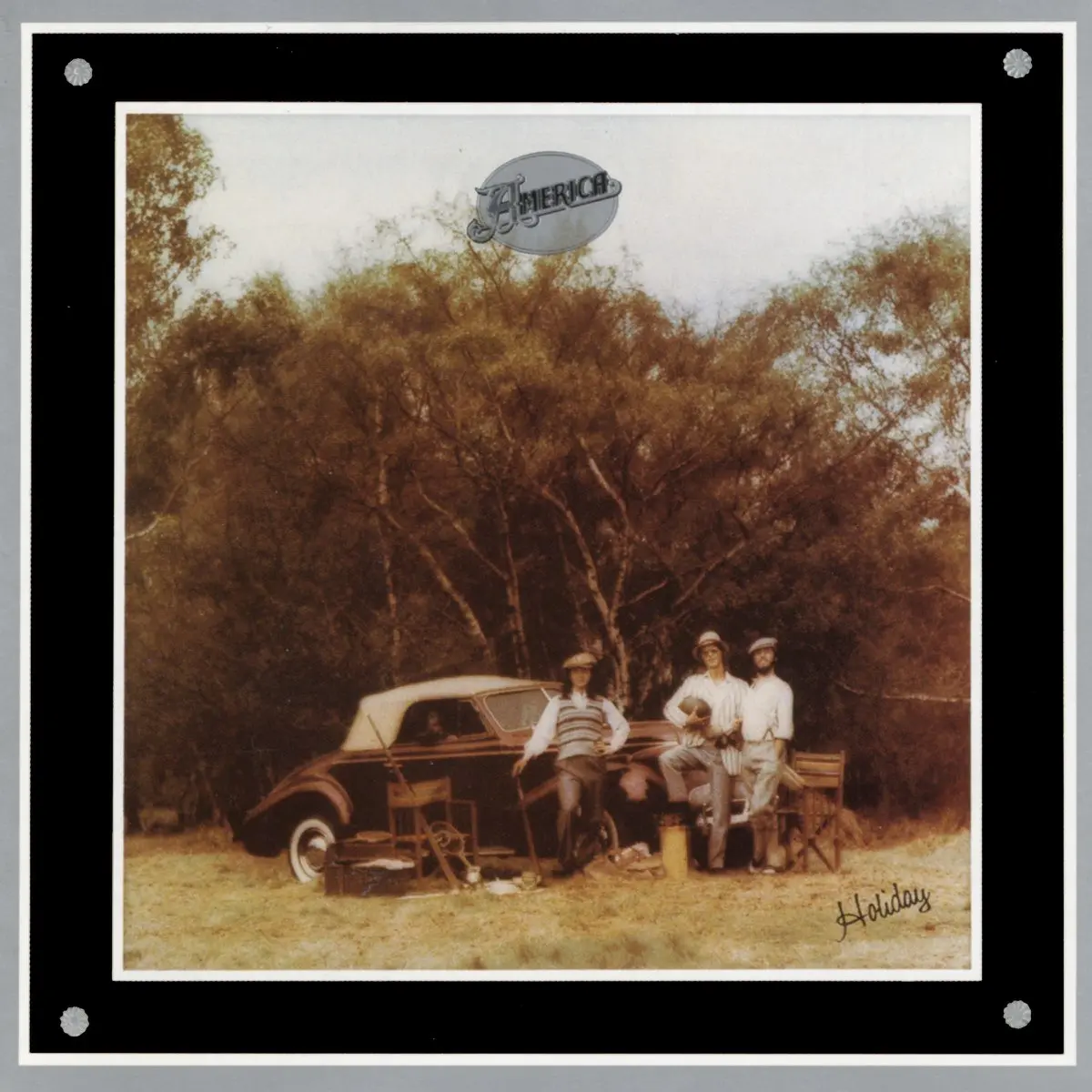 America released their fourth album, Holiday, on June 26, 1974, on Warner Bros.
The album places Gerry Beckley, Dewey Bunnell, and Dan Peek in a concise folk-pop format under the guidance of producer and arranger George Martin, who also performs on keyboards. Each member contributes vocals, guitars, bass, and keyboards, alternating across lead and harmony parts. Drummer Willie Leacox makes his studio debut as a full-time band member, handling percussion throughout.
A1. “Miniature” (1:12) – Beckley
A2. “Tin Man” (3:27) – Bunnell
A3. “Another Try” (3:16) – Beckley
A4. “Lonely People” (2:27) – D. Peek, C. Peek
A5. “Glad to See You” (3:42) – D. Peek
A6. “Mad Dog” (2:39) – Beckley
B1. “Hollywood” (2:49) – Bunnell
B2. “Baby It’s Up to You” (2:24) – Beckley
B3. “You” (2:25) – D. Peek
B4. “Old Man Took” (3:10) – Bunnell
B5. “What Does It Matter” (2:18) – Beckley
B6. “In the Country” (2:58) – D. Peek
Sessions ran from April 17 to May 7, 1974, at AIR Studios in London. Martin arranged all instrumentation and supervised production, with engineering by Geoff Emerick and tape operation by Peter Henderson. Gary Burden oversaw art direction for the album’s packaging.
Warner Bros. issued “Tin Man” as the lead single in August 1974, backed with “In the Country.” It reached No. 4 on the Billboard Hot 100 and No. 1 on the Billboard Adult Contemporary chart. It also placed Top 10 in Canada and on Cash Box and Record World.
“Lonely People” followed in December 1974, backed with “Mad Dog.” Written by Dan Peek and his wife Catherine, the song climbed to No. 5 on the Billboard Hot 100 and became America’s second Adult Contemporary No. 1. It reached No. 3 on Canada’s AC chart and entered the Top 10 on Record World and Cash Box.
Holiday peaked at No. 3 on the Billboard 200 and matched that position on Canada’s RPM chart. It reached No. 25 in Australia and was certified gold by the RIAA for US sales exceeding 500,000 copies.
Hearts
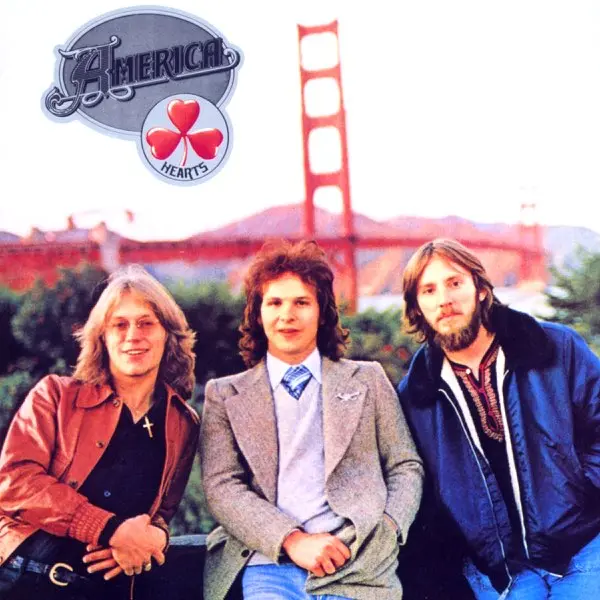 America released their fifth album, Hearts, on March 19, 1975, on Warner Bros.
Hearts continues the trio’s collaboration with producer George Martin, who arranges the material and plays keyboards. Gerry Beckley, Dewey Bunnell, and Dan Peek share all vocal, guitar, and keyboard responsibilities, alternating on lead and harmony parts, backed again by the David Dickey/Willie Leacox rhythm section.
Clydie King and Venetta Fields contribute background vocals on “The Story of a Teenager,” and an uncredited cellist performs on “Daisy Jane.” Hearts also marks a point of broader crossover appeal with the lead track “Sister Golden Hair,” an evergreen of soft-rock radio.
A1. “Daisy Jane” (3:07) – Beckley
A2. “Half a Man” (3:33) – D. Peek
A3. “Midnight” (2:41) – Beckley, Bunnell
A4. “Bell Tree” (2:32) – Beckley
A5. “Old Virginia” (3:28) – D. Peek, C. Peek
A6. “People in the Valley” (2:43) – Bunnell
B1. “Company” (3:23) – Bunnell
B2. “Woman Tonight” (2:19) – D. Peek
B3. “The Story of a Teenager” (3:19) – Beckley, D. Peek
B4. “Sister Golden Hair” (3:16) – Beckley
B5. “Tomorrow” (2:48) – D. Peek
B6. “Seasons” (3:00) – Bunnell
Sessions ran from January 6 to 30, 1975, at the Record Plant in Sausalito, California. George Martin produced and arranged the album and performed additional keyboards. Geoff Emerick engineered the sessions with Mark Guercio assisting. Phil Hartman designed the album’s cover art and Henry Diltz supplied the photography.
Warner Bros. issued “Sister Golden Hair” as the lead single on March 19, 1975, backed with “Midnight.” It reached No. 1 on the Billboard Hot 100, No. 5 on the Easy Listening chart, and topped Record World and Radio & Records. It reached No. 11 in Canada and placed in the year-end Billboard Hot 100 rankings.
“Daisy Jane” followed on July 2, backed with “Tomorrow.” It peaked at No. 20 on the Billboard Hot 100 and No. 4 on the Adult Contemporary chart. In Canada, it reached No. 16 on the RPM singles chart and No. 2 on the Adult Contemporary chart.
“Woman Tonight” was issued in the UK on August 29, backed with “Sister Golden Hair,” and later appeared as a US single. It reached No. 44 on the Billboard Hot 100 and No. 41 on the Adult Contemporary chart.
Hearts peaked at No. 4 on the Billboard 200 and No. 3 in Canada, with additional Top 20 placements in Australia and New Zealand. The album was certified gold by the RIAA for US sales exceeding 500,000 copies.
History: America’s Greatest Hits
On November 3, 1975, Warner Bros. released History: America’s Greatest Hits, the group’s first compilation. Issued at a point when America had already placed multiple singles at the top of the US charts, the album consolidates their early Warner-era output into a single release designed to capitalize on sustained radio presence and catalog strength. It pairs all of the group’s charting singles to date with an edited version of “Sandman,” which had not previously appeared as a single, reinforcing the album’s role as both summary and entry point rather than a simple repackaging.
Although the album carries a George Martin production credit, its most significant distinction lies in post-production rather than original recording. Seven tracks predate Martin’s formal association with America and were newly remixed by him specifically for this release. These remixes alter balances, pitch, and ambience compared to the original single and album versions, with more pronounced bass, added or emphasized overdubs, modified vocal treatments, and tightened edits. Several tracks are crossfaded to remove gaps, giving the compilation a continuous flow that differs from the discrete sequencing of the original albums. Over time, these remixed versions became widely familiar through radio play and reissues, effectively establishing an alternate, parallel canon for many of America’s best-known recordings.
Commercially, the album proved highly successful, reaching No. 3 on the Billboard album chart and achieving multi-platinum certification in the United States, with particularly strong long-term sales in Australia. Its enduring presence on catalog and sales charts decades later underscores its role as a definitive statement of America’s early period, as well as a rare example of a greatest-hits package whose production choices meaningfully reshaped how the source material was heard and remembered.
Hideaway
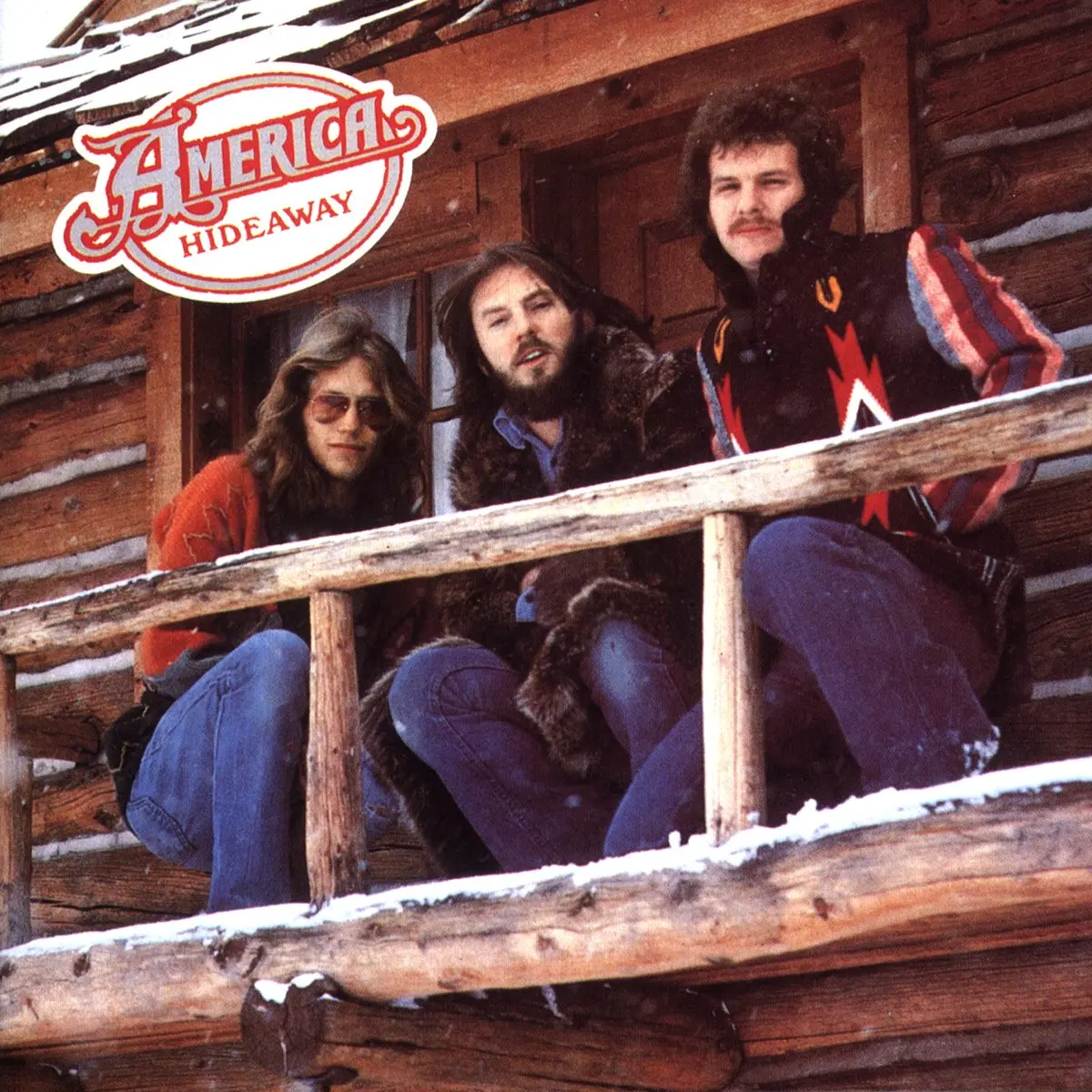 America released their sixth album, Hideaway, on April 9, 1976, on Warner Bros.
The album reunites the band with producer George Martin, who arranges the material and performs piano on “She’s Beside You” and “Hideaway Part I.” Gerry Beckley, Dewey Bunnell, and Dan Peek share all vocal, guitar, and keyboard duties, with Peek also playing banjo, anchored again by the Dickey/Leacox rhythm section.
Recorded during winter at Caribou Ranch in Nederland, Colorado, the album’s cover photo and inner sleeve depict the band in the snow-covered mountain setting.
A1. “Lovely Night” (2:32) – Beckley
A2. “Amber Cascades” (2:50) – Bunnell
A3. “Don’t Let It Get You Down” (2:58) – Bunnell
A4. “Can’t You See” (2:22) – D. Peek
A5. “Watership Down” (4:58) – Beckley
A6. “She’s Beside You” (2:58) – D. Peek
B1. “Hideaway Part I” (1:30) – Bunnell
B2. “She’s a Liar” (3:28) – Beckley
B3. “Letter” (3:05) – Bunnell
B4. “Today’s the Day” (3:15) – D. Peek
B5. “Jet Boy Blue” (3:21) – D. Peek, C. Peek
B6. “Who Loves You” (4:33) – Beckley
B7. “Hideaway Part II” (2:03) – Bunnell
Sessions ran from February 16 to 28, 1976, at Caribou Ranch, opened three years earlier by Chicago manager/producer James William Guercio. George Martin produced and arranged the album and supervised the orchestration. The snowy setting shaped both the mood of the sessions and the visual presentation of the album, which they contrasted with the tropical climate of their next release.
Warner Bros. issued “Today’s the Day” as the lead single in April 1976, backed with “Hideaway Part II.” It became America’s third No. 1 on the Billboard Adult Contemporary chart and reached No. 23 on the Billboard Hot 100. The song also charted in Canada (No. 16), Australia (No. 55), and France (No. 67).
“Amber Cascades” followed in July, backed with “Who Loves You.” It reached No. 17 on the Adult Contemporary charts in the US and Canada, and peaked at No. 75 on the Billboard Hot 100.
“She’s a Liar” appeared as a third single in November. Hideaway peaked at No. 11 on the Billboard 200, No. 10 in Canada, and reached No. 12 in both Australia and New Zealand. The RIAA certified the album gold for US sales exceeding 500,000 copies.
Harbor
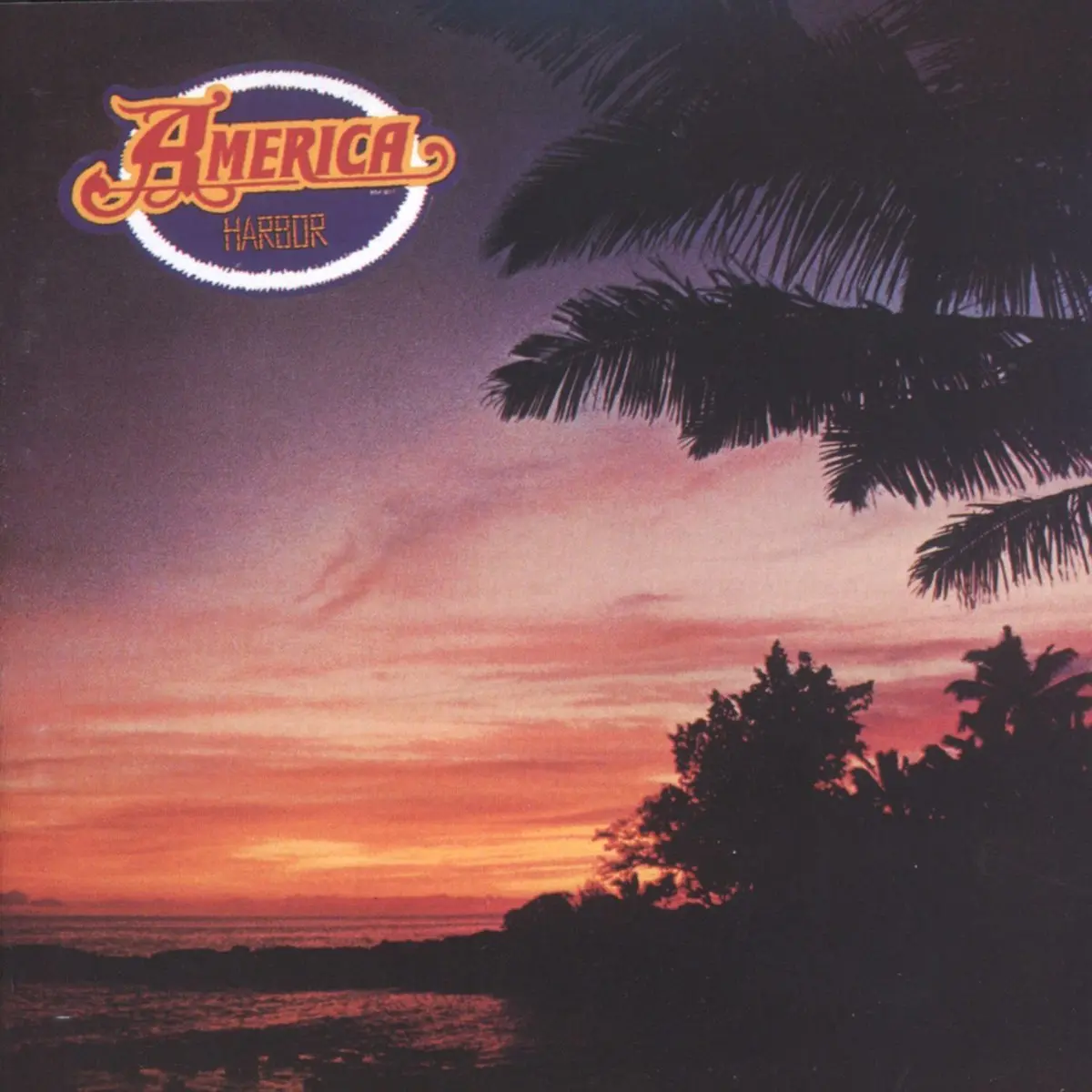 America released their seventh album, Harbor, in March 1977 on Warner Bros.
Harbor is their fourth studio album with producer George Martin. This was their sixth and last H-letter title and their final album with co-founder Dan Peek, who alternated guitar, keyboard, synthesizer, lead and harmony parts with Gerry Beckley and Dewey Bunnell, backed by the Dickey/Leacox rhythm section.
Guest musicians include saxophonist Jim Calire, percussionist Tom Walsh, and guitarist Larry Carlton, who plays the Coral electric sitar. Sessions took place in Hawaii at Ka Lae Kiki, a waterfront studio on the island of Kauai.
A1. “God of the Sun” (3:11) – Beckley
A2. “Slow Down” (3:11) – D. Peek
A3. “Don’t Cry Baby” (3:18) – D. Peek
A4. “Now She’s Gone” (2:25) – Beckley
A5. “Political Poachers” (2:39) – Bunnell
A6. “Sarah” (2:42) – Beckley
B1. “Sergeant Darkness” (2:54) – Beckley
B2. “Are You There” (2:51) – Bunnell
B3. “These Brown Eyes” (2:32) – D. Peek
B4. “Monster” (2:00) – Beckley
B5. “Hurricane” (2:29) – D. Peek
B6. “Down to the Water” (2:35) – Bunnell
Warner Bros. issued “God of the Sun” as the lead single in February 1977, followed by “Slow Down” in April and “Don’t Cry Baby” in June. “God of the Sun” and “Now She’s Gone” received limited FM airplay.
Harbor peaked at No. 21 on the Billboard 200 and reached No. 13 in Norway, No. 16 in Canada, No. 19 in Australia, and No. 31 in New Zealand. Soon after this album, Dan Peek departed America for a solo career.
Live
Live, released in December 1977 on Warner Bros., is America’s first official concert album. Recorded at the Greek Theatre in Los Angeles on July 24, 1977, it documents the band’s transition to a duo following Dan Peek’s departure two months earlier. Produced by George Martin, the album marked his fifth consecutive production effort for America and presents a snapshot of the group’s post-trio stage repertoire.
A1. “Tin Man” (3:38) – Holiday (1974)
A2. “Muskrat Love” (3:07) – Hat Trick (1973)
A3. “I Need You” (2:41) – America (1971)
A4. “Old Man Took” (3:29) – Hat Trick (1973)
A5. “Daisy Jane” (3:04) – Hearts (1975)
A6. “Company” (3:21) – Harbor (1977)
A7. “Hollywood” (3:51) – Harbor (1977)
B1. “Sergeant Darkness” (2:56) – Hearts (1975)
B2. “Amber Cascades” (2:47) – Hideaway (1976)
B3. “To Each His Own” (3:16) – Harbor (1977)
B4. “Another Try” (2:59) – Holiday (1974)
B5. “Ventura Highway” (3:28) – Homecoming (1972)
B6. “Sister Golden Hair” (3:26) – Hearts (1975)
B7. “A Horse with No Name” (4:18) – America (1971)
This live collection highlights songs spanning all seven of America’s studio albums released from 1971 through 1977, giving particular attention to their recent Harbor material while preserving the group’s early chart successes.
Silent Letter
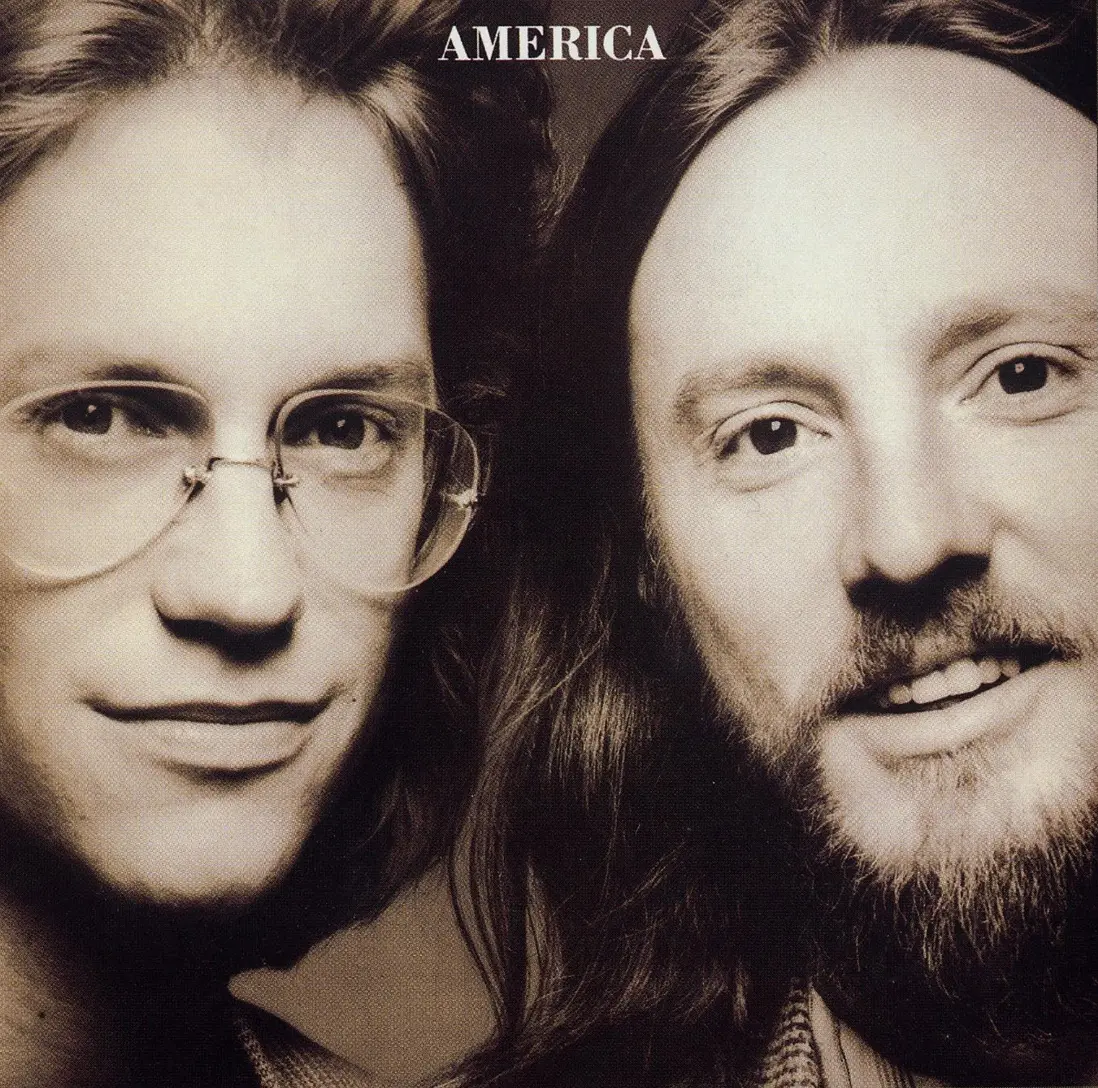 America released their eighth studio album, Silent Letter, on June 15, 1979, on Capitol.
Silent Letter broke the sequence of H-word titles and marked their first release as a duo following the departure of Dan Peek and their first under a new label, with George Martin returning as producer and arranger. Gerry Beckley and Dewey Bunnell share all vocal, guitar, and keyboard responsibilities, joined by lead guitarist Mike Woods and the Dickey/Leacox rhythm section.
A1. “Only Game in Town” (4:12) – Anderson, Didier, Kelly
A2. “All Around” (3:21) – Beckley, Bunnell
A3. “Tall Treasures” (3:15) – Beckley, Bunnell
A4. “1960” (3:10) – Beckley
A5. “And Forever” (3:11) – Bunnell
A6. “Foolin’” (2:53) – Beckley, Fataar
B1. “All Night” (3:19) – Bunnell
B2. “No Fortune” (3:18) – Beckley
B3. “All My Life” (3:02) – Beckley
B4. “One Morning” (2:12) – Bunnell
B5. “High in the City” (3:02) – Beckley, Bunnell
Sessions took place between March and April 1979 at AIR Studios in Montserrat. Musical guests included keyboardist/saxist Jim Calire and percussionist Tom Walsh.
Capitol issued “Only Game in Town” as the lead single in August 1979. It reached No. 107 on Billboard’s Bubbling Under chart. “All My Life” followed in October and reached No. 48 on the Billboard Adult Contemporary chart, with strong airplay in parts of Asia. “All Around” appeared as the third single in January 1980 and peaked at No. 45 on the Adult Contemporary chart.
Silent Letter peaked at No. 110 on the Billboard 200, No. 80 in Canada, and No. 51 in Australia. Despite modest chart impact, the album introduced a stylistic transition that would continue into the 1980s.
Alibi
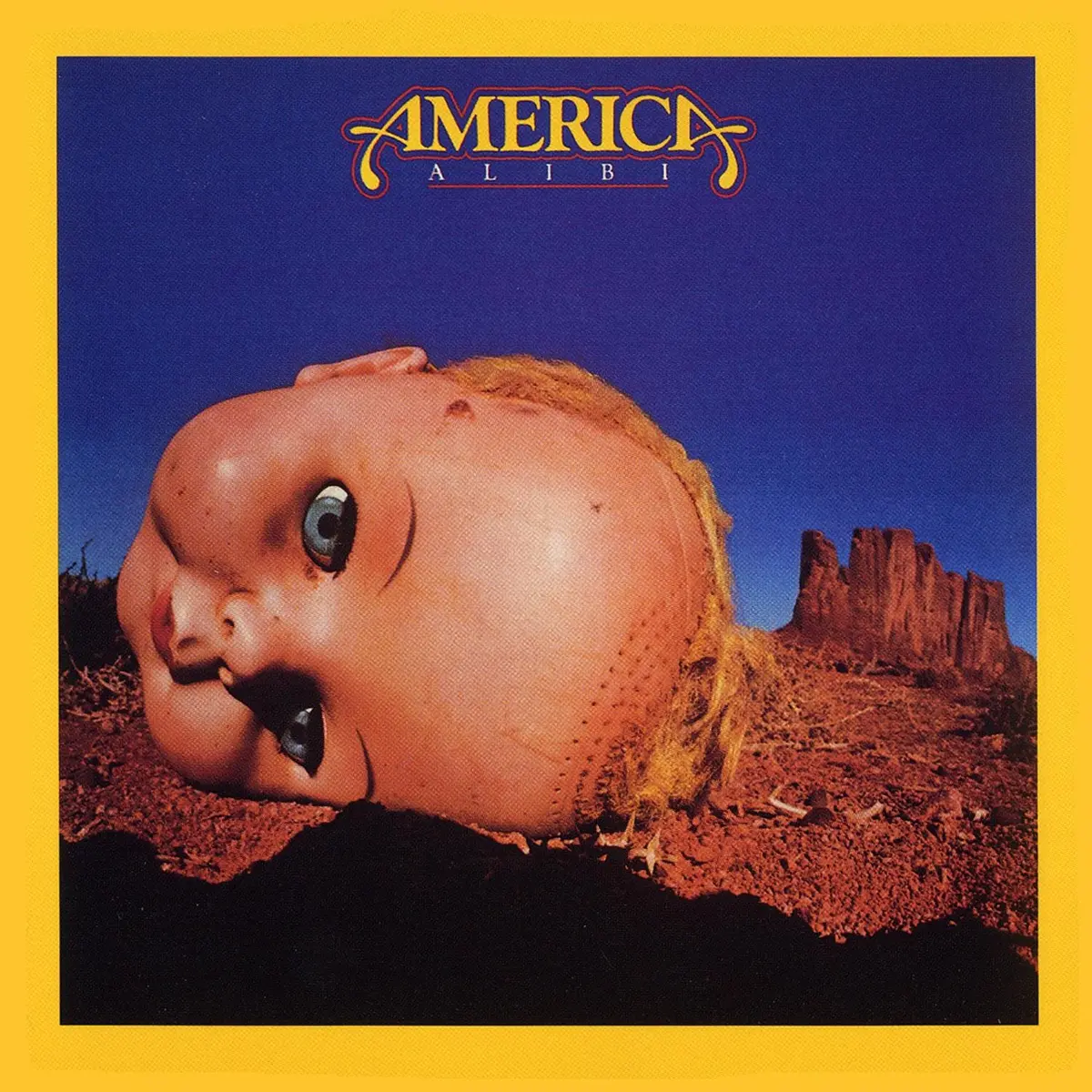 America released their ninth studio album, Alibi, on August 15, 1980, on Capitol.
Alibi marks a shift from band-centered arrangements toward a studio-assembled production featuring numerous session players from the Los Angeles soft rock and pop scene. Dewey Bunnell and Gerry Beckley both wrote and sang lead on multiple tracks, continuing their dual-lead dynamic while working apart from longtime producer George Martin.
They enlisted Matthew McCauley and Fred Mollin as co-producers to oversee a rotating cast of multiple guitarists (Steve Lukather, Dean Parks, Waddy Wachtel, Fred Mollin), keyboardists (James Newton Howard, Jai Winding), and drummers (Mike Baird,Willie Leacox). Leland Sklar plays bass on the majority of tracks. Alibi also features harmonica player Norton Buffalo and backing vocalists Richard Page, Tom Kelly, J.D. Souther, and Timothy B. Schmit.
Our Side (Side One)
A1. “Survival” (3:16) – Beckley
A2. “Might Be Your Love” (3:46) – Bunnell
A3. “Catch That Train” (3:03) – Beckley, Bunnell
A4. “You Could’ve Been the One” (3:08) – Batdorf, Sheridan
A5. “I Don’t Believe in Miracles” (3:23) – Ballard
Their Side (Side Two)
B1. “I Do Believe in You” (3:45) – George, Lang, Manfredi, Page
B2. “Hangover” (3:41) – Bunnell
B3. “Right Back to Me” (3:30) – Beckley
B4. “Coastline” (3:26) – Beckley
B5. “Valentine” (3:35) – Bunnell
B6. “One in a Million” (2:52) – Beckley
Recording took place in early 1980 across multiple Los Angeles studios, with McCauley and Mollin coordinating sessions that utilized top-tier West Coast musicians. The band moved away from the core touring lineup used on Silent Letter and instead opted for a studio-crafted sound with polished textures and layered arrangements. The album’s sequencing dispute between America and Capitol resulted in the novel designation of LP sides as “Our Side” and “Their Side,” sidestepping a fixed side-one assignment.
“You Could’ve Been the One” appeared as the lead single, followed by “Hangover.” In 1982, after America performed at Italy’s Sanremo Music Festival, “Survival” gained traction overseas and reached the Italian top 5 while Alibi climbed to No. 2 on the Italian album chart.
View From the Ground
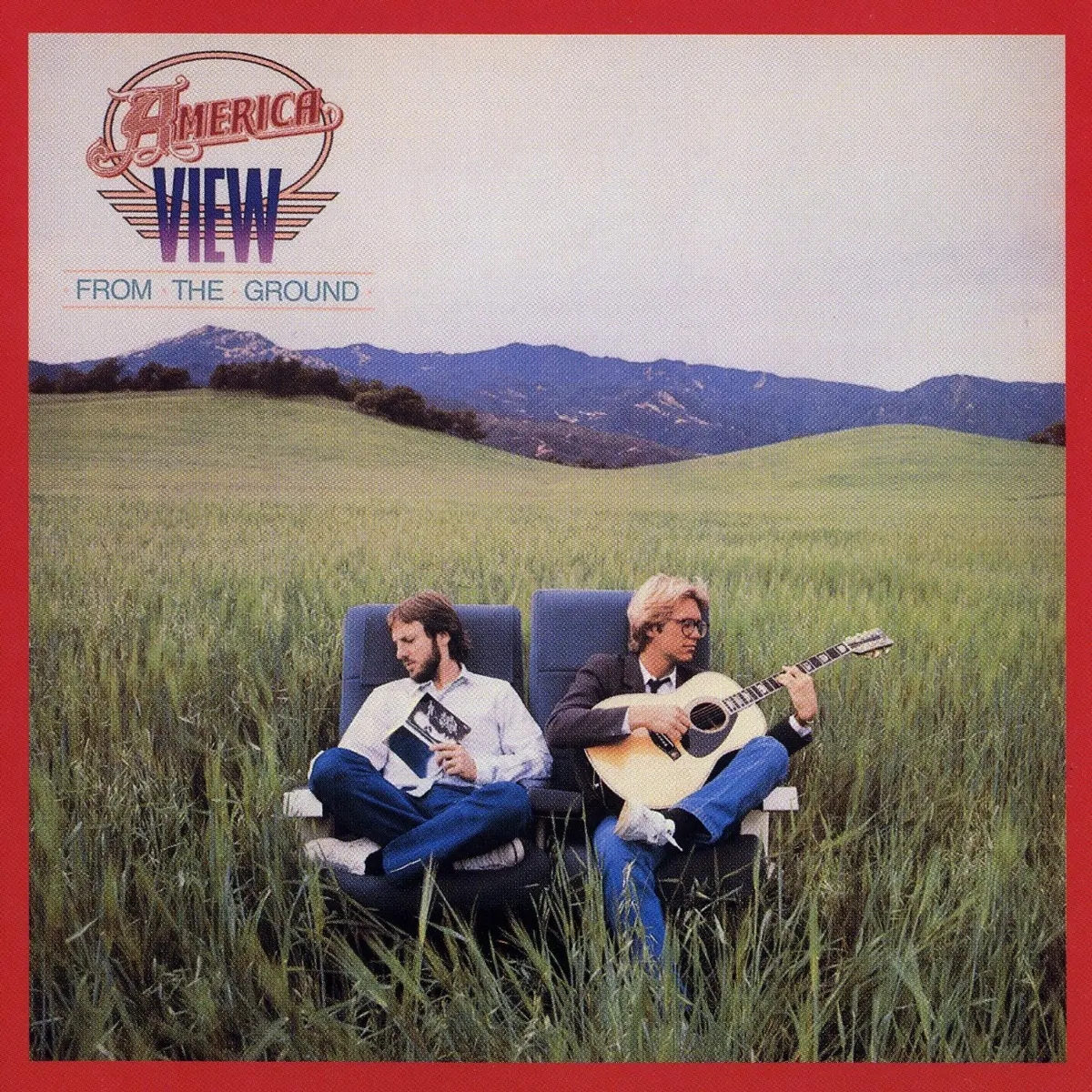 America released their tenth studio album, View From the Ground, in August 1982 on Capitol.
They alternate between self-produced numbers and externally produced sessions with Russ Ballard and Bobby Colomby, who contribute alongside a rotating cast of West Coast session players. Ballard plays all instruments on two tracks and enlists drummer Willie Leacox for “You Can Do Magic,” America’s comeback hit.
The remaining tracks feature multiple guitarists (Steve Lukather, Hadley Hockensmith, Bill Mumy, Dean Parks, Michael Woods, Mike Mirage), keyboardists (Jai Winding, Chris Coté, Bill Linnane), and drummers (Leacox, Jeff Porcaro, Alvin Taylor). Brad Palmer and Mike Porcaro handle bass. Additional parts include synthesizer by Mark Isham and backing vocals by Carl Wilson, Michael McDonald, Timothy B. Schmit, Christopher Cross, Tom Kelly, Chuck Kirkpatrick, and Sara Taylor.
A1. “You Can Do Magic” (3:48) – Ballard
A2. “Never Be Lonely” (3:45) – Beckley, Mumy
A3. “You Girl” (3:32) – Bunnell, Mumy, Haimer
A4. “Inspector Mills” (5:10) – Beckley
A5. “Love on the Vine” (3:02) – Bunnell, Mumy, Haimer
B1. “Desperate Love” (3:51) – LeBlanc, Aldridge, Richardson
B2. “Right Before Your Eyes” (3:47) – Thomas
B3. “Jody” (3:49) – Ballard
B4. “Sometimes Lovers” (4:37) – Beckley
B5. “Even the Score” (3:36) – Bunnell
Sessions began in 1981 and continued into early 1982 with recording and mixing split between Abbey Road Studio 2 in London, Capitol and Amigo Studios in Hollywood, and Criteria Studios in Miami. America self-produced half the album and delegated other tracks to Ballard and Colomby, who also brought in dedicated engineers and musicians. Matthew McCauley arranged and conducted strings. Wally Traugott mastered the album at Capitol Mastering.
“You Can Do Magic,” released on July 6, 1982, reached No. 8 on the Billboard Hot 100 and remained on the chart for 20 weeks. It also hit No. 5 on the Billboard Adult Contemporary chart, No. 7 on Cash Box, and charted internationally in Canada (No. 37), Ireland (No. 20), New Zealand (No. 12), and the UK (No. 59). Capitol paired it with “Even the Score” on 7″ and used it in regional US sports broadcasts.
“Right Before Your Eyes,” issued in November 1982 with “Inspector Mills” as its B-side, reached No. 45 on the Billboard Hot 100 and No. 16 on the Adult Contemporary chart. It reached No. 22 on the Canadian AC chart and became a regional hit in Southeast Asia.
View From the Ground peaked at No. 41 on the Billboard 200, marking America’s first top-half album chart appearance since 1977. The success of the Ballard tracks led to his full production role on their next album, Your Move, in 1983.
The Last Unicorn
America recorded six tracks for The Last Unicorn, a 1982 animated fantasy film directed by Arthur Rankin Jr. and Jules Bass, adapted by author Peter S. Beagle from his own 1968 novel.
The story follows a unicorn who, upon discovering she may be the last of her kind, embarks on a journey to uncover the fate of the others. Along the way, she is transformed into a human woman, confronts love and loss, and ultimately liberates her fellow unicorns from captivity under the fire elemental Red Bull, who serves the melancholic King Haggard. The voice cast includes Mia Farrow, Jeff Bridges, Alan Arkin, Angela Lansbury, and Christopher Lee, with animation by Japanese studio Topcraft, a precursor to Studio Ghibli. Though modest at the box office, the film has since gained a cult following for its emotional tone, literary source, and visual design.
The film’s soundtrack was composed and arranged by Jimmy Webb and features performances by America and the London Symphony Orchestra. Recorded in 1982 at De Lane Lea Studios in Wembley, the album blends Webb’s symphonic scoring with original vocal songs by America, who contribute six tracks: “The Last Unicorn,” “Man’s Road,” “In the Sea,” “The Last Unicorn Part 2,” “Unicorns in the Sea,” and “Now That I’m a Woman” (the latter sung by studio vocalist Katie Irving in place of Mia Farrow). Jeff Bridges performs the duet “That’s All I’ve Got to Say” with Irving. Webb produced and arranged the album and conducted the orchestral portions alongside Skip Mosher, with contributions from the full London Symphony Orchestra.
Earlier in the project’s development (circa 1977), producers tapped Renaissance for soundtrack contributions.
Perspective-wise, this soundtrack marked a stylistic departure for America, whose work here integrates with orchestral and narrative themes rather than functioning as stand-alone pop songs. Dewey Bunnell and Gerry Beckley handle vocals and instruments across their contributions, supported by touring members Michael Woods, Brad Palmer, and Willie Leacox. Released originally in West Germany by Virgin Records in 1982, the album received its first global reissue in digital format on December 25, 2025, followed by a physical re-release on December 29, 2025, via Polydor and Interscope.
“The Last Unicorn” received moderate airplay in Germany, reaching No. 38 and staying in the Top 100 for seven weeks. The score, often noted for its melancholic tone and narrative function, has drawn comparisons to other 1970s and early 1980s literary fantasy soundtracks, including Watership Down, The Hobbit, and Popeye.
Your Move
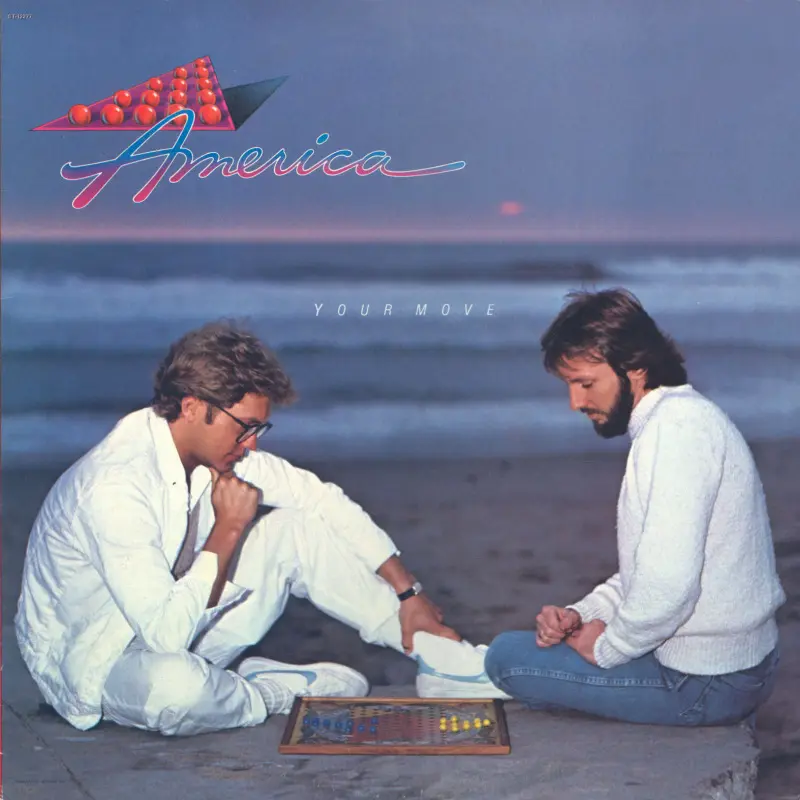 America released their eleventh studio album, Your Move, on June 3, 1983, on Capitol.
The album continues the group’s collaboration with Russ Ballard, who assumes full production duties and contributes six songs and one co-write. He plays keyboards, guitars, bass, drums, and percussion throughout, with Gerry Beckley and Dewey Bunnell contributing only lead and backing vocals.
Saxophonist Raphael Ravenscroft (of “Baker Street” fame) adds guests on “The Border” while Bill Linnane plays piano on select tracks. Stephen Bishop sings backing vocals on “She’s a Runaway.” Louis Clark arranges and conducts string parts performed by the Royal Philharmonic Orchestra, led by Barry Griffiths.
A1. “My Kinda Woman” (3:08) – Ballard
A2. “She’s a Runaway” (4:11) – Ballard
A3. “Cast the Spirit” (4:06) – Ballard
A4. “Love’s Worn Out Again” (3:35) – Beckley, Mumy
A5. “The Border” (3:59) – Ballard, Bunnell
B1. “Your Move” (3:19) – Shaddick, Kipner
B2. “Honey” (3:48) – Ballard, originated on is 1978 album At the Third Stroke.
B3. “My Dear” (4:23) – Bunnell
B4. “Tonight Is for Dreamers” (3:20) – Ballard
B5. “Don’t Let Me Be Lonely” (3:23) – Ballard
B6. “Someday Woman” (3:51) – Beckley, Mumy, Haimer
Sessions took place in 1983 at Abbey Road Studios in London and Criteria Studios in Miami. Ballard oversaw all instrumental tracking, taking near-total control of the album’s arrangements. Beckley and Bunnell supplied a few compositions but otherwise took a secondary role, adding vocal overdubs to pre-constructed recordings. Louis Clark conducted the Royal Philharmonic Orchestra on “The Border,” which features orchestral backing and a prominent saxophone solo.
“The Border” appeared as the album’s lead single and reached No. 33 on the Billboard Hot 100 and No. 4 on the Adult Contemporary chart, becoming America’s final Top 40 pop hit. It also reached No. 22 in the Netherlands. Capitol issued “Your Move” as a single in Italy with “Love’s Worn Out Again” as its B-side.
Your Move peaked at No. 81 on the Billboard 200, marking the duo’s final appearance on the chart during the 1980s.
Perspective
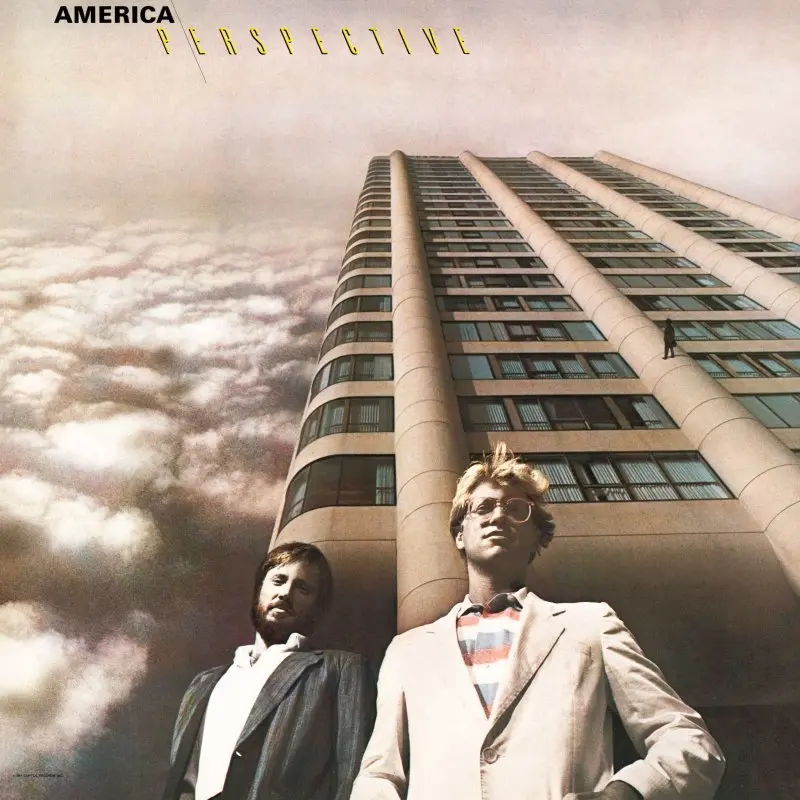 America released their twelfth studio album, Perspective, on September 21, 1984, on Capitol.
Perspective finds the duo fully immersed in modernist production techniques with synthesizers, programmed drums, and layered arrangements. Gerry Beckley and Dewey Bunnell harmonize with backing by multiple guitarists (Paul Jackson Jr., Richie Zito, Dean Parks, Michael Landau, Marty Walsh), bassists (Nathan East, Dean Parks, Arthur Barrow), and nine keyboardists, including Michael Boddicker and James Newton Howard.
Additional guests include saxophonist Phil Kenzie, serial percussionist Paulinho da Costa, and Simmons drum co-developer Richard James Burgess (ex-Landscape, Easy Street), who handles rhythm programming. Ex-Eagle Timothy B. Schmit returns as backing vocalist along with Journey frontman Steve Perry.
A1. “We Got All Night” (3:27) – Shifren, Britten
A2. “See How the Love Goes” (3:17) – Shifren, Britten
A3. “(Can’t Fall Asleep to A) Lullaby” (3:46) – Bunnell, Perry, Mumy, Haimer
A4. “Special Girl” (3:47) – Schwartz, Tyson
A5. “5th Avenue” (3:47) – Beckley
B1. “(It’s Like You) Never Left at All” (3:25) – Goodrum
B2. “Stereo” (3:21) – Beckley, Webb
B3. “Lady with a Bluebird” (3:07) – Bunnell, Mumy, Haimer
B4. “Cinderella” (3:57) – Kimball, Vidal
B5. “Unconditional Love” (3:08) – Beckley
B6. “Fallin’ Off the World” (3:30) – Bunnell, Mumy
Sessions took place across multiple Los Angeles studios, including Amigo, Sunset Sound, Oasis, and United Western, with mixing completed at Larrabee West. Each producer handled their respective tracks: Richard James Burgess produced the opening and fifth tracks, Richie Zito oversaw three others, and Matthew McCauley managed the remainder. Instrumentation reflects a shift toward programmed elements, including use of the Oberheim DMX and Fairlight systems. Recording engineers included Brian Reeves and Mark Linett, with mixing also handled by Linett. Phil Fewsmith photographed the album cover at 100 Wilshire in Santa Monica.
“Special Girl,” issued in September 1984, reached No. 15 on the Billboard Adult Contemporary chart and No. 106 on the Bubbling Under Hot 100. Capitol backed the single with “Unconditional Love.” “(Can’t Fall Asleep to A) Lullaby,” released later that year, reached No. 26 on the Adult Contemporary chart in January 1985. The track features backing vocals by Steve Perry, who included Bunnell in the music video for “Oh Sherrie.”
Despite these placements, Perspective peaked at No. 185 on the Billboard 200 in November 1984. It marked America’s final studio album for Capitol and their last charting release until 2001.
Discography:
- America (1971)
- Homecoming (1972)
- Hat Trick (1973)
- Holiday (1974)
- Hearts (1975)
- Hideaway (1976)
- Harbor (1977)
- Silent Letter (1979)
- Alibi (1980)
- The Last Unicorn (OST, 1982)
- View From the Ground (1982)
- Your Move (1983)
- Perspective (1984)
Sources:
Artist/Album Pages:
Paper Bubble was an English chamber/folk-pop trio that released the album Scenery on Deram in 1970...
Rob Thomsett is an Australian musician and composer who self-released the 1975 symphonic-folk/psyc...
Richard Vimal (born 1952) is a French folk-psych singer/songwriter who debuted with the 1973 Zapa ...
The Floyd Hunchback Group was a Swiss jazz-rock band that released a 1978 self-titled album on Su...
Fat Water was an American soul-rock band from Chicago that released a 1969 album on MGM. Members...
Matrix was an American nine-piece jazz-rock ensemble formed by pianist and composer John Harmon. T...
Maxine Weldon is an American soul singer who released the 1970/71 albums Right On and Chilly Wind...
Rick Springfield (born Aug. 23, 1949) is an Australian singer, songwriter, and actor with a musical ...
Elliott Fisher is an American violinist and arranger who worked extensively in Los Angeles film an...
Pentacle was a French symphonic-rock band that released the album La Clef des Songes on Arcane in ...
The Ritz were an Australian art-rock band from Canberra, ACT, that released a standalone single on...
Peter Banks (1947–2013) was an English rock guitarist who co-founded Yes and played on their first t...