

General Crook is an American soul singer who released a 1974 Wand album and scored R&B hits with “Gimme Some,” “Tell Me What’Cha Gonna Do,” and “Fever in the Funkhouse.”
Background
General Crook was born General Columbus Crook on February 28, 1945, in Mound Bayou, Mississippi. He grew up in Greenville and moved to Chicago while still a teenager.
Crook entered the Chicago club circuit as a lounge singer. He connected with trumpeter-arranger Burgess Gardner, a Chicago music educator who led the Soul Crusaders and operated Down to Earth Records with brother Walter Gardner. Gardner placed Crook with the Soul Crusaders Orchestra, and the group played Chicago-area clubs and dance halls before Crook pursued solo records.
Capitol signed Crook in 1969 and issued “In the Warmth of My Arms,” a song by Maurice White, Wade Flemons, and Don Whitehead from the Salty Peppers circle. The label followed in 1970 with “When Love Leaves You Crying,” a Crook–John Jones song, then ended the association after two singles.
Crook returned to the Gardner circle on Down to Earth Records, where Burgess Gardner and Walter Gardner produced “Gimme Some” with the Soul Crusaders Recording Orchestra behind Crook. The single reached No. 22 on the R&B chart, and Down to Earth followed with “Do It for Me” and “What Time It Is” before Crook moved to Wand for the 1974 album General Crook.
General Crook
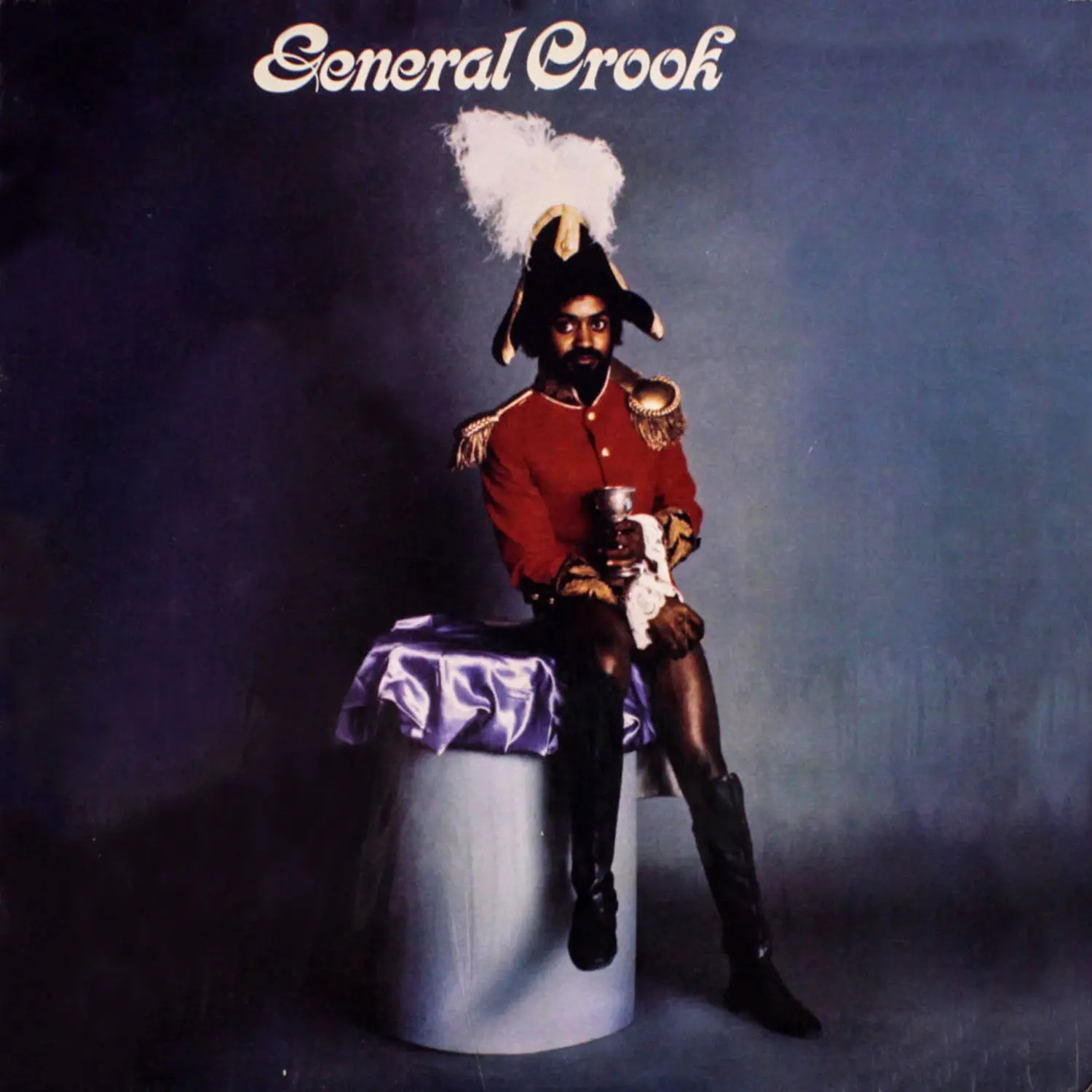 General Crook released his self-titled singular album in June 1974 on Wand.
The album presents a mix of Chicago soul balladry and keyboard-led funk, with Crook as lead singer, primary writer, producer, arranger, and keyboardist. Crook wrote six of the eight songs alone. He co-wrote “Thanks But No Thanks” with G. Dickerson. He recast Marvin Gaye’s “If This World Were Mine” as the closing track.
Crook frames several arrangements with Moog, clavinet, and Fender Rhodes parts.
“Tell Me What’cha Gonna Do” glides through Crook’s sweeter side as keyboard figures press close to the refrain. “Fever in the Funkhouse” struts on clipped accents and a firmer backbeat, with Crook cutting the lead into short command phrases. “The Best Years of My Life” lingers on grateful memory lines, then repeats the title through long, open phrases. “I’m Satisfied” slows the album to low-lit vocal sustain and a settled chorus cadence. “Thanks But No Thanks” coils into medium-stepping motion, with the title phrase set for firm refusal. “If This World Were Mine” opens with a spoken monologue before Crook stretches the familiar pledge across close-harmony support.
A1. “Tell Me What’Cha Gonna Do” (3:42)
A2. “Reality” (2:52)
A3. “Fever in the Funkhouse” (3:00)
A4. “The Best Years of My Life” (6:13)
B1. “Lying Cheatin’ Woman” (3:18)
B2. “I’m Satisfied” (4:01)
B3. “Thanks But No Thanks” (3:05) – General Crook, G. Dickerson
B4. “If This World Were Mine” (7:05) – originated as a 1967 duet between Marvin Gaye and Tammi Terrell.
Crook recorded and remixed General Crook at Paragon Recording Studios in Chicago. He produced and arranged the album.
General Crook appeared in a cover package designed by Dick Smith with photography by Dick Marx. The front image shows Crook in a red military-style jacket, black boots, and a feathered hat against a blue-gray studio background.
Wand previewed the album with “The Best Years of My Life” in October 1973 (b/w “Testification”), which reached No. 71 on the Billboard Hot Soul Singles chart and No. 108 on the Bubbling Under Hot 100 chart.
“Tell Me What’Cha Gonna Do (When You Want to Be Loved)” became a March 1974 single (b/w “Reality”) and reached No. 57 on the Hot Soul Singles chart.
“Fever in the Funkhouse” followed in June 1974 (b/w “Fever in the Funkhouse (Instrumental)”) and reached No. 59 on the same chart. Wand also issued “I’m Satisfied” in 1974 with “Thanks But No Thanks” on the flip side.
Postlude
The 1974 Wand album remained General Crook’s only LP. After the Wand period, Crook shifted toward Chicago studio work as a writer, producer, and arranger, with later activity tied most clearly to Syl Johnson and Willie Clayton. Crook still cut scattered lead-artist singles, including the 1982 Backroom release “Main Squeeze” and the later Crooked Road twelve-inch “In This Thing Called Love.”
Crook worked with Syl Johnson on the 1982 album Ms. Fine Brown Frame. Johnson co-produced the album with Crook, and the program included Johnson–Crook credits on “Ms. Fine Brown Frame” and “Keep On Loving Me.”
Crook also helped Willie Clayton reach the R&B chart in 1984. Clayton recorded “Tell Me,” written and produced by Crook, for Compleat Records; the single reached No. 78 soul. Crook produced the follow-up “What a Way to Put It,” which reached No. 84 soul.
Discography:
- General Crook (1974)
Sources:
Artist/Album Pages:
Blåkulla was a Swedish symphonic hard-rock band that issued a 1975 self-titled album on Anette. ...
UPP was an English jazz-funk band that released two albums on Epic during 1975 and 1976, the first...
Prince Jazzbo — aka Linval Roy Carter (September 3, 1951 – September 11, 2013) — was a Jamaican re...
Anita Meyer (born Oct. 29, 1954) is a Dutch pop singer who first recorded during the late 1960s as...
ID was an American space-rock/jam band that released the 1976 album Where Are We Going on Aura Re...
Energy was a Swedish jazz-rock band behind a 1974 self-titled album on Harvest. Drummer Björn Inge...
Kochi was a multinational jazz-rock super-group behind the 1976 East Wind album Wishes, led by Jap...
Boule Noire — aka Georges Thurston (Dec. 29, 1951 — June 18, 2007) — was a Québécois soul-funk art...
Hermeto Pascoal (June 22, 1936 – September 13, 2025) was a Brazilian composer, multi-instrumentali...
Zafer Dilek (August 30, 1944 — December 11, 2025) was a Turkish musician, composer, and arranger w...
Arthur Brown (born June 24, 1942) is an English singer, performer, and bandleader from Whitby, Yor...
Banda Do Casaco was a Portuguese folk-rock band, active through numerous lineups across two decade...