

Evelyn “Champagne” King is an American soul-funk singer who released eight albums between 1977 and 1985 on RCA Victor. She emerged with Smooth Talk (1977), which featured the gold-certified hit “Shame” produced by Theodore Life.
She reached new heights in the early 1980s working with Kashif on I’m in Love (1981) and Get Loose (1982), both of which yielded No. 1 R&B singles and defined her sleek post-disco sound. Subsequent albums like Face to Face (1983) and So Romantic (1984) saw her collaborate with André Cymone, The System, and Glen Ballard, while A Long Time Coming (1985) closed her RCA run with the Top 10 R&B hit “Your Personal Touch.”
Background
Evelyn King was born on July 1, 1960, in New York City and raised in Philadelphia, where music ran through her family—her father sang backup at the Apollo, her mother managed a local group, and her uncle Avon Long had performed on Broadway and at the Cotton Club.
As a teenager, King joined her mother on cleaning shifts at Philadelphia International Records, where she sang casually while working. During one of these shifts, producer Theodore Life overheard her singing in a washroom and began mentoring her. He soon signed her to his Galaxy Productions imprint and secured a deal with RCA Records, who added the nickname “Champagne” to shape her youthful image ahead of her debut album.
Smooth Talk
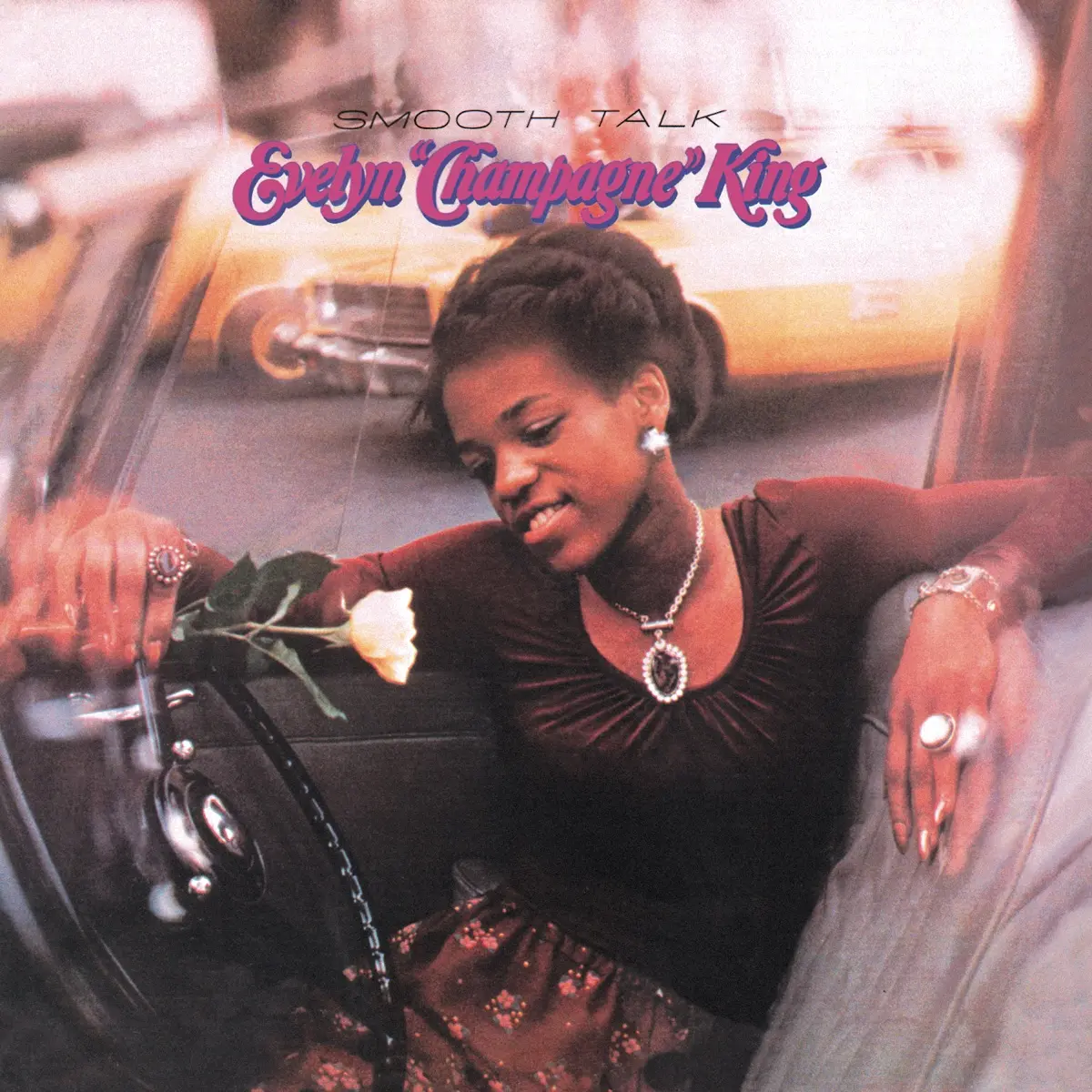 Evelyn “Champagne” King released her debut album, Smooth Talk, on August 17, 1977, on RCA Victor.
The album balances streamlined disco vamps with layered soul arrangements, anchored by Raymond Earl’s supple bass work and countered by soloists like guitarist John H. Fitch Jr. and keyboardist Sam Peake, who alternates between organ, electric piano, and Clavinet.
Smooth Talk balances taut, mid-tempo vamps with subdued ballads and bright rhythmic flourishes. “Shame” threads clipped rhythm guitar and steady hand percussion through a driving pulse, with upward vocal turns breaking across a bridge that resets the pace. “I Don’t Know If It’s Right” builds slowly, wrapping soft keyboard layers around a circular chord figure that moves with restrained momentum. The title track stretches out with brushed snare fills and curving vocal lines that tilt between suspended phrases and late-resolving cadences. Jazz-funk e-pianist Dexter Wansel enriches the mid-tempo closer “The Show Is Over.”
A1. “Smooth Talk” (5:29) – Theodore Life, Mike Holden, William Kimes
A2. “I Don’t Know If It’s Right” (4:17) – Theodore Life, John H. Fitch Jr.
A3. “Til I Come Off the Road” (2:38) – Mike Holden, John H. Fitch Jr., Theodore Life
A4. “Dancin’, Dancin’, Dancin’” (4:13) – Theodore Life, Teddy Pendergrass
B1. “Shame” (4:38) – John H. Fitch Jr., Reuben Cross
B2. “Nobody Knows” (4:31) – John H. Fitch Jr., Reuben Cross, Theodore Life
B3. “We’re Going to a Party” (3:48) – Theodore Life, Aubrey Gravatt, Joe Freeman
B4. “The Show Is Over” (5:40) – Theodore Life, Dexter Wansel
Theodore Life produced Smooth Talk at RCA Studios in New York and Alpha International in Philadelphia. Don Renaldo and His Swinging Horns appear throughout, with horn arrangements credited to Morris Bailey, Sam Peake, Leon Mitchell, and Arnold Coley Jr. Background vocals come from Carla Benson, Evette Benton, Barbara Ingram, Bunny Sigler, and others, including Life himself.
RCA issued “Shame” as the lead single on September 20, 1977. Co-written by Fitch and Reuben Cross, the song gained traction through its 12″ remix by David Todd and Al Garrison, which emphasized the rhythm section and extended the structure with an expanded drum-and-bass arrangement. The single climbed to No. 9 on the Billboard Hot 100, No. 7 on the R&B chart, and No. 8 on the Disco Action chart. It also reached No. 5 on Canada’s RPM Dance/Urban chart, No. 18 in the Netherlands, and No. 12 in Belgium. The RIAA certified it gold on August 11, 1978.
King followed with “I Don’t Know If It’s Right,” issued in October 1978. Also penned by Life and Fitch, the track reached No. 23 on the Billboard Hot 100, No. 7 on the R&B chart, and No. 25 on the Disco chart. It peaked at No. 17 in Canada and spent multiple weeks on RPM’s Adult and Dance/Urban lists. The RIAA awarded it gold status on February 22, 1979.
Smooth Talk peaked at No. 14 on the Billboard 200 and No. 8 on the Soul Albums chart. It landed at No. 76 on Billboard’s 1978 year-end Pop Albums chart and reached No. 31 on the Soul Albums list. On September 6, 1978, the album was certified gold by the RIAA. RCA reissued the album in late 1978 with updated 12″ mixes of the singles in place of the original LP versions. A digital remaster with bonus tracks appeared on Big Break Records in 2010.
Music Box
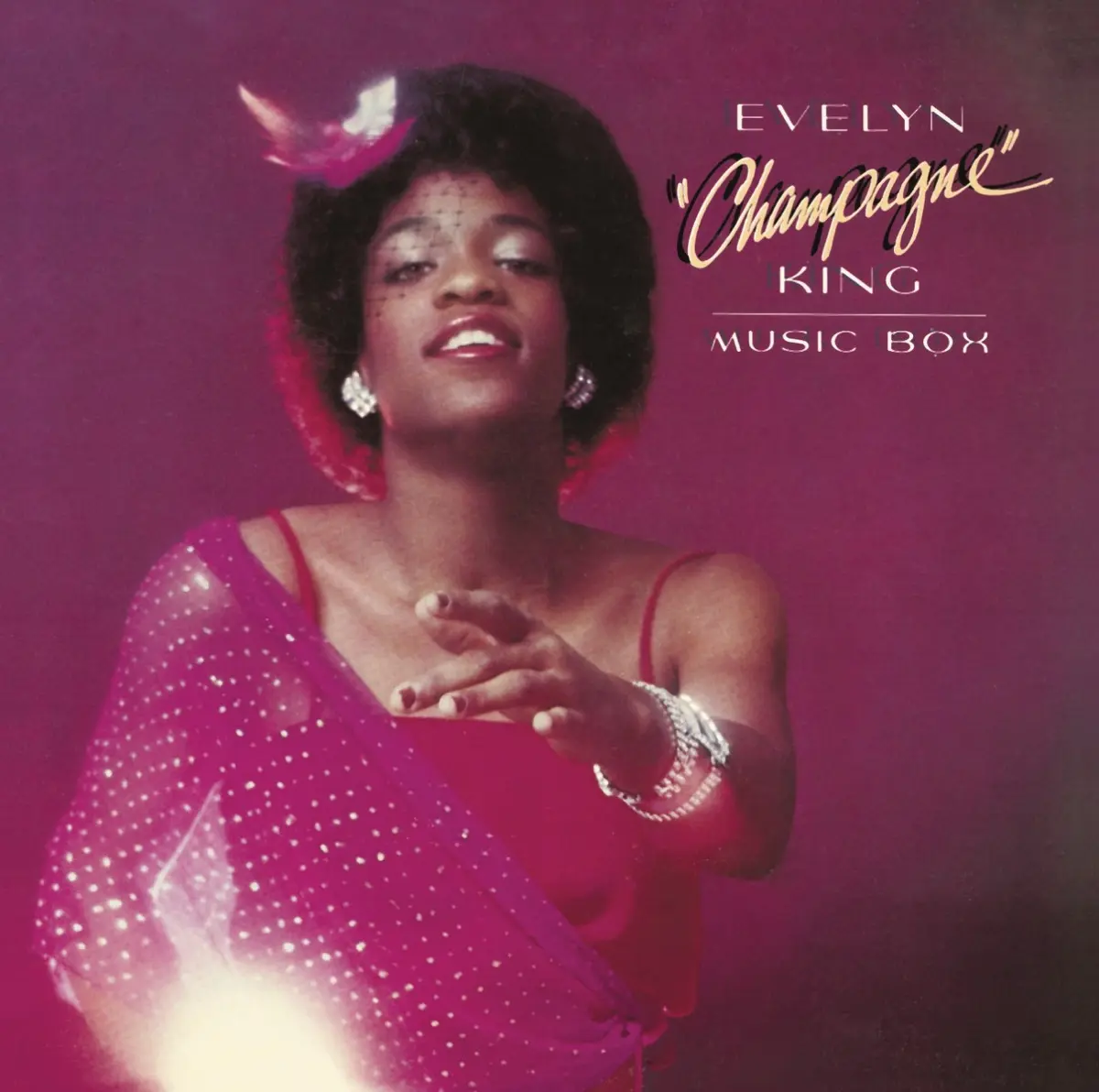 Evelyn “Champagne” King released her second album, Music Box, on March 19, 1979, on RCA Victor.
The album deepens King’s blend of extended dancefloor workouts and compact soul vamps, with extended instrumental breaks spotlighting interwoven leads from guitarist John H. Fitch Jr. and keyboardist Sam Peake, who alternates Clavinet and electric piano textures. Luther Vandross appears among the background vocalists, adding layered harmonies to tracks like “Make Up Your Mind.” Sam Peake co-wrote four songs and shares production credit alongside Theodore Life and Bill Greene.
Music Box trades the tight urgency of Smooth Talk for more spacious, rhythm-centered structures, often relying on mid-tempo repetition and sparse harmonic movement. “Steppin’ Out” unfolds in two parts, shifting between clipped instrumental punches and looser breakdowns with voice-layer interplay. The title track builds gradually on rising vocal refrains over a rigid, clocklike rhythm. “I Think My Heart Is Telling” pares down to restrained percussion and wide intervals, giving her lines a chance to settle and hover.
A1. “Music Box” (6:43) – Theodore Life, Sam Peake, John H. Fitch Jr.
A2. “Let’s Start All Over Again” (3:52) – Theodore Life
A3. “Out There” (4:13) – Sam Peake, Theodore Life
A4. “No Time for Fooling Around” (3:31) – Sam Peake, Theodore Life
A5. “Steppin’ Out (Pt. 1)” (3:59) – Theodore Life, Bill Greene
B1. “Steppin’ Out (Pt. 2)” (5:50) – Theodore Life, Bill Greene
B2. “Make Up Your Mind” (5:01) – Theodore Life, Mikki Farrow, Joe Freeman
B3. “I Think My Heart Is Telling” (4:22) – John H. Fitch Jr., Reuben Cross
B4. “It’s OK” (3:49) – William Kimes, Ken Dudley
Music Box was tracked between Secret Sound Studios in New York and Alpha International in Philadelphia. RCA released the album in a standard 9-track edition, later reissued in 2011 by Funky Town Grooves with 12″ and 7″ mixes appended. Peake and Life handled most of the arrangements, with contributions from Bill Greene, Mikki Farrow, and Joe Freeman on the latter side.
“Music Box” appeared as the lead single and reached No. 14 on the Billboard R&B chart, No. 75 on the Hot 100, and No. 78 on the Dance chart. RCA also issued an extended 12″ version and a promo 7″, the latter of which received regional airplay through mid-1979.
“Out There” followed as the second single. Though it peaked at No. 34 on the R&B chart, it didn’t register on the pop or dance listings. RCA distributed both 7″ and 12″ versions during the fall.
The album peaked at No. 12 on the Billboard Top Soul LPs and No. 35 on the main Billboard 200. The RIAA certified Music Box gold for sales in excess of 500,000 units.
Call on Me
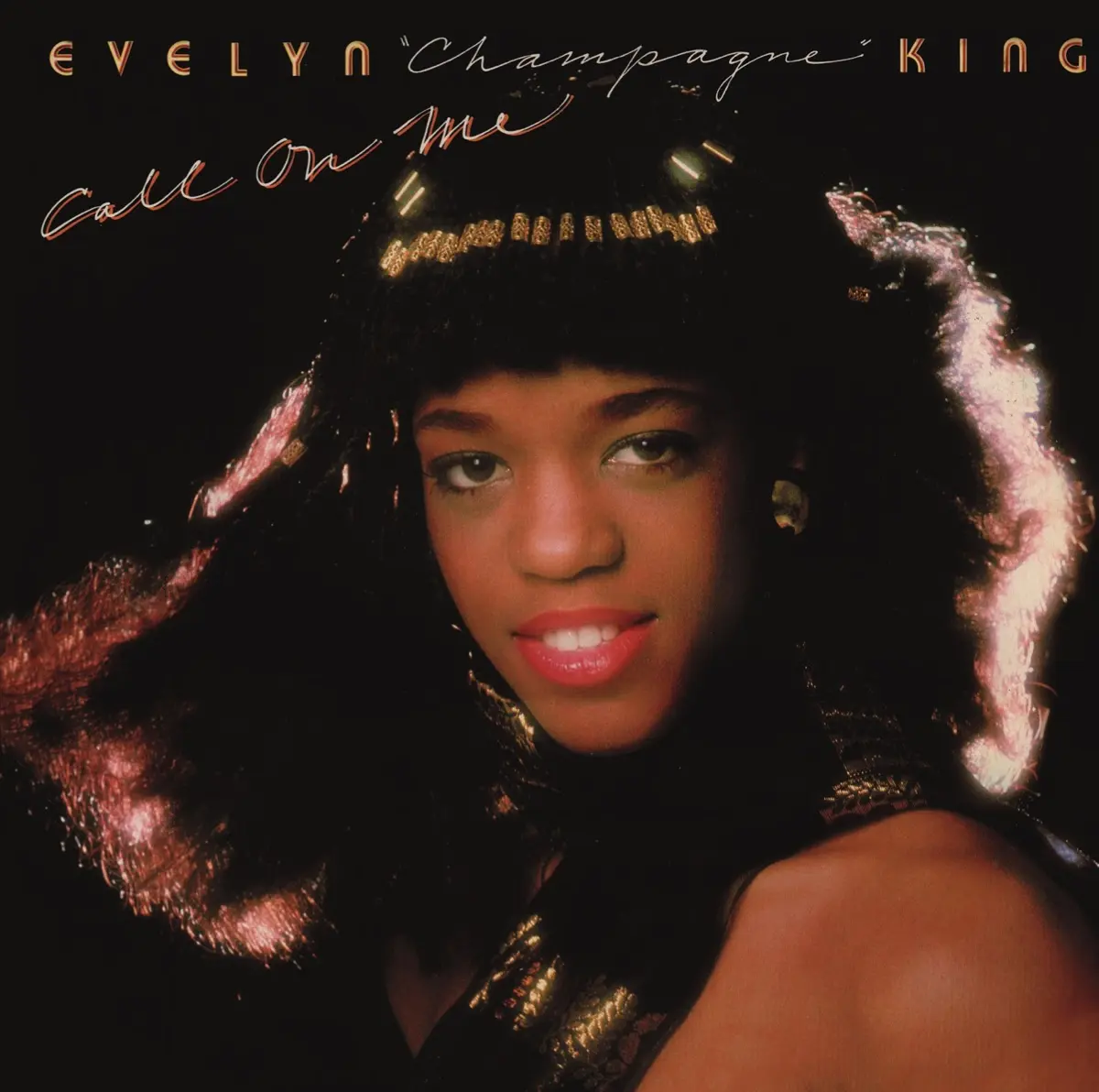 Evelyn “Champagne” King released her third album, Call on Me, on September 8, 1980, on RCA Victor.
The album emphasizes extended funk and slow-burning ballads, with sharper instrumental interplay than its predecessor. Guitarist John H. Fitch Jr. trades rhythmic accents with electric piano and horn bursts arranged by George Andrews, while producer Theodore Life adds keyboard textures and contributes to the vocal layering on several cuts.
Call on Me leans into slower, mid-tempo pacing with tightly looped arrangements that favor repetition over shift. “Let’s Get Funky Tonight” injects brief rhythmic tension with clipped phrases and callout refrains, while “Just a Little Bit of Love” pulls back into a softer pulse with open chord spacing and minimal instrumental layering. “Talk Don’t Hurt Nobody” circles through a static pattern without much harmonic lift, and “Bedroom Eyes” settles into a subdued tempo that barely stirs.
A1. “Let’s Get Funky Tonight” (3:36) – Theodore Life, Hassan Ali, Kwame Hadi, Evelyn King
A2. “Your Kind of Loving” (3:51) – Theodore Life, Frank Snowden
A3. “Call on Me” (5:15) – Theodore Life, Theodore Life III, Nat Lee
A4. “I Need Your Love” (6:18) – Theodore Life, Frank Alstin Jr., George Tindley
B1. “Talk Don’t Hurt Nobody” (6:43) – Theodore Life, Joe Freeman
B2. “Just a Little Bit of Love” (3:40) – Brian Holland, Edward Holland
B3. “Bedroom Eyes” (4:41) – Bill Seidman, Christine Faith
B4. “Universal Girl” (6:00) – Theodore Life, John H. Fitch Jr.
Call on Me was recorded at RCA, Secret Sound, and the Record Plant studios in New York City. Theodore Life and George Tindley co-produced the sessions with string and horn arrangements by George Andrews. RCA issued the album in a standard eight-track LP format with no alternate pressings or 12″ versions noted.
“Let’s Get Funky Tonight” appeared as the album’s lead single. Co-written by King with Life, Hadi, and Ali, it reached No. 58 on the Billboard R&B singles chart. RCA supported the track with a 7″ single, but it did not cross over to the Hot 100.
Call on Me peaked at No. 124 on the Billboard 200 and reached No. 58 on the R&B albums chart.
I’m in Love
 Evelyn “Champagne” King released her four album, I’m in Love, on June 21, 1981, on RCA Victor.
The album shifts into sleek, synth-driven arrangements that foreground interplay between analog synthesizers, rhythm guitar, and tightly layered backing vocals. Kashif supplies multi-instrumental textures across multiple tracks, handling Minimoog basslines, Prophet-5 leads, and electric piano transitions against crisp accents from guitarist Ira Siegel and percussionist Bashiri Johnson. On “I’m in Love,” Kashif’s handclaps and synth voicings interlock with ensemble vocals arranged by Morrie Brown and Paul Lawrence Jones III.
I’m in Love opens with clipped synth pulses and a steady rhythm cycle on the title track, where cascading keyboard lines slide under tightly timed handclaps and Minimoog bass swells. “If You Want My Lovin’” rides a narrow, mid-tempo swing, with vocals moving in unison with background callouts and sharp synth phrasing. “Don’t Hide Our Love” stretches over a wide, laid-back arrangement with soft male harmony and spare instrumental fills, while “Spirit of the Dancer” picks up the pace with choppy transitions and upward melodic jumps. Throughout, the arrangements pivot between compact, synth-driven forms and fuller layers of horns and strings, sometimes pressing tight against the vocal space.
A1. “I’m in Love” (5:01) – Kashif Saleem
A2. “If You Want My Lovin’” (4:18) – Morrie Brown, Paul Lawrence Jones III
A3. “Don’t Hide Our Love” (5:22) – Lawrence Jones, Arthur Moore
A4. “What Are You Waiting For” (4:09) – Willie Lester, Rodney Brown
B1. “Spirit of the Dancer” (4:50) – Kashif Saleem, Morrie Brown
B2. “The Other Side of Love” (4:24) – Willie Lester, Rodney Brown
B3. “I Can’t Take It” (4:07) – Rodney Brown, Willie Lester
B4. “The Best Is Yet to Come” (5:13) – Willie Lester, Rodney Brown
King recorded the album at Celestial Sounds in New York with production split between Morrie Brown (with associates Kashif and Paul Lawrence Jones III) and the team of Rodney Brown and Willie Lester. Kashif arranged and played all keyboards and synthesizers on “I’m in Love” and “Spirit of the Dancer,” including Minimoog, Fender Rhodes, and Prophet-5, while Ralph Schuckett conducted the string and horn sections. Steve Goldman engineered and mixed the sessions under the pseudonym “Magic Hands,” and Sterling Sound handled the mastering. RCA later reissued the album on CD in 2011 through Big Break Records with single and extended mixes as bonus tracks.
RCA issued the title track, “I’m in Love,” as the lead single in June 1981. Kashif wrote and arranged the track, which features him on piano, synth, bass, and handclaps, supported by drummer Leslie Ming and vocalist B.J. Nelson. The single reached No. 1 on both the Billboard Hot Soul Singles and Dance charts, and climbed to No. 40 on the Hot 100. “The Other Side of Love” appeared on the B-side of both the 7″ and 12″ releases.
“If You Want My Lovin’” followed in July as the second single. Co-written by Morrie Brown and Paul Lawrence Jones III, it marked a stylistic continuation of the album’s boogie-infused direction. RCA promoted it with an edited 7″ version and a UK variant, but it did not replicate the prior single’s success.
“Don’t Hide Our Love” appeared in October as the third single. Written by Lawrence Jones and Arthur Moore, the track reached No. 28 on the Billboard R&B chart. RCA issued a 7″ with a 4:11 edited version and used the same flip side as previous singles.
“Spirit of the Dancer” closed the single cycle in January 1982. Co-written by Kashif and Morrie Brown, it peaked at No. 51 on the R&B chart and No. 54 on the Dance chart, completing the album’s year-long visibility in clubs and on Black radio.
I’m in Love peaked at No. 6 on the Billboard Top Soul LPs chart and No. 28 on the Billboard 200, marking King’s strongest chart placement since her 1977 debut.
Get Loose
 Evelyn “Champagne” King released her fifth album, Get Loose, on August 11, 1982, on RCA Victor.
The album pivots around stripped-down electronic arrangements shaped by synthesizer and drum machine interplay, with layered keyboard work from Kashif, who doubles on OB-X, Minimoog, and Fender Rhodes. Guitarist Ira Siegel adds clipped rhythmic stabs over Kashif’s synth basslines, while percussionist Bashiri Johnson provides counter accents with handheld instruments across the up-tempo tracks.
Get Loose opens with “Love Come Down,” where clipped synth stabs and handclaps move in tandem with a staggered bass pulse and ascending vocal refrains. “Betcha She Don’t Love You” slows the pace, centering on a lean rhythm and call-response phrasing that sways over a restrained chord loop. “Get Loose” lifts the energy with darting keyboard fills and compressed vocal layering, while “Back to Love” drops into a softer swing with fluid transitions and sustained keyboard swells.
A1. “Love Come Down” (6:08) – Kashif
A2. “I Can’t Stand It” (4:05) – Paul Lawrence Jones III
A3. “Betcha She Don’t Love You” (5:05) – Kashif
A4. “Get Loose” (4:51) – Paul Lawrence Jones III
B1. “Back to Love” (5:17) – Kashif
B2. “Stop That” (6:37) – Paul Lawrence Jones III
B3. “Get Up Off Your Love” (4:38) – Paul Lawrence Jones III, Arthur “Sonny” Moore
B4. “I’m Just Warmin’ Up” (4:36) – Barbara Wyrick
Get Loose was produced by Morrie Brown and recorded at Celestial Sounds and the Power Station, with post-production mixing handled at Sigma Sound Studios. Kashif and Paul Lawrence Jones III served as associate producers and arranged the material alongside Brown. Kashif programmed the album’s key rhythmic elements and supplied all synthesizer lines, while Jones focused on vocal arrangements and ballad structuring. RCA reissued the album on CD in 2010 through Big Break Records and Sony Music Legacy with 12″ mixes as bonus tracks.
RCA released “Love Come Down” in July 1982 as the album’s lead single. Written by Kashif, it features Minimoog bass, OB-X handclaps, and vocal layering with King, Kashif, and Marie Council. The single hit No. 1 on both the Billboard Hot Soul Singles and Dance charts and reached No. 17 on the Hot 100. It also charted internationally, peaking at No. 7 in the UK. A 12″ mix with extended instrumental breaks accompanied the single release.
“Betcha She Don’t Love You” followed in August. Also written by Kashif, the track was released with “I’m Just Warmin’ Up” on the B-side and issued in both 7″ and 12″ formats. It reached No. 2 on the Billboard Hot Soul Singles chart and peaked at No. 49 on the Hot 100.
“Back to Love” appeared as the third single in November 1982. Kashif again handled writing and instrumentation, carrying over the synth-based rhythmic structure from the earlier tracks. No chart placement is noted for this release.
“Get Loose,” issued in January 1983, served as the final single from the album. Though it did not enter the Hot 100, it reached No. 61 on the R&B chart. RCA included a U.S. 12″ vocal mix on later compilations.
Get Loose became King’s highest-charting LP, reaching No. 1 on the Billboard Top Black LPs chart and No. 27 on the Billboard 200. The RIAA certified the album gold for shipments exceeding 500,000 units.
Face to Face
 Evelyn “Champagne” King released her sixth album, Face to Face, on November 7, 1983, on RCA Victor.
The album transitions into harder-edged synth-funk and new wave-inspired dance music, trading Kashif’s fluid synth voicings for punchier textures shaped by producer-keyboardists Leon Sylvers III and André Cymone. Guitarist Micki Free and keyboardist Joey Gallo exchange clipped fills and sharp accent lines beneath programmed rhythms, while Foster Sylvers doubles on bass and background vocals to reinforce the layered arrangements.
Face to Face pivots on uptempo, synth-layered tracks driven by sharp electronic accents and clipped vocal phrasing. “Teenager” threads its pulse through descending piano chords and tight rhythm guitar while echoing ‘60s soul with a brisk, syncopated vocal line. “Don’t It Feel Good” and “Givin’ You My Love” push jagged synth leads across steady, four-on-the-floor pacing. “Tell Me Something Good” and “Let’s Get Crazy” ride high-register keyboard swells and syncopated stabs that fuse programmed funk with angular, stripped-back elements.
A1. “Action” (5:50) – Leon Sylvers III, Dana Meyers
A2. “Face to Face” (4:55) – André Cymone
A3. “Shake Down” (6:20) – Foster Sylvers, Rickey Smith, Pamela Phillips-Oland
A4. “Tell Me Something Good” (5:10) – Terry Murphy, Pamela Phillips-Oland, Wilmer Raglin
B1. “Don’t It Feel Good” (4:07) – André Cymone
B2. “Makin’ Me So Proud” (4:17) – Terry Murphy, Pamela Phillips-Oland
B3. “Givin’ You My Love (What Cha Gonna Do With It)” (3:40) – William Bryant II, Tina Scott, D’Marie Warren, Roberta Stiger, Karon Floyd
B4. “Teenager” (3:40) – André Cymone
B5. “Let’s Get Crazy” (3:59) – André Cymone
King tracked Face to Face across multiple studios in California and Minneapolis, working with a new production lineup. André Cymone, fresh from his tenure with Prince, contributed writing, arrangement, and multi-instrumental duties on four tracks. Leon and Foster Sylvers produced the remaining cuts with Joey Gallo and featured musicians from the SOLAR stable. RCA later reissued the album in 2011 via Funky Town Grooves with four bonus tracks, including extended 12″ versions and single edits.
RCA released “Action” as the lead single in 1983. Written by Leon Sylvers III and Dana Meyers, the track reached No. 16 on the R&B chart, No. 13 on the Dance chart, and crossed over to No. 75 on the Hot 100. RCA issued multiple formats, including a 7″ single and edited 12″ version.
“Shake Down” followed in early 1984. Written by Foster Sylvers, Rickey Smith, and Pamela Phillips-Oland, it reached No. 12 on the R&B chart and No. 34 on the Dance chart. A dub mix and 12″ dance mix were released alongside a 7″ edit.
“Teenager” appeared as the third single later that year. Composed by Cymone, it placed at No. 28 on the R&B chart. RCA distributed an extended 12″ version as part of the campaign.
Face to Face peaked at No. 24 on the Billboard Top Black Albums chart and No. 91 on the main Billboard 200. Though it marked a stylistic departure, it continued King’s run of charting albums into the mid-1980s.
So Romantic
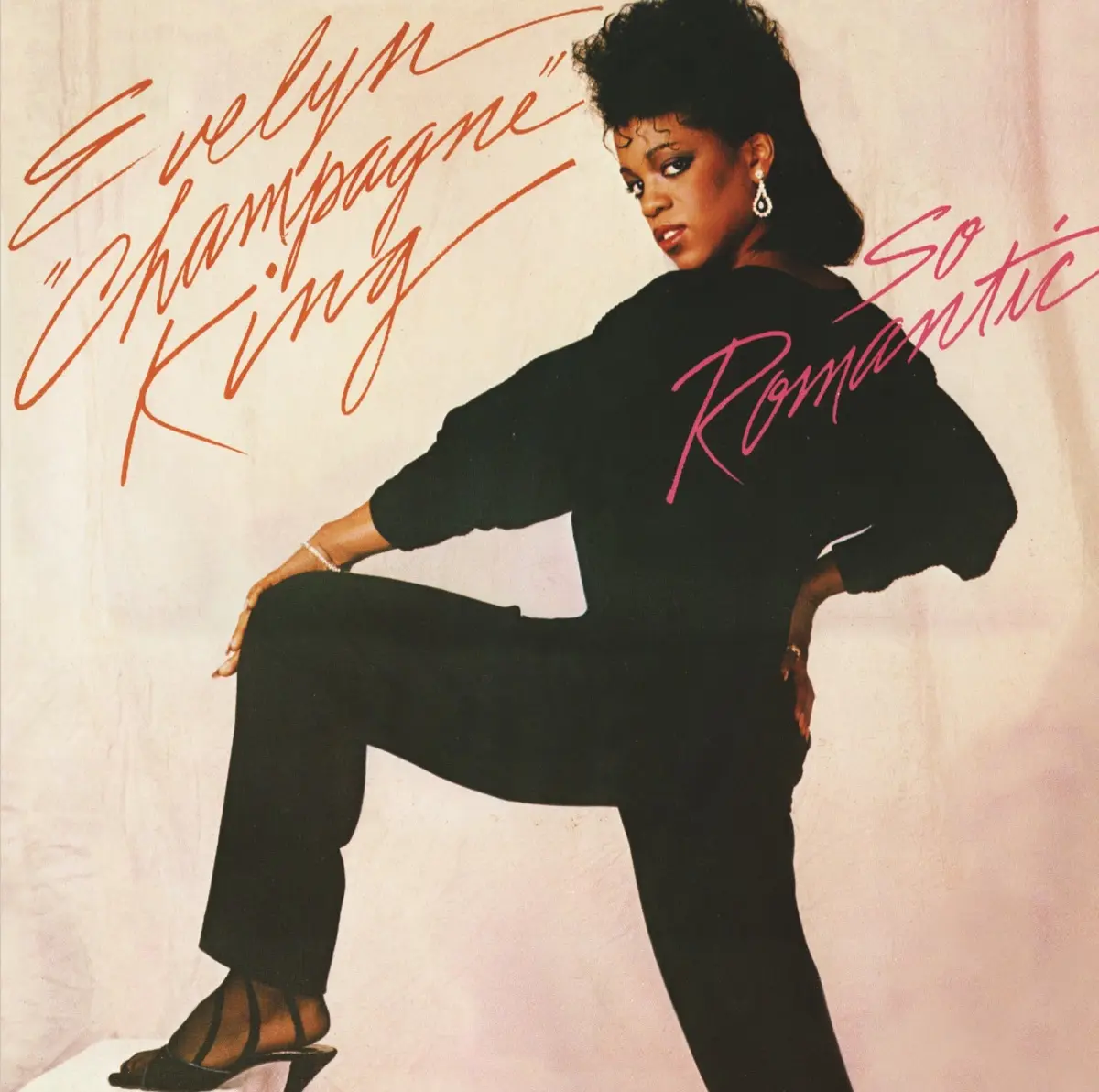 Evelyn “Champagne” King released her seventh album, So Romantic, on October 16, 1984, on RCA Victor.
The album fuses tightly programmed dance rhythms with live guitar and keyboard textures, blending layered synths with sharp rhythmic accents. David Frank and Mic Murphy of The System contribute sleek synth basslines and synth pads that shift fluidly around guitar lines by Bruce Gaitsch and producer Clif Magness, while Glen Ballard’s arrangements highlight the interplay between electronic atmospheres and organic chordal phrasing.
So Romantic opens with “Show Me (Don’t Tell Me),” where clipped guitar figures and tight keyboard stabs drive a forward-thrusting pace under King’s assertive phrasing. “Just for the Night” floats her voice over a vaporous reverb bed with softened percussion and restrained synth layers. “Give Me One Reason” centers on slow, deliberate chord changes and open vocal intervals, while “Till Midnight” stretches into a sustained emotional climb framed by ambient keyboard shading and minimal rhythmic support.
A1. “Show Me (Don’t Tell Me)” (4:42) – Glen Ballard, Clif Magness
A2. “Heartbreaker” (5:00) – Evan Rogers, Carl Sturken
A3. “Till Midnight” (5:01) – Keithen Carter, Bruce Gaitsch
A4. “Just for the Night” (4:45) – Keithen Carter, Pat Leonard, Bruce Gaitsch
A5. “Give Me One Reason” (3:58) – Glen Ballard, Clif Magness
B1. “Out of Control” (5:30) – Jimmy Douglass, Eugene Jackson
B2. “Talking in My Sleep” (4:59) – Evelyn King, Clarence Robert Brice
B3. “I’m So Romantic” (5:16) – Mic Murphy, David Frank
B4. “So in Love” (4:08) – Mic Murphy, David Frank
So Romantic was recorded over a four-month period in 1984 and features production by Clif Magness and Glen Ballard (on tracks A1, A5), Evan Rogers and Carl Sturken (A2), Keithen Carter and Bruce Gaitsch (A3, A4), Jimmy Douglass (B1), and The System’s Mic Murphy and David Frank (B3, B4). Evelyn co-wrote “Talking in My Sleep” with Clarence Brice. RCA reissued the album in 2014 through Funky Town Grooves with extended mixes and alternate versions of several singles.
“Just for the Night” appeared as the lead single in late 1984. Produced by Pat Leonard with writing credits shared with Keithen Carter and Bruce Gaitsch, the track charted at No. 16 on the R&B chart and No. 45 on the Dance chart, with a remixed 7″ version and instrumental issued on RCA.
“Out of Control,” released in early 1985, was co-written and produced by Jimmy Douglass. It climbed to No. 54 on the R&B chart and No. 14 on the Dance chart. RCA circulated multiple 12″ versions, including a vocal dub and remixed extended take.
“Till Midnight” served as the third single, written by Carter and Gaitsch. It reached No. 57 on the R&B chart, and RCA issued several alternate mixes including a dub version and a short a cappella.
So Romantic peaked at No. 38 on the Billboard Top Black Albums chart and reestablished King’s foothold in the dance and club circuit.
A Long Time Coming (A Change Is Gonna Come)
 Evelyn “Champagne” King released her eighth album, A Long Time Coming (A Change Is Gonna Come), on October 28, 1985, on RCA Victor.
The album adopts mid-1980s electronic R&B stylings, with synth layers and programmed rhythms supporting compact arrangements. Guitarist Bruce Gaitsch trades lines with keyboardist Allen George, while producers like Fred McFarlane and René & Angela shape the structure with overdubbed textures that leave space for King’s phrasing to guide the dynamics.
A Long Time Coming moves on rigid, programmed frameworks, with “If You Find the Time” and “I’m Scared” pacing through stock synth textures and clipped rhythm cycles. “Your Personal Touch” layers restrained electronic accents around King’s insistent phrasing, while “Chemistry of Love” shapes its chorus with angular vocal turns over minimal backing. Her reworking of “A Long Time Coming” pares things back to spotlight vocal inflection against sparse chord progressions.
A1. “Chemistry of Love” (4:38) – Evelyn King, Matt Thomas, Larry Taylor, Theodore Life
A2. “A Change Is Gonna Come” (4:36) – Sam Cooke
A3. “Spellbound” (3:31) – René Moore, Angela Winbush
A4. “If You Find the Time” (4:45) – Theodore Life, Larry Taylor, Tony Pritchette, Charles Kennedy
A5. “Slow Down” (3:43) – Bruce Gaitsch, Keithen Carter
B1. “If I Let Myself Go” (4:28) – Sheree Sano, Jose Gomez
B2. “Your Personal Touch” (5:48) – Allen George, Fred McFarlane
B3. “I’m Scared” (4:55) – Kenneth Gilkes
B4. “High Horse” (4:26) – Allen George, Fred McFarlane
King recorded the album across sessions with multiple producers: Allen George and Fred McFarlane oversaw the primary dance tracks, while René & Angela, Theodore Life, Hawk, and Bobby Watson each contributed in separate capacities. She revived Sam Cooke’s “A Change Is Gonna Come,” the song that caught producer T. Life’s attention in 1976 and led to her first record deal. RCA issued the album with nine tracks; later CD reissues by Bluebird and Funky Town Grooves added the non-album tracks “Take a Chance” and “Give It Up,” the latter from the Fright Night soundtrack.
RCA issued “Your Personal Touch” as the lead single in October 1985. Written and produced by George and McFarlane, the track peaked at No. 9 on the Billboard Black Singles chart, No. 5 on the Dance chart, and reached No. 86 on the Hot 100. A UK 7″ featured “Talking in My Sleep” as the B-side.
“High Horse” followed as the second single. Also written by George and McFarlane, it charted at No. 36 on the R&B survey and appeared in 7″ and 12″ formats backed with “Take a Chance,” a non-album track exclusive to this single.
“Slow Down,” composed by Gaitsch and Carter, appeared as the third single and reached No. 57 on the R&B chart. RCA issued a 12″ version for club circulation but did not promote it to Top 40 radio.
A Long Time Coming peaked at No. 38 on the Billboard Top Black Albums chart. Though it marked King’s final studio album for RCA, it preserved her chart presence into late 1985 and closed out her initial eight-album run with the label.
Discography:
- Smooth Talk (1977)
- Music Box (1979)
- Call on Me (1980)
- I’m in Love (1981)
- Get Loose (1982)
- Face to Face (1983)
- So Romantic (1984)
- A Long Time Coming (A Change Is Gonna Come) (1985)
- Flirt (1988)
- The Girl Next Door (1989)
Sources:
- Discogs: Evelyn “Champagne” King
- 45worlds: Evelyn “Champagne” King
- 45cat: Evelyn “Champagne” King
- MusicBrainz: Evelyn “Champagne” King
Artist/Album Pages:
Harmonium was a Québécois symphonic-folk band that released the 1974–75 Célébration albums Harmoni...
The Notations were an American soul group from Chicago that released eleven singles and a 1975 al...
Tantra was a Portuguese symphonic-rock band that made the 1977/78 Epic albums Mistérios e ...
Syncro Jazz was a Brazilian samba-jazz sextet that recorded a 1982 live album for small-press Poit...
Witch Cross was a Danish metal band that self-released the 1983 sides "Are You There" and "No Ang...
Anvil was a Canadian hard-rock/metal band behind the 1982–83 Attic/Polydor albums Hard 'n' Heavy, ...
Fusion was a French jazz-rock supergroup comprised of core Magma personnel Christian Vander, Benoî...
Johnny Warman is an English vocalist and songwriter who cut the 1975 Bellaphon single “Rock Star” ...
Ariel was a Danish jazz-rock band that released a self-titled album in early 1980. Later that same...
Steely Dan was an American jazz-rock/pop band that released six studio albums on ABC between 1972 an...
Mai Yamane — 山根麻以 (Oct. 9, 1958) — is a Japanese singer, pianist, and songwriter who emerged in 19...
Dennis Wilson (Dec. 4, 1944 — Dec. 28, 1983) was an American musician from Inglewood, Calif., best...