

Gary Toms Empire was an American soul-funk band from N.Y.C. that released the 1975 album 7-6-5-4-3-2-1 Blow Your Whistle on P.I.P. Records. In 1977, Toms released the solo albums King of the Empire and Turn It Out, then resurrected Empire for the 1978 Mercury album Let’s Do It Again.
Members: Gary Toms (vocals, piano, organ, keyboards), Butch Campbell, John Sussewell, Norbert Sloley, Rick Aikens, Warren Tesoro
Background
Gary Toms Empire formed in New York City in 1973 around keyboardist Gary Toms (b. March 23, 1934; Philadelphia, PA), a pianist and arranger active on the East Coast club circuit since the mid-1950s. Toms trained on piano in his youth and played in regional jazz and R&B combos. By the early 1960s, he worked as a touring sideman with jazz organist Jimmy Smith and other East Coast performers.
Toms assembled a local band with singer Helen Jacobs, guitarist Rick Kenny, trumpeter Eric Oliver, saxophonist Les Rose, bassist John Freeman, drummer Rick Murray, and percussionist Warren Tesoro. The players had extensive experience in New York’s club, cabaret, and theatre scenes. They met through rehearsal spaces in Harlem and Midtown used by backing bands for touring soul artists.
The group debuted at small uptown clubs and gained traction with sets at the Apollo Theater and other New York showrooms. Their rhythmic precision, horn-driven arrangements, and stage dynamics earned them a contract with P.I.P. (Pickwick International Productions). Their first single, “7-6-5-4-3-2-1 (Blow Your Whistle),” appeared in 1974, leading to a full-length album the following year.
7-6-5-4-3-2-1 Blow Your Whistle
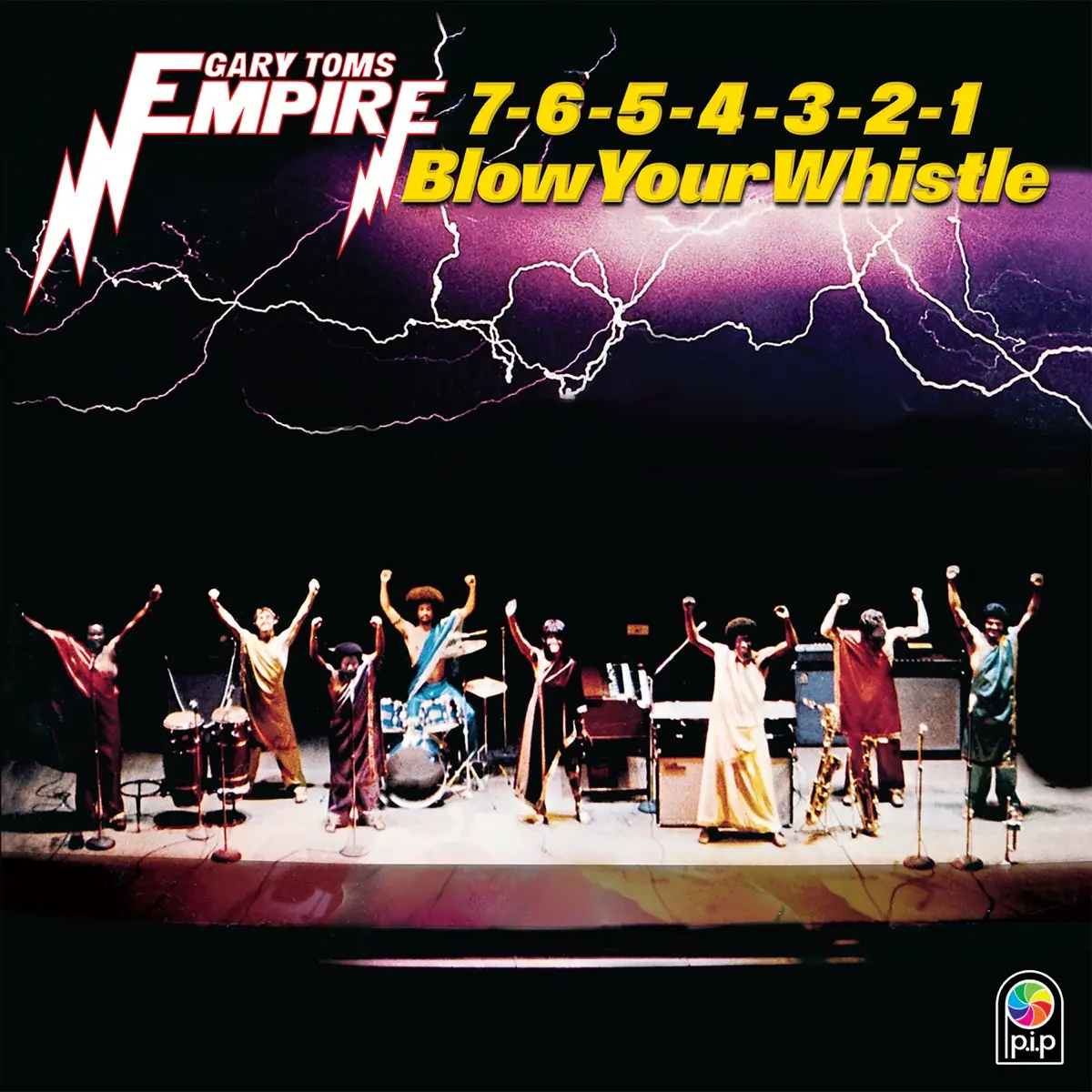 Gary Toms Empire released their debut album, 7-6-5-4-3-2-1 Blow Your Whistle, in 1975 on P.I.P. Records.
The album presents a brisk mix of funk and early disco arranged for rhythm section, horns, and female vocal support. The lineup features keyboardist Gary Toms, singer Helen Jacobs, guitarist Rick Kenny, trumpeter Eric Oliver, saxophonist Les Rose, bassist John Freeman, drummer Rick Murray, and percussionist Warren Tesoro.
Toms wrote the majority of the songs, with outside source material on select tracks, including a cover of a 1965 Beatles track. Several numbers extend mid-tempo rhythmic structures while others employ clipped horn refrains and short vocal refrains.
“7-6-5-4-3-2-1 (Blow Your Whistle)” opens with repeated rhythmic punctuations over a tight horn chart. “Drive My Car,” a cover of the 1965 Beatles number by Lennon–McCartney, receives a percussive disco arrangement. “Slow & Funky” and “Feel That Funky Groove” employ extended instrumental breaks, while “Jubilation (Excitation)” layers chorus refrains over up-tempo rhythm.
A1. “7-6-5-4-3-2-1 Blow Your Whistle” (5:08) — originated as “Get Up” by Blue Mink, written by Roger Cook and Roger Greenaway.
A2. “Slow & Funky” (4:17)
A3. “Tell the People” (5:15)
A4. “Do Your Thing” (2:52)
A5. “Jubilation (Excitation)” (4:07)
B1. “Drive My Car” (3:07) — originally recorded by The Beatles in 1965 on Rubber Soul.
B2. “This Crazy World” (4:04)
B3. “You Are the One for Me” (3:25)
B4. “Feel That Funky Groove” (4:29)
B5. “Love Me Right” (2:58)
B6. “The New Empire” (3:51)
Sessions occurred at Ultra-Sonic Recording Studios in Hempstead, New York, with producers Bill Stahl and Rick Bleiweiss.
Record label promoted the album with the single “7-6-5-4-3-2-1 (Blow Your Whistle)” (b/w “Slow & Funky”), which reached No. 5 on the Billboard R&B chart. A second single, “Drive My Car” (b/w “Do Your Thing”), peaked at No. 32 R&B and No. 69 on the Hot 100, issued on one of the earliest promotional 12-inch formats.
King of the Empire
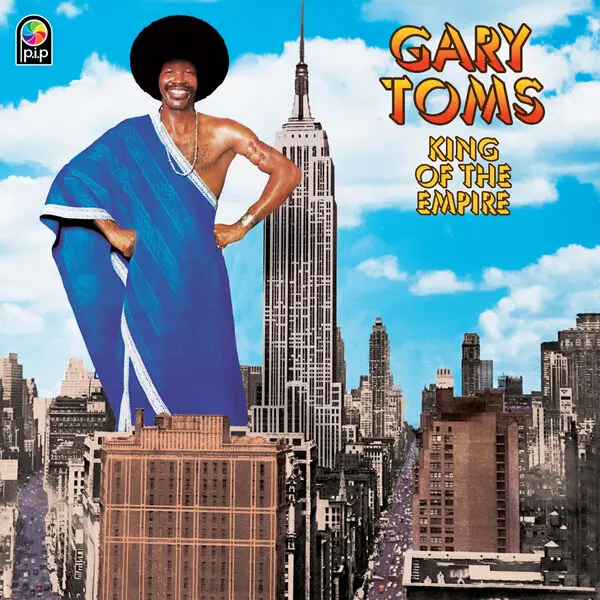 Gary Toms released the solo album King of the Empire in 1977 on Epic Records.
This set leans toward extended disco production with layered horns, strings, and chorus vocals. Toms fronts a large studio ensemble that includes two guitarists (Bert Elliot, Mike McConnel), three drummers (Ron Rogers, Tony Austin, Butch Bateman), multiple horn players including trumpeter Jimmy Sedlar and trombonist Alan Raph, and an eight-member string section arranged by Irving Spice.
Toms wrote or co-wrote the entire album except for the arrangement of the horns and strings, handled by Spice and Les Rose on select tracks. Several numbers extend beyond seven minutes with open instrumental passages and dynamic shifts between verse and refrain.
“Suite Disco” stretches over eight minutes with alternating instrumental figures. “Hurricane” pivots around a repetitive rhythmic pulse with brass interjections. “Turn It Out (Tear This Building Down)” employs chanted refrains. “Cuckoo, Cuckoo” and “Stand Up and Shout” emphasize chorus vocals over sequenced percussion.
A1. “Suite Disco” (8:28)
A2. “Hurricane” (4:31)
A3. “Turn It Out (Tear This Building Down)” (6:23)
B1. “Cuckoo, Cuckoo” (3:43)
B2. “Stand Up and Shout” (7:02)
B3. “Party Hardy” (9:20)
Sessions occurred at Ultra-Sonic Recording Studios with producers Bill Stahl and Rick Bleiweiss.
“Stand Up and Shout” appeared as the lead single in late 1976, reaching minor R&B chart positions.
Turn It Out
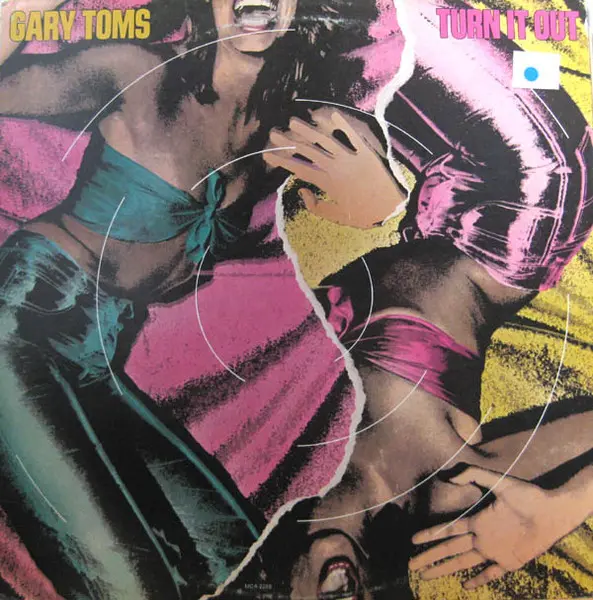 Gary Toms released his second solo album, Turn It Out, in August 1977 on MCA.
This album intensifies the extended disco format with thicker string and horn charts. The sessions involved multiple drummers (Mike Alexander, Rick Aikens, Ron Rogers), guitarist Bert Elliot, horn players Jimmy Sedlar and Les Rose, and string players under the direction of Irving Spice.
Toms wrote or co-wrote most of the material, apart from “Don’t Knock My Love” (originally recorded by Wilson Pickett in 1971) and “Cuckoo, Cuckoo,” a song by Doris Troy and Roger Cook.
“Turn It Out (Tear This Building Down)” reprises the earlier Epic version. “Hurricane” appears in a new mix. “Suite Disco” is divided into movements with extended passages for horns and strings.
A1. “Turn It Out (Tear This Building Down)” (6:23)
A2. “Don’t Fight the Feeling” (6:53)
A3. “Hurricane” (4:31)
B1. “Don’t Knock My Love” (8:23) — originally recorded by Wilson Pickett in 1971.
B2. “Suite Disco” (8:34)
B3. “Cuckoo, Cuckoo” (3:43) — written by Doris Troy and Roger Cook.
Sessions occurred at MCA Recording Studios with producers Bill Stahl and Peter Richards.
MCA promoted the album with the single “Turn It Out (Tear This Building Down)” backed with “Hurricane.”
Let’s Do It Again
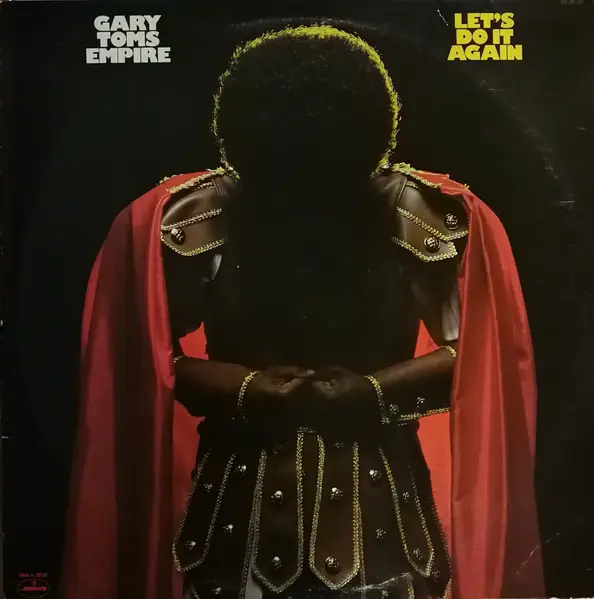 Gary Toms Empire released their second album, Let’s Do It Again, in 1978 on Mercury Records.
The album mixes disco-oriented numbers with shorter pop-funk songs arranged for a smaller studio group. The lineup includes keyboardist Gary Toms, guitarist Butch Campbell, bassist Norbert Sloley, drummer John Sussewell, percussionist Warren Tesoro, and pianist/arranger Patrick Adams, with horn and string sections directed by Adams.
Toms wrote or co-wrote half the tracks; Alvin Fields and Michael Zager wrote the two opening numbers. Patrick Adams handled orchestral arrangements.
“It’s All Up to You” and “Welcome to Harlem” open the set with short rhythmic pieces. “Walk On By” is a cover of the 1964 Dionne Warwick hit written by Burt Bacharach and Hal David. “Miami” and “1-2-3-4 (Let’s Do It Again)” display Toms’s own rhythmic imprint.
A1. “It’s All Up to You” (2:49) — written by Alvin Fields and Michael Zager.
A2. “Welcome to Harlem” (4:17) — written by Alvin Fields and Michael Zager.
A3. “Watch Out for the Lady” (3:20) — written by B. Corsilli, J. Pascucci, M. Bruno, R. Phelps, R. Catanio.
A4. “Walk On By” (3:50) — originally recorded by Dionne Warwick in 1964.
A5. “She’s Something Else” (4:21) — written by Gary Toms.
B1. “Superfine Lady” (4:18) — written by Prince Ellis.
B2. “Miami” (4:15) — written by Gary Toms.
B3. “Feeling Good Again” (4:05) — written by Rick Bleiweiss.
B4. “1-2-3-4 (Let’s Do It Again)” (4:10) — written by Gary Toms.
B5. “Gary’s Love Theme” (4:12) — written by Gary Toms.
Sessions occurred at Ultra-Sonic Recording Studios in Hempstead, New York, with producers Bill Stahl and Peter Richards.
Mercury promoted the album with “Welcome to Harlem” (b/w “Miami”), which entered the Billboard R&B chart at No. 78.
Discography:
- 7-6-5-4-3-2-1 Blow Your Whistle (1975)
- King of the Empire (1977)
- Turn It Out (1977)
- Let’s Do It Again (1978)
Sources:
Artist/Album Pages:
The Love Unlimited Orchestra was a 40-piece American soul-funk big band from Los Angeles, formed i...
Panaché was an American soul-funk duo that released the 1979 album This Is Panaché on self-press R...
The Rhythm Makers were an American soul-funk band from the Bronx that released the album Soul on Y...
Purple Image was an American soul-psych band from Cleveland that released a 1970 self-titled album...
Young & Company were an American soul-funk band from New Jersey that released the 1980 album I...
The Wild Magnolias were an American Mardi Gras Indian ensemble that merged traditional chants with...
Greg Phillinganes (born May 12, 1956) is an American R&B keyboardist from Detroit who served ...
Brick was an American soul-funk band from Atlanta that released six albums between 1976 and 1982 o...
Mandré — aka Michael Andre Lewis (Dec. 7, 1948 — Jan. 31, 2012) — was an American electro-funk mus...
Kool & The Gang were an American soul-funk band from Jersey City that released nineteen albums...
The 1619 Bad Ass Band was an American soul-funk sextet from New Jersey that released a standalone ...
Obatala was an American soul-funk band that released a 1977 album on Dash Records. Members: Rahi...