
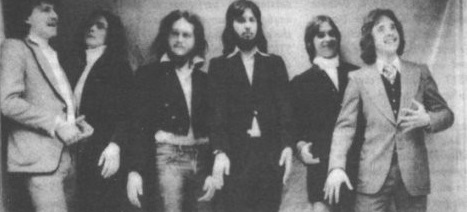
Tibet was a German symphonic-rock band that released the 1976 standalone single “Only Man’s Love,” followed by a 1979 self-titled album on Bellaphon.
Members: Klaus Werthmann (lead vocals), Deff Ballin (keyboards, percussion), Dieter Kumpakischkis (keyboards), Karl-Heinz Hamann (bass, percussion), Fred Teske (drums, percussion, guitar, vocals), Jürgen Krutzsch (guitar, percussion)
Background
Tibet formed in 1972 in Werdohl when guitarist Jürgen Krutzsch merged two local cover outfits, Fine Art and Nostradamus, into a single working band. Krutzsch came out of late-1960s club circuits and initially explored Eastern-leaning concepts, but the lineup solidified around familiar collaborators: bassist Karl-Heinz Hamann, keyboardist Dieter Kumpakischkis, drummer Fred Teske, and vocalist Klaus Werthmann. Early rehearsals shifted the focus away from literal use of non-Western instruments toward a keyboard-driven ensemble sound that retained a subdued, quasi-mystic character.
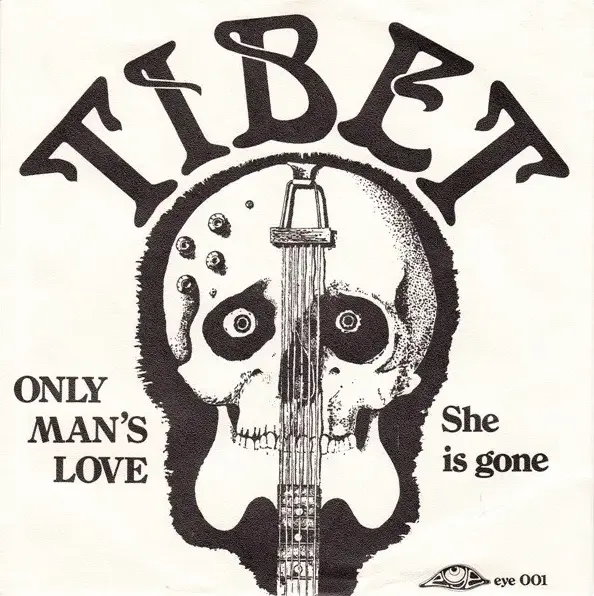 By the mid-1970s, Tibet toured steadily across West Germany and built a reputation as a long-form live band, often sharing bills with Kraan; on July 13, 1975, they opened for Kraan at Goethe Freilichtbühne in Porta Westfalica with a 38-minute set recorded by Grobschnitt drummer Eroc. Studio work began in December 1976 in intermittent sessions that stretched through September 1978, reflecting the band’s parallel commitment to live performance.
In 1976, Tibet cut a standalone single: “Only Man’s Love” backed with “She Is Gone,” both group-written originals. They pressed 1,000 copies in a skull sleeve on EYE Records, a local one-off.
A. “Only Man’s Love” (3:20)
B. “She Is Gone” (3:35)
This marked their only release before Bellaphon compiled the accumulated sessions into their self-titled debut album in May 1979.
Tibet
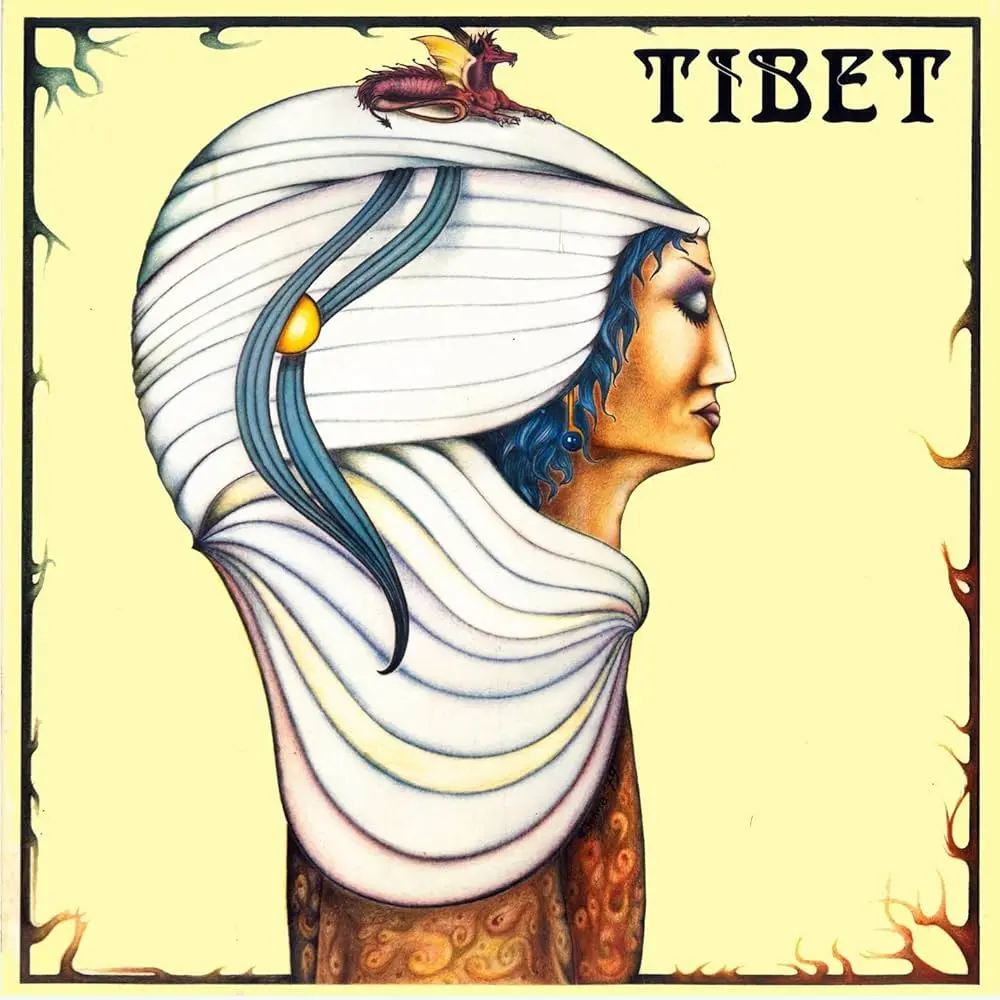 Tibet released their self-titled album in May 1979 on Bellaphon.
The album centers on extended interplay between guitarist Jürgen Krutzsch and dual keyboardists Deff Ballin and Dieter Kumpakischkis, who alternate between lead lines, ambient textures, and rhythmic counterpoint. Ballin adds extra percussion alongside drummer Fred Teske, whose fills and accents underpin the shifting dynamics. Bassist Karl-Heinz Hamann acts as a fulcrum across tempo changes, anchoring the band’s tonal range beneath Klaus Werthmann’s vocals.
Tibet centers on layered keyboard textures and alternations in pace, with dual keyboardists Deff Ballin and Dieter Kumpakischkis forming the core of its shifting, often theatrical arrangements. “White Ships and Icebergs” builds from a subdued mellotron entrance into animated organ runs, shifting into brief acoustic interludes and back again without loss of momentum. “Eagles” sustains a gentler arc, unfolding in patient layers of mellotron, guitar, and subdued rhythm.
The extended “Take What’s Yours” opens with organ in clipped bursts and stretches into a percussion-driven instrumental passage where Fred Teske’s drum fills and Karl-Heinz Hamann’s bass lines underscore the ensemble’s momentum. On “City by the Sea,” ambient piano and guitar give way to a contoured vocal section, then retreat behind walls of mellotron and electric piano. “Seaside Evening” moves at a slow pace beneath restrained vocals, eventually pulling focus toward the surrounding keyboard harmonics. The album’s strongest stretches place instrumental passages at the center, shaped by careful dynamic shifts and tonal layering between the keyboards and guitar.
A1. “Fight Back” (5:05)
A2. “City by the Sea” (4:29)
A3. “White Ships and Icebergs” (6:21)
A4. “Seaside Evening” (4:20)
B1. “Take What’s Yours” (7:30)
B2. “Eagles” (6:13)
B3. “No More Time” (5:38)
All tracks are joint-credited to Ballin, Krutzsch, and Teske. Sessions took place at Rhein-Ruhr-Film Tonstudio between December 1976 and September 1978 with Helmut Rohlfing as engineer. Günter Jenne designed the cover.
Porta Westfalica 1975
In 2024, Garden of Delights released the 1975 Porta Westfalica show as an archival disc.
1. “Fight Back” (5:19)
2. “Kaleidoscope” (6:30)
3. “Monkey Man” (9:06)
4. “The Dawning Of Delirium” (6:35)
5. “Miss One’s Way” (11:12)
6. “Baroque ‘n’ Roll” (7:14)
7. “Take What’s Yours” (8:11)
Discography:
- “Only Man’s Love” / “She Is Gone” (1976)
- Tibet (1979)
Sources:
Artist/Album Pages:
Confluence was a French avant-garde jazz-rock band that debuted with the 1976 live album 4 Voyages...
Déjà-Vu was a Norwegian symphonic-rock band that self-released the 1976 album Between the Leaves. ...
Flight was an American symphonic/jazz-rock band that released the 1975/76 Capitol albums Flight an...
Garfield was a Canadian art-rock band fronted by musician–songwriter Garfield French. They made th...
Harlequin Mass was an American symphonic-rock band from Portland, Oregon, that released a self-tit...
Burnier & Cartier were a Brazilian samba-folk duo that made a 1974 self-titled album on RCA, f...
Alkana was an American symphonic/hard-rock band from San Bernardino that self-released the 1978 al...
Lou Ragland (born July 18, 1942) is an American soul singer, multi-instrumentalist, songwriter, p...
Madden & Harris were the Australian symphonic-folk duo of multi-instrumentalist/tutor Peter Ha...
Sweet Charles — aka Charles Emanuel Sherrell (born March 8, 1943) — is an American soul singer fro...
Barcelona Traction was a Spanish jazz-rock band behind a 1975 self-titled album on Òliba, followed...
Hatfield and the North were an English jazz-rock band that released the 1974/75 Virgin albums Hatf...